Showing posts with label open doors. Show all posts

Friday, October 11, 2013

Do Christians have a future in the Middle East?

(Images courtesy Open Doors)
Middle East (MNN) ― One of the factors in understanding the cultural dynamics of the Middle East and its upheaval is the presence of the Christian communities.

Since the "Arab Spring" began, regimes have fallen and Islamist governments have risen. The turmoil has left many of these Eastern Christians wondering what future is left for them given the corresponding increase in persecution.

President of Open Doors USA David Curry says, "Over the last several decades, we've seen the percentage of the population of Christians drop from about 20% in the Middle East to just 4%." It isn't merely reports of beatings that he finds alarming, but the dramatic shift that they're tracking. "In the next decade or two, unless we do something about it, unless we can find a way to stand up and get heard on this subject, it's possible that Christianity could be extinct in its birthplace."

The reality is that in Pakistan, Egypt, Syria, Palestine, Afghanistan, and Iraq--lands where Christians have lived for 2000 years, being identified as anything but Muslim is dangerous. Curry explains, "Some of it is low-grade discrimination. Some of it is intentional persecution of believers. In other cases, it is outright murder and attacks on believers that are driving them out of their homes. I think the population is being driven out of the Middle East."

Regardless, the current repression clearly communicates that followers of Christ are no longer welcome as full members of society. If nothing changes, that begs the question: Do Christians have a future in the Middle East?

On Sept. 27, a group of academics, politicians, and parliamentarians (all Christians) met in Amman, Jordan to try to scratch out an answer to that question. The conference was titled "Eastern Christians in Light of the Arab Spring."

The group looked at the laws of the land, shifts that subtly altered laws and practices of religious freedom, then the impact on the Christian body, and finally, expectations for the future.

Since the constitutions in many of these countries (except Lebanon) presumes that "Islam is the state religion," Sharia becomes a source of the state's legislation, laws, and regulations. Curry says, "It's basically illegal to decide for yourself what you want to believe. That has very dangerous implications for Christians who may be converting from other religions and deciding that they want to call themselves followers of Jesus.
In many of these places, that marks them immediately for death."

The "religicide" becomes systematic and protected.

Today, more than one million Christians have fled Iraq. Half a million Christians have left Syria, where there were once around 2 million. There remains a remnant church in Egypt. In Lebanon, the retreat is obvious.

Curry notes that despite Islam's obvious impact on the body of Christ, "Christianity is not at the verge of extinction in the Middle East because we've lost the battle of ideas. We are on the verge of being extinct in the Middle East because we are being persecuted, because we are being driven from those areas, and because en masse, we are being targeted for death."

What are the possible ways of dealing with what has become one of the greatest humanitarian catastrophes of our time? Curry takes that question head-on. Be aware. "First of all, I think that there is an element of these extremist groups that is, for lack of a better word, ‘imperialist.' They believe that they can force their faith on people. They'll do it in their regions, and then they're going to do it in our regions."

Be active. Realize that the Gospel is still going forward. Share the predicament of new believers with your Church body.

Also pray. "There's a scriptural premise here, for believers, certainly. It says, ‘When one part of your body hurts, then the whole body hurts.' Right now, we have members of the Christian faith that are suffering; not a few, but millions of people who have no freedom to study and to choose for themselves how they share their faith."

Monday, October 7, 2013

Priests murdered in Colombia buried amid community protests

(Photo by Wikipedia.org)
Colombia (ODM) ― Father Bernardo Echeverry, 62, and Father Hector Fabio Cabrera, 35, who ministered at San Sebastian Roman Catholic parish, Roldanillo village, Valle department, were found murdered late Sept. 27.

Neighbours reported to police having seen two men running from the parish. Investigating officers found the priests' bodies in the residence they shared near the church.

Open Doors Colombia notes that in the last year alone, eight priests have been killed.

According to police and media reports, two men broke into the residence while the priests were celebrating 8 p.m. Mass and awaited the priests with knives. The murderers fled with offerings, a computer, and an iPad.

Local authorities convened a security council meeting where Ubeimar Delgado, governor of Valle, linked the double murder to organized crime. General Rodolfo Palomino, national police director, promised that his organization would not allow the snatching of this community's most sacred members: its spiritual leaders.

After the priests' Sept. 30 funeral, Roldanillo residents peacefully marched to demand justice for the murders.

In Medellín early Sept. 28, disabled priest Luis Javier Sarrázola Úsuga was found stabbed to death in his residence in Manrique neighborhood. According to media reports, a woman bringing a meal to Sarrázola Úsuga entered his home as an unidentified young man fled with a suitcase. The woman and neighbors found his body, which had been stabbed in the chest more than 30 times.

Sarrázola Úsuga, 48, operated a charity called by its acronym FUNEPALIS, or Educational Foundation for Peace and Social Freedom, which served the poor in Medellín's Carambolas neighborhood. Some media reports state that Sarrázola Úsuga was affiliated with the Anglican church.

According to the Episcopal Conference, in the last 29 years in Colombia 84 Roman Catholic priests and two bishops have been murdered.

Pray that the Lord would strengthen and sustain the families of these priests. Pray for the village of Roldanillo and Medellín's Carambolas neighborhood. Pray for the Lord's guidance for the new spiritual leaders appointed.
                                                               

Wednesday, September 18, 2013

Believers shrinking in numbers in Syria

(Photos courtesy Flickr/FreedomHouse)
Syria (ODM) ― "The situation is very grim. There is deep sadness and much stress and anxiety." That is the summary Pastor Edward from Damascus gave to Open Doors on the situation in the Syrian capital.
According to the pastor, about 40% of the members of his church have left the country since the conflict in Syria started over two years ago. Imagine: four of every ten members of your church leaving in such a short period. That means a major loss for every congregation. And that is the reality churches in Syria now face as this example from Damascus shows.

People who have the financial means, and especially those who have contacts abroad, are leaving the country. Pastor Edward knows that in his church, some members still are waiting for the opportunity to leave Syria, too. "They are still trying to find a place to go." However, all the people that left didn't leave the church services empty. "No, we see new people coming to church. Many of the families that we visit and help with a monthly food supply, for example, come to our services now."

Although there is no fighting going on in the central area of Damascus, in several suburbs fighting is a daily reality. No one can escape from the distant sound of explosions and shooting. "It seems that there is no end in sight. Christians are like all other people: concerned for their safety and the future of their children."

In a way, life goes on for many people in the capital. People who work in the public sector still go to work. "But their income is worth less and less as the Syrian pound lost 75% of its value, which caused huge inflation. After over two years of civil war, most people are suffering economically and are traumatized emotionally."

The pastor also mentions "a brighter side" in the gloom. "Church people are closer to the Lord and to each other."

Monday, September 16, 2013

Islamists tell Egyptian Christians 'Convert, go broke, or die

(Photos courtesy Open Doors)
Egypt (MNN) ― Egypt is still upside-down and sideways.

Nearly a month after a state of emergency was declared, the interim government extended the order by two months.

This action gives security forces greater powers of arrest. In mid-August, authorities and protestors clashed violently over the ouster of President, Mohamed Morsi. That led to a backlash of violence that claimed nearly 1,000 lives in the days that followed, with Christians targeted as the scapegoat. Open Doors CEO David Curry says, "Some of these extremist groups think that Christianity itself, the very existence of it, is problematic, so they're trying to snuff it out. So there's a confluence of events which is making it very, very dangerous to be a follower of Jesus in Egypt."

Ever since, a night-time curfew has also been in effect in much of the country. With that in place, how did Islamists managed the takeover of a Christian village in the south? Police can't be everywhere and can't protect everyone, Curry says. The lack of protection is especially dangerous for the residents in Dalga, which was taken over by hardliners a couple of weeks ago. "There are about 20,000 believers that have an enclave there (in Dalga), and they gather together and they go to church. They want to worship in freedom."

What's more, since the siege began, word has leaked out that the Muslim Brotherhood has demanded that the Christians recant, pay a "jizya," or suffer the consequences. Curry explains, "They're literally being taxed until and unless they convert to Islam. So there's a tax levied. If you don't pay the tax, you're going to be attacked, you're going to be punished, and your property is going to be attacked."

The "jizya" is a kind of tax that Islamic law requires religious minorities to pay Muslims. The amounts demanded are ruinous. "We're talking about real money in terms of the Egyptian lifestyle. It may be that a person is made to choose between holding on to their faith and being martyred for their faith."

Already, Muslims in southern Egypt have killed two Christian men for failing to pay it. The Voice of the Martyrs reports that a Muslim man demanded a Christian in a village in Assiut pay him nearly $1,500.

They've also forced at least 140 Coptic Christians to pay 200 Egyptian pounds daily (US $30). When you consider that roughly 40% of Egyptians live on less than $2 USD a day, there aren't many who can remain in their hometown safely. Forty Coptic Christian families have left as a result of the tax.

Still, Curry says there have been reports of people coming to Christ. He explains, "The Christian faith is vibrant, and it's going to find its fruition because people are seeking answers, and they're not looking for political answers." Additionally, the followers of Christ have something that piques curiosity in times like these. "When people are introduced to Jesus, there's peace. There's life there. That's what we want for them.

Certainly, there are still great things happening even in the midst of this difficulty and in this persecution."

Their partners are careful when they respond to needs in the area. "Open Doors is asking everybody to pray for Egypt, to support the believers there. We're on the ground trying to help these churches. We're rebuilding churches. We're trying to help pastors." Curry says you can help, too.

Thursday, September 12, 2013

Islamic onslaught, Christian village takeover

(Photos courtesy Flickr/FreedomHouse)
Syria (MNN/ODM) ― Another village, another hostile takeover by Muslim extremists.

Last week, MNN reported the hostile takeover of the Christian village of Dalga, Egypt. The village was overrun by hardline Islamists.

This week, it's the Christian village of Maaloula, about 55 km northeast of Damascus. The area has become the battleground of fighting between rebel groups and the government army since Wednesday, September 4. The village had been under the firm grip of the regime until a suicide bomber attacked one of the government checkpoints in the village last week.

Could such actions be coincidental in two different countries? Open Doors USA CEO Dr. David Curry says, "There seems to be a very systematic and intentional move into Christian areas: areas that are historically places of faith for Christian believers and where there are larger populations of Christians." The developments of the last 14 days makes one thing is clear: "In some of these countries, it's a very dangerous thing to call yourself a ‘follower of Jesus.' So, they tend to group themselves together in some of these historic areas."
In Syria, news reports say that 5 armed groups fought the government troops and occupied parts of the village. Government forces regained control on Thursday. But they lost it again on Saturday, when a second coordinated assault was initiated by the opposition.

Maaloula is a historic Christian village and known for several Christian residents still speaking Aramaic, the biblical language also spoken by Jesus. Before the war, it was a tourist attraction with its churches and convents, and also because of the narrow gorge, of which is believed that the mountain opened up miraculously to protect Thecla, a pupil of the Apostle Paul, from her persecutors.

In the attack of last week, opposition groups have given assurances that church buildings would not be damaged, but reports describe that at least three of the churches are seriously damaged during to the fighting.

Next to casualties among fighters in the combat, civilians have also been killed, including Christians. "What you see across Syria right now is a huge part of the Syrian population leaving their homes, becoming homeless; and certainly a very large portion of the Christian population in Syria is now refugees or homeless", explains Curry. Over the past week, practically all of the approximately 3,000 villagers have fled to safer regions in Syria, both Muslims as well as Christians.

In the propaganda aired by various stakeholders, it is difficult to distinguish what is truth, or really what an outcome would look like at the end of the war. Curry agrees. "One of the concerns that we have here at Open Doors is that there may not be a ‘best case scenario' for Christian believers between the two scenarios that people have laid out, because it's not clear that any of the political solutions have any concern over Christian believers in Syria."

On Monday September 9, the Syrian troops launched a new offensive against the rebel fighters who are still holding strategic positions in the hills overlooking the village. The attacks fuel the fear among Syrian Christians being driven out of their homes and the wider community of Christians in the country. Depending on who is left after the dust settles, the future could be bleak for believers coming back home. "There are some very radical forces in these countries that want to set up governmental theocracies or Muslim extremists who believe that they want to set up their version of Sharia law."

Please pray that those who have been traumatized will be touched by Jesus' healing power and will be cared for by other Syrian Christians in the country. There are reports of people coming to Christ, however, it's a dangerous time to do so. Gospel partners need wisdom and boldness. "It obviously has a ‘dampening effect' when people who are even identifying themselves as Christians are targeted for violence. We believe that the faith that people have in Jesus Christ to be salt and light in the community is critically important, so we need to support these folks."

Monday, September 2, 2013

Fridays are dangerous in Egypt

(Photo courtesy Globovision)
Egypt (ODM) ― During the last two weeks, a total of seven Christians have been murdered and 17 kidnapped during the violence.

Hundreds more have been injured. Additionally, the rampage has resulted in the destruction or damage of 212 privately-owned Christian shops and homes, and 95 church buildings. Buildings include orphanages, schools, and Bible book stores.

Open Doors ministry partners are confirming that Christians are living in fear, especially those in the countryside where Muslims are the majority. Many Christian families have lost everything and escaped with only what they were wearing. In the wake of the unprecedented violence targeting Egypt's Christian community, Open Doors is working closely with local church partners to support and comfort those left traumatized by painful losses.

Open Doors USA is asking for emergency financial support for those suffering for their faith in Jesus Christ. The need is substantial with a goal of $430,000. The funds will be used for what is most needed to bring hope and relief to many suffering and devastated Christians.

"Christians in the West must understand that the rampage against the followers of Jesus is targeted and intentional," says Open Doors USA President/CEO Dr. David Curry. "Unless we pray, advocate, and support those faithful believers who are under attack, the persecution will continue and perhaps widen. Please consider how you might support our brothers and sisters in Christ."

To make a donation, go to www.opendoorsusa.org and then click the "Help Egypt" icon.

An Egyptian Christian leader states: "What can Christians do? Although the fight seems to be between groups of people, it is clearly a spiritual war. It is written in Ephesians 6:12 that 'our struggle is not against flesh and blood....' Therefore to win the war, believers need to use the right weapons. Egyptian Christians are appealing to people around the world to pray and fast with them."

His prayer requests for Egypt include:

* An end to the current violence

* The police and army to control the situation and bring long-lost law and order back to the streets of Egypt

* For God to expose the lies and deceptions being told so that the truth will be revealed to the entire world

* That Christians continue to love, forgive, and rebuild their country, churches, homes, and businesses

* The country's future leaders bring peace and harmony to all parties and bring Egypt out of poverty and chaos

Egypt is ranked No. 25 on the Open Doors 2013 World Watch List of the worst persecutors of Christians.
For almost 60 years, Open Doors has worked in the world's most oppressive and restrictive countries, strengthening Christians to stand strong in the face of persecution and equipping them to shine Christ's light in these places.

Open Doors empowers persecuted Christians by supplying Bibles and Christian literature, training Christian leaders, facilitating social/economic projects, and uniting believers in the West in prayer for Christians, who are the most persecuted religious group in the world and are oppressed in at least 60 countries.

Thursday, August 15, 2013

Spectre of war not far off in Somalia

(Image courtesy Assist News)
Somalia (ODM) ― Open Doors is asking believers in the West to keep praying for Somalia.
After the many years of anarchy, elections last year in September paved the way for greater stability and growth in the Horn of Africa country. The decreased violence, coupled with increased successes in the internationally-supported fight to drive out al-Shabaab Islamist insurgents, greatly improved the atmosphere in Somalia.

This did not necessarily bring freedom for the Church. But it did bring some welcome consistency and created "space" for increased discipleship, albeit still under great secrecy. However, Open Doors is concerned that the atmosphere is changing rapidly.

The newly-installed Somali government is increasingly challenged in its efforts to maintain stability. It was expected of President Hassan Sheikh Mohamud to stamp out notorious clan politics, corruption, and the "stubborn Islamist insurgency" of al-Shabaab. But observers say his inexperienced government lacks funds as well as the authority to get the job done.

Additionally, in the absence of clear instruction from the provisional constitution, the government is battling to find a way to divide power between the center and the regions. Reuters reported recently that Somalia's neighbors and foreign powers fear a return to civil war.

"It is unclear from our vantage point if the group's influence is really as great as they claim," said an Open Doors worker. What is clear, however, is the fact that greater instability means greater difficulty for believers to function.

For the sake of creating better opportunity for discipleship that can lead to a stronger local Body of believers, we ask believers worldwide to pray for the Lord to show grace to the inexperienced government of Somalia so that they can overcome their multiple challenges."

Friday, August 9, 2013

Spotlight on religious freedom chief highlights problems in Eritrea

(Images courtesy Open Doors)
Eritrea (ODM/MNN) ― The U.S. Commission on International Religious Freedom has a new chair: Robert P. George, McCormick Professor of Jurisprudence at Princeton University and a Visiting Professor at Harvard Law School.

As focus turned to function, the leaders of the U.S. Commission on International Religious Freedom say that religious liberty is an "essential element" of human dignity and that its protection deserves prominence in U.S. foreign policy.

The State Department and the religious freedom commission both named Burma, North Korea, Eritrea, Iran, China, Saudi Arabia, Sudan, and Uzbekistan as "countries of particular concern."

It's a designation that Eritrea both disputes and ignores. However, there have been multiple reports of a widespread crackdown on Christians this year, especially for those outside the state-approved churches.
While children were once considered exempt from it, that's not the case anymore, says Jerry Dykstra, a spokesman for Open Doors USA. "We believe there's been about 200 Christians that have been incarcerated in military camps. That includes 39 students who had just completed the training for military and for schooling. They were not allowed to go forward. Instead, they were arrested because of their ‘Christian beliefs.'"

According to a statement on the official Eritrean Ministry of Information Web site, 17,000 students of the 26th national service intake graduated on July 13. All of these students had successfully completed eight months of academic studies and four months mandatory military training, according to the announcement. These students will now proceed to Senior Secondary school to complete grade 12.

The group of 39 was taken to the Sawa Military training center. Sources told Open Doors that the arrests came as a result of the students' "Christian beliefs and for their commitment to Christ." Dykstra says, "They now face beatings, hard labor, lack of food and water. But if they renounce Christ, then they can go back to their studies."

Since the beginning of the year, Christians belonging to groups outside of the government sanctioned Orthodox, Catholic, and Lutheran churches have faced a widespread arrest campaign. More than 200 men and women of various ages have been arrested since the beginning of the year, he adds. "They have no judicial system. In other words, they're arrested, there are never any charges, there is no trial. They just disappear into thin air."

One 85-year-old woman is being held in a shipping container and has contracted pneumonia. She is still being refused medical attention because she will not agree to camp authorities' terms for receiving medicine. Military training forms part of the Eritrean curriculum. But after completing school, all Eritreans must also do national service.

Since 2002, worship has been forbidden outside the government-sanctioned Sunni Muslim, Eritrean Orthodox Church (EOC), Roman Catholic, and Evangelical Lutheran Church of Eritrea, with Protestant worship a criminal offense. In 2005, authorities also began persecuting the EOC, particularly those in the church's renewal movement. The flip side, Dykstra observes, is that "where there is hostility toward the church, Christ spreads the church and grows it. That's what's happening in Eritrea."

The fact that it's a seemingly sanctioned campaign is disconcerting, at best. "A government official stated that there are three things that need to be eradicated from Eritrea: HIV/AIDs, the regime of arch-enemy Ethiopia, and independent Christians." At least 105 Christians were arrested in 2012, and 31 Christians were reported to have died in prison.

Dykstra goes on to say that it's likely to get worse before it gets better. There's a new peril. "Another growing threat is the rise of the Muslim terrorists in the country, besides the government. We've seen the increase of that over the past year."

Pray for God's strength for Christians imprisoned in containers, especially those arrested in 2012. Pray for spouses and families who are forced to live as refugees in different countries, and for worldwide awareness of the plight of Eritrean Christians.

Monday, May 20, 2013

Northern Nigeria under State of Emergency

Story photo courtesy World Watch Monitor)

Nigeria (ODM/MNN) ― Open Doors USA has issued an urgent appeal for prayer after receiving news that suspected Boko Haram terrorists attacked the predominantly Nigerian Christian village of Zangan in southern Kaduna around midnight on Monday.It was the latest in a string of attacks that prompted a State of Emergency.

Open Doors spokesman Jerry Dykstra says they're still trying to determine the details of what happened, but so far, "Open Doors says it understands an ‘entire village' has been destroyed: burnt down, many people are fleeing after the attack."

The village chief's residence was reportedly burnt to the ground, and the village chief's whereabouts remains unknown after he fled Zangan. Churches and homes were among the buildings destroyed in the attack.

Dykstra says this attack came after an earlier threat and days of uncertainty. "The report that we got from Open Doors in Africa said that they had been threatened before by the Boko Haram. They were living in fear almost daily. In that area, many schools have been closed down because of that."

"We do not have any more details at this stage, but we understand that this area saw a similar attack about four weeks ago. Open Doors urges prayer for the people of southern Kaduna state and Zangan village in particular." Police say 19 people died in that earlier attack.

Open Doors has been active in Nigeria since 1997. Over the last few years, "The Boko Haram actually wants to take over the whole country and put into effect Sharia Law," explains Dykstra. Their attacks--which are estimated to have cost 3,600 lives since 2009--have included suicide blasts as well as coordinated gun and bomb assaults on houses of worship, Christian centers, security forces, schools and other symbols of authority. All that means the Open Doors response teams have seen dramatic growth in the outreach they do.

With the Boko Haram targeting church leaders and Christian adults, that leaves an untold number of orphans and widows. Open Doors projects target schooling for the children, as well as socio-economic projects for widows of Christian leaders who have been killed. Dykstra adds, "We support the Christians there in emergency situations with trauma counseling. We do a lot of care for Muslim-Background Believers, distribution of Bibles, Sunday school training, assistance to Christians in Sharia-controlled States in the North."

Nigeria is ranked No. 13 on the Open Doors 2013 World Watch List (www.worldwatchlist.us ) of the worst persecutors of Christians in the world.

It's unlikely that this pattern will change much. Aside from the physical help, Dyskstra says Nigerian believers are asking for wisdom in their response. "I think we need to pray for Christians not to strike back. The Christian leaders are urging--especially the youth--not to retaliate. That would kind of just recycle this pattern of violence."

Wednesday, May 1, 2013

Islamists driving Christians out of Iraq


Iraq (ODM/MNN) ― Iraq's Christian heritage can be compared to its wetland marshes.

(Images of Iraqi churches courtesy Open Doors Australia)
Christ followers in Iraq date back to the first century A.D., making it one of the oldest Christian communities in the world. But today, Christianity in Iraq is under serious threat. Similarly, the wetland marshes, once teeming with flora and fauna, were drained to desert over a decade ago.

What's more, it seems this attitude is part of a growing trend. Open Doors minister-at-large Paul Estabrooks explains, "The Christians are being told, ‘We want a Muslim-only nation. We do not want any Christians here.' This is similar to what is going on today in northern Sudan."

As a result, Christians in Iraq continue to be targets of violent attacks. "When the Iraq war began, Muslim extremists in Baghdad targeted one whole community called Dara, where the Christians lived in Baghdad." Estabrooks notes, "Today, just about every one of those Christian families has been driven out of the subdivision in which they lived."
While the overthrow of Saddam Hussein in 2003 may have been a victory for coalition forces, ongoing changes in leadership have been a disaster for Iraqi Christians. Estabrooks says, "As each attack against Christians occurs in recent weeks and days, there are more and more concerns that Christians will continue the exodus."
Reports from Open Doors field workers indicate anti-Christian sentiment is only growing. "From a city like Mosul, armed men shot a Christian right in front of his home. Another one had a bomb thrown in his yard." In 2003, there were more than one million Christians in Iraq. A decade later, only a third of this number remain.
The saddest part of this story, says Estabrooks, is the loss of history. Christians have been part of the fabric of Iraqi society since the beginning. During the 7th century, Islam took over and the Christians were hard-pressed, but they survived. That's what makes this modern day "religicide" a travesty. "Even though they were second class citizens at the time, they were able to survive through the challenges and the pressure of that era (7th century Islam). Now, even these denominations are saying, ‘If more and more Christians keep leaving or get killed, then there will be no Church left in this country.'"

However, there are some church leaders who are not content to sit quietly while the violence decimates their homes. Louis Raphael Sako, the newly-elected Chaldean Catholic patriarch of Iraq and Syria, urges Christians to stay. "We must stay. This is our history. This is our cultural heritage. When we leave, everything will leave with us." As he reads the field reports, Estabrooks echoes that sentiment. "There's a sense in which the Salt and Light Christians [bring] must remain there. This is the appeal Christians are making to us for our prayers on their behalf."

Does intercessory prayer make a difference? It must, says Estabrooks. "It is the only recourse we really have other than giving awareness to the international community of this kind of ‘religious cleansing' that seems to be going on."

According to the Open Doors 2013 World Watch List materials, there are only an estimated 330,000 to 350,000 Christians left in Iraq. There were more than 1.2 million Christians in the early 1990s. Many of the believers have fled to Jordan and Lebanon, or to the northern Kurdish region of Iraq. Iraq is ranked No. 4 on the list of the worst persecutors around the globe.

Despite the doom and gloom of this story, it does include a bright note. Dreams and visions of Christ are commonly reported throughout the Middle East and North Africa as the rise of Islam continues. Even as the reports of "religicide" pour in, there are people who are accepting Christ as Savior. Mentoring these new Christians falls on the shoulders of the few church leaders who are left.

The Open Doors ministry in Iraq is coming alongside this remnant and providing trauma counseling, biblical training for church leaders and Muslim-Background Believers, distribution of Bibles and Christian literature, community development projects, and working with Internally Displaced Peoples (IDPs) in Kurdistan.

Remember the comparison we made at the beginning of this story? Recently, an Iraqi civil engineer came back to the wetlands and organized a careful breech of the dams that diverted the waters of the Tigris and Euphrates. Within months, the desert landscape was teeming with life, seeds sprouting from a dry land nearly abandoned to war.

So it is with the seeds of the Church in Iraq.

Thursday, April 18, 2013

Syrian Pastor: situation for Christians worsening

Syrian Refugee (Photo courtesy Open Doors)

Syria (ODM) ― More than 1.3 million Syrians have fled the war-torn country, according to the latest figures from the United Nations High Commissioner for Refugees. The number of Internally Displaced Persons (IDPs) in Syria is over 2 million.

People that are staying in their embattled cities are in need of assistance. Open Doors is helping more than 3000 families spread all over Syria in partnership with local churches. The Alliance Church in Damascus is one of them.

Open Doors recently spoke with Alliance Church pastor Edward Awabdeh. "The fighting gets closer and closer to where the church is located," he says. "Many people see no light at the end of the tunnel. Things are getting worse, with more fighting and bloodshed."

Since April 2012, Open Doors has been supporting many Christian families working with Pastor Awabdeh's church. Open Doors is helping facilitate food supplies, medical assistance, and sometimes even financial support for paying the rent of apartments for temporary shelter for the homeless.

Refugees that come to Damascus often arrive with only the clothes they can carry. There is no work and no income for them. Many families rent an apartment together with one or two other families to share the costs.

The families that flee to Damascus are visited by church team members. The families are registered with the church, and the visiting team makes an assessment of their situation. Then material for the relief packages has to be bought.

"It is risky, yes," says Awabdeh. "When you need to drive through the city, you run a high risk. Roads are closed. Twenty-four hours a day there is shooting and shelling."

It has been difficult to get the materials, the pastor explains. "Sometimes it takes two weeks to have enough of a product. Sometimes we do this in unconventional ways. For example, instead of buying the oil in small bottles, we buy it in gallons and we fill bottles with oil to distribute. For many products we have to go to the outskirts of the city, and that is very risky. Sometimes we make agreements that we pay something extra to have people bring the products, and then it is their risk."

But ministry goes on. Last week the church opened a new distribution center, and now the ministry is able to help hundreds more families.

"We thank the Lord for all the people that are praying for us. We feel the effect of that. We feel supported by that, personally and on the ministry level," says Awabdeh. "This is the time for the church to help; time to support the refugees. Who else can give hope and spread peace than the Lord?

"We see how the Gospel, the message of Christ, fits in the suffering. Love touches the deepest wounds. It is a tool to open hearts....open hearts for the Gospel."

Last month Open Doors launched a campaign called "Displaced Peoples Project." It is targeting countries such as Egypt, South Sudan, Nigeria, Mali, Laos, and Iraq because displacement of Christians is a worldwide problem. Thousands of Christians are being forced to leave their original family homes and villages due to persecution and ravages of war.

"The focus of this project is to embrace uprooted believers, not only in Syria, but also around the world," says Open Doors USA spokesman Jerry Dykstra. "Thousands of Christians are being forced from their homes, churches, schools, and places of work. They find themselves completely destitute and face an uncertain future.

Wednesday, April 10, 2013

Weekend of violence in Egypt

St. Mark's Cathedral (Photos courtesy Wikipedia)

Egypt (MNN) ― Over the weekend, Egypt suffered its worst religious violence since President Morsi came to power last year.

Open Doors Minister-at-Large Paul Estabrooks says tensions had already built up. "In light of some violence that occurred just days before the weekend, there was a funeral at St. Mark's Cathedral--the Coptic orthodox cathedral--which is the home of the pope of the Coptic Church, the main cathedral for the Coptic Christian believers."

The four who were buried on April 7 had died in clashes with Muslims on April 4 in a town north of Cairo. That violence was allegedly sparked by accusations that local Christians had made offensive drawings on the wall of a local religious school.

Christians have been concerned about their situation in Egypt ever since the Arab Spring began about two years ago, says Estabrooks, adding, "It just kind of shows again that the ‘Arab Spring' has become a ‘Christian Winter.'"

Tempers flared when the funeral procession came out of the church. When it was over, Estabrooks says, "At least 80 people were wounded in these clashes, so there was obviously tremendous fighting. Six people had been killed in the violence over the weekend. It just shows that things are very challenging there."

Angry Christians say there is no protection for religious minorities. In fact, notes Estabrooks, "The Christians claim that the police actually sided with the anti-Christian demonstrators and actually fired tear gas into the church cathedral as all of this was happening."

In a conciliatory gesture, President Mohamed Morsi condemned the violence against Christians. "His quoted words were: ‘I consider any attack on the Cathedral as an attack on me, personally,'" says Estabrooks. However, the Muslim Brotherhood's political party blamed the Copts for the violence, claiming the Cathedral gathering was a preparation "for civil war."

Coptic Christians compose about 10% of Egypt's estimated 90 million people. Many fled in the early days of the Arab Spring. For those who remain, they face increasing economic and social challenges because of their Christian faith. Pray that they will see the Lord provide for their basic needs, displaying a witness of God's care to non-Christians.

Most importantly, Estabrooks comments, "Pray that God reveals to them how they should biblically respond to this challenge. It would be a great help for them." Ask God to strengthen and embolden Christians in this time of political uncertainty and give them new opportunities to share the Gospel.

Thursday, April 4, 2013

North Korea must be taken seriously says Open Doors

North Korea is a "real and clear danager" says U.S. official.

North Korea (MNN) ― North Korean church leaders are asking Christians worldwide to pray for their country in the midst of war threats and preparation by country officials.

"Prayer for our beleaguered brothers and sisters in Christ is more important than ever," reports Open Doors, an organization that supports persecuted Christians in 60 countries.

In a secret letter that was smuggled out of the country, the underground Christians describe the war-like atmosphere.

"We are to meet the decisive battle with a gun in one hand and a hammer in the other," summarized a Christian leader about the message that the North Korean people recently received from the "high command."

"The military army, navy, air force troops, strategic rocket troops, the red guards and the red youth guards are already in combat mode. Urgent meetings are being held everywhere, regardless if it is day or night. At those meetings, officials make decisions on what needs to happen in case war breaks out. Everyone, including women, needs to be combat ready."

According to Open Doors sources, many cars on the road are covered with camouflage nets, and soldiers carry guns and wear hats with camouflage dried branches.

North Korean leader Kim Jong-Un released a statement to his people, saying that "if war breaks out because of the actions of the U.S. and puppet South Korean's unpardonable behavior, they will end up with a disgraceful downfall and our people will greet a brilliant new day of reunification. The day has come to show off the power of 'Military First' and great nation to the whole world."

However, Christians and other citizens fear war and its consequences.

"Many people are in a hurry to purchase emergency food supplies and daily goods, just in case. The prices of goods, including food, are skyrocketing," says one believer in North Korea.

North Korean Christians are grateful for their foreign counterparts and request their urgent prayers.

"I would like to thank the many brothers and sisters around the world for their continuous love and support," says the Christian believer. "We know that our journey will not be an easy one, but we are sure that our faith, desperate hope, and passionate desire will some day bear fruit. Nt matter how difficult life is for us, we never blame or complain about our circumstances. God has promised us in the Bible that if we seek His Kingdom first, all other things will be given to us as well. Please pray for us."

Jerry Dykstra, a spokesman for Open Doors USA, adds: "Beneath the surface of the all the rhetoric of war and the launch of nuclear missiles are the suffering and persecution of Christians in North Korea, whose government is the No. 1 persecutor of Christians for 11 years in a row according to the Open Doors 2013 World Watch List.

"We must respond now to the Christian leaders' request to pray for them. Pray for Kim Jung-Un, that God will work in his heart and he will pursue peace and not war. Pray for Christians who are put in even more danger due to war preparations. Pray that believers will find food to feed their families. Finally, pray that no matter what happens, Christians will remain strong in their faith."

Monday, March 18, 2013

Persecution, violence increase in Northern Nigeria

(Image of destroyed Nigerian church
 courtesy World Watch Monitor)

Nigeria (ODM) ― Nigeria's hostage situation seems to have ended with the murder of all seven captives.
The newly-emerged Islamic sect Ansaru Islam confirmed killing the group kidnapped in Bauchi a month ago. They issued a statement in Arabic and English on an affiliate of the Sinam al-Islam network accompanied by screen shots of a video purportedly showing the dead hostages.

Ansaru Islam literally means "helpers" or figuratively, "Struggle for the cause of Allah." The name harkens back to a group of people who waged war for the cause of Islam. They are known for promoting a radical interpretation of Islam with a strict interpretation of Sharia. Their emergence in Nigeria likely means more attacks to rid the country of Christians or those perceived with connections to the West.

The grisly murders seem to underline that concern. "The Nigeria and British government (rescue) operation led to the death of all seven Christian foreigners," the statement claimed. Although Nigerian authorities say they were unable to confirm the deaths, it is understood that the countries of the victims have pronounced them dead.

While northerners in general bemoan the inability of the Nigerian government to bring the situation under control, Open Doors' work in the country is under immense pressure as violence against Christians continues.

The violence includes the killing of 13 factory workers identified as Christians on Feb. 22 in Kano. According to sources, the Muslims confronted the Christians about the reason they were not attending Muslim evening prayers. The men were then killed in front of women and children. Bishop Ransom Bello, CAN chairman in Kano, is accusing Kano state government of nonchalance over the incident. Pray for God's comfort to the traumatized families of the factory workers. Pray for justice to be served.

On March 10, gunmen on tricycles launched attacks at the Hotoro, Sharada, and Dakata areas of Kano, northwest Nigeria, killing three and injuring several other civilians as they were returning home after Sunday evening service before speeding off. Joint Task Force spokesman, Captain Ikedichi Iweha, said they have arrested four of the attackers. Pray for God's comfort to families affected by the killing.

On March 11, Christian leaders in Tudun Wada, Kano state, gathered at the site where their church was destroyed in 2007. They are planning to rebuild. During their visit they were confronted and threatened by Muslim youths who vowed to never allow the rebuilding of another church in Tudun Wada.

The leaders who wanted to report the incident to the local authorities were not allowed to enter the premises of the ministry in charge of complaints. The leaders called Open Doors asking for prayer in their situation. Pray for wisdom for these Christians as they respond and that justice will be done. Pray that the Lord will continue to build His Kingdom in Tudun Wada even if there are no physical buildings to gather.

It seems that the president could be a target, too. President Goodluck Jonathan is also purported to be a Christian. Last week, specialized members of the Nigerian Army (NA) in Maiduguri, Borno State, uncovered a cache of weapons and ammunition hours after the president came through. Seven explosions occurred during his visit, which many fear were failed attempts on the president's life. Pray for peace in Northern Nigeria. Pray that the government will be able to bring the situation under control soon.

Friday, March 15, 2013

Christians in Libya face increase in persecution


Libya (ODM) ― An Open Doors field worker for Libya has expressed his deep concerns about the deteriorating situation for Christians in Libya.

He said, "Since Muammar Gaddafi's regime fell two years ago, there have been several reports of violence against Christians. But since February, dozens of Christians have faced hostilities, detainment, and deportation. Several of them have been severely mistreated, and one died while in detention."

Sherif Ramsis was arrested on Feb. 10. He is an Egyptian Christian living in Libya and had been running his business in Benghazi for 10 years. In the following week, a number of other Christians were arrested as well. Among them were four Egyptians and three non-Arab foreigners working in Libya. Some of them knew Sherif from a work-related or social context. It was reported that they were arrested based on the contacts on Sherif's mobile device.

While the non-Arabs are being treated comparatively well while being detained, local contacts report that the Egyptians are badly mistreated. There are reports of a lack of warm clothing and food, and the Egyptians being forced to sleep on the cold concrete floor in their cell. The Egyptians also sustained bruises due to torture in an attempt to extract information.

While suffering from the consequences of the mistreatment, the detained Egyptians were transferred from Benghazi to Tripoli on Feb. 25. In Tripoli, the lack of proper health care had fatal consequences for one of the detained, Ezzat Hakim Atallah, as confirmed by human rights organization Middle East Concern. Atallah was one of the transferred Coptic Christians.

The Open Doors field worker said: "Ezzat was running a cell phone repair shop in Benghazi and had been living in Libya for 10 years. People knew he was an Egyptian Copt, but that never led to serious trouble for him or his family."

During his imprisonment, he suffered severe chest pains. He was moved to a hospital March 6 for treatment, but was later returned and locked up again with the other Egyptian Copts. The medical treatment proved insufficient, and on Sunday March 10, Ezzat died in his cell. While reportedly still being kept in the same room, the other cell mates stood by helplessly and watched him die. Ezzat leaves behind his wife, and a daughter and son, 11 and 15 years old, respectively.

The other Egyptians are in still in detention. Earlier this week, all appeared before the public prosecutor. While it is difficult to have the official charges verified, the families were told that they will be charged with espionage. In February, a police officer told the press agency Reuters that they had been arrested on suspicion of distributing Christian books and proselytizing.

The Open Doors worker commented: "What really surprises me is that authorities claim the legal and judiciary framework from Gaddafi's regime has been put aside. But when it comes to the freedom of religion and situations like this, it seems that these former laws are still being upheld and used.

"To be honest, I had a sparkle of hope that the country could benefit from the regime change," the Open Doors field worker added. "But the developments of the past month are a big blow and a sobering setback. Still, I think it is possible that we will see positive responses from seekers of Christ in the country. I truly hope that more Libyans will stand up and cling to the freedom that was fought over so hard two years ago."

Libya is ranked No. 17 on the Open Doors 2013 World Watch List of the 50 worst persecutors of Christians.

Tuesday, March 12, 2013

Debunking rumor re: Youcef Nadarkhani

(Images courtesy Present Truth Ministries)

Iran (MNN) ― You know how internet rumors run. They get started from some misinformation and sometimes runs for months.

That's the case surrounding the erroneous story of the execution of Iranian Pastor Youcef Nadarkhani. There were fears that the Iranian pastor had been killed after Facebook messages surfaced last week.

Jason Demars of Present Truth Ministries who was very involved in the Pastor Youcef case explains: "The Anglican vicar in Baghdad is a reliable person. I'm not sure where he got the information from, but they were basically reporting...the status he put on his Facebook page."

When Demars heard that story, "I began to reach out to some of my contacts to see if they could get in touch with the family to verify whether that was the case or not." Demars and Present Truth Ministries were very involved in the Pastor Youcef case. Soon, he heard back from his contacts. "They did reach the family and were able to confirm that he's alive and doing fine."

Last September, an Iranian court acquitted him on apostasy charges, a charge which carries the death-sentence. Instead, the court sentenced him to three years for "evangelizing Muslims." Since he had already spent nearly three years in Lakan Prison, he posted bail and was released on January 7.

Misinformation is common in stories from closed or creative access nations, so sometimes it's hard to know what's really happening. Demars says credibility is really important when communicating security -sensitive information. It's important "when we're asked about situations, to follow through and get direct confirmation of the news."

Even though this story was proven false, there are other Iranian Christians who are serving long prison terms. Iranian-born American Pastor Saeed Abedini is serving an eight-year prison term in Tehran's notorious Evin Prison on charges linked to his Christian faith.

Both the Voice of the Martyrs and Open Doors have noted the uptick in harassment against Christians. Iranian authorities seem to be targeting the growing number of Muslim-background believers who often worship in underground house churches.

Iran ranks 8th on the Open Doors World Watch list, a compilation of the top 50 countries around the world known for their persecution of Christians. Evangelism, Bible training, and publishing Scriptures in Farsi are illegal.

However, Open Doors notes that many disillusioned Iranian Muslims are becoming curious about Christianity. Demars says for those who can provide answers from the Gospel, "Pray for their safety, pray that they have wisdom in their dealings from day to day and that they would continue doing what God has called them to do with strength and faith."

The problem is: rumors like this one sometimes take a while to die down. They can be distracting. Be part of the solution. Demars says, "As these things come up, learn more about them and be an advocate for the persecuted, as well."

Thursday, February 28, 2013

Eritrean campaign against churches continues

(Images courtesy Compass Direct News, Open Doors)

Eritrea (MNN) ― A mild tremor in Eritrea's façade rippled through the government last month.
A brief and quickly-ended coup attempt executed by dissident soldiers did little to provoke an uprising. It was over before it really began.

However, it did give rise to two thoughts: (1) the government was dealing with discontent, and (2) due to the heightened tension, anyone who fell outside the prescribed government lines was under scrutiny.

The latter was particularly true for Christians, who voiced expectation of a spike in harassment and oppression. True to form, the government obliged. Paul Estabrooks, Open Doors Minister-at-large, explains that on February 20, "Seven more believers were arrested. Three of them work for the telecom company, one is a university student, and there was one woman among the seven--a mother of five."

The government only allows Catholic, Orthodox, and Evangelical Lutheran churches. As to why Eritrea's government seems to focus on evangelical and Pentecostal Christians, Estabrooks suggests, "For some reason--and it's suspected that it's to do with a perception of evangelical Christianity being aligned with America, the government has decided that it's illegal to worship in any [denomination] other than those three."

Open Doors partners say that officials arrived during office hours at the Eritrean Telecommunications Corporation and took into custody employees: Petros Araya, Aster Ghermay, and Ferewini Hagos.

At the same time, university student Daniel Mesfin, and another Christian--Samson Tekle, were both taken from their homes in the Mai-Temenai district northeast of Asmara. Open Doors has learned that these two men have both only recently come to faith in Christ.

Officials also collected Haile Gebremiskel Wodi Keshi from his home. He is married and the father of three. Azib Hadgu--a married woman and mother of five--was taken from her small store in Asmara.

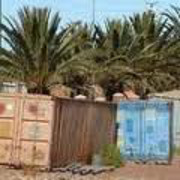
Their well-being remains unknown, says Estabrooks. "We don't know where they're being held, or where they'll be moved to. They don't have enough prison cells in Eritrea for that many prisoners, so they keep them in shipping containers." Estimates are that there are 1500-3000 Christians being held this way.

Worse yet, the legal system isn't protecting the rights of the Christians, either. "There never is a court case in these situations. They don't have any chance to defend themselves, so they are simply charged with ‘worshipping outside prescribed church denominational facilities.'"

Sometimes, the detention is used to try to force a Christian to recant. Open Doors partners have shared reports in which survivors revealed the pressure they faced. "All these people have to do is sign a document that they will no longer be evangelical Christians, they'll no longer follow Jesus, and they'll be released immediately. 'Just sign the document, and you're free.' And yet, our brothers and sisters refuse to sign that document and remain in these terrible prison conditions."

The harsh treatment of Christians hasn't escaped notice. The U.S. Commission on International Religious Freedom has designated Eritrea as a Country of Particular Concern (CPC) for several years. Systematic and ongoing religious freedom violations continue. The report says these violations include: torture or other ill-treatment of thousands of religious prisoners; arbitrary arrests and detentions without charges of members of unregistered religious groups; a prolonged ban on public religious activities; revocation of citizenship rights of Jehovah‘s Witnesses; interference in the internal affairs of registered religious groups; and inordinate delays in responding to registration applications from religious groups.

"Every time we hear about believers being taken to prison, we wonder with the Psalmist, 'How long O, Lord?' But the one comfort that we all have in the Lord is that the gates of hell shall not prevail against Christ and His Church.... We need to continue crying to the Lord for help. Our help comes from Him alone," commented an Open Doors source who remains anonymous for security reasons.

Estabrooks urges prayer for these Christians. "Ask God to bring justice to their situation and faithfulness to those who are finding themselves in these terrible prison situations in Eritrea." Also remember the 40 believers arrested since January 1.

Deadly religous brawl erupts in Nigeria over soccer field


Nigeria (MNN) ― A weekend argument over a soccer field in Nigeria exploded into a free-for-all of violence between Muslims and Christians. 

There are differing news accounts of what happened, but most accounts agree that a Muslim and a Christian quarreled with each other on the field on February 23 in Wukari, northern Taraba State. Open Doors Minister-at-large Paul Estabrooks explains what happened next. "Essentially, the Muslim young person was able to get his hands on a gun, and he shot the young Christian that he was arguing with, which then started a whole conflict between the team and everyone around." 


Within minutes, the fight spiraled out of control. Estabrooks says various news accounts describe absolute mayhem. "The violence extended into the village and the town: 300 homes were burned. It's just incredible violence that occurred there that makes you shudder!"


Police say at the end, five people were dead, although the toll is expected to rise. As of Monday, the casualty list ranged from 20 to 30 victims. Aside from the loss of homes, places of worship also sustained damage. 


The explosion of violence unnerved authorities, and Estabrooks notes that it took very little to tip the scales after a Boko Haram attack on a Christian family in Abuja just two days prior. "It just shows us how deep the religious tensions are in that part of the world. It doesn't take much."


In that attack, military and government reports confirm that Muslim attackers used machetes and guns to murder 10 members of the same Christian family in Plateau state, with half of the victims under the age of six. 


The incident also highlights concerns that the violence won't be contained in the north. "What distresses me," says Estabrooks, "is that it's the young people of northern Nigeria who are the most restless about the violence and about the issues that the two religious groups face." 


What's more, the messages young people are hearing from their leaders are mixed, adding to the tension and confusion. Estabrooks explains: on the one hand, "there is one church leader in Nigeria who has a lot of influence, who says to the young people, ‘Jesus taught non-violence. We cannot respond to violence with violence. It's just not the biblical pattern.'"


On the other hand, "you have another leader who has possibly more influence with young people there who tells them, ‘We have turned the other cheek so many times, we have no more cheeks to turn. So it's time to take up arms and deal with this issue!'


Security forces on patrol. (Story photo by This Day)

"The whole area is just pulsing with antagonism to one another. It seems to me that it has to be even more than just religious differences." Estabrooks asks if there is a winner in this contest for the youth. "Being young and being very emotional when these things happen, you get this kind of conflict that's horrifying as the ultimate outcome."


The future is what's at stake, and the youth have a lot of energy that needs direction. Government efforts to protect Christians haven't been reassuring since the attacks continue. Much of the violence is blamed on the sect Boko Haram, whose name in Hausa means "Western education is sin." Their stated goals are to create an Islamic state, instill Sharia Law, and eradicate Christianity. 

Estabrooks says Christians in Nigeria need prayer for wisdom and grace. "We really need to pray for our brothers and sisters who live in that area of such high tensions, and that God would give them the ability to be peacemakers rather than respond to every little insult and let it erupt into violence that will just about destroy an entire community."


The Gospel message runs counter to the tit-for-tat that disintegrated into a melee Saturday. Estabrooks explains, "Jesus' teaching is a very attractive teaching to people of peace, love, and the ‘putting others before yourself.' But if we don't live it as Christians, no one else is going to accept it because they don't see it in reality."

Sunday, February 10, 2013

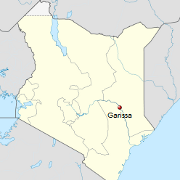
Gunmen target two church leaders in Kenya's deadly Garissa region

Map courtesy Wikipedia)

Kenya (ODM/MNN) ― Police in Kenya say gunmen shot two church leaders and wounded several others Thursday in the northeastern Garissa region.

Garissa has long had a perilous reputation in Kenya. A small outpost down near the Somalia border, the area has been filled with dangerous people for over a decade. The latest in a string of attacks, accounts say the gunmen opened fire on a vehicle as it drove in Garissa, not far from the border with war-torn Somalia.
Open Doors contacts report that Pastor Abdi Welli was pronounced dead on arrival at a hospital. Pastor Ibrahim Makunyi, of the East Africa Pentecostal Church, is in stable condition.

Attacks have increased in Kenya since Nairobi sent soldiers into Somalia in late 2011 to fight al-Qaeda-linked al-Shabaab insurgents who have vowed to take revenge on Kenya. While the violence has been blamed on the insurgents or their Kenyan supporters, the al-Shabaab have not claimed responsibility for any of them.

Al-Shabaab means "The Youth" in Arabic and emerged in 2006 as the radical youth wing of Somalia's previous Union of Islamic Courts. Since Kenyan troops entered Somalia a year ago, al-Shabaab has increased its attacks in Kenya. It seems the terrorists aim their Muslim rage at believers.

Pastor Welli, who was evangelized, discipled, and mentored by Pastor Makunyi, is survived by a widow Hellen and three young sons. Open Doors is monitoring the situation and will provide further updates as soon as more details are available.

According to OD, al-Shabaab influences have triggered instability in Kenya and cast a shadow on the future religious atmosphere in the country. In light of the March 4 elections, along with the Muslim minority's growing influence in the government, the worries are growing.

Islamic family courts based on Sharia Law have been implemented in all counties--even in those with a low Muslim presence. It is feared that at least 10 of the counties with higher Muslim representation may push for the implementation of Sharia Law and may even be harboring ambitions to break away from the rest of the country, which is Christian dominated (83%).

Prayer Points:
• Please pray for the family of Pastor Welli, his widow Hellen and 3 sons as they mourn the loss of their husband and father.
• Pray for quick healing and comfort of Pastor Makunyi as he has lost his spiritual son.
• Pray for comfort and reassurance upon Pastor Makunyi's family as they live and work in Garissa.
• Pray for the congregants of the East Africa Pentecostal Church as Pastor Makunyi recovers.
• Pray for the security situation in Garissa.
• Pray for the believers there as they live in constant danger.

Wednesday, January 23, 2013

To coup, or not to coup?

Eritrean prison camps (Photos by Open Doors)

Eritrea (MNN) ― The buzz word people are using to describe Eritrea's events over the last 48 hours is "coup," but do the signs match an actual coup d'état?

By the government's admission, it was a takeover effort, however small, however failed. Todd Nettleton, a spokesman for the Voice of the Martyrs USA, explains, "Some soldiers surrounded the Ministry of Information in the capital city of Asmara on Monday. They forced a minister to read a statement on State TV in Eritrea. However, it seems that he only got a few sentences into the statement before the TV broadcast signal was cut."

Government troops quelled the would-be rebellion before it got started. However, in a tightly-controlled regime like Eritrea, Nettleton notes, "It seems to be sort of a ‘blip' on the radar, but the fact that there were soldiers acting directly against the government perhaps is a sign of building unrest within Eritrea. Who knows what it means for the future?"

That begs the question of what the else calm facade is hiding. What of the fate of the mutinous soldiers? Nettleton says, "I certainly would not want to be one of these soldiers now, after they have surrendered, because we know that the situation in Eritrean prisons  for Christians is desperate, and obviously, for political enemies of the regime."

The soldiers' demands were two-fold: "They wanted to return to the parameters that were laid down in the constitution of 1997. It also said that they wanted to release political prisoners."

Since independence in 1993, Eritrea has been a one-party state. The government has come under fire by human rights watchdogs who call the regime one of the world's most repressive. That's an assessment Open Doors agrees with.

Open Doors, which comes alongside the persecuted church, keeps tabs on the world's 50 worst countries known for their oppression of Christians. On that list, Eritrea ranks 10th. And that's not a number likely to change for the better in the near future, says Open Doors' spokesman Jerry Dykstra.

In fact, he says just hours before news of the failed coup, "At least 10 leaders of the churches (banned by the government ten years ago) have been rounded up in the past day or two."

Eritrean opposition activists exiled in neighboring Ethiopia said there was growing dissent within the Eritrean military, especially over economic hardships. Of the coup, Nettleton says it might be the first crack in the mask. "The fact that this [involves] soldiers and people in the military, that seems to say that the disenchantment with the leadership there is spreading." He adds, "I think the message that I would take from it is that Eritrea's people are not happy being oppressed under the hand of the president."

Then, there's word that the health of the current president, Isaias Afewerki, is worsening. That might not actually be a positive swing for the oppressed Christians, though, Dykstra reflects. "There is some sense from Open Doors researchers that perhaps a form of radical Islam may take over the country with the death of the president." In short, Eritrea's Christians could find themselves facing a situation similar to those Christians in the newly re-formed Egypt.

As such, church leaders fear that this particular campaign is far more serious because it wants to "eradicate the underground church by targeting its key leaders around the country." If that's true, the death tolls will start climbing. Dykstra says already, "31 Christians died in prisons last year. It's kind of hard to put an estimate on the number of Christians in prison. Last year, it was [estimated] at around 1200."

According to Open Doors, since news of the renewed systematic arrests emerged, several church leaders have gone into hiding for a second time in only a few months. According to trusted sources close to the events in Eritrea, church leaders have remained in good spirits despite these pressures.

For Christians in Eritrea, the past few months have been somewhat of a roller-coaster ride. After the death of the Ethiopian Prime Minister in August last year, there was heightened tension in Eritrea. Christians testified that talk of renewed fighting between Eritrea and Ethiopia after the demise of one of their long-time rivals led to a very grim atmosphere.

There were reports of the government circulating rifles to households in case war broke out. Some Christians described those months of uncertainty as their darkest night while praying earnestly for the light of a new dawn for their country. Nettleton says, "We want to pray for the church as a whole. One of the great challenges is existing in a situation where no public services are allowed. Anytime Christians gather together--evangelical Christians, it's not legal."

Timing now on outreach work will be critical. Anyone viewed as an enemy could be more at-risk for trouble. Nettleton explains, "The president of Eritrea will be watching this and saying, ‘We need to get a handle on this quickly,' which in the short term, perhaps, is going to mean more oppression and more control. It's hard to say at this point what this means."

Dykstra says with circumstances so uncertain, "They're asking for our prayers because of this situation, especially with the loss of the leadership of the 10 Christian leaders."