Showing posts with label kenya. Show all posts

Sunday, February 10, 2013

Gunmen target two church leaders in Kenya's deadly Garissa region

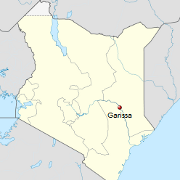
Map courtesy Wikipedia)

Kenya (ODM/MNN) ― Police in Kenya say gunmen shot two church leaders and wounded several others Thursday in the northeastern Garissa region.

Garissa has long had a perilous reputation in Kenya. A small outpost down near the Somalia border, the area has been filled with dangerous people for over a decade. The latest in a string of attacks, accounts say the gunmen opened fire on a vehicle as it drove in Garissa, not far from the border with war-torn Somalia.
Open Doors contacts report that Pastor Abdi Welli was pronounced dead on arrival at a hospital. Pastor Ibrahim Makunyi, of the East Africa Pentecostal Church, is in stable condition.

Attacks have increased in Kenya since Nairobi sent soldiers into Somalia in late 2011 to fight al-Qaeda-linked al-Shabaab insurgents who have vowed to take revenge on Kenya. While the violence has been blamed on the insurgents or their Kenyan supporters, the al-Shabaab have not claimed responsibility for any of them.

Al-Shabaab means "The Youth" in Arabic and emerged in 2006 as the radical youth wing of Somalia's previous Union of Islamic Courts. Since Kenyan troops entered Somalia a year ago, al-Shabaab has increased its attacks in Kenya. It seems the terrorists aim their Muslim rage at believers.

Pastor Welli, who was evangelized, discipled, and mentored by Pastor Makunyi, is survived by a widow Hellen and three young sons. Open Doors is monitoring the situation and will provide further updates as soon as more details are available.

According to OD, al-Shabaab influences have triggered instability in Kenya and cast a shadow on the future religious atmosphere in the country. In light of the March 4 elections, along with the Muslim minority's growing influence in the government, the worries are growing.

Islamic family courts based on Sharia Law have been implemented in all counties--even in those with a low Muslim presence. It is feared that at least 10 of the counties with higher Muslim representation may push for the implementation of Sharia Law and may even be harboring ambitions to break away from the rest of the country, which is Christian dominated (83%).

Prayer Points:
• Please pray for the family of Pastor Welli, his widow Hellen and 3 sons as they mourn the loss of their husband and father.
• Pray for quick healing and comfort of Pastor Makunyi as he has lost his spiritual son.
• Pray for comfort and reassurance upon Pastor Makunyi's family as they live and work in Garissa.
• Pray for the congregants of the East Africa Pentecostal Church as Pastor Makunyi recovers.
• Pray for the security situation in Garissa.
• Pray for the believers there as they live in constant danger.

Tuesday, January 15, 2013

Jihad in Kenya takes a startling turn

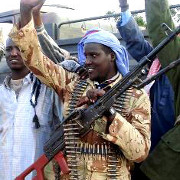
Al-Shabaab soldier (Story photo courtesy Assist News Service)

Kenya (MNN) ― The jihad in Somalia seems to have spilled into Kenya now where tensions between the Christian majority and the Muslim minority are building.

Even as the Muslim hardliners connected to al-Shabaab (subsequently al-Qaeda) gain influence, the economic plight in Kenya seems only to add fuel to the fires they're stirring.

As a result, attacks on churches, specifically designed to provoke communal anxiety, have been on the rise in Kenya. Last October, Kenyan military forces entered Somalia to engage the al-Shabaab.

At first deemed a successful operation, it's now thought that the militia responded with a recruitment drive of Kenyan youth, offering cash incentives for the families of would-be martyrs. Jihadists are also thought to be targeting nominal Christians.

Todd Nettleton is a spokesman for the Voice of the Martyrs USA. First, he says, take this issue: "The unemployment rate in Kenya is said to be about 40%. Among out -of-school youth, it is thought to be as high as 75%. A lot of young people are out of school; they can't find a job."

Then, inject disillusionment: "Into that situation comes a radical Muslim recruiter who says, ‘Come and work for us. It's a regular paycheck. We'll take care of your family if anything happens to you. Why don't you come and join the fight?' That becomes an enticing offer when there are no jobs to be found."

What you wind up with is an escalation in tensions in Kenya, swelling numbers of Kenyan Muslims currently in al-Shabaab's ranks in Somalia, and even some nominal Christians. Nettleton explains, "In Kenya, there is a tribal identity that most people have. If your tribe is a majority Christian tribe, then somebody who meets you on the street just sort of assumes that you are a Christian."

Those young people make the perfect recruit because the Kenyan government isn't looking at the Christian tribes as a threat, notes Nettleton. "That gives them an opportunity to have more freedom of movement. It gives them an opportunity to conduct surprise attacks. Really, al-Shabaab is going for these people who can fly under the radar from a security standpoint, because people who see them assume that they are Christians."

Recruiting "Christians" to attack churches reveals the insidious nature of the jihad in Kenya, he adds. Churches are now putting in security measures similar to those used in Nigerian churches. Nettleton says, "When we think about church, we think of it as a refuge, a place of peace, a place where everyone is welcome. When you put armed guards and when you start frisking people when they come in the door, it's hard to maintain that openness."

Kenyan pastors are on high alert, but keep praying. Nettleton says there is a vibrant Church body in Kenya. "When you are nervous about having new people in your church because they could be bombers, that affects how you reach out; that affects how you welcome visitors; that affects everything about how you conduct the service and how you do things. I think the other side of that coin, really, is a reckoning of your faith."

Still, the strain on Christians is wearing, Nettleton adds. First, "We want to pray for their protection because there is a growing risk. There are more and more of these attacks that we see, so we need to pray that the Lord protects them."

Friday, August 31, 2012

Killing of Islamic cleric leads to violence

(Image courtesy of Open Doors USA)

Kenya (MNN) ― Muslim rioters took to the streets of Mombasa, Kenya following the death of Sheikh Aboud Rogo. Unknown gunmen sprayed Rogo's van with bullets, immediately killing the controversial Islamic cleric. Jerry Dykstra with Open Doors USA said rioters focused their rage on two targets.

"Muslims in Mombasa put some of the blame on the government," Dykstra explains, "but also they attacked Christian churches and organizations."

Five Mombasa churches were attacked and severely damaged by rioters; a few worshippers were injured in the process. The National Council of Churches in Kenya (NCCK) offices were damaged as well.

"We have completely failed to understand the logic that made…demonstrators associate the heinous murder of Aboud Rogo with the churches," said Rev. Canon Peter Karanja, NCCK's General Secretary.

Dykstra said it's not unusual to see believers becoming the scapegoat.

"Christians are blamed for a lot of things," he stated.

Most attacks against Christians have been linked to al-Shabaab, the Somalia-based terrorist cell of al-Qaeda. Al-Shabaab has been growing at a steady rate along the border of Somalia and Kenya. Dykstra expressed concern about al-Shabaab's expansion.

"They've been increasing in power and influence on that border area."

As al-Shabaab's presence increases, it could become even harder for believers to share the Gospel in Kenya.

Al-Shabaab has expanded its hunt for Christians from Somalia to neighboring Kenya, and Rogo was an alleged al-Shabaab fundraiser and recruiter. Remember the July 1 attacks against believers in Garissa? Dykstra said Rogo supported them because he didn't want Muslims and Christians working together.

"He called that a really good happening, a good thing," noted Dykstra.

Within the last year, Christian aid workers have been killed and kidnapped. Two believers died at a Kenyan revival meeting whenterrorists threw a grenade toward the podium. In July, gunmen attacked a Garissa church with grenades and then shot believers as they tried to escape. More than 60 were injured in this attack, and 18 believers died.

"The border area between Kenya and Somalia has become a dangerous place for the followers of Christ, as well as aid workers trying to help those caught in the chaos and poverty," said Carl Moeller, President/CEO of Open Doors. "As we have seen in the past, innocent believers are often targets of the extremists' rage.

"Please pray that the Christians there will stay strong in the faith and that rioting will come to an end."


Thursday, July 5, 2012

Church attacks in Kenya condemned


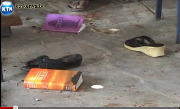
Images are screen grabs from KTN Kenya TV: Church attack in Garissa

Kenya (MNN) ―   At last report, at least 18 died and more than 60 were wounded in Sunday's church attack in northeastern Kenya.

Masked militants, believed to have an al Shabaab connection, crossed the Somalia border and attacked the Africa Inland Church (AIC) and Catholic Church in Garissa. Open Doors President and CEO Carl Moeller explains, "This is a region of Kenya that is exposed to a huge refugee population from Somalia.

Throughout those refugee camps, radical Islam in the form of al Shabaab and terrorism has been permeating those camps." The town is also near  the large Dadaab Refugee Camp is located, where in the past week four aid workers were abducted but eventually freed. 

Eyewitness told Open Doors that first, the gunmen threw grenades into the church, and then, as church goers fled from the explosives, the gunmen shot them as they exited the building.  Even as he described the situation, Moeller said, "The church is a soft target, and this should be seen for what it is: a  huge human rights and persecution tragedy."

Eyewitnesses were deeply shocked by the aftermath of the attacks. Moeller says, "The church in Kenya has been largely an island of stability, although they've been hard pressed as Islam does intrude more and more radical Islam into the culture."  

"We heard something like stones being thrown on top of the roof. Then we realized that we were being shot at," said Mr. Dennis Nzioki who was attending the AIC worship service at the time of the attack. Police say they have identified suspects, no but one has been arrested in connection to the attacks yet.

Then, the inevitable question came: could this be just the beginning of more violence? Moeller agrees with speculation that radical Islamists are only using the tense atmosphere in these regions to get rid of the Christian presence in these Somali dominated border regions. However, he says, "It's our prayer that the church in Kenya will remain in peace and that this sort of violence will not be retaliated."

Meanwhile, Chairman Abdulghafur El-Busaidy of the Supreme Council of Kenya Muslims condemned Sunday's church attacks: "All places of worship must be respected. We want to send our condolences, and we are sad that no arrests have been made yet."

Kenyan Vice President Kalonzo Musyoka also condemned Sunday's church attacks. "Places of worship... should be respected," he said.

Although fear seems to be the initial reaction to the attacks, Moeller says church leaders appear strong in the midst of the difficult circumstances. "The impact as a result is that those Christians that are remaining there (and we just continue to pray for peace in the region), that they become those agents of peace, that they become those agents of hope."

Open Doors is planning to visit the church in the next few days to offer encouragement and to determine the need for further support. Africa Inland Mission's Regional Executive Officer Marvin Smith, in a written statement released by Africa Inland Mission, said, "Join us in prayer for the families who lost loved ones, martyred for their desire to worship God and grow in the Lord. Many of the wounded have been airlifted to hospitals in Nairobi, so pray also for their quick recovery. Pray also for the Africa Inland Church as they receive and respond to this event. While we do not understand why this happened, we can trust our Faithful Creator to work all things for His glory. "

Moeller went on to describe another attack that has been overshadowed by the Garissa incident: "In a separate incident Sunday morning, a large church in Nairobi, Nairobi Lighthouse Church, was attacked by 15-20 armed men, who forced the entire congregation to lie on the floor in order to rob everyone of all their possessions.  They also stole money and other items from the church offices. Our Kenyan Short Term Assistant, Janet Ngarika normally attends the church, but she did not attend yesterday. These incidents against churches in Kenya remind us to take our faith seriously as we live in uncertain times." 

Please pray for the Lord's comfort for the bereaved. Pray that justice will be done. Pray for Open Doors workers as they investigate the attacks and determine an appropriate response.

Wednesday, May 16, 2012

Two pastors set on fire in Kenya

Mission Network News: "Kenya (MNN) ― Last Tuesday, May 8, two pastors were burned to death in Jomvu area Mombasa, Kenya.

Yesterday, police arrested five suspects who may have instigated the attack, says Open Doors, USA. Otieno Awour, the Officer Commanding Police Division, Changamwe Division Mombasa said the five suspects will be arraigned in court once the investigations are complete.

It's the most recent in a bout of increased violence in Kenya, a nation filled halfway with Christians. In this case, the two pastors, Benjamin Juma of Nyali Baptist Church and Jackson Kioko of Melchidizek Church, were planning to hold an evangelistic outreach in the Jomvu area of Mombasa City. While planning, a crowd gathered and suddenly accused them of being thieves."

Read more...

Thursday, February 2, 2012

Ethiopian Convert from Islam Dodges Dangers in Kenya


Muslim extremists try to kill him; others threaten his life.
A Christian convert from Islam who fled hostilities in his native Ethiopia has faced attempted murder and ongoing death threats in Kenya.


Somali Muslim extremists in Kenya kidnapped and tried to kill Barack Hussein Kedir in July 2010, and most recently Kenyan-born Islamic extremists in contact with their co-religionists in Ethiopia sent a death threat to his cell phone on Dec. 3, the Christian told Compass. Since then, Hussein has reported the threatening text message to police, and his wife has fled the country with their two children.


“Although I have been experiencing all these countless problems, suffering persecution and merciless harassment both in my own country and outside of the country, I have never given up or lost my hope in serving the Lord,” Hussein said. “Muslims have tried to murder me several times, even here in Kenya.”


Born to Muslim community leaders in Arsi Negelle district in southern Ethiopia, Hussein had been a zealous Islamic youth coordinator who once harassed Christians before his conversion – a long process that led his father to shoot him in the leg for his commitment to Christ, he said.


Hussein had fled to Kenya in 2003 but secretly returned to his rural home in Ethiopia in June 2009 to help establish three new churches. When area Muslims discovered his work, they started looking for him with intent to kill him, forcing him to return to Kenya, he said.


Shortly after midnight on July 8, 2010, Muslim extremists in Nairobi slipped a CD under his door containing information on how they kill Christians and burn church buildings, along with a threatening letter in the Arabic and Somali languages, he said. The next evening at about 7:30 p.m., presumed Muslim extremists rammed their car into the driver’s side door of the car he was driving and told him they would kill him.


On July 27, 2010, four Somalis, presumed Muslim extremists, forced him into a car at about 9:30 p.m. in Nairobi and, at gunpoint, made him take a detergent (Jik) mixed with powdered soap (Omo), and he fell unconscious and was pushed out of the car, he said. Passers-by took him to a hospital, where staff determined that he must have been thrown out of the car at high speed.


The Somalis, whom he did not know, objected to his preaching Christianity, he said.


Hussein converted to Christianity in 1995 after a series of life threatening episodes that began in 1990. Previously he had traveled to various regions teaching about Islam and developed hostility toward other religions; he harassed many Christians, stealing their food and trying to burn some church buildings, he said.


“While I was practicing and spreading Islamic faith in the country like wildfire, something amazing happened to me,” Hussein said. “I converted to Christ in an unusual way, when Jesus revealed Himself to me through difficult circumstances in which I almost lost my life.”


In 1990 he was mysteriously blinded, he said. After hospital treatment and the prayers of Muslim leaders were of no avail, he said he heard the voice of Jesus saying He loved him.


“In response I said, ‘No, I do not need your help, go away,’” he said. “The voice then said to me, ‘Do you need to get back your health?’ I said, ‘Yes, but I do not need you.’”


Hussein told Compass he later became hopeless and heard the voice again bidding him to ask to be healed, but that again he declined.


“That very evening I saw a white image, and there came the sign of the cross, and I rebuked it,” he said. “The house shook like there was an earthquake. I then decided to cover myself inside the blanket. Everyone inside the house was frightened. Then came again the cross. This time I wanted to catch the cross. My eyes then got opened, though I could not see well. It was very red. Then another voice came to me saying, ‘I am Christ Jesus, follow Me. I am the one who made you blind. I now have healed you.’”


Still skeptical about the healing, he left for a predominantly Christian area to preach Islam, he said, but he lost all sight again and was also paralyzed for seven months.


“I was then taken to my rural village to die there,” Hussein said. “I used to lie on the floor, helping myself [to food or drink] right where I was lying. The place became filthy and smelly. Death dominated my thoughts. I questioned Allah, why he does not want to heal. I then contemplated committing suicide. At that point my eyes got opened and a voice called me again, ‘Barack, I love you. I caused you to be paralyzed. I love you. I am Jesus Christ. Follow Me.’”


The voice directed him to a location about 200 kilometers (124 miles) away in order to regain his health.


“I found this to be very difficult,” he said. “People said I was going crazy. I was then put on a horse and traveled for one hour to reach the bus station. Before reaching the destination, in a vision, I saw a narrow road and a white sword in front, and fire. I got afraid thinking that it wanted to kill me. That time I was barefoot. Then I was woken up, for I had reached the destination. There a cross sign was handed over to me and the message came, ‘Follow Me.’ I got healed miraculously, then returned back with the cross.”


When he arrived home with the cross sign, his father shot him in the leg, forcing him to try to take refuge in a church building – where he was initially rebuffed as an enemy of the faith.


“After a while I was accepted and was taken by the church to Jimma Bible College,” Hussein said. “There I had the seal to preach the gospel within the Jimma vicinity. Soon things turned bad. With my miraculous healing, especially carrying the cross sign around, I faced persecution from my own family as well as the community. It would have been safer for me to either kill myself or recant the Christian faith, but I endured it all, and finally I fled to Kenya in 2003.”


He was admitted to Pan Africa Christian University, and after earning his degree went on to obtain a Master of Leadership from the Nairobi International School of Theology. He is now pursuing another master’s degree, this one in peace and international relations, at the Catholic University of Eastern Africa.


“God has called me to a precious life,” he said. “I have no regrets, and I thank God for delivering me from Islam. I know I have to pay the price, since those who wish to live a godly life must be ready to face persecution.”


Hussein submitted his application for asylum to a third country on July 19, 2010 to the United Nations High Commissioner for Refugees (UNHCR). Officials there interviewed him on Nov. 4, 2010, and also last year, but to date he has not received a determination. A letter to the UNCHR requests that he not be returned to a country where he faces threats on his life or freedom.


A decision is expected at a scheduled May 17 appointment.


END

Tuesday, December 13, 2011

Somali Muslims in Kenya Attack Another Christian

Islamist gang intercepts brother of ‘convert,’ beats him unconscious.
By Simba Tian
 
NAIROBI, Kenya, December 13 (Compass Direct News) – Young Muslim men of Somali descent beat a 23-year-old Somali Christian unconscious last week in Kenya, less than six weeks after a related gang attacked his older brother.
 
Ibrahim, 23, whose surname is withheld for security reasons, was beaten by seven Somalis born in Kenya who stopped him near his home in an undisclosed town at about 8:30 p.m. on Dec. 5, he told Compass. His family was presumably Muslim when he was born, so the gang beat him as an “apostate” even though he later had been raised as a Christian, his family said.
 
He had gone out to buy food for the family, but heavy rains delayed his return. When Ibrahim refused to heed their orders to stop, they began to rough him up, and he heard one of the assailants say, “This is one of the guys we have been looking for, and today we have found him – we did not succeed in killing your brother, but today we are going to kill you.”
 
The young men began hitting him from every side, he said.
 
“A blunt object hit my knee, and immediately I fell down,” he said. “There were several blows that injured my left eye. While on the ground the gang continued hitting me on my head as well as my leg. From that time on I did not know what happened next. I only remember shouting and crying for help. Later I found myself at our house with the rest of the family members.”
 
Area residents were able to stop the beating and took him home, he later learned.
 
When Compass met with him two days after the attack, a knee injury on one leg and bruises and swelling on the other kept him from walking. His left eye looked red, and he said he could not see well.
 
“I feel dizzy, and my memory has been affected,” he said. “I cannot turn my head; the pain all over my body is numbing.”
 
On Oct. 27 a related gang attacked Ibrahim’s brother, 25-year-old Hassan, as they had learned that the entire family had become Christian (See www.compassdirect.org, “Somali Muslims Cut, Beat Christian Unconscious in Kenya,” Nov. 4). Police arrested two of the attackers, but they were released without charges after allegedly accepting a bribe of 10,000 Kenyan shillings (US$110), according to the young men’s mother.
 
The Christian woman, whose name is withheld for security reasons, said police reported that the two suspects escaped from custody.
 
“We have information that the two who are alleged to have escaped from prison are in Nyeri,” a town in central Kenya near Mt. Kenya about 150 kilometers (93 miles) from Nairobi, she said.
 
The Somali neighbors in Kenya who had attacked Hassan left him for dead, bleeding and naked, Like his younger brother, Hassan had been returning home from running errands when six young Muslim men hit him with a metal bar on his forehead and face, he said; he lost two teeth. They also wounded his hands with a knife. The attackers stripped him of his clothes as he bled and dragged him away, dumping him at the entrance of an area Presbyterian Church of East Africa.
 
The young men’s mother, saddened and shaken, said she was reluctant to report the latest assault after the release of the two men arrested in connection with the attack on her oldest son.
 
“I feel it will be a waste of time, because those who attacked Hassan were released without being charged in court,” she said.
 
The latest incident comes in the wake of similar attacks on Somalis who have embraced Christ and have fled radical Islamists who do not hesitate to execute those who abandon the Islamic religion.
 
Ibrahim said he was able to identify two of the Muslims who beat him, Kenya-born Somali neighbors known as Abdi Kodana and Mohammed Kodana. The leader of the gang, he said, was Omar Kadi, also a Kenya-born Somali.
 
The young men’s mother said she is seeking a safer place to move the family. The sole breadwinner for the family, she fled Somalia 10 years ago after the death of her husband. She has five other sons and two daughters.
 
The widow and her family are part of a church that meets secretly in a home, but neighborhood Muslims have gradually surmised that they are Christians as they do not attend a mosque.
 
 
END
 
**********
Copyright 2011 Compass Direct News

Friday, November 18, 2011

Somali Christians Find Danger Follows Them to Kenya

Hostility toward converts from Islam shadows refugees to neighboring country.
By Simba Tian

NAIROBI, Kenya, November 17 (Compass Direct News) – One Christian left his native Somalia 10 years ago and another fled as Muslim extremists were bombing his house earlier this year, but both Somali converts from Islam feel they are still in danger in Kenya.

In February, Islamic extremists from the al Shabaab militia fighting for control of Somalia reduced Mohammed Abdi Mose’s house in Mogadishu to ashes as he evacuated his family, the 54-year-old father of seven told Compass. His head bears a scar where shrapnel struck, and he requires medicine to limit the injury’s damage to his memory.

“It was midnight, and it was raining,” he said. “No moonlight; no light; I said, ‘We are moving.’ Amid the bullets and mortar shells, I had four kids on me, and my wife had three kids on her, with the older boy and girl walking – the smaller ones were on us.”

About 150 people died that night in military fighting, but Mose said it was no accident that his house was targeted. Earlier that month the Muslim extremists, who had suspected he was a convert to Christianity as he had worked for Christian Non-Governmental Organizations (NGOs), confirmed that he had come to faith in Christ and was therefore worthy of death. They tied his hands behind him and began hitting him with sticks and metallic objects, he said.

He sustained a deep cut on his heel. They stomped on his stomach, damaging his urinary system, he said. Neighbors who heard his cries came out in large numbers, forcing the attackers to flee. Mose said he knew then it was time to relocate.

After spending a month with neighbors recovering from his injuries, he and his family fled to Lower Juba in March, then to Kismayo. Kismayo is al Shabaab’s economic lifeline, where the extremists receive goods by ship, as well as ransom money from piracy. The Kenyan military has besieged the port town in an effort to flush out the militants after they were blamed for a spate of kidnappings of foreigners inside Kenyan territory.

Closely monitored by al Shabaab in Kismayo, the family headed toward Kenya in April, renting a donkey to carry their luggage and youngest child, 4 (their oldest, a daughter, is 19). Mose said it took them 18 days to traverse the 370 kilometers (230 miles) to Liboi, the border town on the Kenyan side, where the donkey died of exhaustion. They still had 100 kilometers (62 miles) to go to reach refugee camps in Dadaab.

For the next six months, the family lived in the Ifo refugee camp in Dadaab, where people flow freely in and out of the camp, including al Shabaab members in civilian garb. In September, Mose said, some al Shabaab members in the camp threatened to kill him. Somali Christian contacts in Kenya helped Mose move his family away from the border last month.

Having worked for NGOs while in Somalia, Mose became a target as al Shabaab sees the organizations as either Christian or spies for the West, he said. That reputation has followed him, subjecting his family to discrimination not only from the militants but also from other Somali Muslims; the threat continues in his undisclosed location in Kenya, which is more than 82 percent Christian with a Muslim population of 8.32 percent, according to Operation World.

Mose’s wife bakes and sells bread to try to feed the family. She is due to give birth in January – to twins – and the family fears she may be unable to continue her micro-enterprise. Mose, meantime, said he is still in pain.

“At the moment, I cannot do heavy work,” he said. “I have a lot of pain in my lower abdomen which needs medical attention. My back is also not good. Indeed our situation is not promising, especially taking care of a family of nine as a refugee. If we get asylum, then it will save my family.”

Threatened
Another Somali convert from Islam arrived in Kenya in 2001, but he and his family also are seeking a third country after Muslims in Nairobi recently posted his photo in a mosque, accusing him of being a threat to Islam.

The Muslims of Nairobi’s Somali enclave in Eastleigh found out that Adam Musse Othman, 60, had translated biblical portions into Maay, one of the Somali dialects, and they also got hold of a copy of the Jesus Film that Othman had translated into Maay; they were able to identify the voice-over in the film as his, he said.

Othman said he was not safe from Islamic extremists in Nairobi who told him by phone that they were aware of his involvement in the production of the Christian film and the translation of biblical passages into Maay.

“I cannot take such threats lightly, hence my request for resettlement on security grounds where we can live peacefully, decently and freely – also, to save ourselves from death and violence,” he said.

Othman, who walks with the aid of a cane and said he is suffering from various ailments, said he has made several applications to the United Nations High Commissioner for Refugees for resettlement and is awaiting a reply.

“I feel that our case needs urgent attention, given the current situation surrounding our well-being,” he said. “With the increasing radicalization of Islam in Somalia, and the potential spillover effects into Kenya, I feel unsafe living in Kenya with my family.”

Othman said his absence from mosque prayers had led his Muslim friends and relatives to shun him and his family.

“There are no cordial relations between us, and I have received several threatening phone calls and short text messages in my phone by people who claim to know that I am a Christian,” he said. “I have reported this matter to Pangani police station. The threats to me and my family from Islamic radicals are still haunting me here in Nairobi. There are people who know me and my family and are suspicious of my faith. When my wife visits Eastleigh, she has to cover her face to avoid being identified.”

Othman left Somalia fearing either the civil war or those hostile to his Christian faith would kill him, he said.

“The current situation in Somalia, the emergence of al Shabaab and the introduction of sharia[Islamic law], makes it unthinkable that I can ever return to Somalia,” he said.
He worked as medical liaison officer with a Christian NGO based in Mogadishu between 1992 and 1995; later his family moved to Baidoa when the war intensified.

“That kind of work proved dangerous to me since I started getting threatening phone calls from Islamic extremists,” he said. “I also felt that some members of my sub-clan who knew about me were not happy, judging from the way they constantly challenged me to state my spiritual standing since I was working with a Christian NGO, and this made me feel highly insecure.”

At first he did not take the threats seriously, he said. But then Islamic extremists shot dead his cousin, Abdi Washed, a Christian, in Mogadishu in 1994, and shortly thereafter three friends were killed at Bakaro Market in Mogadishu.

“The killings were carefully planned assassinations,” he said. “I was then warned by my close friends and relatives that I was next in the list of Christians targeted for assassination.”

Heavy fighting in Baidoa made it difficult for Othman to cross into Kenya. He was able to leave Somalia by air in 2001, and the following year his family joined him after traveling on foot and by bus.

Previously he had worked in Yemen with a Christian group, he said, arriving there in 1986 after completing theological studies abroad. It would prove to be one of his first experiences with people hostile to Christianity.

“Some people unknown to me reported to the Yemeni authorities that I was a Christian,” he said. “I was arrested and imprisoned for nine months that year at Sana’a Central Prison.”


END

**********
Copyright 2011 Compass Direct News
Tuesday, November 15, 2011

Church attacked in Kenya, as threats hamper relief work

After grenade attacks on a church in northern Kenya blamed on Islamic extremists, religious leaders say they are redoubling inter-faith peace efforts - writes Fredrick Nzwili.
At the same time, about 100 kilometres away, Christian relief agencies have been carrying out humanitarian work in Dadaab, the world's biggest refugee camp, despite security threats.
Two grenades were lobbed into the East Africa Pentecostal Church compound in the town of Garissa on 5 November, killing two people and injuring five others. The attack has been blamed on al-Shabab militants who are facing a Kenyan military operation in southern Somalia.
"We are alarmed by this blatant attempt by evil forces to drive a wedge between Christians and Muslims," Sheikh Adan Wachu, General Secretary of the Supreme Council of Kenya Muslims told a news conference on 10 November in Nairobi.
Speaking under the auspices of the Interreligious Council of Kenya, he said the militants had hoped to ignite Christians-Muslims violence, but had failed. He said the faiths were united against groups that misuse religion to cause anarchy and would be preaching that message in churches, mosques and temples.
"We have lived peacefully with one another for long. Therefore we choose not to interpret this as religious war," the Rev Joseph Mwasya, a clergyman from Garissa said on 8 November at a news conference.
At Dadaab, many agencies have scaled down since October when threats escalated, but the Rev Eberhard Hitzler, the director of the Department for World Service of the Lutheran World Federation said on 8 November the organisation will continue to deliver humanitarian relief at the camp.
"We have not yet the impression that the current situation in Dadaab constitutes a serious crisis, despite the security risks increasing for the organisation; so we should set up a team to respond to it," said Hitzler whose organisation is responsible for housing and security in the camp. The 20-year-old settlement now contains more than 460,000 refugees who have fled war, famine and disease in Somalia.
[With acknowledgements to ENInews. ENInews, formerly Ecumenical News International, is jointly sponsored by the World Council of Churches, the Lutheran World Federation, the World Communion of Reformed Churches, and the Conference of European Churches.]
[Ekk/3]

Tuesday, July 12, 2011

The Dangerous 'Road to Somalia'

Persecution in Somalia increases,
 and Christian refugees fleeing to
 Kenya are looking for hope.
Somalia (MNN) ― The brutality of the persecution Somali Christians are facing has many fleeing across the border into Kenya. But even leaving the country does not always stop the Al-Shabaab, a radical Muslim group that is hunting down Christians in Somalia. The #1 country on the failed state list, in the throes of civil war, drought, famine, piracy; all these make living in Somalia very dangerous. A Christian in Somalia? Even more so.

In the midst of it all, Somali Christians are not alone. God is using Global Advance and Kenyan Christians to reach out to Somalis in their time of need. At the Global Advance Frontline Shepherds Conference in Kenya, God stirred the hearts of the Christian leaders in Kenya for their Somali brothers and sisters they see fleeing into their country and even those still in Somalia.

Jonathon Shibley with Global Advance says, "They've called their project ‘Road to Somalia.' They're targeting refugees that have come across the border into Kenya, and they are working with people who are living there in these [refugee] camps. They are discipling future leaders that are going to go back into Somalia with the vision to begin to plant churches and indigenous mission works throughout Somalia."

It is a huge risk they are taking. The name for the Frontline Shepherds Conference takes on a whole new meaning as these Christians--both Kenyan and Somali--will literally be in the "frontlines" of danger and persecution. But the call to minister and evangelize for the name of Christ is stronger.

"There's always a risk to taking the Gospel," admits Shibley, "especially in areas like this, and there's really no way to get around it. We need grace and wisdom on how to help them."

Global Advance has been conducting Frontline Shepherds Conferences since 1990 all over the world. It is shocking that only 8% of the 2 million pastors in developing nations have formal ministry training. As Global Advance seeks to equip the other 92%, those leaders armed with training in ministry can be more effective with preaching the Gospel.

According to the UN Refugee Agency, Kenyan refugee camps this year are receiving nearly 10,000 Somali refugees a month. This number is nearly twice the amount of Somali refugees per month in 2010. Political and religious persecution has increased. Somalis both in and out of the country are desperate for hope, and Kenyans are eager to share the hope we have in Christ. But it can't stop at the refugee camps. These efforts, while dangerous, must extend into Somalia.

The cultural and societal challenges in Somalia make the need for effective Christian leaders great. Kenyans hope that by working with native Somali Christians in Road to Somalia,' "these Somali Christians will be able to go back across the frontlines into their country and reach others with the Gospel.

Shibley asks of believers, "Pray that God will soften the hardened ground that's out there and that God will put Somalia on the hearts of many believers that are in east Africa. He has positioned millions of believers throughout east Africa, and there needs to be more indigenous efforts to reach Somalia."