Showing posts with label middle east. Show all posts

Friday, October 11, 2013

Do Christians have a future in the Middle East?

(Images courtesy Open Doors)
Middle East (MNN) ― One of the factors in understanding the cultural dynamics of the Middle East and its upheaval is the presence of the Christian communities.

Since the "Arab Spring" began, regimes have fallen and Islamist governments have risen. The turmoil has left many of these Eastern Christians wondering what future is left for them given the corresponding increase in persecution.

President of Open Doors USA David Curry says, "Over the last several decades, we've seen the percentage of the population of Christians drop from about 20% in the Middle East to just 4%." It isn't merely reports of beatings that he finds alarming, but the dramatic shift that they're tracking. "In the next decade or two, unless we do something about it, unless we can find a way to stand up and get heard on this subject, it's possible that Christianity could be extinct in its birthplace."

The reality is that in Pakistan, Egypt, Syria, Palestine, Afghanistan, and Iraq--lands where Christians have lived for 2000 years, being identified as anything but Muslim is dangerous. Curry explains, "Some of it is low-grade discrimination. Some of it is intentional persecution of believers. In other cases, it is outright murder and attacks on believers that are driving them out of their homes. I think the population is being driven out of the Middle East."

Regardless, the current repression clearly communicates that followers of Christ are no longer welcome as full members of society. If nothing changes, that begs the question: Do Christians have a future in the Middle East?

On Sept. 27, a group of academics, politicians, and parliamentarians (all Christians) met in Amman, Jordan to try to scratch out an answer to that question. The conference was titled "Eastern Christians in Light of the Arab Spring."

The group looked at the laws of the land, shifts that subtly altered laws and practices of religious freedom, then the impact on the Christian body, and finally, expectations for the future.

Since the constitutions in many of these countries (except Lebanon) presumes that "Islam is the state religion," Sharia becomes a source of the state's legislation, laws, and regulations. Curry says, "It's basically illegal to decide for yourself what you want to believe. That has very dangerous implications for Christians who may be converting from other religions and deciding that they want to call themselves followers of Jesus.
In many of these places, that marks them immediately for death."

The "religicide" becomes systematic and protected.

Today, more than one million Christians have fled Iraq. Half a million Christians have left Syria, where there were once around 2 million. There remains a remnant church in Egypt. In Lebanon, the retreat is obvious.

Curry notes that despite Islam's obvious impact on the body of Christ, "Christianity is not at the verge of extinction in the Middle East because we've lost the battle of ideas. We are on the verge of being extinct in the Middle East because we are being persecuted, because we are being driven from those areas, and because en masse, we are being targeted for death."

What are the possible ways of dealing with what has become one of the greatest humanitarian catastrophes of our time? Curry takes that question head-on. Be aware. "First of all, I think that there is an element of these extremist groups that is, for lack of a better word, ‘imperialist.' They believe that they can force their faith on people. They'll do it in their regions, and then they're going to do it in our regions."

Be active. Realize that the Gospel is still going forward. Share the predicament of new believers with your Church body.

Also pray. "There's a scriptural premise here, for believers, certainly. It says, ‘When one part of your body hurts, then the whole body hurts.' Right now, we have members of the Christian faith that are suffering; not a few, but millions of people who have no freedom to study and to choose for themselves how they share their faith."

Saturday, September 28, 2013

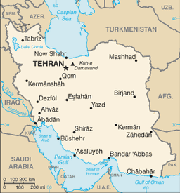
A rescue mission is planned for pastor in Iran

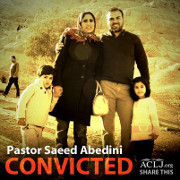
Turkey (MNN) ― A rescue mission is underway for Pastor Saeed Abedini, a Christian arrested for starting home churches in Iran. But it's more like a rescue intervention.

Rev. Patrick Mahoney, Director of the Christian Defense Coalition in Washington, D.C. is taking action in this crisis and plans to leave the U.S. this Sunday for Turkey to meet and talk to Iranian officials there for the release of Abedini.

Once in Turkey, Mahoney hopes that he can make a difference. "I will not be speaking on a political level, but rather as one faith leader to another."

Rev. Mahoney says he's going on this rescue mission in "hopes of securing the release of Pastor Abedini who is serving an 8-year prison sentence because of his Christian beliefs." Rev. Mahoney says, "Every person should be afforded the right to express their faith traditions, free from government persecution, harassment, and intimidation. No one should have to suffer violence or brutality because of what they believe."

Abedini's wife teamed up with The Christian Defense Coalition and America Center for Law and Justice to hold a prayer vigil in front of the White House yesterday--the one-year anniversary of Abedini ‘s imprisonment. This prayer vigil was one of dozens held across the country and around the world for the release of Abedini and religious freedom.

Pray for safety for Mahoney. Pray also that the hearts of Iranian officials will be softened. Click here for more information on other prayer vigils and updates, and to join 600,000 others who have signed a petition securing the release of Saeed Abedini.

Tuesday, July 16, 2013

Christians have a unique voice in Middle East democracies

Todd Nettleton (Courtesy of VOM)
Middle East (MNN) ― The coup in Egypt, civil war in Syria, uncertainty in Lebanon, and disenfranchisement in Iran. All of these issues in the Middle East spell trouble for citizens of these nations whether they are Muslim or not. While Christians are endangered as well, opportunities for the Gospel abound.

Spokesman for Voice of the Martrys USA Todd Nettleton says Christians are involved in politics across the Middle East, but that's not their top priority. "We know that Christians are involved really across the Middle East, as much as they can be in the political process. But their first priority is not politics. Their first priority is to serve the Lord and spread the Gospel."

The question is: with all the unrest, are people in these nations ready to hear it? Nettleton says "yes." "Ten or 15 years ago we would talk about one Muslim coming to Christ. Today, we're not talking about one Muslim, we're talking about hundreds and even thousands of Muslims coming to Christ."

What about the violence in these nations. Can ministry happen in places like Syria, for example? Nettleton says, "There is ministry that's going on in these situations of great upheaval and sometimes even great suffering. There are Muslims who are coming to see the hopelessness of Islam."

Nettleton says Christians have a platform to share. "Christians can have a great ministry simply by presenting the hope of the Gospel and the hope of eternity with Christ."

Helping to perpetuate this is many of these Islamic governments like Iran. "30+ years of an Islamic government, the people look at the failures of the government,nd they see them as failures of Islam."

Those failures open other doors. Nettleton explains: "If Islam doesn't really work, if it fails, what are other options? That is a great time to say, 'Well, let me tell you about Jesus. There is another option.'"

Now is an important time for Christians to pray. "We are right now in the midst of Ramadan. This is a key time for outreach to the Muslim world. Muslims are thinking about spiritual things, things of eternity. So, this can be a great time for ministry, for Gospel seeds to be planted."

If you'd like to help Voice of the Martyrs work on behalf of persecuted Christians in the Middle East and worldwide, click here.


Wednesday, March 6, 2013

Tensions serve to unite the Body of Christ in Egypt


Egypt (MNN) ― There's been an uptick in tensions between Egypt's Muslims and Christ-followers.

The alleged conversion of a 36-year old Muslim teacher lies at the heart of recent unrest. She's been missing for several days and was reportedly seen outside a church in southern Egypt with a Christian friend.

When police used force against hundreds of Muslims trying to overtake the church last week, the crowds pushed back - resulting in over 10 injured officials.

While the divide dates back to biblical times, Egypt's Christians and Muslims have been increasingly at-odds since Mubarak fell from power two years ago. National instability adds another layer of anxiety.

"Things are going down and there's no real vision, and the people in Egypt are very angry. It's very bad," says Mike*, a representative ofIN Network in Egypt. He says many Egyptians who voted for Morsi this summer have now turned against him.

"[Morsi] gave a big promise, and said that he had a great plan to change things in Egypt to move the economy and…he gave many promises," Mike says. "But now it's about 6 months since he took over and the people find out that he didn't have a plan.

"He's not qualified to lead the country, and there's no stability. The people are depressed and it's a big disaster."
How's it affecting the Church?

"Because of the pressure and because they are not sure about the future, there is a spirit of prayer arising in all the churches," he explains. He says it's also serving to bring churches into a new spirit of unity.

"The churches are going to a new season," says Mike. "We've never experienced this before, so we need to train the leaders of the churches."

That's exactly what IN Network is doing: equipping pastors to reach an ever-changing Egypt. For three to five days, hundreds of church leaders are equipped with training and the skills they need to reach their communities for Christ.
Mike says they also put a curriculum together for Sunday School teachers who work with kids between the ages of 4 and 11.

"Many families are very poor, are not able to take care of their kids," explains Mike. "So we train Sunday School teachers how to reach the children, how to help poor children and even how to support some of their needs."

The training is given free to church leaders, but it costs IN Network approximately $15 per attendant to provide this type of resource. President of IN Network USA Rody Rodenhaver says they hope to raise $5000 to cover their training needs for the next two years.

Can you help? Click here .

"Egypt is a very important country, and whatever happens in Egypt, it affects the whole Arab world," says Mike, "so please pray for wisdom to the leaders, pray for stability in the government, and pray for resources, so the people do not suffer more than this."

Thursday, January 31, 2013

Lawyers to challenge Abedini's sentencing, but more help is needed


Iran (MNN) ― Calling it a "mockery of justice," lawyers representing the family of an American pastor jailed in an Iranian prison won’t let his conviction pass without challenge.

Tiffany Barrans is the International Legal Director for the American Center for Law and Justice. She says, “Under Iranian law, Pastor Saeed and his attorney in Iran have 20 days from the sentencing to appeal. We have heard from him and the lawyer in Iran that that is something they do plan to do, although we recognize that the fruitfulness of those appeals are rarely successful.”

Pastor Saeed Abedini was sentenced to 8 years Sunday on charges that included "disrupting national security."

Barrans explains, “In 2000 to 2005, it was not unlawful for Pastor Saeed to have a house church in Iran. In fact, it’s technically not unlawful today. But because he had this church from 2000 to 2005, the regime says NOW that those actions were a threat to the national security of Iran.”

Abedini, a Christian pastor who became an American citizen in 2010, was arrested in September last year for his involvement in an underground house church movement. However, he plainly stated his visit in Iran was to help establish an orphanage.

On January 25, White House Press Secretary Jay Carney said the State Department is "actively engaged in the case" and called for his release. The extra pressure can only serve to help, notes Barrans. “Because we lack diplomatic ties with Iran, we need other governments--governments that are trade partners, governments that are closely tied, even with religious affiliation to Iran--to step up to Iran and say that they need to release Pastor Saeed and all prisoners of conscience inside Iran.”

(Story image courtesy of ACLJ)
Barrans goes on to say that international pressure, similar to that which built up surrounding Youcef Nadarkhani’s case, is one avenue they’ll pursue for recourse in Abedini’s case. “We do believe that this is something that is bigger than the judiciary, but we are hopeful that through international attention, through international pressure, and gaining some support from governments who have economic ties and diplomatic ties with Iran, we will be able to see this conviction dropped.”

The Iranian government has long been adversarial to Christians, according to the reports from religious rights groups like Open Doors and the Voice of the Martyrs. Barrans explains, “They see that Christianity is a threat because it’s growing in Iran. Iran is a theocracy of Islam so, as the youth start to turn to Christ, they find that they have less control over their people.”

Pray for a change of heart, for an overturning of the conviction. Pray that Pastor Abedini will maintain his faith and hope in Christ while in the notorious Evin Prison. Mobilizing advocates is another way to let the Iranian government know this case has not been forgotten.

There’s a petition circulating from the ACLJ, calling for Abedini’s release, among other things. More than raising the awareness, it’s calling governments to account. Barrans concludes,“It’s so important for us to make sure this concept of religious freedom and how it affects the security of every country around the world, when it is violated, is taken to the world leaders so that they start to put pressure on Iran. So that really is our focus right now, in making sure that we have other government support.”

U.S. Representatives demand intervention for persecuted pastor

(Image courtesy of ACLJ)

USA (MNN) ― U.S. Congressmen are demanding more action from national leadership on behalf of Pastor Abedini, an Iranian American pastor from Boise, Idaho.

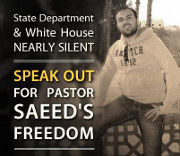
While "protecting human rights around the world is central to U.S. foreign policy," as stated on the U.S. State Department's Web site, it remained silent following Abedini's arrest in September 2012. The governmental body didn't issue a peep during the pastor's subsequent months of imprisonment in Iran's notorious Evin Prison.

Last Friday, the State Department commented on Abedini's situation in a daily press briefing.

"We remain very concerned about U.S. citizen Saeed Abedini, who is detained in Iran on charges related to his religious beliefs," said spokesperson Victoria Nuland. "We call on the Iranian authorities to respect Mr. Abedini's human rights and to release him."

Two days later, the persecuted pastor received an 8-year sentence from the Iranian courts. His crime? "Planting house churches that are intended to undermine national security," Abedini's lawyer told Mohabat News.

"In the Middle East, they react by strength. You show weakness, they react against weakness. When you show strength, they, in many cases, back off," says Illinois Congressman Adam Kinzinger.

He adds, "If you have the President of the United States come out and [make] it obvious and evident that he's paying attention to what's going on..., it makes it hard for a nation to put them in a facility...that is known for torture and terrible conditions."

In December 2012, Fox News brought Abedini's story to light when his wife expressed hope that a media campaign would help set him free. Nearly a month later, the State Department made its first comments on the situation.

In mid-January, Kinzinger and his fellow Congressmen wrote a letter of appeal to Secretary of State Clinton, calling the U.S. to intervene on Abedini's behalf.

"The administration has seemed to be hesitant to engage, concerned they might offend Iran or something like that," says Kinzinger. "But it's important to engage at this level. So we sent this message, and hopefully it hit home loud and clear."

Overall, says Kinzinger, the government's response to this cut-and-dry example of persecution is lackluster at best.

"It's been pretty disappointing to me, frankly, how the State Department has not engaged on this issue. This is something very serious," he states.

But despite America's rocky relationship with Iran, Kinzinger believes a happy ending is possible.

He says, "It's important for the administration to come out and stand tall, and say it's time for the pastor to be released. I think we can see a positive end to this."

Encourage your friends to sign the petition for Pastor Abedini, and keep him in your prayers. Pray that President Obama would take a stronger stand on this issue.

Saturday, January 12, 2013

Southern Baptist 32-year legacy lives on

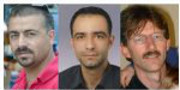
Physician Martha Myers, hospital administrator Bill Koehn,
 and purchasing manager Kathy Gariety were killed Dec. 30, 2002
when a militant gunman burst into a room where they were holding an
early-morning meeting. He opened fire on them with a semiautomatic pistol,
 then moved to another room where he shot pharmacist Don Caswell twice.
 (Image courtesy of IMB)

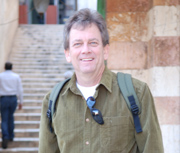
Yemen (MNN/IMB) ― It's been just over decade since three Southern Baptist hospital workers were shot and killed in Yemen, and the Southern Baptist International Mission Board says one of the victim's passions is passing on to the next generation.

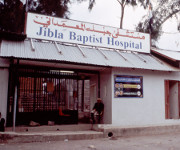
On December 30, 2002, a Muslim militant entered Jibla Baptist Hospital and shot Bill Koehn, Martha Myers, Kathy Gariety and Don Caswell. Myers died almost instantly, while hospital workers did their best to save Gariety and Koehn. Only Caswell survived.

Marty Koehn made it to the hospital before her husband passed away, and she was able to spend a few precious moments with Bill before he went to be with the Lord. After his passing, Marty realized there were many decisions to be made: would she stay in Yemen? Would she return to the United States?

Within 30 minutes of becoming a widow, she sensed an answer.

"Out of the blue, the Lord brought to mind Elisabeth Elliot's story," says Koehn. "I had never read the book, and of course the movie wasn't out at that point, but I had heard of [Elliot's] story, and the Lord reminded me of it.

"To me, it was His clear indication that I was supposed to go back to Yemen."

After going home to the United States to grieve and spend time with her two daughters, Koehn returned to Yemen -- a land where she and Bill had served for nearly 30 years. Upon her return, Koehn also found a role in which to serve: purchasing agent and warehouse manager for the hospital.

It had previously been filled by Kathy Gariety.

"To me, this was another indication God wanted me to go back," Koehn says. "That was the one job I could do because it required someone who knew both English and Arabic, and it was a nonmedical position.

"[The Lord] was preparing everything."
On December 31, 2002 -- the day after the shootings -- Jibla Baptist Hospital was transferred from Southern Baptist ownership to the Yemeni government. The government assumed responsibility of the medical facility in 2003 and continued to employ Southern Baptist workers until its closing in May 2007. Koehn chose this time to retire in Texas to be near family.

Bill and Marty's legacy is living on in a granddaughter who is considering the mission field. She had visited her grandparents in Yemen as a child and seen their ministry firsthand.

Pray that the Lord would guide her steps.

Yemen is in the Top 10 on the Open Doors USA World Watch List, a ranking of 50 countries where persecution of Christians for religious reasons is worst. Many Christians have been abducted, physically harmed and killed, and churches have been damaged or destroyed. Tens of thousands of Christians have fled Yemen.

Thursday, January 10, 2013

Salafi party selects new leader; parliamentary elections forthcoming


Egypt (MNN) ― Egypt's new constitution seems to have everyone on edge.

"There's a lot of fear, a lot of anxiety," says Rex Rogers, president of SAT-7, a Christian satellite television ministry to the Middle East and North Africa.

According to Rogers, vague wording could spell trouble for religious freedom.

"Though the regime says the constitution protects the right of churches to exist, it's rather ambiguous…they just don't buy into the idea of a pluralistic and free society," he says.

"So Christians come back, and SAT-7 comes back and talks a great deal about human rights, and freedom of worship, and respect for all people."

Factor in yesterday's election of a new hardline Islamist leader, and believers could face even more challenges in the days ahead.

"There are more Christians in that country than the rest of the Middle East combined," Rogers explains. "So as Egypt goes...it affects the entire Middle East. It's a great concern for those of us in the West, too."

A 58-year-old Muslim cleric, Younis Makhyoun, was chosen in a consensus vote to lead the Salafi Al-Nour party, Egypt's largest ultraconservative Islamist party. Makhyoun was also part of the Islamist-dominated constituent assembly that drafted the new constitution in early December.

The upcoming parliamentary elections are forefront on the newly-elected leader's mind. According to Makhyoun, Egypt's next parliament is "the most dangerous and most important" in the nation's history because its goal will be "to purify all laws from whatever violates Sharia."

The Salafi party was founded by a group of hardline Muslim clerics shortly after the 2011 Arab Spring which overthrew longtime leader Hosni Mubarak. Rogers says some believers miss Mubarak's heavily-biased rule.

Why?

"Because they have stability, some degree of protection, more senses that they were at least able to exist," Rogers explains. "Now, they're not sure where it's going, and whether or not this Arab Spring can turn into a so-called Christian Winter."

Ask God to protect Christ-followers, and pray that more people would find salvation.

"The bottom line is: they need Jesus, just like anybody else...and that's the difference," says Rogers. "You change the future of the Middle East...one heart at a time."

That's exactly what SAT-7 is trying to do through their programming.

"We talk about the Word of God, we talk about Christianity, and we try to give them the voice because it's an encouragement," Rogers says. "When you're a minority… it's very important to know that others are aware of you, care about you, reach out to you in prayer and fellowship."

Rogers says they also try to speak Truth into Middle Eastern culture.

"We try to emphasize Christian ideas without becoming political: Christian ideas of reconciliation, respect and love for others, forgiveness, peace -- those are Christian values."

You can participate in sharing the life-changing message of Jesus Christ with the people of the Middle East and North Africa, too. Just click here.

Friday, January 4, 2013

Government increases pressure on Christ-followers

(Image courtesy of Wikipedia)

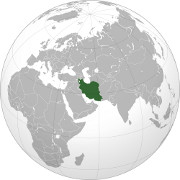
Iran (MNN) ― Iran is putting more pressure on Christians. In recent days, the government demanded personal details from members of a Tehran church.

"People thought maybe a hundred or so would come forward, and over 700 came forward, gave their names and addresses and said, 'Here we are. Here's where we stand,'" an Operation Mobilizationworker focused on Iran told us at Urbana 12.

The Islamic republic of Iran ranks #5 on Open Doors USA's World Watch List, a compilation of countries most resistant to Christianity. Under Iran's harsh apostasy law, anyone from a Muslim background who becomes a Christ-follower faces the death penalty.

The OM worker said for "Muslims who follow Jesus Christ as their Lord and Savior, there are often huge obstacles and problems…they'll lose their jobs, their bank accounts are frozen, and in general, life becomes very difficult."
Take Pastor Youcef Nadarkhani, for example.

In 2009, Nadarkhani was arrested for protesting the Islamic indoctrination in his sons' school system. He served nearly three years in prison, refusing the multiple opportunities to recant his faith. Despite an execution order signed in February 2012, the pastor was acquitted of apostasy and released seven months later.

Nadarkhani was taken into custody again on Christmas Day. Officials claimed that he must finish the remainder of his sentence, approximately 45 days. In September, the courts had stated that Nadarkhani could finish his remaining time in probation.

"There's not been freedom of religion [in Iran]," the OM worker explained. "There has not been basic recognition of human rights, freedom of conscience, and freedom to practice your faith, especially if you're a Muslim who decides that you want to believe in Jesus Christ."

Christian Solidarity Worldwide (CSW) reports that December marks a traditional crack-down on Christians by the Iranian regime. Following Nadarkhani's arrest on Christmas Day, nearly 50 believers were arrested at a Tehran home two days later. CSW says most were released after surrendering mobile phones, full contact details, and passwords to e-mails and social networking sites.

Despite a myriad of challenges, believers are standing firm.

There's a resiliency among Iranians who want to follow Christ, said the worker, "sort of like the story of the man who sold everything in order to get that treasure buried under the ground.

"They value the precious treasure they've found; they're willing to lose everything for…the sake of finding Christ."
What can you do to help them?

"Simply praying for the Church is one of the most significant ways that we can stand with them," the OM worker said.

"The other way we can help is through advocacy. Write to the Iranian embassy, write to the government; Iranian Christians should worship, practice their faith, without fear of persecution."


Monday, October 8, 2012

Christians brave as Syria spirals further


Syria (MNN) ― Few believe the Syrian civil war will end any time soon. In the meantime, the cities of Homs, Aleppo, and Damascus are home to civil war, where the future of anyone living there is uncertain. Shelling, mortar attacks, rebel violence, and more are commonplace. The terror is felt by all who live there. Many want out.

Spokesman for Open Doors USA Jerry Dykstra reports Christians are pleading for prayer. Dykstra shares an e-mail he received from a pastor there. "I am crying like Nehemiah because the walls of our cities are being burned and people are in great trouble. I can weep like Jeremiah because of the intensity and spread of evil. I can mourn like David because of the indiscriminate brutal killing of innocent killing of innocent people -- children, women and our youth."

According to Dykstra, this is an ongoing disaster. "People are dying in the streets. It's been going on for almost 20 months now, and there has been no resolution. That has been very discouraging, especially for the people who live there."

That discouragement is causing people to leave. "300,000 people are now refugees from Syria in countries like Jordan, Lebanon, and Turkey. That's triple the level of just three months ago."

Christians face even more risk than the average Syrian. "Christians are not only victims of the general violence, but also being targeted by militant Islamists."

Open Doors is providing relief aid to Christians. Dykstra says, "We hear reports that many Christians are sharing with their Muslim neighbors, they're taking care of their children. So even in the midst of this terrible tragedy, we see the Lord working."

Dykstra says their work has been curtailed because of the violence. However, Bibles and other Christian literature have been well received by those affected by the conflict. He says, "The Lord is really opening doors. That's why I guess Open Doors is 'Open Doors:' we believe that all doors are open and the Gospel is to be brought into these countries, whether it be Syria or wherever."

In an e-mail from their contact in Syria, Dykstra reads, "We deeply appreciate the prayer of God's people everywhere. This is a rare time when the church in Syria is feeling the true oneness of the body of Christ all over the globe. For this we thank the Lord for this great encouragement to us."

While things are difficult at best, Dykstra says, we can learn from these Christians. "Even in their brokenness, they're continuing to minister to others. And I think they're very concerned about their families and their future, but I don't think that's deterring them from sharing the Gospel when it's appropriate."

Open Doors supports persecuted believers all over the world. Your financial support can be an expression that believers are standing beside them, as well as providing the funding they need to purchase aid, Bibles, and more. Click here to support Open Doors work in Syria


Thursday, October 4, 2012

Iranian lawyer imprisoned, sentenced to 9 years in Evin


Iran (MNN) ― Human rights watchdog Amnesty International is demanding freedom for lawyer Mohammad Ali Dadkhah. He's currently detained in Tehran's notorious Evin prison, sentenced to nine years of imprisonment.

"I was in a court in Tehran defending one of my clients--a jailed political activist on death row," Dadkhah told theGuardian, a UK news service, "when the judge told me that my own sentence has been approved and I will be shortly summoned to jail to serve the 9-year sentence."

It's not the first time he's been behind the bars of Evin. In 2009, Dadkhah was tortured and held in solitary confinement for the majority of his 74-day incarceration.

Ask the Lord to protect Mohammad Ali Dadkhah. Pray that the charges against him would be dropped.
"I have been convicted of acting against the national security, spreading propaganda against the regime, and keeping banned books at home," he said.

He was also banned from practicing law for the next decade. A co-founder of the Centre for Human Rights Defenders (CHRD), Dadkhah was convicted in July 2011 of charges that included "membership of an association [the CHRD] seeking the soft overthrow of the government" and "spreading propaganda against the system through interviews with foreign media." The CHRD was forcibly closed in 2008 by Iranian authorities.

Dadkhah is the fourth CHRD member to be imprisoned within the last 18 months.

"He should never have been put on trial for his legitimate human rights activities," said Ann Harrison, Deputy Middle East and North Africa Program Director at Amnesty International.

"The Iranian authorities must overturn his conviction and sentence, and release him immediately and unconditionally."

Dadkhah has defended the rights of many high-profile clients, including Pastor Youcef Nadarkhani who faced apostasy charges and a potential death sentence. With the help of Dadkhah and international pressure, Nadarkhani's case was dropped, and he returned to his family last month.

"Mohammad Ali Dadkhah and other human rights defenders should be encouraged and supported in their lawful and important work instead of being persecuted for their activism," Harrison continued.

The World Organization Against Torture (OMCT) also condemned the sentencing of Dadkhah and Iran's continual harassment of CHRD members.

"The authorities in Iran are doing their utmost to stifle human rights defenders by imposing heavy sentences of imprisonment, exile, and ban on professional practice," said Gerald Staberock, OMCT secretary general.
"All this is aimed at intimidating the whole society into a deadly silence."

In 2011, the UN Human Rights Committee expressed concern over the reported persecution of human rights defenders (HRDs) in Iran. It stated that "human rights defenders and defense lawyers often serve prison sentences based on vaguely formulated crimes such as 'mohareb' (enemy of God) or the spreading of propaganda against the establishment."

Monday, October 1, 2012

Jordan may be next for Muslim Brotherhood

Tom Doyle with e3 Partners says Jordan could
 be next on the Muslim Brotherhood hit list.

Jordan (MNN) ― The Muslim Brotherhood has seen incredible growth over the last two years as they've had a hand in government overthrows in Egypt, Syria and Libya. The extremist organization is involved in other nations, as well. Now, Jordan is being threatened.

According to reports, Jordan's Muslim Brotherhood is threatening Jordan's King Abdullah. Reports suggest the king has until October to agree to their demand of transforming that nation into a constitutional monarchy, or face an Arab Spring street pressure.

Middle East expert with e3 Partners Tom Doyle says this is troubling. He says Israel could be surrounded: "Lebanon, which Hezbollah has now. Syria, which is in a civil war, but always ready to go to war against Israel. Then there's Egypt to the south. And, even in southern Israel, Hamas is controlling Gaza. The only missing piece of the puzzle has been Jordan."

Doyle says this is a country at risk, and hard-line Islam is already thriving in Jordan. "One of the tell-tell signs in the Middle East as to how fundamental a Muslim country is: the number of honor killings. Per capita, Jordan is way up on the chart--the leader in that. So that just tells us there are numerous groups taking the Quran literally."

Does Doyle think the possible changes will affect e3's work? "If Jordan goes very fundamental Islamic, it will accelerate the work of the church because more people are going to hate the changes that come to Jordan which has been a relatively free country."

The changes in the Middle East are sobering, especially Iran's saber rattling. Doyle says, "We haven't had  leaders since Adolph Hitler that boasted about wiping out the Jews like [Iran's President Mahmoud] Ahmadinejad and the ayatollah are now. So these have extreme prophetic ramifications."

Doyle says as Christians hear the news, we need to make sure we're sharing Christ with Muslims, wherever we are. "Jesus never called us to be Christians: He called us to be disciples --over 250 times. That's what we're looking for."

Doyle continues, "In the midst of this, in the midst of all the bad news you're going to see on CNN and Fox, it is the greatest harvest time for Muslims in 14 centuries." Many of them are coming to Christ through dreams and visions.


Saturday, September 22, 2012

Turkish courts finally put murder suspects on trial


Turkey (MNN) ― In 2007, three Christians were brutally murdered in the Malatya Massacre. Five years down the road, suspects are finally taking the stand, and there could be an end in sight, according to Compass Direct News (CDN). In a recent article, CDN said 19 suspects stood on trial for the Zerve Publishing slayings. This is a big step, as the case has progressed at a remarkably sluggish pace.

But during the six recent consecutive days of court hearings, the massacre mastermind failed to show up. On the stand, one of the defendants denied any connection to the prime suspect.

"We went on an expedition on behalf of Islam on our own to accomplish this event," said defendant Emre Gunaydin.
A recurring theme seems to have surfaced for this trial: one step forward, three steps back.

In late 2007, five men went to trial and faced life sentences for tying up, torturing, and slitting the throats of Necati Aydin, 35, Ugur Yuksel, 32, and German national Tilmann Geske, 46. A year later, the Turkish Interior Ministry investigated accusations against state prosecutors for mishandling the case. The case was expanded in 2009 when evidence suggested the attacks were instigated by Ergenekon, a loose collection of ultra-nationalist generals, businessmen, mafia and journalists. It hit a bump in the road in June 2009 when a suspected middleman failed to show up for court. 

Although the end seemed to be in sight in 2010, the trial dragged on for another two years.

In June, CDN recounts, the courts accepted a new indictment accusing military higher-ups of orchestrating the attacks. The 761-page report claims the murders were planned by a retired military general as part of the Cage Action Plan, formed by military officials trying to undercut the government through "assassinations, threats, and acts of terror against Turkey's non-Muslim minorities."

"This indictment provides the first solid evidence that our military authorities officially assigned the named suspects to monitor and attack the Christians in Malatya," a representative told CDN.

The case's prime suspect, 70-year-old Ret. Gen. Hursit Tolon, reportedly sent the court a 10-day medical excuse from his prison cell. CDN said Tolon and the remaining suspects will testify on November 12, when hearings are scheduled to resume.

Two widows, five young children, and a fiancée survive the victims of the Malatya Massacre. Keep them in your prayers, and pray for the quick resolution of this case. Turkey is #31 on the Open Doors World Watch List. Pray for boldness for Turkish believers.


Wednesday, September 19, 2012

Growing number of believers cause unease among Muslim leaders


Afghanistan (MNN) ―According to the Mohabat News Agency, Muslim officials are calling for action against believers. This is nothing new for the Islamic nation: 
Afghanistan is ranked #2 on the Open Doors World Watch List. But the "rate of growth of Christianity in Afghanistan" is causing unrest among Muslim clerics.

In a recent article, Mohabat News said Islamic seminary students and Muslim clerics called on President Hamid Karzai to "limit the number of aid-workers and Christian missionaries coming to Afghanistan" to keep Afghanis from converting to Christianity. The Iran-based news agency also cited the actions of Afghani Muslim clerics, who "warned the country's government against the spread of Christianity."

Recent turmoil began after a Kabul-based TV station reported the conversion of several Afghans to Christianity and aired photos of them praying and being baptized. This reportedly sparked anger in the Parliament, and some members asked to convict believers under Sharia Law. Under Sharia decree, if someone leaves Islam and converts to another religion, they can be executed.

Ask God to protect these new believers.

The Afghan church is completely underground; the last church building was destroyed two years ago. The small number of known Afghani believers risk their lives each time they gather in small house meetings. Pray for courage and perseverance for Afghani believers. Pray that the Gospel would spread despite significant challenges.

Tuesday, September 18, 2012

Believers demand response for anti-Christian actions

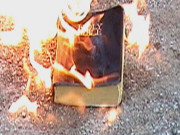
(Image courtesy of LiveLeak.com)

Egypt (MNN) ― Digital politics editor Chris Stirewalt said recently on FoxNews.com, "This is a very bad time to be an American in a Muslim country." Recent chats with missions organizations andan article from the Assyrian International News Agency (AINA) indicate that being a Christian in a Muslim country is even worse.

"It's not the people that are making the movies or the cartoons in the Western world that pay the price for their enjoyment of free speech," SAT-7 CEO Terry Ascott told MNN's Greg Yoder last week. "It is the Christians in the Middle East that bear the brunt of the reaction that inevitably comes."

Case in point: a Muslim cleric named Abu Islam tore the Bible and burned its pages last Tuesday, September 11. His actions were met with loud approval from thousands of Muslims gathered to protest outside the U.S. Embassy in Cairo. The cleric's real name is Ahmed Abdullah.

"Next time I will make my grandson urinate on [the Bible]," Abdullah reportedly told an interviewer. "As the saying goes, 'an eye for an eye and tooth for a tooth,' and the starter is at fault."

A video shows Abdullah tearing the Bible. The AINA article contained a rough translation of the video's contents, shown below:

  • 0:02 "...the overwhelming Book, the Book of Truth and Peace. The place for these words and this book is over the heads because it is the real inspiration..." (He places the Koran on his head) voices chanting Allahu Akbar.

  • 0:30 He Says: "...message to the Egyptian Christians. Out of respect and politeness to the Egyptian Christians, we will not do the same like what they did to our God's book. We will be generous towards you today and say we will respect you momentarily. We will respect this book which is in the Arabic language.

  • 0:54 Demonstrators' chants "Coming, Coming O Islam" 1:09 Abu Islam holds another Bible and says: "This is the book the dog Terry believes in, as well as those dogs with him the Egyptian Christians in America."

  • 1:19 Abu Islam: "Today I can only TEAR IT APART. He starts tearing the Bible and throwing the leaves towards the mob, amid chants:"Allahu Akbar and Khaybar, Khaybar, O Jews, the army of Mohammad is coming."

  • 2:06 Abu Islam saying: "...to all the cross worshippers around the world, we will not keep quiet. Today, we tore it."

  • 2:13 A man in blue beside him burns the Bible raising it for everyone to see. Abu Islam: "Salamu Aleycom (Peace be with you)"and leaves, with mob chanting: "Khaybar, Khaybar, O Jews, the army of Mohammad is coming." "Governing, governing, O Koran." "Coming, Coming O Islam."

In the story carried by AINA, Mary Abdelmassih said multiple complaints were filed by Coptic organizations within Cairo. Dr. Mustafa Maraghy, law professor at Cairo University and chairman of the Coptic Coalition, filed a complaint citing Abdullah for "contempt of religion, disturbing public security and peace." A lawyer with the Copts of Egypt Coalition filed a complaint against Abdullah for damaging the Bible and for previous insults made to Christianity through books and his Islamic Nation TV channel.

Abdelmassih also stated that the Maspero Youth Union (MYU) had called upon President Morsi to "intervene immediately." Magdy Saber, an MYU spokesman, said officials should take action necessary to prevent trouble.
"If we condemn the file-makers…who live outside Egypt," he said, "we should also condemn this disgraceful act in Egypt, stressing the need to punish Abu Islam for his irresponsible actions."

MYU is a group of young Coptic Christians who played a key role in delivering information to the world following attacks on Christians last fall. On October 9, 2011, Christian protestors marching peacefully toward the television and radio broadcasting building near downtown Cairo were attacked by the army and an extremist mob. The attacks left 26 dead and wounded hundreds.

Pray for Egyptian Christians as violence spreads. Ask God to protect Christian ministries in this area.


Thursday, September 13, 2012

'Christians, they will pay for this,' says e3 Partners

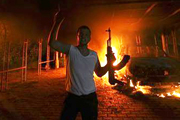
A protester reacts as the U.S. Consulate in Benghazi is seen in f
lames during a protest by an armed group said to have been protesting
a film being produced in the United States September 11, 2012.
 (REUTERS/Esam Al-Fetori)

International (MNN) ― The world is on alert in the aftermath of the attack on two United States embassies. First, protesters scaled the walls of the embassy in Cairo, tearing down the U.S. flag and replacing it with an Islamic one. 

Then, Islamist extremists attacked the embassy in Benghazi, Libya killing Ambassador Christopher Stevens and three other diplomats.

The attacks reignite an already volatile situation in the region. Tie that together with civil war in Syria and the region is unstable at best.

Vice President of e3 Partners Tom Doyle is puzzled about how quiet Egypt's president has been in all this. "As far as I've seen, there hasn't been an official statement for Mohammad Morsi."

On the other hand, Doyle says, "The Libyan government issued a statement of regret and sorrow about the things that happened. It is definitely gang warfare in Libya."

With Libya up for grabs politically, Christians in Egypt are concerned. "They were very concerned that this brotherhood sweep in Egypt would just flow over into Libya and take that over. If that happens, virtually the land space -- that's half of North Africa being led by the radicals."

This recent violence against the United States could be just a glimpse of things to come. "It seems to be in the Middle East a contest of who can outdo each other in their radical allegiance to the Quran and Mohammad."

What about Christians in this region? "There's always the tie from Muslims to believers in their country to the west -- to America, the great Satan. When you see these things, most people don't think about what that means for the Christians. They will pay a price for this."

While the tension is ratcheted up since the attacks, Doyle says many Muslims are sick of the violence. "They've been seeing Muslims kill Muslims. And many young people have had enough of that. You won't see that on the news."

Doyle says, "Isn't it amazing that today the countries of conflict--look at Iran--boast the fastest-growing church per capita in the world right now, according to Operation World. The hotspots in the world is where the church is thriving and flourishing and growing faster than in those countries than it probably ever has in 2,000 years."

With the commemoration of the 9/11 attacks and these recent attacks, Muslims in the west are being marginalized. 

Doyle says Christians should "reach out to them. Start a conversation about Jesus. You will be shocked at how open they are to receive your friendship and just your greeting. Jesus could use this to really reach out to a Muslim."


Christians in Egypt, Libya, Other Countries Could Face Increased Persecution

Coptic Christians hold up cross in the midst of protest.

SANTA ANA, Calif., Sept. 12, 2012 /Christian Newswire/ -- The Tuesday attacks on U.S. embassies in Libya and Egypt could have severe consequences for already marginalized Christians in the Middle East and northern Africa.

The violence, including the death of four American embassy staff members in Benghazi, Libya, was allegedly sparked by a film produced in the U.S. that insulted the Prophet Mohammad.

"It illustrates how hot the fuel is that one spark ignites it so suddenly," says Open Doors spokesman Michael Wood. "At some point we heard that people were protesting because of a film not even knowing what movie this was all about. And as was the case with the publishing of the Danish cartoon several years ago, the movie has been on the Internet several months.

"But it is the unpredictable momentum that suddenly creates a wave of protests and anger. Many of the Muslim fanatics link the U.S. with Christianity. So that puts believers in these hot spots such as Libya and Egypt directly in the line of fire."

Angry protests over the film have already spread in the Middle East with new demonstrations reported late today in Tunisia, Morocco and Sudan. Egypt's powerful Muslim Brotherhood on Wednesday called for nationwide protests on Friday.

Wood adds that Christians in Egypt, who compose 10 percent of the population, and the small community of believers in Libya need our prayers now more than ever before. "Pray that the violence over this film does not spread to other countries...that is the No. 1 prayer request," he says.

An estimated 100 million Christians worldwide suffer interrogation, arrest and even death for their faith in Christ, with millions more facing discrimination and alienation. Open Doors supports and strengthens believers in the world's most difficult areas through Bible and Christian literature distribution, leadership training and assistance, Christian community development, prayer and presence ministry and advocacy on behalf of suffering believers. To partner with Open Doors USA, call toll free at 888-5-BIBLE-5 (888-524-2535) or go to our Website atwww.OpenDoorsUSA.org.
Christian Newswire

Wednesday, September 5, 2012

No end in sight in Syria civil war


Syria (MNN) ― The United Nations says more than 100,000 people fled Syria last month as the civil war exploded out of control. Over the weekend, Syrian aircraft went on the offensive, going after what they're calling insurgents. However, many of those killed are civilians, caught in the middle of this conflict that's trying to push President Assad out of power.

New U.N. statistics indicate the number of refugees in neighboring countries exceed 220,000. According to reports, fewer than half of Syrian hospitals are even functioning.

E3 Partners Vice President Tom Doyle says, "The government is holding nothing back. Aircraft is flying in and blowing up things. Nobody really even has a handle on how many people are dead. The statistics are being withheld by the government."

Rebels want President Assad to step down. Doyle says the sad thing is: there are no signs that the situation will get any better. "Iran is backing Syria, and Russia is in the background--and so is China. The Arab League is supporting the Sunnis. It's just two groups that are going to keep going at each other, and innocent people are caught in the middle."

While the situation appears desperate and hopeless, Doyle says one leader told him, "We're praying that God uses every one of these terrible, horrible situations for His glory, and that it would open up people's hearts that the only peace they're ever going to experience comes from Jesus Christ."

Doyle says it's already happening. The leader added, "We have met Alawites and Sunnis that are now convinced that Jesus is the only way. This religious hatred: they're not seeing it from Christians."

Christians in Jordan are doing everything they can to help the growing refugee population. Doyle says e3 Partners in Syria have been able to help because of donations from people like you. "We've had some significant funding come in to help feed them, clothe them, and provide places for them to stay. And they understand that this is coming from believers and they are overwhelmed by it."

You can help e3 Partners do even more with your donation. Click here to help Syrian refugees.

Doyle says this kind of a conflict can be something God uses to bring Muslims to Himself. However, He's also using dreams and visions. With 60-70% of the Muslim world illiterate, the supernatural may be responsible for Muslims giving their hearts to Christ, says Doyle. He's collected those stories and has written a book called, "Dreams and Visions: Is Jesus Awakening the Muslim World?" It's about "dreams and visions that sound very much like the Old and New Testament-kind of experience where Jesus appears to them in a dream."

While many believers question the validity of these reports, the book describes them. Doyle says, "90 percent of the Muslims who have dreams about Jesus are led to faith in Christ with someone who reaches them with the Bible and shares God's Word with them."

As they do, they talk about dreams and visions of the Bible.


Friday, August 31, 2012

Syrian refugee crisis hits Jordan

Hussein Malla\AP

Jordan (MNN) ― The violence continues in Syria, and now a border situation is causing a refugee crisis.

Bill Bray with Christian Aid Mission says, "Early in the week the Turks closed their border, and it's created a lot of panic. The fighting on the ground is horrific. A lot of these [refugees] are widows and children. This is a real crisis."

Jordanian native missionary leaders say they are being overwhelmed by a new surge of terrified Syrian refugees. "They are coming under the fences every night--2,500 to 3,000 at a time since the border with Turkey closed two days ago," says an indigenous leader of one of the main mission groups who asked not to be identified for security reasons.

"There are already 180,000 refugees here from Syria, and they are growing every day. This is a very, very intense time for us." The Christians are responding as good Samaritans to the desperate refugees, helping them find food and shelter. Most are women and children.

The indigenous leaders asked Christian Aid Mission and others in the USA to help send more immediate financial aid so that food, medicine, and clothing can be purchased on the local market for free distribution to the refugees.

"The refugees are only dressed in light, summer wear and have nothing but the clothes on their backs," he said. "They don't want to enter government camps where there is food and water shortages. Instead, they are coming to us for food and clothing."

Winter is coming, he added, and at least $150,000 will be needed now to keep food parcels going out, supply blankets and winter clothing.

Like all the other front line states, Jordan has officially closed its borders to Syrian refugees and is trying to resist pressure by Sunni Jihadists from nearby Saudi and Qatar. The Islamic Jihad wants to divide up Syrian territory under various militias in order to help bring down the regime of President Bashar al-Assad, an Alawite Muslim who is accused of many atrocities but has protected the Christian minority.

A special fund has been set up by Christian Aid coded 400REF to aid the Syrian Christians during this time of crisis. 

Offerings for the suffering believers of Syria are being collected by phone at 800-977-5650 or at the Christian Aid Mission Web site: www.ChristianAid.or.

"We want to thank you Americans from the bottom of our hearts," said the Jordanian native missionary. "Your prayer and support is helping us befriend, love, and supply aid to these people. Discipleship requires an investment of time, resources, and courage, which we trust the Lord to provide to us."

Bray says, "The biggest thing they need right now is cash immediately to purchase food, medicines, and warm clothing."
A nearby pastor said, "I feel like finally, for the first time, we are doing outreach successfully."

Among the biggest needs they face:

• $70 each to sponsor the education of one child
• $45 each to supply medications for a refugee family
• $12 each for Arabic Bibles
• $55 each for food packets
• $180 per share of rent if a family shares an apartment with several other families

All the Syrian refugees told Christian Aid Mission reporters that they fled Syria after family members were killed. "We lost it all in Syria," said one woman. "I feared for my children, but here in Jordan they can play without being shot! I worry for my family that didn't make it out. I lost friends and loved ones. I've lost all hope."

Just crossing the border can be deadly. "We waited until nightfall, climbed through a barbed-wire fence under heavy gunfire with our husbands and kids. Our husbands didn't make it across."

Another said she came because "I couldn't sleep at night as I watched over my kids thinking this is our last night."

Bray says workers supported by Christian Aid Mission are using this for the Gospel sake. "In the midst of it, they're doing a lot of child evangelism and children's classes. This provides a lot of context in which to do a lot of Christian outreach."

Christian Aid Mission has been supporting indigenous missions in Syria and the front line states of Lebanon, Iraq, Jordan, and Turkey for decades. "We already had an indigenous network in place before the fighting began," said a Christian Aid Mission spokesperson in Charlottesville, Virginia. "We are able to get help to the field quickly."