Showing posts with label Egypt. Show all posts

Tuesday, November 26, 2013

New edict raises red flags in Egypt

(File photos courtesy World Watch Monitor)
Egypt (MNN) ― On Sunday, a new edict went into effect that forbids gatherings larger than 10 people without government permission.

It sounds like it could be a new religion law in Central Asia. It could be a story from the former Soviet Union. But this story comes from Egypt.

Voice of the Martyrs USA spokesman Todd Nettleton explains the new ban. "They're basically saying, 'If you want to have a protest, if you want to have a gathering, you need to come to a government office three days before that, and somebody in the government needs to sign off of you having that gathering." The law imposes hefty fines and prison terms for violators.

Like the religion laws in Central Asia, the purpose behind the law was to restore order. In this case, it was to put a lid on the violent protests plaguing Egypt. Nettleton observes, "I don't think the purpose is to close down churches, but if you go to a particular area of Egypt where the local officials are opposed to the church, they can now use this law and come against the church."

The trouble is that one of the points of the law targets gatherings at places of worship. Again, it's understandable when you come at it from the perspective of a government trying to quell the uprisings of the last two years, notes Nettleton. "A lot of the protests that have happened over the last few months have started at a mosque, and then they've gone out from the mosque. So I think that is why it specifically says that in the law. But, obviously, a church is a place of worship, too, so we don't know what that's going to mean for churches in Egypt."

Former Egyptian president Hosni Mubarak also tried to ban gatherings, but in the wake of his ouster in 2011, it was pushed aside.  The new ban is considered more restrictive, and rights groups are denouncing it already.
 
The law requires three-day prior notice for protests. Officials have the right to bar any protest or gathering considered a threat to public safety and order. Nettleton goes on to say that nobody knows what this means for churches preparing for the Advent and Christmas season. "Are they going to say if a church is established, if a church has officially documentation of their existence, then they're exempt from the law? Are they going to have to come one time and say, 'We gather for worship every week,' and the government signs off on it, or are they going to have to come every single week?"

Nettleton adds that throughout this three-year period of stress on the Church, new people are still turning to Christ. As the Church figures out its response to the new edict, he urges you to "pray for justice in the country, for the Christians there. We can pray for wisdom for them, and again we can pray for protection for our Christian brothers and sisters living in Muslim countries."

Friday, October 11, 2013

Do Christians have a future in the Middle East?

(Images courtesy Open Doors)
Middle East (MNN) ― One of the factors in understanding the cultural dynamics of the Middle East and its upheaval is the presence of the Christian communities.

Since the "Arab Spring" began, regimes have fallen and Islamist governments have risen. The turmoil has left many of these Eastern Christians wondering what future is left for them given the corresponding increase in persecution.

President of Open Doors USA David Curry says, "Over the last several decades, we've seen the percentage of the population of Christians drop from about 20% in the Middle East to just 4%." It isn't merely reports of beatings that he finds alarming, but the dramatic shift that they're tracking. "In the next decade or two, unless we do something about it, unless we can find a way to stand up and get heard on this subject, it's possible that Christianity could be extinct in its birthplace."

The reality is that in Pakistan, Egypt, Syria, Palestine, Afghanistan, and Iraq--lands where Christians have lived for 2000 years, being identified as anything but Muslim is dangerous. Curry explains, "Some of it is low-grade discrimination. Some of it is intentional persecution of believers. In other cases, it is outright murder and attacks on believers that are driving them out of their homes. I think the population is being driven out of the Middle East."

Regardless, the current repression clearly communicates that followers of Christ are no longer welcome as full members of society. If nothing changes, that begs the question: Do Christians have a future in the Middle East?

On Sept. 27, a group of academics, politicians, and parliamentarians (all Christians) met in Amman, Jordan to try to scratch out an answer to that question. The conference was titled "Eastern Christians in Light of the Arab Spring."

The group looked at the laws of the land, shifts that subtly altered laws and practices of religious freedom, then the impact on the Christian body, and finally, expectations for the future.

Since the constitutions in many of these countries (except Lebanon) presumes that "Islam is the state religion," Sharia becomes a source of the state's legislation, laws, and regulations. Curry says, "It's basically illegal to decide for yourself what you want to believe. That has very dangerous implications for Christians who may be converting from other religions and deciding that they want to call themselves followers of Jesus.
In many of these places, that marks them immediately for death."

The "religicide" becomes systematic and protected.

Today, more than one million Christians have fled Iraq. Half a million Christians have left Syria, where there were once around 2 million. There remains a remnant church in Egypt. In Lebanon, the retreat is obvious.

Curry notes that despite Islam's obvious impact on the body of Christ, "Christianity is not at the verge of extinction in the Middle East because we've lost the battle of ideas. We are on the verge of being extinct in the Middle East because we are being persecuted, because we are being driven from those areas, and because en masse, we are being targeted for death."

What are the possible ways of dealing with what has become one of the greatest humanitarian catastrophes of our time? Curry takes that question head-on. Be aware. "First of all, I think that there is an element of these extremist groups that is, for lack of a better word, ‘imperialist.' They believe that they can force their faith on people. They'll do it in their regions, and then they're going to do it in our regions."

Be active. Realize that the Gospel is still going forward. Share the predicament of new believers with your Church body.

Also pray. "There's a scriptural premise here, for believers, certainly. It says, ‘When one part of your body hurts, then the whole body hurts.' Right now, we have members of the Christian faith that are suffering; not a few, but millions of people who have no freedom to study and to choose for themselves how they share their faith."

Sunday, September 29, 2013

Wave of persecution sweeps across the Middle East and North Africa

(Image courtesy Open Doors USA)
Nigeria (MNN) ― Believers in northeast Nigeria are reeling after Islamic militants killed their pastor and his son, and set fire to their church building and five homes.

The Associated Press reports Islamic militants attacked the church in Yobe state just before dawn yesterday; the incident went unnoticed by nearly all major media outlets.

Dr. David Curry, President and CEO of Open Doors USA, points to the attack as the latest in a rising tide of persecution sweeping the Middle East and North Africa (MENA).

"We've had situations in the last three weeks in Iraq, in Syria, in Pakistan, and now last night in northern Nigeria, where people are targeting believers," says Curry. "My greatest concern is that there won't be any pressure to follow-up on this attack.

"Attack after attack on Christians seems to go by the wayside."

Thousands have fallen in Nigeria alone at the hands of the Islamic terrorist group, Boko Haram. Their name means "Western education is sinful," and their four-year-old terror campaign seeks to rid northeast Nigeria of all who follow Christ.

Yobe is one of three northeastern states currently under emergency rule, as Nigerian President Goodluck Jonathan tries to quell Boko Haram insurgents.

"The threat of terrorism in a few states in the northeastern part of our country has proven to be a challenge to national stability," Jonathan told UN leaders earlier this week. "We will spare no effort in addressing this menace."

Terror goes by a different name in the nearby Central African Republic: Seleka. This band of Islamic terrorists rose to national power in March following the ouster of former President Francois Bozize.

Their primary target soon became the Church.

"The various atrocities that preceded, accompanied, and followed Seleka's rise to power have been specifically aimed at the Christian population," states a letter from the CAR Evangelical Alliance to Seleka Islamist leader and CAR President Michel Djotodia.

"Churches and Christian institutions have been desecrated and plundered, priests and pastors have been assaulted, and nuns raped."

In CAR, 50% of the population is Christian and 15% are Muslim. Despite outnumbering the followers of Islam, Christian communities in CAR claim their Muslim neighbors are joining Seleka’s violent campaigns.

"It’s not like Christianity is a minority religion, but ever since the coup in March, the Muslims have increased their persecution of Christians," said Open Doors spokesman Jerry Dykstra in a July 5 article.

To the north, a similar situation unfolds as violence against Christians in Egypt reaches historic levels. Members of the Muslim Brotherhood (MB) were quick to blame Coptic Christians for the July removal of MB proponent and former President Mohamed Morsi from office.

It was a summer of rage for many believers as they endured beatings, their homes and businesses were looted and destroyed, and churches were set aflame. In August, one church was forced to close its doors for the first time in 1,600 years.

And yet, most believers and secular media alike remain unaware of the deadly trend.

"Open Doors has been trying to raise this awareness among Western believers and the media in general," says Curry. "We believe it's worthwhile asking the question: 'Are these attacks coordinated?' Certainly they seem to be intentional and directed at believers.

"Over the last decades…the population of Christians in the Middle East has gone from 20% to 4%. Why is that? It is because there is a concerted effort to force Christians to convert. There is a concerted effort to persecute Christians, to drive them from their home."

As the plight of believers in the MENA continues on, largely unnoticed, you can take action.

"There are so many ways we can support the Persecuted Church," Curry states, "but you won't know how until you get this International Day of Prayer packet, an IDOP packet."

The International Day of the Prayer for the Persecuted Church (IDOP) gathers believers worldwide in continuous prayer for those who are persecuted. This year, IDOP falls on November 3.

"What we're asking is that every believer in the Western world that worships in freedom takes part on November 3rd in praying and supporting the Persecuted Church," explains Curry.

"We're not a political organization, but what we can do is rally believers to defend and to pray and support their brothers and sisters in the Persecuted Church."

Saturday, September 28, 2013

Muslim Brotherhood banned; good news for Christians?

(Photos courtesy Globovision)
Egypt (MNN) ― A lot can change in a year. Just ask Egypt's Muslim Brotherhood.

The organization is reeling from the stunning reversal of power it experienced this summer. They went from being the national darlings post-Arab-Spring to being repressed in the same vein they oppressed other religious minorities.

This week, an Egyptian court issued a ruling that could provide a reprieve for one of those minorities: Christians. Todd Nettleton, spokesman with the Voice of the Martyrs USA,  says, "They've banned the Muslim Brotherhood. They've said it's not acceptable as a Non-Government Organization. Its activities are banned. That's a court ruling on a piece of paper. The big question is: what does that mean on the ground?"

He goes on to say, "If this court ruling becomes reality, and if they actually do close down the Muslim Brotherhood, that's a hopeful sign for the Church and for Christians in Egypt. But again, it remains to be seen how this is actually going to play out on the ground with the authorities there who have to put this court ruling into practice."

Does this injunction dissolve the Muslim Brotherhood? The action also means seizure of the group's assets as it awaits a verdict from a higher court. The group has been accused of exploiting religion for political gain and of "terrorism" in the days after President Mohamed Morsi took office.

The military ousted him a year later, following massive protests throughout the nation. The court's latest action is part of a sweeping crackdown that has already put Muslim Brotherhood leadership and thousands of its supporters behind bars.

Nettleton asks the next questions that no one can answer. "Are the police going to actively pursue Muslim Brotherhood members? Are they going to arrest them? Are they going to take them into custody?"

The Muslim Brotherhood could decide to compromise with the caretaker government in order to remain a political player, there could be an outright revolt, or the group could continue to protest in an effort to question the legitimacy of the interim government.

Predicting their next move is hard. Every scenario plays out differently, depending on how unruly its participants become.

In the meantime, Christians are deeply concerned. In none of these scenarios do they come out on top. "The Muslim Brotherhood had repeatedly attacked churches, attacked Christian homes and businesses, and encouraged that radical Islamic opinion that all of the Christians should either leave Egypt or they should convert to Islam," Nettleton explains.

That could describe any time since Morsi came to power, however, it's likely that the incident he mentions began 14 August. Police violently cleared two protest camps set up by the deposed president's supporters in Cairo.
The crackdown sparked nationwide retaliatory violence that left hundreds dead and thousands injured. Christians were blamed for Morsi's downfall. An international human rights group documented dozens of burned churches and noted that most of the anti-Christian attacks were concentrated in southern Egypt. The potential of a volatile reaction is cause for dread among the battered remnant Church. Nettleton acknowledges, "That could happen again with this court ruling. That could be something that leads to churches and Christians being targeted as they say, ‘It's your fault that the court ruled this way. It's your fault that the Muslim Brotherhood has been ruled illegal.'"
Egypt's future is murky. No one knows if the next few months will lead to an exodus of the remaining believers, or if the nation will be so war weary that stability becomes the prize. Until then, VOM remains a quiet presence in the country, says Nettleton. "Voice of the Martyrs has very significant operations in Egypt to help the Church. We provide Bibles and Scriptures to those that need them. In many cases, we provide medical care to those who were injured in persecution-related attacks, as well as the simple act of encouragement."
What else can be done? Talk about what's happening. The silence from the North American Church has been deafening so far. Raise awareness about the plight of Christ-followers living in Muslim nations like Egypt. Let them know they're not forgotten, says Nettleton. "We need to pray that the Lord will protect them and look out for them. I think, secondly, we need to pray that they will respond in a Christ-like way to the persecution that they're facing. That can be an incredible witness for Christ: the seeds for revival in a country."

Wednesday, September 18, 2013

Believers shrinking in numbers in Syria

(Photos courtesy Flickr/FreedomHouse)
Syria (ODM) ― "The situation is very grim. There is deep sadness and much stress and anxiety." That is the summary Pastor Edward from Damascus gave to Open Doors on the situation in the Syrian capital.
According to the pastor, about 40% of the members of his church have left the country since the conflict in Syria started over two years ago. Imagine: four of every ten members of your church leaving in such a short period. That means a major loss for every congregation. And that is the reality churches in Syria now face as this example from Damascus shows.

People who have the financial means, and especially those who have contacts abroad, are leaving the country. Pastor Edward knows that in his church, some members still are waiting for the opportunity to leave Syria, too. "They are still trying to find a place to go." However, all the people that left didn't leave the church services empty. "No, we see new people coming to church. Many of the families that we visit and help with a monthly food supply, for example, come to our services now."

Although there is no fighting going on in the central area of Damascus, in several suburbs fighting is a daily reality. No one can escape from the distant sound of explosions and shooting. "It seems that there is no end in sight. Christians are like all other people: concerned for their safety and the future of their children."

In a way, life goes on for many people in the capital. People who work in the public sector still go to work. "But their income is worth less and less as the Syrian pound lost 75% of its value, which caused huge inflation. After over two years of civil war, most people are suffering economically and are traumatized emotionally."

The pastor also mentions "a brighter side" in the gloom. "Church people are closer to the Lord and to each other."

Monday, September 16, 2013

Islamists tell Egyptian Christians 'Convert, go broke, or die

(Photos courtesy Open Doors)
Egypt (MNN) ― Egypt is still upside-down and sideways.

Nearly a month after a state of emergency was declared, the interim government extended the order by two months.

This action gives security forces greater powers of arrest. In mid-August, authorities and protestors clashed violently over the ouster of President, Mohamed Morsi. That led to a backlash of violence that claimed nearly 1,000 lives in the days that followed, with Christians targeted as the scapegoat. Open Doors CEO David Curry says, "Some of these extremist groups think that Christianity itself, the very existence of it, is problematic, so they're trying to snuff it out. So there's a confluence of events which is making it very, very dangerous to be a follower of Jesus in Egypt."

Ever since, a night-time curfew has also been in effect in much of the country. With that in place, how did Islamists managed the takeover of a Christian village in the south? Police can't be everywhere and can't protect everyone, Curry says. The lack of protection is especially dangerous for the residents in Dalga, which was taken over by hardliners a couple of weeks ago. "There are about 20,000 believers that have an enclave there (in Dalga), and they gather together and they go to church. They want to worship in freedom."

What's more, since the siege began, word has leaked out that the Muslim Brotherhood has demanded that the Christians recant, pay a "jizya," or suffer the consequences. Curry explains, "They're literally being taxed until and unless they convert to Islam. So there's a tax levied. If you don't pay the tax, you're going to be attacked, you're going to be punished, and your property is going to be attacked."

The "jizya" is a kind of tax that Islamic law requires religious minorities to pay Muslims. The amounts demanded are ruinous. "We're talking about real money in terms of the Egyptian lifestyle. It may be that a person is made to choose between holding on to their faith and being martyred for their faith."

Already, Muslims in southern Egypt have killed two Christian men for failing to pay it. The Voice of the Martyrs reports that a Muslim man demanded a Christian in a village in Assiut pay him nearly $1,500.

They've also forced at least 140 Coptic Christians to pay 200 Egyptian pounds daily (US $30). When you consider that roughly 40% of Egyptians live on less than $2 USD a day, there aren't many who can remain in their hometown safely. Forty Coptic Christian families have left as a result of the tax.

Still, Curry says there have been reports of people coming to Christ. He explains, "The Christian faith is vibrant, and it's going to find its fruition because people are seeking answers, and they're not looking for political answers." Additionally, the followers of Christ have something that piques curiosity in times like these. "When people are introduced to Jesus, there's peace. There's life there. That's what we want for them.

Certainly, there are still great things happening even in the midst of this difficulty and in this persecution."

Their partners are careful when they respond to needs in the area. "Open Doors is asking everybody to pray for Egypt, to support the believers there. We're on the ground trying to help these churches. We're rebuilding churches. We're trying to help pastors." Curry says you can help, too.

Arson a 'small price to pay' for Egyptian pastor

(Photos courtesy SAT-7)
Egypt (SAT-7) ― Days ago, SAT-7, a Christian satellite television service to the Middle East and North Africa, aired footage of Egyptians worshipping in the remains of the Evangelical Church of Beni Mazar.
Located in the town of Minia, it was one of over 80 Egyptian churches targeted in violent attacks during August. This special episode aired as part of the SAT-7 program, "My Church."

Dark smears mark where flames licked the outside walls of the church building after arsonists set it ablaze. The charred hull of the interior is crumbling and peeling where wood and paint previously existed. Singed wiring hangs loose from the ceiling.

On August 14, Rev. Hany Jacque received a phone call notifying him that angry rioters had broken in the door of the church. For seven hours, the rioters stole furniture from inside, broke the glass windows, and burned the church's books, including its Bibles. They also looted and burned its community services building next door, which had provided medical and financial assistance to all the residents of Beni Mazar, regardless of their religion.
Rev. Jacque reflected on the destruction, "The Church is not walls and buildings. The Church is us, the people of God. They burned and destroyed the building, but it will never be possible for them to burn and destroy the Church because the Church will remain forever. If this was the cost for the God's people in this place, that's alright. Pay it, because God's people must always speak the truth.... This is a small price to pay for us to speak the truth."

During the service aired on SAT-7 this week, congregants filled the desecrated building with songs of praise and the words of Scripture. Congregants sang, "Jesus, we bless Your name." They joined hands and prayed that God would accomplish His will in the Church. The song leader encouraged the congregation, saying, "The joy of the Lord is your strength...God's glory in the midst of the Church is a sign for what is coming in the land of Egypt. The Church will be filled with glory."

Rev. Jacque preached a message from Haggai 2. He read encouragement from the Word to the congregation, saying, "‘The glory of this present house will be greater than the glory of the former house,' says the Lord Almighty. ‘And in this place I will grant peace,' declares the Lord Almighty." Toward the end of the service, Rev. Jacque asked Church members to forgive the rioters. He quoted what Jesus said of His attackers on the cross: "They know not what they do."

The Reverend emphasized that while they would have a new building, it was just as important that all things become new in their hearts and their thinking. Another church member closed in prayer, saying, "We turn our eyes today from our surroundings to Your lordliness.... Lord, we pray today for everyone who wronged us, with all love: for each one who extended his hand with an axe, for each one who extended his hand with fire, or stole from the Church."

Attacks targeting Christians intensified after former president Mohamed Morsi was removed from power.

Dr. Terence Ascott, SAT-7 CEO, reflects on the response of Egyptian Christians: "It is evident that the almost universally non-violent response to these attacks (the worst assault on Christians in Egypt for almost 600 years) has greatly impressed many Muslims. This has been a very public turning of the other cheek by the Christians of Egypt and a very public act of obedience to Jesus' injunction for His followers to 'love your enemies and pray for those who persecute you' (Matt 5:44)."

Some Christians are leaving Egypt in hopes of economic opportunities and security, but there is also a spiritual revival taking place among those who remain. Programming Manager George Makeen, an Egyptian citizen, is optimistic about the new opportunities that the revolution brings. He says, "People try to find ways to co-exist and live together, as they now feel responsible for their safety and their future. There are still drastic troubles of lack of trust and misunderstandings, but I think we are moving forward toward knowing and respecting each other."

Makeen sees improvements in education as the key to a brighter future for Egyptians and believes a SAT-7 program could shed light on this. Current public school curricula do not provide an accurate presentation of national history or teach the components of a democratic system.

Given the opportunity, Makeen would also arrange for SAT-7 to do more filming in rural areas to raise awareness for the problems residents outside the cities face. In the meantime, SAT-7 provides a broad platform for reaching and teaching Arabic speakers throughout the region with Christ's message of hope and reconciliation.

Thursday, September 12, 2013

Islamic onslaught, Christian village takeover

(Photos courtesy Flickr/FreedomHouse)
Syria (MNN/ODM) ― Another village, another hostile takeover by Muslim extremists.

Last week, MNN reported the hostile takeover of the Christian village of Dalga, Egypt. The village was overrun by hardline Islamists.

This week, it's the Christian village of Maaloula, about 55 km northeast of Damascus. The area has become the battleground of fighting between rebel groups and the government army since Wednesday, September 4. The village had been under the firm grip of the regime until a suicide bomber attacked one of the government checkpoints in the village last week.

Could such actions be coincidental in two different countries? Open Doors USA CEO Dr. David Curry says, "There seems to be a very systematic and intentional move into Christian areas: areas that are historically places of faith for Christian believers and where there are larger populations of Christians." The developments of the last 14 days makes one thing is clear: "In some of these countries, it's a very dangerous thing to call yourself a ‘follower of Jesus.' So, they tend to group themselves together in some of these historic areas."
In Syria, news reports say that 5 armed groups fought the government troops and occupied parts of the village. Government forces regained control on Thursday. But they lost it again on Saturday, when a second coordinated assault was initiated by the opposition.

Maaloula is a historic Christian village and known for several Christian residents still speaking Aramaic, the biblical language also spoken by Jesus. Before the war, it was a tourist attraction with its churches and convents, and also because of the narrow gorge, of which is believed that the mountain opened up miraculously to protect Thecla, a pupil of the Apostle Paul, from her persecutors.

In the attack of last week, opposition groups have given assurances that church buildings would not be damaged, but reports describe that at least three of the churches are seriously damaged during to the fighting.

Next to casualties among fighters in the combat, civilians have also been killed, including Christians. "What you see across Syria right now is a huge part of the Syrian population leaving their homes, becoming homeless; and certainly a very large portion of the Christian population in Syria is now refugees or homeless", explains Curry. Over the past week, practically all of the approximately 3,000 villagers have fled to safer regions in Syria, both Muslims as well as Christians.

In the propaganda aired by various stakeholders, it is difficult to distinguish what is truth, or really what an outcome would look like at the end of the war. Curry agrees. "One of the concerns that we have here at Open Doors is that there may not be a ‘best case scenario' for Christian believers between the two scenarios that people have laid out, because it's not clear that any of the political solutions have any concern over Christian believers in Syria."

On Monday September 9, the Syrian troops launched a new offensive against the rebel fighters who are still holding strategic positions in the hills overlooking the village. The attacks fuel the fear among Syrian Christians being driven out of their homes and the wider community of Christians in the country. Depending on who is left after the dust settles, the future could be bleak for believers coming back home. "There are some very radical forces in these countries that want to set up governmental theocracies or Muslim extremists who believe that they want to set up their version of Sharia law."

Please pray that those who have been traumatized will be touched by Jesus' healing power and will be cared for by other Syrian Christians in the country. There are reports of people coming to Christ, however, it's a dangerous time to do so. Gospel partners need wisdom and boldness. "It obviously has a ‘dampening effect' when people who are even identifying themselves as Christians are targeted for violence. We believe that the faith that people have in Jesus Christ to be salt and light in the community is critically important, so we need to support these folks."

Overcoming persecution with the Egyptian church

(Images courtesy SAT7)
Egypt (SAT7) ― On July 3, when millions of discontented Egyptians toppled their president (again), current affairs show Bridges was prepared with episodes addressing implications of the week's events. In fact, Bridges had been airing episodes discussing the June 30 protests before they even occurred.

The producers of Bridges felt it was important to continue live broadcasts throughout the summer. At the SAT-7 studio in Cairo, host Dr. Ehab Kharat interviewed politicians and social activists, asking them to discuss the challenges that would face Egyptians in the coming months. Some of the topics they addressed were the poor state of the economy, the prevalence of corruption, changing the constitution, and holding elections.
In the weeks following President Morsi's ouster, angry Morsi loyalists attacked over 80 churches, burning many to the ground and killing a child in front of her church. They also looted and attacked Christian business establishments, apartments, and schools. In some instances, Muslims stood by their Christian neighbors to protect them and decried the attacks.

In response to the horrifying attacks, Bridges sent a filming crew 700 kilometers south of Cairo to Al Dabia, one of the villages affected by sectarian tensions. Women tearfully explained that police removed them from their homes, leaving their husbands to be tortured and die. Church leaders in this particular village were crushed because their longtime neighbors stood by without helping, while Christians were attacked and their buildings looted.

George Makeen, Programming Manager for SAT-7 ARABIC, describes the powerful episode: "Testimonies of people who lost their beloved ones and who lived these hours in fear and pain were heart-breaking. In this episode, we talked about the way to social justice and reconciliation. We discussed the danger of using violence to implement political demands and agendas."

SAT-7, a Christian satellite television ministry to the Middle East and North Africa,  purposed to provide those affected with an opportunity to grieve publicly.
Rev. Dr. Safwat Al-Baiady, President of the Evangelical Churches in Egypt and Deputy Chairman of the SAT-7 International Council, has appeared on past episodes of Bridges as a guest. He notes that Christian schools and hospitals are open to people of all religious backgrounds.

During the civil unrest from the end of June through July, Christian field hospitals even treated members of the Muslim Brotherhood who had perpetrated attacks on churches. The agony of persecution created opportunities for Christians to show their attackers the meaning of forgiveness and unconditional love.

Church leaders throughout Egypt, including Rev. Dr. Al-Baiady, have emphasized that the Church is a body of people and not a building. In the face of persecution, he says, "Our purpose now is to show mercy.... We care for people, not buildings. We can restore the buildings, but we cannot restore a person who is killed or injured."

One of Al-Baiady's greatest concerns is for the young children. He asks, "What kind of children will they be when they grow up? So I say, please don't lose a generation. The children, the coming generation, will be affected by all the scenes they are watching." There are many voices trying to shape the minds of children in Egypt right now. For parents, monitoring the influences in their children's lives can begin with television in the home. As Egyptians look to stay informed and find answers about their changing nation, SAT-7 ARABIC offers a biblical perspective on events that is appropriate for family members of all ages.

Currently, the Egyptian army is fighting militants in the Sinai Peninsula and has taken off the air several television channels connected to the Muslim Brotherhood. However, Executive Director Farid Garas reports that attacks on Christians have subsided elsewhere in the country: "The attacks on churches have stopped, and security is returning to the streets. The good thing about what happened is the unity between Egyptians."

Join us in praying that God's Spirit of peace and love will unite Egyptians and empower them to overcome the persecution of past months.

Peril worsening for Egyptian Christians

(Cover photo courtesy AINA.
 Story photo courtesy Christian Post)
Egypt (MNN) ― Some scholars believe Egypt's continued onslaught of violence against Christians could be the worst in 700 years. And it's not over yet. Musselman, a spokesman with the Voice of the Martyrs Canada, says, "Talking to those that are plugged in to what's going on, they believe that the violence, the destruction, and the assault on the Christian community will continue for at least several more years."

The recent headline news may bear that out. It seems like every Friday after Muslim prayers end, there are riots and protests that erupt among members of the Muslim Brotherhood. A sudden burst of unpredictable violence lurks just beneath the surface, similar to that of 3 July.

The target? Christians. Coptic Church leaders are trying to keep a lid on the tensions. They're encouraging calm and talking about peace, unity, and forgiveness. The most obvious reason behind the message, says Musselman, is that "when people react with violence against violence (which is totally understandable), it just leads to more violence."

Easier said than done. The Islamist takeover of a town in Egypt has Christians drowning in fear. Dalga's takeover followed the ouster of the country's president, Mohamed Morsi. On 3 July, Morsi's Islamist supporters attacked Christians, their homes, and businesses in the southern Minya province.

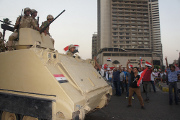
Radicals have yet to leave, promising defiance of the military-backed leadership that has replaced him, and successfully stopping army attempts to send in armored personnel carriers.

Trouble in Sinai could mean a second insurgency could erupt in Minya and Assiut provinces, home to two of the biggest Christian communities in Egypt, while at the same time a foothold for the Islamists.

Musselman considers, "That's very much possible. You've got the Muslim Brotherhood who are not going to sit down and say ‘OK. I guess we lost this thing. We're going to forget about it.' No. That's not what they're thinking about."

The problem is that in the security vacuum, it has been Christians largely paying the price. Musselman explains, "Of course we've seen dozens of churches destroyed, Christian businesses destroyed, homes destroyed--a lot of intimidation. There's a lot of fear right now because even the military and police say they can't adequately protect them."

While the constitution allows for freedom of conversion, in practice, discrimination is commonplace. What's more, waiting for a new constitution puts things in limbo. With things as bad as they are for Christians, Musselman wonders, "Who knows what's going to be happening two months from now? People are leaving.

There's a lack of trust in what's going to happen there." He goes on to add that with the mass exodus of Christians fleeing Egypt, "Who knows how many will be left to vote, or to think at this point in time there's any reason to even be involved in the constitutional process?"

And yet, there's opportunity. "In the middle of all this, there's also been an incredible expression of forgiveness by Christians in places like Minya, south of Cairo. We're seeing where they are actually writing on their destroyed churches, ‘We forgive you.'" The open-handed extension of forgiveness to those who have pulverized their communities speaks volumes for the Christ they follow. It takes guts to speak His name, though, in an atmosphere where you can be killed by a mob just for wearing a cross or being identified as a Christian.

That's where you come in. "Be praying that they will be strong, that they will not be ruled by fear, but they would use wisdom. And also [be praying] that the Christians, in large masses, would exhibit forgiveness."
Pray that God will strengthen and embolden Christians in this time of political uncertainty and give them new opportunities to share the gospel.

Monday, September 2, 2013

Fridays are dangerous in Egypt

(Photo courtesy Globovision)
Egypt (ODM) ― During the last two weeks, a total of seven Christians have been murdered and 17 kidnapped during the violence.

Hundreds more have been injured. Additionally, the rampage has resulted in the destruction or damage of 212 privately-owned Christian shops and homes, and 95 church buildings. Buildings include orphanages, schools, and Bible book stores.

Open Doors ministry partners are confirming that Christians are living in fear, especially those in the countryside where Muslims are the majority. Many Christian families have lost everything and escaped with only what they were wearing. In the wake of the unprecedented violence targeting Egypt's Christian community, Open Doors is working closely with local church partners to support and comfort those left traumatized by painful losses.

Open Doors USA is asking for emergency financial support for those suffering for their faith in Jesus Christ. The need is substantial with a goal of $430,000. The funds will be used for what is most needed to bring hope and relief to many suffering and devastated Christians.

"Christians in the West must understand that the rampage against the followers of Jesus is targeted and intentional," says Open Doors USA President/CEO Dr. David Curry. "Unless we pray, advocate, and support those faithful believers who are under attack, the persecution will continue and perhaps widen. Please consider how you might support our brothers and sisters in Christ."

To make a donation, go to www.opendoorsusa.org and then click the "Help Egypt" icon.

An Egyptian Christian leader states: "What can Christians do? Although the fight seems to be between groups of people, it is clearly a spiritual war. It is written in Ephesians 6:12 that 'our struggle is not against flesh and blood....' Therefore to win the war, believers need to use the right weapons. Egyptian Christians are appealing to people around the world to pray and fast with them."

His prayer requests for Egypt include:

* An end to the current violence

* The police and army to control the situation and bring long-lost law and order back to the streets of Egypt

* For God to expose the lies and deceptions being told so that the truth will be revealed to the entire world

* That Christians continue to love, forgive, and rebuild their country, churches, homes, and businesses

* The country's future leaders bring peace and harmony to all parties and bring Egypt out of poverty and chaos

Egypt is ranked No. 25 on the Open Doors 2013 World Watch List of the worst persecutors of Christians.
For almost 60 years, Open Doors has worked in the world's most oppressive and restrictive countries, strengthening Christians to stand strong in the face of persecution and equipping them to shine Christ's light in these places.

Open Doors empowers persecuted Christians by supplying Bibles and Christian literature, training Christian leaders, facilitating social/economic projects, and uniting believers in the West in prayer for Christians, who are the most persecuted religious group in the world and are oppressed in at least 60 countries.

Monday, August 26, 2013

Report: 42 churches attacked in Egypt

Destruction of Egypt's Christian community.
 (Images courtesy 8thirty8/Facebook)
Egypt (MNN) ― The violence in Egypt could be considered "historic." It silenced a church for the first time in 1,600 years.

Security issues following last week's rioting forced officials to consider the risks of a large gathering of people.

At the same time, a scholar at the Hudson Institute's Center for Religious Freedom was quoted by The Christian Post as saying that last week's attacks on Christian churches and believers in Egypt were the worst in 700 years. Most of the violence seemed to be concentrated in southern Egypt in a 24-hour time frame.

Human Rights Watch, an international human rights group, visited 11 sites in Minya city and Bani Suef, where last week's attacks took place. Their investigation took note of attacks on at least 42 churches (though several ministries working in the region cite as many as 60 churches), as well as those on dozens of Christian institutions, schools, homes, and business owned by Christians. Their conclusion: this was an intimidation campaign thought to be waged by supporters of ousted Islamist President Mohamed Morsi.

In their new report, HRW accused authorities of being "largely absent or failed to intervene" when churches or properties come under attack. While authorities did little to stop the violence, now the military-backed government is trying to capitalize on the church burnings to paint the Brotherhood as terrorists.

The wave of attacks also included drive-by shootings, kidnappings, destruction of church buildings and Christian-owned property, and now lethal shootings. Unidentified vandals marked church buildings and Christian-owned homes and businesses declaring, "Egypt is Muslim, not Christian." During the rampage, many of the same buildings were destroyed.

AMG International has some quiet work in Egypt. President and CEO Tasos Ioannidis says the trouble has been disruptive for AMG ministry partners; they have to keep a low-profile. "The best thing to do is just avoid being identified at this point because a lot of them will be targeted if they are recognized as members of the Christian community."

Just how volatile is it? He says in the report they got this week from their partner, "There was a news story about a taxi driver who was pulled over because he had a cross hanging from the mirror of his car: he was killed, and the taxi was destroyed."

Ioannidis goes on to explain that "the Christians are being blamed for a lot of what is happening right now from the Muslim Brotherhood. They are being targeted, so our co-workers are trying to just avoid situations where they would be in danger. There is a lot of property damage, but property can be rebuilt."

According to The Washington Post, a high-ranking Western official (who spoke on condition of anonymity) doubted the Muslim Brotherhood had orchestrated the assault, blaming vigilantes instead. However, when that came up, Ioannidis disagrees. "From our people on the ground, they are clear that the violence is coming from the Muslim Brotherhood. They see that as being part of their effort to stay in power to control the situation in Egypt."

Still, the Gospel is present throughout Egypt. Even though the voices of some of the churches have been silenced, it's temporary. It's also just one small part of the larger body of Christ. AMG ministry partners haven't given up hope, but they need the protection of an army to keep going forward. Ioannidis sums it up this way: "This is a very dangerous time for them, so they need God's protection. The first thing to do is pray for them daily, and pray that God keeps them safe."

If the paradox of persecution still holds true, as historic as the violence is in Egypt, so will be the new believers on the other side of the turmoil. Will you add your voice to the growing chorus?

A Muslim cleric stirs up trouble

Written on the walls in southern Egypt:
 "Love your enemies, we will pray fervently."
(Image courtesy 8thirty8/Facebook)
Egypt (VOM) ― Christians in Egypt today are experiencing increased attacks against them in conjunction with the government's attempt to disperse two pro-President Morsi camps calling for his re-instatement. At least 250 people have been killed and 1,000 wounded during the raid.

Egypt has declared a month-long state of emergency after scores of people were killed and more wounded during the protests and raid earlier this month.

Forty church buildings have been attacked and set on fire. Three of the churches were in Minya, two in Fayoum, and one in Sohag. At the same time, Christian-owned businesses in Sohag and Assuit were targeted by radical Muslims. A convent called Al Raai Al Saleh in Suez was also set on fire.

In the midst of the chaos, Egyptian Christians have still seen the hand of God at work. According to a worker with Voice of the Martyrs, the Good Shepherd Monastery in Suiz city was surrounded by a mob of radical Muslim Brotherhood members earlier today. The monastery was full of women and children.

Miraculously, everyone was able to flee to safety as the monastery was attacked and burned down.
Sources report that Mohammed El Beltagy, a leader of the Muslim Brotherhood, said "operations against Christians will start now." The Muslim Brotherhood routinely threatens Christians, chanting and protesting against them. A VOM worker said that the Muslim Brotherhood leaders are seeking to disrupt the national unity by creating sedition between Muslims and Christians.

These recent attacks against Christians are not the only ones that have occurred in the past weeks. In another church on Aug. 3, hundreds of Morsi supporters surrounded a church in Sohag and fixed al-Qaeda's flag on the church. In Menia city the same day, over 50 shops and homes owned by Coptic Christians were burned and looted by radical Muslims. Over 20 people were injured in those attacks.

In July, two Christians were killed in northern areas of the Sinai Peninsula. On July 18, two churches were attacked during the funeral procession for two Muslim Brotherhood members. In the Luxor province, the newly-appointed head of police is suspected of intentionally failing to respond to an incident on July 5 in which four Christians were killed.

In response to the declared emergency, the government is enforcing a curfew in eleven different cities from 7 p.m. to 6 a.m. Christians hope that the worst of the violence has passed.

Egyptian brothers and sisters request prayer that an effective rule of law and order will be established to benefit all citizens, and that those affected by the violence will know the healing touch of Jesus. The Voice of the Martyrs is continuing to actively monitor the situation in Egypt and will provide assistance as needed.


Thursday, August 22, 2013

Christians bracing for more attacks

Egypt (MNN) ― While the United States has suspended military aid to Egypt, few in the Middle East country are concerned. Why? Saudi Arabia has pledged to make up any aid that is taken away. That means radicals may only be more emboldened to cause chaos.

At this point, the Egyptian military has gained control of the country, arresting a top Muslim Brotherhood spiritual leader Mohammed Badie.

E3 Partners Middle East expert Tom Doyle says Christians seem relieved that the military is in control, "But I think they're also bracing themselves for attacks. They know with the Brotherhood out of power, they're not going to go away quietly."

Christians have traditionally voted against the Muslim Brotherhood, which just magnifies the problem.

Doyle says despite the unrest, the evangelical church is seeing great growth. 20 years ago, it was rare to hear of a Muslim becoming a Christian. Now, it's common to hear of Muslims coming to faith in Christ in amazing ways. "They privately sought out Christians, learned more about Jesus, started reading the Bible, [and] came to faith in Him. This is something we see as normal today."

Doyle says E3 leaders are excited about the work in Egypt right now. One leader told him, "I wouldn't [want] to be anywhere else in the world but Egypt right now, because God is moving. Certainly it's dangerous, but God is moving in such a powerful way. This is the hour of need where we can bring the message of Jesus to the nation."

E3 Partners is providing training and materials to help believers reach out to Muslims. And funding is needed more now than ever before. "There's a systematic plan to get the Gospel to every living person in Egypt: 85 million. That's quite a feat!"

Many E3 leaders use the EvangeCube, which is a puzzle-like cube with pictures, to share the Gospel with Muslims who had visions or dreams about Jesus. Doyle reports that a believer "was sharing the Gospel using the EvangeCube [with some Muslims], and this was the same picture that they saw in their dream of Jesus on the cross for them. How amazing is that?"

Prayer is essential, too. Click here to join the E3 8Thirty8 prayer initiative, based on Romans 8:38.

Tuesday, August 13, 2013

Egyptian Crhristians harassed by Islamists

Egypt 2012 (Photos by Ruth Kramer)
Egypt (MNN) ― As tensions boil in Egypt, the country's Christians are dreading its repercussions.

Since President Mohammed Morsi and his Muslim Brotherhood were removed from power by the military in early July, Islamist extremists have targeted Egypt's Christian minority, holding them partly responsible. E3 Partners Middle East expert Tom Doyle explains, "Whenever there is some political change, whenever there is something new--the Arab Spring, whatever arises--inevitably targets result...and typically, it's Christians."

Over the weekend, a clash in one southern city between Christians and Muslims saw 15 people wounded, and homes and a church burned. It started innocently enough: Muslim neighbors had a dispute over a speed bump being built in front of a Christian home. Tempers flared and fighting broke out, resulting in the ruins seen in the light of day.

When asked why Christians were blamed for the Morsi's ouster, Doyle said, "They went from having oppression under the government, to now [being] out of power and then being the agitators. They really can't do anything to the military, at this point, because the military is so strong. So they're going after Christians. They're unleashing their anger on Christians."

Applications to leave the country are increasing among both Christians and Muslims. By some estimates, tens of thousands of Christians have fled post-revolution Egypt.

According to corresponding reports from the Voice of the Martyrs USA, radicals have vandalized Christian-owned shops to identify them. Many Christian shop owners have closed their businesses. Christian women and girls are staying at home to prevent being attacked or kidnapped by radical Muslims. Asking for protection provides little comfort. Doyle cited a case where church officials got wind of a threat against them, asked police for help, and only after the church burned to the ground did help arrive. As cases like these pile up, he says, "God is their protector there because they cannot depend on the government."

Doyle goes on to say that the paradox of persecution comes to life in times like this. "There's unrest on both sides, Christian and Muslim. It's a dangerous situation, and people are reevaluating how they think and what they believe."

As people begin questioning the violence, their dogma, and more, ground is being prepared for the seed of hope. "We really need to pray for believers there. There are Christians that are in above-ground churches, like the Coptics. There are underground believers that come from a Muslim background, that are worshiping privately in homes so they're not in danger."

Christians in Egypt are asking you to pray with them for protection, but there's more to it than that. "Pray that the Christians can be known for love and not retaliation," notes Doyle. When believers respond in the name of Christ, and with boldness, it gets noticed. "Privately, Muslims are coming to faith in Jesus, wanting a different way, looking for a different relationship with God that they can only find through Jesus."

Sunday, July 21, 2013

Prayer needed for Christian worker caught in turmoil

(Cover image courtesy @vynguyenhoang via Twitter)
Egypt (MNN) ― Is there more than meets the eye in Egypt?

Ephesians 6:12 says, "For we do not wrestle against flesh and blood, but against the rulers, against the authorities, against the cosmic powers over this present darkness, against the spiritual forces of evil in the heavenly places."

Reports of chaos and violence seem to stream regularly from this Arab Spring nation. Aimed first at the government, frustrations now seem to have found a new target: Egyptian Christians.

Rody Rodeheaver with IN Network USA says there's more under the surface.

"Right now, there is a battle going on," Rodeheaver states. "It may not be a physical battle, but it's a spiritual battle, and it's a political battle for who's going to control the country of Egypt."

One of IN Network's workers is smack-dab in the middle of things, with Muslim Brotherhood literally around every corner.

"He is deeply concerned about the chaos and where all of this is going to lead," says Rodeheaver.

"He's seeing this whole thing through the eyes of an evangelical Christian who's doing ministry…and he is Egyptian. It is his country, and it is his future."

The worker, whose name we're withholding for security reasons, sees both sides of the political coin. He understands why it was important for the military to step in, Rodeheaver explains.

"However, he also realizes that when that happens, the cycle of reconstructing the country is really starting over," adds Rodeheaver.

IN Network's worker and his family, along with fellow believers throughout Egypt, are caught between a rock and a hard place. Unrest is causing the need for ministry to grow.

Rodeheaver gives IN Network's ministry to street kids as an example. As chaos grows, he says, more people are unable to care for their children. Either abandoned or forced out, many kids find themselves on the streets; this is where IN Network workers focus on bringing a message of hope and new life through Christ.

But venturing into the streets right now could put a Christian's life at-risk.

"You can't travel very far in your neighborhood without being stopped at a Muslim Brotherhood checkpoint," Rodeheaver says. "There's great danger in that.

"If they discover that you're really a Christian, and if the right people are at that checkpoint, it could [become] very dangerous."

The ripple effect is restricting many aspects of ministry. A conference for young leaders was supposed to start this week.

"We're having to postpone it because people can't get around the city," Rodeheaver says. "People can't come in from other cities because the train service is being disrupted.

"All of those kinds of things make it hard to do ministry."

In the face of great needs come pronounced opportunities to respond.

"This [need] demonstrates that we, as the Church of Christ, are really connected through the Spirit and the movement of God," states Rodeheaver.

"We have the call to pray, the call to stand with our brothers and sisters in Christ. It could be just encouragement. It could be sending some funds to really help the ministry."

"God has His people there, and we need to pray a hedge of protection around them. This is critical," Rodeheaver adds.

"Over and over again, we see how limited we are in terms of being able to control the situation. We can't control it, and it really takes us--forces us--back to our knees."


Friday, July 19, 2013

Change comes at a price for Egyptian Christians

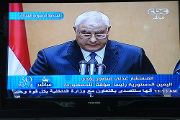
Egypt's interim president getting to business.
(Screen grabs courtesy Kodak Agfa/Flickr/Creative Commons)
Egypt (MNN) ― Egypt‘s new cabinet got to work this week, rolling sleeves up and tackling big problems.

Outside, former President Mohammed Morsi's supporters were ranting and marching through Cairo protesting against a military-backed cabinet and ouster. Greg Musselman, a spokesman for the Voice of the Martyrs Canada says, "It appears it's in organized chaos in some ways, but then on the streets, you're seeing all this violence and the Muslim Brotherhood. They're certainly making their point being heard, but also using violence to try to get Mohamed Morsi back into office."

The new secularist-leaning government essentially shuts out the Islamists that were elected into power last year. However, notes Musselman, the price of the political tumult is being paid by the Christians. "They felt that they needed to make their voice more heard and as a result of that, they have set themselves up, in some ways, to be the scapegoats. The Muslim Brotherhood has already started attacking Christians."

Since Morsi was forced from office, there has been a string of attacks on Christians in different provinces in Egypt. "On one hand, they see the situation, all that's gone on as a positive; yet on the other hand, as we've seen in reports over the last week or two, the attacks against Christians, there have been deaths, there have been churches attacked, (and) Christian businesses."

Specifically, 12 days ago, a priest was shot dead by gunmen in northern Sinai. Five days later, the body of a beheaded Christian man was found in the same area. Arson attacks on Christian houses and shops have also been reported in remote southern villages.

Just this week, a church near Minya, in central Egypt was looted and destroyed and the priest fled for his life. A number of other churches in the region suspended summer activities and postponed several gatherings. Musselman explains, "For the most part, Christians have been pretty low key when it comes to these kinds of situations because they know that retaliation can be something that would happen very naturally if they got involved because of the political and religious dynamic that takes place in the country."

At the beginning of the upheaval, there was hope expressed by the Christian community in Egypt, Musselman says. "The hope is that with the changing of the guard again that they will be more sympathetic to Christians. There may be less persecution coming from the state government, but again, with the radical groups who are not going to sit still, the fear is that these attacks will continue to increase." Despite the threat hanging over the heads of believers, Musselman says the Church will not cower in fear. "We really need to be praying, and that's the [request] coming from Christian leaders in Egypt: ‘Please pray for us. This is a time of great opportunity.' Also what's being said is that ‘Many are coming to know the Lord.'"

In these troubled days of Egypt, the followers of Christ are finding the paradox of persecution to be true. The violence of the militants is prompting questions among Muslims. "There is more of openness to the Lord and to the message of the Gospel." Click here for a link to more ways to get involved.

Wednesday, July 17, 2013

Christians the scapegoat of Egyptian coup

Egypt protests July 2013. (Photos courtesy Kodak AGFA)
Egypt (MNN) ― On one hand, Egypt appears calm as the interim prime minister assembled his cabinet over the weekend. He's trying to lead the country under an army-backed "road map" to restore civil rule after the military removed President Mohammed Morsi.

On the other hand, Egypt's Muslim extremists, enraged over the ouster, have apparently zeroed in on the nation's Christian minority, scapegoating them even though the Islamist leader was widely unpopular. E3 Partners Middle East expert Tom Doyle says, "I talked to leaders up in Alexandria that have said it's an absolute mess up there. It is on the radar, not as much as Cairo and Tahrir Square, but there are some terrible things happening."

Despite the recent seeming unity among the 20+ million on the streets calling for Morsi to step down, Doyle thinks this was not an unexpected reaction. "The believers, as they were elated with the removal of Morsi, they also at the same time were bracing themselves for blowback. So they were telling us, ‘Please pray for us."

More people packed the streets to call for Morsi to leave than elected him into office. Despite the fact that Christians could only make up a small percentage of the millions, Morsi's supporters seem to be targeting them for retribution, notes Doyle. This may be due to rumors that Christian leaders masterminded Morsi's removal. "It's everything that they detest. They can't really go after the military; they're not strong enough. The logical result is they're going to attack Christians, and we're seeing it."

It didn't help matters when the face of Christianity in Egypt took a public stand. "The Coptic pope came out and said some things in support of Morsi's removal, and then in support of the interim government. You could just see this conflict had to be on the horizon."

Since then, kidnappings, assaults, and worse have been reported. Many of the victims have been Christians, note reports from Fox News and Reuters. Historically, Egypt's Coptic community--roughly a tenth of the population--has faced severe marginalization and often has been imprisoned and tortured for their Christian faith.

Although there may be some protection from the military government, the future is all but clear. Will the remainder of this year bring more persecution and marginalization for Christians, or greater liberty to worship?

So far, the signs are not encouraging, says Doyle. In fact, the concern now is a chain reaction that could be sparked by what's happening in Egypt. "We just want to pray for Egypt--all of North Africa, too, because as Egypt goes, so usually goes North Africa. Admittedly, there are many more Christians. There are more Christians in Egypt than in any other Middle East country, but yet the shock waves go out from Egypt."

It's no coincidence, remarks Doyle, that this is happening at this time of year. It's spiritual warfare, he adds. "Here in the holiest month of Islam is when this conflict is happening; so we have put together a Facebook page: 8thirty8 to just give believers each day an opportunity to pray for believers in dangerous countries, that they'd be protected."

Is prayer effective against the wave of ire in Egypt? More than effective: it's catalytic. Doyle explains, "We're praying for Muslims to come to faith in Christ. About 75% of the Muslims that we've interviewed (who are now following Jesus) say that something significant happened to them in their journey to Christ during Ramadan."

Pray that the Egyptian Christians would rely on God's wisdom, especially during their transition of leadership. As they are building their government, pray that they would make Truth the foundation. And finally, says Doyle, "Pray for Muslims to have an opportunity to respond to Jesus' message of love."

Wednesday, April 10, 2013

Weekend of violence in Egypt

St. Mark's Cathedral (Photos courtesy Wikipedia)

Egypt (MNN) ― Over the weekend, Egypt suffered its worst religious violence since President Morsi came to power last year.

Open Doors Minister-at-Large Paul Estabrooks says tensions had already built up. "In light of some violence that occurred just days before the weekend, there was a funeral at St. Mark's Cathedral--the Coptic orthodox cathedral--which is the home of the pope of the Coptic Church, the main cathedral for the Coptic Christian believers."

The four who were buried on April 7 had died in clashes with Muslims on April 4 in a town north of Cairo. That violence was allegedly sparked by accusations that local Christians had made offensive drawings on the wall of a local religious school.

Christians have been concerned about their situation in Egypt ever since the Arab Spring began about two years ago, says Estabrooks, adding, "It just kind of shows again that the ‘Arab Spring' has become a ‘Christian Winter.'"

Tempers flared when the funeral procession came out of the church. When it was over, Estabrooks says, "At least 80 people were wounded in these clashes, so there was obviously tremendous fighting. Six people had been killed in the violence over the weekend. It just shows that things are very challenging there."

Angry Christians say there is no protection for religious minorities. In fact, notes Estabrooks, "The Christians claim that the police actually sided with the anti-Christian demonstrators and actually fired tear gas into the church cathedral as all of this was happening."

In a conciliatory gesture, President Mohamed Morsi condemned the violence against Christians. "His quoted words were: ‘I consider any attack on the Cathedral as an attack on me, personally,'" says Estabrooks. However, the Muslim Brotherhood's political party blamed the Copts for the violence, claiming the Cathedral gathering was a preparation "for civil war."

Coptic Christians compose about 10% of Egypt's estimated 90 million people. Many fled in the early days of the Arab Spring. For those who remain, they face increasing economic and social challenges because of their Christian faith. Pray that they will see the Lord provide for their basic needs, displaying a witness of God's care to non-Christians.

Most importantly, Estabrooks comments, "Pray that God reveals to them how they should biblically respond to this challenge. It would be a great help for them." Ask God to strengthen and embolden Christians in this time of political uncertainty and give them new opportunities to share the Gospel.

Wednesday, March 6, 2013

Tensions serve to unite the Body of Christ in Egypt


Egypt (MNN) ― There's been an uptick in tensions between Egypt's Muslims and Christ-followers.

The alleged conversion of a 36-year old Muslim teacher lies at the heart of recent unrest. She's been missing for several days and was reportedly seen outside a church in southern Egypt with a Christian friend.

When police used force against hundreds of Muslims trying to overtake the church last week, the crowds pushed back - resulting in over 10 injured officials.

While the divide dates back to biblical times, Egypt's Christians and Muslims have been increasingly at-odds since Mubarak fell from power two years ago. National instability adds another layer of anxiety.

"Things are going down and there's no real vision, and the people in Egypt are very angry. It's very bad," says Mike*, a representative ofIN Network in Egypt. He says many Egyptians who voted for Morsi this summer have now turned against him.

"[Morsi] gave a big promise, and said that he had a great plan to change things in Egypt to move the economy and…he gave many promises," Mike says. "But now it's about 6 months since he took over and the people find out that he didn't have a plan.

"He's not qualified to lead the country, and there's no stability. The people are depressed and it's a big disaster."
How's it affecting the Church?

"Because of the pressure and because they are not sure about the future, there is a spirit of prayer arising in all the churches," he explains. He says it's also serving to bring churches into a new spirit of unity.

"The churches are going to a new season," says Mike. "We've never experienced this before, so we need to train the leaders of the churches."

That's exactly what IN Network is doing: equipping pastors to reach an ever-changing Egypt. For three to five days, hundreds of church leaders are equipped with training and the skills they need to reach their communities for Christ.
Mike says they also put a curriculum together for Sunday School teachers who work with kids between the ages of 4 and 11.

"Many families are very poor, are not able to take care of their kids," explains Mike. "So we train Sunday School teachers how to reach the children, how to help poor children and even how to support some of their needs."

The training is given free to church leaders, but it costs IN Network approximately $15 per attendant to provide this type of resource. President of IN Network USA Rody Rodenhaver says they hope to raise $5000 to cover their training needs for the next two years.

Can you help? Click here .

"Egypt is a very important country, and whatever happens in Egypt, it affects the whole Arab world," says Mike, "so please pray for wisdom to the leaders, pray for stability in the government, and pray for resources, so the people do not suffer more than this."