Showing posts with label voice of the martyrs usa. Show all posts

Saturday, September 28, 2013

Muslim Brotherhood banned; good news for Christians?

(Photos courtesy Globovision)
Egypt (MNN) ― A lot can change in a year. Just ask Egypt's Muslim Brotherhood.

The organization is reeling from the stunning reversal of power it experienced this summer. They went from being the national darlings post-Arab-Spring to being repressed in the same vein they oppressed other religious minorities.

This week, an Egyptian court issued a ruling that could provide a reprieve for one of those minorities: Christians. Todd Nettleton, spokesman with the Voice of the Martyrs USA,  says, "They've banned the Muslim Brotherhood. They've said it's not acceptable as a Non-Government Organization. Its activities are banned. That's a court ruling on a piece of paper. The big question is: what does that mean on the ground?"

He goes on to say, "If this court ruling becomes reality, and if they actually do close down the Muslim Brotherhood, that's a hopeful sign for the Church and for Christians in Egypt. But again, it remains to be seen how this is actually going to play out on the ground with the authorities there who have to put this court ruling into practice."

Does this injunction dissolve the Muslim Brotherhood? The action also means seizure of the group's assets as it awaits a verdict from a higher court. The group has been accused of exploiting religion for political gain and of "terrorism" in the days after President Mohamed Morsi took office.

The military ousted him a year later, following massive protests throughout the nation. The court's latest action is part of a sweeping crackdown that has already put Muslim Brotherhood leadership and thousands of its supporters behind bars.

Nettleton asks the next questions that no one can answer. "Are the police going to actively pursue Muslim Brotherhood members? Are they going to arrest them? Are they going to take them into custody?"

The Muslim Brotherhood could decide to compromise with the caretaker government in order to remain a political player, there could be an outright revolt, or the group could continue to protest in an effort to question the legitimacy of the interim government.

Predicting their next move is hard. Every scenario plays out differently, depending on how unruly its participants become.

In the meantime, Christians are deeply concerned. In none of these scenarios do they come out on top. "The Muslim Brotherhood had repeatedly attacked churches, attacked Christian homes and businesses, and encouraged that radical Islamic opinion that all of the Christians should either leave Egypt or they should convert to Islam," Nettleton explains.

That could describe any time since Morsi came to power, however, it's likely that the incident he mentions began 14 August. Police violently cleared two protest camps set up by the deposed president's supporters in Cairo.
The crackdown sparked nationwide retaliatory violence that left hundreds dead and thousands injured. Christians were blamed for Morsi's downfall. An international human rights group documented dozens of burned churches and noted that most of the anti-Christian attacks were concentrated in southern Egypt. The potential of a volatile reaction is cause for dread among the battered remnant Church. Nettleton acknowledges, "That could happen again with this court ruling. That could be something that leads to churches and Christians being targeted as they say, ‘It's your fault that the court ruled this way. It's your fault that the Muslim Brotherhood has been ruled illegal.'"
Egypt's future is murky. No one knows if the next few months will lead to an exodus of the remaining believers, or if the nation will be so war weary that stability becomes the prize. Until then, VOM remains a quiet presence in the country, says Nettleton. "Voice of the Martyrs has very significant operations in Egypt to help the Church. We provide Bibles and Scriptures to those that need them. In many cases, we provide medical care to those who were injured in persecution-related attacks, as well as the simple act of encouragement."
What else can be done? Talk about what's happening. The silence from the North American Church has been deafening so far. Raise awareness about the plight of Christ-followers living in Muslim nations like Egypt. Let them know they're not forgotten, says Nettleton. "We need to pray that the Lord will protect them and look out for them. I think, secondly, we need to pray that they will respond in a Christ-like way to the persecution that they're facing. That can be an incredible witness for Christ: the seeds for revival in a country."

Saturday, September 7, 2013

Persecution on the upswing: do we care?

(Photos courtesy Voice of the Martyrs USA)
International (MNN) ― The Church is under fire. Upon reading that statement, half the people who started reading this article just moved on to something "more interesting."

And that response is troublesome.

The plight of believers gets little attention on the global stage, leaving many Christians throughout North America unaware and therefore indifferent to what's going on in the body of Christ.

Mention persecution, and eyes glaze over. Silence continues because not enough church leaders are talking about it from the pulpit. Although Barna Research states the opposite, many North American church leaders and pastors say their flocks don't want to hear such negative and depressing things.
That's despite the following:

Al-Qaeda vows to slaughter Christians after the U.S. "liberates" Syria. Nigeria's Boko Haram has slaughtered 3,000 Christians since they began waging war. Egypt's Coptic Church is under fire. A Church official there says after the recent violence that destroyed over 72 churches, there are just 57 Christian churches in the entire country--down from more than 300 as recently as 2003.

The Barnabas Fund, a ministry to the persecuted Church, is airlifting Christians out of Sudan. So far, they've evacuated more than 5,000 Christians from northern Sudan. In Pakistan, believers are still trying to put their lives back together after 3,000 angry Muslims torched the Joseph Colony six months ago. That's only part of the Middle East and North Africa.

Asia is also on the list. North Korea is trying to erase Christians and has been atop the Open Doors World Watch List for 11 years as the world's worst persecutor of Christians. There's religicide going on in Burma and in parts of India.

And still, there's relative silence from North America. There are a few who have been speaking out as loudly as they can, but the overall impassive response to the worldwide persecuted church begs the question: Do we care?

Todd Nettleton, a spokesman for the Voice of the Martyrs USA says, "I think the question arises because as we look around the world, we see more than 60 countries where Christians face some form of harassment or persecution. And you look at the average response of the average American Christian which is basically, ‘Man, that's too bad.'"

A defensive response is also common. But here, too, Nettleton asks, "If we care, how is that being lived out?

How are we SHOWING that we care? Not based on clicking the 'Like' button on a Facebook page, but how are we showing that we care in action that is designed to produce a result or some easing of the suffering of our Christian brothers and sisters?"

He goes on to explain, "How we show we care is by being involved, by connecting with these Christians who are suffering. The first line of doing that really is knowing them: knowing their names, knowing their situations, knowing the countries that they live in so that we can pray effectively."

Nettleton is also quick to note that the issue has gotten more traction as awareness of social justice issues has risen. "More people know about the persecuted church now than did 15 or 20 years ago. I think the International Day of Prayer for the Persecuted Church--which is coming up in November--has been a significant part of making the American church aware of what's happening with persecuted Christians."

But there's still a long way to go, he concedes. "One of the challenges is: Americans are pretty home-focused. Our media covers things that are happening in America. In a 30-minute news program, we might get two minutes of what's going on around the world."

Another aspect is understanding the spiritual and biblical component of persecution. "These are not just statistics or people who live 10,000 miles from here. This is our family. These are our brothers and sisters."

Nettleton points out his own two brothers: if they were to be arrested and face the scenarios faced by Christians in Eritrea, for example, he would be making noise about their plight. The same should be true of the body of Christ. "I should be aware of what's happening with them. And when they're being persecuted and oppressed, I should be speaking out on their behalf. I should be letting people know that it is happening and doing whatever I can within my power to make it stop happening."

When believers put real faces, real names, and real places to the stories, the bigger picture becomes clearer. Nettleton explains, "It's not presented as this is what the Bible said was going to happen. Jesus said, 'If you follow Me, the world will hate you.' This is happening all around the world. Followers of Christ are being hated because they're followers of Jesus Christ."

Sometimes Americans avoid the discussion of the persecuted church because the news is discouraging. It's hard to hear and to feel helpless about changing anything. However, Nettleton breaks response down to its most simple elements. "You start by praying. You educate yourself. And then, whatever God lays on your heart as a response, you keep saying Yes to that and keep responding to that. You will find that you will enter into the ‘fellowship of suffering.'"

Then what? Nettleton explains that when people invest in taking on the troubles facing believers worldwide, they begin to understand the God who provokes such a response. As a result, "The persecuted church is strengthened because we can encourage them, we can stand with them, and we can be a voice for them. But we are strengthened, as well, because we see their faithfulness, and we see God's faithfulness to them. And our faith is encouraged and challenged, and we find that we grow spiritually, as well."

Monday, August 26, 2013

A Muslim cleric stirs up trouble

Written on the walls in southern Egypt:
 "Love your enemies, we will pray fervently."
(Image courtesy 8thirty8/Facebook)
Egypt (VOM) ― Christians in Egypt today are experiencing increased attacks against them in conjunction with the government's attempt to disperse two pro-President Morsi camps calling for his re-instatement. At least 250 people have been killed and 1,000 wounded during the raid.

Egypt has declared a month-long state of emergency after scores of people were killed and more wounded during the protests and raid earlier this month.

Forty church buildings have been attacked and set on fire. Three of the churches were in Minya, two in Fayoum, and one in Sohag. At the same time, Christian-owned businesses in Sohag and Assuit were targeted by radical Muslims. A convent called Al Raai Al Saleh in Suez was also set on fire.

In the midst of the chaos, Egyptian Christians have still seen the hand of God at work. According to a worker with Voice of the Martyrs, the Good Shepherd Monastery in Suiz city was surrounded by a mob of radical Muslim Brotherhood members earlier today. The monastery was full of women and children.

Miraculously, everyone was able to flee to safety as the monastery was attacked and burned down.
Sources report that Mohammed El Beltagy, a leader of the Muslim Brotherhood, said "operations against Christians will start now." The Muslim Brotherhood routinely threatens Christians, chanting and protesting against them. A VOM worker said that the Muslim Brotherhood leaders are seeking to disrupt the national unity by creating sedition between Muslims and Christians.

These recent attacks against Christians are not the only ones that have occurred in the past weeks. In another church on Aug. 3, hundreds of Morsi supporters surrounded a church in Sohag and fixed al-Qaeda's flag on the church. In Menia city the same day, over 50 shops and homes owned by Coptic Christians were burned and looted by radical Muslims. Over 20 people were injured in those attacks.

In July, two Christians were killed in northern areas of the Sinai Peninsula. On July 18, two churches were attacked during the funeral procession for two Muslim Brotherhood members. In the Luxor province, the newly-appointed head of police is suspected of intentionally failing to respond to an incident on July 5 in which four Christians were killed.

In response to the declared emergency, the government is enforcing a curfew in eleven different cities from 7 p.m. to 6 a.m. Christians hope that the worst of the violence has passed.

Egyptian brothers and sisters request prayer that an effective rule of law and order will be established to benefit all citizens, and that those affected by the violence will know the healing touch of Jesus. The Voice of the Martyrs is continuing to actively monitor the situation in Egypt and will provide assistance as needed.


Sunday, July 14, 2013

Good news for believers from Iran

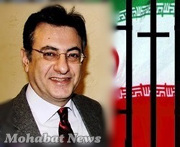
Pastor Robert Asseriyan. (Photo courtesy Mohabat News)
Iran (VOM) ― Despite reports of crackdowns on Christians in Iran, there is one bright spot.

According to reports from Mohabat News and the Voice of the Martyrs USA, Pastor Robert Asseriyan, one of the leaders of the Assembly of God Church in Tehran, was released from prison. He had been arrested during a worship service at the church on May 21.

The Farsi services at the church--one of the last "building churches" that remained open in Iran--have been forcibly closed down by the police, according to Mohabat News.

It seems one of the conditions for Pastor Asseriyan's release was his silence, as authorities instructed him and his family not to be interviewed by the media or to make public statements about his arrest, his 43 days in prison, or conditions for his release. The status of the charges against him is unclear at this time.

Often in Iran, Christians are released from jail after making substantial bail payments, but the charges against them are never dropped. In this way, police can pick them up at any time in the future and can use the unresolved case against them to pressure them to cease Christian activities.

Please continue to pray for Pastor Asseriyan and his family. Pray also for other Christians who remain imprisoned in Iran. You can write letters of encouragement to several of them through the Prisoner Alert Web site.

Monday, May 27, 2013

Nigeria (MNN) -- Nigeria approaches Boko Haram with Dove and Hawk

(Boko Haram images courtesy Compass Direct News)
Nigeria (MNN) ― Nigeria is in lockdown.

Nigeria has rebels on the run. Nigeria is releasing criminals.

What's really going on? Todd Nettleton, a spokesman with the Voice of the Martyrs USA, would not confirm the reports of the Islamist terrorists being in disarray. However, he did address the government's plans to release members of the Boko Haram Islamist group held on suspicion of terrorism, in phases.

In an e-mailed statement by the senior special assistant to the President on public affairs, Dr. Doyin Okupe said the effort was aimed at the peace effort.
The statement read in part:

"It has become necessary to make further clarification on the directive for the release of some people held in connection with activities of the Boko Haram sect, in view of misrepresentations in some sections of the media.

"The order for the release of the detainees will be in phases.

"Concerning the first batch, the emphasis is on women and children who have been in detention on suspicion of involvement and/or connection with insurgency in some parts of the country.

"This will be followed by other phased releases where cases will be treated on their individual merits by the Defence authorities and security agencies."
Yet, it follows a decision by President Goodluck Jonathan to impose a curfew as well as emergency rule in the northeastern states of Borno, Yobe, and Adamawa, and start a military campaign against Boko Haram Islamist insurgents.

Nettleton explains, "My perception is that President Goodluck Jonathon is taking a dual approach in the sense that with one hand, he's reaching out the hand of fellowship. In the other hand, he's kind of balled up a fist."

Rather than viewing the approach as a ‘see what will stick,' he says it's one of options. "If you will talk peace, and if you will cooperate, yes, there's a pathway for that. If you won't, then we're going to come and hunt you down. I think it'll be interesting, in the weeks to come, which pathway produces the most progress in establishing peace and security in northeastern Nigeria."

However, that has been an uphill battle ever since Jonathon took office. "There's not always the level of cooperation in the northern states with the federal government to get a handle on some of these situations.

They want to see a Muslim president elected, and they see it as somewhat good if there are problems, if the people lose confidence in the Christian president that's currently in office."

Boko Haram is a terror group whose campaign is to turn Nigeria into an Islamic state. The resulting bloodbath has cost the lives of 3,000 people in the past four years, and Christians have borne the brunt of the Boko Haram's wrath. In the early months of 2013, it seemed that every Sunday brought news of another church bombing or drive-by shooting massacre. Then, if possible, the violence escalated.

After attacks that left several hundred people dead in the previous fortnight in towns near Maiduguri, on May 14th, Jonathon imposed the state of emergency.

Morning Star News reported that within an hour of the state of emergency declaration in Borno state, Faye Pama Musa, leader of the chapter of the Christian Association of Nigeria was assassinated. Police say the gunmen followed him home from the evening Bible study he led at his church.

Security got tighter at church services. Nettleton noted the presence of armed guards outside the churches during his visit last week, noted vehicle proximity to buildings in case of car bombs, and yet, the most notable thing, he said, was that "people continue to gather for worship even though they know there are risks, even though they know there could be attacks. The church service that I attended was a fabulous church service. I really enjoyed the presence of the Lord and worshipping together with my Nigerian brothers and sisters."

Despite the violence, despite the tension and the threat of harm, people are still following Christ openly and sharing their faith. Nettleton acknowledges that is where the challenge gets real. "That's where the danger is, when you're going into the Muslim community and sharing the Gospel. One of the things they said is ‘to be effective, that's almost always a one-on-one conversation' where they can sit down and talk to somebody, and look at the Bible and look at the Quran, and point them to Jesus Christ."

For the new Muslim-Background Believer (MBB), the risk comes not from outside assassins, but from those they love and trust. "Do you tell your family? Do you tell your friends? How long after you accept faith do you come forward and say, ‘Listen, dad...listen, older brother: I'm a Christian now. I'm following Christ...', because that is where the danger lies, even danger from your own family members."

Despite the confusion surrounding Nigeria's approach to the Boko Haram question, Nettleton says one thing is clear: Christians are hard-pressed, and they're begging for their family to advocate for them. "They asked us to pray for peace, for there to be some kind of long-term stable peace in their country. Secondly, we need to pray for God's protection. I think also, we can pray for these Muslim converts and for the evangelists that are reaching out into the Muslim community."

Monday, May 20, 2013

Pakistani leader moves to form new government

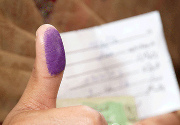
(Cover photo: Nawaz Sharif's election symbol. Story photo:
 Pakistani voter (Images courtesy Olaf Kellerhoff,
Creative Commons, Flickr)

Pakistan (MNN) ― Despite claims of vote rigging, Pakistan's Nawar Sharif is setting an aggressive agenda for his term as Prime Minister.

He's the first to be a three-term Prime Minister, his last period in office ending 14 years ago in a military coup. Sharif inherits a government fraught with challenges: economy, terrorism, and foreign relations with the West. Spokesman for the Voice of the Martyrs USA Todd Nettleton says at first blush, "The good news here is that a duly-elected government of Pakistan is about to hand over power to another duly-elected civilian government in Pakistan. That's the first time that that has happened."

Additionally, initial results show that the Muslim League (Nawaz), of which Sharif is head, leads in 114 constituencies out of 272. Sharif is seen as a fiscal conservative, leaning heavily toward free market economics and deregulation. However, Nettleton suggests that as far as religious freedom goes, things aren't likely to change much. "It's hard to see a situation where there is just a huge dramatic change on the issue of religious freedom, on the issue of the blasphemy laws there just because he's been in power before. If he wanted those kinds of changes, you would have thought that he would have made some moves toward them when he was in power last time."

Elections in Egypt ushered in the Muslim Brotherhood, which introduced a more Sharia-friendly government--much to the dismay of believers. With the Muslim League apparently coming into power, the comparison between Egypt's changes and Pakistan's upcoming adjustments seem obvious. However, on that point, Nettleton demurs. "I don't think it's as overtly Islamic as the Muslim Brotherhood in Egypt, but it's hard to say, once they get into power, who's making the decisions. Those will be things that we'll be watching."

One thing does seem unlikely: changes to the blasphemy law that has given Christians no end of trouble, says Nettleton. "It's hard to imagine a government there who would anger the radical elements within Pakistani society by really making a concerted effort to change the blasphemy law or even to modify it."

In 1860, offenses relating to religion were first codified by India's British rulers. They were then expanded in 1927. Pakistan inherited these laws after the partition of India in 1947, and they remain firmly entrenched in the penal code.

Despite its infringement of the constitution, Sharia law is increasingly applied, even to Christians and Hindus--especially in areas where Islamist groups have control or influence. Many Pakistani Christians have been falsely accused under the Blasphemy Law, or Law 295. Law 295a, blaspheming Islam, and Law 295b, blaspheming the Qur'an, are criminal offenses. Law 295c makes blaspheming Mohammed a crime punishable by death.

Accordingly, "Christians in Pakistan are such a tiny minority that they always watch with a lot of caution what the government is doing and what direction things are going," says Nettleton, and with good reason: Pakistan ranks 14th on the Open Doors World Watch List. It's a compendium of the top 50 countries in the world known for their persecution of Christians.

Pray that Christians in Pakistan will have a bold testimony to those around them. Pray for protection for Christians facing intimidation and threats. One more thing, adds Nettleton: "I think we need to pray for this new government as well. We need to pray that they will stand for minority rights, that they will stand for religious freedom and will protect the rights of Christians and the rights of others to be a part of Pakistani society."

Monday, December 3, 2012

Crisis tests Egyptian constitution

Tahrir Square, November 2012
(Cover photo by Moud Barthez. Story photo courtesy Open Doors USA.)

Egypt (MNN) ― Egypt has a new draft constitution, but it didn't come about the way people hoped. 

On Friday, in a 16-hour vote, Islamists approved the charter without the participation of liberal and Christian members. The move essentially pre-empted a court ruling that could dissolve the constituent assembly, but it also inflamed the conflict between the opposition and President Mohammed Morsi.

The draft still faces a national vote in the next 30 days. If it remains unchanged, human rights experts say Muslim clerics could bring restrictions on freedom of speech, women's rights, and other liberties. 

Secular and Christian leaders complained that hardline Islamists were determined to draft a constitution heavily influenced by Sharia law. In frustration, at least 20 members of the constitutional assembly had resigned in protest by early November. 

Without dissenting opinion, the Islamists included what they wanted. By the time the vote rolled around, television footage of Parliament's chamber showed that of the 85 members in attendance, not a single Christian was present and there were only four women, all Islamists. Many of the men wore beards, the hallmark of Muslim conservatives.
It is against this backdrop that the new Coptic Pope Anba Tawadros, takes up the leadership staff. 

His is a term where Christians have faced increasing pressured since the January 2011 revolution that deposed President Hosni Mubarak. There's been a corresponding rise in anti-Christian violence, and Christians now wonder what their role is. Todd Nettleton, a spokesman for the Voice of the Martyrs USA, says, "Christians in Egypt are concerned because the government really seems to be moving against them, and there are not a lot of positive signs where they would feel protected or they would feel like there's going to be more freedom for Christians in Egypt; it seems like it's going in the other direction."

Pope Tawadros immediately made it clear that his focus was not the political arena. Nettleton explains, "He has talked about focusing on the Church and Christianity rather than focusing on what the government is doing. We'll see what that means to him over the coming weeks and months as we see how he responds." 

However, with no input from the Christian community in the country's constitution, people are looking to Pope Tawadros for guidance since he's the voice and face of the Coptic Church in Egypt. Given what's at stake, says Nettleton, expectations are high. "They hope that he will be a voice that says ‘Christians have a place in Egyptian society. Christians deserve protection.They deserve the freedom to worship without fear for their lives'." 

That begs another question: will the pope change his approach given the circumstances unfolding in Egypt over the last 10 days? What will be his level of representation on behalf of the Christians in front of the state? The pursuit of a secular state would benefit Christians more than a religious one, since that's the direction they're headed in now. 

Concerns over the lack of representation in the draft constitution surface as the reality of religious freedom issues emerges. Nettleton notes, across all age groups in the Egyptian Church, "The biggest concern is probably what the place of the Christians is going to be in Egyptian society under the new government. Are they going to be a protected minority that is allowed to exist and allowed to worship and allowed to meet together? Or are they going to be pressured to disappear?"

Pope Tawadros is expected to continue encouraging Christians to step by themselves into the political arena and take things in their own hands. To do that, he will need to stop doing it for them. This will be a time for growth amongst followers of Christ in Egypt. 

Although the news of the charter was dismaying, it's not even close to the final chapter. In fact, it may be the beginning of a new one. Hardship is a unique crucible for the Gospel. Nettleton sums it up this way: "They [Christians] can be an incredible witness for Christ because the ability to forgive and the ability to love those who are persecuting us: there is not a human explanation for that. It can only be a supernatural explanation that God and the Holy Spirit have empowered us to be able to live that way."

Tuesday, October 2, 2012

Nigerian seminary attacked; broader aim revealed

File footage of past attacks on churches in Nigeria (Courtesy Compass Direct)

Nigeria (MNN) ― A bomb blast and gunfire shook an area around a seminary in northern Nigeria on Sunday, leaving two dead. 

It was not immediately clear who was behind the blast in the city of Zaria, but extremist group Boko Haram has been blamed for hundreds of deaths as part of its insurgency in northern and central Nigeria.

Investigators said the blast was the result of an improvised explosive device. The targeted area included the school as well as the worship center.

Sound like a familiar story? In this case, it involved the Salafi, students who are studying Sunni Islam. Todd Nettleton, spokesman for Voice of the Martyrs USA, explains what this might mean. "I think it goes to show the nature of Boko Haram, that they have a very narrow vision of what Islam is and what it should be, and they want all Nigerians to fall within that very narrow vision." Nettleton goes on to say that reports indicated "the Salafist cleric who runs this Islamic boarding school has been at odds with Boko Haram in the past. It seems like that is a strong possibility of a Boko Haram attack in Nigeria." 

The violence came a day ahead of commemorations marking 52 years of Nigerian independence. However, says Nettleton, "They celebrate independence, but I think there's a real threat to their independence that is growing in northern Nigeria among Boko Haram."
 
Nigeria's north has been hit by scores of deadly attacks attributed to Boko Haram. In the last two years, their rebellion has cost 1,400 people their lives. 

While Boko Haram has claimed to be fighting for the creation of a state in Nigeria's north, Nettleton warns: don't be fooled. "They talk about wanting an independent state that would be run according to their vision of what true Islam is, but their demands have changed over time, as well."

The lines have gotten muddied on what Boko Haram actually wants. The name of the group is generally translated as "Western education is sinful," but in Hausa it literally means "book forbidden." The founders of the group believed Islam had been corrupted by Westernization, especially education and Christianity. They also rejected the legitimacy of the state and of Muslim traditional rulers. 

What they wanted, explains Nettleton, was a Sharia state governed by orthodoxy. "Obviously, Christians fall outside of that. We've seen attacks on churches, we've seen attacks on Christian institutions, but this shows that even if they [Boko Haram] think fellow Muslims are outside of what they call the ‘true teaching of Islam,' they will attack them as well."

The battle for Nigeria's soul intensifies. While Islamic terrorists rely on weapons and fear, Nettleton says Christians need to trust in God's love and eternal promises. That's also one of the challenges for the church in Northern Nigeria: the issue of fear. "Just imagine when you wake up Sunday morning and are deciding, ‘Should we go to church or not?' If you add in the threat that ‘maybe our church will be bombed while we're there this morning,' you imagine the sense of fear and the sense of concern that that would raise." 

That's what standing in solidarity would mean, Nettleton adds. "We can pray with them against that spirit of fear, and against that spirit of intimidation. I think the second issue then becomes: 'How are we going to respond to those who attack us? How are we going to respond to the Muslims around us?' There is obviously a place for evangelism; there's a place for sharing." 

The bigger issue is how to respond to the violence of the insurgents and "the issue of forgiveness, the issue of loving those who society would say are our enemies. That's a difficult thing, and that's another thing that we can pray for our Nigerian brothers and sisters, for them to be able to do that with God's help."

Ask God to protect them and help them as they seek to respond in love and prayer for their Muslim attackers. Pray for the attackers, that God's mercy and grace might pierce through the hardness of these hearts so opposed to His name. Ask God to send peace to Nigeria. 


Friday, September 28, 2012

Voice of the Martyrs gives pastor new dignity

(Image courtesy of VOM)

India (MNN) ― In a northern region of India, Pastor Khanna spent 40 days in jail last November for baptizing seven Muslims. While the new believers insisted they weren't offered money to convert, this didn't stop local media from destroying Khanna's reputation in the community.

"You would hang your head in shame at what was written about [the pastor's] family," said a Voice of the Martyrs, USA partner.

The ordeal took a serious toll on Khanna's family and the church's view of his leadership. His wife became sick, as well as deeply disappointed by the church's lack of support. Meanwhile, church leaders hinted that Khanna shouldn't have baptized the converts from Islam.

Although his case was eventually dropped because of a lack of evidence, Khanna was dismissed from church leadership without pension.

But VOM has given the pastor new dignity. When lawyers in Kashmir refused to represent Khanna during his ordeal, VOM's partner in India helped him out. They recently came to the rescue again by offering the former pastor a job in Bangalore.

Pastor Khanna now speaks on behalf of persecuted Christians in churches throughout India. The move has improved both Khanna's confidence and his wife's health. Pray that her health continues to improve.

"I am not bothered by what happened to me, but I glorify the Lord," declared Pastor Khanna.

While Hinduism is India's majority religion, India has the world's third-largest Muslim community. Most people in Kashmir are Muslim. They surround churches during worship services and circulate hate literature with a racial undertone against Christians. Pig blood is highly offensive to Muslims, and the Kashmir media portrays believers as people who use it in their religious practices.

Pastor Khanna held many community-wide events in Kashmir, trying to reconcile Muslims and Christians. The controversial baptism that triggered Pastor Khanna's arrest was recorded at one of these events, and the video was later posted to YouTube.

VOM supports persecuted pastors in restricted nations throughout the world. Click here to learn more about their work. 

You can sponsor Pastor Khanna and write him a letter by contacting VOM directly. Click here to fill out the form and type "Pastor Khanna" in the comments field.


Friday, December 16, 2011

U.S. declares war in Iraq at an end

(Photos by Gregg.Carlstrom)

Iraq (MNN) ― U.S. defense secretary Leon Panetta formally declared an end to nine years of a war in Iraq on Thursday at a ceremony in Baghdad.

The cost: 4,500 American dead, 32,000 wounded and more than $800 billion. However, Mr Panetta said that "the mission had succeeded in "making that country sovereign and independent and able to govern and secure itself."

According to government reports, the pullout of U.S. troops began in 2009, and combat operations stopped a year later. U.S. troops pulled out of the cities in 2009 and halted combat operations a year later. Training Iraqi personnel has been on schedule, so it's assumed that the withdrawal will have little immediate impact on the lives of most Iraqis.

However, that might not be true for one of the minority groups in Iraq: the Christians. Spokesman for The Voice of the Martyrs USATodd Nettleton explains, "The potential is there for it to affect believers, because believers have had a sense that American presence provided at least a little bit of protection, a little bit of oversight for them."  

However, Nettleton notes that "the reality is that there have been attacks on believers while the Americans have been there. There will be attacks on believers, now that they're gone. It is simply a continuation of the persecution that Christians in Iraq face on a day-to-day basis."

About 334,000 Christians remain in Iraq, less than half of the number there in 1991. The violence has caused hundreds of thousands of Iraqi people--both Muslim and Christian--to leave the country, and many more are displaced inside Iraq, particularly in Kurdistan.

There is one question Iraq's believers want answered. "Now that the Americans are leaving, now that the Iraqi government is fully in charge and fully in place, what will be done about religious freedom? Will there be protections for Christians to meet together?"

A wait-and-see approach is the only option. In the meantime, the Gospel is going forward. "The Voice of the Martyrs is directly involved in ministries that equip the church, particularly equipping Christians who are doing evangelism. We provide Bibles, we provide other Gospel materials. We are also providing other material needs to Christians, especially those who have been displaced by the violence."

Pray for protection for the Christians who remain. Nettleton says their teams are praying for government leaders who will stand for religious freedom. "We can pray about the evangelism efforts that are going on. We can pray for those who are spreading the Gospel that God will protect them, that seeds will be planted, and that lives will be changed by the love of Christ."