Showing posts with label pray. Show all posts

Thursday, October 3, 2013

More violence rattles Pakistan

(Photos courtesy Morning Star News
 / Voice of the Martyrs Canada)
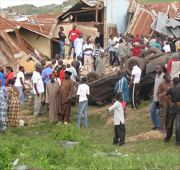
Pakistan (MNN) ― On Friday, days after a massive church bombing in Peshawar, Pakistan, another bomb exploded on a crowded bus carrying government officials. This blast killed 17 people and wounded more than 40. It was the second major attack in or near the northwestern Pakistani city in a week.

A Taliban splinter group claimed responsibility for that attack as well. Both were reportedly in retaliation for American drone strikes in the nearby tribal belt. However, the attacks also spurred new conversation about the wisdom of peace talks with the terror group as well as security for the minorities they were targeting.

In fact, the security issues provoked demonstrations on Monday and Tuesday that brought parts of Pakistan's cities to a standstill. Voice of the Martyrs Canada spokesman Greg Musselman explains, "That led to Christians protesting in cities around the country saying 'the military needs to do a better job of protecting us.' The police, in many cases, situations have happened, and we've seen government officials, police, and military, not be very active." Christians held crosses aloft, burned tires and blocked roads across the country as they demanded better protection from the government.

The U.S. Commission on International Religious Freedom (USCIRF) has warned that the attack on All Saints Church could be the first of many if Pakistan's government doesn't take decisive action to bring the perpetrators to justice. Musselman agrees. Violence tends to build its own momentum. "As one colony is attacked, or a church is bombed or Christians are attacked, then it causes others to say, ‘This is a good way of going after these infidels, these ones that love the West.' It's used as an excuse to attack. The fear definitely is that these kinds of things will continue and become more violent."

After confirming the attack on All Saints Church as the deadliest attack on Pakistani Christians in Pakistan's history, USCIRF said that words and promises to protect the religious minority will not be enough to stop the ever-escalating levels of intolerance sweeping across Pakistan. "Certainly, the government of Pakistan and local officials don't want to see these kinds of suicide bombings and massive attacks, but then what that led to was Christians saying, ‘You NEED to protect us.' That's the word coming from governments around the world: ‘You need to do a better job of protecting your minorities--in this case, Christians.'"

What's more, the Taliban group issued this threat through Reuters: "[The Christians] are the enemies of Islam, therefore we target them. We will continue our attacks on non-Muslims on Pakistani land." To that, Musselman adds, "This has been going on for a long time. I don't think it's going to get any better. But, it has caused the church of Christ in Pakistan and many corners of the country to stand up and say, ‘We're here, too, and we have a right to be here.'"

Pakistan ranked #14 out of 50 on the Open Doors USA World Watch List of countries that persecute Christians. If the pattern holds true, there will be more headlines and more bloodshed. To that end, Musselman urges solidarity among the followers of Christ. "Be praying that the Lord will continue to draw people to Himself. Then also, [pray] for the protection of these new believers, especially those from Muslim backgrounds, and then also for the Christian leaders that they would have wisdom on how they talk to their people."

Saturday, September 7, 2013

Persecution on the upswing: do we care?

(Photos courtesy Voice of the Martyrs USA)
International (MNN) ― The Church is under fire. Upon reading that statement, half the people who started reading this article just moved on to something "more interesting."

And that response is troublesome.

The plight of believers gets little attention on the global stage, leaving many Christians throughout North America unaware and therefore indifferent to what's going on in the body of Christ.

Mention persecution, and eyes glaze over. Silence continues because not enough church leaders are talking about it from the pulpit. Although Barna Research states the opposite, many North American church leaders and pastors say their flocks don't want to hear such negative and depressing things.
That's despite the following:

Al-Qaeda vows to slaughter Christians after the U.S. "liberates" Syria. Nigeria's Boko Haram has slaughtered 3,000 Christians since they began waging war. Egypt's Coptic Church is under fire. A Church official there says after the recent violence that destroyed over 72 churches, there are just 57 Christian churches in the entire country--down from more than 300 as recently as 2003.

The Barnabas Fund, a ministry to the persecuted Church, is airlifting Christians out of Sudan. So far, they've evacuated more than 5,000 Christians from northern Sudan. In Pakistan, believers are still trying to put their lives back together after 3,000 angry Muslims torched the Joseph Colony six months ago. That's only part of the Middle East and North Africa.

Asia is also on the list. North Korea is trying to erase Christians and has been atop the Open Doors World Watch List for 11 years as the world's worst persecutor of Christians. There's religicide going on in Burma and in parts of India.

And still, there's relative silence from North America. There are a few who have been speaking out as loudly as they can, but the overall impassive response to the worldwide persecuted church begs the question: Do we care?

Todd Nettleton, a spokesman for the Voice of the Martyrs USA says, "I think the question arises because as we look around the world, we see more than 60 countries where Christians face some form of harassment or persecution. And you look at the average response of the average American Christian which is basically, ‘Man, that's too bad.'"

A defensive response is also common. But here, too, Nettleton asks, "If we care, how is that being lived out?

How are we SHOWING that we care? Not based on clicking the 'Like' button on a Facebook page, but how are we showing that we care in action that is designed to produce a result or some easing of the suffering of our Christian brothers and sisters?"

He goes on to explain, "How we show we care is by being involved, by connecting with these Christians who are suffering. The first line of doing that really is knowing them: knowing their names, knowing their situations, knowing the countries that they live in so that we can pray effectively."

Nettleton is also quick to note that the issue has gotten more traction as awareness of social justice issues has risen. "More people know about the persecuted church now than did 15 or 20 years ago. I think the International Day of Prayer for the Persecuted Church--which is coming up in November--has been a significant part of making the American church aware of what's happening with persecuted Christians."

But there's still a long way to go, he concedes. "One of the challenges is: Americans are pretty home-focused. Our media covers things that are happening in America. In a 30-minute news program, we might get two minutes of what's going on around the world."

Another aspect is understanding the spiritual and biblical component of persecution. "These are not just statistics or people who live 10,000 miles from here. This is our family. These are our brothers and sisters."

Nettleton points out his own two brothers: if they were to be arrested and face the scenarios faced by Christians in Eritrea, for example, he would be making noise about their plight. The same should be true of the body of Christ. "I should be aware of what's happening with them. And when they're being persecuted and oppressed, I should be speaking out on their behalf. I should be letting people know that it is happening and doing whatever I can within my power to make it stop happening."

When believers put real faces, real names, and real places to the stories, the bigger picture becomes clearer. Nettleton explains, "It's not presented as this is what the Bible said was going to happen. Jesus said, 'If you follow Me, the world will hate you.' This is happening all around the world. Followers of Christ are being hated because they're followers of Jesus Christ."

Sometimes Americans avoid the discussion of the persecuted church because the news is discouraging. It's hard to hear and to feel helpless about changing anything. However, Nettleton breaks response down to its most simple elements. "You start by praying. You educate yourself. And then, whatever God lays on your heart as a response, you keep saying Yes to that and keep responding to that. You will find that you will enter into the ‘fellowship of suffering.'"

Then what? Nettleton explains that when people invest in taking on the troubles facing believers worldwide, they begin to understand the God who provokes such a response. As a result, "The persecuted church is strengthened because we can encourage them, we can stand with them, and we can be a voice for them. But we are strengthened, as well, because we see their faithfulness, and we see God's faithfulness to them. And our faith is encouraged and challenged, and we find that we grow spiritually, as well."

Wednesday, July 17, 2013

Christians the scapegoat of Egyptian coup

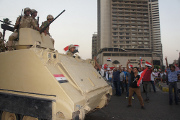
Egypt protests July 2013. (Photos courtesy Kodak AGFA)
Egypt (MNN) ― On one hand, Egypt appears calm as the interim prime minister assembled his cabinet over the weekend. He's trying to lead the country under an army-backed "road map" to restore civil rule after the military removed President Mohammed Morsi.

On the other hand, Egypt's Muslim extremists, enraged over the ouster, have apparently zeroed in on the nation's Christian minority, scapegoating them even though the Islamist leader was widely unpopular. E3 Partners Middle East expert Tom Doyle says, "I talked to leaders up in Alexandria that have said it's an absolute mess up there. It is on the radar, not as much as Cairo and Tahrir Square, but there are some terrible things happening."

Despite the recent seeming unity among the 20+ million on the streets calling for Morsi to step down, Doyle thinks this was not an unexpected reaction. "The believers, as they were elated with the removal of Morsi, they also at the same time were bracing themselves for blowback. So they were telling us, ‘Please pray for us."

More people packed the streets to call for Morsi to leave than elected him into office. Despite the fact that Christians could only make up a small percentage of the millions, Morsi's supporters seem to be targeting them for retribution, notes Doyle. This may be due to rumors that Christian leaders masterminded Morsi's removal. "It's everything that they detest. They can't really go after the military; they're not strong enough. The logical result is they're going to attack Christians, and we're seeing it."

It didn't help matters when the face of Christianity in Egypt took a public stand. "The Coptic pope came out and said some things in support of Morsi's removal, and then in support of the interim government. You could just see this conflict had to be on the horizon."

Since then, kidnappings, assaults, and worse have been reported. Many of the victims have been Christians, note reports from Fox News and Reuters. Historically, Egypt's Coptic community--roughly a tenth of the population--has faced severe marginalization and often has been imprisoned and tortured for their Christian faith.

Although there may be some protection from the military government, the future is all but clear. Will the remainder of this year bring more persecution and marginalization for Christians, or greater liberty to worship?

So far, the signs are not encouraging, says Doyle. In fact, the concern now is a chain reaction that could be sparked by what's happening in Egypt. "We just want to pray for Egypt--all of North Africa, too, because as Egypt goes, so usually goes North Africa. Admittedly, there are many more Christians. There are more Christians in Egypt than in any other Middle East country, but yet the shock waves go out from Egypt."

It's no coincidence, remarks Doyle, that this is happening at this time of year. It's spiritual warfare, he adds. "Here in the holiest month of Islam is when this conflict is happening; so we have put together a Facebook page: 8thirty8 to just give believers each day an opportunity to pray for believers in dangerous countries, that they'd be protected."

Is prayer effective against the wave of ire in Egypt? More than effective: it's catalytic. Doyle explains, "We're praying for Muslims to come to faith in Christ. About 75% of the Muslims that we've interviewed (who are now following Jesus) say that something significant happened to them in their journey to Christ during Ramadan."

Pray that the Egyptian Christians would rely on God's wisdom, especially during their transition of leadership. As they are building their government, pray that they would make Truth the foundation. And finally, says Doyle, "Pray for Muslims to have an opportunity to respond to Jesus' message of love."

Thursday, April 4, 2013

North Korea must be taken seriously says Open Doors

North Korea is a "real and clear danager" says U.S. official.

North Korea (MNN) ― North Korean church leaders are asking Christians worldwide to pray for their country in the midst of war threats and preparation by country officials.

"Prayer for our beleaguered brothers and sisters in Christ is more important than ever," reports Open Doors, an organization that supports persecuted Christians in 60 countries.

In a secret letter that was smuggled out of the country, the underground Christians describe the war-like atmosphere.

"We are to meet the decisive battle with a gun in one hand and a hammer in the other," summarized a Christian leader about the message that the North Korean people recently received from the "high command."

"The military army, navy, air force troops, strategic rocket troops, the red guards and the red youth guards are already in combat mode. Urgent meetings are being held everywhere, regardless if it is day or night. At those meetings, officials make decisions on what needs to happen in case war breaks out. Everyone, including women, needs to be combat ready."

According to Open Doors sources, many cars on the road are covered with camouflage nets, and soldiers carry guns and wear hats with camouflage dried branches.

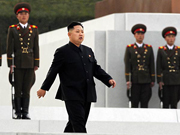
North Korean leader Kim Jong-Un released a statement to his people, saying that "if war breaks out because of the actions of the U.S. and puppet South Korean's unpardonable behavior, they will end up with a disgraceful downfall and our people will greet a brilliant new day of reunification. The day has come to show off the power of 'Military First' and great nation to the whole world."

However, Christians and other citizens fear war and its consequences.

"Many people are in a hurry to purchase emergency food supplies and daily goods, just in case. The prices of goods, including food, are skyrocketing," says one believer in North Korea.

North Korean Christians are grateful for their foreign counterparts and request their urgent prayers.

"I would like to thank the many brothers and sisters around the world for their continuous love and support," says the Christian believer. "We know that our journey will not be an easy one, but we are sure that our faith, desperate hope, and passionate desire will some day bear fruit. Nt matter how difficult life is for us, we never blame or complain about our circumstances. God has promised us in the Bible that if we seek His Kingdom first, all other things will be given to us as well. Please pray for us."

Jerry Dykstra, a spokesman for Open Doors USA, adds: "Beneath the surface of the all the rhetoric of war and the launch of nuclear missiles are the suffering and persecution of Christians in North Korea, whose government is the No. 1 persecutor of Christians for 11 years in a row according to the Open Doors 2013 World Watch List.

"We must respond now to the Christian leaders' request to pray for them. Pray for Kim Jung-Un, that God will work in his heart and he will pursue peace and not war. Pray for Christians who are put in even more danger due to war preparations. Pray that believers will find food to feed their families. Finally, pray that no matter what happens, Christians will remain strong in their faith."

Central African Republic: Coup leader tightens grip on power


Central African Republic (MNN) ― The issue of child soldiers haunts the troops in the Central African Republic.

South African soldiers sent to support the CAR government reported their suspicions following the fall of the capital and the ouster of the president.

Steven Wolcott, a Regional Executive Officer at Africa Inland Mission (AIM), commented, "That is a very common occurrence with rebel groups in Central Africa." However, he went on to note that "I haven't heard anything specific that way, other than some news reports. From sources on the ground that we have, I haven't heard that directly."

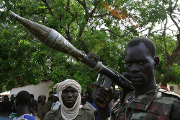
So, while the reports may still need further investigation, it does reveal an underlying chaos at the heart of the CAR. After days of looting and chaos, rebel soldiers seem to have secured the area. In the meantime, CAR's Prime Minister formed his new government. Seleka, a coalition of three rebel groups, launched its insurgency in December, accusing ousted president Francois Bozize of failing to honor earlier peace deals signed with rebels in the conflict-prone country.

The concern comes from the high percentage of Seleka rebels who form the cabinet leadership. Wolcott explains, "The new leader has come in from the north of the country and has ties, it seems, with Sudan and also with Chad and some of the Islamic groups up there. So it does seem as though there's tension."

Reports from groups like Open Doors confirm the reality of religious tensions. Wolcott says it's hard to figure out what their team is doing because of how uncertain things are. "From the church people that we're in contact with, that is a huge concern. What is going to be the long-term impact, the future impact against them?"

It's also not an isolated incident, he observes, noting similar changes in Arab Spring countries. "They (Islamists) want to cover all of Africa, and so they're pushing hard to do that in whatever way they can, trying to bring in leaders who are in tune with that."

The questions that have to be answered before more outreach strategy forms are: "'What is the security situation really on the ground?' and ‘Is it really possible to do ministry in a way that's effective?' Those are issues with the Church and as a mission." Wolcott says an assessment team is going in. "There's a trip planned for next week to go and look and talk with the Church to figure out what the next step should be. It's just really difficult with the LRA and now, with the Seleka rebel group coming in."

An already difficult ministry field, there is a risk that the coup could interfere further. AIM has been trying for years to get teams into the CAR. "The Lord's Resistance Army and [leader Joseph] Kony have been up in that area since 2008. Because of that, it's been really difficult to actually move ahead, to function, to do discipleship." Wolcott explains that it's not logistics they're assessing. It's much more basic. "The bigger issue is just one of survival of the local pastors, believers just being able to survive the things that are going on against them: the LRA coming in, raiding their gardens, abducting people, killing people."

What can be done? Pray. Wolcott cited the story of Gideon in the Old Testament and noted its similarity to the situation facing believers in CAR. In a seemingly impossible situation, God intervened and used Gideon and a handful of faithful leaders to save Israel. "I'm praying that the Lord would raise up Gideons, and that as we pray together against the schemes of Satan that are opposed to us, we will actually see advances and see God intervene on our behalf, just as he did in the Gideon story."


Wednesday, February 6, 2013

14 arrested in connection with attempted murder

Pastor Emre Karaali
(Image coutresy of Voice of the Martyrs Canada)

Turkey (MNN) ― Persecution seems to be on the rise in Turkey, a country where Christians make up only .2% of the population.

The Voice of the Martyrs Canada says 14 suspects were recently arrested in the attempted murder of Pastor Emre Karaali. The suspects also planned to attack Christians during a series of evangelical outreach meetings in January.

When these suspects brought someone from eastern Turkey to carry out the murder, the country's anti-terror division became involved. Karaali had been working with police for a year after being repeatedly threatened.

Two of the suspects had been attending Karaali's church for more than a year in order to get close to the pastor and his wife. When police raided the suspects' homes, they found maps of the Karaali home and his church, personal information, and photos of other preachers connected to the church.

In addition to recorded telephone conversations, officers also found two guns in one of the homes they raided.

The Karaali's have served the Church for four years, in an environment Karaali describes as difficult: "Two years ago, I almost lost my life because of my health, but the Lord brought me back to life, and He has done this for me again.

"He protects us, so we believe this means the Lord has work for us to do. We haven't lost our confidence. On the contrary, we feel the Lord is with us because He didn't allow this (assassination) to happen, and we will continue to do what the Lord asks."

A Human Right Violations Report by the Association of Protestant Churches lists at least ten incidents of verbal and physical assault hate crimes against Christians in 2012. Police protection from possible attacks continued throughout the year for leaders of five Protestant congregations.

Pray for Pastor Karaali and his wife as they continue to share the Gospel with a people group that is over 95% Muslim. Ask God to keep a hand of protection around them. Pray for protection over all believers who are spreading the Good News of Jesus Christ in Turkey.

Tuesday, October 2, 2012

Nigerian seminary attacked; broader aim revealed

File footage of past attacks on churches in Nigeria (Courtesy Compass Direct)

Nigeria (MNN) ― A bomb blast and gunfire shook an area around a seminary in northern Nigeria on Sunday, leaving two dead. 

It was not immediately clear who was behind the blast in the city of Zaria, but extremist group Boko Haram has been blamed for hundreds of deaths as part of its insurgency in northern and central Nigeria.

Investigators said the blast was the result of an improvised explosive device. The targeted area included the school as well as the worship center.

Sound like a familiar story? In this case, it involved the Salafi, students who are studying Sunni Islam. Todd Nettleton, spokesman for Voice of the Martyrs USA, explains what this might mean. "I think it goes to show the nature of Boko Haram, that they have a very narrow vision of what Islam is and what it should be, and they want all Nigerians to fall within that very narrow vision." Nettleton goes on to say that reports indicated "the Salafist cleric who runs this Islamic boarding school has been at odds with Boko Haram in the past. It seems like that is a strong possibility of a Boko Haram attack in Nigeria." 

The violence came a day ahead of commemorations marking 52 years of Nigerian independence. However, says Nettleton, "They celebrate independence, but I think there's a real threat to their independence that is growing in northern Nigeria among Boko Haram."
 
Nigeria's north has been hit by scores of deadly attacks attributed to Boko Haram. In the last two years, their rebellion has cost 1,400 people their lives. 

While Boko Haram has claimed to be fighting for the creation of a state in Nigeria's north, Nettleton warns: don't be fooled. "They talk about wanting an independent state that would be run according to their vision of what true Islam is, but their demands have changed over time, as well."

The lines have gotten muddied on what Boko Haram actually wants. The name of the group is generally translated as "Western education is sinful," but in Hausa it literally means "book forbidden." The founders of the group believed Islam had been corrupted by Westernization, especially education and Christianity. They also rejected the legitimacy of the state and of Muslim traditional rulers. 

What they wanted, explains Nettleton, was a Sharia state governed by orthodoxy. "Obviously, Christians fall outside of that. We've seen attacks on churches, we've seen attacks on Christian institutions, but this shows that even if they [Boko Haram] think fellow Muslims are outside of what they call the ‘true teaching of Islam,' they will attack them as well."

The battle for Nigeria's soul intensifies. While Islamic terrorists rely on weapons and fear, Nettleton says Christians need to trust in God's love and eternal promises. That's also one of the challenges for the church in Northern Nigeria: the issue of fear. "Just imagine when you wake up Sunday morning and are deciding, ‘Should we go to church or not?' If you add in the threat that ‘maybe our church will be bombed while we're there this morning,' you imagine the sense of fear and the sense of concern that that would raise." 

That's what standing in solidarity would mean, Nettleton adds. "We can pray with them against that spirit of fear, and against that spirit of intimidation. I think the second issue then becomes: 'How are we going to respond to those who attack us? How are we going to respond to the Muslims around us?' There is obviously a place for evangelism; there's a place for sharing." 

The bigger issue is how to respond to the violence of the insurgents and "the issue of forgiveness, the issue of loving those who society would say are our enemies. That's a difficult thing, and that's another thing that we can pray for our Nigerian brothers and sisters, for them to be able to do that with God's help."

Ask God to protect them and help them as they seek to respond in love and prayer for their Muslim attackers. Pray for the attackers, that God's mercy and grace might pierce through the hardness of these hearts so opposed to His name. Ask God to send peace to Nigeria. 


Monday, September 24, 2012

More threats against Christians in Egypt

(Photos by Hector de Pereda)
Egypt (MNN) ― A report Friday indicated Egyptian Christians in border towns are getting threats of violence if they don't leave. One church leader suspects the threats are connected to the anti-Islam film which has angered Muslims throughout the Middle East.

In other parts of the country, the pressure has increased to the point where people are fleeing in droves. They represent an increasing number of the country's 8 million Coptic Christians were already feeling increasingly cornered.

The atmosphere chilled quickly in the wake of Hosni Mubarak's ouster and the Muslim Brotherhood's meteoric rise to power. Already subjected to anti-Christian discrimination and attacks for years under Mubarak, his fall meant no one was there to suppress the hard-liner Islamists.

The nation's Christians saw an uptick in violence against them alongside an overall rise in crime since Egypt's 2011 revolution. There are heightened concerns now that believers might face backlash amid outrage over the film, says Rody Rodeheaver with IN Network.

It's not something that dies down quickly. "Each subsequent conversation about that continues to elevate the emotional level in countries like Egypt and others." As a result, Rodeheaver says their team is very concerned about exodus of believers.

There's also the danger of the mass hysteria driving a rumor mill that comes back on the believers. For example, one of the rumors on the street is that there were six Egyptian Christians that participated in the making of the video. "There is no way of knowing whether that is true or false, but that is the word on the street, according to our staff. What that then does is just escalates the emotional extreme reaction to this whole situation."

Meanwhile, Christian leaders are trying to distance any connection--perceived or otherwise. Compass Direct News cited Rev. Dr. Andrea Zaki, Vice President of the Evangelical denomination in Egypt, who said that "the film insulting Islam is a criminal act, and should not be tolerated. It must be prosecuted, and they who produced and published it are criminals."

In his statement, Zaki stressed that the Egyptian Evangelical Church "not only condemned the film, but is communicating with several American institutions to stop such films depicting the sacred, because they represent a crime against human rights."

IN Network Egypt has a team in place, committed to ministering the Gospel. On one hand, says Rodeheaver, there's the human reality of working and being part of the pressure of this kind of situation. But, "On the other, they're seeing that the God who called them is also there, working beside them, providing fruit for their efforts."

That's why Rodeheaver doesn't foresee them leaving. Practically speaking, abandoned property is often stolen or vandalized. But the other reason has staying power. "This is their home, and they need to be there as a voice for the Lord to the people to whom they serve." Plus, Rodeheaver adds, "I think what our staff is seeing is that they are experiencing a real outpouring of God's Spirit as it relates to the programs that they're conducting."

The team works through Bible correspondence courses offered to men and women across the country, encouraging them in the study of Scripture. A Bible school program equips pastors with all they need to serve their communities for God. Finally, leadership conferences bring in hundreds of people every year to be empowered to lead others to Christ.

Pray that things would not escalate. IN Network's team is now asking themselves how they can continue to minister to the people God has called them to. The threats are not taken lightly, but continued work "takes a great amount of wisdom, and courage. That becomes a real focus for the prayers of God's people." 


Monday, August 20, 2012

Ethnic and communal violence spreads fear throughout India

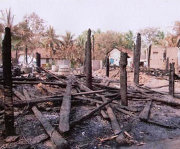
Assam violence (File photo courtesy of Gospel For Asia)

India (MNN) ― The beauty of India's Assam state is belied by its bloody history.

Ethnic and religious violence in that region has forced the military to respond and impose a curfew after days of rioting.
At least 50 died and hundreds were injured in the clashes that lasted a week and a half--clashes between Muslim settlers and the Hindu-leaning Bodos. The Bodos are one part of three larger indigenous secessionist movements.  

Although the issues that lead to conflict are complex, Danny Punnose with Gospel For Asia simplifies what's been going on there. "There's always tribal fighting between tribes, or land disputes. This is a very common thing up in the northeast part of India in those areas. But the violence is getting a little more severe where people are actually being killed and there's rioting happening. So the army has been called out to give a sense of security, but also a sense of protection."

Stories of Muslim-Hindu violence spread like wildfire through social media outlets, which also sparked panic that led to days of more rioting. Government officials had been trying to encourage people to ignore the inflammatory stories, to no avail. Punnose goes on to say that "there are rumors that violence is going to break out there because there are lots of Assamese workers and students down in the south." As the trouble had been escalating and spreading, thousands who were from the Northeast fled the southern city of Bangalore last week.

Nearly 400,000 people are in makeshift camps, displaced by the escalating fighting. In the meantime, curfews have been imposed in some areas. "Everything [comes] to a standstill. It's the only way to contain certain elements of the violence," says Punnose, adding that  those who violate curfew risk their lives. "They think that you are part of the underground, or the underground thinks you're part of the army, so you're caught in the crossfire."

In some areas, curfews have been relaxed to certain hours. Although the violence seems to have calmed somewhat, it would take very little to ignite uprisings. Issues are deeply polarizing. Punnose says until the uneasy calm can be trusted, much of their work is also at a standstill.

Solutions won't easily be reached, he goes on to say. "It's very, very deeply ingrained. It's not just the caste system: it's tribal, and it's land. It's so many levels of the dynamics of this, and then you've got violence and you've got strikes."

GFA is asking for prayer. "Pray for the leaders of the nation to have wisdom to know how to handle this. You're not talking about people just being upset with each other. This is thousands of years of ingrained prejudice and animosity and anger."

Although their teams can't get out, Punnose says they are readying themselves for response. "Pray that God would give us opportunities to share the love of Christ, whether it's praying for people or counseling people, or maybe it's relief work to help people get back on their feet."


Tuesday, July 31, 2012

Good news in missionary abduction case


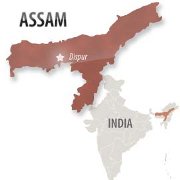
(Images courtesy of Gospel For Asia.
 Cover photo of church, Story photo of Assam map.)

India (GFA/MNN) ―Kidnapping, threats, terror, and ransom demands: all part of a typical action movie.

In this case, it was only too real for Gospel For Asiamissionary Ponnachan George.

Kidnapped at gunpoint on July 23 from the Bible school campus operated by Gospel for Asia, the terrorists released him on Sunday, July 29. GFA founder and president K.P. Yohannan says in Assam, India, "The chance of him coming out alive was actually a very small percentage. It's a real miracle. The local police, the state government, all authorities, and even the Central Government...everyone got involved."

GFA also broke with its usual low-profile policy for the protection of the victim in such cases as the Indian news media begins to report on George's abduction. With concerns that the attention from national press may further endanger his life, believers prayed more urgently. Yohannan explains, "When you go public with it, then they will say, 'If anybody talks about it, then for sure, without the ransom we're looking for,  we'll just kill him."

God answered in a big way, says Yohanna. "Finally, after almost a week, [George] was released. Of course, blindfolded, his hands tied back, left on the roadside" -- and without the huge ransom they demanded!  

There's only one reason this situation ended well. Initially, when word of the kidnapping occurred, GFA sent out an emergency e-mail to its supporters urgently soliciting prayer for the safe release of George. The mission agency maintains a policy of non-negotiation with terrorists for money. Although this was the riskiest case, in other instances GFA has relied solely on prayer and fasting, and God has answered through miraculous releases before.

Interestingly, Yohannan says the entire local police force, army personnel, and high-level officials--both from the state and federal governments and even the Prime Minister--got involved in the case. Not only that, but the main extremist groups, known for employing this method of operation, distanced themselves from the action, too. "Most of these leaders came forward to the media and said, 'None of these groups have done it. It's some splinter group that lives in the deep of the forests that is doing this.' That kind of support, even from the ex-terrorists, was quite a surprise."

Shortly after the release, Yohannan spoke with Pastor Ponnachan and asked him to share his thoughts during captivity. Overcome, he wept for a long time, unable to say much. "Finally he said, 'I thought about Christ suffering on the Cross, and I said to myself, 'I came here as Jesus came from Heaven to suffer and give His life. It's a one-way ticket my leaders gave me to be here to serve God."

George thanked God and the Body of Christ for the massive fasting and prayer that took place on his behalf. Yohannan added that George had surrendered his life to the Lord. "'This is the end of the journey. Fine, Lord.' This kind of statement makes me weep and say, 'Lord, thank You. This is a real life and a real call.'"

The pastor knew his life on hanging on a slender thread. The terrorists blindfolded him and tied his hands behind his back. They forced him to walk for hours deep into the forest to their hideout. Throughout Ponnachan's entire ordeal, his captors repeatedly told him they were going to shoot him and would not spare him.

In the end, God's direct intervention through the collective voices calling for his safe return held sway.  Pastor Ponnachan's work with GFA has done a lot of good for a lot of people: schools, literacy programs, training, water wells, and many other community development projects. 

Yohannan says, "This leader provides us 300 missionaries, 200 parishes or churches, some 4,000 children at our Bridge of Hope centers, and three radio broadcasts."

Could there be another attack coming? It's possible, because the area is volatile. However, Yohannan says, that won't deter their team. The strength behind their team's faith in Christ and love for the needy was stronger than ever on Sunday. "When they released him, all our workers, all our leaders, continued to stay there--they didn't run away. [They spent the night] there and regrouped and declared, 'We are here for life. We're not going anywhere.'"

Gospel for Asia (www.gfa.org) is a non-profit charitable organization dedicated to serving the needy in word and deed to demonstrate the love of Jesus in developing countries in Asia. 

GFA-supported national missionaries are seeing incredible fruit in the lives of people to whom they are proclaiming the Love of Jesus Christ. Although they often risk persecution, these missionaries boldly carry on, counting it a privilege to suffer for Christ.

Gospel for Asia has 67 Bible colleges throughout South Asia, where thousands of men and women are studying God's Word and undergoing intensive training in preparation for ministry. 

Most of the Bible college graduates will go on to minister in areas where the love of Christ has never been proclaimed.

Wednesday, August 10, 2011

Muslim extremists haunt a new Christian in India


India (MNN) ― An Indian woman just months into her Christian walk was recently attacked for the second time in four months.

Although Hindu radicals are behind many attacks against Christians in India, "In this case, we're talking about radical Muslims who were offended that a Muslim woman left Islam to follow Jesus Christ," explains Todd Nettleton with Voice of the Martyrs.

Compass Direct reports that Selina Bibi converted from Islam in eastern India's West Bengal state, where, Nettleton says many of India's 172 million Muslims reside. The woman had been stripped and beaten four months ago when 50 Muslim extremists found out she'd become a Christian.

"She was attacked, embarrassed, and beaten up right after she came to Christ," explains Nettleton. "Now it's happened again, and they've said, ‘Hey, if you keep following Jesus, we're going to burn your house down. If you keep having Bible studies here, we're going to burn your house down.' So this is sort of another chapter in the life of faith for an Indian Christian."

During the March attack, extremists surrounded Bibi at Believers Church where she was being baptized. Compass Direct says another radical group came to the service upon discovering Bibi's conversion and verbally abused the Christians there.

Days later, two women and an extremist group brought Bibi to one of their homes and stripped her, apparently looking for marks they believe Christians are branded with when they convert. When they could not find any such mark, they began to beat her.

Bibi has been severely ostracized over the last four months, no longer able to buy goods from the store, sell vegetables, or draw water from the village well. The most-recent attack and threat came after she decided to host a weekly Bible study at her home despite the persecution.

Compass reports that a complaint has been filed, and police will prosecute if any further attacks or disturbances take place.

Many believers face persecution in India, but things have been particularly harsh for Bibi. "This is a lady who's only been a believer less than a year and already has faced significant persecution twice in her young life of faith," Nettleton points out.

Pray for Bibi's safety and for her faith in Christ to remain unshaken. Pray also for believers across India to continue preaching the Good News despite the hardships they're forced to face daily.

Although this particular attack does not seem to be connected to the Muslim holy month of Ramadan, in which persecution often increases, pray for believers in Muslim communities around the world who may be up against increased persecution through August.