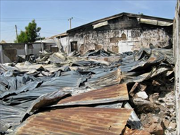
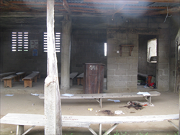
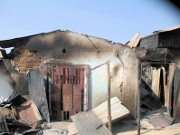
Showing posts with label Boko Haram. Show all posts

Monday, November 18, 2013

Will it change anything?

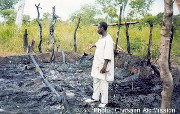
(Story photo courtesy Compass Direct)
Nigeria (MNN) ― After four years of jihad, the U.S. finally declares Boko Haram a terrorist organization.

The decision came last week, and Open Doors USA President/CEO David Curry says it's not clear why this designation took so long.

"What is clear is that across the board, our government seems to be hesitating on calling out Christian persecution, wherever it's happening across the globe," says Curry.

"[The U.S. has] some geopolitical connections with these governments, in many, many cases, but yet we're not encouraging them to crack down, try to protect Christians where persecution is happening."

Boko Haram, whose name means "Western education is sin," has been attacking churches and believers in northern Nigeria since 2009. The U.S. State Department designated three of Boko Haram's top leaders as terrorists in June 2012, but stopped short of applying the label to the entire group.

"We would love to see more responsiveness on this point, and really calling it what it is when it happens, wherever it happens," says Curry.

According to an official statement issued last Wednesday, the terror designations forbid a provision of "material resources" to Boko Haram and splinter group Ansaru.

"Without these kinds of designations, I don't think people take them seriously," Curry explains.

"They sort of sense that maybe they're random; but these aren't random attacks. These are planned attacks; these are targeted attacks in the northern part of Nigeria to eliminate, to squeeze out, Christianity in those regions."

Curry hopes the designation means more than just words on paper.

"We hope that there'll be dollars available, that there'll be anti-terrorist training continuing for some of their police forces and military forces that will help to protect Christians there," Curry states.

But the actions of Nigerian Christians speak volumes.

"Christians are praying there; they're holding together in unity," says Curry. "They are saying, 'We have to find a spiritual solution, because a practical, physical solution seems to be so slow here on the ground'."

Will you join them?

"Pray for those families that have been directly affected by loss of life," Curry suggests.

"There are people, entire congregations, who've lost their church, their pastors have been killed. We want the freedom for people to go to church without fear of being hurt, without fear of the church being bombed.

"These are simple things that we don't even think twice about here in the States, but would be very important things to pray for--not just in Nigeria, but around the world."

VOM Canada will keep caring for the persecuted, no matter what

(Photos courtesy Wikipedia/Al Jazeera/Flickr CC)
Nigeria (MNN) ― A long-awaited decision has been made. The U.S. State Department recently designated Nigeria's radical Islamic militant group Boko Haram and splinter group Ansaru as Foreign Terrorist Organizations (FTO).

"I guess it's a little bit disappointing in the fact that it's taken so long.... The Boko Haram have been going since 2009," says Voice of the Martyrs Canada spokesman Greg Musselman.

The designation, however, probably won't affect their work among Christian families attacked by the terrorist group, he adds.

"There's a lot of pressure put on our organization and other organizations, especially in the area of medical and helping the persecuted Christians there. But in terms of our work, no, it won't affect it," states Musselman, "unless the Boko Haram stops--and we don't see that happening anytime soon, unfortunately."

Who are the Boko Haram?

"They want to set up an Islamic state...with strict Sharia law. They've got this in their mind that Christians are of the West," Musselman explains.

"Boko Haram means 'against Western education' or 'Western education is sinful.' They want nothing to do with the West, and they see Christianity--particularly evangelical Christian--as being American or Western."

Boko Haram has killed at least 2,000 people over the past four years, many of them Christians.

"I've seen figures of 3,600 people who've been killed, mainly up in the northern part of Nigeria," says Musselman. "It's not just Christians they're attacking; they're a very violent group."

In 2012, the International Criminal Court issued a report concluding Boko Haram is guilty of committing "Crimes Against Humanity." The ICC's prosecutor clearly found that Boko Haram has "attacked religious clerics, Christians, political leaders, Muslims opposing the group, members of the police and security forces, 'westerners,' journalists, as well as UN personnel."

Voice of the Martyrs USA spokesman Todd Nettleton also noted a frustrating avoidance among U.S. leadership of the Boko Haram's religious motivations.

"[Boko Haram's] motivation for those crimes is obviously radical Islam and pushing a Sharia agenda, and yet our government says that Boko Haram is the result of 'economic imbalance' in Nigeria and 'lack of educational opportunities,'" says Nettleton.

In light of the past four years' death toll, it's easy to get overwhelmed by Boko Haram's widespread and ongoing reign of terror. "People just kind of put their hands up in the air and say, 'There's nothing we can do'" notes Musselman.

"Of course, that's not true. There is much we can do."

It all starts with prayer. "Our prayer really needs to be for the Church in Nigeria, that they will be strong," says Musselman.

Sunday, October 13, 2013

Twenty-five Christian buildings marked for demolition

A church that was destroyed in Yobe State,
 Nigeria (Photo by Voice of the Martyrs Canada)
Nigeria (MNN/VOMC) ― Government authorities in northern Nigeria's Borno state plan to demolish 25 churches and schools, ostensibly to make room for new housing. However, no plans for the housing development have been produced, says Voice of the Martyrs Canada. Christian leaders believe this is yet another attempt by local governments in northern Nigeria to persecute the Christian minority. (Other informative reports can be accessed at the Nigeria Country Report.)

The proposed demolitions would compound the security challenges that these believers are already facing from the militant group, Boko Haram. "We have seen the eviction notice from the Borno state government," says Dr. Asake, general secretary of the Christian Association of Nigeria. "We are Nigerians, and there are other places where the state government can develop. The areas earmarked for demolition are already developed with churches and schools. Christians have already suffered enough in Borno state."

Pray that the demolitions will not go through, and that God would maintain these places for worship, education, and meeting. Pray that these Nigerians will be successful in sharing the gospel with their Muslim neighbors.

Sunday, October 6, 2013

Will 'dialogue' help settle Boko Haram in Nigeria?

Nigerian President Goodluck Jonathan.
 (Cover image courtesy Voice of the Martyrs.
 Story photo courtesy Flickr/GovermentZA )
Nigeria (MNN) ― October 1 marked 53 years of independence from Britain, but the occasion was somber due to an eruption of violence by an Islamic insurgency group.

Given the events of the last month, is the state of emergency effective in curbing the Boko Haram?

Not exactly. Violence has been increasing over the past few months. Todd Nettleton, a spokesman with the Voice of the Martyrs USA, says, "Boko Haram means ‘Western education is a sin' or ‘Western education is evil,' so they are going after educational institutions. They're going after schools that they perceive to not be teaching the correct radical Islamic ideology."

Nettleton is referencing the attack on a secondary school dormitory in Yobe around 1:00AM on Sunday.

More than 40 students, many of them Muslims, died. Coincidental? It came just after the government promised protection and urged schools in Yobe to re-open after earlier similar attacks. Nettleton asks, "When will the general population of Northern Nigeria--which is heavily Islamic-- turn against Boko Haram and say, ‘Hey, we have had enough?'"

Other news accounts surfaced indicating President Goodluck Jonathan pledged a national dialogue to heal a "divided" Nigeria. Earlier accounts seemed to point to negotiations and peace talks with the Boko Haram.

However, Nettleton says when he took that issue up with church leaders, "Their number one response was: ‘Who are we negotiating with? People who will not step forward; they will not have a name and a face and admit what they are doing, and admit who they are. How are we going to negotiate with those people? Even if we come to an agreement, how are we going to hold them to it?'"

"The renewed violence is creating uncertainty and fear among people," reported an Open Doors worker. "It is intensifying an already explosive atmosphere as the government continues its battle against Boko Haram."

The violence is expected to continue, if not worsen. Nettleton explains, "Next year, there will be national elections in Nigeria. Goodluck Jonathan is running for president again. I would assume that one or probably more than one Muslim candidate for president will be running against him."

Nettleton goes on to say that in the grasp for political power, an insurgency could be enough to tip the balance. "As Boko Haram can create chaos and make Goodluck Jonathan and his government appear powerless, they affect the political process. They affect what the voters do and what the voters think."

The Islamist agenda for Nigeria is to bring the whole country under the House of Islam, using whatever method works. For believers, the months ahead will be the ultimate test their faith. "It's an act of courage just to go to church on Sunday. It takes some courage to do that because you realize our church could be targeted. We could be bombed. There could be gunmen that come to the church . That changes how they function."

Fear is pervasive among churches. Security has been beefed up in many places. Christians don't feel safe. Isolation and separation can lead to discouragement and intimidated silence. That's what we have to pray against, urges Nettleton. Stated another way, he says, "I think one of the first things to pray for is a sense of encouragement and a sense of passionately following the Lord even though there is risk, even though it is dangerous."

Pray that God will intervene to preserve their places of worship, fellowship, and teaching. Give thanks that believers are responding to recent pressure with increased prayer, evangelism, and care for Muslim Background Believers. Click here for a look at some past issues Nigeria's believers have had to contend with.

Sunday, September 29, 2013

Wave of persecution sweeps across the Middle East and North Africa

(Image courtesy Open Doors USA)
Nigeria (MNN) ― Believers in northeast Nigeria are reeling after Islamic militants killed their pastor and his son, and set fire to their church building and five homes.

The Associated Press reports Islamic militants attacked the church in Yobe state just before dawn yesterday; the incident went unnoticed by nearly all major media outlets.

Dr. David Curry, President and CEO of Open Doors USA, points to the attack as the latest in a rising tide of persecution sweeping the Middle East and North Africa (MENA).

"We've had situations in the last three weeks in Iraq, in Syria, in Pakistan, and now last night in northern Nigeria, where people are targeting believers," says Curry. "My greatest concern is that there won't be any pressure to follow-up on this attack.

"Attack after attack on Christians seems to go by the wayside."

Thousands have fallen in Nigeria alone at the hands of the Islamic terrorist group, Boko Haram. Their name means "Western education is sinful," and their four-year-old terror campaign seeks to rid northeast Nigeria of all who follow Christ.

Yobe is one of three northeastern states currently under emergency rule, as Nigerian President Goodluck Jonathan tries to quell Boko Haram insurgents.

"The threat of terrorism in a few states in the northeastern part of our country has proven to be a challenge to national stability," Jonathan told UN leaders earlier this week. "We will spare no effort in addressing this menace."

Terror goes by a different name in the nearby Central African Republic: Seleka. This band of Islamic terrorists rose to national power in March following the ouster of former President Francois Bozize.

Their primary target soon became the Church.

"The various atrocities that preceded, accompanied, and followed Seleka's rise to power have been specifically aimed at the Christian population," states a letter from the CAR Evangelical Alliance to Seleka Islamist leader and CAR President Michel Djotodia.

"Churches and Christian institutions have been desecrated and plundered, priests and pastors have been assaulted, and nuns raped."

In CAR, 50% of the population is Christian and 15% are Muslim. Despite outnumbering the followers of Islam, Christian communities in CAR claim their Muslim neighbors are joining Seleka’s violent campaigns.

"It’s not like Christianity is a minority religion, but ever since the coup in March, the Muslims have increased their persecution of Christians," said Open Doors spokesman Jerry Dykstra in a July 5 article.

To the north, a similar situation unfolds as violence against Christians in Egypt reaches historic levels. Members of the Muslim Brotherhood (MB) were quick to blame Coptic Christians for the July removal of MB proponent and former President Mohamed Morsi from office.

It was a summer of rage for many believers as they endured beatings, their homes and businesses were looted and destroyed, and churches were set aflame. In August, one church was forced to close its doors for the first time in 1,600 years.

And yet, most believers and secular media alike remain unaware of the deadly trend.

"Open Doors has been trying to raise this awareness among Western believers and the media in general," says Curry. "We believe it's worthwhile asking the question: 'Are these attacks coordinated?' Certainly they seem to be intentional and directed at believers.

"Over the last decades…the population of Christians in the Middle East has gone from 20% to 4%. Why is that? It is because there is a concerted effort to force Christians to convert. There is a concerted effort to persecute Christians, to drive them from their home."

As the plight of believers in the MENA continues on, largely unnoticed, you can take action.

"There are so many ways we can support the Persecuted Church," Curry states, "but you won't know how until you get this International Day of Prayer packet, an IDOP packet."

The International Day of the Prayer for the Persecuted Church (IDOP) gathers believers worldwide in continuous prayer for those who are persecuted. This year, IDOP falls on November 3.

"What we're asking is that every believer in the Western world that worships in freedom takes part on November 3rd in praying and supporting the Persecuted Church," explains Curry.

"We're not a political organization, but what we can do is rally believers to defend and to pray and support their brothers and sisters in the Persecuted Church."

Tuesday, August 13, 2013

Boko Haram investigated for 'crimes against humanity'

Cover photo courtesy of Pinterest/
Story photo courtesy of World Mission.
Nigeria (MNN) ― When the courts of a country fail to prosecute, the International Criminal Court (ICC) steps in.

ICC’s Chief prosecutor, Fatou Bensouda, stated last Monday August 5 that Boko Haram is being investigated by ICC for “crimes against humanity” through “widespread and systematic attacks.”

Greg Kelly with World Mission says, “They’ve been targeting Christians especially. In the neighborhood of about 3,000 people have lost their lives as the direct result of their attacks since 2009. So they’re very aggressive, they definitely target Christians, and they primarily operate in Northern Nigeria.... They want to incorporate Sharia law among all of Northern Nigeria.”

World Mission has worked in Northern Nigeria for 12 years and have been personally impacted by Boko Haram’s attacks.

“We’ve lost leaders in that area,” says Kelly. “In fact, just a few months ago, one of our leaders...in Northeast Nigeria [was] participating in a prayer meeting, and Boko Haram people sort of invaded that area and executed 10 people, including our state national leader.”

It’s not safe to be a Christian in Northern Nigeria. When someone makes a decision to follow Christ, sometimes World Mission has to take protective action.

Kelly says, “In villages where hostilities are exaggerated,... it’s just not safe for someone who’s made a decision to follow Christ. Once they’re found, then they tend to disappear, and we never hear from them again. So that’s why we try and bring people out into a safe harbor, disciple them, mentor them, grow them in their understanding of who Jesus is, and then reintroduce them into either that village or another area where they can be effective.”

Because Boko Haram is so radical, they are difficult to engage, says Kelly. But God has called World Mission to reach northern Nigerians, including Boko Haram. “We’ve been distributing The Treasure--which is our solar-powered audio Bible--in the Hausa language, which is the language of the Boko Haram,” Kelly says. “So we do distributions and set up listening groups, and we’ve seen 20 people give their lives to Christ just in recent weeks.”

A high percentage of the population in Northern Nigeria learns orally. 9 times out of 10, they prefer The Treasure audio Bible to a written Bible. World Mission has a goal to distribute 500 Treasures to Northern Nigeria this year. On average, one Treasure touches the lives of 12 people. Over 50,000 people would be impacted by these 500 Treasures.

According to Kelly, “It takes $50 for us to distribute a Treasure. That unleashes our entire arsenal so to speak. We’re distributing a unit, paying the royalties, providing follow-up, providing leadership training.”

There’s also an opportunity to engage a community’s physical needs when World Mission passes out Treasure audio Bibles. “In many instances, especially in Northern Nigeria and places where there’s radicalization of Islam, we’ll do a water well or we’ll do a humanitarian expression which just softens the soil and makes the Treasure that much more impactful. So in Northern Nigeria, Boko Haram has created 240,000 refugees just in two states; there’s a real humanitarian crisis that’s really not spoken about,” says Kelly.

Pray for World Mission as they distribute Treasures to communities in Northern Nigeria. Pray for safety and for many Muslims to come to Christ.

Monday, May 27, 2013

Nigeria (MNN) -- Nigeria approaches Boko Haram with Dove and Hawk

(Boko Haram images courtesy Compass Direct News)
Nigeria (MNN) ― Nigeria is in lockdown.

Nigeria has rebels on the run. Nigeria is releasing criminals.

What's really going on? Todd Nettleton, a spokesman with the Voice of the Martyrs USA, would not confirm the reports of the Islamist terrorists being in disarray. However, he did address the government's plans to release members of the Boko Haram Islamist group held on suspicion of terrorism, in phases.

In an e-mailed statement by the senior special assistant to the President on public affairs, Dr. Doyin Okupe said the effort was aimed at the peace effort.
The statement read in part:

"It has become necessary to make further clarification on the directive for the release of some people held in connection with activities of the Boko Haram sect, in view of misrepresentations in some sections of the media.

"The order for the release of the detainees will be in phases.

"Concerning the first batch, the emphasis is on women and children who have been in detention on suspicion of involvement and/or connection with insurgency in some parts of the country.

"This will be followed by other phased releases where cases will be treated on their individual merits by the Defence authorities and security agencies."
Yet, it follows a decision by President Goodluck Jonathan to impose a curfew as well as emergency rule in the northeastern states of Borno, Yobe, and Adamawa, and start a military campaign against Boko Haram Islamist insurgents.

Nettleton explains, "My perception is that President Goodluck Jonathon is taking a dual approach in the sense that with one hand, he's reaching out the hand of fellowship. In the other hand, he's kind of balled up a fist."

Rather than viewing the approach as a ‘see what will stick,' he says it's one of options. "If you will talk peace, and if you will cooperate, yes, there's a pathway for that. If you won't, then we're going to come and hunt you down. I think it'll be interesting, in the weeks to come, which pathway produces the most progress in establishing peace and security in northeastern Nigeria."

However, that has been an uphill battle ever since Jonathon took office. "There's not always the level of cooperation in the northern states with the federal government to get a handle on some of these situations.

They want to see a Muslim president elected, and they see it as somewhat good if there are problems, if the people lose confidence in the Christian president that's currently in office."

Boko Haram is a terror group whose campaign is to turn Nigeria into an Islamic state. The resulting bloodbath has cost the lives of 3,000 people in the past four years, and Christians have borne the brunt of the Boko Haram's wrath. In the early months of 2013, it seemed that every Sunday brought news of another church bombing or drive-by shooting massacre. Then, if possible, the violence escalated.

After attacks that left several hundred people dead in the previous fortnight in towns near Maiduguri, on May 14th, Jonathon imposed the state of emergency.

Morning Star News reported that within an hour of the state of emergency declaration in Borno state, Faye Pama Musa, leader of the chapter of the Christian Association of Nigeria was assassinated. Police say the gunmen followed him home from the evening Bible study he led at his church.

Security got tighter at church services. Nettleton noted the presence of armed guards outside the churches during his visit last week, noted vehicle proximity to buildings in case of car bombs, and yet, the most notable thing, he said, was that "people continue to gather for worship even though they know there are risks, even though they know there could be attacks. The church service that I attended was a fabulous church service. I really enjoyed the presence of the Lord and worshipping together with my Nigerian brothers and sisters."

Despite the violence, despite the tension and the threat of harm, people are still following Christ openly and sharing their faith. Nettleton acknowledges that is where the challenge gets real. "That's where the danger is, when you're going into the Muslim community and sharing the Gospel. One of the things they said is ‘to be effective, that's almost always a one-on-one conversation' where they can sit down and talk to somebody, and look at the Bible and look at the Quran, and point them to Jesus Christ."

For the new Muslim-Background Believer (MBB), the risk comes not from outside assassins, but from those they love and trust. "Do you tell your family? Do you tell your friends? How long after you accept faith do you come forward and say, ‘Listen, dad...listen, older brother: I'm a Christian now. I'm following Christ...', because that is where the danger lies, even danger from your own family members."

Despite the confusion surrounding Nigeria's approach to the Boko Haram question, Nettleton says one thing is clear: Christians are hard-pressed, and they're begging for their family to advocate for them. "They asked us to pray for peace, for there to be some kind of long-term stable peace in their country. Secondly, we need to pray for God's protection. I think also, we can pray for these Muslim converts and for the evangelists that are reaching out into the Muslim community."

Thursday, May 23, 2013

Nigeria adds curfew to state of emergency

(Cover photo: Boko Haram. Story photo:
Burned out homes. Images courtesy Christian Aid Mission)
Nigeria (MNN) ― Nigeria's military is striking back against the insurgency of the Boko Haram.

Boko Haram has battled the government since 2009 in an effort to impose Islamic law on majority-Muslim northern Nigeria. It's been a bloody fight. More than 3,000 people have been killed in Boko Haram-related violence, including hundreds in government counter-insurgency operations.

With the recent uptick in violence, the military imposed a 24-hour curfew in 11 parts of the northeastern city of Maiduguri, the home base of the Boko Haram.

A state of emergency is also currently in force in Adamawa, Yobe, and Borno states. Brittany Tedesco is the Africa Director for Christian Aid Mission, your link to indigenous missions. She explains, "The curfew is from 6 in the morning till 6 in the evening. That, as you can imagine, is really affecting their work."

On Friday, U..S Secretary of State John Kerry urged the Nigerian army to show restraint and not violate human rights as it pursues the militants. However, the rebels are not so circumspect.

Christian Aid-supported Missionary Crusaders Ministries in Nigeria have had to respond to the constant threat. Ministry leader Gabriel Barau writes, "In as much as our missionaries remain committed to sharing Christ with the unreached, we need your prayers and support." Just last month, says Tedesco, "Terrorists set fire to three of the homes/mission bases of the missionaries that [Barau] is working with."

Discouragement is one major challenge. Fear is another. The attacks were personal. "The missionaries are currently staying at the mission school of missions until [Barau] can provide accommodation for them. On top of that, there's the follow-up and the discipleship that he provides to new believers."

Barau is scrambling to get the survivors of the fire resettled, Tedesco adds. "Thanks to help of our donors, Christian Aid was able to send some funds to rebuild these homes/mission bases.
"
Each simple home, which doubles as a place for cell group meetings and discipleship of new converts, costs $3,500. The need is especially urgent now as the rainy season is about to begin and will halt construction.

Since 1983, Barau has trained and sent out missionaries to share Christ with the unreached of Nigeria. The ministry has grown, in spite of the harassment and persecution coming from the Boko Haram. Despite being targeted, prayer cover has been their mainstay. Tedesco says, "None of these missionaries have been harmed. There are 183 missionaries working with this ministry. None of them has been harmed or killed."

Many of their mission fields are located in the country's Muslim northern region, where the majority of Boko Haram attacks have occurred. However, Tedesco says, "This ministry is committed to moving forward despite the danger that they're in right now. They've reached two new tribes with the Gospel."

Safety IS a concern. Christian Aid has been working closely with this ministry to help them relocate their headquarters. "The headquarters office that they're renting is located in Adamawa state, where Boko Haram has been striking repeatedly." The project has been a long time in coming when the risk of attack is imminent.

Still, God has been faithful. Tedesco says, "We are in the home stretch, praise the Lord! Right now, all we need is the windows, the doors, and flooring." The team will move into this office as soon as the roofing is completed.

Please pray for wisdom for Gabriel Barau as he leads the work of Missionary Crusaders Ministries, and pray that terrorized Nigerians will experience a return to peace in their homeland. "Continue to pray for the Lord's hand on this ministry, to give discernment to the ministry leader as to how to move forward in the safest possible way, and also just for protection for these brave missionaries who are risking it all to remain on their fields."

Monday, May 20, 2013

Northern Nigeria under State of Emergency

Story photo courtesy World Watch Monitor)

Nigeria (ODM/MNN) ― Open Doors USA has issued an urgent appeal for prayer after receiving news that suspected Boko Haram terrorists attacked the predominantly Nigerian Christian village of Zangan in southern Kaduna around midnight on Monday.It was the latest in a string of attacks that prompted a State of Emergency.

Open Doors spokesman Jerry Dykstra says they're still trying to determine the details of what happened, but so far, "Open Doors says it understands an ‘entire village' has been destroyed: burnt down, many people are fleeing after the attack."

The village chief's residence was reportedly burnt to the ground, and the village chief's whereabouts remains unknown after he fled Zangan. Churches and homes were among the buildings destroyed in the attack.

Dykstra says this attack came after an earlier threat and days of uncertainty. "The report that we got from Open Doors in Africa said that they had been threatened before by the Boko Haram. They were living in fear almost daily. In that area, many schools have been closed down because of that."

"We do not have any more details at this stage, but we understand that this area saw a similar attack about four weeks ago. Open Doors urges prayer for the people of southern Kaduna state and Zangan village in particular." Police say 19 people died in that earlier attack.

Open Doors has been active in Nigeria since 1997. Over the last few years, "The Boko Haram actually wants to take over the whole country and put into effect Sharia Law," explains Dykstra. Their attacks--which are estimated to have cost 3,600 lives since 2009--have included suicide blasts as well as coordinated gun and bomb assaults on houses of worship, Christian centers, security forces, schools and other symbols of authority. All that means the Open Doors response teams have seen dramatic growth in the outreach they do.

With the Boko Haram targeting church leaders and Christian adults, that leaves an untold number of orphans and widows. Open Doors projects target schooling for the children, as well as socio-economic projects for widows of Christian leaders who have been killed. Dykstra adds, "We support the Christians there in emergency situations with trauma counseling. We do a lot of care for Muslim-Background Believers, distribution of Bibles, Sunday school training, assistance to Christians in Sharia-controlled States in the North."

Nigeria is ranked No. 13 on the Open Doors 2013 World Watch List (www.worldwatchlist.us ) of the worst persecutors of Christians in the world.

It's unlikely that this pattern will change much. Aside from the physical help, Dyskstra says Nigerian believers are asking for wisdom in their response. "I think we need to pray for Christians not to strike back. The Christian leaders are urging--especially the youth--not to retaliate. That would kind of just recycle this pattern of violence."

Wednesday, May 1, 2013

Boko Haram: Amnesty or not?


Nigeria (MNN) ― Nigeria is fast becoming one of the deadliest places in the world to be a Christian.

Boko Haram's victims: Nigerian churches
 (Courtesy Compass Direct News)
According to a statistic noted by Christian Today, nearly 70% of the Christians who were killed globally were murdered in Nigeria. Open Doors and the Voice of the Martyrs report that over 900 Christians were killed in Nigeria in 2012 for their faith. This year has been another bloody year. Boko Haram--translated loosely in Hausa as "Western education is sin"--so far has claimed the lives of 128 Christians.

Over the past three years, Boko Haram has terrorized Christians by bombing churches and murdering Christians in their own homes. The Boko Haram insurgency is estimated to have cost more than 3,000 lives since 2009, including deaths caused by the security forces.

An April 19 attack in Borno State is a perfect example of the lawlessness. Authorities say Boko Haram extremists attacked Baga, a small village in the North. By the time the bloodbath was over, the Red Cross said there were 187 dead--the worst death toll in a single event throughout the Islamist insurgency.

Nigeria's federal government is attempting to offer Boko Haram a total amnesty deal in exchange for peace in northern Nigeria. However, spokesman for the Voice of the Martyrs USA Todd Nettleton asks, "What's the real issue for Boko Haram?"

They've made a mission out of reshaping the country into a Muslim nation under Sharia law. Nettleton warns, "If that's what they really want, amnesty is not going to work." Besides, he adds, it sends a mixed message to the terror group's victims. "The believers look on this with quite a bit of trepidation. For one thing, they simply don't trust Boko Haram. The other question is: who can speak on behalf of Boko Haram to make those decisions and make those choices?"

Boko Haram is a fragmented group without a single head. The fragmentation showed clearly under the alleged "cease fire" earlier in the year which ended when Boko Haram continued its attacks on schools, churches, government offices, and law enforcers. Nettleton says aside from not knowing who speaks for the group, there are threats from within the group itself against other members. "The self-proclaimed leader of Boko Haram has already threatened to kill anyone who accepted an offer of amnesty in the name of Boko Haram."

The appointed amnesty committee is being tasked with the seemingly impossible. "President Goodluck Jonathan has said within three months he wants this committee to have opened some dialogue with Boko Haram's leaders. He said as he appointed them, ‘This is a really hard job. We hope you can make some progress.'"

In fact, President Jonathon's charge seemed to acknowledge the monumental task before the 26-member committee. "We're looking for you to perform magic by making a way to peace with Boko Haram."

Nettleton says it's an almost impossible imagining: "the mechanics of actually working out some kind of an agreement and then having all the different factions within Boko Haram accept that agreement and follow through with it. "

Oddly, both the Christian Association of Nigeria (CAN) and Boko Haram rejected the idea. CAN expressed its opposition to a proposal to grant amnesty to the terrorists and suggested that any political approach had to involve both parties to a conflict.

However, one church leader asked, "Can a man clap with one hand?" describing skepticism that Boko Haram would honor any agreement. They also noted that past leaders seemingly open to a political solution have been assassinated. Boko Haram, meanwhile, responded by saying it has done nothing it needs amnesty for.

This all adds up to an ominous rumble. A disquieting movement has begun between the Christian and Muslim youth in the South. One group, claiming they would be acting to "protect" Christians, has already issued a May 31 deadline. Once that passes, they say a campaign of mosque bombings and other acts of violence will target the Muslim communities. Whether or not it will spark an answering volatility in the North is unknown.

Nettleton says in the meantime, the uncertainty does have an impact on Gospel work. "Obviously, that affects people going to church, it affects people gathering together. But then, when you step beyond that and you step to actual outreach and actually even encouraging Muslims to consider following Christ, you really put a target on your chest."

The solution? Prayer. "Even in these situations, there are great things that God can do and is doing. That can be our prayer in this, that we will see the Kingdom advance in Northern Nigeria regardless of amnesty or no amnesty."

Thursday, April 4, 2013

Nigeria: under siege

(Images courtesy Christian Aid Mission)

Nigeria (CAM/MNN) ― Nigeria is under siege.

The Islamist militant group called Boko Haram has made a mission out of reshaping the country into a Muslim nation under Sharia law. Most of the shaping comes in the form of violence against those regarded as enemies: law enforcement, government, religious minorities, i.e. Christians.

Last year, insurgents targeted churches on a weekly basis in Niger State, Borno State, Plateau State, and Yobe State. One report from Shoebat.com quoted a priest from Maiduguri (Borno State) who estimated that Boko Haram has destroyed 50 out of 52 churches in that area alone.

According to Human Rights Watch (a global human rights monitoring group), militants have claimed 3,000 lives since the campaign began in 2009. To put that into perspective, in the first 10 months of 2012, more than 900 people died in suspected attacks by the group. Little seems to have a deterrent effect on the Boko Haram.

In the first quarter of 2013, terrorism and death have been the hallmark of Boko Haram with over a dozen attacks and hundreds of deaths. Christian Aid Mission Africa Director Brittany Tedesco says the situation has hit too close to home for a ministry they support in Nigeria. "They actually attacked a prison in an area right near one of the mission fields where Christian Aid supports missionaries."

Gabriel Barau, ministry leader of Missionary Crusaders Ministries in Nigeria, noted in a recent report, "30 gunmen walked into the town, destroyed the police station...and killed 64 persons instantly. That is the tension we have in the northeast every day. We sincerely need your prayers to raise the funds needed to move our headquarters office to a safe location."

Another concern, Tedesco added: "They (Boko Haram) released over 100 prisoners. The citizens are just constantly living in fear of what might happen next."

For more than 20 years, Barau has rented an office headquarters in Adamawa State, the site of this most recent deadly attack. Tedesco says the endless barrage of attacks has complicated things, forcing the MCM ministry team to work out of the leaders' home. "It's just too dangerous to be able to utilize that office. That place was also the place where they had a discipleship and mission's training school. That's kind of been put ‘on hold' for now."

For 28 years, Barau has worked to share the gospel with unreached tribes in Nigeria, training native missionaries and sending them out to live among the people they are reaching. "Every day we live with the threat of death for ourselves, our children, and the staff who live here with us," Barau reports.

That statement, says Tedesco, means that all 183 workers are still moving forward, planting churches and discipling converts. Many of their mission fields are located in the country's Muslim northern region, where the majority of Boko Haram attacks have occurred. "They have identified another unreached people group that they are committed to reaching. So far, they are reaching about 17 unreached people groups."

Christian Aid Mission assists the work of these missionaries through monthly sponsorships. They have also provided funds for MCM to construct a new headquarters in a safer, more centralized location. Tedesco remarks that they are looking for people to come alongside in two ways: "The two big prayer needs that I see for this ministry are protection and funds."

Monday, March 18, 2013

Persecution, violence increase in Northern Nigeria

(Image of destroyed Nigerian church
 courtesy World Watch Monitor)

Nigeria (ODM) ― Nigeria's hostage situation seems to have ended with the murder of all seven captives.
The newly-emerged Islamic sect Ansaru Islam confirmed killing the group kidnapped in Bauchi a month ago. They issued a statement in Arabic and English on an affiliate of the Sinam al-Islam network accompanied by screen shots of a video purportedly showing the dead hostages.

Ansaru Islam literally means "helpers" or figuratively, "Struggle for the cause of Allah." The name harkens back to a group of people who waged war for the cause of Islam. They are known for promoting a radical interpretation of Islam with a strict interpretation of Sharia. Their emergence in Nigeria likely means more attacks to rid the country of Christians or those perceived with connections to the West.

The grisly murders seem to underline that concern. "The Nigeria and British government (rescue) operation led to the death of all seven Christian foreigners," the statement claimed. Although Nigerian authorities say they were unable to confirm the deaths, it is understood that the countries of the victims have pronounced them dead.

While northerners in general bemoan the inability of the Nigerian government to bring the situation under control, Open Doors' work in the country is under immense pressure as violence against Christians continues.

The violence includes the killing of 13 factory workers identified as Christians on Feb. 22 in Kano. According to sources, the Muslims confronted the Christians about the reason they were not attending Muslim evening prayers. The men were then killed in front of women and children. Bishop Ransom Bello, CAN chairman in Kano, is accusing Kano state government of nonchalance over the incident. Pray for God's comfort to the traumatized families of the factory workers. Pray for justice to be served.

On March 10, gunmen on tricycles launched attacks at the Hotoro, Sharada, and Dakata areas of Kano, northwest Nigeria, killing three and injuring several other civilians as they were returning home after Sunday evening service before speeding off. Joint Task Force spokesman, Captain Ikedichi Iweha, said they have arrested four of the attackers. Pray for God's comfort to families affected by the killing.

On March 11, Christian leaders in Tudun Wada, Kano state, gathered at the site where their church was destroyed in 2007. They are planning to rebuild. During their visit they were confronted and threatened by Muslim youths who vowed to never allow the rebuilding of another church in Tudun Wada.

The leaders who wanted to report the incident to the local authorities were not allowed to enter the premises of the ministry in charge of complaints. The leaders called Open Doors asking for prayer in their situation. Pray for wisdom for these Christians as they respond and that justice will be done. Pray that the Lord will continue to build His Kingdom in Tudun Wada even if there are no physical buildings to gather.

It seems that the president could be a target, too. President Goodluck Jonathan is also purported to be a Christian. Last week, specialized members of the Nigerian Army (NA) in Maiduguri, Borno State, uncovered a cache of weapons and ammunition hours after the president came through. Seven explosions occurred during his visit, which many fear were failed attempts on the president's life. Pray for peace in Northern Nigeria. Pray that the government will be able to bring the situation under control soon.

Thursday, February 28, 2013

Deadly religous brawl erupts in Nigeria over soccer field


Nigeria (MNN) ― A weekend argument over a soccer field in Nigeria exploded into a free-for-all of violence between Muslims and Christians. 

There are differing news accounts of what happened, but most accounts agree that a Muslim and a Christian quarreled with each other on the field on February 23 in Wukari, northern Taraba State. Open Doors Minister-at-large Paul Estabrooks explains what happened next. "Essentially, the Muslim young person was able to get his hands on a gun, and he shot the young Christian that he was arguing with, which then started a whole conflict between the team and everyone around." 


Within minutes, the fight spiraled out of control. Estabrooks says various news accounts describe absolute mayhem. "The violence extended into the village and the town: 300 homes were burned. It's just incredible violence that occurred there that makes you shudder!"


Police say at the end, five people were dead, although the toll is expected to rise. As of Monday, the casualty list ranged from 20 to 30 victims. Aside from the loss of homes, places of worship also sustained damage. 


The explosion of violence unnerved authorities, and Estabrooks notes that it took very little to tip the scales after a Boko Haram attack on a Christian family in Abuja just two days prior. "It just shows us how deep the religious tensions are in that part of the world. It doesn't take much."


In that attack, military and government reports confirm that Muslim attackers used machetes and guns to murder 10 members of the same Christian family in Plateau state, with half of the victims under the age of six. 


The incident also highlights concerns that the violence won't be contained in the north. "What distresses me," says Estabrooks, "is that it's the young people of northern Nigeria who are the most restless about the violence and about the issues that the two religious groups face." 


What's more, the messages young people are hearing from their leaders are mixed, adding to the tension and confusion. Estabrooks explains: on the one hand, "there is one church leader in Nigeria who has a lot of influence, who says to the young people, ‘Jesus taught non-violence. We cannot respond to violence with violence. It's just not the biblical pattern.'"


On the other hand, "you have another leader who has possibly more influence with young people there who tells them, ‘We have turned the other cheek so many times, we have no more cheeks to turn. So it's time to take up arms and deal with this issue!'


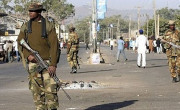
Security forces on patrol. (Story photo by This Day)

"The whole area is just pulsing with antagonism to one another. It seems to me that it has to be even more than just religious differences." Estabrooks asks if there is a winner in this contest for the youth. "Being young and being very emotional when these things happen, you get this kind of conflict that's horrifying as the ultimate outcome."


The future is what's at stake, and the youth have a lot of energy that needs direction. Government efforts to protect Christians haven't been reassuring since the attacks continue. Much of the violence is blamed on the sect Boko Haram, whose name in Hausa means "Western education is sin." Their stated goals are to create an Islamic state, instill Sharia Law, and eradicate Christianity. 

Estabrooks says Christians in Nigeria need prayer for wisdom and grace. "We really need to pray for our brothers and sisters who live in that area of such high tensions, and that God would give them the ability to be peacemakers rather than respond to every little insult and let it erupt into violence that will just about destroy an entire community."


The Gospel message runs counter to the tit-for-tat that disintegrated into a melee Saturday. Estabrooks explains, "Jesus' teaching is a very attractive teaching to people of peace, love, and the ‘putting others before yourself.' But if we don't live it as Christians, no one else is going to accept it because they don't see it in reality."

Sunday, February 24, 2013

Boko Haram 'cease fire' reveals future goals

(Photos by Voice of the Martyrs)

Nigeria (MNN) ― 23 days ago, Nigeria's Islamist faction, Boko Haram, offered a truce.

The government responded with a 30-day "wait and see." Their cautious optimism came in light of the intensified 42-month multi-prong attack strategy. It seemed that under the "Western education is forbidden" motto of Boko Haram, everyone was fair game: military, police, security facilities, schools and churches.

The goals of the extremist group were two-fold: instill Sharia law throughout the country, and create an Islamic state. A subset goal was the eradication of Christian presence.

Todd Nettleton, a spokesman for The Voice of the Martyrs USA, notes confusion over the ceasefire offer. Violence was supposed to stop, but "there are news reports that since the announcement was made, 53 Nigerians have lost their lives in violence. Not all of those have been claimed by Boko Haram. but they are assumed to be Boko Haram, so it doesn't seem like there's been a significant change of direction."

That reveals two things, observes Nettleton. First, the ongoing violence could signal a rift within the leadership of the Boko Haram sect. That's evidenced by the hallmarks of unclaimed violence. Several of the recent attacks have been dismissed as the work of a criminal gang, while others are blamed on extremists.
 Nettleton says that because of the confusion, "It is hard to look at the situation and clearly identify who the player is in a particular incident or a particular attack, because they're just not a united organization."

Second, it indicates the country is still a long way from bidding terrorism good bye. "Boko Haram is not really a united organization. There are different factions and different groups and different sub leaders under the overall Boko Haram ‘umbrella.' Nigerian president Goodluck Jonathon believes the spread of the Islamist extremist group could eventually undermine the region."

Nettleton explains, "There has also been this group called ‘Ansaru' that kind of split off from Boko Haram; they apparently are more focused internationally. They're focused on Mali, they're focused on the rest of Africa."

Boko Haram provides al Qaeda with an avenue to expand in Africa since they share ambitions and causes within Nigeria, greater Africa, and throughout Asia and Europe.

What does that mean? Fragmentation usually manifests in all groups trying to make a name for themselves.

That means more attacks and more violence. Nettleton says, "We may start to see more connections between those different groups, and that obviously is a frightening prospect for Christians in Africa. It's also a frightening prospect for the government in these countries that would like to put a lid on this violence."

The prospect of a blood-tainted future can be daunting, but VOM workers continue to come alongside believers in Nigeria to encourage them. A recent distribution of 37 bicycles, 15 motorcycles, and 50 megaphones will help pastors and Christian workers in the north. These simple tools will help them share the story of Jesus Christ in northern Nigeria.

Despite the near weekly attacks on churches, 2,500 believers in Gombe state gathered for a worship service. Gombe is one of the hardest-hit states in the north. "One of the significant opportunities for spreading the Gospel is the way that the Christians respond to persecution and even to those who are persecuted."

Widows, orphans, pastors and entire families from all over Gombe came together to hear a pastor preach about loving their neighbors. The pastor reminded worshipers that they must not hate their attackers and that martyrs like Stephen forgave his attackers. That message is the crux of the work VOM does, says Nettleton. "If Christians respond with forgiveness, with grace, and love, that can be an incredible testimony of the truth of the Gospel."

Pray that Muslims there will be reached with the Gospel. Pray for Christians in Nigeria to remain confident in the Lord. Pray for many others in Nigeria to come to know Christ and for church leaders to advance their ministry.


Thursday, February 14, 2013

Is a ceasefire a reality with Nigeria's Boko Haram?

(Images courtesy Compass Direct News)

Nigeria (MNN) ― After three years of incessant attacks on places of worship and other public places, Nigeria's Boko Haram sect has called a truce.

The price of the ceasefire: freedom for the arrested members of the group and the rebuilding of the destroyed mosque of its leader, Mohammed Yusuf.

Too high a price to pay? For its part, the embattled Nigerian government said it would not make a formal pronouncement yet on the ceasefire until it had time to study the conditions. "It seems the government and the military are working on the assumption that this is a legitimate ceasefire offer. The military there has kind of taken a 30-day "wait and see,'" notes Voice of the Martyrs spokesman, Todd Nettleton.

"If there are no incidents, if there are no attacks, if there are no church bombings for the next 30 days, then we'll know they're serious and then we can move forward," adds Nettleton.

Boko Haram is loosely translated "Western education is sinful" in Hausa. The group had its origins in Borno state, and under the banner of fighting to impose Islamic law on Nigeria, spread to Adamawa, Abuja, Bauchi, Niger, Kano, Yobe, Kadun,a and throughout other parts of Nigeria's northeast.

However, since the ceasefire was announced 17 days ago, nine women taking part in a polio vaccination exercise in Kano city were murdered, and three Korean medical doctors were killed in Yobe state. These attacks bear the hallmarks of the extremist group, but security forces admit that the violence could also have been a criminal gang profiting from the growing lawlessness in Nigeria's northeast.

That raises doubts about how much effect a ceasefire would have on security. Nettleton agrees. He goes on to explain, "They want westerners out of northern Nigeria, and they want to push for Sharia law in northern Nigeria. It is hard to imagine, for me at least, a situation where they stop short of that and agree to some form of compromise. So this may just be a small period of them sort of regrouping, but again, it's just so early that we don't know how this is all going to play out."

As to the reason this story has flown under the radar? Past history and several broken accords litter this road paved with good intentions. Nobody knows who backed the idea or who will cooperate with the truce. "Is this widespread? Is this going to come down from the top to everybody? Is this one small group that wants to have some peace, and maybe there are others who don't?" Nettleton asks.

There is some cautious optimism. Nettleton says partners have been sending back reports. "In the city of Maiduguri, which is kind of the headquarters of Boko Haram, there are stories of businesses returning to somewhat normal business hours, people in the markets, people in the streets, more so than they have been."

Still, the instability has taken its toll. "One of the impacts of the violence is that a lot of Christians have left the area. They simply have said, ‘We don't have a future here,' so there's that. When you talk about outreach, it complicates things--even simply to have someone come visit your church."

People are jittery, especially those who gather on Sunday in church. "Any guests at a church right now in northern Nigeria are watched with some apprehension and even fear. I've heard of churches that are putting in metal detectors. I've heard of churches where the Christians literally are taking machetes with them to church in case there's a battle that breaks out during the service, in case they have to fight their way out of the building."

Please pray for God's protection, regardless of whether the cease-fire holds. Pray that Muslims there will be reached with the Gospel. What's interesting, says Nettleton, is that more and more, Muslims are disenchanted with the things they're hearing from the al-Qaeda-linked Boko Haram. "The truth of Islam is coming out, and that can be a time of seed planting and even a time of revival."

Saturday, January 12, 2013

Christian workers need your help in Nigeria

(Image courtesy of Christian Aid Mission)

Nigeria (MNN/CAM) ― While past and present Nigerian presidents war over words, Christian Aid Mission reports a stark reality.

According to Human Rights Watch, the Boko Haram has taken over 2,800 lives, with 2012 slated as their bloodiest year. In the past, the militant Islamist group with ties to al-Qaeda targeted other Muslims they felt were on an immoral path, but increasingly they have targeted Christ-followers.

Earlier this week in an interview with CNN, former Nigerian president Olusegun Obasanjo criticized the current government's handling of Boko Haram's terrorist activities. President Goodluck Jonathan, a believer who took office in 2011, responded through his spokesman on Twitter.

"In Jan. 2013, OBJ (Obasanjo) tells CNN Govt should adopt a carrot and stick approach to Boko Haram," the spokesman tweeted. "Genocide & dialogue? Where exactly does he stand?"

A ministry helped by Christian Aid says Boko Haram attacks are occurring almost daily in their location.

Christian Aid has helped an indigenous ministry in Yola, Nigeria, since 1986. Last year, multiple Boko Haram attacks killed over 20 people in Yola. A recent attack claimed the lives of four, including a grandmother and grandchild burned to death in their home.

"In an official letter to the Police Commissioner, terrorist spokesmen threatened to make Yola another center and target of their operations," a native missionary ministry leader told Christian Aid Africa Director, Rae Burnett, in an e-mail. "This week they used mortar weapons and heavy machinery to attack the police station.

"We are all shaking."

This ministry has 183 workers planting churches and discipling converts among unreached Muslim and animist tribes throughout Nigeria. They're trying to move their headquarters to a safer location, but they need your help to get there.

Click here to help Christian workers ministering in Nigeria.

There are several additional things needed that would enable the ministry to move forward in reaching those who have never heard the Gospel:

    • Building and furnishing the office, including relocation and cost of movement, staff accommodations, and other fees.
    • A one-year course in the School of Missions for 16 English-speaking and 21 Hausa-speaking Nigerian trainees.
    • Posting and settling 38 new missionaries. This will include transportation, new stations, building or renting simple homes, motor bikes, and other necessities for families.
    • Completing and providing materials for the Muslim Convert Care Center, which needs four sewing machines, one grinding machine, mosquito nets, food, an additional building, and two motorcycles. This is where Muslim converts are protected while being discipled.
    • Monthly support for missionaries and school fees for their children. None of the missionaries are on salary; they live by faith.
    • At least 16 motorcycles are urgently needed for fields in the far north with 87-99% Muslims.

Ask God to protect and encourage believers ministering in this dangerous region. Pray that all needed funding would come in.

Thursday, January 10, 2013

Boko Haram continues bloody path to dominance

(Photos courtesy CBN)

Nigeria (MNN) ― Suspected Boko Haram militants in northern Nigeria have killed at least 34 people since Christmas--including 27 Christians attending church services. 

So far, the body count tops more than 2,800, roughly a third of them Christians, according to Human Rights Watch. 

Frustration is growing with the ineffective government response, although President Goodluck Jonathan celebrated the arrest of significant number of terrorism suspects accused in the bombings of the Nigeria Police Headquarters and the United Nations building in Abuja. These terrorists are also believed responsible for a church bombing in Madala which killed scores.

The name Boko Haram means "Western education is sacrilege." In the past, they have attacked other Muslims they felt were on an immoral path but have increasingly killed Christians. Greg Musselman, a spokesman for the Voice of the Martyrs, Canada, explains, "They want to turn the northern part of Nigeria into an Islamic state. That is their goal, and those that would stand against that are seen as legitimate targets for the Boko Haram." 

Musselman goes on to note that even if they accomplish this goal, it won't likely stop the violence. "Eventually, they would want to take over the whole country. So again, those that would get in their way are seen as legitimate targets." 

The U.S. State Department has accused Boko Haram of attacking mosques and churches to incite tensions between the two religious groups, hoping to drive a wedge between them. That's one explanation for the spike in attacks. Another, says Musselman, is "because the Gospel is advancing into the North, and many are becoming Christians. We need be praying that the Church will not be bogged down in fear." 

That's especially true now. "What terrorism tries to do is to bring terror to people, to lock them up and prevent them from advancing the Gospel," says Musselman. The pressure is refining the Church, and the boldness of Christians is having a direct impact on the community. "Pray that there will still be boldness and wisdom in how they go about advancing God's kingdom. We need to also ask the Lord how we can  practically help through ministries like Voice of the Martyrs, Open Doors, Christian Solidarity Worldwide." 

Under the current pressures, it is dangerous to convert and dangerous for churches to integrate new converts. However, Musselman says that won't stop the Gospel or the workers they support. "Be praying and then supporting the church the best that we can, helping them, encouraging them (i.e. with orphanages for the young victims who have lost parents because of the violence)." 

Friday, December 28, 2012

12 Christians Killed in Christmas Bloodshed in Nigeria

Gunmen attack two churches in Borno, Yobe states on Christmas Eve

By Dan Wooding, who was born in Nigeria
Founder of ASSIST Ministries

JOS, NIGERIA (ANS) -- Christmas Eve attacks by suspected Islamic extremists in northern Nigeria's Borno state - already reeling from the slaughter of at least 10 Christians earlier this month - took the lives of six people at a Baptist church, as gunmen killed six others in Yobe state the same night.
One of the vehicles used by the bombers in the attack that hit a church inside a military barracks of the Armed Forces Command and Staff College, in Jaji, Kaduna state


According to Morning Star News (http://morningstarnews.org) in Borno state, where Islamic extremist group Boko Haram is based, six Christians were slain at First Baptist Church in Maiduguri on Christmas Eve.

About 160 kilometers (100 miles) away in Kupwal village in Chibok Local Government Area, suspected jihadists shouting "Allahu Akbar [God is greater]" on Dec. 1 slit the throats of at least 10 people in carefully selected Christian homes, according to reports from survivors.

The story went on to say that in Yobe state on Christmas Eve, gunmen believed to be members of Boko Haram reportedly entered the Evangelical Church Winning All (ECWA) in Peri, near Potiskum, and killed six Christians including a pastor before setting the church building ablaze. Several others were reported seriously wounded.

"No group has claimed responsibility for the Christmas Eve attacks, but Boko Haram mounted Christmas assaults on Christians last year and in 2010," said the Morning Star News Nigeria correspondent. "Boko Haram, which reportedly has ties to Al Qaeda, has vowed to eradicate Christianity from Nigeria and seeks to impose a strict version of sharia (Islamic law) on the entire country. Boko Haram has targeted churches, state offices, law enforcement sites and some moderate mosques in its effort to destabilize the government.

"Before the attack in Peri, Boko Haram had reportedly battled Nigerian security forces in Potiskum, bombing a local police station and attacking a bank. Potiskum has reportedly become a hotbed for Islamic militants of Boko Haram. Attacks on Christians in Yobe state have forced thousands of Christians to flee to others parts of Nigeria, while others have become refugees in Cameroon.

"Attacks on churches in northern Nigeria have intensified since a 2011 Christmas Day attack at the town of Madallah near Abuja, Nigeria's capital."

Morning Star News added that in Jaji, in northern Nigeria's Kaduna state, 11 Christians were killed in a suicide attack on a church on Nov. 25. The Rev. Titus Sambo and Israel Olaleye, students at Baptist Theological Seminary in Kaduna, died in the dual bomb blasts at the Armed Forces Command and Staff College, a military barracks church serving military personnel, their families and civilians in Jaji, about 25 miles from Kaduna City. At least 30 people were reported injured.

The bombers were suspected members of Boko Haram group, also suspected of bombing a Kaduna church on Oct. 28, killing seven Christians.

"Jaji is located midway between Kaduna and Zaria, two cities that have witnessed suicide bombings in recent months," said Morning Star News. "Besides the Oct. 28 bombing of St. Rita's Catholic Church in the Malali area of Kaduna City, in Zaria suicide bombers on June 17 carried out attacks on an ECWA congregation in the Wusasa area of the city, killing at least 24, and the Catholic Christ the King Cathedral in the Sabon Gari area, killing at least 16. In Kaduna, the group bombed a Pentecostal church, Shalom Church, where at least 10 died. Boko Haram took responsibility for the June attacks."

Christians make up 51.3 percent of Nigeria's population of 158.2 million and live mainly in the south, while Muslims account for 45 percent and live mainly in the north. But those practicing indigenous religions may be as high as 10 percent of the total population, according to Operation World, so the percentages of Christians and Muslims may be less.

Note: Morning Star News is a 501(c)(3) non-profit corporation whose mission is to inform those in the free world and in countries violating religious freedom about Christians worldwide who are persecuted for their faith. For free subscription or to make tax-deductible donations, contact editor@morningstarnews.org,  or send check to Morning Star News, 24310 Moulton Parkway, Suite O # 157, Laguna Hills, CA 92637, USA.

2012: Boko Haram's bloodiest year

(Photo courtesy of Christian Aid)

Nigeria (MNN) ― Boko Haram, a Nigerian militant Islamist group, had their bloodiest year in 2012, responsible for over 750 deaths.

General Aziza, Nigeria’s former national security advisor, says the upscale in Boko Haram’s terrorist attacks may be linked with the upcoming 2015 Nigerian presidential elections.

When President Goodluck Jonathan, a Christian, was elected president of Nigeria in 2011, a series of Boko Haram killings followed. Boko Haram made threats on the president to resign or else turn Nigeria into an Islamic nation.

Rae Burnett, the Africa Director for Christian Aid Mission, explains, “I do believe that it’s spiritual warfare, but it’s definitely the desire to see that Islam is the world religion. They start where they are, and these guys are Nigerian, so they want to be empowered in Nigeria.”

Several of the Muslim-majority Northern states began declaring themselves under Sharia law after the 2011 elections. Of the 32 Nigerian states, 12 currently are govern by Islamic Sharia law. 2015 will be Muslims’ next chance to gain power in Nigeria’s political arena.

However, Boko Haram grew quiet on the large-scale attack front earlier this month. The fact that Christmas was approaching—the biggest Christian holiday of the year—wasn’t lost on anyone and created an eerie silence. Attacks were expected, especially since Boko Haram has declared intent to eradicate Christians from Nigeria.

And Boko Haram militants have the means to back up this desire. With ties to Al-Qaeda and funding for weapons, they fight in pockets and avoid any clashes with the Nigerian military. They’ve gotten bolder. According to Burnett, “They do whatever is in front of them. If it’s a school bus, they’ll blow it up. If it’s a school, they’ll blow it up. They’re trying to make people afraid.”

Because of the disjointed nature of Boko Haram’s fighting tactics, several smaller attacks still occur weekly in Northern Nigeria, but they are largely unreported.

Burnett shares, “Once, I read [about another attack] and called my friend [in Nigeria] and said, ‘Why didn’t you tell me about this?’ He said, ‘Look, if I tell you about every terrorist attack, we would be on the phone all the time.’ They’ve become so common place that they are happening every day. We don’t hear about them.”

The attacks have gotten so bad in the state where Christian Aid’s headquarters are located that they need to move to a safer site. But Christian Aid can’t do it without the funds. Out of the $40,000 needed, they only have $10,000—enough to buy the land and lay a foundation. Christian Aid still needs $30,000 to finish the headquarter buildings and residences.

“They really need to move from the state where they are now,” says Burnett. “Two and three times a week, they are suffering terrorist attacks.”

But despite the danger, the 120 missionaries in Nigeria associated with Christian Aid are staying in the ministry field. “They are committed to making the Lord known and dying for Him if need be,” says Burnett. “They’re doing wonderful work, and many people are coming to Christ.”

Pray for Christians in Nigeria to persevere and hold fast to their hope in the Lord. Pray for many others in Nigeria to come to know Christ and for church leaders to advance their ministry.

Monday, December 10, 2012

War on global terror far from over

Story photo: Rev. Dr. Musa Asake,
General Secretary Christian Association of Nigeria.
(Images courtesy Christian Association of Nigeria)
Nigeria (MNN) ― A recent U.S. military briefing on the war on terror seemed to paint a rosy picture.

While the Pentagon's top lawyer was looking at a post al-Qaeda era, experts say entering into that planning stage is premature.

At first blush, it seemed that the rise of the Arab Spring brought more freedom as regimes changed. However, human rights watchdogs say what it really did was help al-Qaeda affiliates flourish.

Reports from religious rights groups indicate that the changes distracted from the numbers of radicalized training camps that mushroomed in the last decade. Recruiting efforts increased, and there is evidence to support a link between al-Qaeda and the Boko Haram (whose name means "Western education is sin" in Hausa).

Rev. Dr. Musa Asake, General Secretary of the Christian Association of Nigeria, shares the bigger picture of concern. 

"Once they get Nigeria, being the most-populous country in Africa: if Nigeria goes down, Africa goes down. That is their goal, and that is why they have connections in northern Mali. Some of them have friends there."

Mali's instability brings up another issue: the Boko Haram is beginning to represent a global threat with its militant connections not only to al Qaeda, but also to Somalia's al-Shabaab.

The group's leadership has set its sights on spreading its ideology across the region and into Europe. Since 1999, Muslim state leaders have imposed Sharia law in 12 northern states and parts of four others.

Their stated goal: to eradicate Christian presence from Nigeria. The sect says they'll stop their attacks only if the government implements Sharia law. As a result, the scale of persecution of Christians by Muslims has accelerated in Nigeria's northern states and as far south as the central plateau. The losses are staggering. As the death toll mounts into the thousands, Asake explains, "[sic] They continue to burn down our churches and kill innocent people. That is why we are crying out for the world to know, and seeking for whatever help can come, to help stop this thing."

Appeals to the Nigerian government for help yielded little in effective protection. Asake goes on to say, "We had hoped that this would go down, that they would be controlled; but they seem to be increasing by the day and spreading all over the northern states of the country. That's a concern to the Christians in the country."

As the attacks ramped up this year, the damage they inflicted was proof that the Boko Haram was better resourced and organized with outside help. Outraged, the Christian Association of Nigeria (CAN) called for help. They're still encouraging Christians not to retaliate through violence, notes Asake. "Pastors continue to preach ‘We should wait upon the Lord, as difficult as it is', and ‘Vengeance is the Lord's.' So, we continue to preach that and continue to look for ways that this thing will go, without all the retaliation."

CAN intends on taking its case to the International Criminal Court (ICC). Last month, The Hague's prosecutor found reasonable evidence that the Boko Haram Islamists had committed "crimes against humanity." It was the first step in the right direction. Asake says, "Our attorneys are looking into that, and it's going to be soon, but we have not made a timeline." The CAN is also asking the Nigerian Federal Government to name Boko Haram as a foreign terrorist group.

If terrorists are bombing churches because they're opposed to the sharing of the story of Christ, what kind of impact does that have on Gospel work? Actually, says Asake, there are more people committing their lives to Christ. Groups like Open Doors USA agree, noting the "paradox of persecution." Former CEO Carl Moeller has said, "As extremism rages in people's hearts, it produces a deeper vacuum, and that vacuum can only be filled by Jesus. Sometimes they don't even know that, but Jesus is still moving in people's hearts, even in the midst of this violence."

Asake asks for believers to "pray that God will continue to see us through these difficult times. Pray for those that have lost their loved ones in this situation. Pray for the leadership of the church, that we would continue to focus on God's work and preach the message of love, even in these difficult times."