Showing posts with label voice of the martyrs canada. Show all posts

Wednesday, September 18, 2013

Tribal violence in Nigeria on the rise

(Photo courtesy Morning Star News)
Afghanistan (VCM/MNN) ― Lafia, Nasarawa, Nigeria is in chaos.

According to a report from AllAfrica, troops arrived in Lafia on Sunday to reinforce the soldiers already there trying to quell the ongoing crisis between the Eggon and Alago tribes. Their report also notes that four towns and villages have been hit by deadly violence in the last few days.

While not directly linked to the riots, the next part of this story goes to show the anarchy in the region.

Reports from the Voice of the Martyrs Canada have noted tensions on the rise for weeks. Last month, a church in Lafia was attacked by a mob of Muslim militants. The mob generated alarmingly fast over a 20 naira--12 cent (USD)--fee to use a water well.

On August 17, while the St. James Anglican Cathedral choir was rehearsing, Rev. Isaac Onwusongaonye was in a Bible study meeting with the elders when he got notice about a confrontation that took place at the church's water borehole.

Reportedly, a Muslim woman in the community got angry, which incited neighboring militants to attack the church after arguing with the Christian young man who runs the well.

Despite the church's attempts to defuse the row by waiving the fee, the woman's son and associates responded with violence. Using knives, clubs, motorcycle chains, iron poles, and wooden rods, the angry mob of 30 attacked the church's security guards, injuring them severely enough to require hospitalization.
In addition, three pastors, four elders, and an indeterminate number of choir members sustained injuries.

Church property was also destroyed. Thankfully, the arrival of police averted plans to burn down the church building. While the ringleader's mother was initially arrested, she was later discharged in exchange for her son. The case is still under investigation.

Thank the Lord for the courage of the security guards who risked their lives while trying to protect the church. Ask God to minister to the traumatized victims, granting them needed comfort and healing. May the Lord encourage and reward the church's leaders and congregation members, bringing justice in this situation and blessing their outreach in the community.

Thursday, September 12, 2013

Peril worsening for Egyptian Christians

(Cover photo courtesy AINA.
 Story photo courtesy Christian Post)
Egypt (MNN) ― Some scholars believe Egypt's continued onslaught of violence against Christians could be the worst in 700 years. And it's not over yet. Musselman, a spokesman with the Voice of the Martyrs Canada, says, "Talking to those that are plugged in to what's going on, they believe that the violence, the destruction, and the assault on the Christian community will continue for at least several more years."

The recent headline news may bear that out. It seems like every Friday after Muslim prayers end, there are riots and protests that erupt among members of the Muslim Brotherhood. A sudden burst of unpredictable violence lurks just beneath the surface, similar to that of 3 July.

The target? Christians. Coptic Church leaders are trying to keep a lid on the tensions. They're encouraging calm and talking about peace, unity, and forgiveness. The most obvious reason behind the message, says Musselman, is that "when people react with violence against violence (which is totally understandable), it just leads to more violence."

Easier said than done. The Islamist takeover of a town in Egypt has Christians drowning in fear. Dalga's takeover followed the ouster of the country's president, Mohamed Morsi. On 3 July, Morsi's Islamist supporters attacked Christians, their homes, and businesses in the southern Minya province.

Radicals have yet to leave, promising defiance of the military-backed leadership that has replaced him, and successfully stopping army attempts to send in armored personnel carriers.

Trouble in Sinai could mean a second insurgency could erupt in Minya and Assiut provinces, home to two of the biggest Christian communities in Egypt, while at the same time a foothold for the Islamists.

Musselman considers, "That's very much possible. You've got the Muslim Brotherhood who are not going to sit down and say ‘OK. I guess we lost this thing. We're going to forget about it.' No. That's not what they're thinking about."

The problem is that in the security vacuum, it has been Christians largely paying the price. Musselman explains, "Of course we've seen dozens of churches destroyed, Christian businesses destroyed, homes destroyed--a lot of intimidation. There's a lot of fear right now because even the military and police say they can't adequately protect them."

While the constitution allows for freedom of conversion, in practice, discrimination is commonplace. What's more, waiting for a new constitution puts things in limbo. With things as bad as they are for Christians, Musselman wonders, "Who knows what's going to be happening two months from now? People are leaving.

There's a lack of trust in what's going to happen there." He goes on to add that with the mass exodus of Christians fleeing Egypt, "Who knows how many will be left to vote, or to think at this point in time there's any reason to even be involved in the constitutional process?"

And yet, there's opportunity. "In the middle of all this, there's also been an incredible expression of forgiveness by Christians in places like Minya, south of Cairo. We're seeing where they are actually writing on their destroyed churches, ‘We forgive you.'" The open-handed extension of forgiveness to those who have pulverized their communities speaks volumes for the Christ they follow. It takes guts to speak His name, though, in an atmosphere where you can be killed by a mob just for wearing a cross or being identified as a Christian.

That's where you come in. "Be praying that they will be strong, that they will not be ruled by fear, but they would use wisdom. And also [be praying] that the Christians, in large masses, would exhibit forgiveness."
Pray that God will strengthen and embolden Christians in this time of political uncertainty and give them new opportunities to share the gospel.

Saturday, September 7, 2013

A Christian mother goes missing in Somalia

Somalia's flag. (Image courtesy Wikipedia)
Somalia (VCM) ― Islamic militants suspected to be from Al Shabaab have kidnapped a Christian mother and threatened to attack her husband because of their faith.

According to reports from the Voice of the Martyrs Canada, three masked men abducted Shamsa Enow Hussein, 28, outside of her home in Bulo Marer, Lower Shebelle Region, on August 5th. Her husband, 31-year-old Mohamed Isse Osman, received a text from her that night urging him to evacuate. "Please leave immediately because of what we believe," she said in the text. "They have abused me sexually, saying I am an infidel."

Mohamed has also received anonymous threatening text messages from the kidnappers, including one that read, "Your wife has told us all about your Christian involvement, and soon we shall come for you, too." Mohamed and his two daughters, aged 3 and 5, have moved to an undisclosed location. A religious leader in the region claims that Osman has had no contact with his wife since her text on August 5th.

Like most Somali Christians, Shamsa and her husband are secretive about their faith. According to one resident of Bulo Marer, locals are aware of Shamsa's abduction but have no idea why it occurred. "What little we knew about (the) family was that they were not very committed to attending the mosque during Ramadan time," he said. Somalis consider themselves Muslim by birth and regard Islam as a significant part of their cultural identity.

Officials estimate that Somalia is close to 100% Muslim. Apostasy, or the leaving of Islam, is punishable by death.

Pray that God will preserve Shamsa's life, bringing her safely back to her family. May they sense His comforting presence throughout the turmoil. Also remember in your prayers other Somali believers who are fearing for their own safety and that of their loved ones. Ask that the Lord will not only provide His protection but also bless them with boldness as they speak the truth in love.

Tuesday, August 13, 2013

Reverend missing; activists suspect kidnapping

Reverend Paolo Dall'Oglio.
(Photo courtesy of VOMC/Flickr /veDro - l'Italia al futuro)
Syria (MNN/VOMC) ― Rev. Paolo Dall’Oglio is still missing two weeks after his disconcerting disappearance in Syria.

Dall’Oglio, an Italian Jesuit priest, was last heard from on Monday, July 29th. Activists in the region speculate he may have been kidnapped by Syrian rebel forces linked to al-Qaeda.

Rev. Paolo Dall'Oglio spent three decades in Syria before the government deported him last year for helping victims of President Bashar al-Assad's military crackdown, according to Voice of the Martyrs Canada (VOMC) source, Assist News Service. He re-entered the country in late July.

A source close to Dall’Oglio got an e-mail from him on July 26. The reverend wrote in the e-mail that he would be travelling to assist “difficult mediation,” according to the Religion News Service. The Christian Post says the source suggested, “It is possible the priest purposely went off the grid in Raqqa to help mediate the release of two hostages being held by Islamic rebels.”

The reverend's disappearance comes three months after the kidnapping of the Greek Orthodox and Syriac Orthodox archbishops of Aleppo in April. According to VOMC, these reflect the dangers Christians are still facing in this war-torn country.

Paul Yazigi of the Greek Orthodox Church and Yohanna Ibrahim of the Syriac Orthodox Church were kidnapped near the village of Kafr Dael on April 22nd while returning from the Turkish border on a humanitarian relief trip. The abduction happened on the road to Aleppo from the rebel-held Bab al Hawa Province, where gunmen intercepted their vehicle and killed the driver.

The fate of both clergymen is still unknown.

According to the United Nations, Syrian Christians have been vulnerable since the beginning of the civil war in 2011 which has left more than 100,000 people dead. Reportedly hundreds of believers have been kidnapped since hostilities began in 2011, and thousands more have fled the country. Many have crossed over into Lebanon or Turkey where they await legal or illegal means to reach Europe and obtain political asylum.
VOMC asks for prayer that the Lord would be a shield to the multitudes of innocent people who are caught in the cross fire between the forces of good and evil. Ask for His divine protection and strength to be upon all of His faithful servants who are boldly taking a stand for righteousness.

Friday, July 19, 2013

Change comes at a price for Egyptian Christians

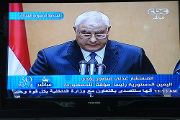
Egypt's interim president getting to business.
(Screen grabs courtesy Kodak Agfa/Flickr/Creative Commons)
Egypt (MNN) ― Egypt‘s new cabinet got to work this week, rolling sleeves up and tackling big problems.

Outside, former President Mohammed Morsi's supporters were ranting and marching through Cairo protesting against a military-backed cabinet and ouster. Greg Musselman, a spokesman for the Voice of the Martyrs Canada says, "It appears it's in organized chaos in some ways, but then on the streets, you're seeing all this violence and the Muslim Brotherhood. They're certainly making their point being heard, but also using violence to try to get Mohamed Morsi back into office."

The new secularist-leaning government essentially shuts out the Islamists that were elected into power last year. However, notes Musselman, the price of the political tumult is being paid by the Christians. "They felt that they needed to make their voice more heard and as a result of that, they have set themselves up, in some ways, to be the scapegoats. The Muslim Brotherhood has already started attacking Christians."

Since Morsi was forced from office, there has been a string of attacks on Christians in different provinces in Egypt. "On one hand, they see the situation, all that's gone on as a positive; yet on the other hand, as we've seen in reports over the last week or two, the attacks against Christians, there have been deaths, there have been churches attacked, (and) Christian businesses."

Specifically, 12 days ago, a priest was shot dead by gunmen in northern Sinai. Five days later, the body of a beheaded Christian man was found in the same area. Arson attacks on Christian houses and shops have also been reported in remote southern villages.

Just this week, a church near Minya, in central Egypt was looted and destroyed and the priest fled for his life. A number of other churches in the region suspended summer activities and postponed several gatherings. Musselman explains, "For the most part, Christians have been pretty low key when it comes to these kinds of situations because they know that retaliation can be something that would happen very naturally if they got involved because of the political and religious dynamic that takes place in the country."

At the beginning of the upheaval, there was hope expressed by the Christian community in Egypt, Musselman says. "The hope is that with the changing of the guard again that they will be more sympathetic to Christians. There may be less persecution coming from the state government, but again, with the radical groups who are not going to sit still, the fear is that these attacks will continue to increase." Despite the threat hanging over the heads of believers, Musselman says the Church will not cower in fear. "We really need to be praying, and that's the [request] coming from Christian leaders in Egypt: ‘Please pray for us. This is a time of great opportunity.' Also what's being said is that ‘Many are coming to know the Lord.'"

In these troubled days of Egypt, the followers of Christ are finding the paradox of persecution to be true. The violence of the militants is prompting questions among Muslims. "There is more of openness to the Lord and to the message of the Gospel." Click here for a link to more ways to get involved.

Thursday, April 18, 2013

Pre-election violence rattles sectarian nerves

Image courtesy the Voice of the Martyrs Canada)

Iraq (MNN) ― There's been a deadly wave of bombings in advance of Saturday's 450-seat provincial elections.

On Monday, police say insurgents coordinated 24 separate attacks in six different provinces, killing nearly four dozen people and wounding more than 257 others.

Based on the targets and who claimed responsibility, the violence appears to be sectarian. Greg Musselman, a spokesman with the Voice of the Martyrs Canada, explains, "There is a lot of instability. You've got al-Qaeda who definitely wants to make it their mission to take over the country and what they believe--their brand of militant Islam--and they will use any means to do that."

Noting what seems to be a spike within the last few weeks, Musselman attributes some of it to bad timing. "Part of that is with the U.S. pullout, they are really testing to see how strong the military--the police--are in the country. Obviously, they're finding out that there are some holes. That's become a very big challenge for the Iraqi officials and security."

While most of the violence is between the Shia and Sunni, it doesn't take much before Christians are caught in the crossfire. Iraqi Christians--one of the oldest communities in the world--have faced such violence, that tens of thousands left the country in 2011.

Although Iraq's constitution says each individual has freedom of thought, conscience, and belief, Christians feel that the government fails to protect them. Since there is no article on changing one's religion, and Islamic law forbids conversion of Muslims to other religions, believers--especially Muslim-Born Believers--are routinely threatened, robbed, raped, or kidnapped, and their churches bombed.

As a result, persecution watchdog groups note with some alarm that Christians in Iraq are on the verge of extinction. Musselman says, "Somewhere back in the mid-1990s, there were 1.2 to 1.4 million Christians. Today, some say there are less than 200,000. Not all of those Christians are meeting in visible churches. There's a lot of underground activity going on."

The head of the Chaldean Church estimates that only 57 churches remain with members of the minority fleeing Islamist attacks. Musselman is quick to point out that not everyone is taking the exodus in stride.

Some believers are going against the flow. "Some of the evangelical denominations are starting new churches, so there's some activity--especially in the North, like Kurdistan--where there's certainly more security. But in Baghdad, they have to be more careful."

In fact, church leaders are answering difficult questions concerning fear and family safety: "Should I stay or should I go?" That's where strong faith comes into play, says Musselman. "One of the pastors in Kirkuk we talked to told us, ‘We want the Christians to stay. We need to be the light. This is an historic place where the Church has 2000 years of history, and if all the Christians leave, where will that leave us?'"

Saturday, March 9, 2013

Life in Venezuela uncertain

(Cover photos by GloboVision. Story photo by David Seaton)

Venezuela (MNN) ― Venezuelans began seven days of public mourning on Tuesday night following the death of their president, 58-year-old Hugo Chavez, after a long battle with cancer.

His hand-picked successor, vice-president Nicolás Maduro, said Chavez would be given a state funeral in Caracas on Friday. In the meantime, Maduro will act as interim president and run for the office in the upcoming election in the next 30 days. The Voice of the Martyrs Canada spokesman Greg Musselman says of Maduro, "He was very loyal to Hugo Chavez. We've seen a consolidation among left-leaning Latin American countries, so there is the belief that he will continue on in the same way that Hugo Chavez had."

Venezuela's constitution specifies that the speaker of the National Assembly should assume the interim presidency if a president can't be sworn in, but Chavez made his wishes known before he died. Government officials are following the plan he outlined at that time.

Maduro is also warming up to his role. He called out unnamed "enemies" he claimed were trying to undermine Venezuela's government in a speech Tuesday. Then, he expelled an American Air Force attaché at the U.S. embassy for spying. There's rumor that government officials blame the United States for the death of Chavez.

The big question now is: will there be a huge change? Not likely. "Chavism" is expected to reign on. Musselman explains, "He's a guy that does hold to the socialist ideology. We don't expect things to change drastically for the evangelical Church when it comes to evangelism and freedom to gather."
From what Venezuelan Christians report, Musselman says in the 14 years he was in office, "Chavez may have had his points of trying to help the poor and some of those things which we say are great. But ultimately, he didn't deliver on everything that he promised. Some would say the country is a lot worse."

The "worse" Musselman is referring to is the loss of freedoms. "When you start preaching the Bible--that there's one King and one Kingdom (the Kingdom of God), and not the government of a dictator (as we see with Hugo Chavez), the Christians run into difficulty."

Soon, that turned into a kind of subtle oppression. Musselman spoke with a prominent church leader in Venezuela: Nelson Castro (no relation to Cuba's Fidel Castro), a former colonel who served with Hugo Chavez, confirms the undercurrents. "There has been that pressure turned on them, in terms of them getting radio stations licenses, to be able to spread the Gospel, to be able to expand the Church and a lot of what was happening he said, was very much parallel to what had happened in Cuba under Fidel Castro."

In 2009, the human rights situation in Venezuela was beginning to deteriorate. There were reports that the regime was considering confiscating churches, schools, and other religious buildings. That same year, Venezuela was added to the U.S. Commission on International Religious Freedom Watch List.

Three years later, the country remains on the list along with Afghanistan, Belarus, Cuba, India, Indonesia, Laos, Russia. and Somalia. According to the USCIRF, "The Watch List provides advance warning of negative trends that could develop into severe violations of religious freedom, thereby providing policymakers with the opportunity to engage early and increasing the likelihood of preventing or diminishing the violations."

From the USCIRF report segments involving Venezuela, the report added more rights violations including:

*the government's failure to investigate and hold accountable perpetrators of attacks on religious leaders and houses of worship,
*rhetoric from President Hugo Chavez, government officials, state media, and pro -Chavez media directed at certain faith-based communities.

"Definitely, the Church has been in defensive mode under Chavez, and it has been getting more intense over the past few years," notes Musselman, while at the same time acknowledging that the Constitution of Venezuela provides for freedom of religion, and there are no official restrictions on religious practice.

Religious groups are required to register with the Directorate of Justice and Religion (DJR) in the Ministry of Interior and Justice, and so far, no groups were refused registration in the past few years.

Still, Musselman goes on to say, the actions of Chavez created a hostile ministry environment. "If things had continued to progress the way that things had been under Hugo Chavez, it would become more and more difficult getting better jobs and education, because anybody that was not for him was against him."

By law, Venezuela will hold elections in the next 30 days. So far, there isn't a candidate strong enough to challenge the government frontrunner. In light of that, Musselman urges believers to "pray that the church leaders [and] Christians that are serious about evangelizing and sharing the Gospel of Jesus Christ would continue to remain devoted to the Lord, (that) they would not be intimidated."

Thursday, January 10, 2013

Boko Haram continues bloody path to dominance

(Photos courtesy CBN)

Nigeria (MNN) ― Suspected Boko Haram militants in northern Nigeria have killed at least 34 people since Christmas--including 27 Christians attending church services. 

So far, the body count tops more than 2,800, roughly a third of them Christians, according to Human Rights Watch. 

Frustration is growing with the ineffective government response, although President Goodluck Jonathan celebrated the arrest of significant number of terrorism suspects accused in the bombings of the Nigeria Police Headquarters and the United Nations building in Abuja. These terrorists are also believed responsible for a church bombing in Madala which killed scores.

The name Boko Haram means "Western education is sacrilege." In the past, they have attacked other Muslims they felt were on an immoral path but have increasingly killed Christians. Greg Musselman, a spokesman for the Voice of the Martyrs, Canada, explains, "They want to turn the northern part of Nigeria into an Islamic state. That is their goal, and those that would stand against that are seen as legitimate targets for the Boko Haram." 

Musselman goes on to note that even if they accomplish this goal, it won't likely stop the violence. "Eventually, they would want to take over the whole country. So again, those that would get in their way are seen as legitimate targets." 

The U.S. State Department has accused Boko Haram of attacking mosques and churches to incite tensions between the two religious groups, hoping to drive a wedge between them. That's one explanation for the spike in attacks. Another, says Musselman, is "because the Gospel is advancing into the North, and many are becoming Christians. We need be praying that the Church will not be bogged down in fear." 

That's especially true now. "What terrorism tries to do is to bring terror to people, to lock them up and prevent them from advancing the Gospel," says Musselman. The pressure is refining the Church, and the boldness of Christians is having a direct impact on the community. "Pray that there will still be boldness and wisdom in how they go about advancing God's kingdom. We need to also ask the Lord how we can  practically help through ministries like Voice of the Martyrs, Open Doors, Christian Solidarity Worldwide." 

Under the current pressures, it is dangerous to convert and dangerous for churches to integrate new converts. However, Musselman says that won't stop the Gospel or the workers they support. "Be praying and then supporting the church the best that we can, helping them, encouraging them (i.e. with orphanages for the young victims who have lost parents because of the violence)." 

Monday, December 10, 2012

Elderly Christian worker shot in Pakistan.

(Image courtesy Voice of the Martyrs Canada)

Pakistan (VCM/MNN) ―Pakistani police are investigating the shooting of a Christian worker in Lahore last Monday.

Voice of the Martyrs Canadacontacts confirm that Birgitta Almby, Area Director of Full Gospel Assemblies (FGA) in Lahore, Pakistan, was recuperating at Jinnah Hospital. They say Almby spent the week in critical condition after two unidentified gunmen on a motorcycle opened fire as she arrived home from work. 

Although the doctors were able to remove the bullet from her chest, the shooting caused considerable damage to the 70-year-old woman's lungs and jugular vein. On Friday, VOM Canada reported Dr. Ali Usman as saying, "We have kept her in the Intensive Care Unit, where her situation is precarious because of the excessive bleeding."

Almby was a familiar figure around the Christian community in Lahore. For 38 years, she served in Pakistan---some of that time with the FGA, which describes itself as a "church fellowship." The organization runs charities in Pakistan, including a technical training institute, an adult literacy center, and orphanages.

VOM Canada sources say while the investigation is in its early stages, Islamist extremists may be responsible for the attack. They've been increasingly targeting Christians in Pakistan, who are a beleaguered minority of about 2.5% in a country of 176.7 million, which is 96% Muslim.

However, despite the oppression, VOM Canada says Christian leaders have been reporting a steady but significant trickle of Muslims responding to the Gospel and joining churches.

As a marginalized community, many of their struggling fellow believers in Pakistan will be the recipients of VOM Canada's "Christmas Blessing" packages throughout the Christmas season. It's a source of encouragement at a time when it's becoming increasingly dangerous for followers of Christ to openly share their faith. 

VOM Canada asks for Christians to come alongside the Pakistani church in prayer. Ask God to intervene, not only sparing Birgitta's life, but also ministering complete healing to the areas wounded by the attack. 

Please also pray that He will bring much-needed peace and encouragement to her family and fellow Christian workers, as well as to all those in the community she so lovingly served. Pray that through this situation, people's hearts would open to the peace and love of Christ, and that communities would be transformed. 

Wednesday, October 10, 2012

Venezuelan course of action likely worsens for religious freedoms

(Photos by Brian Russell)

Venezuela (MNN) ― In a re-election to another six-year term, Venezuela's President Hugo Chavez defeated Henrique Capriles by a 10% point margin in the presidential election.

The win marks Chavez's fourth presidential election victory since 1998. It also means more of the same leftist-leaning policies. Some of these have earned Venezuela a dubious reputation.

In fact, the 2012 U.S. Commission on International Religious Freedom Watch List includes Afghanistan, Belarus, Cuba, India, Indonesia, Laos, Russia, Somalia, and Venezuela. Venezuela has been on USCIRF's Watch List since 2009.

According to the USCIRF, "The Watch List provides advance warning of negative trends that could develop into severe violations of religious freedom, thereby providing policymakers with the opportunity to engage early and increasing the likelihood of preventing or diminishing the violations." 

In that report, investigators found continued violations of freedom of religion. These included: government failure to hold accountable those behind attacks on religious leaders and houses of worship, virulent rhetoric from President Hugo Chavez, government officials, state media, and pro-Chavez media directed episodically against the certain faith-based communities.

Since President Chavez first came to office in 1998, there has been a steady increase of government rhetoric, and in some cases government actions, against the faith-based groups thought to have ties with the West. 

Greg Musselman, spokesman for Voice of the Martyrs Canada,says it's not likely things will change in the direction of more freedom. "Chavez, being close with the Castro (Cuban regime), would have similar kinds of policies against the Church, which would be having more control over the church. And if they didn't go along with the policies of the government, or if they were in any way seen even preaching the Gospel--which will conflict with an ideology like Hugo Chavez, that could cause problems for the Church." 

As Chavez flexed his muscle over the economy, non-governmental organizations, and society, he simultaneously seemed to be backtracking on democracy and respect for human rights. There are no official restrictions on religious practice, but Chavez' actions have created a hostile ministry environment. Musselman explains, "It's more of subtle persecution. It's still things that are happening against the Church. It's a church leader who has a second job and may lose his job." 

That is likely to continue if Chavez continues to trend the way he's been going. "If things do get more difficult, pray that the church would be strengthened, that believers would be prepared for churches to close down."

One of the more obvious manifestations of Chavez ideology was seen in November 2005. President Chavez gave all New Tribes missionaries ninety days to leave tribal areas of the country. The order effectively revoked a forty-year-old permit given to the mission.

After so many years' presence for NTM, what changed? Musselman says it was a rise in nationalistic fervor. "Christianity can often be labeled as ‘Americanism' or ‘coming from the West.' If he would view missionaries as ‘westerners' in some way, undermining his control, he would be in much opposition of that." NTM appealed the order, but the Supreme Court allowed it to stand, leading to the relocation of missionaries in the tribal areas in February 2006. 

In the meantime, there have been scattered reports of church bombings and other assaults, and slow justice. That's another hallmark of a country that's steadily moving toward unfriendly territory for Christians. First, says Musselman, "That may not be bad for the church because it'll cleanse it. There has been quite a compromise amongst many of the leaders." 

Second, Musselman spoke with a prominent church leader in Venezuela: Nelson Castro (no relation to Cuba's Fidel Castro), a former colonel who served with Hugo Chavez. He understands Chavez' ideology which is why "he expects things will get worse in Venezuela, and there will be closing down of churches. In his opinion, the Church has started to go underground."

As that begins to unfold, Musselman says, "The main prayer request is that the church would be strong, that they would continue to preach the Gospel, certainly in humility and love, but not compromise as has been the case in the last number of years." 


Thursday, October 4, 2012

VOMC supports women widowed by Boko Haram


Nigeria (MNN) ― Each week, it seems there's a new report of Nigerian Christians slaughtered by the Boko Haram. But what happens to those who survive? Some women lose more than just a husband: they lose their livelihood.

Through their Women's Ministry, Voice of the Martyrs Canadasupports Nigerian women who lost husbands and children in Boko Haram attacks.

 During a visit to the nation ranked #13 on the Open Doors USA World Watch List, VOMC teams spoke with three widows: Monica Dra, Fatu Apollos, and Ester Simon.

Each lost a husband to Boko Haram persecution. Each found strength to overcome.

"If I am able to endure like him, I will see him again and that will bring me comfort," said Apollos.

Violence erupted in northern regions of Nigeria last April following the election of a Christian president. Angry Muslim youth took to the streets, attacking believers and burning houses and churches. After learning Apollos' husband was a pastor, they killed him in front of her eyes.

Dra and Simon also lost their husbands in anti-Christian attacks. VOMC recorded each woman's story, and you can find details by clicking here.

VOMC's Women's Ministry provided each of the widows a new way to support their families. Dra received a sewing machine and grinding machine that she uses to support herself and her only surviving son. Simon received help from the Stevens House, a Nigerian safe house for children orphaned by persecution.

Not only do they provide an education for Simon's children, but they gave her the funds to start her own general store. With the money she earned from her store, Simon was able to purchase some land and construct a 3-room building.


Wednesday, September 5, 2012

Christians still suffering in Orissa state

Tens of thousands still homeless following 2008 violence.
 (Image courtesy of Voice of the Martyrs Canada)

India (MNN) ― As if being terrorized by Hindu extremists and watching their homes burn to the ground wasn't enough, believers are still waiting for justice and compensation after four years.Voice of the Martyrs Canadasays 10,000 believers are still homeless after radicals destroyed over 5,000 homes and hundreds of church buildings throughout late 2008 and early 2009.

Pray for these suffering believers.

India's Orissa state (now called Odisha State) has always been a hotbed for anti-Christian violence. But it reached a new peak following the assassination of Swami Lakshmanananda Saraswati on August 23, 2008. Saraswati was the leader of India's radical Vishva Hindu Parishad (VHP). Although a Marxist group claimed responsibility for Saraswati's death, the VHP pinned the blame on Christians and launched vehement attacks.

As the attacks increased in severity and frequency, it became clear to the worldwide community that this situation was beyond violent protests: it was genocide.

Eventually, India's Supreme Court stepped in and ordered authorities to protect believers. Change in leadership at the national level and new protections for religious minorities seemed to bring hope to oppressed believers.

But it's hard to remain hopeful in your fourth year of desperate homelessness.

According to a fact-finding visit by a group of journalists, activists, and writers, there's been no justice for victims and even less compensation for lost homes and churches. And according to AsiaNews.it, India's government isn't planning to pay. Hundreds of churches and Christian facilities destroyed by Hindu radicals will remain in rubble.
What's bright side of this dark situation? You can help.

Pray for persecuted believers in Orissa state. Pray for boldness and strength as they face continuous adversity for their faith.

Give online to VOMC's Relief and Development Fund. Voice of Martyrs Canada helps Orissa Christians rebuild their lives through skills training, micro-loans, and discipleship training for church leaders. VOMC also cares for children orphaned by the violent attacks, providing a safe home, education, clothing, food and medical attention.


Monday, July 30, 2012

Two Iranian believers released


(Photo courtesy of VCM)

Iran (MNN) ― After several months in prison and solitary confinement, two Iranian Christians have been released from prison.

According to The Voice of the Martyrs, Canada, Noorollah Qabitizse, 48, was recently released after serving 19 months in prison.

Qabitizse was a house church leader arrested in 2010 on Christmas Eve. Authorities raided a celebration gathering in his house church and captured Qabitizse, along with 10 other believers.

Authorities interrogated and tried to force Qabitizse to denounce his faith, causing him to suffer from mental abuse.

While in the Dezful prison, Qabitizse started a Bible study. When authorities got wind of his activities in prison, they transferred him out to Ahwaz as punishment.

The second Christian recently released was 24-year-old Ehsan Behrouz. He was a university student studying management in the University of Mashhad.

After his arrest on October 2011, Behrouz suffered eight months in prison including 105 days in solitary confinement.

Although Behrouz has been released, he hasn’t been able to resume classes, and his education is at stake. Other Christian students in the past have been forcibly deprived of their education.

Please pray for Behrouz to be able to continue his education in peace. Pray that these testimonies of faith in Christ will encourage other believers in Iran to persevere for the Gospel.

Wednesday, July 25, 2012

Imprisoned pastor in critical condition


Pastor Behnam Irani (Photo courtesy of VCM)

Iran (MNN) ― Behnam Irani, a 41-year-old Iranian pastor serving prison time, is currently facing severe health concerns due to physical persecution.

While serving his time in Karaj’s Ghezel Hesar Prison, Behnam has suffered several beatings from prison authorities and his cell mates. Authorities have ordered these beatings to occur regularly.

In a recent update, Voice of the Martyrs, Canada (VCM) reports that Behnam lost consciousness in the last few days due to colon complications and severe bleeding from ulcers. He was admitted into a military hospital.

Benham has since regained consciousness, but his health is reportedly declining because of harsh mistreatment and prison conditions. He is unable to walk or see well, and VCM says there are growing concerns that he may not even survive these next few months.

Serving a five-year sentence, Behnam has a little less than four years left to serve in prison. For the first few months of his sentence, he was held in solitary confinement.

His conviction occurred on January 2011 for crimes against national security. At the time of Behnam’s arrest, he was conducting a Bible study for 10 young Iranian men who had recently come to Christ.

Behnam is a husband and father to two children. His family is concerned about his poor health, especially since his brother died from intestinal cancer.

Ghezal Hesar Prison, where Behnam is held, is one of Iran’s largest and most notorious prisons for violence and cramped conditions. The head of Prisons Organization says it houses 20,000 inmates: 300 times its holding capacity.

Please pray for the Lord to fully restore Behnam’s health. Pray for Christ’s perfect comfort to give his family peace. Pray that prisoners and guards in Ghezal Hesar Prison will come to know Christ through Behnam’s example and faith.


Wednesday, July 11, 2012

Government shuts down theological training camp


China (MNN) ― One of Henry Ford’s most famous alleged sayings with the production of the Model T vehicle in 1908 was, “You can have any color as long as it’s black.”

This humorous quote may relate to the trite subject of car color. But is there a similar mindset in China’s treatment of a Christian’s freedom to worship?

The Communist government of China states in Article 36 of its constitution, “Citizens of the People's Republic of China enjoy freedom of religious belief.”

However, Greg Musselman through Voice of the Martyrs, Canada’ssource, ChinaAid, says, “Over the next ten years, [China’s government] has made a stated document…that actually shows a three-phase plan to eradicate house churches or unregistered churches and then gett them all together under the three-self patriotic church which then allows the government to control the church.”

Some wonder what the big deal is with registering a house church in China anyway. Musselman explains, “There may be some good things going on within the government-controlled churches [if they are] preaching a salvation message, but really that is frowned upon by the government. So many I have talked to over the years are saying that the control of the government is not really a true church [with] the freedom to preach the whole Bible.”

One recent example of governmental crackdown on unregistered church activity took place two weeks ago, June 26, when Chinese government officials forced a teacher theological training camp for pastors to shut down.

The Chinese Theological Society is registered in Hong Kong, but not with the Chinese government where they held the training in Southern China. “They were doing some training…and near the end of their training time, the religious police came in and shut them down. And again, it’s a part of the intimidation process that the Chinese government often uses to try to force the underground Christians or the house church Christians into registering.”

ChinaAid says that cases of Christian persecution like these in China have increased by 20%.

However, Musselman points out that they don’t always make the headlines, since many of the more serious cases of persecution don’t always happen in the big cities. “China is such a massive country and many places are very rural, and so we don’t often hear the stories until much later, if at all in some cases.”

Yet, Christianity is flourishing and growing, both in the registered and unregistered churches. “The interesting thing is that there are more Christians in China than anywhere in the world,” says Musselman. “Some of the sources we’ve heard say that there are over 100 million, maybe as high as 120 million, who identify themselves as Christians.”

Musselman asks for prayer "that the Lord will give the [church] leaders wisdom and strength not to compromise.”

Monday, June 18, 2012

Iranian believer charged with blasphemy released


Iran (MNN) ― Last week on June 10, Christian brother Mehdi "Petros" Foroutan was released from prison in Iran, reports Voice of the Martyrs, Canada.

Foroutan served about a year in an Iranian prison for crimes against national security. In other words, he did time for following Christ.

Foroutan, 27, was one of five Iranian Christians and ministers who were convicted of crimes against the Islamic Order. They were convicted March 8, 2011 for telling Muslims the truth about Jesus Christ. Their technical crime was blasphemy.

Although the judge ruled that the five were not guilty, the prosecutor appealed the verdict.

At the time of the sentence, one of the five believers was seven months pregnant.

Now Foroutan at least has been released from prison. His time spent was very difficult, as only about a month into his sentence, Foroutan was put in solitary confinement for a period. Pray that he would overcome all of the after-effects of his imprisonment.

This is one small victory for the persecuted church in Iran, but many others remain imprisoned for their faith. Most notably, Pastor Youcef Nadarkhani remains on death row in Rasht, Iran. He is still awaiting an official response from the local court regarding his September 2011 trial.

Voice of the Martyrs has several ways for free believers to encourage their persecuted brothers and sisters. Through theirPrisonAlert.com, Christians can advocate on behalf of individual believers, write letters to prisoners, and become better versed in worldwide persecution.


Monday, June 11, 2012

Covert persecution on the rise


(Photo courtesy of Andy Fitz)

Indonesia (MNN) ― The rise of covert persecution tactics on Christians in Indonesia may be moving this country up the rankings on the World Watch List of worst places for Christians to live.

According to Compass Direct News, last year Indonesia had a total of 64 cases of violation on Christian freedoms. This year, Indonesia has reached nearly two-thirds of that number already with 40 Christian freedom violations in these first five months.

22 churches have been forced to close down by the Indonesian government this year. 18 of those occurred just within the last month in the Aceh Province after the election of a hard-line Islamic governor.

Direct violence has also increased. On May 17, 600 Islamists threw bags of urine and ditch water at 100 members of the Philadelphia Batak Christian Protestant Church in Eastern Indonesia. So far this year, the extremist group, Islamic Defenders Front, has carried out two attacks on the Gereja Pentakosta di Indonesia church.

If this trend of persecution continues through the year, marginalization of Indonesian Christians will have increased by 50%. This will be the third year in a row that persecution has gone up.

However, the trials Christians in Indonesia face don’t always make the news.

Greg Musselman with Voice of the Martyrs, Canada says, “The persecution is not as violent [in Indonesia] as in places like Nigeria, which gets a lot of coverage, but it’s an ongoing situation there. Christians are marginalized, and with the rise of more of a militant Islam, there’s concern that it’s going to become even worse in Indonesia.”

While violent persecution still happens in Indonesia, Musselman says that even the passive-aggressive restrictions on the church need to be taken seriously. “[In] Indonesia, because it’s just more subtle pressure on Christians, it has a very devastating effect on people who are willing to reach out….When it’s more violent, [people] have to make a decision, ‘Are we willing to spread the Gospel in the face of such danger?’”

“It’s an ongoing, always underlying [pressure in] the life of the church there. In some ways they accept that and say, ‘Well, this is just the way it is.’” Musselman begs the question, “When do you speak up and say, ‘Enough is enough and we’re going to meet no matter what and the government can’t do this to us?' Does that fuel more persecution?”
Some would say because select Islamic groups have been disbanded, like the Laskar Jihad back in 2002, that persecution of Christians in Indonesia can’t be that bad.

But Musselman points out, “The way things are going with the rise of some of these Islamic groups, they disappear, then they come back as a new name…. The reality is: there are other [Islamic] groups that are starting to come together in this worldwide networking between the groups like Al Qaeda, Boko Haram, and Nigeria.”

A review on the Laskar Jihad published last year by GlobalSecurity.org says although it’s officially disbanded, the group continues activities of persecution and marginalization of Christians and other ethnic minorities on the Indonesian islands.

Despite all this, the church in Indonesia is steadily growing.

Musselman was encouraged by meetings he had with Indonesian believers in underground Bible colleges and discipleship training centers. “The passion of these young people to go and plant churches, and the amazing stories that we’re hearing [about people] coming to Jesus Christ…they’re phenomenal stories.”

Please be praying for safety and growth of the church in Indonesia. “I can only see that this more sophisticated persecution from the militant Islamist side—which is the issue in Indonesia—is getting stronger,” says Musselman. 

“The church needs to be even stronger than the persecution coming at them.”

Wednesday, June 6, 2012

Ailing mother evicts children for following Christ


Laos (MNN) ― A brother and sister in Laos were recently expelled from their homes because of their faith in Christ, reports Voice of the Martyrs, Canada.

The 18-year-old son and 20-year-old daughter were blamed for their mother's extreme illness. Village elders claimed that the spirits were displeased because the two Christians were in the house.

The duo's older brother even tried to convince them to recant their faith in Christ so as to heal their mother. When the two believing siblings refused to do so, their ill mother accused them of hating their other brother. She threw their belongings out of the house and told them to leave.

The two siblings immediately moved to a Christian village where they originally heard the Gospel, where they were welcomed with open arms, according to VOM.

Pray for these two brave Christians who have been forced from their family for the sake of Christ. Pray that they will have opportunities to share the message of Jesus with their family.

Laos is comprised of only 1.9% evangelical believers, according to the Joshua Project. The Open Doors World Watch List places Laos as the 12th worst nation in its persecution of believers out of all nations worldwide. There is a long history of evictions and other persecution throughout Laos, especially in the last couple years.

To learn more about the persecuted Church in Laos, please visitthe VOM Canada Laos Country Report. To post a prayer of support for these siblings, click here for the Persecuted Church Prayer Wall.

Friday, May 11, 2012

Hmong families evicted for turning to Christ in Vietnam

Mission Network News: "Vietnam (MNN) ― On May 9, 2011, a protest of Hmong Christians for more religious freedom and land reforms was quashed by security forces in Vietnam. The clashes resulted in the death of 28 people. Scores more went missing.

Later that month, unarmed Viet-Hmong protesters were the targets of helicopter attacks along the northern Vietnam border. By May 24, reports showed 63 peaceful protesters had been killed."

Read more...

Monday, April 23, 2012

Believer awaits appeal decision after 'shaking the faith' of Muslims

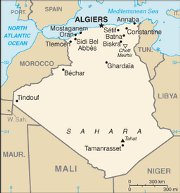
Mission Network NewsAlgeria (MNN) ― Algeria is earning its keep as country number 23 on the Open Doors World Watch List for the worst persecutors of Christians.


Voice of the Martyrs, Canada and Voice of the Martyrs, USA recently cited two separate accounts of persecution in Algeria.

An Algerian Christian was sentenced to five years in prison for "shaking the faith" of Muslims last May. Currently, "Kadar" is awaiting a decision on his appeal.

Kadar, who regularly shares his faith with Muslims in the city of Oran, was discussing his belief in Christ with a man at an outdoor food court last May when the man became angry and accused Kadar of insulting Muhammad. Police arrested Kadar and found a large amount of Christian materials in his apartment.

After Kadar was convicted, the judge gave him the maximum sentence of five years in prison even though the prosecutor had recommended a lesser sentence. Kadar is now out on bail awaiting the decision.

Another case has been much more hopeful. An Algerian evangelist, "Azad," had been a believer for several years when his father chased him out of his family home. Azad's in-laws even threatened to take away his wife if he continued to evangelize. A few months later, Azad was fired from work.

In the midst of the battle, Azad told a VOM worker, "I am so discouraged, and I feel hatred against God." He stopped reading his Bible or going to church.

Recently, though, Azad asked a Christian friend for something to read. The Christian gave him "Tortured for Christ," a book written by VOM's founder about his experiences in prison. The book had a profound effect on Azad, and he decided to accept his plight and recommit to the Lord.

Life is not easy for believers in Algeria. Pray that the Lord will give believers undergoing persecution peace and strength, and even more opportunities to share the Gospel. Ask that the Church will continue to grow in Algeria. 

'via Blog this'