Showing posts with label world watch list. Show all posts

Saturday, September 7, 2013

Evening prayer raided by Eritrean authorities

Eritrea (MNN/ODM) ― Eritrean authorities arrested 30 members of the Church of the Living God gathered for evening prayer on August 24.

The Christians were located in the Kushet suburb of the capital Asmara. Their group includes 12 women.

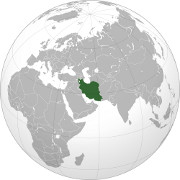
Map of Eritrea. (Photo courtesy
of the CIA World Factbook)
Sources with Open Doors USA say the Christians are being held at Police Station 5 in Asmara and are under pressure to recant their faith.

Since the beginning of the year, the religious atmosphere in Eritrea has deteriorated with authorities arresting at least 261 Christians.

Human rights organizations such as Amnesty International and Human Rights Watch have reported that the government of Eritrea continues to incarcerate prisoners under inhumane conditions.

Officials continue to deny access to organizations like The Red Cross to investigate the state of prisons.

"The Church in Eritrea is deeply saddened by the continued scrutiny and distrust from the government and highly appreciates the prayers of our brothers and sisters around the globe," commented an Open Doors source who remains anonymous for security reasons.

Eritrea is ranked 10th out of 50 countries for extreme persecution of Christians on the Open Doors 2013 World Watch List. Evangelical churches in Eritrea were closed in 2002 after a government ban on religions other than Orthodox, Lutheran, Catholic and Islam.

Please pray for religious freedom in Eritrea and for the arrested Christians to be released.

Sunday, July 14, 2013

Religious freedom a stuttering pulse in Central Asia

(Cover photo courtesy of Stefan Krasowski/Flickr.
 Story photo courtesy of SGA.)
Central Asia (MNN) ― There are 12 nations either in Central Asia or sometimes included in listings of Central Asia. Of those 12 countries, 10 of them are on the World Watch List for worst persecution of Christians.

That means Central Asia makes up 20% of the World Watch List.

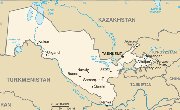
Countries on the World Watch List located completely or partially in Central Asian include Uzbekistan, Kazakhstan, and China.

Islam is the prominent religion in Central Asia, and restrictions on Christians make ministry difficult.

Slavic Gospel Association (SGA) is currently holding children’s summer camps to share the Gospel in Russia and the surrounding Central Asian countries with heavy Muslim presence. Last weekend, SGA President Bob Provost received a disturbing e-mail from one camp’s church leaders.

15 agents including law enforcement and alleged medical personnel swept into an SGA-sponsored children’s camp. The authorities took several photographs, arrested the camp leaders, and heavily fined them. Some of the frightened kids were even interrogated. When parents heard about the incident, they were alarmed.

Joel Griffith with SGA says, “The specific wording of the charge was ‘holding an unsanctioned religious gathering,’ and even that can be very difficult. I mean the church is trying to follow the law there, and the law says that they have to register their churches; so they do everything they can possibly do to follow the law, and then the authorities throw obstacles in their way to make it impossible for them to register their churches.”

They’re seeing a step-up in persecution of Christians in Central Asia. Even for security concerns, SGA was unable to share the specific nation and needed to protect the identities of the church leaders.

“We know of situations in this same country where there are churches that have to meet discreetly, even going out in the woods sometimes,” says Griffith. “They circulate the word of the services by word of mouth and try not to communicate it electronically or by telephone because they’re watched carefully. That’s basically the reality of how Christians in this particular country have to operate.”

Even the requirement that churches register in Muslim-dominated countries is difficult. Griffith states, “These laws that these countries are passing can be very arbitrary. Sometimes the provisions in these laws can be very contradictory. I know that some of them at times have been appealed to places like the International Court of Human Rights. I know that a lot of religious rights and human freedom watchdog organizations keep an eye on this sort of thing to see when new legislation comes out that could potentially impact the freedom of the churches.”

Now the church leaders from the SGA children’s camp could face property confiscation if they can’t pay the fines in a short amount of time.

“These church members and church leaders do not have a whole lot of resources. The fines, if I were to give them in American dollars, would not sound necessarily like a whole lot of money,” says Griffith. “But to these people who are largely very poverty stricken, these fines are sometimes insurmountable. It is a serious situation.”

Despite the oppression, believers in the Central Asian country are pressing on, says Griffith. “They lived under the communist system, and they know what it’s like to have to operate under these restrictions--and even worse. They’re certainly going to keep proclaiming the Gospel as they always have.”

Griffith goes on to share, “The purpose of our ministry at SGA is basically to come alongside them and serve them however they need us. First we help by getting the word out for intercessory prayer, and then we do our best to help sponsor in terms of some of the financial resources they need for the children’s Bibles, materials, supplies.... Yet, as I say, we have to do it very discreetly because of the issues that get raised.”

When SGA was founded around 80 years ago, founder Peter Deyneka's motto was, “Much prayer; much power.” Please pray for the church leaders to be able to pay the fines and to continue in ministry somehow. Pray for the kids and their families, and for religious freedom in Central Asia.

If you’d like to support SGA’s ongoing ministry with churches and children’s summer camps, click here.


Friday, March 15, 2013

Christians in Libya face increase in persecution


Libya (ODM) ― An Open Doors field worker for Libya has expressed his deep concerns about the deteriorating situation for Christians in Libya.

He said, "Since Muammar Gaddafi's regime fell two years ago, there have been several reports of violence against Christians. But since February, dozens of Christians have faced hostilities, detainment, and deportation. Several of them have been severely mistreated, and one died while in detention."

Sherif Ramsis was arrested on Feb. 10. He is an Egyptian Christian living in Libya and had been running his business in Benghazi for 10 years. In the following week, a number of other Christians were arrested as well. Among them were four Egyptians and three non-Arab foreigners working in Libya. Some of them knew Sherif from a work-related or social context. It was reported that they were arrested based on the contacts on Sherif's mobile device.

While the non-Arabs are being treated comparatively well while being detained, local contacts report that the Egyptians are badly mistreated. There are reports of a lack of warm clothing and food, and the Egyptians being forced to sleep on the cold concrete floor in their cell. The Egyptians also sustained bruises due to torture in an attempt to extract information.

While suffering from the consequences of the mistreatment, the detained Egyptians were transferred from Benghazi to Tripoli on Feb. 25. In Tripoli, the lack of proper health care had fatal consequences for one of the detained, Ezzat Hakim Atallah, as confirmed by human rights organization Middle East Concern. Atallah was one of the transferred Coptic Christians.

The Open Doors field worker said: "Ezzat was running a cell phone repair shop in Benghazi and had been living in Libya for 10 years. People knew he was an Egyptian Copt, but that never led to serious trouble for him or his family."

During his imprisonment, he suffered severe chest pains. He was moved to a hospital March 6 for treatment, but was later returned and locked up again with the other Egyptian Copts. The medical treatment proved insufficient, and on Sunday March 10, Ezzat died in his cell. While reportedly still being kept in the same room, the other cell mates stood by helplessly and watched him die. Ezzat leaves behind his wife, and a daughter and son, 11 and 15 years old, respectively.

The other Egyptians are in still in detention. Earlier this week, all appeared before the public prosecutor. While it is difficult to have the official charges verified, the families were told that they will be charged with espionage. In February, a police officer told the press agency Reuters that they had been arrested on suspicion of distributing Christian books and proselytizing.

The Open Doors worker commented: "What really surprises me is that authorities claim the legal and judiciary framework from Gaddafi's regime has been put aside. But when it comes to the freedom of religion and situations like this, it seems that these former laws are still being upheld and used.

"To be honest, I had a sparkle of hope that the country could benefit from the regime change," the Open Doors field worker added. "But the developments of the past month are a big blow and a sobering setback. Still, I think it is possible that we will see positive responses from seekers of Christ in the country. I truly hope that more Libyans will stand up and cling to the freedom that was fought over so hard two years ago."

Libya is ranked No. 17 on the Open Doors 2013 World Watch List of the 50 worst persecutors of Christians.

Tuesday, March 12, 2013

Debunking rumor re: Youcef Nadarkhani

(Images courtesy Present Truth Ministries)

Iran (MNN) ― You know how internet rumors run. They get started from some misinformation and sometimes runs for months.

That's the case surrounding the erroneous story of the execution of Iranian Pastor Youcef Nadarkhani. There were fears that the Iranian pastor had been killed after Facebook messages surfaced last week.

Jason Demars of Present Truth Ministries who was very involved in the Pastor Youcef case explains: "The Anglican vicar in Baghdad is a reliable person. I'm not sure where he got the information from, but they were basically reporting...the status he put on his Facebook page."

When Demars heard that story, "I began to reach out to some of my contacts to see if they could get in touch with the family to verify whether that was the case or not." Demars and Present Truth Ministries were very involved in the Pastor Youcef case. Soon, he heard back from his contacts. "They did reach the family and were able to confirm that he's alive and doing fine."

Last September, an Iranian court acquitted him on apostasy charges, a charge which carries the death-sentence. Instead, the court sentenced him to three years for "evangelizing Muslims." Since he had already spent nearly three years in Lakan Prison, he posted bail and was released on January 7.

Misinformation is common in stories from closed or creative access nations, so sometimes it's hard to know what's really happening. Demars says credibility is really important when communicating security -sensitive information. It's important "when we're asked about situations, to follow through and get direct confirmation of the news."

Even though this story was proven false, there are other Iranian Christians who are serving long prison terms. Iranian-born American Pastor Saeed Abedini is serving an eight-year prison term in Tehran's notorious Evin Prison on charges linked to his Christian faith.

Both the Voice of the Martyrs and Open Doors have noted the uptick in harassment against Christians. Iranian authorities seem to be targeting the growing number of Muslim-background believers who often worship in underground house churches.

Iran ranks 8th on the Open Doors World Watch list, a compilation of the top 50 countries around the world known for their persecution of Christians. Evangelism, Bible training, and publishing Scriptures in Farsi are illegal.

However, Open Doors notes that many disillusioned Iranian Muslims are becoming curious about Christianity. Demars says for those who can provide answers from the Gospel, "Pray for their safety, pray that they have wisdom in their dealings from day to day and that they would continue doing what God has called them to do with strength and faith."

The problem is: rumors like this one sometimes take a while to die down. They can be distracting. Be part of the solution. Demars says, "As these things come up, learn more about them and be an advocate for the persecuted, as well."

Saturday, January 12, 2013

Mali rebels push government region

(Photo courtesy of Magharebia)

Mali (MNN) ― A pepper of gunfire continues to play back and forth between Islamic rebels in Mali’s north and the Mali army in the south.

On Wednesday, Mali’s military attacked the rebel Islamic group called Ansar Dine with heavy weapons along the north-south dividing line, according to Mali officials. Rebels boasted of capturing soldiers in the attack.

Earlier on Tuesday, Islamist fighters reportedly pushed toward Mopti--the last government-controlled city in the north--and the army held them off with “warning shots.”

Peace talks were scheduled between the Mali government and Ansar Dine group members in the neighboring country of Burkina Faso on Thursday.
The potential for rebel forces in the northern territory--an area the size of France--to push south is troubling. Canadian Prime Minister Stephen Harper said to BBC News, “Obviously we are very concerned about the situation, and the development of essentially an entire terrorist region is of grave concern to everybody in the international community.”

While most of the world is fixated on radical Islamic presence in countries like Iran, Afghanistan, and Nigeria, Mali has kept a low profile. Muslim extremists didn’t rise up until March 2012 in a coup that led to their north takeover. The Taureg insurgents wanted to make their own country in the north.

Paul Estabrooks with Open Doors USA says, “The first thing they did was a kind of religious ethnic cleansing. They began to do house-to-house searches. They literally warned Christians that if they didn’t get out of this new country in the north part of Mali, they would kill them--and they weren’t joking. Many Christians were killed; others were injured severely.”

The Open Doors World Watch List tracks the top 50 countries that carry out persecution of Christians and restrict religious freedom. When the 2013 World Watch List was released January 8, the results for Mali were shocking.

According to Estabrooks, “Mali was not even on the World Watch List last year, and because of all the challenges there, [Mali] has suddenly jumped to 7th place out of 50 countries. It is a significant factor.”

Members of the group Ansar Dine are applying Islamic law in their north region, even punishing moderate Muslims. There have been reports of public amputations, executions, and whippings. Several people fled to neighboring countries and are living in refugee camps.

“It’s been a fairly quiet country, so [Christians] haven’t had a strong history of persecution,” says Estabrooks. “So when it comes suddenly like it has in Mali, it’s a real challenge for believers because they haven’t really prepared for what’s going on. The fear factor is an extremely difficult thing for them to deal with.”

Estabrooks says, “It’s a highly speculative situation at the moment. I mean we just don’t know what’s going to happen. Is it possible that things could be returned to some kind of normalcy? Or if not, will the north just literally overrun the south which is what they want to do? We’re in a wait-and-see kind of situation.”

Please pray for Christians to stand strong under persecution. Pray also for their safety. Pray that they would be ambassadors for Christ and bring hope to others living in fear.

Friday, January 4, 2013

Government increases pressure on Christ-followers

(Image courtesy of Wikipedia)

Iran (MNN) ― Iran is putting more pressure on Christians. In recent days, the government demanded personal details from members of a Tehran church.

"People thought maybe a hundred or so would come forward, and over 700 came forward, gave their names and addresses and said, 'Here we are. Here's where we stand,'" an Operation Mobilizationworker focused on Iran told us at Urbana 12.

The Islamic republic of Iran ranks #5 on Open Doors USA's World Watch List, a compilation of countries most resistant to Christianity. Under Iran's harsh apostasy law, anyone from a Muslim background who becomes a Christ-follower faces the death penalty.

The OM worker said for "Muslims who follow Jesus Christ as their Lord and Savior, there are often huge obstacles and problems…they'll lose their jobs, their bank accounts are frozen, and in general, life becomes very difficult."
Take Pastor Youcef Nadarkhani, for example.

In 2009, Nadarkhani was arrested for protesting the Islamic indoctrination in his sons' school system. He served nearly three years in prison, refusing the multiple opportunities to recant his faith. Despite an execution order signed in February 2012, the pastor was acquitted of apostasy and released seven months later.

Nadarkhani was taken into custody again on Christmas Day. Officials claimed that he must finish the remainder of his sentence, approximately 45 days. In September, the courts had stated that Nadarkhani could finish his remaining time in probation.

"There's not been freedom of religion [in Iran]," the OM worker explained. "There has not been basic recognition of human rights, freedom of conscience, and freedom to practice your faith, especially if you're a Muslim who decides that you want to believe in Jesus Christ."

Christian Solidarity Worldwide (CSW) reports that December marks a traditional crack-down on Christians by the Iranian regime. Following Nadarkhani's arrest on Christmas Day, nearly 50 believers were arrested at a Tehran home two days later. CSW says most were released after surrendering mobile phones, full contact details, and passwords to e-mails and social networking sites.

Despite a myriad of challenges, believers are standing firm.

There's a resiliency among Iranians who want to follow Christ, said the worker, "sort of like the story of the man who sold everything in order to get that treasure buried under the ground.

"They value the precious treasure they've found; they're willing to lose everything for…the sake of finding Christ."
What can you do to help them?

"Simply praying for the Church is one of the most significant ways that we can stand with them," the OM worker said.

"The other way we can help is through advocacy. Write to the Iranian embassy, write to the government; Iranian Christians should worship, practice their faith, without fear of persecution."


Friday, October 26, 2012

'They're like soldiers that are dropped behind enemy lines


North Korea (MNN) ― When you hear the words,concentration camp, what comes to mind? Walking skeletons? Piles of dead bodies? You might think these camps ended with World War II, but they're all over North Korea.

"On the one hand, it is amazing that the international community continues to turn a blind eye to this reality," said Eric Foley with Seoul USA. "On the other hand, it is equally amazing that the North Korean underground church considers this their mission field."

Would you be able to see conditions like torture and starvation as a testing ground for your faith? North Korean Christians do. They don't beg believers on the outside for freedom or for action against their Communist government.
"What the North Korean Church says is, 'Pray that we will be found faithful in every circumstance in which the Lord places us,'" said Foley.

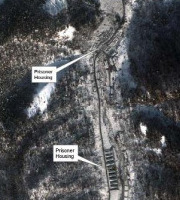
Satellite imagery depicts Camp 14.
 (Images found in a 2003 publication of the
 Commission for Human Rights in North Korea)
In These Are The Generations (a book highlighting the sufferings of a North Korean Christian family), a former inmate describes North Korean gulags as "the best seminary training a Christian can get."

"He thinks of the North Korean concentration camps as…the gates of Hell," said Foley. "And they claim that promise that the gates of Hell shall not prevail against the advance of Christians on a mission."

North Korea tops Open Doors USA's World Watch list, a compilation of 50 countries where persecution of Christians for religious reasons is worst.

Why does it rank over regions like the Islamic Middle East and communist China? Crimes in these areas usually consist of evangelism or unregistered church activity, but in North Korea, the offense is Christianity.

"The crime is simply being Christian," Foley said. Any display can be deadly. "Everything from bowing your head to possessing a Bible, all of those things are considered the highest offense against the State. All of them will land you in a concentration camp."

Of the estimated 100,000 believers in North Korea, a third of them are detained in concentration camps. But, Foley says, they are free in Christ.
"There is a difference between freedom of religion and freedom in Christ," he said. "And freedom in Christ, as Mr. Bae points out in the book, can't be taken away by the government. Freedom in Christ exists in as pure a form in North Korea as it does in the United States.
"Now, the cost of being a believer," he adds, "is much higher."
2 Corinthians 3:17 says, "Now the Lord is the Spirit, and where the Spirit of the Lord is, there is freedom." Foley questioned the reliance of many western believers on freedom of religion instead of spiritual freedom in Christ.

"If freedom of religion were taken away from us, would we still experience the same freedom in Christ?" Foley asked. "The story of Mr. Bae's family would tell us, 'Yes that is still possible.'"

Thursday, October 4, 2012

VOMC supports women widowed by Boko Haram


Nigeria (MNN) ― Each week, it seems there's a new report of Nigerian Christians slaughtered by the Boko Haram. But what happens to those who survive? Some women lose more than just a husband: they lose their livelihood.

Through their Women's Ministry, Voice of the Martyrs Canadasupports Nigerian women who lost husbands and children in Boko Haram attacks.

 During a visit to the nation ranked #13 on the Open Doors USA World Watch List, VOMC teams spoke with three widows: Monica Dra, Fatu Apollos, and Ester Simon.

Each lost a husband to Boko Haram persecution. Each found strength to overcome.

"If I am able to endure like him, I will see him again and that will bring me comfort," said Apollos.

Violence erupted in northern regions of Nigeria last April following the election of a Christian president. Angry Muslim youth took to the streets, attacking believers and burning houses and churches. After learning Apollos' husband was a pastor, they killed him in front of her eyes.

Dra and Simon also lost their husbands in anti-Christian attacks. VOMC recorded each woman's story, and you can find details by clicking here.

VOMC's Women's Ministry provided each of the widows a new way to support their families. Dra received a sewing machine and grinding machine that she uses to support herself and her only surviving son. Simon received help from the Stevens House, a Nigerian safe house for children orphaned by persecution.

Not only do they provide an education for Simon's children, but they gave her the funds to start her own general store. With the money she earned from her store, Simon was able to purchase some land and construct a 3-room building.


Tuesday, October 2, 2012

Religious discrimination increases in Dashoguz, Turkmenistan


Turkmenistan (MNN) ― Multiple raids occurred recently in Turkmenistan's northern city of Dashoguz, noted Forum 18 News Service. The latest attack was particularly violent, leaving the hands of a 68-year-old woman beaten and bloodied. Her 77-year-old husband was literally dragged out of their home by his shirt collar, detained, and questioned by police.

"I am very sad that this lawless behavior took place without regard for the individual," one believer told Forum 18.

Begjan and Klara Shirmedov were gathered in their home with 15 members of the Path of Faith Church when police broke in, questioned congregation members, and seized religious literature. 

Officers seized Begjan Shirmedov, dragging him out of the house. 

Forum 18 said that when Klara Shirmedov spoke up, police beat her hands until they bled. Police then took church members to their station for questioning and threatened them with prosecution.
Ask God to heal Klara's wounds.

This attack comes on the heels of another raided home church meeting in the city. Forum 18 said three believers were fined in this incident, and one was banned from leaving the country. When Oleg Piyashev tried to board a plane last week, intending to return to his family in Russia, officials prevented him from leaving the country. Later, Piyashev was told that even though his documentation was correct, he was "temporarily banned from travelling."

Forum 18 said that a number of believers are currently on Turkmenistan's "exit black list," including a pastor who was imprisoned for two years. Another leader had been imprisoned from 1998 to 2002 to "punish him for his faith." His wife and nine children were barred from leaving the country in 2008. They tried with no avail to get an explanation from the government, Forum 18 noted.

"They replied most recently...to say we are still banned from travelling, but again gave no reasons," the believer complained to Forum 18.

Turkmenistan is #18 on the Open Doors USA World Watch List, a compilation of 50 nations with the worst Christian persecution. Police and other officials put Christian activities under strict surveillance, making it difficult for believers to spread the Gospel. Pray that doors would be opened in this restrictive society.


Wednesday, September 19, 2012

Growing number of believers cause unease among Muslim leaders


Afghanistan (MNN) ―According to the Mohabat News Agency, Muslim officials are calling for action against believers. This is nothing new for the Islamic nation: 
Afghanistan is ranked #2 on the Open Doors World Watch List. But the "rate of growth of Christianity in Afghanistan" is causing unrest among Muslim clerics.

In a recent article, Mohabat News said Islamic seminary students and Muslim clerics called on President Hamid Karzai to "limit the number of aid-workers and Christian missionaries coming to Afghanistan" to keep Afghanis from converting to Christianity. The Iran-based news agency also cited the actions of Afghani Muslim clerics, who "warned the country's government against the spread of Christianity."

Recent turmoil began after a Kabul-based TV station reported the conversion of several Afghans to Christianity and aired photos of them praying and being baptized. This reportedly sparked anger in the Parliament, and some members asked to convict believers under Sharia Law. Under Sharia decree, if someone leaves Islam and converts to another religion, they can be executed.

Ask God to protect these new believers.

The Afghan church is completely underground; the last church building was destroyed two years ago. The small number of known Afghani believers risk their lives each time they gather in small house meetings. Pray for courage and perseverance for Afghani believers. Pray that the Gospel would spread despite significant challenges.

Wednesday, March 21, 2012

Uzbekistan tightens grip on unregistered churches with series of raids

Uzbekistan (MNN) ―Uzbekistan has earned its spot as 7th on the Open Doors World Watch List for the persecuted church and is proving its keep.

Basic religious rights have been defied multiple times in Uzbekistan over the last couple of months. According to Forum 18, last month police raided an unregistered church and confiscated literature, pianos, and church property. A week later, the church pastor was fined $3,421 -- a cost of 100 times the minimum monthly wage.

Just a few days before the raid on the church, a woman's home was raided. She was fined 20 times the minimum monthly wage, and her Christian books were handed over to Samarakand Regional Muslim Board.

Just a couple of weeks later, a Baptist congregation in the southern town of Mubarek was raided and will be fined.

These types of raids are not new to Uzbek Christians, and especially not to members of unregistered churches. Alleged "expert analyses" are routinely used by authorities to confiscate religious material, Forum 18 reports.

The number of serious raids and fines that took place in recent weeks has some concerned. "It really does seem like Uzbekistan is beginning to step up its campaign against unregistered churches and groups of any kind," says Joel Griffith with Slavic Gospel Association. "Of course we're watching to see what kind of trickle-down this has on even the registered churches."

Griffith agrees that raids like this could be indicators of worse persecution to come. Already, pastors have been arrested all across Central Asia.

The number of basic rights that have been denied is disconcerting. Uzbekistan and surrounding, oppressive nations continue to bring concern to human rights watch groups.

Despite the influx of persecution and more likely to come, the church is standing strong. SGA has to be discrete about what they've seen, as far as church growth is concerned. But Griffith does say this: "You could look on a global perspective: typically, the more they try to stamp the church out, the more it grows."

Pray for boldness for church members, especially those who are younger. Griffith says many older members of the church remember well what it was like to live under the oppressive Soviet regime, but younger Uzbeks don't. Pray for church growth despite persecution. 

Friday, January 6, 2012

Kazakhstan and other former Soviet nations earn a spot on the World Watch List

Photo by Irene

Kazakhstan (MNN) ―Kazakhstan has experienced a lot of religious firsts over the last year, including the introduction of two new restrictive religion laws. The start of 2012 has thrust them into another one: a spot on theOpen Doors World Watch List.

The World Watch List is a detailed analysis of Christian persecution worldwide, ranking the top 50 nations with the worst persecution worldwide. The 2012 list came out this week, revealing Kazakhstan at slot 45.

It's Kazakhstan's first time on the list. Still, Joel Griffith with Slavic Gospel Association says he wasn't surprised to see Kazakhstan ranked.

"When you consider the ‘Stan' countries that are largely Muslim in makeup, Kazakhstan--since the Soviet Union broke apart in 1991--had really been a country where there was quite a bit of religious freedom," says Griffith. "Here in the past couple of years, we've seen that steadily start to decrease, sadly, with Kazakhstan joining the other central Asian Islamic Republics and cracking down on their religious groups."

Kazakhstan does seem to be following suit with surrounding countries. Other former Soviet nations have been on the list for years. Tajikistan came in at 34 this year, Azerbaijan at 25 and Turkmenistan at 18, to name a few. Uzbekistan moved up from 9th last year to a ranking of 7th for 2012--a placement two spots worse than Iraq.

"It's hard to imagine that the Soviet Union and atheistic communism came to an end 20 years ago," says Griffith. "It's almost like we're waking up and entering that world all over again. Even though it doesn't go under the name ‘Soviet Union,' we're seeing some of the same restrictive practices rear their heads again."

Much of the reasoning behind crackdowns in these nations is the avoidance of radical Islam. Unfortunately, Christians suffer so much as a result that ministry may need to resort to old ways, says Griffith.

"I think basically we have to do what we did during the Soviet days--as long as we're able to assist [churches] with resources, to do that as directly as we can. And then we have to start planning for times when maybe access is going to be very restricted and we need to be a little bit more creative about how we do it."

Ministry will not need to revert completely back to Soviet days; Griffith points out that the addition of internet and smart phone capabilities to ministry now certainly allow for more opportunities. Still, the safety of the church is a priority.

Prayer is needed for these former Soviet nations. The Gospel is still spreading despite restrictions, but pray for safety and boldness as these Christians enter a new year of hardship. Pray, more immediately, that SGA children's Christmas programs would not be disrupted tomorrow, Russian Christmas. 

Wednesday, January 4, 2012

Persecution Increased Most in Sudan, Nigeria, Report Says

Open Doors’ 2012 World Watch List ranks countries where Christians suffered in 2011.
By Jeff M. Sellers
 
Nigerians killed in Vwang Kogot
Photo courtesy: Compass Direct News
LOS ANGELES, January 4 (Compass Direct News) – Sudan and northern Nigeria saw steeper increases in persecution against Christians than 48 other nations where Christians suffered abuse last year, according to an annual ranking by Christian support organization Open Doors.
 
Sudan – where northern Christians experienced greater vulnerability after southern Sudan seceded in a July referendum, and where Christians were targeted amid isolated military conflicts – jumped 19 places last year from its 2010 ranking, from 35th to 16th, according to Open Doors’ 2012 World Watch List. In northern Nigeria, a rash of Islamist bombings, guerrilla-style attacks and increased government restrictions on Christians contributed to the region leaping by 10 on the list, from 23rdto 13th place.
 
“Nigeria continues to be the country where the worst atrocities in terms of loss of life occur, with over 300 Christians losing their lives this year, though the true number is thought to be far higher,” according to the Open Doors report, noting that the Islamic extremist Boko Haram (literally, “Western learning is forbidden”) became increasingly violent across the reporting period through most of 2011.
 
As it has the previous nine years, North Korea topped the list as the country where Christians are most persecuted, with a persecution index of 88. The list is based on a questionnaire filled out by Open Doors in-country field personnel and cross-checked with independent experts. Countries are then ranked according to their points total, or index.
  
Both Sudan and northern Nigeria saw their persecution indices rise more than other countries’ – Sudan by 16.5, from 37 in 2010 to 53.5 last year, and northern Nigeria by 9, from 44 to 55. The persecution index for three other countries rose by at least 5 points – Egypt from 47.5 to 53.5, Ethiopia from 30 to 36, and Indonesia from 26.5 to 31.5.
 
In terms of ranking, Egypt landed at 15 in the 2012 list after being ranked 19 last January, before political chaos loosened the grip on Islamic extremists; Ethiopia went from 43rd to 38th place, and Indonesia from 48th to 43rd place. Most of the countries on the list, 38 out of 50, have an Islamic majority – including nine of the top 10.
 
“As the 2012 World Watch List reflects, the persecution of Christians in these Muslim countries continues to increase,” said Carl Moeller, president/CEO of Open Doors USA. “While many thought the Arab Spring would bring increased freedom, including religious freedom for minorities, that certainly has not been the case so far.”
 
In the case of Sudan, the secession of mainly Christian southern Sudan left Christians in (north) Sudan “much more isolated under President Omar al-Bashir,” who is wanted for crimes against humanity, according to the Open Doors report.
 
“In response to the loss of the south, he has vowed to make his country even more Islamic, promising constitutional changes,” the report states.  “On the ground, however, Christian communities have been attacked in complex battles over resources, and estimates of thousands killed by the Sudanese military are known of, yet impossible to verify.” 
 
Territorial violence flared on border areas with South Sudan in the provinces of Abyei, South Kordofan and Blue Nile, and “Christian communities were disproportionately affected,” according to the report.
 
In Egypt, a bomb attack on a Coptic church in Alexandria killed at least 21 Christians on New Year’s Day, 2011, and the Feb. 11 ouster of President Hosni Mubarak was followed by a series of Islamic extremist attacks on Christians that culminated in the Maspero massacre in Cairo on Oct. 9, “when the military turned on its own citizens,” killing 27 Coptic Christian demonstrators, the report notes. 
 
“Some were shot by soldiers or ran over by tanks, while others were killed by Muslim extremists,” the report states. “At the closing of 2011, Islamist parties flourished in the November elections, prompting some to speak of an Arab Winter instead of an Arab Spring for Christians.”
 
China moved from 20th place to 21st on the list, “mainly due to other countries comparatively getting worse,” though it still has the world’s largest persecuted church of 80 million, the report notes. That it dropped out of the top 20 this year “is due in large part to the house church pastors knowing how to play ‘cat and mouse’ with the government,” the report states – that is, knowing how not to attract the attention of authorities, such as not putting up church name signs, limiting worship attendance to no more than 200, and not singing too loudly.
 
A new addition to the list is Kazakhstan at 45th place, and Colombia returned to the list at 47th after being absent in the 2011 and 2010 editions.
 
Kazakhstan moved onto the list due to the passage of “an invasive and restrictive religion law” requiring the re-registration of all religious communities, the report notes. The law will make youth work virtually illegal and put all religious acts under government scrutiny, it adds.
 
Colombia had been included on the World Watch List annually before 2010, with left-wing insurgencies as well as paramilitary groups targeting Christian pastors. During the reporting period these movements “have branched into narco-trafficking, and Christian leaders that will not cooperate in the drug trade are targeted for assassination,” the report notes. “Five were killed this year, and it is thought the number could be as high as 20.”  
 
After North Korea, the top 10 on the list are Afghanistan, Saudi Arabia, Somalia, Iran, the Maldives, Uzbekistan, Yemen, Iraq, and Pakistan. Pakistan entered the top 10 for the first time with a spike in radical Islamist violence that included the assassination of the nation’s highest-ranking Christian politician, Federal Minister for Minorities Affairs Shahbaz Bhatti, for his efforts to change Pakistan’s blasphemy law.
 
 
END
 
**********
Copyright 2012 Compass Direct News

Islamic countries dominate list of persecutors

(Photo by Quinn Dombrowski)

International (ODM/MNN) ―The Open Doors 2012 World Watch List has a familiar look to it.

North Korea tops the list for the 10th straight year as the country where Christians face the most severe persecution, while Islamic-majority countries represent 9 of the top 10, and 38 of the 50 countries on the annual ranking.

Open Doors USA President/CEO Dr. Carl Moeller said this year's report also reveals an interesting, but not surprising, reality. "Islamic extremism is on the rise. Nine out of the top ten countries on our list of the worst persecutors of Christians around the world are Islamic. 38 out of the top 50 that we've ranked are Islamic extremist situations."

Afghanistan (2), Saudi Arabia (3), Somalia (4), Iran (5) and the Maldives (6) form a bloc where indigenous Christians have almost no freedom to openly worship. For the first time, Pakistan (10) entered the top 10, after a tumultuous year during which the nation's highest-ranking Christian politician, Cabinet Minister Shahbaz Bhatti, was assassinated for his attempts to change the blasphemy law.

Moeller says, "I was told by an Egyptian brother who was with me just last week: 'The situation for Christians in Egypt and all of North Africa is not an 'Arab Spring' at all, but a 'cold winter' of threat and increased persecution.'" He adds, "The pressure on the church is causing, literally, hundreds of thousands of Christians every year to flee these countries. That will devastate the Christian populations in the Middle East."

In 2011, remnant churches are becoming the norm in many countries where Islamic hardliners are in power. "There is a Muslim-background believer (MBB) church that is growing remarkably during these very chaotic times. We can attribute that to the work of the Holy Spirit. We can attribute that to the spiritual emptiness that is still present amidst the political and social upheaval."

There are significant moves on the World Watch List, including Sudan moving up 19 spots to No. 16 - the biggest leap of any country from 2011. Nigeria jumped 10 spots to No. 13. Egypt, wracked by violent protests and upheaval during the Arab Spring, rose four positions to No. 15. Increased Islamic extremism triggered the upward movement of Sudan, Nigeria and Egypt.

However, it's not only the Middle East and North Africa that are topping the list. The rest of the top 10 is composed of Uzbekistan (7), Yemen (8), and Iraq (9). Laos was the lone country to drop from the top 10 list, falling to No. 12 from No. 10.

"Persecution globally is increasing dramatically," says Moeller. "It's coming from a number of new sources. One of the megatrends that we noticed is that more and more countries, particularly in the Islamic world, are becoming unstable and close to becoming Failed States--or are indeed Failed States."

For example, Somalia, Afghanistan and Pakistan could be considered Failed States. "That's producing untold hardship on the Christian communities in these places, because in a Failed State, there are no vehicles for Christians to address their concerns politically. They can only address them spiritually through prayer and through the encouragement of God's Word."

While persecution has worsened due to persecution by Muslim extremists, without question North Korea once again deserves its No. 1 ranking. Defiantly Communist, North Korea built a bizarre quasi-religion around the founder of the country, Kim Il-Sung. Anyone with "another god" is automatically persecuted. The estimated 200,000 to 400,000 Christians in this country must remain deeply underground. An estimated 50,000 to 70,000 Christians are held in ghastly prison camps.

"How the death of Kim Jong-Il last month and the coming to power of his son, Kim Jong-Un, will affect the status of Christians in North Korea is hard to determine at this early stage," Moeller said. "Certainly the situation for believers remains perilous. Please pray with me that the Lord will open up North Korea and there will be religious freedom to worship the One, true God, not the gods of Kim Jong-Il and Kim Il-Sung."

In July 2011 southern Sudan, which is mostly Christian, seceded to become an independent country, called South Sudan, leaving the Christians of North Sudan much more isolated under President Omar al-Bashir. In response to the loss of the south, al-Bashir vowed to make constitutional changes to make his country even more Islamic. On the ground the military has attacked Christian communities in battles over resources with many being killed.

Nigeria remains the country with the worst atrocities in terms of lives lost. More than 300 Christians were martyred last year in Nigeria, though the actual number is believed to be double or triple that number. The total is probably greater in North Korea, but impossible to confirm due to its isolation. Since 2009 the extreme Islamic group Boko Haram has destroyed more than 50 churches and killed 10 pastors in Nigeria.

Egyptian Christians experienced a disastrous start to 2011 when a bombing at the Coptic Orthodox Church of Saint Mark and Pope Peter in Alexandria killed 21 Christians on New Year's Day. After the ouster of President Hosni Mubarak in February, hopes soared for new freedoms for all Egyptians. But on Oct. 9, the military turned on its own citizens in the Maspero massacre in Cairo, killing 27 Coptic Christian demonstrators. At the close of 2011, Islamist parties flourished in the November elections, prompting some to speak of an Arab Winter instead of an Arab Spring for Christians.

China still has the world's largest persecuted church of 80 million, but it dropped out of the top 20 this year to No. 21. Last year China ranked No. 16. This is due in large part to the house church pastors learning how to play "cat and mouse" with the government.

The good news behind the bad news of rising persecution is an increase in church growth. "Muslims are turning to faith in Christ, so we see both things happening: the visible church being incredibly pressured and many Christians fleeing the region, and also the growth of Muslim-Background Believer churches and cell groups despite the persecution."

Through the upheaval, Moeller says, "Open Doors is committed to being on the ground, shoulder-to-shoulder with our brothers and sisters throughout North Africa, providing Bibles, providing spiritual encouragement, training."

The WWL is based on a questionnaire devised by Open Doors to measure the degree of persecution in over 60 countries. The questionnaires are filled out by Open Doors field personnel working in the countries and cross-checked with independent experts to arrive at a quantitative score per country. Countries are then ranked according to points received.   

Tuesday, August 23, 2011

Libya advances on freedom


Libya (MNN) ― Now that rebels have stormed Tripoli, there are growing rumors hinting that Libyan leader Colonel Muammar Gaddafi could flee to Venezuela or Cuba.

In the meantime, the European Union welcomed the advance and called for Gaddafi to step down. Whether or not the state of Libya will remain the same over the next 72 hours is yet to be seen.

What makes this advance particularly significant in the six months of civil war is the absence of key leaders who defected over the last few weeks, leaving Gaddafi increasingly isolated. Could another assault force a reset of the conflict? That's unknown.

However, says Todd Nettleton with Voice of the Martyrs, change is likely to favor those seeking freedom, specifically, the Christians. Libya is ranked 25th on the Open Doors World Watch List, a spot earned because "there was heavy persecution, particularly of Muslim converts. There were some churches in the city of Tripoli that were allowed to be open, allowed to operate, but primarily they dealt with foreigners."

Libya adheres to Islamic law, and all citizens are Sunni Muslims "by definition." Conversion to Christianity is forbidden, and there are few native Libyan believers. Nettleton explains that "where you run into persecution is where a Muslim changes [his or her] faith and comes to Jesus Christ. Those are the people who face really heavy persecution."

The National Transitional Council is urging Libya to start an "all-inclusive" dialogue leading to democratic elections.

Watchdog groups warn that the transition could bring more violence with it. Nettleton says, "There's just a lot of questions at this point, and we need to pray that Christians will be protected, that whoever ends up in government authority will provide protection, will recognize the rights of minority groups like Christians."
Currently, most Libyan Christians are forced to believe in secret and are afraid to meet with other believers. Small

Christian communities do exist, mostly consisting of sub-Saharan migrants and Western expatriate workers. They've remained active throughout the longest periods of oppression. Nettleton says because of this, "In some cases, Bibles have been able to be delivered into Libya because of some of the upheaval. Maybe the border is not being as tightly monitored as in previous years. "

That's nothing new. With Gaddafi's strict control of the country, evangelism has been difficult and any Christian literature that got into the country was smuggled in. At the crossroad of change, could there be more freedom? Nettleton indicates it's too early to know yet, but "we can pray about that as well, that Scriptures will go in and that Christian work can fill some of the voids."

Given the significance of the persecution and harassment in Libya, just 3% of the population is believers.  That begs the question: Is Libya home to a remnant church? Nettleton replies, "There is a vibrant group of believers that are there, that are sharing the Gospel. So while I would say a 'remnant' is a fair description, don't be confused into thinking that there aren't really bold, on-fire believers there, because there absolutely are."

As Libya looks forward to a new beginning, Christians are encouraged to "pray first, pray second, and pray third. I think at this point, because there's so much upheaval, I think prayer really is the frontline of the spiritual battle for the nation of Libya."