By Michael Ireland
Senior Correspondent, ASSIST News Service
WASHINGTON, DC (ANS) -- Michael H. Posner, the Assistant Secretary, Bureau of Democracy, Human Rights, and Labor in the State Department testified before Congress July 27, 2011 in regards to human rights abuses in Syria and Iran.
 |
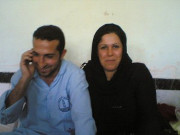
Michael H. Posner |
During his testimony, Posner stated: "On May 1, the Revolutionary Court in the northern city of Bandar Anzali tried 11 members of the Church of Iran, including Pastor Abdolreza Ali-Haghnejad and Zainab Bahremend, the 62-year-old grandmother of two other defendants, on charges of 'acting against national security.' This month, Iranian courts ruled that Christian pastor Youcef Nadarkhani must recant his Christian faith or face the death penalty for apostasy."
In his appearance before the House Foreign Affairs Committee, Subcommittee on the Middle East and South Asia Congress, Posner thanked Chairman Chabot, Ranking Member Ackerman, and distinguished Members of the Committee for inviting him to appear before them to discuss the Iranian and Syrian governments' continuing and worsening abuses against their own people.
Posner said that as people across the region are taking stock of their governments, "we see in the Syrian and Iranian regimes a parallel failure to respond to or respect the will of their citizens.
"Our concerns about these countries' horrendous human rights abuses are longstanding, but never has their repression been more flagrantly at odds with the realities of the region - the irrepressible demands for democracy and fundamental human rights that have already swept two leaders from power. The United States has played an essential leading role in demanding an end to this repression, enlisting the international community's support for fundamental human rights in the region, and leveraging our resources to support the peoples' demands for justice, freedom and dignity. We have used new authorities to single out and sanction those most responsible for these abuses and have encouraged other countries to do join us in this effort. Going forward, the United States will expand our efforts to answer the call of Syrian and Iranian citizens that their governments be held accountable for their actions," Posner said.
Posner said that as a prime example of its contempt for dissent, the Iranian regime has held the de facto leaders of the Green Movement, former presidential candidates Mir Hossein Mousavi and Mehdi Karroubi, under house arrest without charges since February.
"Many from the second-tier leadership of the Green Movement-affiliated entities remain imprisoned or have fled Iran, and their family members have been intimidated, attacked, and detained. This has left the Green Movement beleaguered and scattered. Although demonstrations are rarer, government intimidation didn't stop the Green Movement last February from demonstrating in solidarity of their kindred spirits protesting government oppression across the Arab world," said Posner.
Posner stated that in Syria, a committed, peaceful grassroots opposition movement has rapidly emerged in response to the Asad regime's brutality.
"Last March, security forces fired upon demonstrators calling for the release of children held for weeks for simply writing political graffiti. That brutal act sparked the collective outrage of the long-oppressed Syrian people. The growing momentum for change, which has drawn people from across Syria to participate in peaceful demonstrations, is now well into its fourth month.
"President Asad and his regime have responded with gunfire, mass arrests, torture and abuse. Human rights organizations report that more than 1,800 Syrians have been killed and over ten thousand jailed, while security forces hold the Syrian people hostage to a widening crackdown. Through high-level intervention, Ambassador Ford and Embassy Damascus have secured the release of ten Americans who had been detained on security grounds since January."
Posner told the committee that Amnesty International has reported killings and torture by security forces in the town of Tell Kalakh near the Lebanese border in May.
"Residents reported seeing scores of males including some elderly and under18 being rounded up. Detainees described brutal torture, including beatings, prolonged use of stress positions and the use of electric shock to the genitals. Human Rights Watch interviewed 50 witnesses to the weeks of violence in Daraa, and reported that member of various branches of the mukhabarat security forces and snipers on rooftops deliberately targeted protestors and that victims had lethal head, neck and chest wounds."
But in spite of this intense repression, said Posner, the Syrian people have lost their fear.
"They have not backed down. They are continuing to take to the streets to demand freedom, respect for their basic rights, and a transition to democracy. Beyond demonstrations, we have also seen the opposition organize itself and begin to articulate an agenda for Syria's future, recognizing that the strongest Syria is one in which all citizens, regardless of faith or ethnicity, are equal participants. And for our part, the Obama Administration has articulated clearly that the United States has absolutely nothing invested in the Bashar al-Asad regime, which has clearly lost legitimacy, most importantly in the eyes of the hundreds of thousands of Syrians who have taken to the streets. A peaceful and democratic transition would be a positive step for Syria, the region, and the world."
Posner continued: "It is up to the Syrian people to determine what the next chapter holds for Syria, as the pages turn toward a new future for this country. President Asad can delay or obstruct it but he cannot, however, stop it. As Syrians chart their own future, we hope to see the participation of and respect for all of Syria's ethnic and religious groups. The United States, and the international community, want to see a Syria that is unified, where tolerance, respect for human rights, and equality are the norm. This is the message that Ambassador Ford is delivering to the Syrian leadership and the Syrian people.
"Even as the Syrian military and security forces have besieged communities, conducted mass arrests, targeted emergency medical responders, tortured children, shot peaceful protestors with impunity, cut off water, internet and telephone services, and barred an independent media, people have found ways to get their word out, through reports, images and videos taken by brave demonstrators and smuggled out."
Posner said that in bearing witness to these terrible abuses, the United States "has and will continue to play a crucial role.
"Demonstrators have peacefully protested for over a month in Hama, where over 10,000 Syrians were killed in 1982 by President Asad's father Hafez Asad. The people of Hama kept their peace despite their tragic history and the provocation of the government forces besieging the city. We know this precisely because our representative to the Syrian people, Ambassador Ford, toured Hama and reported seeing no protestors carrying weapons, nor damage to government buildings. We also know through Ambassador Ford's reports that, contrary to the promises from President Asad to end the emergency law and follow proper judicial procedures, the government has carried out sweeps and arrested dozens of peaceful demonstrators in Hama, and reports of torture in custody are well documented. Our diplomatic presence and watchfulness is an important way for us to gain independent knowledge of the facts, to show support for Syrians' rights, and to speak directly and plainly to the Syrian government about the need to change course."
Returning to the topic of Iran, more than two years since that country's disputed presidential election, Iranian authorities persist in harassment, arbitrary detention, torture, and imprisonment of their citizens, as well as some of ours, Posner said.
"Targets include those who demand accountability from their government and who stand up for the rights of their fellow citizens; ethnic and religious minorities; journalists, women's rights activists, bloggers and students."
Unfortunately, the situation has only further deteriorated in 2011, he said.
"Protestors were killed in Tehran in February and in ethnically-Arab areas in April; political prisoners are held in deplorable conditions with convicted murderers in former stockyards; those released from prison are forced to pay exorbitant bail sums or often released with conditions such as long bans on travel or work in their field; additional sentences were levied on those already in prison merely for sending letters to family members; mass executions of mainly ethnic minority prisoners have been carried out without their families' knowledge; at least 190 people have been executed this year, more than in any other country in the world except China; restrictions on speech have intensified; journalists and bloggers continue to be targeted by the regime for daring to write the truth; teachers and other workers are harassed and incarcerated when they seek freedom of association and payment of wages owed; trade union leaders remain imprisoned on questionable charges; politically-active students have been banned from universities; entire university faculties deemed un-Islamic face threat of closure; and, recently, female journalists and artists have been arrested for merely practicing their profession."
Posner told the committee that what is particularly troubling is the deepening persecution of religious minorities.
"On May 1, the Revolutionary Court in the northern city of Bandar Anzali
 |
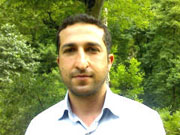
Pastor Youcef Nadarkhani |
tried 11 members of the Church of Iran, including Pastor Abdolreza Ali-Haghnejad and Zainab Bahremend, the 62-year-old grandmother of two other defendants, on charges of 'acting against national security.' This month, Iranian courts ruled that Christian pastor Youcef Nadarkhani must recant his Christian faith or face the death penalty for apostasy. In March, over 200 Gonabadi Sufis were summoned to courts around the country to answer allegations that they were insulting Iranian authorities. In April, eight other Sufis were re-arrested on charges of disrupting public order - charges for which they had been punished with flogging and imprisonment. The Iranian government also continues to arrest and harass members of the Baha'i faith."
Posner went on to say: "As the Iranian and Syrian regimes have expanded their repressive tactics, we have expanded the scope of our efforts to challenge these governments' deplorable human rights violations. We have designated 11 Iranian officials and three government entities for serious human rights abuses in accordance with the Comprehensive Iran Sanctions Accountability and Divestment Act and, as the act requires, we are actively seeking more information on possible targets. Separately, on July 8, the United States and the United Kingdom imposed visa restrictions on officials of the Government of Iran and other individuals who have participated in human rights abuses in Iran. Iranian officials subject to this visa ban include government ministers, military and law enforcement officers, and judiciary and prison officials."
He told the Committee that responding to the atrocities in Syria, President Obama signed two executive orders. The first, E.O. 13572, signed on April 29, targets those responsible for human rights abuses and the repression of the Syrian people. The second, E.O. 13573, signed on May 18, targets senior officials of the Syrian government because of the ongoing crackdown and refusal to implement political reform.
"These two authorities were used to impose sanctions against President Asad and senior Syrian officials responsible for human rights abuses. In addition to President Asad, the sanctions so far have designated the Vice President, Prime Minister, ministers of interior and defense, the head of Syrian military intelligence, and director of the political security directorate. Other U.S. sanctions target President Asad's brother and two cousins, the Syrian military and civilian intelligence services, its national security bureau and the air force intelligence, as well as Iran's Revolutionary Guard Qods Force and senior Qods force officers that have assisted the Asad regime in suppressing Syrian civilians."
Posner suggested that: "It is no coincidence both Iran and Syria have responded to their citizens with similar contempt and brutal tactics. As the latter designation shows, we know that the Syrians have employed Iranian help in curbing dissent. This has exposed a strident hypocrisy on the part of the Iranian regime, which has tried unsuccessfully to take credit for democratic movements in Egypt and elsewhere and laud protesters when it suited its strategic interests, but has materially helped the Syrian government crush its own protestors in order to preserve their ally. The Iranian regime's false narrative is further exposed even as the regime continues to smother its own domestic opposition.. Nevertheless, hundreds of brave Iranian citizens continue to engage in the most basic but critical of human rights work, documenting and reporting on abuses, with the hope that one day Iranian government officials will be held accountable for crimes they have committed against their fellow citizens.
"In the case of Syria," Posner said, "we have seen the regime play a cruel double game designed to divert attention away from people's demands and justify the regime's monopoly on power. Asad is exploiting fears of sectarianism and factionalism by surreptitiously fomenting violence of an intentionally sectarian nature, while at the same time cautioning Syrians not to rock his carefully guided boat. As a consequence, deadly violence has at times taken a purportedly sectarian shade. This has only left more blood on Asad's hands.
"We view these incidents as further evidence that President Assad's government continues to be the real source of instability within Syria. He has promised reforms but delivered no meaningful changes. He talks about dialogue, but continues to engage in violence that proves his rhetoric hollow. Assad has made clear that he is determined to maintain power regardless of the cost. And the human toll is mounting."
"Nevertheless," he said, "the Syrian people will not be distracted -- they have shown they will not cease their demands for dignity and a future free from intimidation and fear, and they are countering the regime's propaganda falsely accusing them of seeking that division and ethnic strife. Asad has made occasional conciliatory gestures, but to date these starts have not been credible, sustained, or made in good faith. The regime's promises of reform have been shown to be false by the continued arrests and shootings of peaceful demonstrators."
Posner said the European Union and other nations have joined the United States in enacting sanctions on key regime figures in Iran and Syria to hold their leaders accountable for the violence.
"We continue to urge more nations to join our call, in bilateral and multilateral settings, to shine a spotlight on these countries' gross violations of human rights. We also urge other countries to press Iran on its abuses in their bilateral diplomacy. An international consensus is forming to mobilize greater diplomatic pressure on these regimes. We successfully prevented both governments from joining the United Nations Human Rights Council (HRC) after they had announced their candidacies and have appropriately used this forum to draw the world's attention to their offenses. And in the U.N. General Assembly last year, we helped win passage of a Canadian-led resolution condemning Iran's human rights abuses by the largest margin in eight years. At the March session of the HRC, we led a successful effort to establish a Special Rapporteur on Iran, the first country-specific human rights rapporteur created since the Council came into being, and last month, the Council confirmed former Foreign Minister for the Maldives Ahmed Shaheed at that position. This historic action sent an unmistakable signal to Iran's leaders that the world will not stand passive in front of their systematic abuse of their own citizens' human rights. More importantly, the Special Rapporteur serves as a critical voice for those Iranians whose own voice is repressed because of their political, religious, and ethnic affiliations."
Posner went on to tell the committee, "In a Special Session in April, the HRC also condemned the ongoing violations by the Syrian authorities. The Council called on Syrian authorities to release prisoners of conscience and those arbitrarily detained, and to end restrictions on Internet access and journalists. It also established an international investigation led by the Office of the High Commissioner for Human Rights, though President Asad refuses to allow the monitors mandated by the Council to enter Syria. In the June HRC session, the United States joined Canada and more than 50 other countries in a forceful joint statement that again condemned violations committed by the Syrian authorities and called for credible, independent, and transparent investigations into these abuses, accountability for those who perpetrated such abuses, and unfettered access to the UN High Commissioner's mission to investigate the many allegations of human rights abuses. The High Commissioner will present a report on the human rights situation in Sy ria in the September session."
He added: "We have been working assiduously with other members on the UN Security Council to obtain a resolution condemning the ongoing atrocities being committed by the Asad regime. We are aware that some key Council members oppose such a resolution, but we are moving to forge consensus and will press for a vote.
"Our efforts to support the Iranian and Syrian people as they seek to exercise their rights have been consistent and sustained. Just as we do throughout the region, we work with civil society organizations to support their efforts to defend human rights and to advocate for change. We help them expand political space and hold their government accountable. We provide training and tools to civil society activists in Iran and Syria, and throughout the world, to enable citizens to freely and safely exercise their freedoms of expression, association, and assembly on the Internet and via other communication technologies. In cases like Iran and Syria, where governments have good reason to fear the spotlight on their activities, access to technological tools allows the people to tell their story to the world. Despite both government's ramped up activities to try to suppress information flows, the days are gone when governments could brutalize their people without the world knowing."
Posner further told the committee members: "As Secretary Clinton has said, 'we stand for a single internet where all of humanity has equal access to knowledge and ideas. .This challenge may be new, but our responsibility to help ensure the free exchange of ideas goes back to the birth of our republic.' Our Internet freedom programming is aimed at making sure that voices for peaceful democratic reform across the region can be heard. "Countering such regimes' increasingly active Internet surveillance and censorship efforts requires a diverse portfolio of tools and training. State Department grants will support more advanced counter-censorship technologies, including circumvention tools in Farsi and Arabic, secure mobile communications, and technologies to enable activists to post their own content online and protect against cyber-attacks. We also have trained 5,000 activists worldwide, including many from the Middle East, in cyber-self-defense. And we plan to expand these efforts to teach democratic activists, journalists, blogger s, human rights defenders and others how to protect their online privacy and their data - so that they in turn can train others. Given the evolving state of technology, no single tool will overcome the efforts of Internet-repressive regimes, and that is why we have invested in incubating a diverse portfolio of technologies and digital safety training. This way, even if one particular tool is blocked, other tools will still be available. Likewise, we work to prevent all repressive governments from acquiring sensitive technology to repress its citizens."
A strong, representative government can be responsive to popular demands; an autocratic one is threatened by empowered publics, said Posner.
"But these crackdowns also indicate a basic lack of understanding that free speech - whether it's supportive speech or subversive speech - is harder than ever to suppress in the Digital Age. The young people who have taken to the streets across the Arab world this year understand what their governments are suppressing. It's not just the Internet, it is people - it's their demands for dignity and a say in the political and economic future of their countries.
He stressed to the committee that the United States will continue to stand with those who struggle to assert their fundamental humanity.
"It is essential that these brave people know that the international community supports them, just as it is essential that human rights abusers in Damascus and Tehran know that we are watching them. Until such time as they are held accountable by domestic authorities, it is our responsibility to hold them accountable at the international level," he said.
He concluded: "Similarly, we hope that today's hearing will serve as further evidence that the American people and our government in Washington stand united in our admiration and support for those across the region who have boldly assumed the duty and made the sacrifices to advance their rights. For this opportunity, we wish to thank the Committee again, and welcome your questions."
Michael H. Posner was sworn in as Assistant Secretary of State for the Bureau of Democracy, Human Rights and Labor on September 23, 2009.
Prior to joining State Department, Mr. Posner was the Executive Director and then President of Human Rights First. As its Executive Director he helped the organization earn a reputation for leadership in the areas of refugee protection, advancing a rights-based approach to national security, challenging crimes against humanity, and combating discrimination. He has been a frequent public commentator on these and other issues, and has testified dozens of times before the U.S. Congress. In January 2006, Mr.. Posner stepped down as Executive Director to become the President of Human Rights First, a position he held until his appointment as Assistant Secretary.
Mr. Posner played a key role in proposing and campaigning for the first U.S. law providing for political asylum, which became part of the Refugee Act of 1980. In 1998, he led the Human Rights First delegation to the Rome conference at which the statute of the International Criminal Court (ICC) was adopted.
Mr. Posner also has been a prominent voice in support of fair, decent, and humane working conditions in factories throughout the global supply chain. As a member of the White House Apparel Industry Partnership Task Force, he helped found the Fair Labor Association (FLA), an organization that brings together corporations, local leaders, universities, and NGOs to promote corporate accountability for working conditions in the apparel industry. He also was involved in the development of the Global Network Initiative, a multi-stakeholder initiative aimed at promoting free expression and privacy rights on the internet.
Before joining Human Rights First, Mr. Posner was a lawyer with Sonnenschein, Nath & Rosenthal in Chicago. He lectured at Yale Law School from 1981 to 1984, and again in 2009. He was a visiting lecturer at Columbia University Law School since 1984. A member of the California Bar and the Illinois Bar, he received his J.D. from the University of California, Berkeley Law School (Boalt Hall) in 1975, and a B.A. with distinction and honors in History from the University of Michigan in 1972.
Jason DeMars of the Minneapolis, Minnesota-based Present Truth Ministries (
www.presenttruthmn.com ) , which has been closely following Pastor Nadarkhani's case, told ANS: "We are glad that the State Department is making an effort to stand for Christians under persecution in Iran.
"Our desperate plea is that you continue to pray for the power, peace and joy of God to overcome all fears in the hearts of Iranian Christians, pray specifically for brother Youcef and brother Abdolreza that are mentioned here. But pray for the other believers to experience God's love, power, peace and joy in ways they have never done so before."
DeMars said you can also write a letter to Youcef by using a great service that Voice of the Martyrs provides called Prisoner Alert. Please write him a letter and remember him daily in prayer before God.
If you go to
www.prisoneralert.com you will see Pastor Youcef's profile. From there, you can email Iranian officials politely requesting his immediate release, and, more importantly, you can send an encouraging letter to him in prison.
Earlier this week, DeMars told ANS that at that point, 1,444 letters had been sent as part of the campaign to raise awareness of Nadarkhani's situation.
Please forward this email to your friends and ask them to take action on behalf of Pastor Nadarkhani.
| ** Michael Ireland is Senior Correspondent for ANS. He is an international British freelance journalist who was formerly a reporter with a London (United Kingdom) newspaper and has been a frequent contributor to UCB UK, a British Christian radio station. While in the UK, Michael traveled to Canada and the United States, Albania,Yugoslavia, Holland, Germany,and Czechoslovakia. He has reported for ANS from Jamaica, Mexico, Nicaragua, Israel, Jordan, China,and Russia. Michael's volunteer involvement with ASSIST News Service is a sponsored ministry department -- 'Michael Ireland Media Missionary' (MIMM) -- of A.C.T. International of P.O.Box 1649, Brentwood, TN 37024-1649, at: Artists in Christian Testimony (A.C.T.) International where you can donate online to support his stated mission of 'Truth Through Christian Journalism.' Michael is a member in good standing of the National Writers Union, Society of Professional Journalists, Religion Ne wswriters Association, Evangelical Press Association and International Press Association. If you have a news or feature story idea for Michael, please contact him at: ANS Senior Reporter |