Showing posts with label persecuted church. Show all posts

Friday, September 27, 2013

Suicide bombers leave more than 80 dead, 100+ wounded

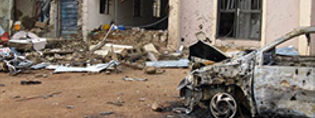
Protestors flooded the streets following Sunday's
 attacks in Pakistan.
(Image courtesy 8thirty8 via Facebook)
Pakistan (MNN) ― Many are calling Sunday's blast the "deadliest assault" against Pakistan's Christians.

A pair of suicide bombers blew themselves up outside the historic All Saints Church in Peshwar after Sunday's service was dismissed. Explosions rocked the area as hundreds of people, many of whom were women and children, left the church building.

Witnesses reportedly heard two blasts, the second more powerful than the first. Over 600 people were inside for Sunday's Mass, reports Reuters.

So far, the injured exceeded 120, and the death toll soared past 80. Voice of the Martyrs USA spokesman Todd Nettleton says it probably won't stop there.

"Our contacts in Pakistan are telling us by the time everything is said and done...the death toll will likely go over 100 for this attack," states Nettleton.

Two Islamic militant groups, both with past links to the Taliban, are claiming to be behind the attack, according to BBC News. Reuters says one of the groups, TTP Jundullah, claimed responsibility within hours.

Reuters quotes the group's spokesperson, Ahmed Marwat, as saying, "They are the enemies of Islam, therefore we target them. We will continue our attacks on non-Muslims on Pakistani land."

Following Sunday's assault, masses reportedly took to Peshwar's streets, burning tires and protesting the government's apparent inability to protect religious minorities.

"They knew it was a potential target. Peshawar is a city where there is a lot of radical Islamic activity, so that's one of the questions and one of the complaints from the Christian community there in Pakistan: how did this happen?" Nettleton says.

"I think underneath that question is the grief and the shock of so many people being killed so quickly in, really, a senseless attack."

While some are taking to the streets in protest, Nettleton says other believers are reacting with violence against Peshwar's Muslim community.

"We need to pray against that; we need to pray for peace; we need to pray for the Christian community to have a spirit of forgiveness and understanding and grace," he says.

Pakistan's Christians are the second-largest religious minority group behind Hindus, representing around 1.6% of the mostly-Muslim population. One lawmaker says about 200,000 believers live in the north-western province of Khyber Pakhtunkhwa

Islamic militants often target religious minorities in their campaigns for power, but sectarian violence in Pakistan has primarily involved two parties: Sunni and Shia Muslims. While sporadic bouts of violence do occur against Christ-followers, most persecution results from Pakistan's blasphemy law.

While the source and cause for Sunday's attack remain unclear, Nettleton says there may be a silver lining.

"Potentially, maybe there are some slivers of hope in this as we see the government, even Muslims within the government, respond to this attack and say, 'This is unacceptable,'" he states.

He adds that recent statements from Pakistani leaders--"This is not true Islam. This is not acceptable under any religion to attack women and children like this"--are an encouraging sign.

"Again, those are words," Nettleton says, "but we wait to see what actions will be taken and what will be done to practically provide protection for the Church there."

Your prayers are needed as Pakistani believers grapple with this tragedy. Please pray for those widowed or orphaned by Sunday's attack. Ask the Lord to meet each of His followers in a deeper way during this time.

"Pray for the pastors who are working in this situation and trying to minister hope and help and encouragement to the Christian community there," asks Nettleton. "One of our contacts there is a pastor. When we spoke with him, he had already done five funerals yesterday--five burials for those killed in the church."

Pray for supernatural grace to fall upon each heart impacted by this tragedy.

"In a situation where grace is completely NOT the natural response, we need to pray that God will provide supernaturally for them to respond with forgiveness," Nettleton says.

Monday, September 2, 2013

You can help persecuted believers in Egypt

(Image courtesy Bible Society of Egypt)
Egypt (MNN) ― Friday remains a dangerous day of the week in Egypt. Last week's Muslim Brotherhood call for protests drew some 10,000 people to Cairo alone.

There are protests in the streets, mass killings, and the burning of towns and villages over differing opinions of religion and politics. More than 1,000 people have died, and an estimated 3,500 people have been injured.

Christian Aid Mission, your link to indigenous missions, says there's a way you can help Egypt's Persecuted Church.

So far, Christian Aid says 80 churches, two bible bookstores, three Christian schools, and countless homes, businesses, and property have been vandalized or destroyed. Christian Aid supports several ministries that are sharing the Gospel and reaching out to unbelievers despite violent blows dealt specifically to them.

One of those ministries, the Bible Society of Egypt, watched two of their bookstores go up in flames during the first wave of attacks in mid-August.

“The attackers demolished the metal doors protecting the bookshops, broke the store windows behind them, and set the bookshops on fire," said Ministry Director Ramez Atallah.

"They did the same to many stores on those streets, as well as demolishing many parked cars.”

The Bible stores are located in the cities of Minia and Assiut in southern Egypt. Christians in those two cities have no other source of Bibles, and Atallah is determined to rebuild as the bookstores are in strategic locations.

In addition, the ministry is producing print and audio-visual Scripture selections to address the present crisis both for comfort and to challenge believers and unbelievers during this difficult time.

Egyptian believers are encouraging their distraught brothers and sisters not to seek retaliation in the wake of the attacks. Instead, they ask for Christians in other parts of the Middle East and around the world to offer their support and prayers.

Please pray for Egypt's violence to end. Pray that many will turn to the Lord for peace and accept Him as Lord and Savior. Pray protection for all Christian properties across the nation.

Friday, August 9, 2013

Spotlight on religious freedom chief highlights problems in Eritrea

(Images courtesy Open Doors)
Eritrea (ODM/MNN) ― The U.S. Commission on International Religious Freedom has a new chair: Robert P. George, McCormick Professor of Jurisprudence at Princeton University and a Visiting Professor at Harvard Law School.

As focus turned to function, the leaders of the U.S. Commission on International Religious Freedom say that religious liberty is an "essential element" of human dignity and that its protection deserves prominence in U.S. foreign policy.

The State Department and the religious freedom commission both named Burma, North Korea, Eritrea, Iran, China, Saudi Arabia, Sudan, and Uzbekistan as "countries of particular concern."

It's a designation that Eritrea both disputes and ignores. However, there have been multiple reports of a widespread crackdown on Christians this year, especially for those outside the state-approved churches.
While children were once considered exempt from it, that's not the case anymore, says Jerry Dykstra, a spokesman for Open Doors USA. "We believe there's been about 200 Christians that have been incarcerated in military camps. That includes 39 students who had just completed the training for military and for schooling. They were not allowed to go forward. Instead, they were arrested because of their ‘Christian beliefs.'"

According to a statement on the official Eritrean Ministry of Information Web site, 17,000 students of the 26th national service intake graduated on July 13. All of these students had successfully completed eight months of academic studies and four months mandatory military training, according to the announcement. These students will now proceed to Senior Secondary school to complete grade 12.

The group of 39 was taken to the Sawa Military training center. Sources told Open Doors that the arrests came as a result of the students' "Christian beliefs and for their commitment to Christ." Dykstra says, "They now face beatings, hard labor, lack of food and water. But if they renounce Christ, then they can go back to their studies."

Since the beginning of the year, Christians belonging to groups outside of the government sanctioned Orthodox, Catholic, and Lutheran churches have faced a widespread arrest campaign. More than 200 men and women of various ages have been arrested since the beginning of the year, he adds. "They have no judicial system. In other words, they're arrested, there are never any charges, there is no trial. They just disappear into thin air."

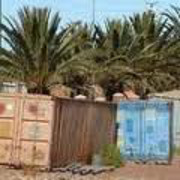
One 85-year-old woman is being held in a shipping container and has contracted pneumonia. She is still being refused medical attention because she will not agree to camp authorities' terms for receiving medicine. Military training forms part of the Eritrean curriculum. But after completing school, all Eritreans must also do national service.

Since 2002, worship has been forbidden outside the government-sanctioned Sunni Muslim, Eritrean Orthodox Church (EOC), Roman Catholic, and Evangelical Lutheran Church of Eritrea, with Protestant worship a criminal offense. In 2005, authorities also began persecuting the EOC, particularly those in the church's renewal movement. The flip side, Dykstra observes, is that "where there is hostility toward the church, Christ spreads the church and grows it. That's what's happening in Eritrea."

The fact that it's a seemingly sanctioned campaign is disconcerting, at best. "A government official stated that there are three things that need to be eradicated from Eritrea: HIV/AIDs, the regime of arch-enemy Ethiopia, and independent Christians." At least 105 Christians were arrested in 2012, and 31 Christians were reported to have died in prison.

Dykstra goes on to say that it's likely to get worse before it gets better. There's a new peril. "Another growing threat is the rise of the Muslim terrorists in the country, besides the government. We've seen the increase of that over the past year."

Pray for God's strength for Christians imprisoned in containers, especially those arrested in 2012. Pray for spouses and families who are forced to live as refugees in different countries, and for worldwide awareness of the plight of Eritrean Christians.

Monday, May 6, 2013

Chen Guangcheng case a wind gauge for the persecuted Church


China (MNN) ― The Chinese government is reportedly attacking the family of a blind human rights activist.

Chen Guangcheng is known for speaking out against forced abortions and China's one-child policy. His escape from house arrest last year brought shame to the Chinese government. Since then, they've been instigating violence against his family.

According to a report from China Aid Association, the home of Guangcheng's eldest brother has come under multiple attacks. Early last week, government-hired thugs drove up to the home and started throwing beer bottles and bricks at it.

Chen Kegui, one of Guangcheng's nephews, is currently in jail suffering from appendicitis, and authorities haven't offered him surgery. Reportedly, U.S. Secretary of Defense John Kerry plans to raise the case with senior Chinese officials.

China Aid is also helping Guangcheng get justice. They've helped the activist since his escape from China, with ChinaAid founder and president Bob Fu acting as an informal liaison between Guangcheng and the U.S. government.

Now, ChinaAid is calling people to act as a proxy for Guangcheng's family. Check out our Featured Links section to see how you can help.

Although Chen Guangcheng is not a Christ-follower, underground church leaders told the Wall Street Journal his case has become an anemometer. They're watching the development of Guangcheng's case to see how far China's Communist government will go to punish those it views as a threat.

Pray that no matter what happens, the Gospel will keep going forward in China. Pray the faith of Chinese believers remains strong.

Wednesday, January 23, 2013

To coup, or not to coup?

Eritrean prison camps (Photos by Open Doors)

Eritrea (MNN) ― The buzz word people are using to describe Eritrea's events over the last 48 hours is "coup," but do the signs match an actual coup d'état?

By the government's admission, it was a takeover effort, however small, however failed. Todd Nettleton, a spokesman for the Voice of the Martyrs USA, explains, "Some soldiers surrounded the Ministry of Information in the capital city of Asmara on Monday. They forced a minister to read a statement on State TV in Eritrea. However, it seems that he only got a few sentences into the statement before the TV broadcast signal was cut."

Government troops quelled the would-be rebellion before it got started. However, in a tightly-controlled regime like Eritrea, Nettleton notes, "It seems to be sort of a ‘blip' on the radar, but the fact that there were soldiers acting directly against the government perhaps is a sign of building unrest within Eritrea. Who knows what it means for the future?"

That begs the question of what the else calm facade is hiding. What of the fate of the mutinous soldiers? Nettleton says, "I certainly would not want to be one of these soldiers now, after they have surrendered, because we know that the situation in Eritrean prisons  for Christians is desperate, and obviously, for political enemies of the regime."

The soldiers' demands were two-fold: "They wanted to return to the parameters that were laid down in the constitution of 1997. It also said that they wanted to release political prisoners."

Since independence in 1993, Eritrea has been a one-party state. The government has come under fire by human rights watchdogs who call the regime one of the world's most repressive. That's an assessment Open Doors agrees with.

Open Doors, which comes alongside the persecuted church, keeps tabs on the world's 50 worst countries known for their oppression of Christians. On that list, Eritrea ranks 10th. And that's not a number likely to change for the better in the near future, says Open Doors' spokesman Jerry Dykstra.

In fact, he says just hours before news of the failed coup, "At least 10 leaders of the churches (banned by the government ten years ago) have been rounded up in the past day or two."

Eritrean opposition activists exiled in neighboring Ethiopia said there was growing dissent within the Eritrean military, especially over economic hardships. Of the coup, Nettleton says it might be the first crack in the mask. "The fact that this [involves] soldiers and people in the military, that seems to say that the disenchantment with the leadership there is spreading." He adds, "I think the message that I would take from it is that Eritrea's people are not happy being oppressed under the hand of the president."

Then, there's word that the health of the current president, Isaias Afewerki, is worsening. That might not actually be a positive swing for the oppressed Christians, though, Dykstra reflects. "There is some sense from Open Doors researchers that perhaps a form of radical Islam may take over the country with the death of the president." In short, Eritrea's Christians could find themselves facing a situation similar to those Christians in the newly re-formed Egypt.

As such, church leaders fear that this particular campaign is far more serious because it wants to "eradicate the underground church by targeting its key leaders around the country." If that's true, the death tolls will start climbing. Dykstra says already, "31 Christians died in prisons last year. It's kind of hard to put an estimate on the number of Christians in prison. Last year, it was [estimated] at around 1200."

According to Open Doors, since news of the renewed systematic arrests emerged, several church leaders have gone into hiding for a second time in only a few months. According to trusted sources close to the events in Eritrea, church leaders have remained in good spirits despite these pressures.

For Christians in Eritrea, the past few months have been somewhat of a roller-coaster ride. After the death of the Ethiopian Prime Minister in August last year, there was heightened tension in Eritrea. Christians testified that talk of renewed fighting between Eritrea and Ethiopia after the demise of one of their long-time rivals led to a very grim atmosphere.

There were reports of the government circulating rifles to households in case war broke out. Some Christians described those months of uncertainty as their darkest night while praying earnestly for the light of a new dawn for their country. Nettleton says, "We want to pray for the church as a whole. One of the great challenges is existing in a situation where no public services are allowed. Anytime Christians gather together--evangelical Christians, it's not legal."

Timing now on outreach work will be critical. Anyone viewed as an enemy could be more at-risk for trouble. Nettleton explains, "The president of Eritrea will be watching this and saying, ‘We need to get a handle on this quickly,' which in the short term, perhaps, is going to mean more oppression and more control. It's hard to say at this point what this means."

Dykstra says with circumstances so uncertain, "They're asking for our prayers because of this situation, especially with the loss of the leadership of the 10 Christian leaders."

Friday, January 4, 2013

Government increases pressure on Christ-followers

(Image courtesy of Wikipedia)

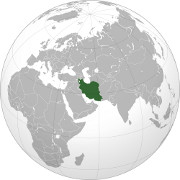
Iran (MNN) ― Iran is putting more pressure on Christians. In recent days, the government demanded personal details from members of a Tehran church.

"People thought maybe a hundred or so would come forward, and over 700 came forward, gave their names and addresses and said, 'Here we are. Here's where we stand,'" an Operation Mobilizationworker focused on Iran told us at Urbana 12.

The Islamic republic of Iran ranks #5 on Open Doors USA's World Watch List, a compilation of countries most resistant to Christianity. Under Iran's harsh apostasy law, anyone from a Muslim background who becomes a Christ-follower faces the death penalty.

The OM worker said for "Muslims who follow Jesus Christ as their Lord and Savior, there are often huge obstacles and problems…they'll lose their jobs, their bank accounts are frozen, and in general, life becomes very difficult."
Take Pastor Youcef Nadarkhani, for example.

In 2009, Nadarkhani was arrested for protesting the Islamic indoctrination in his sons' school system. He served nearly three years in prison, refusing the multiple opportunities to recant his faith. Despite an execution order signed in February 2012, the pastor was acquitted of apostasy and released seven months later.

Nadarkhani was taken into custody again on Christmas Day. Officials claimed that he must finish the remainder of his sentence, approximately 45 days. In September, the courts had stated that Nadarkhani could finish his remaining time in probation.

"There's not been freedom of religion [in Iran]," the OM worker explained. "There has not been basic recognition of human rights, freedom of conscience, and freedom to practice your faith, especially if you're a Muslim who decides that you want to believe in Jesus Christ."

Christian Solidarity Worldwide (CSW) reports that December marks a traditional crack-down on Christians by the Iranian regime. Following Nadarkhani's arrest on Christmas Day, nearly 50 believers were arrested at a Tehran home two days later. CSW says most were released after surrendering mobile phones, full contact details, and passwords to e-mails and social networking sites.

Despite a myriad of challenges, believers are standing firm.

There's a resiliency among Iranians who want to follow Christ, said the worker, "sort of like the story of the man who sold everything in order to get that treasure buried under the ground.

"They value the precious treasure they've found; they're willing to lose everything for…the sake of finding Christ."
What can you do to help them?

"Simply praying for the Church is one of the most significant ways that we can stand with them," the OM worker said.

"The other way we can help is through advocacy. Write to the Iranian embassy, write to the government; Iranian Christians should worship, practice their faith, without fear of persecution."


Monday, December 3, 2012

Crisis tests Egyptian constitution

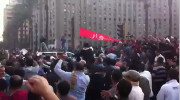
Tahrir Square, November 2012
(Cover photo by Moud Barthez. Story photo courtesy Open Doors USA.)

Egypt (MNN) ― Egypt has a new draft constitution, but it didn't come about the way people hoped. 

On Friday, in a 16-hour vote, Islamists approved the charter without the participation of liberal and Christian members. The move essentially pre-empted a court ruling that could dissolve the constituent assembly, but it also inflamed the conflict between the opposition and President Mohammed Morsi.

The draft still faces a national vote in the next 30 days. If it remains unchanged, human rights experts say Muslim clerics could bring restrictions on freedom of speech, women's rights, and other liberties. 

Secular and Christian leaders complained that hardline Islamists were determined to draft a constitution heavily influenced by Sharia law. In frustration, at least 20 members of the constitutional assembly had resigned in protest by early November. 

Without dissenting opinion, the Islamists included what they wanted. By the time the vote rolled around, television footage of Parliament's chamber showed that of the 85 members in attendance, not a single Christian was present and there were only four women, all Islamists. Many of the men wore beards, the hallmark of Muslim conservatives.
It is against this backdrop that the new Coptic Pope Anba Tawadros, takes up the leadership staff. 

His is a term where Christians have faced increasing pressured since the January 2011 revolution that deposed President Hosni Mubarak. There's been a corresponding rise in anti-Christian violence, and Christians now wonder what their role is. Todd Nettleton, a spokesman for the Voice of the Martyrs USA, says, "Christians in Egypt are concerned because the government really seems to be moving against them, and there are not a lot of positive signs where they would feel protected or they would feel like there's going to be more freedom for Christians in Egypt; it seems like it's going in the other direction."

Pope Tawadros immediately made it clear that his focus was not the political arena. Nettleton explains, "He has talked about focusing on the Church and Christianity rather than focusing on what the government is doing. We'll see what that means to him over the coming weeks and months as we see how he responds." 

However, with no input from the Christian community in the country's constitution, people are looking to Pope Tawadros for guidance since he's the voice and face of the Coptic Church in Egypt. Given what's at stake, says Nettleton, expectations are high. "They hope that he will be a voice that says ‘Christians have a place in Egyptian society. Christians deserve protection.They deserve the freedom to worship without fear for their lives'." 

That begs another question: will the pope change his approach given the circumstances unfolding in Egypt over the last 10 days? What will be his level of representation on behalf of the Christians in front of the state? The pursuit of a secular state would benefit Christians more than a religious one, since that's the direction they're headed in now. 

Concerns over the lack of representation in the draft constitution surface as the reality of religious freedom issues emerges. Nettleton notes, across all age groups in the Egyptian Church, "The biggest concern is probably what the place of the Christians is going to be in Egyptian society under the new government. Are they going to be a protected minority that is allowed to exist and allowed to worship and allowed to meet together? Or are they going to be pressured to disappear?"

Pope Tawadros is expected to continue encouraging Christians to step by themselves into the political arena and take things in their own hands. To do that, he will need to stop doing it for them. This will be a time for growth amongst followers of Christ in Egypt. 

Although the news of the charter was dismaying, it's not even close to the final chapter. In fact, it may be the beginning of a new one. Hardship is a unique crucible for the Gospel. Nettleton sums it up this way: "They [Christians] can be an incredible witness for Christ because the ability to forgive and the ability to love those who are persecuting us: there is not a human explanation for that. It can only be a supernatural explanation that God and the Holy Spirit have empowered us to be able to live that way."

Wednesday, October 10, 2012

Venezuelan course of action likely worsens for religious freedoms

(Photos by Brian Russell)

Venezuela (MNN) ― In a re-election to another six-year term, Venezuela's President Hugo Chavez defeated Henrique Capriles by a 10% point margin in the presidential election.

The win marks Chavez's fourth presidential election victory since 1998. It also means more of the same leftist-leaning policies. Some of these have earned Venezuela a dubious reputation.

In fact, the 2012 U.S. Commission on International Religious Freedom Watch List includes Afghanistan, Belarus, Cuba, India, Indonesia, Laos, Russia, Somalia, and Venezuela. Venezuela has been on USCIRF's Watch List since 2009.

According to the USCIRF, "The Watch List provides advance warning of negative trends that could develop into severe violations of religious freedom, thereby providing policymakers with the opportunity to engage early and increasing the likelihood of preventing or diminishing the violations." 

In that report, investigators found continued violations of freedom of religion. These included: government failure to hold accountable those behind attacks on religious leaders and houses of worship, virulent rhetoric from President Hugo Chavez, government officials, state media, and pro-Chavez media directed episodically against the certain faith-based communities.

Since President Chavez first came to office in 1998, there has been a steady increase of government rhetoric, and in some cases government actions, against the faith-based groups thought to have ties with the West. 

Greg Musselman, spokesman for Voice of the Martyrs Canada,says it's not likely things will change in the direction of more freedom. "Chavez, being close with the Castro (Cuban regime), would have similar kinds of policies against the Church, which would be having more control over the church. And if they didn't go along with the policies of the government, or if they were in any way seen even preaching the Gospel--which will conflict with an ideology like Hugo Chavez, that could cause problems for the Church." 

As Chavez flexed his muscle over the economy, non-governmental organizations, and society, he simultaneously seemed to be backtracking on democracy and respect for human rights. There are no official restrictions on religious practice, but Chavez' actions have created a hostile ministry environment. Musselman explains, "It's more of subtle persecution. It's still things that are happening against the Church. It's a church leader who has a second job and may lose his job." 

That is likely to continue if Chavez continues to trend the way he's been going. "If things do get more difficult, pray that the church would be strengthened, that believers would be prepared for churches to close down."

One of the more obvious manifestations of Chavez ideology was seen in November 2005. President Chavez gave all New Tribes missionaries ninety days to leave tribal areas of the country. The order effectively revoked a forty-year-old permit given to the mission.

After so many years' presence for NTM, what changed? Musselman says it was a rise in nationalistic fervor. "Christianity can often be labeled as ‘Americanism' or ‘coming from the West.' If he would view missionaries as ‘westerners' in some way, undermining his control, he would be in much opposition of that." NTM appealed the order, but the Supreme Court allowed it to stand, leading to the relocation of missionaries in the tribal areas in February 2006. 

In the meantime, there have been scattered reports of church bombings and other assaults, and slow justice. That's another hallmark of a country that's steadily moving toward unfriendly territory for Christians. First, says Musselman, "That may not be bad for the church because it'll cleanse it. There has been quite a compromise amongst many of the leaders." 

Second, Musselman spoke with a prominent church leader in Venezuela: Nelson Castro (no relation to Cuba's Fidel Castro), a former colonel who served with Hugo Chavez. He understands Chavez' ideology which is why "he expects things will get worse in Venezuela, and there will be closing down of churches. In his opinion, the Church has started to go underground."

As that begins to unfold, Musselman says, "The main prayer request is that the church would be strong, that they would continue to preach the Gospel, certainly in humility and love, but not compromise as has been the case in the last number of years." 


Wednesday, September 26, 2012

In the face of intense persecution, believers stand their ground

More than 680 people have died in Boko Haram attacks,
 according to AP. (Image courtesy Compass Direct)

Nigeria (MNN) ― Four believers perished in a suicide bombing thought to be associated with Boko Haram.

Nearly 50 were injured in the attack on St. John's Catholic Cathedral Church, located in the state capital of Bauchi. 

Several were quite severe, and the death toll is expected to rise. According to the Associated Press, drive-by attacks and church bombings initiated by the Boko Haram have killed over 680 people this year.

Yet, believers are standing firm, says Emily Fuentes with Open Doors USA.

"Their faith is just unshakeable," she said.

The Boko Haram is bound and determined to wipe Christians off the face of the Nigerian map. Their regular and persistent attacks can certainly make evangelism a daunting task.

"When you're dealing with people who are this extreme," Fuentes explained, "it seems almost impossible to witness or share the Good News."

The fact that these believers remain is a living testimony. They're not backing down, and that sends a message louder than any words could say.

"Despite the hardships, these Christians are remaining strong," said Fuentes. "I think that really is one of their strongest witnesses."

In a recent trip to Nigeria, Fuentes got an inside look at the perseverance of these believers. They shared their stories and experiences with Open Doors--not to gain pity or donations, but prayer.

Fuentes recounted one tale that created an others-centered passion within a 24-year-old Nigerian believer. In January, members of Boko Haram infiltrated this young man's village disguised as policemen. One stopped the believer and asked for his name, then shot him in the arm because the young man was named after an apostle.

"God kept me alive for a reason, and I have to live to share His message," he told Fuentes after sharing his story with her. "I have to use this story to encourage other Christians and bring more to Christ."

His testimony had a profound impact on the Open Doors worker.

"It was amazing to hear his perspective," Fuentes shared.

Many Nigerian believers share the drive to make their stories known. Many were encouraged to hear fellow Christians knew about their situation and were praying for them. It gave them further reason to share their accounts with Open Doors. Teams shared 1 Corinthians 12:12-26 with Nigerian believers and encouraged them with a reminder that they all belonged to the Body of Christ.

"When one member suffers, we all suffer," Fuentes pointed out. Open Doors asked how Christians in free nations could stand with the persecuted church in Nigeria. Their response was simple: share our story.

"They knew once others heard their stories, they would be compelled to pray," said Fuentes.

Pray for strength and encouragement for Nigerian believers. Start a prayer movement by visiting Facebook.com/MissionNetworkNewsand sharing the link to this story.

"And of course, [pray] for their safety and their livelihood," Fuentes added.


Friday, September 7, 2012

Pakistan Christian Cabinet member urges re-think of blasphemy law

Rimsha Masih (Image courtesy Asia News)
Pakistan (MNN) ― What began as a blasphemy accusation has led to scandal and a call to re-evaluate Pakistan's blasphemy law.

Todd Nettleton, spokesman for Voice of the Martyrs USA, says the blasphemy law is often misused by Muslims to settle personal scores with Christians. Even unproven allegations can prompt a violent public response.

"Whatever it is that you wanted to get even with them for, you can take care of that while they're locked away in prison", says Nettleton. "Even if eventually the court says, 'There was no evidence of this. This is a ridiculous charge; let this person go.' They've still lost four to seven years of their lives fighting the charges and waiting for the legal process to go forward."

Nettleton goes on to say, "The level of what it takes to get the charges filed is so small, and it really ruins somebody's life." Gospel work has been negatively impacted, too. He explains that "if you say anything negative about Mohammed, that's blasphemy. Obviously as we share the Gospel, we want to do that out of a sense of love and out of a sense of respect. But at some point, when you compare two religions, you're probably going to say something negative about Islam and about Mohammed and about the Quran. All of those things would fall under the blasphemy laws there in Pakistan."
In other words, the interpretation is loose, and yet the penalties are harsh. Convictions carry the potential of a life sentence for desecrating the Quran and the death penalty for insulting the prophet Muhammad.
The case that started the ball rolling involves a young girl, Rimsha Masih, who is developmentally disabled. She is in custody nearly three weeks after she was accused of burning pages containing verses from the Quran.

In an odd twist to the case, Nettleton says, "The mullah at her local mosque: apparently now there are witnesses who say he put the burned pages in her stuff and then took the stuff to the police and said, 'This is Rimsha's stuff.' She's been burning pages from a Quran'."

Investigating authorities found the motive revealing. "Apparently now, it was all a set up by him to try to get the Christians out of the village or create animosity by the Muslims toward the Christians. So that evidence coming on top of the questions that were already there because of her age, or because of her mental capacity, is really giving some momentum to this idea of 'this is really a black eye for the entire country to have these laws on the books.'" With that evidence, the cleric was arrested for tampering with evidence. Activists hope to use the case to stop the abuse of Pakistan's strict laws on insulting Islam.

As a result of the turn of events, activists hope Masih could be released as early as tomorrow. According to Open Doors News, Rimsha Masih is likely to be cleared of the blasphemy charge against her, but Nettleton says the family's life is changed. "Even if she is released on Friday and is returned to her family, there is still an issue of safety for them that we can pray about and pray for."

Police put the girl in jail both to placate angry demonstrators and to keep Rimsha safe from attack. Her parents likewise were removed to protective custody, while hundreds of Christian neighbors fled to the relative safety of more distant Islamabad sectors.

Paul Bhatti is the Minister for National Harmony, and the only Christian on the cabinet. He is calling for a re-evaluation of how the law is enforced. His brother and predecessor Shahbaz Bhatti was gunned down last year for speaking out against the blasphemy law.

However, Nettleton says the circumstances now are different. "The fact that someone has suggested reforming the blasphemy law is not a new thing. What will be interesting to see--especially in light of this mullah being arrested--is if this gains any traction within the legislative process there and if there is really some practical change for the Christians in Pakistan."

Pray for justice, as it relates to the blasphemy law. This is a unique opening to change laws that are unfair. "Pray for the Christian community there, regardless of what happens with the government or what happens with the blasphemy laws, that they will continue to focus on Christ and be a witness for Him in spite of whatever laws are on the books or whatever persecution comes their way."


Head of Open Doors USA steps down

(Photo courtesy Open Doors)

USA (ODM) ― Dr. Carl Moeller announced Tuesday that he is stepping down as president/CEO of Open Doors USA. Open Doors is an international ministry that supports and strengthens persecuted Christians in the most dangerous countries in the world.

Moeller is leaving Open Doors USA after nine years to accept the position of president and managing partner of Sequoia Global Resources, located in Irvine, California.

"It has been a joy and privilege working with my persecuted brothers and sisters around the world over the past nine years," said Moeller. "They have taught me so much about being faithful in the midst of suffering. My prayer is that more Christians in the West become informed about persecution and unite as one in supporting persecuted believers.

"It also has been my privilege to work with so many dedicated people at Open Doors. Many of them literally risk their lives to bring Bibles, conduct seminars, and bring hope and comfort to marginalized believers."

The Open Doors USA Board announced that board member Steve Ridgway has been appointed interim CEO during the transition period. Ridgway is executive director of Northwest Network Foundation, Puyallup, Washington. Northwest Network Foundation is a non-profit organization that mentors existing and emerging leaders. Ridgway has been an Open Doors USA board member for nine years.

"For the past nine years, Carl Moeller has been a voice for Christ-followers living in the midst of persecution," said Ridgway. "Through the artistry of his vision and voice, he has clearly and vividly painted a picture of what the church looks like where following Jesus is both difficult and deadly. Carl's presence will be missed, but his vision will remain."

Ridgway added: "The future of Open Doors USA will be to move forward in filling the CEO's position during this transition and to continue to support our persecuted brothers and sisters in Christ throughout the world."

Open Doors International CEO Jeff Taylor stated: "Carl's passion for persecuted Christians was evident in his nine years as president of Open Doors USA. He desperately wanted the American church to be more aware of the persecution of Christians, but he also wanted the church to mobilize on behalf of our brothers and sisters suffering for their faith in Jesus Christ. I know Carl will take that same passion and desire to his new ministry role."

An estimated 100 million Christians worldwide suffer interrogation, arrest, and even death for their faith in Christ, with millions more facing discrimination and alienation. Open Doors supports and strengthens believers in the world's most difficult areas through Bible and Christian literature distribution, leadership training and assistance, Christian community development, prayer and presence ministry and advocacy on behalf of suffering believers.


Tuesday, June 12, 2012

Emir rejects death penalty for blasphemy


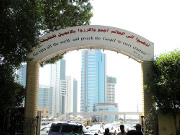
Church compound in Kuwait (Flickr photo by Samira)

Kuwait (MNN) ― Kuwait's proposed changes to blasphemy law continue to polarize.

Although the amendment was backed by 46 votes, the Emir rejected changes that sought the death penalty for those who blaspheme. Todd Nettleton with Voice of the Martyrs says the decision provoked a lot of backlash. However, "It seems that that legislation is going to die. It's not going to come before the entire parliament for a vote, which is obviously good news for Christians."

Even though the law had been approved by lawmakers and state ministers in two rounds of voting, the Emir still has the power to block parliament.  

The question is: why he would refuse to add the death penalty as has been done in Iran and Pakistan? Nettleton explains, "One of the things that has happened just within the last week: a Kuwaiti man has been sentenced to 10 years in prison, and among the charges against him were 'insulting the prophet Mohammed.'" 
  
The case could be pertinent to the Emir's decision. Nettleton shares some thoughts on the issue. "I'm wondering if this man being sentenced has sort of taken the need for the death penalty off of the table. 'We are addressing the issue harshly; we are taking care of those who would blaspheme the Prophet. We've just locked this guy up for 10 years.' I don't know if that played into the decision to table the legislation or not, but it's interesting that the two would happen so close together."

The biggest question mark in deciding blasphemy cases is what really defines blasphemy? "If you're a Christian in Kuwait, you wonder 'where is the line of blasphemy? If I'm witnessing to a Muslim, if I'm explaining to them why I think Jesus Christ is superior to the Prophet Mohammed, is that blasphemy?'"

For example, in Pakistan, the law is used to settle feuds and other personal scores, nearly always in favor of the Muslim. Nettleton says similar legal questions are being debated in Kuwait. "It's hard to know how it would be enforced or how it would be put into practice. What happened in Pakistan is that the blasphemy law sort of becomes a big club to beat Christians over the head with."

Although Kuwait's constitution technically protects freedom of belief, Islam is the state religion and Islamic law (Sharia) is an important source of legislation. The situation has deepened the rift between the Shia and Sunni majority Muslims and could worsen with the proposed changes.

Christians, however, have not had an easy time in Kuwait. The country is #30 on the Open Doors World Watch List, a compilation of countries known for their persecution of Christians. There are only a few hundred Kuwaiti believers; most Christians are foreign workers. "Pray for the Church in Kuwait. There is a Church there. There are believers there. We can pray that they will be encouraged, that they will be bold witnesses for Christ."

There is no word on the next step parliament will take next on the penal code changes in the blasphemy law. That's a window of opportunity. Nettleton says, "We can pray for the government. We can pray against laws that would take away religious freedom that would take away the right of Christians to be a witness, to worship together, anything that would hinder their living out their faith."

Wednesday, January 4, 2012

Missing Christian lawyer found

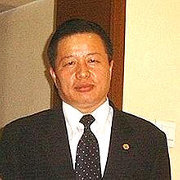
(Photo courtesy China Aid)

China (CAA/MNN) -- For the first time since he disappeared nearly two years ago, a U.S.-based Chinese human rights group can confirm the wherabouts of Christian human rights lawyer Gao Zhisheng.

ChinaAid, a partner of The Voice of the Martyrs USA,learned January 1 that Gao is being held at Shaya Prison in the Xinjiang Uyghur Autonomous Region, western China. The notification was signed and dated on Dec. 19 by the prison.

According to ChinaAid, police took Gao into custody again on April 2010, the most recent arrest since a 2006 conviction on a subversion charge.

Then, on December 16, shortly before his five-year probation period was to have ended, the Chinese government sentenced him to three more years for violating his probation. The good news was that Gao was still alive, but the bad news was they still didn't know where he was or if he was healthy.   

Gao is best known for defending cases of religious persecution, including house church leaders and members of Falun Gong.

ChinaAid founder and president Bob Fu says of his friend, "Gao's internal exile reminds the world of how former Soviet dissident Andrei Sakharov was cruelly treated in Siberia in the 1980s."

Fu goes on to say that "the Chinese government can use this remote jail to prevent concerned people from visiting Attorney Gao, but just like Sakharov, Gao's courageous voice can never be silenced by the four walls of his prison cell."

Tuesday, December 27, 2011

Kid's curriculum loses the fluff

(Photo courtesy of Kids of Courage)

USA (MNN) ― This isn’t your typical, everyday Sunday school lesson. No fluff or watering-down can be found in this latest Vacation Bible School curriculum.

The Voice of the Martyrs just came out with their Kids of Courage curriculum, a challenging series that presents the reality of persecution, forgiveness, and what being strong in your faith really means.

A VOM worker who helped prepare the curriculum says, “A lot of kids can learn about persecution without going into graphic detail. They can learn that we can trust God when we are having problems, and we can even praise Him.”
The curriculum comes with over 50 stories from countries like China, Egypt, India, Nigeria and North Korea where Christians are persecuted daily for their faith.

It also takes care of group leaders by providing crafts and skits for them to use. There’s enough material for leaders to choose which stories and activities are age-appropriate for the group they are teaching.

“Leaders and teachers have said they have wanted to teach children about persecution but they didn’t know how to do it in an age-appropriate way,” says VOM staff member. “They like it when the kids are able to study the same thing as the adults. We have stories that are current about kids their age that are happening right now. Everything in the curriculum is country related or persecution related.”

Some churches have already taken the curriculum and adapted it into a youth program or teaching series. The Kids of Courage curriculum is only $45 and can be purchased atwww.kidsofcouragevbs.com.

Youth Pastor William Thompson states, “As a youth minister, I tend to stay away from lessons that are watered down. In today’s world, I think people need reality rather than fantasy. We enjoyed the curriculum so much, we are going to use it during our Wednesday night youth program so that even more kids learn about the persecuted church and how to be a kid of courage!”

Thursday, December 15, 2011

Arab Spring not bringing revolution or freedom for Christians

(Photos by Maggie Osama)

Egypt (MNN/ODM) ― 11 months ago, the spark of revolution ignited in Tunisia. Within weeks,  the first regime tumbled. 
What followed in the next few months was the toppling of other repressive governments. The season of protest was soon dubbed "Arab Spring." The movement changed the landscape of the Middle East and North Africa and sent shockwaves around the world.

However, not everyone has been benefitting from the uprisings. Carl Moeller is President and CEO of Open Doors USA, a ministry advocating on the behalf of the persecuted church. He says, "The reality for Christians in Northern Africa, Middle Eastern region, that have experienced an 'Arab Spring' is that the situation is far more complex and dangerous for Christians in that region than it was a year ago. The political dimension of almost every one of the revolutions has become the contours of an Islamic government."

Christians were already a minority population in countries like Egypt, Libya and Tunisia, and for them the future is all but clear. Did they get any benefit from the democracy movement? It depends on who you ask. Many hailed the movement as a victory for democracy. However, the reality doesn't resemble democracy as Americans recognize it. Moeller says, "That didn't dim the optimism that many of our Christian brothers in Egypt had during that time frame, because they were throwing off a regime that was oppressive. One of the challenges now is to reconcile those great hopes with the unmistakable reality that there is still a very strong possibility that persecution is going to increase."

Will 2012 bring more persecution and marginalization for Christians, or greater liberty to worship?Moeller says, "In places like Egypt, we are going to see a lot more turmoil before the day is out. There's one thing you can say about this movement: it is still defining itself." It's not totally set in stone, Moeller points out. "There are still two more election rounds to go, and we know that in those election rounds, other things can happen to form the final form of the government."

Moeller adds that the current situation in Egypt in which the Islamist Muslim Brotherhood is holding an estimated 40% of the seats in the parliamentary elections so far is a reality check for Coptic and evangelical Christians, who comprise 10% of the population. Hardline Salafists are also doing well in the on-going election.

Soon, Egyptian believers may be joining the ranks of Iraqi believers on the move. "We think that Christians will emigrate more; we think there will be an upswing in persecution and restrictions. But we're still hopeful and prayerful that the church will continue to grow, nonetheless."

The up-side of this story is that it means the Gospel is taking root. "Where the Gospel is penetrating more, there's more persecution. Where there's more persecution, it seems that there's a greater opportunity for the Gospel to be shared and for the church to actually grow."

It's a paradox of note: "They become more committed to their faith as their faith that they're committed to costs them more."  The single most requested help coming from believers in the region is prayer.  Moeller says, "Pray for the Christians in Egypt to be strong amid the uncertainty and the increasing pressure. Pray for the political process that it will produce a government in many of these countries that will respect the rights of Christians."

A Christian in Egypt made the following request to the Open Doors team while saying goodbye: "Thank you for coming. It was a great encouragement, and it really meant something for us. Please remember us in your prayers and ask believers in the West to pray for us. We need your prayers. We need to be one in Christ in this challenging chapter of our history. My wife and I want to stay here, but we know it will not be easy. Please, do not forget us and leave us alone."

Monday, November 14, 2011

Southern California church asked to 'Pray for the Persecuted' and also become 'Ambassadors for Peace'

ANS Founder, Dan Wooding, and Garry Ansdell, senior pastor of Hosanna Christian Fellowship, make these pleas during a special prayer service


By Jeremy Reynalds
Senior Correspondent for ASSIST News Service


BELLFLOWER, CA (ANS) -- Veteran journalist Dan Wooding, founder of the ASSIST News Service, and Garry Ansdell, senior pastor of Hosanna Christian Fellowship, Bellflower, California, joined forces on Sunday morning (November 13, 2011) to challenge Christians to get involved in helping persecuted Christians.
Garry Ansdell with Dan Wooding with a copy of From Tabloid to Truth, Wooding's autobiography


Wooding, 70, was speaking at the Bellflower church on the International Day of Prayer for the Persecuted Church (IDOP) and began by saying, "Welcome to the biggest prayer meeting in the history of the world. 


Today, we join with millions of Christians around the world who are praying for the persecuted church."


He continued, "As we pray for our persecuted brothers and sisters around the world on this day, I would like you to think about what it will be like for our brothers and sisters living in restricted countries as they secretly gather to worship our Lord Jesus Christ, not knowing if they will be arrested for their activities. For some, the very act of gathering in their home to pray, study the Bible and quietly singing worship hymns and choruses, could mean imprisonment and worse, if they are discovered by the authorities."

Wooding reminded the congregation that hundreds of millions of Christians today suffer serious discrimination, imprisonment, torture, kidnappings, and even death, because of their commitment to Jesus Christ.
Hosanna Christian Fellowship


He said, "And this morning, I want you to meet some of these courageous believers, such as Asia Bibi, a 45-year-old Pakistani Christian mother of five who is on death row in her country for not denying her Savior."
Wooding went on to detail the shocking story of Bibi, who is appealing her death sentence and has had several death threats on her life and is in solitary confinement.

"Her story began when in June 2009, Asia, a farm hand from the village of Ittan Wali in Sheikhupura District, was asked to fetch water. She complied, but some of her Muslim fellow workers refused to drink the water as they considered Christians to be 'unclean.' Apparently some arguments ensued. There had already been a disagreement between Asia and a neighbor about some property damage. Later some coworkers complained to a cleric that Asia made derogatory comments about Prophet Muhammad. Apparently she told them that Jesus was still alive, but Mohammad was dead," said Wooding.

Asia Bibi
Wooding continued, "A mob came to her house, beating her and members of her family before she was rescued by the police. However, the police initiated an investigation about her remarks, resulting in her arrest and prosecution under Section 295 C of the Pakistan Penal Code. She spent more than a year in jail. In November 2010 Muhammed Naveed Iqbal, judge at the court of Sheikhupura, Punjab, sentenced her to death by hanging. 


Additionally, a fine of an equivalent of $1,100 was imposed."


Wooding said Bibi's husband, Aashiq Fauji Masih, 51, plans to appeal the verdict, which has to be upheld by the Lahore High Court."

He added, "As if that wasn't enough, there have since been two assassinations of Pakistani leaders who had leapt to her defense."

The first took place on Jan. 4 2011, at Kohsar Market of Islamabad, when the Governor of Punjab, Salmaan Taseer, was assassinated by a member of his security team, Malik Mumtaz Hussein Qadri. The killing was a result of his defense of Asia and opposition to the country's blasphemy law. Taseer was outspoken in his criticism of the law and the verdict in the Asia Bibi case.

Wooding said, "The next day, thousands turned up for Governor Salman Taseer's funeral in Lahore in spite of warnings by the Taliban and some clerics. Thousands of Muslims also rallied in support of the blasphemy laws in Pakistan after the murder."

He added, "Then Pakistan's Minority Affairs Minister Shahbaz Bhatti, the only Christian member of Pakistan's cabinet, was also assassinated, on March 2 2011, reportedly also for his position on blasphemy laws. He was shot dead by gunmen who ambushed his car near his residence in Islamabad."

Yousef Nadarkhani
Wooding then spoke about Iranian pastor Yousef Nadarkhani who has twice refused to recant his Christian faith during two court hearings held in Rasht, Gilan Province on September 25-26 2011.


Nadarkhani was tried and found guilty of apostasy (abandoning Islam) in Sept. 2010 by the court of appeals in Rasht. The verdict was delivered verbally in court, while written confirmation of the death sentence was received nearly two months later.

Wooding said, "At the appeal in June 2011, the Supreme Court of Iran upheld Pastor Youcef Nadarkhani's sentence, but asked the court in Rasht, which issued the initial sentence, to re-examine whether or not he had been a practicing Muslim adult prior to converting to Christianity. The written verdict of the Supreme Court's decision included provision for annulment of the death sentence if Pastor Nadarkhani recanted his faith."

Wooding continued, "Following investigation, the court in Rasht has ruled that Pastor Nadarkhani was not a practicing Muslim adult before becoming a Christian. However, the court has decided that he remains guilty of apostasy because he has Muslim ancestry."

He then said that Nadarkhani's lawyer, Mohammed Ali Dadkhah, has made it clear to the court that the repeated demand for recanting is against both Iranian law and the constitution. The court's response was that the verdict of the Supreme Court must be applied, regardless of the illegality of the demand.

Wooding said, "The death sentence for apostasy is not codified in the Iranian Penal Code. However, using a loophole in Iran's constitution, the judges in Rasht based their original verdict on fatwas by Ayatollahs Khomeini, the 'father' of Iran's revolution in 1979, Khamenei, the Supreme Leader of Iran, and of Makarem Shirazi, currently the most influential religious leader in Iran. I ask you to pray for this courageous pastor and his family, that God will intervene in his case and he will be freed."

Wooding also featured stories about persecution in Egypt and also in the land of his birth, Nigeria, where he said, "Christians are being systemically slaughtered by a fanatical group called Boko Haram, who are pledged to turn the country into an Islamic state. Just days ago, 63 people, including many Christians, were murdered by this group."

He continued, "As of 2011 it is thought to be responsible for increasingly violent and sophisticated attacks, with at least 327 people killed in 2011 through November 6 according to the Associated Press. Boko Haram use the bomb attacks in Nigeria as a strategy of tension. Its aim is to create tension and division in Nigeria."

Wooding said, "Many of us think of persecution as a modern-day tragedy, but the truth is that persecution has been a reality for the body of Christ since the days of the apostles. Hebrews 13:3 states, 'Remember...those who are mistreated as if you yourselves were suffering.' We read in the book of Acts how Paul and Silas were thrown in prison because of their faith. Throughout his life, Paul was repeatedly locked behind bars, but his captors could never silence his preaching. Today's suffering church is just like that."

Wooding concluded, "There are some 100 million of our brothers and sisters in more than 60 countries that risk their very lives to live for Jesus Christ in their land. And they are crying out for OUR HELP. They need our prayer and also our support in practical ways."

Wooding encouraged the congregation to not just pray for suffering Christian brothers and sisters on this special day, but on every day of the year."

He emphasized, "We should all 'pray without ceasing.'"

The co-founders of Ambassdors for Peace, Garry Ansdell and Ameal Haddad
Before Wooding spoke, Pastor Ansdell shared about his group, Ambassadors for Peace (www.am4peace.com), which he co-founded with Ameal Haddad, another Bellflower pastor.


He urged the congregation to go to his website and sign a "Religious Freedom Resolution" which he said is an issue, "Whose time has come."

Both Ansdell and Haddad have visited many countries in the Middle East, including Egypt, Syria, Bahrain and Morocco, to share this resolution with both Muslim, Jewish, and Christian leaders. It has been signed by many of them.

He explained the resolution like this:

* It is motivated by the existence of religious hate crimes.

* The resolution puts in writing a declaration assented to by leaders from all walks of religious beliefs.

* The resolution puts the public statements into a form that can hold us all accountable for our words.

* The religious community of the world can no longer allow the politicization of our God given right to believe and live in peace. Therefore, it will foster religious tolerance, the right to faith, freedom of speech, and freedom from reprisal or persecution.

* We therefore hold all religious and political leaders to their words of peace.

* We agree that the answer to religious disagreements is dialogue and/or debate without violence, or violent responses.

* This resolution does not seek to be political nor ecumenical. It does not intend to convert or compare nor interpret religions. It is not racially or nationally oriented.

The resolution continues:

* We understand that there are extremes in every religion. We therefore agree that violence of any kind to exercise a religious point or to cause conversion is unacceptable.

* Representatives from religions throughout the world that are connected by our common humanity and personal belief in their creator, hereby resolve to honor, respect, and acknowledge every individual's right to their faith in the creator.

* Therefore, we resolve that the inalienable rights of all individuals shall be respected.

* We believe that each religion lived out by individuals or an organization has the right to peacefully present its view of theology, people, and the hereafter.

* All national and religious entities have the right to proclaim their religious beliefs and to debate them in any open forum without violence.

* We recognize the individual's right to believe in the religion of their choice.

* Men and women everywhere have the God given right to convert or not to convert to any religion without harm from any other religion or national politics.

* We agree that no opposing religion or nation has the right to interfere in the religious service of another.

* The individual has the right to debate the facts about his or her religion without fear of reprisal.

* Every individual has the right to hear and to be heard. A citizen of the world has the right to know the facts about their religious beliefs and have access to their holy books.

* Every person no matter what religion, race, or nationality has the right to live at peace with their neighbor no matter what their faith.

* Each individual from any religion has the right to listen to another individual.

* No one has the right to interfere or disrupt a religious service.

Every seeker has the right to enter a religious service for their own exploration of knowledge. They all want others to know what they know.

* We, therefore, assert that all people have a divine right to share what they know and to live at peace with the results.

During the service, a moving video was shown called "Shatter the Silence. It was written by Welsh-born singer, Kevin Gould, and produced with guitar great Phil Keaggy.
To view and download the video, please go to: http://www.youtube.com/watch?v=fHhL2GIkIzw

Jeremy Reynalds is Senior Correspondent for the ASSIST News Service, a freelance writer and also the founder and CEO of Joy Junction, New Mexico's largest emergency homeless shelter,http://www.joyjunction.org He has a master's degree in communication from the University of New Mexico, and a Ph.D. in intercultural education from Biola University in Los Angeles. His newest book is "Homeless in the City."


Additional details on "Homeless in the City" are available at http://www.homelessinthecity.com. Reynalds lives in Albuquerque, New Mexico. For more information contact: Jeremy Reynalds atjeremyreynalds@comcast.net.

** You may republish this story with proper attribution.