Showing posts with label protests. Show all posts

Friday, September 14, 2012

Turmoil in the Middle East spreads

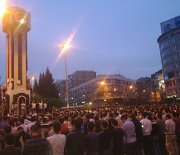
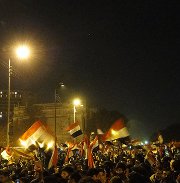
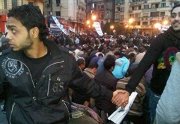
(File photos courtesy SAT-7)

Middle East (MNN/SAT7) ―Egypt's Muslim Brotherhood has called for a nationwide peaceful demonstration today to condemn insults to Prophet Mohammad from an amateurish film.

The announcement followed the attacks against U.S. Embassies in Libya and Egypt. Demonstrators also attacked the U.S. embassies in Yemen and Egypt (again) on Thursday. The spreading turmoil was a response to a film they consider blasphemous to Islam.

An investigation has begun into the events surrounding Tuesday's attack on the U.S. embassy in Libya, which resulted in the death of the U.S. ambassador Christopher Stevens and three other Americans. Eight Libyans were injured in that violence.

Protests also erupted in Iraq and Iran, as students in Tehran protested outside the Swiss embassy. In Bangladesh, Islamists tried to march on the U.S. embassy in Dhaka but were turned back by police. There were also reported protests at U.S. missions in Tunisia, Sudan, and Morocco.

The film may have been the vehicle used to stir up tensions, especially in light of the September 11 anniversary. SAT-7 CEOTerry Ascott says, "That reaction is inflamed by people who have a vested interest, like Al Qaeda, in exploiting people's anger at the West. It's a bit of a coincidence, one might say, that this flared up all within hours in Egypt, in Yemen, in Libya, in other places. It seems somewhat orchestrated."

Security was being increased at U.S. diplomatic stations around the globe, but what about ministries? "There have been specific threats against, for example, Egyptian Christians in Yemen and churches and Christians, in general...anyone who is a ‘cross worshipper,' as they say in the street."

Ascott goes on to say, "It's not the people that are making the movies or the cartoons in the Western world that pay the price for their enjoyment of free speech. It is the Christians in the Middle East that bear the brunt of the reaction that inevitably comes."

Throughout the Middle East and North Africa, it's a common belief that Christianity is a Western religion. Therefore, when trouble occurs similar to what's happened this week, entities with Western connections are targeted, and that includes ministries.

SAT-7 has an office in Cairo. When asked if there was a contingency plan for the staff, Ascott first said, "We do have heavy fences and cameras and security people around our building, but it certainly would not be enough if a mob decided to attack the building."

However, Ascott went on to explain that they're also being vigilant. "If there are signs of trouble, we would try to evacuate our staff from the premises before that got out of hand. But we don't have armed guards on the building to protect it from a riot."

Still, the staff is putting together programs that will address much of what has happened this week in the region.

Interestingly, the SAT-7 ARABIC team had already begun a series of programs called Forbidden, which address issues relevant to North Africa. Presenter Emad D. is a Tunisian poet and pastor. The inspiration for the program comes from John 11:35, "Jesus wept." Emad wants to show the Arab world that Jesus cares about them and weeps over them.

Emad hopes to use testimonies to demonstrate that the Church is spreading all over the world, and longs to see equality between people of all religions--with more respect for new believers. Ascott states that the program aims to overcome negative perceptions of the Church.

Another team is doing a live show on Saturday. Ascott says, "In the situation with the Middle East where there are so many agendas, so many tensions between so many different groups, we're trying to bring reconciliation through better understanding, advocacy of forgiveness, and so on--some of the things that are unique in the Christian Gospel."

Pray wisdom for the production teams. Pray for safety for the staff. Pray for peace to return. Pray for open hearts.


Thursday, September 13, 2012

Christians in Egypt, Libya, Other Countries Could Face Increased Persecution

Coptic Christians hold up cross in the midst of protest.

SANTA ANA, Calif., Sept. 12, 2012 /Christian Newswire/ -- The Tuesday attacks on U.S. embassies in Libya and Egypt could have severe consequences for already marginalized Christians in the Middle East and northern Africa.

The violence, including the death of four American embassy staff members in Benghazi, Libya, was allegedly sparked by a film produced in the U.S. that insulted the Prophet Mohammad.

"It illustrates how hot the fuel is that one spark ignites it so suddenly," says Open Doors spokesman Michael Wood. "At some point we heard that people were protesting because of a film not even knowing what movie this was all about. And as was the case with the publishing of the Danish cartoon several years ago, the movie has been on the Internet several months.

"But it is the unpredictable momentum that suddenly creates a wave of protests and anger. Many of the Muslim fanatics link the U.S. with Christianity. So that puts believers in these hot spots such as Libya and Egypt directly in the line of fire."

Angry protests over the film have already spread in the Middle East with new demonstrations reported late today in Tunisia, Morocco and Sudan. Egypt's powerful Muslim Brotherhood on Wednesday called for nationwide protests on Friday.

Wood adds that Christians in Egypt, who compose 10 percent of the population, and the small community of believers in Libya need our prayers now more than ever before. "Pray that the violence over this film does not spread to other countries...that is the No. 1 prayer request," he says.

An estimated 100 million Christians worldwide suffer interrogation, arrest and even death for their faith in Christ, with millions more facing discrimination and alienation. Open Doors supports and strengthens believers in the world's most difficult areas through Bible and Christian literature distribution, leadership training and assistance, Christian community development, prayer and presence ministry and advocacy on behalf of suffering believers. To partner with Open Doors USA, call toll free at 888-5-BIBLE-5 (888-524-2535) or go to our Website atwww.OpenDoorsUSA.org.
Christian Newswire

Monday, September 3, 2012

Christians across Pakistan protest and call for the ‘urgent release’ of a 14-year-old girl arrested in a ‘fabricated case’ of blasphemy

It follows the arrest of an imam charged in a ‘Quran plot’ of planting evidence

By Dan Wooding
Founder of ASSIST Ministries

Pakistani Christians carry crosses during a protest against the imprisonment of Rimsha Masih, a Christian girl accused of blasphemy, in Hyderabad, Pakistan, Sunday

ISLAMABAD, PAKISTAN (ANS) -- Following the news that a Pakistani imam has been remanded in custody, accused of planting pages of the Quran among burnt pages in the bag of Rimsha Masih, a 14-year-old Christian girl, Christians across Pakistanis have held a protest rallies demanding her immediate release.

The protests came after the media reported that Imam Khalid Chishti had allegedly told a witness, after tampering with the girl's bag, that this was a “way of getting rid of Christians”, a prosecutor said, and now he will himself face charges of blasphemy.

The imam was arrested after his deputy Maulvi Zubair and two others told a magistrate he added pages from the Quran to the burnt pages brought to him by a witness,” an investigator Munir Hussain Jaffri said.
He said Mr. Zubair and some others had told the imam not to interfere, urging him to “give the evidence to the police as he got it”.

The accused Imam being brought blindfolded
into court
According to Mr. Jaffri, Imam Chishti had told them: “You know this is the only way to expel the Christians from this area.”

The investigator said the cleric had been arrested at his home on Saturday under Pakistan's blasphemy law.

“By putting these pages in the ashes he also committed desecration of the Holy Quran and he is being charged with blasphemy,” he said.

The girl's lawyer told AFP news agency that Rimsha “should be acquitted immediately”, as it had been “fully proven that it was a conspiracy”.

Protesters in Rawalpindi
Now ANS has been told by Shamim Masih, an ANS correspondent in Pakistan and also a human rights activist, a group called the Pakistan United Christian Movement (PUCM) organized a Demonstration on Sunday, September 02, 2012, outside of St. John’s School, Rawalpindi.

Mr. Masih told ANS that Albert David, Chairman of the Executive Committee of PUCM, appealed to the Pakistan government to immediately release Rimsha saying, “The real culprit has been arrested yet the girl is still in jail.”

He went on to say, “Failure to do so, points to a bleak future for the minorities in this country.

The time has come for Christian in Pakistan to be treated equally in all spheres of life.”

Mr. Masih said that the rally protestors were holding placards and banners, demanding equal citizenship for Christian and the ending of discriminatory practices.

He added that PUCH made a number of recommendations to the government which included steps to be taken for solve the problems that all minorities in the country face in accordance with the United Nations Universal Declaration of Human Rights.

It also called for the various blasphemy laws should be “revisited” an also the victims of blasphemy allegations that have not yet been proved, should be released.”

Shamim Masih added there were with other Christian, religious and social reformers, who also made speeches there at the rally.

Another large protest rally took place in Hyderabad, Pakistan, on Sunday, when Christians carrying crosses called for justice for the young girl.

Also reports are coming into ANS reveal that other protest rallies have taken place across the United Kingdom and also outside the United Nations in New York and if she is not free immediately, the groundswell of protests are expected to spread around the world.


Tuesday, December 13, 2011

Arab Spring 1 Year Later: Outlook Gloomy for Suffering Christians

SANTA ANA, Calif., Dec. 13, 2011 /Christian Newswire/ -- Almost a year ago a wave of revolutions started in the Middle East, with Tunisia the central country where the first regime tumbled. 

Called the "Arab Spring," repressive governments crumpled like dominoes, changing the landscape of the Middle East and North Africa forever and sending shockwaves around the world.

Unfortunately for the already minority Christian population in Muslim-dominated countries like Egypt, Libya and Tunisia, the future is all but clear. Will 2012 bring more persecution and marginalization for Christians or greater liberty to worship?

So far, the signs are not encouraging, according to Open Doors USA President/CEO Dr. Carl Moeller.

"Many hail this movement of popular discontent that has toppled dictators as victory for democracy," Moeller says. "But within Arab Spring are troubling incidents against Christians, even those in countries yet unreached by the revolutionary wave. For Westerners, the notion of democracy is majority and minority groups working together, each having a voice at the table.

"But the model unfolding in these lands is far from Jeffersonian. A possible result is the law of mob rule, where Islamists are likely to control governments, exclude minority faiths even from police protection, and Christians live in constant terror from the clear message: There is no place here for Christians."

Moeller adds that the current situation in Egypt where the Islamists' Muslim Brotherhood is holding an estimated 40 percent of the seats in the parliamentary elections so far is a reality check for Coptic and evangelical Christians, who comprise 10 percent of the population. Hardline Salafists are also doing well in the on-going election.

Moeller adds: "There have been significant reports of increased violence against Christians. We know Christians whose churches have been burned, and thousands who have been affected by extremist groups.

"Hopefully a new government will produce more protections for the Christians, but that's not necessarily something that people are expecting. Many are fearing that there will be a decrease in the capacity of Christians to freely exercise their faith, as well as further restrictions on their public activity."

Likewise, the Simon Wiesenthal Center has repeatedly spoken out regarding the plight of Egypt's largest minority.

"For hundreds of years, Jews have known persecution, both political and religious," says Rabbi Yitzchok Adlerstein, Director of Interfaith Affairs for the Simon Wiesenthal Center. "We know the particular virulence of the latter, and we therefore fear for Egypt's Copts. They have suffered discrimination for decades as a vulnerable minority. What they face from a resurgence of Islamist fervor is something we would like not to think about, but moral outrage leaves us no choice.

"The Simon Wiesenthal Center has asked Egypt's interim government to demonstrate its commitment to her Christians by a visible and demonstrable security presence to protect her communities and institutions. It has tried to persuade the world community to measure the success of Egypt's experiment with democracy -- as well as those of other countries that have thrown off the yoke of dictatorship -- first and foremost by how well she guarantees religious liberties. Egypt is not Syria. It will respond to wall-to-wall pressure from the West. It is the job of all with a conscience to ensure that this pressure is applied."

A Coptic Christian recently told a visiting team from Open Doors that "we have lived side by side with Muslims for many decades without problems, but a lot of these extremists hold very radical views and are not afraid of using violence. It feels we are going backwards -- moving in the wrong direction."
Some Christians have already left Egypt and others are preparing to leave. According to Moeller, a mass exodus of Christians from Egypt would be disastrous.

"Thousands of Christians have either left Iraq or fled to the northern part of the country due to the violence against them by Muslim extremists," he states. "There were almost 1 million Christians in Iraq in the early 1990s but now only an estimated 345,000," he states. "Pray that does not happen in Egypt....that there is not another religicide."

Another Christian in Egypt made the following request to the Open Doors team while saying goodbye:

"Thank you for coming. It was a great encouragement and it really meant something for us. Please remember us in your prayers and ask believers in the West to pray for us. We need your prayers. We need to be one in Christ in this challenging chapter of our history. My wife and I want to stay here, but we know it will not be easy. Please, do not forget us and leave us alone."

An estimated 100 million Christians worldwide suffer interrogation, arrest and even death for their faith in Christ, with millions more facing discrimination and alienation. Open Doors supports and strengthens believers in the world's most difficult areas through Bible and Christian literature distribution, leadership training and assistance, Christian community development, prayer and presence ministry and advocacy on behalf of suffering believers. To partner with Open Doors USA, call toll free at 888-5-BIBLE-5 (888-524-2535) or go to our Website at www.OpenDoorsUSA.org.

Tuesday, November 29, 2011

Sanctions, suspension unlikely to mean change in Syria

(Photo by Syriana)

Syria (MNN) ― Amid a myriad of accusations against Syria has come a new label. The U.N. recently dubbed President Bashar al-Assad's behavior toward protesters as "crimes against humanity."

The BBC reports that the title was given for investigations claiming Assad had ordered the torture, sexual assault, and murder of citizens, including children.

The reports have come out just days after the Arab League suspended Syria and decided to move forward with sanctions. Assad has been called upon by a number of nations to stop his harsh tactics, or even to relinquish power.

Assad is undeniably under pressure, but it's hard to say if the pressure is making any difference at all.

"I think it's causing Bashar Assad to just put the pedal down and even go harder and faster to try to get this thing over, and get back his full control," observes Tom Doyle, the Middle East/Central Asia Director for E3Partners.

"I think with the Arab League suspending their membership, that's pretty significant. It's only happened two other times: recently with Libya with all the killing going on there, and then after Egypt made a peace treaty with Israel, their membership in the Arab League was suspended," notes Doyle. "This sends a signal. I don't think, in the end, it will do anything."

If in fact the pressure does get to Assad, however, Doyle fears the worst. Assad out of power leaves the door open for far worse fates.

"Believers now are very, very nervous about the changeover if it would come, just because it might be a worse group than Bashar Assad," explains Doyle. "There are some hard-line radical Muslim groups that are fighting him. If they get control, it will even be worse than it is right now."

Zooming out even further, if Assad does leave, Syria is not the only nation that will be affected. Hezbollah has promised a coup in Lebanon.

An anonymous source "close to Hezbollah" told news network al-Arabia that since Hezbollah and Assad are allies, Hezbollah will respond negatively in Beirut if Assad falls. The Jerusalem Post reports, "The source said that Hezbollah would seek to fortify itself in the nation's capital in order to defend itself against the threat posed by Israel, which may feel emboldened enough following the fall of Assad to launch an offensive against Hezbollah in Lebanon."

Hezbollah is expected to have the support of the Free Patriotic Movement behind them as they take even more control than they have now in Lebanon.

At that point, as differences shine brighter than ever between surrounding nations, says Doyle, "About the only unifying factor that could bring them together is a war with Israel. And I think if you look at Zechariah 12, it says that there is a regional war coming sometime."

The potential consequences of Assad's fall could be devastating. Thus, believers feel stuck between a rock and a hard place. If the dictator leaves, the nation could be taken over by radicals and even lead to war. If he stays, more could be killed. Assad is thought to be responsible for at least 3,500 deaths since protests began in the spring.

"Recently, talking with believers, they've felt less pressure [under Assad]. Because I think the government sees they're not a threat to the government," says Doyle, "many of the believers are thinking the best solution at this point is probably for Assad to stay, believe it or not."

As terrible as things have been for many under the current regime, the church has been thriving. Doyle says as Muslims watch Muslims turn on each other, they are coming to Christians for answers. Entire families are coming to Christ.
It's a catch 22 in Syria whether Assad stays or goes. Pray for strength for believers whatever happens, and for the church to continue to move forward. 

Wednesday, November 23, 2011

Muslim Brotherhood likely to take over in Egyptian elections

Cover photo: Protests in Tahrir
 Square (Naicomeno). Story photo:
 Protests go into the night (Ramy Raoof).

Egypt (MNN) ― After days of protests, Egypt's military rulers have not only accepted the cabinet's resignation, but they have even agreed to speed up presidential elections to July 2012, according to BBC News.
Three-month preliminary elections are still scheduled to begin Monday, November 28.

Regardless of these new promises, however, clashes continue. Reports agree that since protests began in Tahrir Square on Saturday, at least 29 have died and several hundred have been injured as the police have fired rubber bullets, tear gas, and more into crowds.

The election conditions agreed upon by the Egyptian military do not seem to have satisfied most protesters. Many protesters fear that even if a new president is elected fairly, the military will not recognize the leader but will instead hold on to power.

If the military is true to their word and a new government is elected, things may not get much better for Egypt though.
Tom Doyle, Middle East-Central Asia Director for E3Partners, warns, "This just plays into kind of the worst scenario with a vacuum of power and the Muslim Brotherhood stepping up and saying, ‘We'll restore order.'"

Doyle says Christians in particular are nervous for what may come. "It's always who's lurking around the corner. Most of the leaders in Egypt seem to think it's going to be Islamic Brotherhood."

At this point, says Doyle, there is no other contender for the Muslim Brotherhood in the coming elections. No other group seems altogether organized or prepared to step in.

"The Christians have never had a real political stand there, haven't had much influence. Then you've got the secular Muslims that were pretty much with Mubarak, and they were thrown out because of the corruption," Doyle explains. "So then you have moderates and radicals. And it just always seems when it's moderates versus radicals, it's the radicals that win."

Opening the door for the Muslim Brotherhood could easily mean hard-line Islamic law in Egypt.

"We've heard talk about Sharia law," notes Doyle. "Islam started in the Arab world, and they do not like that Iran has the platform as the leader of Islam, if you will, today. And they want that back."

The prospect for Egypt's future looks grim. But while bad news gets worse, believers are actually getting bolder. Doyle says if Muslim fundamentalists take over, the church is likely to grow even more.

"When the hard-liners get in, that's when the church flourishes. We certainly don't want to see our brothers and sisters in persecution, but when the difficult government takes over--like in Iran, then the church grows."

Pray that the church would grow whatever happens, and that believers would have the strength for what is to come. 

Monday, November 21, 2011

Appeal to help Christians affected by Syria unrest

Pro-Syrian regime protesters outside
 the Syrian foreign ministry, November 14AP

There are growing concerns for the future of Christians in Syria and the thousands of Iraqis seeking refuge there.
President Bashar al-Assad continues to defy calls to step down amid international outcry over his regime’s crackdown on the uprising that has gripped Syria for the last eight months.
The UN estimates that at least 3,500 people have been killed at the hands of the military since anti-government demonstrations broke out.
The worsening situation prompted the Arab League to suspend Syria on Saturday. Jordan’s King Abdullah II and Turkish Prime Minister Tayyip Erdogan are the latest leaders to say the Syrian President should go.
Christians in the country, however, fear that if Assad falls, Syria will descend into the same chaos as Iraq did post-Saddam Hussein.
While the influence of militant Islamists was restrained under Saddam, they were virtually free to wreak havoc on Iraq’s Christian community after his demise.
The scale of the violence, which has included deadly bomb attacks on churches, has caused thousands of Christians to flee Iraq, many of them ending up in Syria.
A Syrian church leader and coordinator of Barnabas Fund’s food programme for Iraqi Christian refugees in Syria said: “Most of the Iraqi Christians living in Syria are worried because they do not want to see Syrian Christians passing through the same path as happened with them in Iraq.
“They are lifting their prayers for a safe and secure Syria and for it to continue to be a safe haven.”
Barnabas Fund said many Christians in Syria had stayed away from the protests because of the reasonable amount of religious freedom they have enjoyed under President Assad.
The organisation, which supports persecuted Christians, said more funds were desperately needed to help meet the practical needs of Christians affected by the crisis.
Dr Patrick Sookhdeo, International Director of Barnabas Fund, said: “Syria has been very much a safe haven for Christians in the Middle East, one of the few Arab countries where they were treated with respect and had equality with the Muslim majority.
“Syria also has a history of welcoming in persecuted Christians from other countries. But I greatly fear that within the near future we will see a new Iraq developing in Syria.
“Barnabas Fund is standing with our brothers and sisters during this tumultuous time through both prayer and practical support. Please help us to help them.”
To donate to the Barnabas Fund appeal, click here

Thursday, November 10, 2011

Christians threatened, killed in Syrian vigilantism

(Photos of Homs protest
 courtesy of 'Syriana 2011')

Syria (MNN) ― While Libya was fighting for freedom from a dictator and Egypt was planning out its new government, Syria was quickly deteriorating in the background.

Syria has in many ways slipped under the international radar. The U.N. recently raised the death toll for protesters killed since March to 3,500. The estimate was deemed "conservative," according to Al Jazeera.

Demonstrations against the nation's dictator Bashar al-Assad have been taking place for months. The Syrian government has frequently responded with gunfire, resulting in the 3,500 lives lost.

Yet, Paul Estabrooks with Open Doors says, "The U.N. stepped up Libya, but nothing has ever been decided or done in the case of Syria."

And the situation is worsening.

Although the Arab League Agreements have forced the Syrian army out of some regions, the decision has meant bad news for Christians. Open Doors reports that the army pulling out of Homs has been disastrous for believers.

"Under Assad, they've actually had a relatively quiet and peaceful life, but now things have changed," observes Estabrooks. "For example, the city of Homs, which is the third-largest city of Syria, had the military pull out recently, and Islamic extremists and armed civilians have taken over the city. And they're threatening our brothers and sisters there."
The threats have given way to the deaths of at least two Christians and to extreme fear. A Catholic priest reported that many believers are not leaving their homes anymore.

Estabrooks explains, "Christians in general, and women, in specific, are being threatened and told to leave the city. There are checkpoints everywhere they go. And these checkpoints are not military people. They're local vigilantes of extremists who are telling them to leave the city, that this is a Muslim city, that 'we don't want you Christians here, and you should get out.'"

Miraculously, the church is still growing in Syria, but Christians are begging for one thing. "In these recent cases, the Christians in Syria are just pleading with us to remember them in prayer. They said, ‘We need prayer--now more than ever before.'"

Pray for protection for believers. Pray that God's children will remain a light in these darkest of times.
Estabrooks encourages you to alert your representatives about the plight of Christians in Syria. 

Monday, July 25, 2011

Political tensions give way to protests


Riots in Malawi started last
 Wednesday in protest of Malawi's
 government injustice pushing other
 countries to cut aid funds.
Malawi (MNN) ― The drastic cutting of British aid funding to Malawi has rocked the country. That, plus high food and fuel prices, started widespread rioting and protests in the streets as of last Wednesday.

The UK is joining ranks with several other countries and organizations boycotting Malawian government for failure to respond to issues in their country. There have been several months of diplomatic attempts to resolve Malawi government actions, but to no avail.

Malawi government officials have neglected their duty to human rights, fair governing, and fuel importation issues, and have restricted their people's ability to demonstrate peacefully against government practices.

Amidst the demonstrations and chaos, CURE International has been in the thick of it. Their Malawi base, CURE Malawi, closed at the start of the riots and even had protesters passing as close as their front gate.

CURE Malawi is now operating again and established a security committee to determine which areas are safe and which areas are too dangerous for staff.
For CURE Malawi staff, the danger cannot prevent them from doing what God has called them there to do. They provide medical assistance and surgeries to children who are physically disabled.
Stuart Palmer, CURE Malawi Executive Director, writes in an update, "All non-state owned radio stations have been taken off the air. Only Facebook and Twitter are enabling us all to find out what is happening on the ground. CURE Malawi continues to operate but in a limited capacity for the safety of our staff and patients."

While many demonstrations started out as peaceful, Catherine Ashton, High Representative of the European Union for Foreign Affairs and Security Policy, stated that police used force and live ammunition to subdue protestors.

As of Friday, July 22, the Ministry of Health and police officials confirmed 18 deaths, 250 arrests, and several critical injuries. Looting by bandits has also occurred under the chaos created by the civil unrest.

With the loss of so much aid and government funding, the needs of the people are only climbing, making CURE Malawi's assistance in the community even more critical, as well as the message of the Gospel they bring.

The people of Malawi are looking for hope in these desperate times. CURE Malawi pairs everything they do with the message of hope in Christ. The Malawian people can find a more stable hope in Christ as government officials disappoint with their actions. Hopefully through CURE Malawi's ministry, they can show the greater assurance of faith in Christ.

Please pray for the safety of the staff with CURE Malawi in these times of tension. Pray also that their medical and evangelistic ministries would only expand and that more people would receive the physical and spiritual healing they need.