Showing posts with label blasphemy. Show all posts

Tuesday, October 23, 2012

Rimsha Masih's case extended

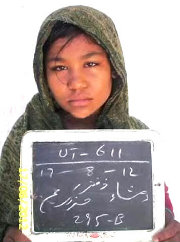
Police picture of Rimsha Masih after her
 arrest. (Photo Courtesy of ANS)
Pakistan (MNN) ― 14-year-old Rimsha Masih was arrested two months ago, accused of committing blasphemy. Her court case has been extended to November 14, 2012, a month away. 

According to an Assist News correspondent in Pakistan, the Islamabad High Court (IHC) has extended her stay during the hearing of the petition. "The court extended the stay in order to first decide on the petition for quashing the First Informational Report (FIR). During Wednesday's hearing of Rimsha's petition, Chaudhry Abdul Aziz, Advocate, submitted his power of attorney on behalf of Malik Ummad, the accuser."

In the petition filed, Rimsha's lawyer had said that it was the Imam, Khalid Jadoon Chishti, who fabricated the charge of blasphemy. His reason, according to the lawyer, was that he wanted the Christian community to vacate the area. That is exactly what happened, too. 

Living in a country where 97% of the population is Muslim, allegations of blasphemy can create public fury. Pakistan is #10 on the Open Doors World Watch List for persecution of Christians. Rimsha's arrest made hundreds of Christians in her neighborhood flee in fear for their lives. 

Hafiz Zubair, prosecution witness, recorded on August 31 that the Imam put pages of the Holy Quran in the shopping bag. In doing so, it made a case against the Christians. 

To make the case even stranger, three witnesses testified against Imam. According to DawnNews, soon after, they withdrew their testimonies. The witnesses stated that they had been forced into recording statements by the police. 
Two witnesses recorded separate statements saying they saw Jadoon putting some pages of the Holy Quran in a plastic bag, tearing them. 

The court delayed the hearing in Jadoon's bail plea until October 3. On the 11th of October, he was granted bail, six weeks after his arrest. His bail was set at 200,000 rupees ($2,065 US) after witnesses again retracted their statements early in October. 

In the beginning of September, Rimsha was granted bail. Under protective custody, she was airlifted to an unspecified location. She now has to wait until November 14 for her next court date. 


Thursday, September 20, 2012

French publication fuels Muslim anger

(Story Photo by Rae Burnett)

Egypt (MNN) ― The last day or two have been without blaring headlines describing Muslim rioting, but that could all change. 

A French magazine this week published vulgar caricatures of the Prophet Muhammad, despite government entreaties not to publish the images. In response, the French government ordered embassies and schools to close Friday in about 20 countries.

The incident is likely to raise tensions that were already dangerously high. It follows days of violent protests from Asia to Africa against the U.S.-produced film "Innocence of Muslims" and turned France into a potential target of Muslim rage
But don't be fooled, says Rae Burnett with Christian Aid Mission. "The film was just a pretext for the violence." She goes on to explain that the event gave a cover story for lashing out at intended targets--a theory that's been substantiated by the Libyan government. Further, says Burnett, "Since the violence has subsided, nothing has gotten better because these believers are in grave danger. They're afraid of being slaughtered because everything is intensifying."

That concern is magnified by the feeling of isolation. "They [extremists] are overtly burning churches and persecuting Christians and kidnapping their children...just terrible things far surpassing what they used to experience, and the world is silent." 

Burnett says the real story is the uncertainty. Christian Aid supports indigenous ministries who seek to engage the lost people of Egypt through holding house meetings, setting up Bible training, and doing evangelistic outreach. She explains that "one of these guys called me the first day of the rioting in Egypt and said, ‘They're burning Bibles in front of the U.S. embassy.' They were doing those kinds of things just to show their hostility, and they were burning churches and things that weren't reported."

The threat plays out on the political stage, but Burnett says, "This is all spiritual warfare. We're seeing it in a political environment because that's the environment through which this takes place. But the point is to destroy the work of the Lord and to destroy those who might come into the Kingdom, to keep people in darkness."

Given that understanding, the workers supported by Christian Aid Mission haven't fled. "It hasn't diminished any of their efforts. The main group that we help just had a conference of their workers, training their workers and praying together to ask the Lord for direction. So they are going forward in the work, but they are really discouraged about the political situation and the future of Christianity in Egypt." 

They're careful, but they won't be intimidated. Burnett says the Coptic Church is targeted because they have a noticeable presence in Egypt. However, "The people that we're helping generally meet in homes. They might have an office somewhere if they can afford that, so they're less of a target. Of course, because of their evangelistic efforts, people know who they are."

The Gospel, as she's said multiple times, is still going forward. It's about standing shoulder-to-shoulder with the worn out believers of Egypt and advancing together. Burnett says, "We have to understand that and pray accordingly and act accordingly to be lights in the darkness." Pray for creative and effective approaches to spread God's Word in Egypt. Pray for open hearts. Pray for change in the chaos.

Friday, September 14, 2012

Turmoil in the Middle East spreads

(File photos courtesy SAT-7)

Middle East (MNN/SAT7) ―Egypt's Muslim Brotherhood has called for a nationwide peaceful demonstration today to condemn insults to Prophet Mohammad from an amateurish film.

The announcement followed the attacks against U.S. Embassies in Libya and Egypt. Demonstrators also attacked the U.S. embassies in Yemen and Egypt (again) on Thursday. The spreading turmoil was a response to a film they consider blasphemous to Islam.

An investigation has begun into the events surrounding Tuesday's attack on the U.S. embassy in Libya, which resulted in the death of the U.S. ambassador Christopher Stevens and three other Americans. Eight Libyans were injured in that violence.

Protests also erupted in Iraq and Iran, as students in Tehran protested outside the Swiss embassy. In Bangladesh, Islamists tried to march on the U.S. embassy in Dhaka but were turned back by police. There were also reported protests at U.S. missions in Tunisia, Sudan, and Morocco.

The film may have been the vehicle used to stir up tensions, especially in light of the September 11 anniversary. SAT-7 CEOTerry Ascott says, "That reaction is inflamed by people who have a vested interest, like Al Qaeda, in exploiting people's anger at the West. It's a bit of a coincidence, one might say, that this flared up all within hours in Egypt, in Yemen, in Libya, in other places. It seems somewhat orchestrated."

Security was being increased at U.S. diplomatic stations around the globe, but what about ministries? "There have been specific threats against, for example, Egyptian Christians in Yemen and churches and Christians, in general...anyone who is a ‘cross worshipper,' as they say in the street."

Ascott goes on to say, "It's not the people that are making the movies or the cartoons in the Western world that pay the price for their enjoyment of free speech. It is the Christians in the Middle East that bear the brunt of the reaction that inevitably comes."

Throughout the Middle East and North Africa, it's a common belief that Christianity is a Western religion. Therefore, when trouble occurs similar to what's happened this week, entities with Western connections are targeted, and that includes ministries.

SAT-7 has an office in Cairo. When asked if there was a contingency plan for the staff, Ascott first said, "We do have heavy fences and cameras and security people around our building, but it certainly would not be enough if a mob decided to attack the building."

However, Ascott went on to explain that they're also being vigilant. "If there are signs of trouble, we would try to evacuate our staff from the premises before that got out of hand. But we don't have armed guards on the building to protect it from a riot."

Still, the staff is putting together programs that will address much of what has happened this week in the region.

Interestingly, the SAT-7 ARABIC team had already begun a series of programs called Forbidden, which address issues relevant to North Africa. Presenter Emad D. is a Tunisian poet and pastor. The inspiration for the program comes from John 11:35, "Jesus wept." Emad wants to show the Arab world that Jesus cares about them and weeps over them.

Emad hopes to use testimonies to demonstrate that the Church is spreading all over the world, and longs to see equality between people of all religions--with more respect for new believers. Ascott states that the program aims to overcome negative perceptions of the Church.

Another team is doing a live show on Saturday. Ascott says, "In the situation with the Middle East where there are so many agendas, so many tensions between so many different groups, we're trying to bring reconciliation through better understanding, advocacy of forgiveness, and so on--some of the things that are unique in the Christian Gospel."

Pray wisdom for the production teams. Pray for safety for the staff. Pray for peace to return. Pray for open hearts.


Friday, September 7, 2012

Pakistan Christian Cabinet member urges re-think of blasphemy law

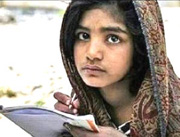
Rimsha Masih (Image courtesy Asia News)
Pakistan (MNN) ― What began as a blasphemy accusation has led to scandal and a call to re-evaluate Pakistan's blasphemy law.

Todd Nettleton, spokesman for Voice of the Martyrs USA, says the blasphemy law is often misused by Muslims to settle personal scores with Christians. Even unproven allegations can prompt a violent public response.

"Whatever it is that you wanted to get even with them for, you can take care of that while they're locked away in prison", says Nettleton. "Even if eventually the court says, 'There was no evidence of this. This is a ridiculous charge; let this person go.' They've still lost four to seven years of their lives fighting the charges and waiting for the legal process to go forward."

Nettleton goes on to say, "The level of what it takes to get the charges filed is so small, and it really ruins somebody's life." Gospel work has been negatively impacted, too. He explains that "if you say anything negative about Mohammed, that's blasphemy. Obviously as we share the Gospel, we want to do that out of a sense of love and out of a sense of respect. But at some point, when you compare two religions, you're probably going to say something negative about Islam and about Mohammed and about the Quran. All of those things would fall under the blasphemy laws there in Pakistan."
In other words, the interpretation is loose, and yet the penalties are harsh. Convictions carry the potential of a life sentence for desecrating the Quran and the death penalty for insulting the prophet Muhammad.
The case that started the ball rolling involves a young girl, Rimsha Masih, who is developmentally disabled. She is in custody nearly three weeks after she was accused of burning pages containing verses from the Quran.

In an odd twist to the case, Nettleton says, "The mullah at her local mosque: apparently now there are witnesses who say he put the burned pages in her stuff and then took the stuff to the police and said, 'This is Rimsha's stuff.' She's been burning pages from a Quran'."

Investigating authorities found the motive revealing. "Apparently now, it was all a set up by him to try to get the Christians out of the village or create animosity by the Muslims toward the Christians. So that evidence coming on top of the questions that were already there because of her age, or because of her mental capacity, is really giving some momentum to this idea of 'this is really a black eye for the entire country to have these laws on the books.'" With that evidence, the cleric was arrested for tampering with evidence. Activists hope to use the case to stop the abuse of Pakistan's strict laws on insulting Islam.

As a result of the turn of events, activists hope Masih could be released as early as tomorrow. According to Open Doors News, Rimsha Masih is likely to be cleared of the blasphemy charge against her, but Nettleton says the family's life is changed. "Even if she is released on Friday and is returned to her family, there is still an issue of safety for them that we can pray about and pray for."

Police put the girl in jail both to placate angry demonstrators and to keep Rimsha safe from attack. Her parents likewise were removed to protective custody, while hundreds of Christian neighbors fled to the relative safety of more distant Islamabad sectors.

Paul Bhatti is the Minister for National Harmony, and the only Christian on the cabinet. He is calling for a re-evaluation of how the law is enforced. His brother and predecessor Shahbaz Bhatti was gunned down last year for speaking out against the blasphemy law.

However, Nettleton says the circumstances now are different. "The fact that someone has suggested reforming the blasphemy law is not a new thing. What will be interesting to see--especially in light of this mullah being arrested--is if this gains any traction within the legislative process there and if there is really some practical change for the Christians in Pakistan."

Pray for justice, as it relates to the blasphemy law. This is a unique opening to change laws that are unfair. "Pray for the Christian community there, regardless of what happens with the government or what happens with the blasphemy laws, that they will continue to focus on Christ and be a witness for Him in spite of whatever laws are on the books or whatever persecution comes their way."


Friday, August 31, 2012

Pakistani Christian girl still held

Ramsha Masih will be in court tomorrow.
Pakistan (MNN) ― A bail hearing has been adjourned until Saturday of a young Pakistani girl accused of blasphemy.

Rimsha Masih was taken into custody a few weeks ago after an angry mob surrounded her home accusing her of burning pages with verses of the Quran written on them.

Masih, who's reported to be about 14-years-old, is also believed to be mentally disabled.

According to Voice of America, a lawyer representing the accuser challenged a medical report released earlier this week that said the girl was 14-years-old, but mentally younger than that. The girl's lawyer, Tahir Naveed Chaudhry, hopes the judge would settle the matter during a bail hearing set for tomorrow.

Human-rights groups are asking for the girl to be released immediately. According to Christian Solidarity Worldwide, Prominent Muslim clerics in Pakistan and the country's president are pressing for a fair and impartial investigation into her case.

Pakistan's blasphemy laws have long been used to harass religious minorities and settle personal vendettas. Amnesty International and other human rights groups called for Pakistan to reform their blasphemy laws and protect Masih and her family against possible intimidation or attack.

Christian leaders in the government have been targets of attacks. Last year, Pakistan's Minister of Minorities, Shahbaz Bhatti--the only Christian member of the federal Cabinet, was killed by an assassin in Islamabad. And Salman Taseer, Punjab province's governor, was killed by one of his bodyguards for his opposition to the blasphemy law.

Christians are the largest non-Muslim religious minority in Pakistan, making up about 5% of the population.

The United States has called Masih's case "deeply disturbing" and urged Pakistan's government to protect not just its religious minority citizens, but also women and girls.


Tuesday, August 28, 2012

Pakistan blasphemy case girl examined by doctors

By Dan Wooding
Founder of ASSIST Ministries

PAKISTAN (ANS) -- Doctors in Pakistan have examined a young Christian girl imprisoned on blasphemy charges to determine her age and mental capacity, with the results due to be presented in court tomorrow.

According to the BBC, her lawyer says the girl, called Rimsha, is 11 or 12 years old and appears to have Down’s syndrome.

“She is being held in a maximum security prison after an angry mob accused her of desecrating pages of the Koran. But her supporters say she has been wrongly accused,” said the BBC.

“Police say the girl was arrested last week in a Christian area of the capital Islamabad, after a crowd of people demanded that she be punished for allegedly desecrating pages of the Muslim holy book.

“It is not clear whether she burned pages of the Koran or was found to be carrying them in her bag.

Attack fears

The doctors' report will be presented at a bail hearing in Islamabad on Tuesday.

Christian leaders say she is as young as 11 but police quoted in some media reports say she may be older and that she had no mental impairments.

Pakistan's Minister for National Harmony, Paul Bhatti, has said she is innocent and should be released.

He told the BBC earlier: “The police were initially reluctant to arrest her, but they came under a lot of pressure from a very large crowd who were threatening to burn down Christian homes.”

According to the BBC's Orla Guerin in Islamabad, Rimsha’s lawyer said that when he saw her in jail over the weekend she wept and begged to be released.

Her parents have been taken into protective custody following threats, and many other Christian families are reported to have fled the neighborhood.

“There are fears that even if she is released, Rimsha’s family will not be safe in Pakistan. 

Others accused of blasphemy have been killed by vigilante mobs in the recent past,” concluded the BBC story.


Tuesday, June 12, 2012

Emir rejects death penalty for blasphemy


Church compound in Kuwait (Flickr photo by Samira)

Kuwait (MNN) ― Kuwait's proposed changes to blasphemy law continue to polarize.

Although the amendment was backed by 46 votes, the Emir rejected changes that sought the death penalty for those who blaspheme. Todd Nettleton with Voice of the Martyrs says the decision provoked a lot of backlash. However, "It seems that that legislation is going to die. It's not going to come before the entire parliament for a vote, which is obviously good news for Christians."

Even though the law had been approved by lawmakers and state ministers in two rounds of voting, the Emir still has the power to block parliament.  

The question is: why he would refuse to add the death penalty as has been done in Iran and Pakistan? Nettleton explains, "One of the things that has happened just within the last week: a Kuwaiti man has been sentenced to 10 years in prison, and among the charges against him were 'insulting the prophet Mohammed.'" 
  
The case could be pertinent to the Emir's decision. Nettleton shares some thoughts on the issue. "I'm wondering if this man being sentenced has sort of taken the need for the death penalty off of the table. 'We are addressing the issue harshly; we are taking care of those who would blaspheme the Prophet. We've just locked this guy up for 10 years.' I don't know if that played into the decision to table the legislation or not, but it's interesting that the two would happen so close together."

The biggest question mark in deciding blasphemy cases is what really defines blasphemy? "If you're a Christian in Kuwait, you wonder 'where is the line of blasphemy? If I'm witnessing to a Muslim, if I'm explaining to them why I think Jesus Christ is superior to the Prophet Mohammed, is that blasphemy?'"

For example, in Pakistan, the law is used to settle feuds and other personal scores, nearly always in favor of the Muslim. Nettleton says similar legal questions are being debated in Kuwait. "It's hard to know how it would be enforced or how it would be put into practice. What happened in Pakistan is that the blasphemy law sort of becomes a big club to beat Christians over the head with."

Although Kuwait's constitution technically protects freedom of belief, Islam is the state religion and Islamic law (Sharia) is an important source of legislation. The situation has deepened the rift between the Shia and Sunni majority Muslims and could worsen with the proposed changes.

Christians, however, have not had an easy time in Kuwait. The country is #30 on the Open Doors World Watch List, a compilation of countries known for their persecution of Christians. There are only a few hundred Kuwaiti believers; most Christians are foreign workers. "Pray for the Church in Kuwait. There is a Church there. There are believers there. We can pray that they will be encouraged, that they will be bold witnesses for Christ."

There is no word on the next step parliament will take next on the penal code changes in the blasphemy law. That's a window of opportunity. Nettleton says, "We can pray for the government. We can pray against laws that would take away religious freedom that would take away the right of Christians to be a witness, to worship together, anything that would hinder their living out their faith."

Wednesday, May 23, 2012

Pakistani Christian Accused of ‘Blasphemy’ after Billiards Dispute

Pakistani Christian Accused of ‘Blasphemy’ after Billiards Dispute:


LAHORE, Pakistan, May 22 (Compass Direct News) – Police in Pakistan have charged a young Christian man with “blasphemy” after he had an argument with Muslims over a billiards game in Punjab Province’s Sheikhupura district, his cousin said. Farooqabad Police arrested Sajid Inayat, 20, on Friday (May 18) and charged him with desecrating the Quran under the country’s controversial blasphemy laws after area young men accused him of setting on fire “holy pages” placed in a box on an electricity pole, Irfan Manzoor said. Inayat was charged under Section 295-B, which makes willful desecration of the Quran or use of an extract in a derogatory manner punishable with life imprisonment. Manzoor told Compass by telephone that his cousin had been falsely accused because he had had an argument with some local Muslim boys over a billiards game just two days before the alleged incident. Sheikhupura District Police Officer Haider Ashraf said that authorities had sent Inayat to jail on judicial remand. Ashraf said the matter was serious and that police were investigating from all angles.

Read more...

Thursday, February 16, 2012

'Blaspheming' Christian still awaiting sentence after eight months in Pakistani prison

Pakistan (MNN) ― Things are only getting worse for another Christian charged with blasphemy in Pakistan.
Dildar Yousaf, 28, was arrested and charged with blasphemy after defending his 8-year-old nephew from a group of Muslim boys last June, according to Voice of the Martyrs.

Dildar's nephew, Ehtasham, was taunted by a group of boys as he passed an Islamic school. As Ehtasham walked by the "madrassa," seven boys gathered around him and tried to force him to become a Muslim. When Ehtasham refused, the boys began to scream and beat him.

Dildar happened to pass by and pulled his nephew away from the boys, took him home, and went about his work for the day. That afternoon, the news spread that Dildar had disgraced the Muslim proclamation of faith.

Police picked up Dildar from his workplace and put him in protective custody. They also filed a blasphemy charge against him under Pakistani law 298A, which carries the lightest sentence for blasphemers.

Months later, Dildar remains in prison, awaiting a sentence. His wife and two children have now been forced to flee because of ongoing threats. Ehtasham and his family have also had to leave their village. VOM is supporting the family and providing legal assistance to Dildar.

Dildar's village has a history of persecution, VOM reports. Pray for Christians in the area to remain bold. Pray that despite ongoing trials, Dildar would remain safe and faithful to the Lord.

To learn about others willing to take a stand for Christ in places dangerous to do so, visit persecution.com

Tuesday, January 24, 2012

Accused apostate's accuser recants in Pakistan?

Pakistan (MNN) ― The case of Asia Bibi, the Pakistan Christian mother-of-five who was sentenced to death for alleged blasphemy, has taken an extraordinary turn.


According to a story monitored by the ASSIST News Service, Qari Salam, who accused Bibi of blasphemy charges which resulted in a jail sentence and possible hanging, is reported to have "ostensibly" regretted filing a blasphemy charge against the impoverished Christian woman.

"The source of his guilt: realization that the case was not based on facts but on hyped religious emotions and personal bias of some village women, including his wife," said the story posted at: 
http://www.topix.com/forum/religion/islam/T72AF1K9C8RL3C6TG.

Bibi has been languishing in Sheikhupura jail since a sessions court gave her a death sentence for insulting Prophet Muhammad.

Qari, according to some of his close friends, was now thinking of not pursuing the case anymore and expressed his desire to some of his friends, only to find himself in a difficult situation when activists of an Islamic religious organization "convinced" him not to change his mind.

"We will chase her through hell. Don't worry about the money, hiring best lawyers," Salam told The Express Tribune, quoting the son of Khatm-e-Nabuwat's London chapter's leader.

The leader's son flew to Nankana from London after hearing that Salam might not go to Lahore High Court (LHC) when the review petition against Asia's conviction is taken up.

Friday, July 8, 2011

Pakistan’s Christian Sanitation Workers Swept into Societal Gutter

‘Sweeper’ leader faces suspension, criminal charges; for others, disease, death – and murder.
 
The following news analysis was written by Asif Aqeel, director of the Community Development Initiative, a human rights group affiliated with the European Centre for Law and Justice.
 
LAHORE, Pakistan, July 7 (Compass Direct News) – The often unseen or unrecognized abuses suffered by Christians at Pakistan’s lowest level of society – street sweepers – have come into sharp focus this year.
 
Abbas Masih (photo courtesy Compass Direct News)
While one Christian sanitation worker in Lahore has been suspended and criminal charges filed against him for objecting to discrimination against fellow workers, another was killed the same month for not tending to a shopkeeper’s command fast enough.
 
Anayat Masih Sahotra, who has worked as a street sweeper for Lahore’s Solid Waste Management (SWM) department for 24 years, said he is facing baseless charges of forgery and fraud from his employers because of his work as a labor leader for area sweepers, who are nearly all Christians. He was suspended and accused of the crimes on May 14 after he asked SWM Managing Director Wasim Ajmal Chaudhry to fulfill a promise to make 400 Christian workers regular employees with full benefits, he said.
 
Sahotra said when Chaudhry refused his request to make the Christian sweepers regular employees according to the requirements of Pakistani law, he told the managing director that he could expect protests. Protest against injustice was their civil right, he said, and plans for a demonstration were underway when he received the suspension order alleging forgery and fraud.
 
When he went to Chaudhry’s office again on May 26 to object to the injustice of the suspension order, he said Chaudhry referred to him and other Christian workers asChuhras, an offensive term of contempt for street sweepers, an occupation assigned only to those of such low “untouchable” social standing that they are below the remnant caste system predating Pakistan’s predominantly Islamic society.
 
“I know you low-born Christian Chuhras, and I know how to deal with you,” Sahotra said Chaudhry told him.
 
Sahotra left Chaudhry’s office, he said, only to receive a phone call a few minutes later from SWM Assistant District Officer Faiz Ahmed Afridi telling him to come to his office. Sahotra went to Afridi’s office in the evening, where he was offered to sit and have a cup of tea, he said.
 
“While I was taking tea, police entered the office and arrested me,” Sahotra said. “I was shocked how cunning Faiz had been to me.”
 
Charges were filed the same day at Islampura police station, accusing Sahotra of criminally intimidating Afridi, though Sahotra said he was calmly taking tea when police arrested him.
 
The next day Sahotra was granted bail, but a few days later Anarkali police called him, saying the superintendent of police wanted to talk to him.
 
“The police of Anarkali are tricking me into meeting them,” he said. “They want to arrest me on any other charge in order to mount pressure on me to withdraw my support to the Christian employees who are not being made regular despite having worked there for several years.”
 
As temporary or “work charge” employees, the sanitation workers’ contracts expire every 88 days, and they are hired every third month. This goes on for decades, with the employees working until they are too feeble to do so without any benefits or pension. They get no days off – no weekends, no holiday, no sick leave.
 
Their morning shift begins at 6 a.m., but the general public does not want them working when they are awake, so the sweepers prefer to clean streets beforehand. Starting at 4 a.m., they work until 7 p.m. for US$100 per month, leaving them no opportunity to work any other part-time job. Thus they are kept poor, with no opportunity to provide quality education to their children, who
perpetuate the cycle as they too become sweepers.
 
Murdered Sweeper
The deep, culturally-rooted disparagement Christian sanitation workers suffer was apparent in another incident in May. Abbas Masih, 36, was cleaning the streets when he was murdered for not picking up trash quickly enough, human rights advocates said.
 
Eyewitnesses said Masih was cleaning streets in the Pir Maki area of Lahore on May 21 when Muhammad Imran, an Arain or agricultural caste member who worked at a flower shop, told Masih to pick up dried leaves and flowers from in front of the shop. Masih told him that he would gather them up when he came back from the end of the street.
 
“How can a Chuhra argue with me?” Imran said, and he took out a knife used at the flower shop and shoved it into Masih’s heart, according to the witnesses. Masih fell. He was taken to a hospital, where he died.
 
Two brothers who own the shop, Muhammad Tariq and Muhammad Shehzad, told Compass that Imran had opened the store that morning. Imran asked Masih to pick up a small pile of dried leaves and flowers and take them away with the garbage, they said.
 
As witnesses also noted, they said Masih told him that he would pick up the trash upon his return from the end of the street. Imran insisted that he pick up the pile immediately.
 
“Imran called him names and then took out the knife and stabbed the heart of Masih,” Shehzad said, adding that he was at home at the time but heard about it from another who came home from the scene of the incident. “I rushed to the spot, picked Masih up, put him in a rickshaw and rushed him to the Mayo Hospital. I also phoned the emergency police, Rescue 15, and informed the shop that Muhammad Imran must not be allowed to go, as Masih had passed away in the hospital.”
 
He said that Masih was “a very good person.”
 
The Lower Mall police station registered a First Information Report (FIR) only after several Christian leaders protested.
 
Although Masih had worked with SWM for 16 years, he remained a work-charge employee, so his family was not eligible for financial assistance upon his death. Several Christian leaders protested to the Chief Minister of Punjab Province, whose office in turn wrote to the SWM.
 
Based on feedback from the chief minister’s secretariat, in a June 9 letter the SWM responded to the Christian leaders: “It is the policy of the government to grant financial assistance to the family of deceased civil servants, and work charge employees do not fall under the definition of civil servants. However, on the death of work charge employees during their engagement, it is the practice to pay financial assistance after getting the approval of the Chief Minister as a special case.”
 
The chief minister has not responded to the request, and Christians said there is little possibility that he will consider it.
 
Though Christians account for 90 percent of sewage workers and an even high percentage of sweepers, they make up only 2.45 percent of Pakistan’s population, which is more than 95 percent Muslim, according to Operation World. Masih’s widow, Rukhsana Masih, said that she and her family members had feared filing a police report about the case – Pakistani police are notorious for falsely charging or otherwise harassing marginalized minorities like Christians – and that they were too poor to retain a lawyer. The Community Development Initiative, an affiliate of European Centre for Law and Justice, has since allayed her fears about the legal process and offered to assist her, and she has agreed to pursue justice.
 
Overlapping Religions
When the Indian subcontinent was divided in 1947 and Pakistan was carved out in the name of Islam, ultimately there was a merging of Brahmanic Hinduism’s ritual impurity with Islamic ceremonial uncleanness in regard to sweepers – almost all of whom were Hindu “untouchables” who converted to Christianity in the late 19th century.
 
This synthesis, however, came about over time. Initially the founding father of Pakistan, Muhammad Ali Jinnah, had no notion of bringing religion into the sphere of political life. He was also an advocate of ending caste-based discrimination. With Jinnah’s early death and the use of Islam for political gain by migrating, Urdu-speaking leaders who previously had no political bases here – in particular the first prime minister, Liaquat Ali Khan – over six decades Islam permeated every aspect of life: social, political, economic and legal.
 
After Pakistan became fundamentally Islamic, Muslims confused the notion of ceremonial uncleanness – considered temporary in nature in Islamic jurisprudence – with the Brahmanic notion of ritual impurity, considered innate and permanent. Islam forbids eating and drinking with a kafir or infidel, but it allows it with the “people of the Book.” But as caste-based “untouchability” became confused with the Islamic notion of ceremonial uncleanness, Christians also came to be seen as ritually polluting a person or a thing.
 
Thus contempt toward Christians is deeply rooted, and there is no legislation to arrest this hatred. Rather, the state appears to want to keep Christians in this degrading occupation. Several job advertisements from government departments clearly state that sweeper candidates must be non-Muslim; some even specify that they must be Christians.
 
The Pakistani government hasn’t evolved any modern system of maintaining hygiene in metropolitan areas, so Christian sweepers are forced to collect and discard garbage under filthy conditions. Rotten and stinking garbage is a source of several contagious diseases, and most of the sweepers have respiratory and skin problems. A large number of them suffer from tuberculosis and hepatitis B.
 
One reason Sahotra is struggling to get these workers full employee status is that as temporary workers they are not entitled to any Social Security Hospital. They are not considered government employees and hence are not entitled to treatment in hospitals for government employees.
 
The same situation prevails at the Water and Sanitation Agency (WASA), which maintains the sewage system, where about 90 percent of workers are Christians. They face extremely dangerous work conditions. When sewer lines clog because they are too small, these workers are not provided any protective gear as they sometimes dive 30 to 50 feet below ground into manholes filled with dirty and toxic water. When a sewer line gets unclogged, the strong flow sometimes carries away the worker.
 
Several sanitation workers have lost their lives due to toxic gasses in manholes. Overall, hundreds of people have lost their lives working for WASA, but their families do not receive the benefits that other government employees get because the workers do not have regular status despite working decades for the department.
 
Caste-Based Blasphemy
One reason missionaries had such success in converting area Hindus to Christianity in the late 19th century was that conversion offered the community a way to socioeconomic as well as religious emancipation.
 
Although a large number of Christians managed to escape the bondage by attaining education, still an overwhelming number of Christians were caught in an occupation that society rendered humiliating and degrading.
 
Several cases of Christians falsely charged under Pakistan’s “blasphemy” laws have been rooted in such caste-based discrimination.
 
Asia Noreen (also known as Asia Bibi), sentenced to death in November 2010 for allegedly insulting the prophet of Islam, was working in the fields picking fruit when she took water from a bucket for all workers. Her co-workers argued that she had polluted the water by touching it, and that the water would be drinkable only if she converted to Islam. When she answered, they ensnared her in a blasphemy case. 
 
Remnant Hindu Brahmanic notions of untouchability combined with Islamic fervor for conversion in Pakistan also figured in accusations of blasphemy against Rubina Bibi in Alipur Chatta, Punjab Province. She had bought ghee, an Indian oil used for cooking, but when she felt it was adulterated, she told the shopkeeper to return it and give her money back. The shopkeeper argued that the oil had been polluted for having been poured into the bowl of a Christian, so it could never be returned. The ensuing argument veered into religious issues that ultimately invoked Pakistan’s blasphemy laws.
 
The hierarchical sense of superiority that marked Imran’s alleged murder of Abbas Masih was also present in the ransacking of Christians’ homes in Bahmaniwala, Kasur, in June 2009. Trolley driver Sardar Masih asked Muhammad Hussain to remove the motorbike that he had parked in the middle of the road. Hussain refused, asking how a “Chuhra” could give him an order.
 
The argument grew into a brawl between two families, with the inevitable accusation from the Muslims that the Christians had committed blasphemy. The entire Christian population of the village fled, and Muslims ransacked their houses.