Showing posts with label Bangladesh. Show all posts

Sunday, May 12, 2013

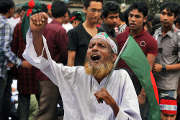
Bangladesh Islamists push for blasphemy law

(Images courtesy Uncultured/Creative Commons/Flickr)

Bangladesh (MNN) ― At least 27 people died in clashes between police and Islamic hardliners in Bangladesh's capital city Monday. 

Demonstrators were demanding that the government enact an anti-blasphemy law. We spoke with the national co-director ofAsian Access(A2)/Bangladesh, Rev. Peter Mazumder, who also serves as director of IFES-Bangladesh (International Fellowship of Evangelical Students). He explains, [sic] "Jamaat-e-Islami want to pressure that Bangladesh should have this blasphemy law, which is totally denied by the government of Bangladesh. And also, the concerned people from Bangladesh, they don't accept that one." 

Essentially, that means the government of the Muslim-majority nation has rejected the demand, insisting that Bangladesh is governed by secular law. 

However, Jamaat-e-Islami was joined by Hefajat-e-Islam, the islamist group behind the demand, and the main opposition party, the Bangladesh National Party (BNP). Hefajat-e-Islam attracted little public attention until recently. Mazumder says its mission is stated in its name: ‘Hefajat-e-Islam' translates to ‘protecting islam'. 

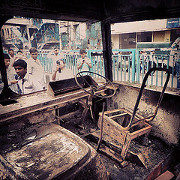
With the three groups together, that advanced the number of protestors exponentially. It was a tinder box situation. Mazumder says, [Sic] "We don't like the violence. The fundamental groups are so dangerous, that they are breaking all the cars and everything, and all of the sudden, lots of riots is coming up, and it's not safe."

The opposition has sponsored a series of recent general strikes demanding that the next general election due in early 2014 be supervised by a neutral caretaker administration.

Paying attention to the political makeup of the government is particularly important because for a ministry like Asian Access, Bangladesh is the first Muslim country where they've set up operations. 

In 2011, A2 launched its first leader development session in Bangladesh. Mazumder notes that Class 1 is in session this week, and only a few participants have been late or unable to come because of the protest strikes. It means that their work is largely undisrupted despite the upheaval. [Sic] "We are having our A2 seminars, and we are now completing the seventh seminar semester; in September, we're having our graduation."

Notably, the national strikes have impacted the last three previous sessions, (Sep, Nov, and Feb). A2 notes that sometimes the session needs to end early, in order to allow enough time for the pastors to make it back to their home churches in time to preach on Sunday.

The situation created a unique and unifying opportunity for Christians in Bangladesh, says Mazumder. [Sic]"The last few days many churches came together, and we prayed God may transform this situation and change the situation. We'd like to see a peaceful country like that, so you can pray for that."

The accord between these Christians is proof that A2's approach to church leadership training and discipleship training works. Essentially, it boils down to this idea: If you want to plant a church, you must first grow a leader. Careful selection of a select group of emerging leaders is key. The Asian Access leadership training has been recognized as one of the most creative and fruitful leadership training programs in Asia. 

Continue to pray for the safety of the students and leaders. Ask God to intervene on behalf of believers in Bangladesh. Pray for peace to be restored. If you want to see more about the leadership training model, click here. 

Tuesday, March 12, 2013

Clashes, protests stir Bangladesh


(Photo by Rajiv Ashrafi)
Bangladesh (MNN) ― Deadly political unrest in Bangladesh continued to escalate over the weekend. 

Hundreds of demonstrators rallied in Dhaka at the end of last week, demanding capital punishment to the war criminals, and a ban on Jamaat-e-Islami. The date last week had historic significance.

On March 07, 1971, the Independence leader of Bangladesh Sheikh Mujibar Rahman asked people to make the Bangladesh free from Pakistan. On March 26, 1971, Bangladeshis started the liberation war against Pakistan. Horrors and crimes against humanity followed. 

This month's uproar is blamed on the verdict of a tribunal, which was supposed to help Bangladesh come to terms with its bloody birth in 1971. However, the verdict seems to have provoked an outcry louder than any other heard in their 42 year history. 

It's not likely to die down soon. Shahbagh demonstrators staged rallies in Uttara, Chittagong, and Ashulia on March 10 and had plans to strike again on March 16.

Over 50 people have been killed, and many houses have been burnt in the rallies. Transportation has become difficult in the major cities. Some persecution of minority religious groups has occurred. 

So far, all Compassion-assisted families and Compassion staff members are safe and unharmed. As a precaution, Compassion Bangladesh temporarily suspended project activities of 20 centers last week. Re-opening is dependent on whether or not the turmoil settles down over the next few days.

All staff members have been instructed to be on emergency alert. Additionally, due to the difficulties, the staff of Compassion Bangladesh has enough to do without having to be concerned over the safety of visitors. For the time being, they won't be hosting any Tours or Vision trips.

Every child who participates in a Compassion program is given the opportunity to learn about Jesus and discover how to develop a lifelong relationship with God. This good news is modeled and shared in age-appropriate and culturally relevant ways. Community transformation results. 

Please pray for the protection of Compassion-assisted families and Compassion staff members throughout Bangladesh.


Friday, September 14, 2012

Turmoil in the Middle East spreads

(File photos courtesy SAT-7)

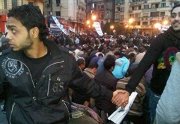
Middle East (MNN/SAT7) ―Egypt's Muslim Brotherhood has called for a nationwide peaceful demonstration today to condemn insults to Prophet Mohammad from an amateurish film.

The announcement followed the attacks against U.S. Embassies in Libya and Egypt. Demonstrators also attacked the U.S. embassies in Yemen and Egypt (again) on Thursday. The spreading turmoil was a response to a film they consider blasphemous to Islam.

An investigation has begun into the events surrounding Tuesday's attack on the U.S. embassy in Libya, which resulted in the death of the U.S. ambassador Christopher Stevens and three other Americans. Eight Libyans were injured in that violence.

Protests also erupted in Iraq and Iran, as students in Tehran protested outside the Swiss embassy. In Bangladesh, Islamists tried to march on the U.S. embassy in Dhaka but were turned back by police. There were also reported protests at U.S. missions in Tunisia, Sudan, and Morocco.

The film may have been the vehicle used to stir up tensions, especially in light of the September 11 anniversary. SAT-7 CEOTerry Ascott says, "That reaction is inflamed by people who have a vested interest, like Al Qaeda, in exploiting people's anger at the West. It's a bit of a coincidence, one might say, that this flared up all within hours in Egypt, in Yemen, in Libya, in other places. It seems somewhat orchestrated."

Security was being increased at U.S. diplomatic stations around the globe, but what about ministries? "There have been specific threats against, for example, Egyptian Christians in Yemen and churches and Christians, in general...anyone who is a ‘cross worshipper,' as they say in the street."

Ascott goes on to say, "It's not the people that are making the movies or the cartoons in the Western world that pay the price for their enjoyment of free speech. It is the Christians in the Middle East that bear the brunt of the reaction that inevitably comes."

Throughout the Middle East and North Africa, it's a common belief that Christianity is a Western religion. Therefore, when trouble occurs similar to what's happened this week, entities with Western connections are targeted, and that includes ministries.

SAT-7 has an office in Cairo. When asked if there was a contingency plan for the staff, Ascott first said, "We do have heavy fences and cameras and security people around our building, but it certainly would not be enough if a mob decided to attack the building."

However, Ascott went on to explain that they're also being vigilant. "If there are signs of trouble, we would try to evacuate our staff from the premises before that got out of hand. But we don't have armed guards on the building to protect it from a riot."

Still, the staff is putting together programs that will address much of what has happened this week in the region.

Interestingly, the SAT-7 ARABIC team had already begun a series of programs called Forbidden, which address issues relevant to North Africa. Presenter Emad D. is a Tunisian poet and pastor. The inspiration for the program comes from John 11:35, "Jesus wept." Emad wants to show the Arab world that Jesus cares about them and weeps over them.

Emad hopes to use testimonies to demonstrate that the Church is spreading all over the world, and longs to see equality between people of all religions--with more respect for new believers. Ascott states that the program aims to overcome negative perceptions of the Church.

Another team is doing a live show on Saturday. Ascott says, "In the situation with the Middle East where there are so many agendas, so many tensions between so many different groups, we're trying to bring reconciliation through better understanding, advocacy of forgiveness, and so on--some of the things that are unique in the Christian Gospel."

Pray wisdom for the production teams. Pray for safety for the staff. Pray for peace to return. Pray for open hearts.


Tuesday, August 30, 2011

Church Leaders in Bangladesh Beaten at Police Station


Christians filed complaint, protested over seizure of house by ruling party activists.
Special to Compass Direct News
 
LOS ANGELES, August 29 (Compass Direct News) – Hundreds of Christians this month protested the hitting of two church leaders at a police station in southern Bangladesh after a Christian reported a local ruling party activist had occupied his house.
 
Bablu Biswas of Christianpara village in Gopalganj district, 62 miles (100 kilometers) south of Dhaka, had filed a police complaint accusing the son of the ruling Bangladesh Awami League (AL) district president of illegally occupying his house. Biswas said Sohel Miah, son of Gopalganj district AL leader Raja Miah Batu, seized his house on July 23. Miah is also active in the AL.
 
A police official of Gopalganj called the Christians and the ruling party leaders, who are Muslims, to the police station to resolve the complaint. Onukul Biswas, pastor of St. Mothuranath Assembly of God Church, was present at the police station meeting.
 
“The attitude of the political leaders was that we should accept everything, whatever they said – if we argued anything, they got angry,” Pastor Biswas said. “At one point in the talks, Miah thrust at one of our older church leaders. He pushed him several times very inhumanly and landed a punch on his nose in front of everyone.”
 
The Christians left the police station in protest of the assault on their elderly pastor, said Pastor Biswas, but while they were still in the police station compound, Miah and his supporters beat Mitul Bala, a Church of the Nazarene of Bangladesh elder, for protesting their hostility.
 
“The beating of two pastors brought disgrace upon the whole Christian community,” said Biswas.
 
Christians across Gopalganj district quickly mobilized, with 250 to 300 gathering to demonstrate against the treatment of the Christians at the police station. The demonstrators submitted a letter of protest to the district administration chief, or deputy commissioner, who promised to resolve the dispute within a week. The Christians also demonstrated at the district press club.
 
House Grabbing
Bablu Biswas told Compass that a group of Muslims headed by Miah had ordered him to leave his home, falsely telling him that they had bought it.
 
“They warned me to leave my house for the first time on June 25,” he said. “Again they threatened me on July 17, that I must leave the house or they would evict me. They gave a false reason to evict me – they said they had bought the house. Forcibly they occupied my house on July 23.”
 
The 35-year-old Biswas said he fled the house when they issued the July 17 threat to evict him. He filed a complaint of house seizure at the nearby police station, and when police called both sides to the station on Aug. 2, about a dozen Christians arrived.
 
Among them was the Rev. Samuel S. Bala, president of Gopalganj Christian Fellowship and one of the organizers of the demonstration, who told Compass that the violence showed flagrant disregard for the Christian community.
 
“If they can beat us in the police station, they can do anything on us – where will we get protection?” Bala said. “We held a protest rally because a police station is such a place where everybody is equal in the eyes of the law. But the son of the ruling party leader beat one of our pastors by wielding political power.”
 
Police arrested Miah on Aug. 2, but he was released the same day, area Christians said. Police and district administrative officials assured the demonstrators that they would recover the land within three days.
 
“Police and other government officials recovered the house within three days, but the son of the political leader remained unpunished,” Bala said.
 
Church Land Grabbing
Miah’s father, Batu, had seized a piece of St. Mothuranath church land around 20 to 25 years ago, area Christians said.
 
The Rev. Joseph Pandey, who was among those assaulted on Aug. 2, told Compass that the illegal occupations of the church land and house, along with other demonstrations of hostility by Muslim political leaders, threatened social and religious harmony in the area.
 
“Nobody sold the land to Raja Miah Batu – he occupied the land forcefully,” Pandey said. “No one is even allowed to sell the church’s land. Only the chairman of the Assembly of God denomination can sell it for the sake of the church.”
 
Sheikh Yousuf Harun, deputy commissioner of Gopalganj district, told Compass that officials had taken measures to quickly resolve the dispute.
 
“The land allegedly occupied by the ruling party leader belongs to the church – it is the church’s land,” Harun said. “The son of the AL leader did not buy the house of the Christian villager. Now there is no dispute over the church land and the Christian house.”
 
Bangladesh is the world’s third-largest Muslim-majority nation, with Muslims making up 89 percent of its population of 164.4 million, according to Operation World. Christians are less than 1 percent of the total, and Hindus 9 percent.
 
 
END
 
**********
Copyright 2011 Compass Direct News

Monday, July 11, 2011

Bangladeshi Christians Cleared of Wrongdoing Face New Charge

Police claim foreign doctor’s Christian literature offended Muslims.
Special to Compass Direct News
 Nural Islam photo courtesy Compass Direct News
LOS ANGELES, July 11 (Compass Direct News) – Police in Bangladesh have charged two Christians and their four Muslim friends with “hurting religious sensibility” just three days after they were cleared of any wrongdoing.
The accused will appear in court tomorrow to face the charges, which were filed against them three days after they were exonerated on April 10. They had been arrested on March 24 in Damurhuda, Chuadanga district, some 210 kilometers (126 miles) northwest of Dhaka, under Section 54 of the penal code, which provides a special power to police to arrest anyone on any suspicion. They were released on bail three days later.
Mannan Mridha, a pastor in the Way of Peace movement of 490 house churches in northwest Bangladesh, told Compass that the second case was filed only to stop Christian activities in the area.
“The case was also filed simply to harass the Christians,” Mridha said.
Carpas Danga camp police from the Damurhuda police station on April 13 charged the men with “hurting religious feelings” of area Muslims after a foreign doctor offered Bibles to patients at a health camp where the accused were volunteering. The accused men, including the four Muslims previously misidentified as Christians, appeared in district court on June 1.
A group of Christians under the direction of the Way of Peace movement had arranged a two-day health camp offering free treatment to poor villagers in Damurhuda earlier this year. Around 100 villagers attended the camp for free treatment on March 23, and a Japanese doctor treated them. The next day, more than 400 people were supposed to attend the health camp.
The Japanese volunteer doctor offered Christian leaflets and Bibles to the patients, telling them they were under no obligation to take the literature, sources said. Area Muslims stirred up residents against the doctor, according to police, and the angry villagers had police arrest the Christians. The foreign doctor was not named in either of the cases filed against the six nationals.
“These books seriously hurt the religious sentiments among the Muslims,” police charged in the second case. “After thorough investigation, we found it true that the accused were engaged in the activities of hurting religious sentiments.”
One of the accused, 30-year-old Christian convert Nurul Islam, told Compass that the Japanese doctor had discussed with villagers the devastation of the earthquake and the tsunami that ripped through northeastern Japan on March 11, showing some pictures of its destruction published in newspapers.
“He also talked about life, how transient it is, and also about eternal life in the after-world,” said Islam. “He recited some verses from the Bible about eternal life and how to achieve it. Then he told the people that he had Bibles, so anyone could take them if they liked.”
The volunteers at the clinic said they did not expect the doctor to offer this spiritual message.
“In fact, we were not informed and did not know that the Japanese doctor would distribute Bible among the patients,” Islam said. “He did it spontaneously.”
The Christians had obtained permission from the government to operate the free health camp. They had urged officials and police to provide protection to the doctor, as Maoist insurgents in western Bangladesh are known to kill and kidnap area residents. The government provided two policemen.
“The police investigation alleged that we were propagating Christianity under the cover of free treatment,” Islam said. “If we had that kind of motive, we would not seek permission from the government and police. We would have done it secretly.”
Villagers were not upset about the Bible distribution, he said.
“At that time a Cricket World Cup match was going on,” he said. “So there was a huge hue and cry in a nearby club over the afternoon match.”
Suddenly four policemen appeared in the health camp out of nowhere, he said.
“Police told us, ‘For security reasons, you need to come with us. If you stay here, you will be in trouble,’” Islam said. “Police also said, ‘We will let you free in the nearby Carpas Danga police camp.’ But later they took us to the Damurhuda police station.”
At the police station, officers confiscated their watches, mobile phones, belts, glasses and money, he said.
“Later police went to the hotel room that we had booked for guests coming from Dhaka,” Islam said. “They went there and rummaged through everything. We had medicines there, which we did not find after the police search. Police arrested two Muslims from that hotel. In total, the role of police was very mysterious.”
Way of Peace’s Mridha said the police’s witnesses were less than credible.
“In this case, police used three witnesses who are drug peddlers and smugglers living near the Indian border,” he said. “Police did not use any good villager as a witness. Police should improve the law-and-order situation of the country, rather than put our lives in trouble.”
Contradiction

Under Section 54, police are required to submit a primary investigation report within 15 days of beginning prosecution, sources said.
A judge asked police to submit a report against the Christians about their accusations, but officers were unable to submit anything, they said. Receiving no convincing answers from police, the judge discharged all the accused Christians on April 10.  

The second case filed by police Sub-inspector Jubaet Khan, however, claims, “The accused have done recognizable offense, and they were sent to the honorable court under section 54 of the penal code, and a report was submitted to the court.”

The Bangladeshi constitution provides for people to propagate their religion subject to law, but authorities and communities often objected to efforts to convert people from Islam, according to the U.S. Department of State’s 2010 International Religious Freedom report.
Bangladesh is the world’s third-largest Muslim-majority nation, with Muslims making up 89 percent of its population of 164.4 million, according to Operation World. Christians are less than 1 percent of the total, and Hindus 9 percent


Copyright 2011 Compass Direct News