Showing posts with label yemen. Show all posts

Saturday, January 12, 2013

Southern Baptist 32-year legacy lives on

Physician Martha Myers, hospital administrator Bill Koehn,
 and purchasing manager Kathy Gariety were killed Dec. 30, 2002
when a militant gunman burst into a room where they were holding an
early-morning meeting. He opened fire on them with a semiautomatic pistol,
 then moved to another room where he shot pharmacist Don Caswell twice.
 (Image courtesy of IMB)

Yemen (MNN/IMB) ― It's been just over decade since three Southern Baptist hospital workers were shot and killed in Yemen, and the Southern Baptist International Mission Board says one of the victim's passions is passing on to the next generation.

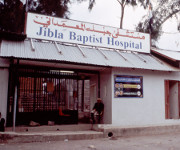
On December 30, 2002, a Muslim militant entered Jibla Baptist Hospital and shot Bill Koehn, Martha Myers, Kathy Gariety and Don Caswell. Myers died almost instantly, while hospital workers did their best to save Gariety and Koehn. Only Caswell survived.

Marty Koehn made it to the hospital before her husband passed away, and she was able to spend a few precious moments with Bill before he went to be with the Lord. After his passing, Marty realized there were many decisions to be made: would she stay in Yemen? Would she return to the United States?

Within 30 minutes of becoming a widow, she sensed an answer.

"Out of the blue, the Lord brought to mind Elisabeth Elliot's story," says Koehn. "I had never read the book, and of course the movie wasn't out at that point, but I had heard of [Elliot's] story, and the Lord reminded me of it.

"To me, it was His clear indication that I was supposed to go back to Yemen."

After going home to the United States to grieve and spend time with her two daughters, Koehn returned to Yemen -- a land where she and Bill had served for nearly 30 years. Upon her return, Koehn also found a role in which to serve: purchasing agent and warehouse manager for the hospital.

It had previously been filled by Kathy Gariety.

"To me, this was another indication God wanted me to go back," Koehn says. "That was the one job I could do because it required someone who knew both English and Arabic, and it was a nonmedical position.

"[The Lord] was preparing everything."
On December 31, 2002 -- the day after the shootings -- Jibla Baptist Hospital was transferred from Southern Baptist ownership to the Yemeni government. The government assumed responsibility of the medical facility in 2003 and continued to employ Southern Baptist workers until its closing in May 2007. Koehn chose this time to retire in Texas to be near family.

Bill and Marty's legacy is living on in a granddaughter who is considering the mission field. She had visited her grandparents in Yemen as a child and seen their ministry firsthand.

Pray that the Lord would guide her steps.

Yemen is in the Top 10 on the Open Doors USA World Watch List, a ranking of 50 countries where persecution of Christians for religious reasons is worst. Many Christians have been abducted, physically harmed and killed, and churches have been damaged or destroyed. Tens of thousands of Christians have fled Yemen.

Friday, September 14, 2012

Turmoil in the Middle East spreads

(File photos courtesy SAT-7)

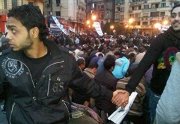
Middle East (MNN/SAT7) ―Egypt's Muslim Brotherhood has called for a nationwide peaceful demonstration today to condemn insults to Prophet Mohammad from an amateurish film.

The announcement followed the attacks against U.S. Embassies in Libya and Egypt. Demonstrators also attacked the U.S. embassies in Yemen and Egypt (again) on Thursday. The spreading turmoil was a response to a film they consider blasphemous to Islam.

An investigation has begun into the events surrounding Tuesday's attack on the U.S. embassy in Libya, which resulted in the death of the U.S. ambassador Christopher Stevens and three other Americans. Eight Libyans were injured in that violence.

Protests also erupted in Iraq and Iran, as students in Tehran protested outside the Swiss embassy. In Bangladesh, Islamists tried to march on the U.S. embassy in Dhaka but were turned back by police. There were also reported protests at U.S. missions in Tunisia, Sudan, and Morocco.

The film may have been the vehicle used to stir up tensions, especially in light of the September 11 anniversary. SAT-7 CEOTerry Ascott says, "That reaction is inflamed by people who have a vested interest, like Al Qaeda, in exploiting people's anger at the West. It's a bit of a coincidence, one might say, that this flared up all within hours in Egypt, in Yemen, in Libya, in other places. It seems somewhat orchestrated."

Security was being increased at U.S. diplomatic stations around the globe, but what about ministries? "There have been specific threats against, for example, Egyptian Christians in Yemen and churches and Christians, in general...anyone who is a ‘cross worshipper,' as they say in the street."

Ascott goes on to say, "It's not the people that are making the movies or the cartoons in the Western world that pay the price for their enjoyment of free speech. It is the Christians in the Middle East that bear the brunt of the reaction that inevitably comes."

Throughout the Middle East and North Africa, it's a common belief that Christianity is a Western religion. Therefore, when trouble occurs similar to what's happened this week, entities with Western connections are targeted, and that includes ministries.

SAT-7 has an office in Cairo. When asked if there was a contingency plan for the staff, Ascott first said, "We do have heavy fences and cameras and security people around our building, but it certainly would not be enough if a mob decided to attack the building."

However, Ascott went on to explain that they're also being vigilant. "If there are signs of trouble, we would try to evacuate our staff from the premises before that got out of hand. But we don't have armed guards on the building to protect it from a riot."

Still, the staff is putting together programs that will address much of what has happened this week in the region.

Interestingly, the SAT-7 ARABIC team had already begun a series of programs called Forbidden, which address issues relevant to North Africa. Presenter Emad D. is a Tunisian poet and pastor. The inspiration for the program comes from John 11:35, "Jesus wept." Emad wants to show the Arab world that Jesus cares about them and weeps over them.

Emad hopes to use testimonies to demonstrate that the Church is spreading all over the world, and longs to see equality between people of all religions--with more respect for new believers. Ascott states that the program aims to overcome negative perceptions of the Church.

Another team is doing a live show on Saturday. Ascott says, "In the situation with the Middle East where there are so many agendas, so many tensions between so many different groups, we're trying to bring reconciliation through better understanding, advocacy of forgiveness, and so on--some of the things that are unique in the Christian Gospel."

Pray wisdom for the production teams. Pray for safety for the staff. Pray for peace to return. Pray for open hearts.


Monday, November 28, 2011

Yemen power transition tainted by ‘immunity’ deal

A power-transfer agreement reportedly granting Yemeni President Ali Abdullah Saleh and others immunity from prosecution in exchange for leaving office, deals a serious blow to victims of human rights violations, critics say.
While only part of the agreement, which was signed at the end of last week, has been made public, it is widely believed to offer the President and some of those serving under him immunity from facing criminal investigations and prosecutions for a string of serious abuses.
It is based on a deal originally brokered by the Gulf Cooperation Council (GCC) and comes after negotiations facilitated by a UN envoy.
“Granting immunity as part of the transition agreement would deliver a hammer blow to accountability for human rights violations by blocking the investigation or prosecution of high-ranking officials,” commented Philip Luther, Amnesty International’s Acting Director for the Middle East and North Africa.
“Immunity leads to impunity. It denies justice and deprives victims of the truth and full reparations,” he added.
Under international law, including the Convention against Torture and Other Cruel, Inhuman or Degrading Treatment or Punishment, Yemen is obliged to investigate and, where there is sufficient admissible evidence, to prosecute anyone suspected of such crimes.
President Saleh, who has been in power for 33 years, has hinted at stepping down several times in the past months, only to change course later.
Under the GCC transition deal, Ali Abdullah Saleh will retain the title of president until elections take place within 90 days, but will hand over some presidential powers to Vice-President Abd Rabbu Mansour Hadi, enabling him to implement the agreement. A member of the opposition will head a government of national reconciliation, with ministerial posts divided up among political parties. The new government would remain in power for an interim period of two years.
The deal was welcomed by international governments, but sparked protest from some Yemenis who oppose it, calling for Saleh and other officials to stand trial for their role in abuses.
Armed Saleh supporters opened fire on a group of unarmed protesters marching against the decision from the protest camp known as Change Square in Sana’a on 24 November 2011.
At least five were killed by gunshot wounds to the head, neck and chest, and dozens more were wounded. Security forces were reported to have been spotted but did not attempt to intervene to stop the attacks.
Over the past 10 months, more than 200 people have been killed and thousands injured as security forces and armed Saleh supporters attempted to quell mostly peaceful pro-reform protests in Sana’a and elsewhere.
Amnesty International and the UN Office of the High Commissioner for Human Rights have called for an independent, international investigation into Yemen’s ongoing human rights violations.
Despite a fact-finding mission to Yemen by the UN Office of the High Commissioner for Human Rights in July finding evidence of serious crimes under international law, the UN Security Council last month issued a resolution calling for the signature and implementation of an agreement. The resolution was based on the GCC’s proposed transition deal, which was believed to contain an immunity provision.
The Security Council resolution also underlined the need for a comprehensive, independent and impartial investigation consistent with international standards into alleged human rights abuses and violations, with a view to avoiding impunity and ensuring full accountability.
“By lending their support to the transition deal, it appears that UN officials have allowed wiggle room for serious human rights violators to go unpunished in Yemen and violated the UN Secretary General’s directive that prohibits brokering peace agreements which contain immunity clauses,” said Amnesty's Philip Luther.
“The only way to ensure accountability is to carry out an independent, international investigation into the allegations of serious crimes under international law, regardless of the rank or affiliation of those responsible.
“Any such investigation should have the ability to refer cases to Yemeni prosecuting authorities so that suspects can face trial wherever there is sufficient admissible evidence,” he concluded.
[Ekk/3]

Thursday, November 10, 2011

Yemeni women burn veils in protest for freedom

Yemen (MNN/IMB) ― In the last couple of weeks, Yemeni women in search of more rights have set fire to their veils in protest.

"Here we burn our makrama (veils) in front of the world to witness the bloody massacres carried out by the tyrant Saleh," read leaflets handed out by women present at a recent demonstration, according to The Associated Press.

It's a traditional Bedouin tribal cry for help from the women of a nation that has faded from headlines. But International Mission Board workers are holding out hope that these protests will be what leads these women to Christ.

IMB reports that Yemeni President Ali Abdullah Saleh has long said he would step down from his 33-year rule, but he doesn't seem to be going down without a fight. In late September, government gunfire killed dozens of demonstrators, and rockets hit a protest camp. The bloodshed hasn't slowed down in October.

And women have been right in the middle of it all, begging for democracy and freedom, says IMB. One Yemeni woman, Tawakkul Karman, was even named as a joint winner of this year's Nobel Peace Prize for her activism for women's rights.

"What do they want? Well, what do we all want? We want lives filled with joy. We want the freedom to pursue the things we enjoy, and we want to experience the kind of love found only in a family," said Beth Judson, a Christian worker who spent some time in Yemen in the past. "This is what they want as well."

The theme of their dreams, however, is starting to change with a new generation, Judson said. "More recently, I think there has been a shift taking place in what the younger generation of girls wants out of life. Many of their mothers only ever thought about getting married and having sons. Though this is still very important to many of the high school and college-age crowd, they are also starting to explore new and perhaps unconventional paths for their lives."

The average age for marrying is rising for women because they sometimes fear their husbands might keep them from going to college, she explained. "Most of the women who are protesting have at least some education and are lobbying for their own rights--a freedom that was once reserved only for men."

It's a yearning Judson prays will put them on a journey to finding freedom in Jesus Christ -- a permanent freedom they can't find in expanded civil rights or career opportunities. "My desire is that these women find the joy that they are searching for," said Judson. "The joy and satisfaction they seek comes only from being set free from the chains of sin and death and being robed with the righteousness of Christ."

It is a lasting joy and not a temporary one they seek, Judson said.

"A new government, or a degree from a well-respected university, or a job will not give them what they are looking for," she said "Only a relationship with their Maker--the One who loves them and created them for fellowship with Him--can fill them with the joy they seek."

Judson asked believers to pray for God to move among these women, and for believers to boldly share their faith.