Showing posts with label arab league. Show all posts

Wednesday, January 25, 2012

Syria's Assad to be left alone?

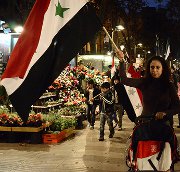
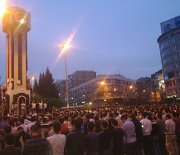
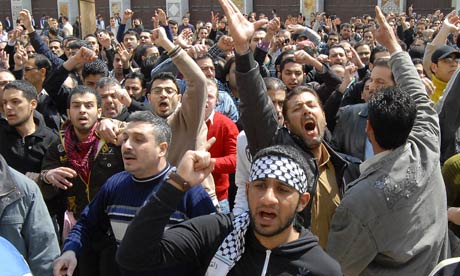
(Photos by PanARMENIAN Photo)
Syria (MNN) ― The Syrian government rejected the Arab League's call for President Assad's resignation, defending their brutal crackdown on rebels as an obligation. In response, Arab nations actually appear to be stepping down.


Gulf Arab states announced yesterday that they are withdrawing from the Arab League's observe mission in Syria, reports BBC News.

At this point, it seems unlikely that the Arab League or any individual Arab nation will try to step in again, says Tom Doyle, Middle East/Central Asia Director of E3Partners.

"[Because] Syria is such a strong Arab nation, I think the other Arab nations risk isolation from Syria. In that area, they all need each other," explains Doyle. "Eventually, probably what's going to happen is it will all be a lot of talk for nothing."

Months of talk have lifted the hopes of rebels in Syria, but those hopes are dying. "They feel forgotten. They expected a coalition of nations to come against the dictator, much like happened in Libya, and it hasn't happened." And Doyle says it likely won't.

The bloodbath has cost at least 5,000 lives in the last 10 months. It seems unlikely that any nation will step in unless it gets much worse, says Doyle. Essentially, it seems Assad will hold onto power unless forced out of it.
It's an interesting position for believers. Although Assad's regime has been violent, the government has laid off Christians as of late.

"Through this revolution, the pressure on believers has let up because I think the government has seen that the church, the believers, are not a threat--they're not trying to overthrow Assad," explains Doyle. "So the pressure that's normally been on them--which has been fairly intense in the last five years--has kind of lessened."

If a rebel-run government were to take over, things could get much worse for Christians. Unsure of what's to come, believers are taking advantage of this interim time to boldly preach the message of Christ.

"We've seen an upsurge in the Gospel. People are desperate; they're frustrated; they have lost a lot of hope. This is prime soil for the Gospel to just flourish." Seeds are being sown, and a harvest of both Alawites and Muslims is growing.

Above all things political, pray for the church in Syria. Pray that believers would continue to boldly proclaim the hope found only in Christ. Pray that Syrians would cling to this truth. 

Wednesday, January 4, 2012

Pressure heats up for Assad

(Cover photo by Saleem Homsi.
 Story photo by Teresa Forn.)

Syria (MNN) ― Despite an ongoing investigation thrusting members of the Arab League right into the heart of the fighting in Syria, violence has not let up.

The Arab League has been threatening Syrian president Bashar Assad for months now and is finally in Syria assessing the situation. Since members of the League have been in the volatile nation, fighting has not only continued, but the Arab Parliament has actually advised the League members to leave Syria for their own safety, according to BBC News.

Tom Doyle with E3 Partners has been providing updates on the Syrian conflict since it began in early 2011. Doyle says now, "It is bloody, and we keep getting reports from our E3 leaders in Syria that say some of the things happening in broad daylight in the middle of the streets are unspeakable."

The Local Coordination Committee, an umbrella group of activists, has reported that since December 21--less than two weeks ago, 390 people have been killed. The total death toll throughout the clashes between Assad's regime and civilian rebels has surpassed 5,000.

Despite the treacherous outlook, the international response to the violence is growing stronger by the second. French president Nicolas Sarkozy reportedly demanded that Assad step down in a statement he made yesterday. On Monday, Israeli Defense Ministrer Ehud Barak went as far as to say that Assad only had "a few weeks" left to control Syria, according to Agence France-Presse.

Even as violence continues, Doyle agrees that Assad cannot hold on much longer.

"There's a Sunni majority within the country, and they've always despised the whole Alawite control of the government. But I think it's all come down to that fight. And I really just don't know if Assad is going to be able to hang on through this.

There is so much international outcry, and if there's international assistance, I think his days are over."

The Alawites, an Islamic sect in Syria, make up a mere 20% of the nation, says Doyle. Assad's family is Alawite, but the majority of the population is made up of Sunni Muslims. Those facts combined with extreme international pressure could push Assad to boiling.

There can only be speculation as to what will happen then.

In the midst of the turmoil, E3 Partners has seen tremendous church growth. The ministry has repeatedly heard of Muslims knocking on the doors of Christians in the night, looking for someone who is not taking part in the violence. 

Muslims all across the Middle East are hungry for Truth, says Doyle, and many have already come to Christ underground.

Fervent prayer is needed in Syria. Pray for boldness for the church, for guidance and stability for the nation, and for heart change among the people. You can also get behind specific church leaders working in Syria at the E3 Partners Web site. 

Tuesday, November 29, 2011

Sanctions, suspension unlikely to mean change in Syria

(Photo by Syriana)

Syria (MNN) ― Amid a myriad of accusations against Syria has come a new label. The U.N. recently dubbed President Bashar al-Assad's behavior toward protesters as "crimes against humanity."

The BBC reports that the title was given for investigations claiming Assad had ordered the torture, sexual assault, and murder of citizens, including children.

The reports have come out just days after the Arab League suspended Syria and decided to move forward with sanctions. Assad has been called upon by a number of nations to stop his harsh tactics, or even to relinquish power.

Assad is undeniably under pressure, but it's hard to say if the pressure is making any difference at all.

"I think it's causing Bashar Assad to just put the pedal down and even go harder and faster to try to get this thing over, and get back his full control," observes Tom Doyle, the Middle East/Central Asia Director for E3Partners.

"I think with the Arab League suspending their membership, that's pretty significant. It's only happened two other times: recently with Libya with all the killing going on there, and then after Egypt made a peace treaty with Israel, their membership in the Arab League was suspended," notes Doyle. "This sends a signal. I don't think, in the end, it will do anything."

If in fact the pressure does get to Assad, however, Doyle fears the worst. Assad out of power leaves the door open for far worse fates.

"Believers now are very, very nervous about the changeover if it would come, just because it might be a worse group than Bashar Assad," explains Doyle. "There are some hard-line radical Muslim groups that are fighting him. If they get control, it will even be worse than it is right now."

Zooming out even further, if Assad does leave, Syria is not the only nation that will be affected. Hezbollah has promised a coup in Lebanon.

An anonymous source "close to Hezbollah" told news network al-Arabia that since Hezbollah and Assad are allies, Hezbollah will respond negatively in Beirut if Assad falls. The Jerusalem Post reports, "The source said that Hezbollah would seek to fortify itself in the nation's capital in order to defend itself against the threat posed by Israel, which may feel emboldened enough following the fall of Assad to launch an offensive against Hezbollah in Lebanon."

Hezbollah is expected to have the support of the Free Patriotic Movement behind them as they take even more control than they have now in Lebanon.

At that point, as differences shine brighter than ever between surrounding nations, says Doyle, "About the only unifying factor that could bring them together is a war with Israel. And I think if you look at Zechariah 12, it says that there is a regional war coming sometime."

The potential consequences of Assad's fall could be devastating. Thus, believers feel stuck between a rock and a hard place. If the dictator leaves, the nation could be taken over by radicals and even lead to war. If he stays, more could be killed. Assad is thought to be responsible for at least 3,500 deaths since protests began in the spring.

"Recently, talking with believers, they've felt less pressure [under Assad]. Because I think the government sees they're not a threat to the government," says Doyle, "many of the believers are thinking the best solution at this point is probably for Assad to stay, believe it or not."

As terrible as things have been for many under the current regime, the church has been thriving. Doyle says as Muslims watch Muslims turn on each other, they are coming to Christians for answers. Entire families are coming to Christ.
It's a catch 22 in Syria whether Assad stays or goes. Pray for strength for believers whatever happens, and for the church to continue to move forward. 

Tuesday, November 15, 2011

Jordan’s king calls on Syria’s President Assad to step down

King Abdullah’s comments came in an exclusive BBC interview

By Michael Ireland
Senior International Correspondent, ASSIST News Service


BEIRUT, LEBANON (ANS) -- Jordan's King Abdullah II has become the first Arab leader to openly say Syrian President Bashar al-Assad should stand down in the interest of his country.
King Abdullah of Jordan addresses the general debate at the 66th session of the United Nations General Assembly at United Nations headquarters in New York on September 21, 2011. (Photo credit: Jason Szenes / EPA
via msnbc website).
King Abdullah told the British Broadcasting Corporation (BBC) that if he were in Assad's position, he would make sure "whoever comes behind me has the ability to change the status quo."

In an exclusive interview with the BBC, King Abdullah urged President Assad to begin talks on an orderly transition of power.

The BBC reports that many Arab leaders have condemned the crackdown on months of protests in Syria. Dozens of deaths are reported in the latest unrest on Monday.

The BBC said both the Saudi and Qatari ambassadors left Damascus in protest at the repression. The Arab League voted on Saturday to suspend Syria's membership.

However, King Abdullah went further than other Arab leaders in his exclusive interview with BBC World News television.

"If Bashar has the interest of his country [at heart] he would step down, but he would also create an ability to reach out and start a new phase of Syrian political life," he said.

"That's the only way I would see it work and I don't think people are asking that question," he added.
King Abdullah warned there would be "more of the same" if whoever replaced President Assad did not change the status quo.

The BBC says Jordan, which borders Syria, has been increasingly critical of the crackdown on anti-government protesters.

The BBC stated that many Western powers have urged President Assad to stand down. Both the European Union (EU) and the US have said he has lost legitimacy but have ruled out military intervention.

The EU on Monday tightened sanctions on Syria, the BBC said, reporting that EU foreign ministers meeting in Brussels added 18 Syrian officials to a list of people affected by a travel ban and asset freeze.

The BBC said the ministers also approved moves to prevent Syria getting funds from the European Investment Bank.

French Foreign Minister Alain Juppe said he hoped the UN would finally impose its own sanctions on Syria. Russia and China last month vetoed a Western-sponsored resolution condemning Damascus. The BBC also reported that earlier on Monday, Syrian Foreign Minister Walid al-Muallem reacted defiantly to the Arab League's suspension. He said the decision was illegal, and vowed to overcome "conspiracies" against Damascus.

The Arab League is set to hold another meeting to discuss Syria on Wednesday.

The BBC said Russia on Monday condemned the suspension. "Someone really does not want the Syrians to agree among themselves," Foreign Minister Sergei Lavrov said in Moscow.

In the latest Syrian violence, the Local Co-ordination Committees -- a network of opponents to President Assad's rule -- said 40 people had been killed on Monday, including 20 in the restive southern province of Deraa.

There are also reports that about 20 members of the security forces were killed in a clash with defectors from the Syrian army, the BBC said.

The BBC reported that such claims are impossible to verify as the Syrian government has severely restricted access for foreign journalists.

The BBC also explained that the UN says more than 3,500 people have died since the start of the protests in March while the Syrian authorities blame the violence on terrorists.

Key Quotes from King Abdullah’s BBC Interview

On Assad stepping down:

"If I were in his shoes, I would step down. If it was me, I would step down and make sure whoever comes behind me has the ability to change the status quo that we're seeing. Again, I don't think the system allows for that, so if Bashar has the interests of his country, he would step down but he would also create an ability to reach out and start a new phase of Syrian political life."

On a successor:

"This is the first time where I think most leaders in the Middle East don't have a clear answer on Syria. If Bashar was to step down, he needs to step down with changing the way the system deals with its people, so if he was to say 'I'm going to step down but let's have new elections, let's reach out to the people, let's get this as a national dialogue', then it would work. But if you're just going to remove one person and put another person in, I think that you'll continue to see more of the same."

On who's in charge:

"If you understand Syrian politics, he's in front, and the image of Syria is President Bashar. Having said that, both his brother and brother-in-law are very active on military side. So at the end of the day, like all leaders in Middle East, we're in the driving seat, we have to shoulder the responsibility for what happens in that country. But I don't think it is a one-man show, I think there is a team there, and again there is a system that has expectations of whoever is in the driver seat unfortunately."

On violence:

"Whenever you exert violence on your own people it is never going to end well, and so as far as I am concerned, yes there will be an expiration date, but again it is almost impossible for anybody to predict if it would be six weeks, six months or six years."

On reform:

"I honestly believe that he has reform in his blood. The vision that he had for Syria the times that I met him was very encouraging. I think the challenge is does the system allow for reform? So even, as you said, if Bashar was not on the scene, if the regime brings in someone else, does that person get it and realise the world has changed? And that is where I have my doubts."

On attempts at dialogue:

"Well I have spoken to him [Bashar al-Assad] twice earlier this year expressing our frustration and concerns about what was going on in Syria... I even sent the chief of the Royal Court in the late spring to see him again to see if we can't work together in bringing the violence down in Syria. And it became very clear to me that they were not interested in dialogue with Jordan or a lot of other countries unfortunately."

On Middle East politics:

"If Syria is kept in isolation, you are going to continue to see what is going on pretty much the same. However there are other forces at play, there is still the Arab peace proposal between the Israelis and the Palestinians. You have the Arab Spring in general. Recently we have maybe some hype moved on the Iranian portfolio because of the nuclear issue. The Turks are taking more aggressive stands in the north. What's going to happen in Lebanon? As you well know the Middle East is a mosaic of things and I think the problems that are challenging leaders in the Middle East is if there is life after Bashar what is that? And I think a lot of people are concerned because the unknown is scaring them more than the known."

In analysis of the Syrian conflict on the BBC website, Lyse Doucet of BBC News says that King Abdullah's remarks, coupled with the Arab League's decision to suspend Damascus, mark a turning point in the Arab world's approach to Syria.

Doucet writes: “But Jordan's monarch was emphatic that President Assad stepping down was not enough. His call to the Syrian leader was about changing a ‘system.’ He admitted that no-one was clear how to do that, and the Syrian regime still believed it was ‘in a fairly comfortable position.’

"King Abdullah, like many others, also emphasized there was great concern about ‘life after Bashar.’ He warned that any outside intervention in Syria would open ‘Pandora's box.’
“The relationship between two Arab leaders, seen as a new generation when they took over from their fathers, has been under growing strain.

"But King Abdullah said he still believed the Syrian leader had ‘reform in his blood.’ He had reached out to him earlier this year, even if, as he admitted, Jordan was not ‘by any means... a perfect story.’"

Timeline of Growing Foreign Pressure on Syria:

June 10: Turkish PM condemns the "savagery" of the response to the unrest
July 19: Qatar closes its embassy in Damascus after an attack by Assad loyalists
August 8: Saudi Arabia condemns crackdown and recalls its envoy in Damascus
August 10: US imposes new sanctions on Syrian telecom companies and banks
August 18: US, UK, Germany and France call on President Assad to step down; US imposes full ban on oil imports
November 12: Arab League suspends Syria from the organization
November 14: Jordanian king openly urges Assad to go; EU tightens sanctions

** Michael Ireland is the Senior International Correspondent for ANS. He is an international British freelance journalist who was formerly a reporter with a London (United Kingdom) newspaper and has been a frequent contributor to UCB UK, a British Christian radio station. While in the UK, Michael traveled to Canada and the United States, Albania,Yugoslavia, Holland, Germany,and Czechoslovakia. He has reported for ANS from Jamaica, Mexico, Nicaragua, Israel, Jordan, China,and Russia. Michael's volunteer involvement with ASSIST News Service is a sponsored ministry department -- 'Michael Ireland Media Missionary' (MIMM) -- of A.C.T. International of P.O.Box 1649, Brentwood, TN 37024-1649, at: Artists in Christian Testimony (A.C.T.) International where you can make a donation online under 'Donate' tab, then look for 'Michael Ireland Media Missionary' under 'Donation Category' to support his stated mission of 'Truth Through Christian Journalism.' Michael is a member in good standing of the National Writers Union, Society of Professional Journalists, Religion Newswriters Association, Evangelical Press Association and International Press Association. If you have a news or feature story idea for Michael, please contact him at: ANS Senior International Reporter

** You may republish this story with proper attribution.
UN must follow Syria's Arab League suspension with action

The Arab League's decision to suspend Syria should spur the UN Security Council into action over its abuses, human rights campaigners say.
At an emergency meeting in Cairo today, 18 out of 22 member states voted in favour of suspending Syria's membership of the regional organisation with effect from Wednesday if the government continued to breach the terms of the Arab League's action plan.
"This decision sends a clear signal from the Arab League that the gross human rights violations that continue to be committed against mainly peaceful protesters in Syria must stop," said Philip Luther, Amnesty International's Middle East and North Africa Director.
"Now that the Arab League has taken decisive action, it is time for the UN Security Council to finally step up to the plate and deliver an effective international response to Syria's human rights crisis."
"The question is whether those countries who have been blocking effective international action on Syria - in particular Russia and China - will recognise how isolated they have become by giving support to a Syrian regime which Amnesty International considers to have been committing crimes against humanity."
Amnesty has called on the UN Security Council to refer the situation in Syria to the International Criminal Court, impose an arms embargo, and freeze the assets of President Bashar al-Assad and his top associates which are held abroad.
On 5 October 2011, Russia and China used their vetoes to block the passing of a UN Security Council resolution which condemned Syria's crackdown on protesters and left open the possibility of sanctions.
More than 100 people are reported to have been killed since Syria announced last week that it would abide by the action plan it agreed with the Arab League on 30 October. The majority of those killed appear to have been unarmed protesters and bystanders shot by the security forces and army.
[Ekk/3]