Showing posts with label christian persecution. Show all posts

Thursday, September 13, 2012

Youcef Nadarkhani and Rimsha Masih

-- Two Christian prisoners walk 'free'

By Elizabeth Kendal
Religious Liberty Prayer Bulletin (RLPB) 176 
Special to ASSIST News Service

AUSTRALIA (ANS) -- Over the weekend of 8-9 September two persecuted, imprisoned and much-prayed-for Christians -- Pastor Youcef Nadarkhani (34) of Iran and Rimsha Masih (14) of Pakistan -- walked free from their cells into the warm embrace of family. While we praise and thank the LORD for granting these blessings, we must recognise that these battles are not over. We must persist in prayer.
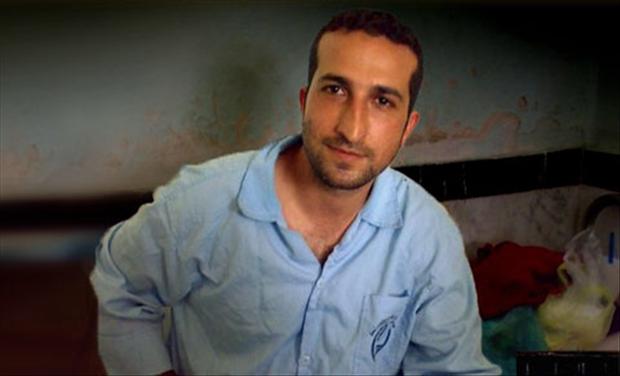
PASTOR YOUCEF NADARKHANI (IRAN)

On Saturday 8 September, after more than 1000 days in jail, Youcef Nadarkhani -- the sorely persecuted pastor who repeatedly refused to renounce his LORD -- emerged a free man, unbroken. The court acquitted Nadarkhani of apostasy, the charge for which he had been sentenced to death. According to Mohammad-Ali Dadkhah, Nadarkhani's lawyer, the court 'finally accepted our argument' that Iran's penal code did not 'criminalise apostasy' (Financial Times, 9 Sep). However, the court did find Nadarkhani guilty of 'evangelising Muslims'. For this 'crime' he was sentenced to three years imprisonment but granted time served and released.

While we rejoice that Pastor Youcef is out of jail, enjoying the fellowship of believers and the joyful, tender warmth of his wife and sons, we must remember that Nadarkhani's life might be more at risk now than ever. Iran's penal code might not criminalise apostasy but Islamic Sharia law does. Furthermore, as this prayer mini stry previously cautioned in RLPB 173, 'by launching a new trial with unprovable accusations [extortion and banditry], the regime may be seeking to "wash its hands" publicly of Nadarkhani and release him to the Islamists and secret police while declaring itself "innocent of this man's blood" (after the manner of Pontius Pilate in Matthew 27:24), as has happened before in Iran.' Furthermore, a second conviction of 'evangelising Muslims' would doubtless be punished more severely than the first. We must also remember that numerous Iranian Christians remain in prison, including Pastor Behnam Irani (41; married, with two children) who is gravely ill.

RIMSHA MASIH (PAKISTAN)

Rimsha Masih (14) was granted bail on 7 September but could not leave prison until adequate security was arranged. On Sunday 9 September she was transported in a bulletproof armoured vehicle to a helicopter that flew her to a secret location where she should be safe from the radicalised Muslim mobs that demand her death. 

Rimsha will face court again on Sunday 16 September and should be acquitted. Having been accused of blasphemy, Rimsha in reality is not safe anywhere in Pakistan -- her innocence is irrelevant! Unless the family is removed to a safe-haven in the West, she will eventually be killed -- probably sooner rather than later.

Whilst Rimsha's plight is terrible, what it says about the Pakistani society in which Christians have to live is far worse. And because the authorities have been able to turn this case into one about age and mental capacity (Rimsha is a mentally impaired juvenile) and a local imam has been accused of evidence-tampering, they have been able to whitewash the whole crisis completely so that it is no longer about the blasphemy law and endemic religious hatred at all. The danger is, that with the next crisis waiting in the wings, the real issues are not being addressed. A few voices of protest and disgus t are being raised, warning that Pakistan will be torn apart unless Wahhabi Saudi Arabian, Sunni fundamentalist ideology is countered. However, political courage is in short supply.

While we rejoice that Rimsha is out of jail and back in the comforting arms of her loving parents, we must resist the temptation to cry 'peace, peace' when there is no peace! At this stage, nothing has changed in Pakistan.

Religious Liberty Monitoring, 5 Sep 2012]

PLEASE PRAY SPECIFICALLY THAT THE LORD WILL --
  • intervene in Iran and (as in RLPB 128) 'redeem the suffering of Iran's Church, so that this persecution will actually have the opposite effect to what is intended. (Habakkuk 2:14)'
  • intervene i n Pakistan and (as in RLPB 173) 'redeem all this appalling suffering, and use it to shame and awaken Pakistani Muslims to the ugliness that has engulfed them, softening their hearts to the Good News so that they and even their whole communities can be radically transformed. (Isaiah 2:2-4)'
'Those who go out weeping, carrying seed to sow, will return with songs of joy, carrying sheaves with them.' (Psalm 126:6 TNIV)
  • be a strong shield and fortress around Youcef Nadarkhani and Rimsha Masih as well as all their family members; may angels guard them, and may those who seek to kill them be frustrated and ashamed. (Isaiah 26:1-6 and Psalm 141:8-10)

Christians in Egypt, Libya, Other Countries Could Face Increased Persecution

Coptic Christians hold up cross in the midst of protest.

SANTA ANA, Calif., Sept. 12, 2012 /Christian Newswire/ -- The Tuesday attacks on U.S. embassies in Libya and Egypt could have severe consequences for already marginalized Christians in the Middle East and northern Africa.

The violence, including the death of four American embassy staff members in Benghazi, Libya, was allegedly sparked by a film produced in the U.S. that insulted the Prophet Mohammad.

"It illustrates how hot the fuel is that one spark ignites it so suddenly," says Open Doors spokesman Michael Wood. "At some point we heard that people were protesting because of a film not even knowing what movie this was all about. And as was the case with the publishing of the Danish cartoon several years ago, the movie has been on the Internet several months.

"But it is the unpredictable momentum that suddenly creates a wave of protests and anger. Many of the Muslim fanatics link the U.S. with Christianity. So that puts believers in these hot spots such as Libya and Egypt directly in the line of fire."

Angry protests over the film have already spread in the Middle East with new demonstrations reported late today in Tunisia, Morocco and Sudan. Egypt's powerful Muslim Brotherhood on Wednesday called for nationwide protests on Friday.

Wood adds that Christians in Egypt, who compose 10 percent of the population, and the small community of believers in Libya need our prayers now more than ever before. "Pray that the violence over this film does not spread to other countries...that is the No. 1 prayer request," he says.

An estimated 100 million Christians worldwide suffer interrogation, arrest and even death for their faith in Christ, with millions more facing discrimination and alienation. Open Doors supports and strengthens believers in the world's most difficult areas through Bible and Christian literature distribution, leadership training and assistance, Christian community development, prayer and presence ministry and advocacy on behalf of suffering believers. To partner with Open Doors USA, call toll free at 888-5-BIBLE-5 (888-524-2535) or go to our Website atwww.OpenDoorsUSA.org.
Christian Newswire

Tuesday, September 11, 2012

Apostasy, Fitna and abuse of Interpol

Saudi Arabia does not allow the public
 practice of any un-Islamic religion
If a 2 September report in the Saudi Gazette is true, then it may well be the first time Interpol as been abused by an Islamic State for the purpose of retrieving an apostate. 

------------------------------------------

APOSTASY

On 28 July 2012, the Saudi Gazette reported: "A Saudi girl who recently embraced Christianity and fled the country for refuge in Lebanon told the host of a religious program on an Arabic TV channel that she was tired of performing prayers and fasting during Ramadan. 

"The girl, who said her name was Maryam, said praying and fasting did not bring her any benefits. She also criticized the Commission for the Promotion of Virtue and Prevention of Vice (Hai'a) and claimed that she was raised to hate Judaism and Christianity but fell in love with the religions after she found peace in Christianity.

"She said she became a Christian after she had a dream one night. In it, she climbed to the skies and heard God telling her that Jesus is His son." 

According to reports, Maryam (28) was working in an insurance firm in Al-Khobar when she became interested in Christianity through the influence of her Christian boss, Lebanese expatriate, Mr Henna Sarkees (50). An unnamed male Saudi national with links to the firm then secured false travel documents that allowed her to leave the country for Lebanon, then for Sweden. 

Henna Sarkees and the unnamed Saudi national will stand trial in Al-Khobar, in Saudi Arabia's Eastern Province, on Saturday 15 September. Maryam's parents have charged the two men with coercing Maryam into converting to Christianity and then convincing her to leave the country without the consent of her male guardian. They have even suggested it may all be part of a conspiracy to get their daughter into the hands of international people-traffickers. 

Saudi media asserts that Maryam regrets her conversion, maintains she is still Muslim, denies ever talking to Arabic TV, desires to return home and is accusing Christians of taking her to Sweden against her will. 

For more background, details and links see: 
Religious Liberty Prayer Bulletin | RLPB 175 | Wed 05 Sep 2012
SAUDI ARABIA: convert flees; helpers to face court 
-- Interpol and Swedish authorities aid Saudi Embassy to hunt convert.
By Elizabeth Kendal

On 2 September, the following news report appeared in the Saudi Gazette: 
(copied in full; emphasis mine)
---------------------------------------------------------------------------
Efforts on to bring back ‘Al-Khobar girl’ from Sweden
Sunday, September 02, 2012 

AL-KHOBAR —The Al-Khobar girl who fled the Kingdom after allegedly converting to Christianity will be brought home from Sweden in a matter of few days, Al-Yaum newspaper reported Saturday quoting informed sources.

The Interpol is coordinating with the Saudi Embassy in Stockholm and Swedish authorities to return the girl to her homeland before her 'kidnappers' move her to another country, the sources said.

The girl's father received phone calls from unknown people who threatened to kill his daughter or move her to another European country if the main suspect in her case, a Lebanese man named Henna Sarkess, was not released from jail in the Kingdom. 

Sources said it is highly likely that a global human trafficking network was involved in the kidnapping of the girl, who was persuaded by her Lebanese manager to embrace Christianity and leave the country without the knowledge of her family.

A Saudi was arrested for faking a travel permit, which the girl used to leave the Kingdom and go to Lebanon. There, she stayed with a Christian group inside a church for a while. When she told the group that she wanted to return to the Kingdom and that she regretted what she had done, the group decided to take her to Sweden because it did not want her to return to the Kingdom. 

The girl’s father has called upon the authorities to help him bring back his daughter. He said his daughter still talks to them over the phone and she is currently in Sweden. The father is worried that his daughter might get brainwashed. 

The Saudi Embassy in Stockholm said it received a letter from the girl’s father requesting it to help her return to the Kingdom. The [Saudi] embassy has started a search with the Swedish authorities.

--------------------------------------------

INTERPOL

The information in this section of the posting has mostly been gleaned from the following sources:

Interpol's Red Notices Used by Some to Pursue Political Dissenters, Opponents.
Investigative report by Libby Lewis, for The Cutting Edge, 25 July 2011 

GLOBAL ADMINISTRATIVE LAW MEETS “SOFT” POWERS:THE UNCOMFORTABLE CASE OF INTERPOL RED NOTICES
Journal article (91 pages) by Mario Savino, March 2010
Journal of International Law and Politics, New York University

The website of Fair Trials International / Interpol 

Interpol's official website 

INTERPOL: WHAT IS IT?

With 190 member countries, Interpol is the world's second largest international entity after the United Nations. As in the United Nations, Interpol's member countries span from totalitarian dictatorship to liberal democracies. While Interpol possesses many attributes of an international organisation, many would say it is really more of an international network, linking police globally for the purpose of facilitating police cooperation and law enforcement across the globe.

INTERPOL: HOW IT WORKS 

Interpol operates "a closed communications system linking police via vast international databases". (Lewis) Normally, police in member countries send Interpol a domestic arrest notice, which Interpol then sends out as a global Red Notice. On the basis of a Red Notice, police in other member countries may arrest suspects for extradition. 

While Interpol's Constitution mandates neutrality and prohibits "any intervention or activities of a political, military, religious or racial character," cooperation is based on trust -- i.e. Interpol trusts member countries not to abuse the system. 

WHERE IS THE PROBLEM?

While Interpol has doubtless made the world a safer place by facilitating the arrest of numerous transnational terrorists, traffickers and other criminals, there is nothing to prevent human rights-abusing, non-free, totalitarian states from abusing the system and using Interpol to extend their own repressive arms internationally. Indeed, dictatorial regimes have been known to abuse the system and use it to track down and capture, or even just drive underground, their most troublesome dissidents. 

And because Interpol is neither transparent nor accountable, it is extremely easy to abuse.

"Interpol is not entrusted with any significant investigative or operational powers. Those powers are still located at national level. . . Interpol's core business is the administration of information." (Savino, p26)

Fair Trials International reports: "Even though some of Interpol's member countries are known human rights abusers and notoriously corrupt, Interpol has no effective mechanisms to prevent countries, or even individual prosecutors, abusing the red notice system. As a result, even though most red notices may be perfectly valid, abuses of Interpol are also affecting human rights campaigners, journalists and businessmen, in countries all over the world.

"People in this situation have no independent court they can turn to for redress. Your only option is to request a review by a Commission, funded by Interpol and serviced by Interpol staff. You have no right to a hearing, no opportunity to respond to allegations against you and will be given no reasons for the decision reached. Even if the Commission concludes that a red notice is inaccurate or abusive, it cannot require its removal or amendment. It can only make non-binding recommendations."

According to Interpol's Chief Lawyer, Joël Sollier, the agency does try to ferret out dubious requests. His instruction to Interpol is that a Red Notice should be cancelled if there is any doubt. (Lewis)

According to Lewis, Interpol's issuance of Red Notices has increased markedly in recent years, from 2,343 Red Notices in 2005, to 6,344 in 2010. "Partly to deal with that increased workload, Interpol is putting more power into the hands of its police members.

"Two years ago," writes Lewis, "police had to apply directly to Interpol for a Red Notice. Today, every Red Notice request is entered into the system directly by the police themselves—not by Interpol. Police around the world instantly see those notices—before Interpol even reviews them.

"Police can also bypass the formal Red Notice system altogether—and just type an informal notice of arrest in an email—and post it on Interpol’s communications system. Those email notices—Interpol calls them 'diffusions'—go out instantly, with no automatic Interpol review."

And as Lewis notes, "these informal email notices are linked to far more arrests than arrests linked to the Red Notices Interpol vets for political concerns". In fact, according to Lewis, in 2010, at least 1,858 arrests were made of people named in email notices while only 663 arrests were made of people named in Red Notices.

This might explain why in February of this year, while Malaysian police were claiming that they had arrested the Saudi tweeter Hamza Kashgari (23) "following a request made to us by Interpol" on behalf of the Saudi authorities, Interpol was strongly denying that it had anything to do with it. 

See: Interpol accused after Malaysia arrests journalist over Muhammad tweet
Police agency strongly denies its system used by Saudi Arabia to get journalist detained for insulting the Prophet Muhammad on Twitter
By Own Bowcott, The Guardian, 10 February 2012

Kashgari had fled Saudi Arabia after his tweeted imaginary conversation with the prophet Mohammad was deemed blasphemous. After being arrested in Malaysia and extradited, he was imprisoned in Saudi Arabia.He remains in prison to this day, still offering up apologies, but to no avail. Voices are still calling for him to be executed. 

There have also been some really obvious and undeniable abuses of Interpol.

One such case involves Indonesia's call for a Red Notice to be issued against Papuan independence advocate Benny Wenda (36). The Red Notice was issued despite the fact that the persecuted, tortured, now Oxford-based Wenda had been granted asylum in the UK. Only in August of this year was the Red Notice against Wenda dropped. 

See: Benny Wenda's plight has highlighted the misuse of Interpol
Interpol must act to stop its red notice system being abused by countries to persecute refugees and exiled political activists
By Alex Tinsley, The Guardian, 6 Aug 2012.

In an article published by CNN, Libby Lewis raises the case of Iranian dissident Shahram Homayoun (57). "After fleeing Iran in 1992 and moving to Los Angeles, Homayoun started a satellite television station, Channel One, to beam a message of civil resistance into the homes of Iranians.

"Over the years, his audience has scribbled his slogan, Ma Hastim ("We exist" in Farsi) on Iranian walls and bridges to promote democracy in the country. He has also called on his listeners to show their solidarity in creative ways, such as gathering at the tomb of Cyrus the Great or showing up at their local bakery on the same day -- every Thursday -- and asking for bread. 

"At the request of Iran, which charged Homayoun with inciting terrorism, Interpol issued a Red Notice in December 2009 requesting Homayoun's arrest."

Regarding Maryam, all the Saudi authorities would have had to do was to report through Interpol channels that a Saudi Arabian girl was being held in Sweden against her will, possibly by international traffickers, and request help to retrieve her and return her to her family. And with that, Maryam's hopes of liberty are dashed.  

FITNA

As I said in my opening remarks, if the 2 Sept 2012 report in the Saudi Gazette is true, then it may well be the first time Interpol has been abused by an Islamic State for the purpose of retrieving an apostate. 

In the past, Islamic states have generally been content to let apostates flee, for at least then they are not be around to spread fitna (temptation / doubt) amongst the locals. However, in these days of global communications -- satellite TV, YouTube, Facebook, Twitter etc -- the apostate can generate far more fitna from a safe-haven in the West than they ever could at home. And "fitna is worse than killing". (Qur'an Sura2:191).

Christian advocacy groups that have excelled at speaking into political power must quickly learn how to speak into international law enforcement so that Interpol and national police forces do not become unwitting extensions of Islamic religious police. 

Tuesday, May 29, 2012

ISRAEL: CHRISTIAN CHURCH EVICTED

Persecution.com: "Pastor Steven Khoury from Holy Land Missions in Jerusalem has received a 30-day notice of eviction from the owner of the building where his church currently worships.

“The pressure from the Muslim community is so strong that the landlord is given no other choice but to do this,” Khoury wrote in a letter to The Voice of the Martyrs. “With just 30 days left to move a church community, another Band-Aid solution of renting a place is not a viable solution. Our church community needs permanent roots.”"

Read more...

Monday, March 19, 2012

Crackdown in Iran Hits Official Churches


Authorities target Isfahan’s Anglicans, as well as ‘underground’ Christians.
In a rare crackdown on a concentrated area, Iranian authorities have arrested Christians living in the country’s third largest city in what is seen as a tactic to discourage Muslims and converts to Christianity from attending official churches.

Since last month officials have arrested about 12 Christian converts in Isfahan, 340 kilometers (211 miles) south of Tehran. Authorities have arrested leaders and members of churches meeting in buildings, as well as some from underground churches, according to Mohabat News.

The targeted arrests started on Feb. 22, when intelligence officers arrested approximately seven Christians at their homes between 6 a.m. and 7 a.m., Mohabat reported. Authorities raided their homes and confiscated valuables, including Bibles, computers, identification and other documents, and in one case even pictures decorating walls.

The Christian Iranian news service identified those detained on Feb. 22 as Hekmat Salimi, pastor of St. Paul Anglican Church, a convert of 30 years and author of theological books; Giti Hakimpour, 78, a female pastor at St. Luke’s Anglican Church; Shahram Ghaedi, an actor; Maryam Del-Aram, 54; Shahnaz Zarifi, a mother of two; and Enayat Jafari.

Another Christian, Majid Enayat, was arrested on the same day at his workplace. He is a member of a house church, and Mohabat reported that prior to his arrest, authorities arrested other members of his group. Some of these Christians warned him that authorities intended to arrest him.

Of those arrested, Mohabat reported that authorities released Hakimpour on Feb. 25. Authorities have denied proper medical treatment to Del-Aram, who is under medical supervision. When her daughter tried to bring her medication to her at the prison, they refused it, according to Mohabat.

On March 2, authorities arrested another convert in Isfahan, Fariborz Parsi-Nejad.

Authorities have allegedly arrested more Christians in Isfahan, but sources have not been able to confirm the arrests and details. None of those arrested in Isfahan last month has been officially charged.

Though religious freedom monitors in Iran said it was not clear what triggered authorities to target Christians in Isfahan, one Iranian Christian outside the country said it may be yet another tactic to stop converts from attending Farsi-speaking meetings in official church buildings.

“I now have 12 names of Christians arrested in Isfahan,” said the Iranian Christian, who requested anonymity. “Isfahan is a very Islamic city. We have two or three church buildings there. The government is very sensitive in Isfahan, which is the only city apart from Tehran with official church buildings. Now the government is focusing on the church buildings to scare the people so they don’t go.”

There are also a number of church buildings in various cities in Iran that are attended by ethnic Armenian Christians. The services are held in Armenian, and members have relatively more freedom to meet.

Earlier in February, authorities in Tehran ordered Emmanuel Protestant Church and St. Peter’s Evangelical Church to discontinue their Farsi-language services. These were the last two official churches in the capital offering Farsi-language services on Fridays.

On Feb. 12, Noorallah Qabitizade was transferred to Dastgerd Prison in Isfahan. He was originally arrested in Dezful on Dec. 24, 2010, and this is the third time authorities have transferred him to a different prison because he is outspoken about his faith while incarcerated. His conditions in Isfahan were expected to be harsher, according to Mohabat.

Previous ArrestsSince the beginning of this year, authorities have arrested Christian converts in Tehran, Ahwaz, Shiraz, Isfahan and Kermanshah.

In Tehran, authorities on Feb. 8 arrested the pastor of Narmak Assemblies of God Church. He was released on bail on Feb. 16. Sources reported that his arrest was part of a government targeting of government-sanctioned, evangelical denominations.

In Kermanshah, authorities raided a house church on Feb. 21, arresting 13 Christians who had gathered to worship. Authorities verbally and physically abused them during the arrest, according to Mohabat. Of those arrested, most were released the next day, and now only three remain in prison.

But the Revolutionary Court of Kermanshah last month sentenced Masoud Delijani, a convert to Christianity arrested last year, to three years in prison on charges of being a Christian, holding illegal house church gatherings, evangelizing Muslims and action “against national security,” according to Mohabat.

Arrested on March 17, 2011, Delijani suffered great mental and physical pressure while in prison, according to Mohabat. In July 2011 he was released on bail amounting to about US$100,000 and rearrested two weeks later. Authorities did not give him due legal process, denying him legal defense, according to Mohabat.

In January 2010, officials had ordered the Pentecostal Church of Assyrians in Kermanshah to close on charges of spreading Christianity among Muslims.

Christians in Iran, most belonging to networks of house churches meeting in small groups in secret, are routinely arrested and interrogated. Iranian authorities view Christianity as a deviant anti-government movement and Christians as pawns of the West.

Iran is the fifth worst persecutor of Christians in the world, according to the most recent World Watch List by Christian support group Open Doors.


END

Thursday, March 15, 2012

Laos: Christians threatened -- recant or leave

-- a call to pray for the Church in Laos

By Elizabeth Kendal
Religious Liberty Prayer Bulletin (RLPB) 150 
Special to ASSIST News Service


Lao Christians threatened to be
 expelled from village, activists say, the
 latest in a series of reported anti-
Christian incidents targeting churches
 and individuals in the Communist
 country.
 
AUSTRALIA (ANS) -- Laos is a Communist-ruled South-east Asian state known for its abysmal human rights record, particularly its appalling prison conditions and systematic use of torture. 

Christians in this poor, landlocked nation face intensive persecution. Generally the religious persecution occurs outside the main cities, targets the already marginalised and persecuted ethnic minorities and is committed by belligerent and corrupt local officials. In Laos, religious liberty exists in theory but not in practice. Article 30 of the Laos Constitution states: 'Lao citizens have the right and freedom to believe or not to believe in religions.' 

However, the Prime Minister's 2002 Decree on Religious Practice (Decree 92) renders religious liberty illusory by mandating that religious activities first be approved by the village, district and regional authorities.

Furthermore, Decree 92 and Article 9 of the Constitution prohibit activities that could cause 'chaos' or 'social division'. Lao Communists oppose the growth of Protestant Christianity amongst the ethnic minorities, viewing it as part of a US conspiracy to destroy social cohesion and challenge Communist rule. Meanwhile, ethnic minority groups with a tradition of ancestor worship oppose Christianity, fearing reprisals from offended ancestral spirits. Denial of services (educational, medical, sanitation), imprisonments, forced renunciations of faith (using threats and torture) and expulsions are the main means employed against Christians by Communist officials determined to maintain control over a harmonious society. In January 2010 eleven Christian families consisting of 48 believers were expelled at gunpoint from Katin village in Ta-Oih district, Saravan Province, southern Laos, simply on account of their faith. Over the course of the year several other families, moved by the Christians' witness, decided to follow Christ and were also expelled. These believers have suffered greatly, losing everything they owned, with some even dying in the bush. They are slowly re-establishing themselves but life is hard.
(For background see RLPB blog label: Laos )

On 2 March 2012 Khamla, the only known Christian in the whole of Viengphuka district in Luang Namtha Province, was summoned to meet with Lao officials at their headquarters. Khamla had recently converted to Christianity after being miraculously healed from a long-term disease in answer to the prayers of believers from another district. After rebuking and interrogating Khamla, the authorities gave him an ultimatum: recant or leave Dongvieng village by 7 March. 

Local authorities are reportedly determined to keep Christianity out of Viengphuka district. No update on Khamla is available.

On 18 February local authorities in Pakoo district of Luangprabang Province issued an expulsion order against ten Christian families. The families, comprising some 65 believers, were given until 18 March to either recant their faith or leave Hueygong village. Eight of the ten families became Christian only three months ago, but without the permission of the Pakoo district chief, a district religious affairs official and the secretary of the Communist party's regional branch. Head of religious affairs of Luangprabang Province, Mr Bousee Chantuma, has reportedly intervened and is seeking a reversal of the expulsion order on the grounds that it is illegal as provincial religious affairs are supposed to be under his jurisdiction. Whether he is protesting injustice or procedural irregularity is unclear. Not all officials are prepared to use force against Christians who stand their ground. In mid-January local authorities threatened to expel 14 Christian families, comprising over 80 believers, from Hueysell village in Ngoi district, also in Luangprabang Province, unless they recanted their faith. Standing firm in faith, the believers held their ground and while the authorities continue to threaten and intimidate, as yet they have not used force against them.

(For breaking news and reports see Human Rights Watch for Lao Religious Freedom - HRWLRF)

PLEASE PRAY SPECIFICALLY THAT GOD WILL --
  • bless his faithful Church in Laos, protecting them wherever they are, meeting all their spiritual, emotional and physical needs.
  • redeem this suffering, using the arising witness to fan flickers of faith into a revival that transforms communities: may there be a spiritual awakening in Laos that liberates tribal animists driven by fear of ancestral spirits; Lao Buddhists driven by fear into legalism and ritual; and spiritually empty Communists driven by atheism into meaninglessness, selfishness and cruelty.
  • bring unity and solidarity to the body of Christ in Laos, so that registered (state-approved) religious groups will not be ashamed of those who are suffering on account of Christ's name. May they have strength and courage from the Holy Spirit to support their brothers and sisters who are suffering. 'By this all people will know that you are my disciples, if you have love for one another.' (John 13:35 ESV)


Elizabeth Kendal is an international religious liberty analyst and advocate. This prayer bulletin was initially written for the Australian Evangelical Alliance Religious Liberty Commission (AEA RLC).

Elizabeth Kendal's blogs:
Religious Liberty Monitoring and Religious Liberty Prayer Bulletin

** You may republish this story with proper attribution.

Tuesday, March 13, 2012

Pakistani Woman Charged with ‘Blasphemy’ for Refusing Islam


Relatives who became Muslims try to force her to renounce Christian faith.
A young mother has been falsely accused of “blaspheming” Muhammad, the prophet of Islam, because she rebuffed attempts by relatives who had converted to Islam to force her to renounce her Christian faith, family members said.


Police in Khichiwala, Bahawalnagar district, in Punjab Province, charged 26-year-old Shamim Bibi, mother of a 5-month-old girl and resident of the village Chak No. 170/7R Colony, in the Fort Abbas area, under Section 295-C of Pakistan’s “blasphemy” statutes after neighbors accused her of uttering remarks against Muhammad. She was arrested on Feb. 28.


Speaking ill of Muhammad in Pakistan is punishable by life imprisonment or death under Pakistan’s internationally condemned blasphemy laws.


The young woman’s brother, Ilyas Masih, and her brother-in-law, Shahbaz Masih, told Compass that she had been wrongly accused because she had resisted pressure to convert to Islam four days before her arrest.


“Nazeeran, sister of Shamim’s husband Bashir Masih, and her nephew Nadeem and niece Bella accepted Islam on Feb. 24 and called on her to do the same,” Masih said. “She refused, telling them that she was satisfied with Christianity and did not want to convert.”


He said the newly-converted Muslims persisted in trying to force her to convert, but she resisted.


“Shamim told them that she had complete faith in a living God, and that there was no reason for her to start ‘worshiping graves,’” Masih said.


That remark was not the one deemed “blasphemous.” Rather, on Feb. 27 her neighbors accused her of making derogatory remarks – as yet unknown – on a separate occasion about Muhammad while in her courtyard.


Ansar Ali Shah, a local prayer leader in Chak 170/7R Colony, claimed that Shamim Bibi’s neighbors, Hamad Ahmed Hashmi and Abdul Qayyum, told him and other Muslims that they had heard the Christian woman making derogatory remarks about Muhammad in her courtyard, according to the First Information Report (FIR No. 30/12) registered by the Khichiwala police station. But there is no indication in the FIR of what, exactly, Shamim Bibi was alleged to have said.


As word of the allegation spread, a large crowd of villagers besieged her house and demanded “severe punishment for the infidel,” claiming she had hurt their religious sentiments, sources said.


Shahbaz Masih, her brother-in-law, told Compass that Qayyum, one of the two men named in the FIR as witnesses, has denied hearing anything from Shamim Bibi that supports the charge.


“Qayyum told police that he wasn’t even present in his house at the time of the alleged incident and had come to know about it from Hamad, the other witness,” Shahbaz Masih said.


Hamad Ahmed Hashmi, a motorized-rickshaw driver, also was not present at his house at 3 p.m., the time of the alleged remark, Shahbaz Masih said, based on information gathered from Shamim Bibi’s neighborhood.


“Hamad transports schoolchildren and could not have been in his house at the time of the incident, as it was just after school closing hours,” he said.


Bahawalnagar Superintendent of Police Investigation Irfan Ullah acknowledged that one of the two witnesses had admitted to not being present at the alleged “crime” scene at the time of the alleged remark.


“Qayyum told us that he hadn’t witnessed the incident and his name had been included in the FIR by the locals, but still that does not prove that Shamim did not commit blasphemy,” Ullah told Compass by phone. “The other witness is standing by his claim, and she has produced nothing so far which can prove her innocence.”


He vehemently denied that police had caved in to pressure from local Muslims and had registered a case in undue haste.


“I visited the village twice, and so far nothing has come up that suggests that the people have accused Shamim wrongly,” Ullah said. “We registered a case against her on the directions of the district police officer.”


Bahawalnagar District Police Officer Salman Ali Khan could not be reached for comment.


Shamim Bibi’s family and her infant daughter, meantime, may have to wait for a long time for her return. While no one has been executed for blasphemy in Pakistan, most are freed on appeal after suffering for years under appalling prison conditions.


Vigilantes have killed at least 10 people accused of blasphemy, rights groups estimate.


Section 295-C of Pakistan’s blasphemy law states: “Whoever by words, either spoken or written or by visible representation, or by any imputation, innuendo, or insinuation, directly or indirectly, defiles the sacred name of the Holy Prophet Mohammed (PBUH) shall be punished with death, or imprisonment for life, and shall also be liable to fine.”


END

Monday, March 12, 2012

Russian Prosecutor General’s Office condemns hunt for Protestants

By Victoria Uzunova of the Christian Telegraph (www.christiantelegraph.com)  
Special to ASSIST News Service


REPUBLIC OF BASHKORTOSTAN, RUSSIA (ANS) -- The Prosecutor General’s Office of the Russian Federation has demanded that comments from the Ministry of Education of the Republic of Bashkortostan, Russia that characterize certain registered religious groups as “destructive” be withdrawn, in reference to Associated Russian Union of Christians of Evangelical-Pentecostal Faith press center.
An Evangelical church service in the
Republic of Bashkortostan


A letter from Sergey Ryahovski, Supervisory Bishop of the Associated Russian Union of Christians of Evangelical-Pentecostal Faith, had entreated the Prosecutor General to respond to these allegations.

On October 25th, 2011, Artur Surin, the Deputy Minister of Education of the Republic of Bashkortostan sent letters around to authorities and heads of educational institutions about the dangers of “foreign religious organizations of destructive persuasion.”

These letters stated that there are nearly one hundred religious organizations of “destructive persuasion” in Bashkortostan, including Evangelical Christians, Pentecostals, Seventh-day Adventists and Evangelical Christian-Baptists.

In an official response to this letter, Victor Grin, the Deputy of Prosecutor-General of Russian Federation, noted that the religious organizations mentioned in Mr. Surin’s letter are “officially registered and act according to the Russian law.” Mr. Surin has also brought a charge by the Prosecutor General's Office.

The Advisory Council of Protestant Leaders of Russia, which consists of leaders of the biggest Russian Protestant unions, also sent an appeal concerning this case to the Ministry of Education of the Russian Federation.


Victoria Uzunova is a correspondent for the Christian Telegraph [www.christiantelegraph.com ], a unique Christian news service partnering with the largest Christian News Agency in Russian language InVictory News [www.invictory.org/news/] which is one of few news gateways of what is happening in Christianity in such former USSR countries as Russia, Ukraine, Belarus, Latvia, Lithuania, Estonia, Kazakhstan, Uzbekistan, Turkmenistan, Kyrgyzstan, Armenia, Georgia and others.


** You may republish this story with proper attribution.

Friday, March 9, 2012

Minorities Fear Persecution in a Post-Assad Syria

Why a swift fall of the Syrian regime may be disastrous for the Assyrians

By Dan Wooding
Founder of ASSIST Ministries


STOCKHOLM, SWEDEN (ANS) -- “While much of the rest of the world is waiting for the Assad regime in Syria to crumble, some Syrians, while not supporting the brutal dictatorship, still dread the prospect of a rapid disintegration of the Syrian state power. One such group is Assyrian Christians, who make up around 5 percent of the Syrian population. “There is great concern and fear among the Assyrians. Many think they will have to leave the country as soon as possible should the regime suddenly fall as a result of the uprising,” says Rima Haro, a political scientist and Middle East expert, herself of Assyrian origin, living in Sweden.”

So wrote By Aron Lamm in the Epoch Times (www.theepochtimes.com).
File photo of Iraqi Assyrians in Damascus, Syria, wearing traditional dress to celebrate the New Year (Photo: Louai Beshara/AFP/Getty Images)
Lamm said that the Assyrians are an ethnic group, traditionally spread out over Syria, Iran, Iraq, Lebanon, and Turkey, but with a large diaspora in other parts of the world.

As Christians in the Muslim-dominated Middle East, they have faced rounds of persecution throughout history, and just like the Kurds, they have not had a nation-state as a homeland.

One country, with a large Assyrian population is Sweden. Over 100,000 Assyrians live here, particularly in the city of Sodertalje, about 19 miles south of the capital Stockholm, he went on to say. Out of 80,000 inhabitants in Sodertalje, more than 20,000 Assyrians are a core part of the community.

“Haro, 36, has been an interpreter and journalist, and worked for the Swedish Ministry of Foreign Affairs, before becoming a local politician in Stockholm,” Lamb continued. “She is an example of why the Assyrians are considered one of Sweden’s most well-integrated immigrant groups.”

Born of an Assyrian mother and an Armenian father in the northeastern Syrian town of Qamishli, she moved with her family to Sadertalje when she was 10 years old. Like many other Assyrians in Sweden, she is very worried about the current situation in her homeland.

“To be perfectly honest, I dread the prospect of a regime collapse,” she said. “I have relatives and friends living there, and I fear for what will happen to them. It will be Iraq or Egypt all over again,” she added, referring to the persecution of Christians following both the fall of Saddam Hussein and Hosni Mubarak.

“The several areas where most Christians in Syria live have been relatively quiet, but some Christians, like so many other civilians, have been caught in the crossfire in the brutal siege of Homs recently,” wrote Lamm. “Haro hasn’t heard of Christians being persecuted in particular, however.

“Haro strongly emphasizes that she in no way supports dictatorship and says that democracy is ‘the best thing in the world.’ But the fact remains that the Assyrians, with a long history of religious persecution behind them, have had a relatively easy time under Assad, compared to many of their brethren in other countries in the region. If the regime would simply crumble, she, like many Assyrians, fear an even worse bloodbath than the one taking place right now, in the ensuing power struggles and retaliations.

“Furthermore, should fundamentalist forces from the majority Sunni population come to power in Syria, the risk of religious persecution seems obvious to the Assyrians.”

Haro, said the journalist, has met many Iraqi Christian refugees in her work as an interpreter, and for them, the persecution that followed in the civil war after the disintegration of Saddam’s rule has been a disaster.

Haro says that a similar development in Syria would be a worst case scenario. “We are not too far from that situation right now,” she said.

Lamm added, “A peaceful group, largely content with enjoying their religious freedom and not being persecuted, the Assyrians have never challenged the Ba’ath Party’s authority. This is also a reason why they have enjoyed relative peace and quiet under the Assad regime, Haro says. Unlike the Kurds, who have carried on an armed struggle for decades, the Assyrians do not pursue dreams of a homeland.”

“The Christians in Syria have been very compliant, and in return, their rights have been guaranteed. This has been incredibly important for them,” she said.

“Now, however, the Assyrians, like other minorities in Syria, find themselves caught in a bind, Haro says, If they choose not to support the uprising, they may be viewed as regime loyalists and face persecution should the uprising succeed; if they side with the opposition and the regime stays in power, they risk retaliation from the regime.”

“I feel really sorry for the minorities right now. They don’t know which way to turn,” she said.
Lamm said that Haro is very disappointed over the international community’s and most of the Western media’s stance, that the swift fall of the Assad regime is the only option. She hopes that United Nations-led mediations will be able to break the deadlock and open up for a more peaceful development.

“We need dialogue. Some people say ‘It’s impossible to have a dialogue with the Assad regime.’ But I think we need to try not only once or twice, but three, four or 10 times. People’s lives are at stake,” she said.

Lamm concluded his story by saying that the best case scenario in Haro’s opinion would be if the regime could be convinced to instigate reforms, and eventually to hold free elections. As long as the violence ends and martial law is revoked, years of difficult negotiations would be preferable to an even worse bloodbath.

“It will take a long time, and it’s an incredibly complicated situation. It will not be easy to convince the Assad regime to surrender power to anyone else, but I would still like to see all possible options of mediation tried before any attempts at a military solution,” she said.


Dan Wooding, 71, is an award winning British journalist now living in Southern California with his wife Norma, to whom he has been married for 48 years. They have two sons, Andrew and Peter, and six grandchildren who all live in the UK. He is the founder and international director of ASSIST (Aid to Special Saints in Strategic Times) and the ASSIST News Service (ANS) and was, for ten years, a commentator, on the UPI Radio Network in Washington, DC. He now hosts the weekly “Front Page Radio” show on KWVE in Southern California which is also carried throughout the United States. The program is also aired in Great Britain on Calvary Chapel Radio UK and also in Belize and South Africa. Besides this, Wooding is a host for His Channel Live, which is carried via the Internet to some 192 countries and also provides a regular commentary for Worship Life Radio on KWVE. You can follow Dan Wooding on Facebook under his name there or at ASSIST News Service. Dan has recently received two top media awards -- the Passion for the Persecuted award from Open Doors US, and one of the top "Newsmakers of 2011" from Plain Trust magazine. He is the author of some 44 books, one of which is his autobiography, “From Tabloid to Truth”, which is published by Theatron Books. To order a copy, press this link. Wooding, who was born in Nigeria of British missionary parents, has also recently released his first novel “Red Dagger” which is available this link.


** You may republish this story with proper attribution.