Thursday, September 12, 2013

Peril worsening for Egyptian Christians

(Cover photo courtesy AINA.
 Story photo courtesy Christian Post)
Egypt (MNN) ― Some scholars believe Egypt's continued onslaught of violence against Christians could be the worst in 700 years. And it's not over yet. Musselman, a spokesman with the Voice of the Martyrs Canada, says, "Talking to those that are plugged in to what's going on, they believe that the violence, the destruction, and the assault on the Christian community will continue for at least several more years."

The recent headline news may bear that out. It seems like every Friday after Muslim prayers end, there are riots and protests that erupt among members of the Muslim Brotherhood. A sudden burst of unpredictable violence lurks just beneath the surface, similar to that of 3 July.

The target? Christians. Coptic Church leaders are trying to keep a lid on the tensions. They're encouraging calm and talking about peace, unity, and forgiveness. The most obvious reason behind the message, says Musselman, is that "when people react with violence against violence (which is totally understandable), it just leads to more violence."

Easier said than done. The Islamist takeover of a town in Egypt has Christians drowning in fear. Dalga's takeover followed the ouster of the country's president, Mohamed Morsi. On 3 July, Morsi's Islamist supporters attacked Christians, their homes, and businesses in the southern Minya province.

Radicals have yet to leave, promising defiance of the military-backed leadership that has replaced him, and successfully stopping army attempts to send in armored personnel carriers.

Trouble in Sinai could mean a second insurgency could erupt in Minya and Assiut provinces, home to two of the biggest Christian communities in Egypt, while at the same time a foothold for the Islamists.

Musselman considers, "That's very much possible. You've got the Muslim Brotherhood who are not going to sit down and say ‘OK. I guess we lost this thing. We're going to forget about it.' No. That's not what they're thinking about."

The problem is that in the security vacuum, it has been Christians largely paying the price. Musselman explains, "Of course we've seen dozens of churches destroyed, Christian businesses destroyed, homes destroyed--a lot of intimidation. There's a lot of fear right now because even the military and police say they can't adequately protect them."

While the constitution allows for freedom of conversion, in practice, discrimination is commonplace. What's more, waiting for a new constitution puts things in limbo. With things as bad as they are for Christians, Musselman wonders, "Who knows what's going to be happening two months from now? People are leaving.

There's a lack of trust in what's going to happen there." He goes on to add that with the mass exodus of Christians fleeing Egypt, "Who knows how many will be left to vote, or to think at this point in time there's any reason to even be involved in the constitutional process?"

And yet, there's opportunity. "In the middle of all this, there's also been an incredible expression of forgiveness by Christians in places like Minya, south of Cairo. We're seeing where they are actually writing on their destroyed churches, ‘We forgive you.'" The open-handed extension of forgiveness to those who have pulverized their communities speaks volumes for the Christ they follow. It takes guts to speak His name, though, in an atmosphere where you can be killed by a mob just for wearing a cross or being identified as a Christian.

That's where you come in. "Be praying that they will be strong, that they will not be ruled by fear, but they would use wisdom. And also [be praying] that the Christians, in large masses, would exhibit forgiveness."
Pray that God will strengthen and embolden Christians in this time of political uncertainty and give them new opportunities to share the gospel.

Afghani Member of Parliament: "Execute Afghan Christian Converts."

By Jeremy Reynalds
Senior Correspondent for ASSIST News Service

AFGHANISTAN (ANS) -- Quds Online news website, affiliated with Astan Quds Razavi Foundation, reported that an Afghani news service, Ava, is saying the number of Christians is increasing in Afghanistan.

According to Mohabat News Service, Ava quoted Nazir Ahmad Hanafi, Afghani Parliament Member, as saying, "Afghani citizens continue to convert to Christianity in India. Numerous Afghanis have become Christians in India. This is an offense to Islamic Laws and according to the Quran they need to be executed."

Earlier, another Member of Afghanistan's Parliament had acknowledged that an Afghani church had been built in India. He said, "A church has been built in India called Afghani's Church. Any Afghani citizen who travels to India would be officially invited to the church."

However, Mohabat News said, some other Afghani MPs, however, blame the U.S. for the increasing number of Christian conversions.

Abdul Latif Pedram, who represents Badakhshan province in the Afghani Parliament, stated, "The presence of the U.S. in Afghanistan results in the conversion of Afghans to Christianity. The United States' long term plan is to attack Afghani culture. Converting Afghan citizens serves that purpose."

Mohabat News said he a lso claimed, "If you want to stop people from converting to Christianity, and are afraid that more people will convert, then why did you sign the Bilateral Security Agreement with the U.S?"

Abdul Rauf Ibrahimi, Speaker of the Parliament, has a long record of anti-Christian activities. Condemning all evangelical activities in Afghanistan, Mohabat News said he ordered the National Security Committee in parliament to follow up on the issue through "authoritative organizations."

Of course, Mohabat News commented, such harsh statements against Christianity are made while a number of members of the Parliament of Afghanistan have converted to Christianity, despite all the risks involved.

Islamic leaders of Afghanistan consider the growth of Christianity to be a threat. This phenomenon has reached the point where Mohabat News said they received reports that some Afghani Islamic clerics warned the government against the influence of Christianity in the country.

Some time ago, Mohabat News reported, the Islamic Counc il of Afghanistan notified President Karzai about more Christian aid workers and missionaries coming to Afghanistan and the likelihood of more conversions across the country.

Human Rights Group Says Up to 20,000 North Korean Prison Camp Inmates Have "Disappeared"

By Jeremy Reynalds
Senior Correspondent for ASSIST News Service

TOKYO (ANS) -- There are fears that as many as 20,000 people may have died of disease or starvation in the run-up to the closure of North Korea Prison Camp No 22,at the end of last year.
North Korean leader Kim Jong-un walking arm in arm with soldiers of the Wolnae islet defense detachment.(Photo: EPA/KCNA)

According to a story by Julian Ryall of Britain's Telegraph newspaper, the suspicion has emerged from a newly-released report by the Committee for Human Rights in North Korea (HRNK). 

It details the situation in penal colonies as Kim Jong-un consolidated his power after taking over as leader from his father, Kim Jong-il who died in 2011. Now the group is demanding an inquiry into their fate.

The Washington-based organization gleans information from defectors from the North, including former guards and the occasional survivor of a prison camp, as well as examining satellite imagery.

It focused much of its attention on Camp 22, a vast compound that sprawled across more than 770 square miles, making it larger than London.

The report, "North Korea's Hidden Gulag: Interpreting Reports of Changes in the Prison Camps," reveals that two camps have been shut down in the last year but that 130,000 individuals are still being held in penal labor colonies across the country.

"Through this vast system of unlawful imprisonment, the North Korean regime isolates, banishes, punishes and executes those suspected of being disloyal to the regime," The Telegraph says the report states. "They are deemed 'wrong-thinkers,' 'wrong-doers,' or those who have acquired 'wrong-knowledge' or have engaged in 'wrong-associations.'"

Detainees are "relentlessly subjected to malnutrition, forced labor, and to other cruel and unusual punishment," the report says, with thousands more forcibly held in other detention facilities.

"North Korea denies access to the camps to outsiders, whether human rights investigators, scholars, or international media and severely restricts the circulation of information across its borders," the study adds.

At Camp No. 22, in North Hamyong Province, in the far north-east of the country, the prison population shrank dramatically in the months before its closure.

The Telegraph said reports suggest a severe food shortage meant that little was passed on to inmates and numbers dwindled rapidly from 30,0 00 to 3,000.

Defectors told investigators that as many as 8,000 prisoners may have been transferred to other camps in North Korea's network of gulags, but there are no suggestions that any inmates were released - implying that they may have succumbed to a harsher than usual prison regime.

"North Korea's 2009 currency devaluation (whereby camp authorities were reportedly unable to purchase food in markets to supplement the crops grown in the camps), combined with bad harvests, resulted in the death of large numbers of prisoners after 2010," the report states.

"If even remotely accurate, this is an atrocity requiring much closer investigation."

The Telegraph said a United Nations commission of inquiry held hearings in Seoul and Tokyo late last month to examine reports of human rights abuses in the North, including the abduction of foreign nationals. Pyongyang insists that it respects the human rights of its citizens and refused to allow members of the commission to visit specified sites.

Roberta Cohen, c o-chairman of HRNK, called for the International Red Cross to be granted access to the camps as soon as possible.

"An accounting of the fate and whereabouts of all of North Korea's political prisoners, including those missing and those who have died in detention, should be of highest priority to the UN commission of inquiry and the entire international community," The Telegraph reported she said.

The organization has said it fears the North Korean regime will attempt to erase evidence of atrocities or eliminate surviving prisoners.

Very few North Koreans have managed to escape from prison camps and to freedom outside the country's borders, but those who have tell of terrible suffering.

The Telegraph said inmates - who can be imprisoned for life for anything considered critical of the regime - are forced to survive by eating frogs, rats and picking corn kernels out of animal waste.

Activists say that as many as 40 percent of inmates die of malnutrition, while others succumb to disease, sexual violence, torture, abuse by the guards or are worked to death. Men, women and children are required to work for up to 16 hours a day in dangerous conditions, often in mines or logging camps.

Anyone sent to a North Korean labor camp is unlikely to ever leave again, The Telegraph reported analysts say, while a failed attempt to escape brings execution.

A recent report by South Korea's National Human Rights Commission suggests that the majority of inmates were caught attempting to flee the country in search of food or work, instead of being incarcerated for their political beliefs. Others were imprisoned after being overheard praising South Korea.

Christian woman raped and murdered in Madhya Pradesh

Woman’s body left naked beside her screaming child


A Christian woman has been raped and brutally murdered in the central Indian state of Madhya Pradesh.
The 30-year-old was raped and killed by two men on August 29 in Bakoudi village in the central Indian state of Madhya Pradesh.

It is uncertain whether the attack took place because of the woman’s faith, but Christian women often report threats in the area.

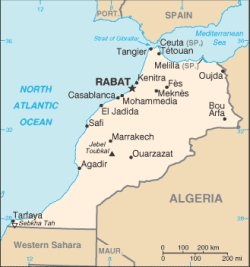
Moroccan Christian jailed for evangelising

Mohamed el Baldi convicted for ‘shaking the faith’ of Muslims


A Moroccan Christian man has been jailed for two-and-a-half years and fined for evangelising.

Mohamed el Baldi, 34, from the town of Ain Aicha, near Fes, was ordered to pay 5000 dirhams ($600) for “shaking the faith of a Muslim”, at a court hearing on September 3.

Propagating Christianity is prohibited under Article 220 of the Moroccan Penal Code. By law, the maximum punishment for this offence is three-to-six months’ imprisonment and a fine of 200 to 500 dirhams. However, el Baldi has been punished much more strictly.

Campaign launched to free Pakistan mother on death row 'for drinking water'

By Claire Fuller
Special to ASSIST News ServiceMinistries

GLASGOW, UK (ANS) -- A UK-based human rights organisation is calling for the release of a mother of five currently on death row in Pakistan for allegedly blaspheming during an argument over drinking water.

Free Aasia Bibi - (iTunes image)
The Global Minorities Alliance (GMA) has launched a worldwide awareness raising campaign to free Aasia (also known as Asia) Bibi, the first woman in Pakistan's history to receive a death sentence under blasphemy laws.

As well as aiming to gather half a million signatures for a petition against the sentence, GMA has also launched a song to raise awareness of her plight at a well-attended event at Wellington Church in Glasgow on Saturday 7 September, where noted guests included John Mason, MSP for Shettleston.

The song, called "Free Aasia Bibi", is a call for her release as well as a message to the world about Pakistan's discriminatory blasphemy laws.

Aasia Bibi
The song, written by GMA's Vice-Chairperson Shahid Khan, composed and produced by musician Sam Gallagher and performed by the GMA Band, is a call for solidarity to demonstrate how people across the world are standing with her as the third anniversary of her death sentence approaches.

"The song is the expression of the inner most feelings of concerned people across the world who share in the pain and sufferings of Aasia, along with her family who is currently in hiding in Pakistan due to the threats and fears from the extremists," said Mr Shahid Khan.

"We continue to stand with the persecuted that are subject to violations, oppression and tyranny. Music is our way and message to the world to treat other human beings with love, honor and dignity regardless of anything else."

In June 2009, Aasia Bibi, a Christian farm hand and mother of five from the small village of Ittianwali in Sheikhupura District of Punjab, Pakistan, had a heated argument with her fellow labourers over a seemingly trivial matter of drinking water from the same glass as them. Bibi was then accused of using derogatory words about the prophet Mohammed and was subsequently arrested.

According to some reports she had a noose put around her neck and was dragged through the streets by the village men before taken into police custody where a First Investigation Report (FIR) was lodged which cited Section 295-C of Pakistan's blasphemy laws for her arrest:

"Whoever by words, either spoken or written or by visible representation, or by any imputation, innuendo, or insinuation, directly or indirectly, defiles the sacred name of the Holy Prophet Mohammed (Peace Be Upon Him) shall be punished with death, or imprisonment for life, and shall also be liable to fine."

Following pressure from influential Muslims in the area, she was convicted of blasphemy and sentenced to death in November 2010.

Glasgow students standing in solidarity
with Aasia Bibi
Later Bibi applied for clemency under Article 45 of the Constitution of Pakistan, which allows the President of Pakistan to pardon any sentence passed by any court, tribunal or authority. Bibi's case is currently pending an appeal at Lahore High Court, and despite of the international outcry against the misuse of Pakistan's blasphemy laws and countless pleas from human rights organizations, religious leaders and politicians across the world, she is still kept in solitary confinement in Multan women's prison.

She was moved there from Shiekhupura jail amid security issues following prison breaks by militants in North West Pakistan; however, there are still fears for her safety as other blasphemy convicts have died by having their food poisoned during their incarceration.

"We are extremely concerned about the safety of Aasia Bibi in light of the prison breaks in Pakistan and the threats from militants who want to take away her life," said Mr Manassi Bernard, GMA's Chief Executive.

"She is facing threats not only from the outside but also from within prison, which is making us more concerned about her safety," he added. 

GMA has recently launched an online petition and is aiming to gather 500,000 signatures demanding the release of Bibi. The petition will later be presented to Pakistan Consulate in Glasgow, both to further Aasia's cause and to urge the Pakistan Government to stop the widespread misuse of Pakistan blasphemy laws.
The petition is available at www.globalminorities.co.uk/FreeAasia.

GMA has vowed to work against persecution, such as the kind Aasia Bibi is currently facing, by working through national and international ambassadors in countries of concern such as Pakistan, Egypt, Nigeria, Iran and Indonesia where members of minorities are made prisoners of persecution by harassment, imprisonment or killing.

GMA is also advocating for Rohingya Muslims and Iranian Baha'is, and is currently planning parliamentary sessions, both in Holyrood and Westminster. GMA has also recently visited Berlin to speak to German parliamentarians about human rights violations the world over, and also holds awareness-raising sessions in the UK to advocate for persecuted communities.

"Our message to the world is of hope and love. There is enough pain, death and suffering in our world and we continue to spread our message of love and light to the far corners of the world through the work of the Global Minorities Alliance, be that through our peace education project or becoming a voice for the persecuted communities around the world," said Mr Shahid Khan.

You can sign and share the petition by clicking going to http://www.globalminorities.co.uk/FreeAasia.

About Global Minorities Alliance

Formed in 2012, the Global Minorities Alliance is a Glasgow-based human rights organisation, committed to raising the voice of minority communities around the world.

As stated by the Alliance's Vice-Chairperson, Shahid Khan, on the Global Minorities Alliance 
websitewww.globalminorities.co.uk: "The absence of fairness, transparency, meritocracy and the rule of law in general in some countries leave minorities more vulnerable to abuse as the mighty and influential in these lawless lands take it as their birthright to mistreat minorities as they choose. In some parts of the world the integration of minorities into mainstream society is restricted by design due to the subjugation forced upon them.

"We call for an end to the systematic discrimination of minorities in any shape or form and urge the governments of such countries to push through reforms aimed at providing equal rights to the poor and the disadvantaged sections of their societies.

"No-one can choose where they are born or who they are born to. To be born into a minority community should not mean that you have to live a life where you suffer at the hands of your own countrymen.

"We say enough is enough and call upon the international community and like-minded organizations and individuals across the world to support us in our commitment to help the minority communities across the world."