Monday, March 18, 2013

Persecution, violence increase in Northern Nigeria

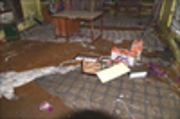
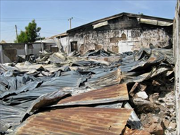
(Image of destroyed Nigerian church
 courtesy World Watch Monitor)

Nigeria (ODM) ― Nigeria's hostage situation seems to have ended with the murder of all seven captives.
The newly-emerged Islamic sect Ansaru Islam confirmed killing the group kidnapped in Bauchi a month ago. They issued a statement in Arabic and English on an affiliate of the Sinam al-Islam network accompanied by screen shots of a video purportedly showing the dead hostages.

Ansaru Islam literally means "helpers" or figuratively, "Struggle for the cause of Allah." The name harkens back to a group of people who waged war for the cause of Islam. They are known for promoting a radical interpretation of Islam with a strict interpretation of Sharia. Their emergence in Nigeria likely means more attacks to rid the country of Christians or those perceived with connections to the West.

The grisly murders seem to underline that concern. "The Nigeria and British government (rescue) operation led to the death of all seven Christian foreigners," the statement claimed. Although Nigerian authorities say they were unable to confirm the deaths, it is understood that the countries of the victims have pronounced them dead.

While northerners in general bemoan the inability of the Nigerian government to bring the situation under control, Open Doors' work in the country is under immense pressure as violence against Christians continues.

The violence includes the killing of 13 factory workers identified as Christians on Feb. 22 in Kano. According to sources, the Muslims confronted the Christians about the reason they were not attending Muslim evening prayers. The men were then killed in front of women and children. Bishop Ransom Bello, CAN chairman in Kano, is accusing Kano state government of nonchalance over the incident. Pray for God's comfort to the traumatized families of the factory workers. Pray for justice to be served.

On March 10, gunmen on tricycles launched attacks at the Hotoro, Sharada, and Dakata areas of Kano, northwest Nigeria, killing three and injuring several other civilians as they were returning home after Sunday evening service before speeding off. Joint Task Force spokesman, Captain Ikedichi Iweha, said they have arrested four of the attackers. Pray for God's comfort to families affected by the killing.

On March 11, Christian leaders in Tudun Wada, Kano state, gathered at the site where their church was destroyed in 2007. They are planning to rebuild. During their visit they were confronted and threatened by Muslim youths who vowed to never allow the rebuilding of another church in Tudun Wada.

The leaders who wanted to report the incident to the local authorities were not allowed to enter the premises of the ministry in charge of complaints. The leaders called Open Doors asking for prayer in their situation. Pray for wisdom for these Christians as they respond and that justice will be done. Pray that the Lord will continue to build His Kingdom in Tudun Wada even if there are no physical buildings to gather.

It seems that the president could be a target, too. President Goodluck Jonathan is also purported to be a Christian. Last week, specialized members of the Nigerian Army (NA) in Maiduguri, Borno State, uncovered a cache of weapons and ammunition hours after the president came through. Seven explosions occurred during his visit, which many fear were failed attempts on the president's life. Pray for peace in Northern Nigeria. Pray that the government will be able to bring the situation under control soon.

Pakistani Christians told, 'Protest again and you will die'

Many in the Lahore area are living in shocking conditions following the violence there which saw about 200 Christian homes torched and two churches burned to the ground

By Dan Wooding
Founder of ASSIST Ministries

LAHORE, PAKISTAN (ANS) -- Outraged Pakistani Christians have taken to the streets of Lahore (and other cities in the country,) to protest against the terrible violence they have suffered following a blasphemy accusation against a young Christian.

Rioters running away after helping to burn down 200 homes and two churches
The demonstrators denounced the burning of about 200 Christian homes and two churches by a frenzied Muslim mob of about 3,000, amidst claims spurred by allegations that a Christian man made remarks against the Muslim prophet Mohammed.

Some of the hundreds of protesters last Sunday threw stones at police, saying the government failed to adequately protect Christians, Lahore senior police official Rai Tahir.

"Tahir said video footage of the fires helped lead to the arrests of more than 150 attackers. He said charges of terrorism have been filed against the suspects," said a CNN report.

The violence that tore through Lahore's Badami Bagh community on Saturday, March 9, 2013, followed the arrest of Sawan Masih, a Christian in his 20s accused of blasphemy.

"But Masih's arrest wasn't enough to appease an angry mob of Muslims irate over the alleged crime," added CNN. "(The) mob wanted police to hand them over the alleged blasphemer, said Hafiz Majid, a senior police official in Badami Bagh.

An anguished Pakistan Christian woman following the attacks on her community
"The mob also looted some shops run by Christians, he said. Majid said Christians have fled the area for fear of being killed.

"If convicted, Masih faces the death penalty. He denies the allegations made by the two men who filed the blasphemy complaint against him with police on Friday (March 8, 2013), Majid said."

Since that time, hundreds Pakistani Christians become homeless in Badami Bagh, said ANS correspondent, Shamim Masih, who also reports for the British Pakistani Christian Association.

He said, "Two hundred homes were turned to ashes and poor Christians are now living in the streets, desperate for food and other needs. Their children cannot attend school or college due to the destruction and fear. Many Residents have expressed great dismay and sorrow and depression is seeping through the entire community."

One Christian that Shamim Masih spoke to, Sajid Masih, broke into tears as he said, "I feel helpless and unable to do anything for myself and my family."
A Christian protest
Shamim Masih went on to say, "Christians around the country who have been incensed by the recurring theme of a blasphemy allegation followed by the attack and burning down of our vulnerable communities, held protests across the country in a concerted effort to vent their disgust at this most recent incident and to show solidarity with the victims.

"In Youhanabad and Kot Lakhpat, Lahore police used this opportunity to beat the innocent Christian protestors, shot tear gas at them and beat them with sticks, yet when the Muslim attack took place they stood back and watched till the town had been razed to the ground," he said.

He said demonstrations also took place in Islamabad, Rawalpindi, Sialkot, Jhelum and Sahiwal, as well as other cities across Pakistan.
Jhelum controversy:

Mr. Masih said that Muslims of Jhelum City, located on the right bank of the Jhelum River, in the north of Punjab province, "then threatened to burn Christians homes like those in the Badami Bagh community, in response to the protests."

According to sources, on March 12, 2013, Christians of Jhelum City began to protest against the violence in Badami Bagh, chanting slogans like, "Repeal the Blasphemy Law" and "The Blasphemy law is a Black Law."

"After this had occurred," added Shamim Masih, "local Imams began preaching hatred from their mosque loudspeakers calling Muslims to gather together and punish those Christians who were decrying the Blasphemy law.

"Local radicals have pressured the area police station to lodge a First Investigation Report - FIR under 295-C PPC -- against Christians who chanted slogans against the blasphemy laws.

"Now the community living there is living in fear of reprisals for their simple act of condemning violence and the blasphemy laws of Pakistan that have been used as a tool for destruction and intimidation."

Basharat Khokhar, a local human rights activist, said that there were around 26 Christian families living among the large Muslim population in an area of the city.

The local Christians, he said, arranged their protest to show their solidarity with Christians of Badami Bagh community, and Mr. George Masih led the protest rally. Khokhar said that they "obtained permission from the District Police Officer (DPO) who provided them with security. There were 250 people in the protest rally. The next day, Muslims demanded the arrest of George Masih and called for the registration of an FIR against him."

According to Pastor Naeem Bhadhar, a Presbyterian missionary living in Kalaswala village, in the Sialkot district, located about 87 miles from Lahore city, told Shamim Masih by telephone, that he had arranged a protest rally in his city but on Thursday, March 14, 2013, when he was travelling back to his village "a few radical Muslims from Jammat ut Dawa [a Muslim organization] severely beat him with sticks and destroyed his motorcycle.

"He has been severely injured and was taken to hospital and has had a number of stitches on his left arm. He has been warned by the extremist group, that if Christians organize further protests, they will be killed."

BPCA volunteers joined Shamim Masih to deliver food packages to every tent in the area
On the positive note, Masih has reported that he has been able, with other volunteers, to deliver aid to families affected by the violence in the Badami Bagh area on behalf of the British Pakistani Christian Association (BPCA).

He said, "We found more than 178 families that were living in tents in different streets. They are all scattered in different areas and though we usually set up one base and distribute our aid from there, we decided to visit each resident in their individual tents. More than 200 food packets were distributed among the needy people of Badami Bagh."

One person, he was able to help was Bushra bibi, sister of Sawan Masih, the accused young man in the blasphemy case. She told him, "Thank you for the food packages. We have been hungry and have no sources of income, as our men are too scared to go to work, where they will be threatened."
A time of prayer was held at Sawan's family home before the distribution


She added, "We want to see our brother, who is alone in the jail and nobody is taking care of his case. I have heard a cleric say that they [the Muslims] will hang him."

Another person that Mr. Masih was able to deliver aid to was Naila bibi, a young lady, who told him, "We have been here in tents and very few people have reached to us. I request my Christians around the world to step in to help us in our restoration."

Sardar Masih, father of five young children, said, "It's hard to survive in this sort of situation, but we are here and now our future generation is suffering from cruelty from our Muslim neighbors."

Shamim Masih said, "There is a desperate need for cooking utensils and equipment, families also require proper bedding, a source of clean water and some temporary maintained toilet facilities. Families seek prayer and have no church building to worship in, they are seeking a large tent for church services. We pray that God will provide for the needs of this innocent community."

Wilson Chowdhry Chairman of the BPCA, based in London, England, said, "The quality of life for Pakistani Christians has reached a nadir. This recent attack on Badami Bagh is unwarranted and a blight on the nation. St Joseph's community [where Badami Bagh is located] has been left destitute and homeless and when other Pakistani Christian communities decried this treatment, they have been savagely attacked by police authorities and threatened by local Imams. Yet police failed to intervene when 200 Christian homes and two churches were being raised to the ground?

Chowdhry added: "This dual standard response has illustrated how minorities are regarded as worthless anathema, in a nation that has espoused the demonization of any non-Muslims in their educational textbooks and media. Blame for the continuing extremism in Pakistan therefore lies firmly in the hands of the political leaders, whose lack of equality measures has resulted in sectarianism, community schism and opportunists/religious zealots taking advantage of vulnerable minorities.

"Unless the Government of Pakistan reforms its legal frameworks, constitution and national curriculum to protect and recognize its minorities, the polarization we see now will eventually manifest as numerous massacres."
Torture Probably Led to Death of Egyptian Christian in Libya

Sources say beatings, electrical shock exacerbated serious heart condition

By Jeremy Reynalds
Senior Correspondent for ASSIST News Service

CAIRO, EGYPT (ANS) -- Repeated electrical shock torture of an Egyptian Christian accused of “proselytizing” in Libya likely exacerbated his heart ailment, leading to his death in custody, according to sources close to the deceased.

Ezzat Hakim Atallah died while in custody of Libyan authorities, according to relatives. (Courtesy: MidEast Christian News)
According to a story by Morning Star News 

(http://morningstarnews.org), Ezzat Hakim Atallah, 45, died on March 10 in a Tripoli jail while in the custody of an Islamic militia group known as the Preventative Security Unit.

Atallah was arrested without being formally charged in Benghazi on Feb. 13 as Preventative Security was rounding up expatriate Christians and accusing them of spreading Christianity to Muslims. The group is an internal police force formed during the Libyan Revolution by regional rebel leaders.

Sources close to Atallah told Morning Star News he had a “serious chest condition” that would have cost him his life under the repeated beatings and electrical shocks.

Atallah was taken to a hospital once during his captivity, on March 6, but he returned to jail after medical personnel were either unwilling or unable to properly treat him, they said.

Morning Star News said Libyan authorities told his family he collapsed in jail and that he died of high blood pressure. The embassy of Egypt, a country where a majority believes those who leave Islam should receive the death penalty, has claimed he probably died of “natural causes.” Atallah also reportedly suffered from diabetes.

In Washington, D.C., advocacy group Coptic Solidarity planned a demonstration in front of the Libyan embassy.

Morning Star News said the group called for release of all Egyptians charged with “proselytizing” in Libya and an investigation into Atallah’s death, and it “condemns in the strongest terms the Egyptian authorities, especially the foreign minister, the ambassador in Libya and the consul in Benghazi, for their failure to defend their fellow citizens.”

Ezzat Hakim Atallah’s widow, Ragaa Nagah (with ponytail), collapses with grief upon arrival to Cairo's airport (Photo: Morning Star News)
Atallah leaves behind a 15-year-old son and an 11-year-old daughter. His widow, Ragaa Abdallah, arrived in Cairo on a plane carrying her husband's body on March 12, en route to his funeral in Upper Egypt's town of Assiut.

“He is all of us,” said one of the people gathered to pay their respects at Cairo International Airport. “What happened to him could happen to any of us.”

Morning Star News said more than 100 well-wishers, most of them Christians from several denominations, joined relatives of Atallah's widow to greet her at the airport. She was overcome with emotion and collapsed in the airport lobby. Helped to a set of chairs, she recovered and left to collect her husband's body. His remains were transferred by van to Assiut and were buried within hours of arriving.

Morning Star News said Atallah, who had run a cellphone sales business in Benghazi, was arrested as part of a round-up of foreign Christians the week of Feb. 10. Seven Christians were arrested that week, four of them Egyptians.

Initially only one of the seven, Sherif Ramses, was believed to have been tortured, but now Christians with close ties to Libya say all seven of those arrested have likely been tortured.

Morning Star News said Ramses owned a bookstore that sold Christian and secular books. Members of the Islamic militia used Ramses’ cell phone to identify other Christians in the area and arrested them as well, though Ramses reportedly insisted that Atallah had not taken part in his publishing business. Atallah was reportedly transferred to Tripoli on Feb. 25.

Morning Star News reported that sources close to Atallah now say the round-up occurred after a Muslim villager in Benghazi became angry when Christian literature destined for Ramses' store was mistakenly delivered to him.

It also said that Atallah's death comes after another major incident of Christian persecution in Benghazi.

The week of Feb. 17, militia members rounded up dozens of Coptic Orthodox Christians, accused them of preaching to Muslims and detained them in a camp. Numerous Copts were abused and harassed. The captors shaved the heads of many of those they detained, and forced many into hard labor.

Most of those held were detained for a week. It is almost impossible to determine how many were detained as others were later arrested, but reportedly some 35 of a an initial 55 prisoners were later deported, with the others released but allowed to remain in the county. Also, on Feb. 28 a priest and his assistant in a Coptic Orthodox church in Benghazi were attacked. Both suffered minor injuries.

Morning Star News said one Protestant clergy member who works directly with Christians in Libya said the climate toward Christians in the country has changed dramatically over the past few years.

“Now in Libya they don't like Christians, they don't tolerate them,” he said. “They know there are many Muslims that are becoming Christians. And because of it, all Christian workers are in danger.”

Morning Star News said Atallah was widely known in the Coptic community as a deeply committed Christian.

“He was a very kind person,” a pastor with ties inside Libya said. “He was someone who liked to help everyone.”
For more information go to http://morningstarnews.org 

Friday, March 15, 2013

Christians in Libya face increase in persecution


Libya (ODM) ― An Open Doors field worker for Libya has expressed his deep concerns about the deteriorating situation for Christians in Libya.

He said, "Since Muammar Gaddafi's regime fell two years ago, there have been several reports of violence against Christians. But since February, dozens of Christians have faced hostilities, detainment, and deportation. Several of them have been severely mistreated, and one died while in detention."

Sherif Ramsis was arrested on Feb. 10. He is an Egyptian Christian living in Libya and had been running his business in Benghazi for 10 years. In the following week, a number of other Christians were arrested as well. Among them were four Egyptians and three non-Arab foreigners working in Libya. Some of them knew Sherif from a work-related or social context. It was reported that they were arrested based on the contacts on Sherif's mobile device.

While the non-Arabs are being treated comparatively well while being detained, local contacts report that the Egyptians are badly mistreated. There are reports of a lack of warm clothing and food, and the Egyptians being forced to sleep on the cold concrete floor in their cell. The Egyptians also sustained bruises due to torture in an attempt to extract information.

While suffering from the consequences of the mistreatment, the detained Egyptians were transferred from Benghazi to Tripoli on Feb. 25. In Tripoli, the lack of proper health care had fatal consequences for one of the detained, Ezzat Hakim Atallah, as confirmed by human rights organization Middle East Concern. Atallah was one of the transferred Coptic Christians.

The Open Doors field worker said: "Ezzat was running a cell phone repair shop in Benghazi and had been living in Libya for 10 years. People knew he was an Egyptian Copt, but that never led to serious trouble for him or his family."

During his imprisonment, he suffered severe chest pains. He was moved to a hospital March 6 for treatment, but was later returned and locked up again with the other Egyptian Copts. The medical treatment proved insufficient, and on Sunday March 10, Ezzat died in his cell. While reportedly still being kept in the same room, the other cell mates stood by helplessly and watched him die. Ezzat leaves behind his wife, and a daughter and son, 11 and 15 years old, respectively.

The other Egyptians are in still in detention. Earlier this week, all appeared before the public prosecutor. While it is difficult to have the official charges verified, the families were told that they will be charged with espionage. In February, a police officer told the press agency Reuters that they had been arrested on suspicion of distributing Christian books and proselytizing.

The Open Doors worker commented: "What really surprises me is that authorities claim the legal and judiciary framework from Gaddafi's regime has been put aside. But when it comes to the freedom of religion and situations like this, it seems that these former laws are still being upheld and used.

"To be honest, I had a sparkle of hope that the country could benefit from the regime change," the Open Doors field worker added. "But the developments of the past month are a big blow and a sobering setback. Still, I think it is possible that we will see positive responses from seekers of Christ in the country. I truly hope that more Libyans will stand up and cling to the freedom that was fought over so hard two years ago."

Libya is ranked No. 17 on the Open Doors 2013 World Watch List of the 50 worst persecutors of Christians.

Thursday, March 14, 2013

Pakistan: a study of reconciliation, restoration, and caution

(Cover image by Wikipedia. Story image by World Watch Monitor)

Pakistan (MNN) ― Police have arrested around 150 men a day after a mob set fire to homes in a Christian neighborhood in Pakistan. The Christian neighborhood of Joseph Colony in Lahore came under attack on Saturday after a Muslim accused a Christian of blaspheming the Prophet Mohammed.

No one was killed in the attack because police had cleared most of the Christian families from the area. When it was over, the mob had torched over 170 houses, 18 shops, and two churches. Christians protested on Sunday over the lack of protection and the existence of the blasphemy laws that have caused them no end of trouble.

Speaking on a spotty cell phone connection, we reached Hana*, a Christian from Pakistan involved in ministry there that encourages and equips the local church to face persecution. She explains, "Most of the blasphemy accusations in Pakistan have been false. This one is debatable, and there's been a lot of speculation on it. We would hope that there would be some further investigation into the blasphemy laws of Pakistan. We don't know what it holds in terms of a repeal of this law."

Hana goes on to say that even though the area has calmed, "Christians are constantly on edge. In this particular case, Christians were vulnerable because it was a low income area, and there is a problem of alcoholism."

In the aftermath, a committee comprised of Bishops, Muslim legal scholars (called Ulema), and Christian leaders was established to assist in the rebuild. The Muslim scholars, often connected with the enforcement of Sharia law, condemned the attacks in Badami Bagh--the neighborhood within the network of Christian communities within the Joseph colony in Lahore.

The Ulema also termed the attack an anti-state, anti-humanity, and anti-Islam act of violence, setting aside March 15 as a Day of Solidarity with Christian Community in mosques. On March 17, churches will return the favor and mark it as a Day of Tolerance. Government officials also pledged to help residents rebuild their homes and offered $2,000 compensation to each affected family.

Unintended unity sparked by the arsons may eventually impact the upcoming elections. Already Pakistani Christians are conditioning their support at the polls on the repeal of the blasphemy laws. Hana says there's no way to know what that will look like by the time May rolls around.

Law 295a -- blaspheming Islam, and Law 295b -- blaspheming the Qur'an are criminal offenses. Law 295c makes blaspheming Mohammed a crime punishable by death. Courtrooms packed with militants have often pressured judges into returning a guilty verdict or continuing trials indefinitely. Christians are regularly barred from jobs or face troubles from their employers and co-workers. Christian merchants are often harassed. Cases surrounding the use of the laws earned Pakistan the 14th spot on the Open Doors World Watch list of countries known for their persecution of Christians.

The next question is a hard one to answer, says Hana. "'What now?' We don't know ‘what now.' We do know that Christians in the area are called to proclaim the Gospel. They're called to live for Christ. They're called to be the light and the salt in that area, and there are those that are faithfully doing that."

Christians are wrestling with whether or not to flee the country, says Hana. "We are asking for prayer that Christians would know the peace that passes all understanding at this time, keeping in mind that this has been years of the extremists selling this story that Christians do not belong. "

In the meantime, they're praying that the rebuilding of Badami Bagh will go forward unmolested. Hana says it's especially risky for the teams who will respond to the needs there. "Pray for the protection of the teams that are at work. Once you start working with a group of people that have been accused of blasphemy, you are in essence saying, ‘I will take the flak for this blasphemy case.' You are in essence saying, ‘I'm part of this.'"

*Name changed for security reasons

Kenya: Kenyan religious groups ready to work with President-elect, despite his war crime indictment


‘Let them have a chance to speak at the Hague, and let the ICC decide’, says Catholic leader   
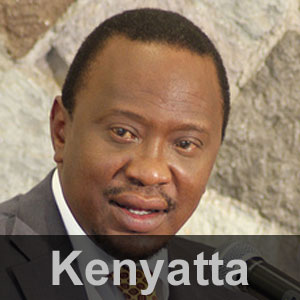
Amongst their first formal meetings as President and Deputy President-elect of Kenya, Uhuru Kenyatta and William Ruto on Tuesday 12th March met senior religious leaders, even ahead of meeting outgoing President Mwai Kibaki.  

Mr. Uhuru emerged the winner by garnering 6173,453 votes, meeting the threshold of the country’s Constitution which required a 50% + 1 vote of all total votes cast. This was the first election to be held under a new Constitution passed by Kenyans in 2010.

The threshold requirement was the first of its kind in the country, aimed at ensuring Kenya does not slip into a situation such as the last elections in 2007, where disputed Presidential results led to post-election violence. Over a thousand people were killed and 660,000 displaced from their homes.

Uhuru Kenyatta (son of Kenya’s first post-Independence President Jomo Kenyatta) and his Deputy face indictment at the International Criminal Court in the Hague, charged for their alleged role in organising that 2007-8 post-election violence.  

During his meeting with religious leaders, held at the symbolically-named Kenyatta International Conference Centre, Kenyatta urged politicians and all Kenyans to rise above the partisanship of the latest campaign period and join hands to build the country.

The President-elect said Kenyans should focus on nation building, adding that in his government there will be no losers or winners.

Kenyatta said that religious leaders are the custodians of conscience and commended them for playing what he called the ‘noble’ role of calling upon the political leadership to maintain high standards of probity and integrity, and to keep to the straight path, however narrow it may be.

“I congratulate the religious leadership for the manner in which it has continued to engage the political leadership in all matters of national interest. My government will nurture this tradition,” said Kenyatta.