Showing posts with label religion law. Show all posts

Friday, July 26, 2013

Protestant churches feel the heat in Kazakhstan

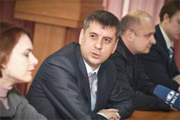
Police arrest a group of young people for an unsanctioned religious meeting.
(Image, caption courtesy Christian Aid)
Kazakhstan (CAM) ― Is religious freedom a reality in Kazakhstan? The answer depends on who you ask.

While the constitution of this Central Asian country provides for freedom to worship, in truth it is adherents of traditionally recognized faiths and denominations who enjoy that privilege.

Ironically, says Christian Aid Mission, more restrictive laws were enacted to stem the tide of growing Islamic radicalism in Kazakhstan. In the process, intense government scrutiny of all minority religious groups has led to persecution of Christians, particularly evangelicals.

A law passed in 2011 requires churches and religious organizations to apply for state registration. The process is not that simple, however, as official registration is restricted to groups of 50 people or more. Most Christian congregations in Kazakhstan are small and meet in private homes.

To comply with the new regulations, a group of believers can only gather for worship or prayer in a state-approved location, such as a church building. Since the purchase or construction of building costs anywhere from $12,000 to $18,000 on average, congregations find themselves facing a great dilemma.

Even believers who are members of government-sanctioned churches sometimes encounter harassment from local authorities and have to prove their case in court.

The crackdown has resulted in arrests, steep fines, and imprisonment. According to the Forum 18 News Service Web site, fines were imposed on at least 62 Council of Churches Baptists since the start of 2013. The denomination refuses to pay the fines on principle, considering them in violation of human rights.

In response, the government has reportedly imposed a new set of restrictions on the Baptist churches, banning the members from traveling outside of the country until the fines are satisfied.

The following report was taken verbatim from a Christian Aid-assisted ministry in Kazakhstan. It reveals the extreme measures taken by local authorities to try to stamp out unregistered churches.

On March 31 in a town in eastern Kazakhstan, nine Christians (mainly elderly people) gathered to celebrate Easter, to pray, communicate, and have some tea. After a while, seven police officers came into the apartment. They brought two drunken men with them as witnesses.

Without presenting any documents, the police began to take a video and do a search of the apartment. The senior captain offered to take the Christians to the police station for questioning, but the Christians refused, demanding a good reason for why they should. The answer was that they were engaged in unregistered religious activities.

On April 3, this group of Christians was called to the police station. After police kept them in the office from 12 p.m. to 6 p.m., they were given the interrogation report to sign. The report stated they were engaged in illegal religious activities and storage and sale of drugs. Some of the elderly people signed the report without reading it. But after one woman pointed out the information about drugs, all of them refused to sign it. The authorities threatened to place the group in jail overnight. The Christians sent a statement to the regional prosecutor’s office, including a copy of the document that accused them of storage and sale of drugs.

An administrative court proceeding took place April 18, where four of the Kazakhs were each fined $577 to be paid within one month. The next day, a trial was held for three more of the Christians. Two were fined a penalty of $577 each, and the other individual was fined $1154. Two more people are in the hospital at the present time and haven’t been given a summons to the court. The total sum of fines was $4616.

Before the “law of religious activity,” this small group of Christians was without any need of registration. With the introduction of new rules, the legal features were established. They applied for registration a couple of times since September of last year and were rejected because there were less than 50 people.

Despite opposition, the Kazakh churches continue to grow. About 25% of the country’s population is Christian, most of whom are from the accepted Russian Orthodox denomination. Protestants, making up 0.8%, are viewed with suspicion as dangerous sects that may pose a threat to the government.

Christian Aid assists ministries in Kazakhstan that have planted more than 120 churches and comprise some 12,000 believers. Donors have also provided funding for a Bible school that graduates over 100 students each year and an orphanage that provides compassionate care in the name of Christ to some 300 youngsters.

Tuesday, March 19, 2013

Court orders destruction of religious literature


Kazakhstan (MNN) ― Religious freedom is losing even more ground in Kazakhstan, says Forum 18 News.

For the first time since the country gained independence in 1991, a court ordered religious literature to be destroyed. According to Forum 18, 121 pieces of religious literature--mostly in the Kazakh language--were taken from a believer in northern Kazakhstan.

Vyacheslav Cherkasov was reportedly handing out religious literature on the city streets when police arrested him. He was fined a month's wages, and a suitcase full of religious books--Bibles, children's Bibles, books and tracts on the Christian faith--were confiscated.

Earlier this month, a judge ordered the literature to be destroyed.

"Most likely the books would be burnt," an official told Forum 18.

Authorities accused Cherkasov of violating Kazkahstan's Religion Law, which was rewritten in 2011 to include more things as "religious offenses." Right now, Cherkasov is appealing the case.

"We know that religious literature has frequently been confiscated since the new Religion Law came into force in 2011," human rights defender Yevgeni Zhovtis told Forum 18. "But I've never heard that religious literature is being destroyed, unless it is extremist.

"This is terrible, terrible!"

Pray that Cherkasov will not lose his appeal and that the Gospel won't be held back in Kazakhstan.

This case seems to highlight the fact Kazakhstan is moving back toward its Soviet roots. It now joins neighboring Russia and Uzbekistan as a country where courts order the destruction of religious literature.

When Kazakhstan's government signed a new Religion Law in 2011, its restrictions were seemingly intended to curb extremism. However, most of its resulting consequences fell on the shoulders of minority Christians.

For example, in early 2012, AsiaNews.it reported the ban of 579 religious groups if they had less than 50 registered members. This forced many unregistered Protestant congregations to go "underground," meeting in members' homes. But even there they weren't safe. Forum 18 frequently reports on Kazakh police raiding homes, the latest incidents occurring in January.

Furthermore, a third of all religious groups in Kazakhstan were reportedly shut down in October 2012--another step in the crackdown on religious freedom.

The rapidly-declining situation calls for much prayer. Pray that the government will release pressure on Christians so Gospel work could continue. Ask the Lord to protect His followers in this country and give them boldness.

Pray that the crackdown on religion in Kazakhstan will end.

Thursday, January 10, 2013

More religious activities proposed for legal chopping block


Kyrgyzstan (MNN) ― Throughout 2012, government officials tookone step after another, trying to keep extremist ideology from spreading throughout Kyrgyzstan.

Now, it appears they're moving beyond censorship to punishment. According to Forum 18 News, officials are trying to get more activities to be considered as "violations" of the nation's Religion Law.

Forum 18 says the proposed administrative code is much longer than the current one, Article 395. This article punishes youth ministry and the refusal by church leadership to register with the government.

Article 395 would expand dramatically if the new amendments are passed.

Sharing the Gospel openly or trying to lead kids to Christ would result in fines. Activities like praying outside the walls of a registered church building, teaching Christianity without personal registration, and conducting unregistered religious activity would be regarded as "violations" of the Religion Law.

Missionaries to Kyrgyzstan and missionary groups would also be subject to legal heat.

"Any religious activity without state registration by foreign organizations and individuals," reports Forum 18, "would be punished by fines…deportation…and a ban on the activity of the organizations, including local branches."
Multiple religious groups expressed concern about the new amendments, a source told Forum 18.

"All of the religious leaders present without exception were very worried about the amendments," said Galina Kolodzinskaia of the Inter-Religious Council in the Kyrgyz Republic. "If adopted, the punishments will definitely be used.
"We regard them as a way for the authorities to collect money from religious communities."

Representatives of Muslim, Protestant Christian, Jewish, and Buddhist communities participate in the Council. 

Kolodzinskaia spoke to Forum 18 after the council's meeting earlier this week and said members plan to make their opposition known to government officials.

Forum 18 says the new amendments would need approval from the Committee of Ministers Department before it can be considered by parliament. However, the drafts were returned "for further work" on December 31, 2012.
Pray that additional punishments would not be added.

Kyrgyzstan's Religion Law, which passed in 2009, requires all religious organizations to be registered with the state. Since the inception of the Religion Law, officials have repeatedly tried to make the code harsher.

New censorship amendments were added last month and increased state control over all religious literature. Additional draft amendments appeared before parliament in October 2012 and, if adopted, would impose the following restrictions: 

  •   • Government permission would be required for students to attend foreign religious colleges.
  •   • Each religious group would need 200 Kyrgyzstani founders in one location.
  •   • Foreigners would need a state license to proclaim their faith.

Pray that Kyrgyzstani believers would share their faith boldly, despite governmental restrictions.

Friday, September 28, 2012

New religion law could force evangelicals underground in Russia


Russian Ministries trains next generation church leaders.
 Pray the new legislation dies for lack of support.
Russia (MNN) ― Traditional religious leaders and lawmakers in Russia are touting a proposed new law that could require a 3-year prison sentence for insulting the religious feelings of believers and vandalizing holy sites. However, bloggers and opinion columnists across the country believe the law will only make religious freedom more difficult, especially for evangelical Christians.

Mission Network News caught up with Wally KulakoffRussian Ministries in Moscow. He says he's concerned for one important reason. He says the Duma has openly proclaimed that there are only four traditional religions in Russia. 

"That's orthodoxy, Islam, Judaism, and Buddhism. And if you say anything contrary to, or against. then you are insulting the four traditional religions of the former Soviet Union. What place do Protestants have in the former Soviet Union?"

Kulakoff says evangelical Christians insult many when they say God had a Son. "He became the Lamb of God who takes away the sins of the world. Islam says that they have a god who does not have a son, and anyone who claims God had a son has no right to live on this earth. Now, who is insulting who?"

Many who oppose the law believe this only opens Pandora's box. Kulakoff says, "Non-traditional religion in Russia with be chastised, prohibited, [and] will have to go underground. There will be no room for the Protestant church."

Russian Ministries School Without Walls program is discipling next-generation church leaders -- young people who are already leaders in their community. If this law is passed and it's interpreted harshly, Kulakoff says, "Then School Without Walls goes underground and will continue to have an impact, but in another form. Rather than openly, it'll be more excluded and secluded."

This law could have far-reaching impact. Kulakoff says the greatest insult to the Orthodox Church is to have a Bible translation that they didn't authorize. "That means Russia will say you can only use one Bible; then, the more modern, the more contemporary translations will be illegal."

In the meantime, Kulakoff and other Christians in the former Soviet Union are asking you to pray that the law would fail. 

They're also asking you to support their work, not only with your prayers but your financial support.


Monday, February 20, 2012

Reality of Kazakh religion law comes into focus

Kazakhstan (MNN) ― Fears about Kazakhstan's new religion laws are coming to fruition.

Forum 18 News Service reported last week that the first known use of Kazakhstan's amended religion law went into effect against a Baptist shoe-repairer and father.

Aleksei Asetov was fined what locals estimate to be about a year and a half's average wages for leading a small congregation of believers in his home, according to Forum 18.

"Apparently this was done under some provision that was introduced in the new amendments to the religion laws that we've been talking about thus far. Then this judge, I guess, also banned the congregation from meeting," explains Joel Griffith with Slavic Gospel Association.

SGA has had a close eye on the new religion laws since their inception in October, 2011. The laws seem to incorporate harsher punishments for unregistered religious groups and put into question ministry to small numbers of people or to children. SGA and its Kazakh contacts have been nervously waiting since then to see just how far these laws would go.

The situation with Asetov appears to be one clue as to how the law will be enforced. Although Asetov is not the first religious person to be fined since the new laws were introduced, he is the first to be tried under new penalties. Forum 18 reports that when prosecutors presented a case against Asetov, it was to try him under the old law's conditions. The judge apparently told the prosecutors to start over with punishment suggestions from the new law instead.

It's not a good sign for the direction of Kazakhstan, says Griffith. "At least from what I'm seeing, we're going to start more and more incidents like this from varying degrees of severity just as this new law begins to be implemented across the country."

A number of raids have indeed been conducted on religious groups since October. In one incident, officials raided a church and confiscated all of their literature and religious DVDs, claiming the church was violating the law by distributing the literature. Though the church does not seem to have been distributing it at the time, officials say they must hold onto the materials for at least two months to investigate whether or not  they contain anything "negative."

This is only the beginning for this religion law in Kazakhstan, a nation that until recently has been one of the freer countries in Central Asia when it comes to religious rights.

At this point, though, there are still a number of questions as to how this law will affect its nation.

"What sort of obstacles are going to be in their way for forming a new church because of the numbers of requirements that would be imposed?" wonders Griffith. "Let's say if they're innocently trying to witness their faith out on the street, are they going to be arrested for doing so because they're outside their church building? Who knows? Are they going to be prohibited from working with children?"

For those answers, we will have to wait and pray.

Pray for the church to stay bold and encouraged. Pray that new laws would not prohibit the Gospel from spreading.


Monday, November 7, 2011

Azerbaijan to tighten restrictions on religious literature

Azerbaijan (MNN) ― By mid-November, Azerbaijan's parliament will have adopted stricter amendments for those who produce or distribute religious literature.

Heftier fines and long prison sentences will now be the punishment for those who do not submit their religious literature to compulsory state censorship before producing or distributing it, according toVoice of the Martyrs, Canada.

Prison sentences will be as long as five years, and fines will be as high as nine years' official minimum wages, reports Forum 18 News.

The new restrictions come just months after an amendment made to Azerbaijan's Religion Law. In June, the nation invoked a requirement for all religious communities that 50 adults must state that they are founders in order for the group to apply for registration.

Over the course of less than 20 years, Azerbaijan has created a Religion Law and added 13 amendments to it, reports Forum 18. The law tightens its grip around religious necks each time an amendment is added, keeping Azerbaijan in the top 25 Most Persecuted countries in the world.

Parliament is set to discuss the new restrictions around November 15. They are expected to adopt the amendments in one reading.

Pray that these restrictions would not hinder the spread of Christian materials, and more importantly the spread of the Gospel, in any way. Pray that the church would continue to grow in Azerbaijan despite increased persecution and pressure.

VOM, Canada has created a report regarding Azerbaijan's relation to Christians. View it here. 

Tuesday, November 1, 2011

Kazakhstan explosions come on the heels of new religion laws

Mission Network News: "Kazakhstan (MNN) ― Two explosions went off in Kazakhstan yesterday morning, killing one man and injuring no others. The man killed was reportedly a suicide bomber responsible for one of the two attacks.

The first blast apparently came from a trash bin and went off near an administrative building in Atyrau, according to Reuters news agency. The second went off near the offices of the city's prosecutors, breaking windows but harming no one except the bomber."

Read more...

Wednesday, October 19, 2011

Christians cringe as Kazakhstan passes restrictive religion laws

Mission Network News: "Kazakhstan (MNN) ― Two new restrictive religion laws were signed into effect by Kazakhstan President Nursultan Nazarbayev last week, raising the concern of human rights groups, Muslims, and Christians."

Read more...

Tuesday, August 23, 2011

Restrictive child religion law to be enacted after Ramadan


Tajikistan (MNN) ― A controversial law which bans most children under 18 from participating in religious activities is set to go into effect in Tajikistan once Ramadan ends.

The Law on Parental Responsibility for Education and Upbringing of Children was passed by parliament on July 21. On August 2, President Emomali Rahmon gave the law his stamp of approval as well.

"It looks like indeed this controversial Law of Parental Responsibility has actually entered the force," confirms Joel Griffith with Slavic Gospel Association. "The president did sign it. It does appear also that this particular law was the personal initiative of the president."

F18 News service notes that "religious communities of all faiths are struggling to find out how the law's almost complete ban on children's participation in religious activity will be enforced." But based on the testimonies of men like Hikmatullo Sayfullozoda of the Islamic Renaissance Party, it seems certain that the laws enforcement, to whatever degree, will begin at the end of August.

The Muslim holy month of Ramadan ends August 31. Griffith speculates that the Tajik government won't enact the law during Ramadan due to the possibility of uproar in the mostly-Muslim nation during an Islamic holy month.

When the law does go into effect, though, no one is certain what precisely it will mean. On August 16 when Forum 18 attempted to ask the Religious Affairs Committee in Dushanbe about the law, no one was prepared to explain what religious activity by children is now permitted.

"It's a little bit too soon to see just how this law will be enforced," agrees Griffith.

The Parental Responsibility Law, in practice, would place a ban on most children under 18 from participating in religious activities. The Office of Human Rights in Tajikistan told Forum 18 that the law is needed especially for parents who lose control of their children to extremist religious groups.

Whatever the intentions of the law, however, it will certainly affect ALL children of ALL religions. "That not only affects parents and their right to raise children in the faith as they choose, but also children being able to attend worship services and children being able to participate in church-led functions like summer camp ministries," explains Griffith. "It really is a serious concern for exactly what the ramifications of this law are and will be in the future."

It's hard to say what it will mean, but if the laws are enacted and put into practice, state religious affairs officials told Forum 18 that they have specialists who would be in place at religious services to be sure the laws are being followed. If they find kids or teens in religious activities, higher structures will be appealed to.

The Parental Responsibility Law even calls for parents to restrict certain types of jewelry, tattoos, and even names they can choose for their kids.

The law has been met with criticism from various religious and human rights groups, but so far, it seems to be moving full-speed ahead. Christians are bracing themselves for the September enactment of the law, but will not cease teaching their children about Christ.

"This seems to be heading back to the Soviet days where they're just going to have to do things discretely and clandestinely," notes Griffith. "So it just continues to be a matter of prayer."

Pray for protection for believers and their families, who may be targets in regard to this law in coming weeks. Continue to pray that this law might be turned around, and that the Lord would change the heart of the Tajik president so freedom to preach the Truth would reign.

SGA has several missionary contacts in Tajikistan. To track the progress of the laws as SGA hears from their missionaries, visitsga.org.