Showing posts with label forum 18. Show all posts

Thursday, August 15, 2013

Children's camps raided, threatened in Uzbekistan

Each summer, hundreds of children have the opportunity
 to attend church-run Christian camps across
 Central Asia. (Image, caption courtesy SGA)
Uzbekistan (MNN) ― Religious freedom is hitting a new low in Uzbekistan. According to Forum 18 News, police raided one children's camp and is trying to take the property of another.

Local Protestants were holding an unregistered children's camp recently when four buses carrying 80 officials arrived carrying 30 police and 20 riot police. Brandishing rubber batons, a source told Forum 18, they began questioning everyone-- including small children.

After collecting statements for six hours, the officials took everyone at the camp--9 adults and 22 children--back to the police station for further questioning.

And in another region, a children's camp is at risk of seizure. "Camp Joy" sits on property purchased in 2000 by the Union of Evangelical Christians-Baptist (UECB), a registered group of congregations supported by Slavic Gospel Association.

"The state does not want to buy the land back from the UECB. Instead, they want to confiscate it. The intention then is to turn around and sell the land to somebody else," says SGA's Joel Griffith.

Although the property's intended purpose is for hosting children's summer camps and activities, it hasn't been able to since 2009. That's when UECB had to change their leadership as a result of a police raid on Camp Joy.

"They actually have not used that for children's camps since then because it does carry a risk of arrest with it," Griffith states. "Whatever children's activities [UECB has] are held at different locations around the country."

Baptists told Forum 18 that officials have no legal ground to stand on. Under Uzbek law, actions like this have to be done within three years of the land purchase. The UECB bought the Camp Joy property in 2000.

Believers told Forum 18 that they don't understand why authorities waited 13 years to raise an issue like this. However, the case will go before a judge tomorrow.

"Once this court hearing gets held on August 15, we'll have a clearer idea of where things stand," says Griffith.

Pray for justice in tomorrow's court hearing.

While Uzbekistan's constitution guarantees religious freedom, Griffith says it's basically non-existent in everyday life.

"Whatever the churches do, they try to do it as quietly as possible; but it's always at great risk," he says. "[Uzbekistan is] supposed to have a very secular government; but again, you have the government cracking down on people of all faiths."

The battle over Camp Joy is only one challenge the UECB faces. Griffith says they also have a hard time registering new churches with the government: another state requirement.

"All religious faiths encounter difficulty," he explains. "Freedom of religion and freedom of thought, freedom of conscience, freedom of practice: they all encounter difficulties."

It's a problem noted in Forum 18's religious freedom survey, published last week, as well as the U.S. International Religious Freedom Report for 2012. Open Doors USA puts Uzbekistan at #16 on their World Watch List, a compilation of the world's 50 worst persecutors of the Christian faith.

"Pray that the Lord would move in the hearts of the authorities to change the situation on the ground in Uzbekistan," Griffith states.

Will you also ask the Lord to protect Gospel workers in Uzbekistan? Pray, too, for the Gospel to go forth unhindered.

"The Church is determined and committed to carrying out the Great Commission, no matter what man may do, and they've certainly proven that through the years," says Griffith.

"Despite the opposition, they're going to go on proclaiming the Gospel."

See how SGA supports the church in this mission.

Friday, July 26, 2013

Protestant churches feel the heat in Kazakhstan

Police arrest a group of young people for an unsanctioned religious meeting.
(Image, caption courtesy Christian Aid)
Kazakhstan (CAM) ― Is religious freedom a reality in Kazakhstan? The answer depends on who you ask.

While the constitution of this Central Asian country provides for freedom to worship, in truth it is adherents of traditionally recognized faiths and denominations who enjoy that privilege.

Ironically, says Christian Aid Mission, more restrictive laws were enacted to stem the tide of growing Islamic radicalism in Kazakhstan. In the process, intense government scrutiny of all minority religious groups has led to persecution of Christians, particularly evangelicals.

A law passed in 2011 requires churches and religious organizations to apply for state registration. The process is not that simple, however, as official registration is restricted to groups of 50 people or more. Most Christian congregations in Kazakhstan are small and meet in private homes.

To comply with the new regulations, a group of believers can only gather for worship or prayer in a state-approved location, such as a church building. Since the purchase or construction of building costs anywhere from $12,000 to $18,000 on average, congregations find themselves facing a great dilemma.

Even believers who are members of government-sanctioned churches sometimes encounter harassment from local authorities and have to prove their case in court.

The crackdown has resulted in arrests, steep fines, and imprisonment. According to the Forum 18 News Service Web site, fines were imposed on at least 62 Council of Churches Baptists since the start of 2013. The denomination refuses to pay the fines on principle, considering them in violation of human rights.

In response, the government has reportedly imposed a new set of restrictions on the Baptist churches, banning the members from traveling outside of the country until the fines are satisfied.

The following report was taken verbatim from a Christian Aid-assisted ministry in Kazakhstan. It reveals the extreme measures taken by local authorities to try to stamp out unregistered churches.

On March 31 in a town in eastern Kazakhstan, nine Christians (mainly elderly people) gathered to celebrate Easter, to pray, communicate, and have some tea. After a while, seven police officers came into the apartment. They brought two drunken men with them as witnesses.

Without presenting any documents, the police began to take a video and do a search of the apartment. The senior captain offered to take the Christians to the police station for questioning, but the Christians refused, demanding a good reason for why they should. The answer was that they were engaged in unregistered religious activities.

On April 3, this group of Christians was called to the police station. After police kept them in the office from 12 p.m. to 6 p.m., they were given the interrogation report to sign. The report stated they were engaged in illegal religious activities and storage and sale of drugs. Some of the elderly people signed the report without reading it. But after one woman pointed out the information about drugs, all of them refused to sign it. The authorities threatened to place the group in jail overnight. The Christians sent a statement to the regional prosecutor’s office, including a copy of the document that accused them of storage and sale of drugs.

An administrative court proceeding took place April 18, where four of the Kazakhs were each fined $577 to be paid within one month. The next day, a trial was held for three more of the Christians. Two were fined a penalty of $577 each, and the other individual was fined $1154. Two more people are in the hospital at the present time and haven’t been given a summons to the court. The total sum of fines was $4616.

Before the “law of religious activity,” this small group of Christians was without any need of registration. With the introduction of new rules, the legal features were established. They applied for registration a couple of times since September of last year and were rejected because there were less than 50 people.

Despite opposition, the Kazakh churches continue to grow. About 25% of the country’s population is Christian, most of whom are from the accepted Russian Orthodox denomination. Protestants, making up 0.8%, are viewed with suspicion as dangerous sects that may pose a threat to the government.

Christian Aid assists ministries in Kazakhstan that have planted more than 120 churches and comprise some 12,000 believers. Donors have also provided funding for a Bible school that graduates over 100 students each year and an orphanage that provides compassionate care in the name of Christ to some 300 youngsters.

Wednesday, May 1, 2013

President praises country's religious freedom; law introduced to punish faith-sharing


Kazakhstan (MNN) ― There's an interesting back-and-forth battle in Kazakhstan.

Forum 18 News says early last week, the country's president claimed Kazakhstan respects religious freedom. But within 48 hours, there were heavy fines against Protestant Christians who celebrated Easter Sunday.

According to Forum 18, the raid brought one elderly member under enough stress to trigger a heart attack. This person told Forum 18 that police "have decided to use fear to separate us from God, something they can never achieve. They cannot ban me from my Christian faith."

By the end of the week, says Joel Griffith of Slavic Gospel Association, a new law was in the works.

"Reportedly, it introduces a new maximum penalty for those who share their faith, or witness," Griffith explains.

"If that actually comes into law, that really is of great concern."

Under the proposed law--alluded to in a separate Forum 18 article--those who share the Gospel openly could be imprisoned for up to four months.

"It does certainly seem that some storm clouds are on the horizon," says Griffith. "Even if there isn't an official code that's been voted on by Parliament right now…, the [Agency of Religious Affairs] seems to be taking quite a bit of authority on itself and trying to put pressure on religious groups."

In the scope of Central Asian history, Kazakhstan's current state of affairs is nothing out of the ordinary. Griffith says it reminds him of their days under Soviet rule.

"Officially, they had freedom of worship and freedom of religion in their constitution," he says. "But in practice, they didn't have it. People were arrested; people were sent to the gulag."

At this time of great persecution, SGA began a prayer movement for the Union of Soviet Socialist Republics.

"We prayed and prayed and prayed about that, and miraculously in the late 1980s the Berlin Wall came down," Griffith recalls. "And then in 1991, the entire Soviet Union broke apart, and each of those 15 nations became independent."

Griffith says the Gospel enjoyed great freedom as Kazakhstan took its first steps of independence.

"But we've seen backtracking on that in recent years," says Griffith. "This is just certainly more evidence of that."

As was the case in Kazakhstan's Soviet days, Griffith says the most important thing to do is pray.

"The Lord answered prayers during that time, and the door was opened for the Gospel there like never before," he states. "Well, now we're beginning to see the doors close again. The most important ministry we can do for them is intercessory prayer."

Tuesday, March 19, 2013

Court orders destruction of religious literature


Kazakhstan (MNN) ― Religious freedom is losing even more ground in Kazakhstan, says Forum 18 News.

For the first time since the country gained independence in 1991, a court ordered religious literature to be destroyed. According to Forum 18, 121 pieces of religious literature--mostly in the Kazakh language--were taken from a believer in northern Kazakhstan.

Vyacheslav Cherkasov was reportedly handing out religious literature on the city streets when police arrested him. He was fined a month's wages, and a suitcase full of religious books--Bibles, children's Bibles, books and tracts on the Christian faith--were confiscated.

Earlier this month, a judge ordered the literature to be destroyed.

"Most likely the books would be burnt," an official told Forum 18.

Authorities accused Cherkasov of violating Kazkahstan's Religion Law, which was rewritten in 2011 to include more things as "religious offenses." Right now, Cherkasov is appealing the case.

"We know that religious literature has frequently been confiscated since the new Religion Law came into force in 2011," human rights defender Yevgeni Zhovtis told Forum 18. "But I've never heard that religious literature is being destroyed, unless it is extremist.

"This is terrible, terrible!"

Pray that Cherkasov will not lose his appeal and that the Gospel won't be held back in Kazakhstan.

This case seems to highlight the fact Kazakhstan is moving back toward its Soviet roots. It now joins neighboring Russia and Uzbekistan as a country where courts order the destruction of religious literature.

When Kazakhstan's government signed a new Religion Law in 2011, its restrictions were seemingly intended to curb extremism. However, most of its resulting consequences fell on the shoulders of minority Christians.

For example, in early 2012, AsiaNews.it reported the ban of 579 religious groups if they had less than 50 registered members. This forced many unregistered Protestant congregations to go "underground," meeting in members' homes. But even there they weren't safe. Forum 18 frequently reports on Kazakh police raiding homes, the latest incidents occurring in January.

Furthermore, a third of all religious groups in Kazakhstan were reportedly shut down in October 2012--another step in the crackdown on religious freedom.

The rapidly-declining situation calls for much prayer. Pray that the government will release pressure on Christians so Gospel work could continue. Ask the Lord to protect His followers in this country and give them boldness.

Pray that the crackdown on religion in Kazakhstan will end.

Thursday, January 10, 2013

More religious activities proposed for legal chopping block


Kyrgyzstan (MNN) ― Throughout 2012, government officials tookone step after another, trying to keep extremist ideology from spreading throughout Kyrgyzstan.

Now, it appears they're moving beyond censorship to punishment. According to Forum 18 News, officials are trying to get more activities to be considered as "violations" of the nation's Religion Law.

Forum 18 says the proposed administrative code is much longer than the current one, Article 395. This article punishes youth ministry and the refusal by church leadership to register with the government.

Article 395 would expand dramatically if the new amendments are passed.

Sharing the Gospel openly or trying to lead kids to Christ would result in fines. Activities like praying outside the walls of a registered church building, teaching Christianity without personal registration, and conducting unregistered religious activity would be regarded as "violations" of the Religion Law.

Missionaries to Kyrgyzstan and missionary groups would also be subject to legal heat.

"Any religious activity without state registration by foreign organizations and individuals," reports Forum 18, "would be punished by fines…deportation…and a ban on the activity of the organizations, including local branches."
Multiple religious groups expressed concern about the new amendments, a source told Forum 18.

"All of the religious leaders present without exception were very worried about the amendments," said Galina Kolodzinskaia of the Inter-Religious Council in the Kyrgyz Republic. "If adopted, the punishments will definitely be used.
"We regard them as a way for the authorities to collect money from religious communities."

Representatives of Muslim, Protestant Christian, Jewish, and Buddhist communities participate in the Council. 

Kolodzinskaia spoke to Forum 18 after the council's meeting earlier this week and said members plan to make their opposition known to government officials.

Forum 18 says the new amendments would need approval from the Committee of Ministers Department before it can be considered by parliament. However, the drafts were returned "for further work" on December 31, 2012.
Pray that additional punishments would not be added.

Kyrgyzstan's Religion Law, which passed in 2009, requires all religious organizations to be registered with the state. Since the inception of the Religion Law, officials have repeatedly tried to make the code harsher.

New censorship amendments were added last month and increased state control over all religious literature. Additional draft amendments appeared before parliament in October 2012 and, if adopted, would impose the following restrictions: 

  •   • Government permission would be required for students to attend foreign religious colleges.
  •   • Each religious group would need 200 Kyrgyzstani founders in one location.
  •   • Foreigners would need a state license to proclaim their faith.

Pray that Kyrgyzstani believers would share their faith boldly, despite governmental restrictions.

Tuesday, October 2, 2012

Religious discrimination increases in Dashoguz, Turkmenistan


Turkmenistan (MNN) ― Multiple raids occurred recently in Turkmenistan's northern city of Dashoguz, noted Forum 18 News Service. The latest attack was particularly violent, leaving the hands of a 68-year-old woman beaten and bloodied. Her 77-year-old husband was literally dragged out of their home by his shirt collar, detained, and questioned by police.

"I am very sad that this lawless behavior took place without regard for the individual," one believer told Forum 18.

Begjan and Klara Shirmedov were gathered in their home with 15 members of the Path of Faith Church when police broke in, questioned congregation members, and seized religious literature. 

Officers seized Begjan Shirmedov, dragging him out of the house. 

Forum 18 said that when Klara Shirmedov spoke up, police beat her hands until they bled. Police then took church members to their station for questioning and threatened them with prosecution.
Ask God to heal Klara's wounds.

This attack comes on the heels of another raided home church meeting in the city. Forum 18 said three believers were fined in this incident, and one was banned from leaving the country. When Oleg Piyashev tried to board a plane last week, intending to return to his family in Russia, officials prevented him from leaving the country. Later, Piyashev was told that even though his documentation was correct, he was "temporarily banned from travelling."

Forum 18 said that a number of believers are currently on Turkmenistan's "exit black list," including a pastor who was imprisoned for two years. Another leader had been imprisoned from 1998 to 2002 to "punish him for his faith." His wife and nine children were barred from leaving the country in 2008. They tried with no avail to get an explanation from the government, Forum 18 noted.

"They replied most recently...to say we are still banned from travelling, but again gave no reasons," the believer complained to Forum 18.

Turkmenistan is #18 on the Open Doors USA World Watch List, a compilation of 50 nations with the worst Christian persecution. Police and other officials put Christian activities under strict surveillance, making it difficult for believers to spread the Gospel. Pray that doors would be opened in this restrictive society.


Tuesday, September 11, 2012

Officials to return Uzbek pastor, a religious refugee since 2007


Kazakhstan (MNN) ― According to the Forum 18 News Service, officials are sending Pastor Makset Djabbarbergenov and his family back to neighboring Uzbekistan, the nation they fled to escape religious persecution. Forum 18 says Uzbek authorities put the Protestant pastor on a wanted list for illegal teaching of religion and literature distribution, religious "crimes" he had committed in 2007.

The charges against Djabbarbergenov each carries a maximum of three years' imprisonment. Pray for the pastor and his family as they endure this persecution. The Djabbarbergenovs are expecting their fifth child in April. Pray that their faith remains steadfast.

An assistant working in the District Prosecutor's Office told Forum 18 that "Uzbek authorities are seeking to imprison Djabbarbergenov because he led an unregistered Protestant church in his home town.

"As a person, I can say this is not right," he added. "But we have to follow the rules. We just collect the documentation."

Kazakhstan has a reputation for returning religious refugees in order to maintain political favor with China and Uzbekistan. Forum 18 points out that in June, the United Nations Committee against Torture (CAT) criticized Kazakhstan for extraditing 29 Uzbek Muslim refugees in 2011. Though the men sought asylum and religious refuge, Kazak officials accused them of being terrorists and sent them back to Uzbekistan, where intense persecution is routine.

Uzbekistan has steadily moved higher on Open Doors USA's World Watch List, a compilation of the world's most heavily-persecuted nations. The Central Asia nation ranked #10 on the list two years ago but has since moved to #7 following increased governmental suspicion, police attacks, and raids. Common cruelty used by Uzbek authorities includes electric shock, beatings, rape, asphyxiation, and psychological abuse.

A report issued earlier this month from the human rights group International Federation for Human Rights (FIDH) says religious persecution is to be expected from Shanghai Cooperation Organization (SCO) member nations. Created in 2001, the SCO includes Russia, China, Kazakhstan, Kyrgyzstan, Tajikstan and Uzbekistan. The FIDH says the Shanghai convention is used as a "vehicle for human rights violations," because members are expected to accept any accusations made by another SCO member, no questions asked.

Richard Wild, a law professor who worked on the FIDH report, told Radio Free Europe/Radio Liberty that member states essentially use the SCO as front to hide human rights violations.

"The threat in terms of human rights comes from the SCO because, on the one hand, it is playing the international game of speaking a human rights language -- using 'human rights' within their charter," said Wild. "At the same time, it actually results in a coordinated regional form of extradition on the basis of suspicion rather than evidence.
"And it lacks any kind of transparency or international oversight."


Thursday, August 30, 2012

Forum 18 notes new penalties and shift of power away from judicial courts


Tajikistan (MNN) ― Tajikistan has added new punishments for non-Islamic religious activity. According to Forum 18 News Service, Tajikistan has tightened its religious restrictions and given power to the State Committee for Religious Affairs to oversee punishments. Forum 18 says these new restrictions are "part of a steady tightening of state controls over all religious activity."

Under the newly-added penalties, people can be fined for sending Tajik citizens abroad for religious education, preaching or teaching religious doctrines in their homes, and establishing ties with religious organizations overseas.

Religious organizations can be penalized for carrying out any religious activity not specifically spelled-out in their statutes.

"The Religion Law and the administrative penalties totally violate believers' rights," members of one religious community told Forum 18.

Another alteration is the ability for Tajikistan's State Committee for Religious Affairs (SCRA) to directly administer punishments to religious groups without investigation by police or prosecutors. One independent legal expert said courts should administer punishment for legal violations, not the state.

"[In 2011], after the new provisions to the Religion Law were added, the authorities did not particularly punish religious communities," said the anonymous members. Now they're afraid that with the introduction of these new penalties, authorities will start cracking down on them.

Hikmatullo Sayfullozoda of the officially registered Islamic Renaissance Party (IRP) told Forum 18 that new penalties and changes in the Religion Law were "made to limit as much as possible the religious believers from exercising their religious freedoms."

Tajikistan is #34 on the Open Doors World Watch List. These new fines could become a substantial financial burden, especially for believers without work or those living in poorer areas. Pray for Tajik believers facing persecution.


Monday, August 13, 2012

Uzbekistan tightens grip on Christians

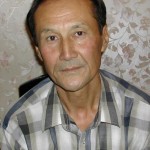
Uzbek man (File footage courtesy of Open Doors USA)

Uzbekistan (MNN) ―Uzbekistan appears to be taking the repression of Christians one step further.

Joel Griffith with Slavic Gospel Association explains, "It seems the authorities are going into private homes and actually confiscating religious books from these homes during the raids they make; and they're also threatening fines."

The case stems from a series of recent raids, as reported by Forum 18 News. Based on the details of the case, Forum 18 began questioning the apparent violations of due legal process, denials of legal representation, misrepresentation defendant pleas, untimely verdicts, and so-called "expert analyses" that confused Protestant books with Jehovah's Witness books.

Griffith notes, "Police confiscated one Bible in the Uzbek language, and then there was a Bible in the Russian language that was confiscated. Then, from one Protestant home, reportedly, a book by John Bunyan was confiscated." It was during that raid, Griffith says, when "police allegedly said that it's prohibited to have such books at home, that they were going to be sent to the Religious Affairs Committee of the government, and that the owner of the books would be fined."

Griffith goes on to say that the alarm bells began ringing because "this latest report on the private homes being raided and books being confiscated is certainly a step up from what they'd been doing previously."

The alleged violations of due process would seem to be unconstitutional, which is the same word used to defend authorities' actions, according to Forum 18. The judge in one of the cases claimed that the defendant was "engaged in anti-constitutional activity and is a member of Jehovah's Witnesses, which was confirmed by the literature confiscated from him."

Wrong on that last count, it turns out. But Griffith says this is more insidious. "Previously, they had been raiding summer camps and trying to shut down churches here and there and stopping public witnessing. But going into private homes is certainly a new twist."

The Baptist in that case filed an immediate appeal, which has yet to be heard. "There was a fine imposed for possessing religious literature. There was a Baptist fined. He was given the equivalent of 40 times the minimum monthly salary. That's about $1300."

Griffith says fear is initially what led to these vaguely-worded criminal codes. "The secular governments of these countries had been concerned about radical Islam. The thought was that if they're going to crack down on radical Islam for the appearance of fairness then, they needed to crack down on everybody."

However, as the countries in the former Soviet Bloc became more Muslim, "No matter what a constitution will say in a lot of these countries, the authorities pretty much end up doing what they want,"says Griffith.

Meanwhile, police have continued their raids and confiscations. "We know that the churches there are going to continue to proclaim the Gospel, no matter what the personal risk they have to themselves," says Griffith. The Body of Christ in places like Uzbekistan need advocates. "Obviously, the western governments will continue to protest and intervene in cases like these. 

But we as believers here in the West, above all, need to pray for our brothers and sisters there and come alongside and support them however we can."

Uzbekistan is #7 on the Open Doors World Watch List of countries known for the persecution of Christians. Pray for pastors trying to lead their churches with limited resources. Pray for courage for Muslim-background believers who experience great pressure from family and society.


Monday, February 20, 2012

Reality of Kazakh religion law comes into focus

Kazakhstan (MNN) ― Fears about Kazakhstan's new religion laws are coming to fruition.

Forum 18 News Service reported last week that the first known use of Kazakhstan's amended religion law went into effect against a Baptist shoe-repairer and father.

Aleksei Asetov was fined what locals estimate to be about a year and a half's average wages for leading a small congregation of believers in his home, according to Forum 18.

"Apparently this was done under some provision that was introduced in the new amendments to the religion laws that we've been talking about thus far. Then this judge, I guess, also banned the congregation from meeting," explains Joel Griffith with Slavic Gospel Association.

SGA has had a close eye on the new religion laws since their inception in October, 2011. The laws seem to incorporate harsher punishments for unregistered religious groups and put into question ministry to small numbers of people or to children. SGA and its Kazakh contacts have been nervously waiting since then to see just how far these laws would go.

The situation with Asetov appears to be one clue as to how the law will be enforced. Although Asetov is not the first religious person to be fined since the new laws were introduced, he is the first to be tried under new penalties. Forum 18 reports that when prosecutors presented a case against Asetov, it was to try him under the old law's conditions. The judge apparently told the prosecutors to start over with punishment suggestions from the new law instead.

It's not a good sign for the direction of Kazakhstan, says Griffith. "At least from what I'm seeing, we're going to start more and more incidents like this from varying degrees of severity just as this new law begins to be implemented across the country."

A number of raids have indeed been conducted on religious groups since October. In one incident, officials raided a church and confiscated all of their literature and religious DVDs, claiming the church was violating the law by distributing the literature. Though the church does not seem to have been distributing it at the time, officials say they must hold onto the materials for at least two months to investigate whether or not  they contain anything "negative."

This is only the beginning for this religion law in Kazakhstan, a nation that until recently has been one of the freer countries in Central Asia when it comes to religious rights.

At this point, though, there are still a number of questions as to how this law will affect its nation.

"What sort of obstacles are going to be in their way for forming a new church because of the numbers of requirements that would be imposed?" wonders Griffith. "Let's say if they're innocently trying to witness their faith out on the street, are they going to be arrested for doing so because they're outside their church building? Who knows? Are they going to be prohibited from working with children?"

For those answers, we will have to wait and pray.

Pray for the church to stay bold and encouraged. Pray that new laws would not prohibit the Gospel from spreading.


Monday, November 21, 2011

Tightening of restrictions felt by Kazakh religious community with prayer room bans

(Photo by Irene)

Kazakhstan (MNN) ― A month after two new religion laws came into effect, Kazakhs are beginning to feel the ever-tightening squeeze of restrictive legislation.

The laws introduced in October cover a great deal of ground in an attempt by the government to eradicate extremism. New restrictions imposed range from registration regulations for religious groups, to fewer rights for children involved with religious activities, to the banning of prayer rooms in public places.

The latter bit of legislation has caused an uproar in Kazakhstan over the past weeks, according to Forum 18 News and Slavic Gospel Association (SGA).

Joel Griffith with SGA explains: "We've seen increasing restrictions being enforced, and it's going across the board, from what we've seen. Not only evangelical churches and Orthodox churches [are affected], but also Islamic mosques are being shut down and prayer rooms being shut down in prisons. And they're citing basically these two laws in doing so," explains Griffith.

Forum 18 reports that prayer rooms in care facilities have already been closed. In one instance, a prayer room that was closed for renovation is simply not being reopened. The hospital claims that it needs the space for beds, but dozens of religious leaders have said otherwise.

Religious leaders argue that prayer rooms are greatly needed in hospitals when people are looking for hope in difficult circumstances. But, church leader Aleksandr Suvorov says, "The government argues that having such prayer rooms allows them to be exploited by extremists."

Griffith says this mentality could be extremely harmful to ministry---prison ministry in particular. Prayer rooms in prisons are being removed in compliance with the laws as well, which could be detrimental for Kazakh prison ministries.

"A lot of churches actually are formed behind prison walls, and these prisoners basically have their own congregations behind prison walls," explains Griffith. "It seems now like [with] some of the prayer rooms, these new laws are being cited by the government to shut them down. And obviously we're concerned if this is the case...it's obvious that prison ministry is going to be made a lot more difficult."

On top of these concerns, as the laws make their presence known throughout Kazakhstan, SGA remains uncertain about children's ministry. "It remains to be seen, now with Christmas coming up, just how are these laws going to be used to impact maybe children's ministries?"

Kazakhstan is just beginning to feel the weight of these new laws. Believers are determined to continue to spread the Gospel, but outreach is getting harder and will likely continue to do so.

"We here as Christians in the West need to not only continue supporting our Kazakh brothers and sisters, but to really engage in intercessory prayer that the Lord would change hearts and that this law would not be as rigorously enforced as it could be. If there would be a change of heart, pray that maybe the constitutional court there would overturn the law or that the law would be repealed. Certainly the Lord can accomplish anything through the power of prayer." 

Monday, November 7, 2011

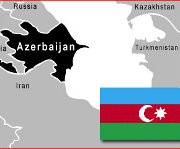
Azerbaijan to tighten restrictions on religious literature

Azerbaijan (MNN) ― By mid-November, Azerbaijan's parliament will have adopted stricter amendments for those who produce or distribute religious literature.

Heftier fines and long prison sentences will now be the punishment for those who do not submit their religious literature to compulsory state censorship before producing or distributing it, according toVoice of the Martyrs, Canada.

Prison sentences will be as long as five years, and fines will be as high as nine years' official minimum wages, reports Forum 18 News.

The new restrictions come just months after an amendment made to Azerbaijan's Religion Law. In June, the nation invoked a requirement for all religious communities that 50 adults must state that they are founders in order for the group to apply for registration.

Over the course of less than 20 years, Azerbaijan has created a Religion Law and added 13 amendments to it, reports Forum 18. The law tightens its grip around religious necks each time an amendment is added, keeping Azerbaijan in the top 25 Most Persecuted countries in the world.

Parliament is set to discuss the new restrictions around November 15. They are expected to adopt the amendments in one reading.

Pray that these restrictions would not hinder the spread of Christian materials, and more importantly the spread of the Gospel, in any way. Pray that the church would continue to grow in Azerbaijan despite increased persecution and pressure.

VOM, Canada has created a report regarding Azerbaijan's relation to Christians. View it here

Tuesday, July 26, 2011

Praying for A Miracle on Children's Religious Rights

Children's rights to attend
 worship services and functions
 in Tajikistan are under attack
 with new laws waiting to be passed.
 (Photo courtesy of Grace Episcopal Church)

Tajikistan (MNN) ―Parliament in Tajikistan adopted two new laws Thursday July 21 which would ban most children under the age of 18 from religious activities.

As reported by Forum 18, these documents are to be forwarded to President Emomali Rahmon for his approval. If President Rahmon signs these legal documents, it could spell out increased suppression of parent and child religious rights in the country.

Joel Griffith with Slavic Gospel Association says, "Apparently the Presidential administration was sort of behind [the effort] to put this kind of a law through to begin with, so the initiative came from there. So if it's not signed, it would certainly be a miracle."

Specifically, the two measures adopted are the Parental Responsibility Law and the Criminal Code amendments. These would affect many religious organizations, including churches in Tajikistan supported by Slavic Gospel Association.
The Parental Responsibility Law, in practice, would place a ban on most children under 18 from participating in religious activities. The Office of Human Rights in Tajikistan told Forum 18 that the law is needed especially for parents who lose control of their children to extremist religious groups.

"I'm sure the government would say that it's aimed basically at extremism," says Griffith. "It's really difficult to know what their real motivation is for passing such a thing, because it goes beyond targeting just what everybody would agree maybe would be extremist elements and ends up impacting mainstream as well.... As the law is worded, it would seem to impact everybody."

On top of that, the Parental Responsibility Law also calls for parents to restrict certain types of jewelry, tattoos, and even names they can choose for their kids.

This, paired with the amendments to the Criminal Code, demonstrates the type of penalty given to violators. A maximum of two years' imprisonment would be sentenced to organizers and participants in things such as unapproved gatherings, meetings, and demonstrations.

Griffith states, "You've got local churches themselves that would be impacted by this; there's question whether children would even be allowed to go to a worship service until they're 18 years old.... It's a matter of deep concern to the churches."

If the laws are enacted and put into practice, state religious affairs officials told Forum 18 that they have specialists who would be in place at religious services to be sure the laws are being followed. If they find kids or teens in religious activities, higher structures will be appealed to.

Griffith assures, "Evangelical churches are going to continue to proclaim the Gospel no matter what, and I'm sure that they are going to continue to teach their children the things of the Lord. But obviously as they proceed to do that, it would put churches and their families at great risk if this [proposed law] is enforced aggressively."

Please pray that these laws would not be signed by Tajikistan's President. If the laws are passed, pray that they truly are limited to extremist groups and would not endanger the evangelical church in the country and that the Lord would protect them.

Proverbs 21:1 says, "The king's heart is a stream of water in the hand of the LORD; He turns it wherever He will." (ESV)