Showing posts with label europe. Show all posts

Sunday, October 6, 2013

Censorship in Azerbaijan is crippling for the church

Azerbaijan (MNN) ― For years, many have been intrigued by novels such as Ray Bradbury's Fahrenheit 451 and George Orwell's 1984. More recently, Americans have eaten up movies like The Book of Eli and Equilibrium.

These are stories of total government control and oppression. In these stories, written works aren't allowed. While fictional in these stories, this is actually happening.

Open Doors USA reports that Azerbaijan is facing this very scenario. Censorship has become increasingly restrictive in recent years, and stricter laws and codes have been enforced to progress this control. While the country still has access to books and other media, it is extremely regulated.

The State Committee is need for the possession, importation, or reproduction of any work. Every title must be inspected. This State Committee also sets the limit to how many of any approved title is allowed. Any book sent to Azerbaijan has to be inspected before it can be released. At airports, too, inspection of books has become regular routine.

Anyone found with illegal material is subject to punishment including the confiscation of the text, raids, detentions, and fines.

This is a big problem for Christians. Even the Bible is condemned to these limitations. Most religious material must be approved. This includes other media, too. This ban and limitation on religious texts, including the Bible and the Koran, has been set in place since 2008.

Even internally it is difficult to produce copies of the Bible. Because printing and photocopy shops must get permission before they print anything, they usually will refuse to copy the Bible. This is because the State Committee usually refuses consent.

Religion overall is already looked down upon by the government. All things religious are controlled by the Committee on Religious Affairs. The government and the people of Azerbaijan are especially harsh toward Christians. This is largely because Christianity is associated with Armenia, Azerbaijan's biggest enemy.

This country needs prayer. We can rejoice that the church is still growing amidst oppression. But as more and more citizens become Christians, the need for Bibles increases. Pray that the church continues to receive converts, and that Christians in this country will grow in their faith in light of the oppression of the government. Pray that the Word will not be stopped despite the government's regulation.

Monday, May 20, 2013

Anti-extremist program may hurt Christians

Sergey Rakhuba with the Kazak Ambassador to the USA.

Kazakhstan (MNN) ― Kazakhstan is again raising eye-brows. According to a report from Forum 18 News, the government would like to implement what they're calling a new State Program to Counter Religious Extremism and Terrorism for 2013-2017.

If adopted in its current form, all places of worship would require security systems and require the teaching of what the government calls "traditional religions."

President of Russian Ministries Sergey Rakhuba met with the Kazak Ambassador to the United States last week. "I was very much optimistic having a chance to openly discuss these issues, but when it comes from the reports from the ground like this, it shows there is a lot more that is to come."

Rakhuba is referring to additional restrictions to religious freedom for evangelical Christians. He believes the new program will put more pressure on evangelical churches and will create more difficulties for their work, but won't stop it. "That's why we are always trying to be proactive and finding ways we can continue to be effective in spite of all these difficulties. That's why School Without Walls perfectly fits this reality."

That program doesn't require registration or a permanent facility. "We provide non-formal training to these young potential leaders," says Rakhuba, "who live in the reality of the difficulties and continue leading their congregations and offering new outreach initiatives."

Although their summer camp ministry may be affected, "now we have to be more creative, so we're not just calling them Bible camps. We will do some other initiatives." Sport camps and other youth ministries will be used to share Christ this summer.

Russia Ministries needs your help to send 5,000 kids across the former Soviet Union to camp. How much does it cost? "$50. That helps us to send one child to summer camp for one week. That also includes a children's Bible or other Christian literature."

Friday, April 5, 2013

U.S. pastor pleads guilty in Russia

Pastor Thomas Kang takes a plea deal in Russia, now free.

Russia (MNN) ― American Pastor Thomas Kang felt compelled to plead guilty to charges in court just outside of Moscow.

On Tuesday, April 2, a hearing was held on the case of Pastor Kang. He and his lawyer decided to plead guilty in order to soften the punishment for the crime.

Wade Kusack, Russian Ministries Project Manager for Religious Freedom Issues in Eurasia, says, "He agreed to plead guilty and received six months in prison and 90,000 rubles, or $3,000, in penalties." Following that, Pastor Kang was released because he had already served seven months in jail.

Kusack says Pastor Kang didn't have a choice. "He accepted the offer from the prosecutor [to] plead guilty and be free. He was separated from his family for almost seven months. It was almost impossible for him to prove the truth." (Click here for more details.)
Kusack says, "We believe that the case was fabricated by the local authorities, that the pastor gave a 'bribe' under pressure from the police officer and had been abetted by his assistant. He believes this was a test by authorities to put pressure on religious minorities. I am afraid they will practice such a situation in the future on other minorities in the future.

The following is the statement by the Russian Guild of Experts on Religion and Law:

Increasingly in Russia, prosecutorial agencies take action against the faithful, against Christian missionaries, and these actions are not, formally, prosecution initiated on the basis of their religious beliefs. Essentially, representatives of various faiths are provoked, and said provocations result in criminal, or other action.

Kusack says, "In this regard, the Guild of Experts on Religion and Law calls on the Investigative Committee of Russia, the Prosecutor General's Office, the Public Chamber of the Russian Federation, and the general public to take note of the case of the Protestant Pastor Thomas Kang, a U.S. citizen, who, as a result of obvious provocation, is under investigation for bribery."

The case isn't completely over. Kusack says authorities took personal belongings from him. "There are many things that just disappeared from his apartment: jewelry, 28,000 rubles, and more things. The lawyer has initiated a case against the police officers who searched his apartment."

Kusack also says Pastor Kang will have another issue facing him. "There's a good chance that Pastor will be deported from Russia because of his so-called 'criminal' past. I don't know what will happen."

Actions such as this, which are clearly targeted at believers who are persona non grata (an unwelcome persons), as well as at active preachers who are unable to defend themselves, will inflict damage on Russia's international reputation as a Christian country. Kusack says, "What transpired with Pastor Kang is a case of blatant persecution on the basis of religion, aided by criminal provocation. There is no doubt that the actions against Pastor Kang were taken with the aim of stamping out the Christian community which he created, and developing a means of expelling him from Russia."

Kusack continues, "We hope that, both within Russia and abroad, the public will respond vigorously to such blatant violations of the rights of believers to religious freedom and freedom to practice their beliefs, which are more and more frequently being threatened under various pretexts on the territory of Russia."

Friday, September 28, 2012

New religion law could force evangelicals underground in Russia


Russian Ministries trains next generation church leaders.
 Pray the new legislation dies for lack of support.
Russia (MNN) ― Traditional religious leaders and lawmakers in Russia are touting a proposed new law that could require a 3-year prison sentence for insulting the religious feelings of believers and vandalizing holy sites. However, bloggers and opinion columnists across the country believe the law will only make religious freedom more difficult, especially for evangelical Christians.

Mission Network News caught up with Wally KulakoffRussian Ministries in Moscow. He says he's concerned for one important reason. He says the Duma has openly proclaimed that there are only four traditional religions in Russia. 

"That's orthodoxy, Islam, Judaism, and Buddhism. And if you say anything contrary to, or against. then you are insulting the four traditional religions of the former Soviet Union. What place do Protestants have in the former Soviet Union?"

Kulakoff says evangelical Christians insult many when they say God had a Son. "He became the Lamb of God who takes away the sins of the world. Islam says that they have a god who does not have a son, and anyone who claims God had a son has no right to live on this earth. Now, who is insulting who?"

Many who oppose the law believe this only opens Pandora's box. Kulakoff says, "Non-traditional religion in Russia with be chastised, prohibited, [and] will have to go underground. There will be no room for the Protestant church."

Russian Ministries School Without Walls program is discipling next-generation church leaders -- young people who are already leaders in their community. If this law is passed and it's interpreted harshly, Kulakoff says, "Then School Without Walls goes underground and will continue to have an impact, but in another form. Rather than openly, it'll be more excluded and secluded."

This law could have far-reaching impact. Kulakoff says the greatest insult to the Orthodox Church is to have a Bible translation that they didn't authorize. "That means Russia will say you can only use one Bible; then, the more modern, the more contemporary translations will be illegal."

In the meantime, Kulakoff and other Christians in the former Soviet Union are asking you to pray that the law would fail. 

They're also asking you to support their work, not only with your prayers but your financial support.


Tuesday, September 11, 2012

Church destroyed, Russian evangelicals are concerned


Russia (MNN) ― Is Russian turning the clock backward as it relates to religious freedom? Russian Christians are uncertain what the demolition of the Holy Trinity Church will mean for the future of religious freedom in that nation.
According to Forum 18 News, the incident took place on September 6 just after midnight.

Paul Tokarchouk with Russian Ministries is in Moscow. He says police and civil volunteers "opened the gates and doors, got inside, and took all of the belongings -- some sound equipment and other things that are typically in the church. They just started to destroy walls, and step by step [the church was destroyed].

Tokarchouk says this demolition is making headlines around the country. "This is shaking Moscow, and it looks like it's spreading out across of Russia."

Mikhail Odintsov, an aide to Russia's Ombudsperson for Human Rights, told Forum 18 from Moscow on 6 September, "This is the Soviet approach: to come in the middle of the night with mechanical diggers. This is unacceptable."
According to Tokarchouk, church leaders are voicing their concerns to high ranking government officials.

This situation is a little complicated. Property rights aren't the same as they are in most western nations. Tokarchouk explains what it was like during the days of the Soviet Union. "We had no institution of property belonging to people because Moscow authorities had provided land for this church. [However,]  seven years ago the government said, 'We have reason to take the lot from you,' and that's what they did."

Typically in a situation like this, the government provides an alternative lot in the same district. However, it doesn't look like this was done.

Odintsov added that members of Holy Trinity Church in Kosino-Ukhtomsky District in Moscow's Eastern Administrative District (Okrug) had already spoken to the Ombudsperson's Office by telephone earlier in the day and are expected to lodge a written appeal to Ombudsperson Vladimir Lukin about the church destruction.

Tokarchouk says Christians have faced persecution in some areas, "There is some marginalization toward evangelicals. If it's a big trend, this is really a concern."

Holy Trinity Church was established in 1979 by Serafim Marin, a Pentecostal who had spent 18 years in Soviet labor camps for his faith. It gained registration with the Soviet authorities as an autonomous Pentecostal community in the late 1970s. However, the city authorities forced it out of its first building in 1995. The replacement "temporary" church -- bulldozed today -- was built on the current site in 1995-96.

Officials consistently refused to legalise the building and prevented it from being linked to the water and electricity supply and sewerage. Holy Trinity's Pastor, Vasili Romanyuk, and the congregation have long battled to save their church from confiscation and destruction. "We put a lot of our resources into this building," he told Forum 18.

Tokarchouk says the church has faced persecution before. "In the midst of persecution, the church is growing. We'll be motivated to cooperate, to get stronger, to be solid for Christ's sake so the Gospel can be proclaimed in our country."

Will this prevent Russian Ministries from helping local churches? "Sometimes it will be hard, [but] we will still keep going to continue to help the church raise young generation leaders to proclaim the Gospel even in the midst of some restrictions."

Wednesday, July 25, 2012


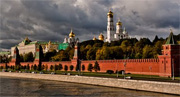
Kremlin in Moscow (photo by Oleg Koryagin)

Russia (MNN) ― A new law in Russia will punish non-governmental organizations for receiving funding from abroad. 

The bill cleared the upper house of parliament and was signed into law last week by President Vladimir Putin. Foreign government leaders and Russian activists are concerned. Under the bill, if an NGO receives funding from abroad, they have to register as "foreign agents."

President of Russian Ministries Sergey Rakhuba says while the law is specifically targeting those involved in political activities, "We see that there is an effort to control protests. But I know from experience that many local authorities will interpret that in order to control religious activity."

While government leaders say the law applies to NGOs engaging in political activities, opponents say it is a Kremlin attempt to silence critics.

Rakhuba's response to this new law isn't from a religious persecution angle. "We're not saying that this law was aiming at evangelical or mission organizations, but since they are under the category of non-governmental organizations, definitely local authorities can interpret it as a signal to control specifically religious activities."

The term "foreign agents" will push many Russians away, especially organizations that would use outside funding to provide aid, resources, and the Gospel.

Rakhuba says Christian NGOs will be affected. "Most of those who receive support from foreign donors will be very much restricted. And, unfortunately, they will need to be more creative. Many of them will ignore (the law) and go back to receiving support underground."

"But, I don't think it will stop mission work," says Rakhuba.

One of the oldest NGOs in Russia says not only will they ignore the law, they'll challenge it in court. Rakhuba says, "Of course this law needs to be challenged. It needs to be challenged, not a by a few in Russia, but I think the foreign community, the human rights networks, need to address this issue and create some pressure. This law needs to be revised."

Will Russian Ministries curtail their work? Rakhuba says there's no need for them to do that. They need to continue reaching the lost through young church leaders. "True change will come when the Gospel will reach thousands and millions of Russian citizens." That's when these types of laws will end.

In the meantime, ironically, Russian Ministries needs your support. "The need in Russia, training next generation leaders, is bigger than ever before. And we still need support to provide resources for these young people." The funding covers Bibles, other Christian literature, and training and more.


Thursday, May 3, 2012

Sharia law concerns ministry in Chechnya

Mission Network News: "Russia (MNN) ― The government in the autonomous region of Chechnya is openly approving Muslim honor killings. Over the last few years, dozens of bodies of young Chechen woman have been found.

President of Russian Ministries Sergey Rakhuba says Chechnya's president "approved publicly, saying the killings were okay because the lady that got shot by relatives publicly had loose morals. He went on to describe women as the property of their husbands and say their main role is to bear children.""

Read more...

Monday, March 5, 2012

BBC says it's okay to mock Christians

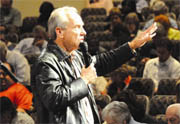
Evangelist Sammy Tippit

International (MNN) ― There has been a perceived bias against Christians in the media in the western world, but now it's more than perceived. According to the Christian Institute in the United Kingdom, the head of the BBC, Mark Thompson, says the company would never mock Mohammed like it mocks Jesus.

He admitted the religious bias suggesting that mocking Mohammed might have the "emotional force" of "grotesque child pornography." But he claims Jesus is fair game because Christianity has broad shoulders and fewer ties to ethnicity.

That's not sitting well with Christians world-wide, especially evangelist Sammy Tippit who travels all over the world. Tippit says it's not good to mock any religion. He says it's a dangerous precedent. "I think the type of attitude and philosophy that's being expressed at the BCC prepares people for persecution."

He says media bias in Rwanda prepared that nation for genocide. While this may be an extreme case, Tippit says it's not right. "If this kind of drumbeat continues, it could be very bad for Christians, not just in the western world, but all over because the BCC has its tentacles all through the world."

Tippit is issuing this call. "I would just issue a call for BBC to stop their unethical--and what could be and become a very immoral--practice. I would say 'stop it' before someone gets hurt. Probably people are already being hurt."

Christians are being urged to speak out about this, but Tippit saysbe different. "We don't need to respond with 'insult for insult' and respond with anger to those who hate us. We need to have the proper response. And yet, I think it's proper also to call for repentance among those who are doing that."

While it was common for Communists to make fun of Christians and other religions, Tippit says this isn't Communism. "When you start seeing this in the western world--the free world, the lying of what Christianity is, the media is very powerful in this day. And there are a lot of people who will believe what they see on that tube, so we need to speak out about these things."

Tippit says the west desperately needs revival. If that happens, he believes Christians will face even more persecution.
Sammy Tippit ministries offers a number of resources on their Web site to help Christians going through difficult circumstances. Click here to find those resources.

Monday, December 5, 2011

China religious freedom record on display

    Belgium (MNN) ― Religious freedom is nonexistent in China, according to ChinaAid  founder and president Bob Fu. He'll be testifying before the European Parliament on Wednesday.
    Fu said human rights and religious freedom in China have deteriorated to its lowest point since the period after the crackdown on the 1989 Tiananmen Square student-led pro-democracy demonstration.
    Fu and several other ChinaAid witnesses were invited by the European Parliament to testify at its hearing on "the human rights situation in China" at the parliament building in Brussels, Belgium.
    The next day, the delegation will be in The Netherlands to participate in a human rights forum on "the situation of Christians in China," where Fu will be making a similar presentation on the serious deterioration of religious freedom, the rule of law and human rights in general.
    At the EU hearing, ChinaAid will deliver recommendations that were requested to help the European Union set its China policy and address human rights problems in China. In attendance at the hearing will be members of the European Parliament and their assistants.
    This is the second time that ChinaAid and Fu have appeared before the European Parliament. In 2009, Fu and two Christian lawyers engaged in rights defense work also testified before the same body.

    Fu expressed appreciation to the European Parliament for the opportunity to testify.
    "The grave human rights violations by the Chinese government [are] a global issue," said Fu. "We urge the European leaders to take more concrete steps to encourage the Chinese government to improve its record by building an international coalition founded on an unwavering solidarity with the Chinese rights defenders community."
    In Ridderkerk, The Netherlands, the ChinaAid delegation will be speaking to an audience of mainly NGOS, representatives of the missionary organizations of several churches, some individuals with ties to China and members of the Dutch Political Reformed Party (SGP), Holland's most orthodox Protestant party, as well as members of the Dutch media.