Showing posts with label Islam. Show all posts

Wednesday, October 30, 2013

Iran's abuses widespread despite reform promise

(Image courtesy Voice of the Martyrs)
Iran (MNN) ― Iran's regime has made stopping the spread of Christianity a cornerstone of its crackdown on religious freedom.

It's those actions and others like them that have drawn closer scrutiny from the United Nations. The UN's special rapporteur for human rights in Iran has said the country has shown "no sign of improvement" in human rights and "continues to warrant serious concern."

Spokesman for the Voice of the Martyrs USA Todd Nettleton says Iran dismissed the findings. "Their instant response was, ‘Well, this is biased. He doesn't know what he's talking about.' But the reality is: this is what we see happening inside Iran."

There are estimated to be as many as 370,000 Christians in Iran, according to the most recent U.S. State Department report. The UN report noted Iran's "authorities continue to compel licensed Protestant churches to restrict Persian-speaking and Muslim-born Iranians from participating in services, and raids and forced closures of house churches are ongoing.... More than 300 Christians have been arrested since 2010, and dozens of church leaders and active community members have reportedly been convicted of national security crimes in connection with church activities, such as organizing prayer groups, proselytizing, and attending Christian seminars abroad."

Recent attempts to show a more moderate face aren't really convincing, adds Nettleton. "They're not going to fool the people inside Iran who know this is going on, and they're not going to fool the international community because the stories are just too consistent. Even though they would like for the information to stay locked in Iran, it does get out, and groups like the Voice of the Martyrs and others are able to say, ‘This is what's really happening behind the scenes.'"

In fact, a Voice of the Martyrs Canada report indicates Iranian Christians are requesting prayer following a series of arrests that took place about the time the government released some prisoners in an effort to appear more liberal.

At least 20 Christians, mainly from Muslim backgrounds, were detained in Tehran, Karaj, Isfahan, and Tabriz. As a sign of being politically progressive, the government of newly-appointed President Hassan Rouhani pardoned and then released 11 prisoners of conscience on September 20. Two of them were Christians.

Meanwhile, Christian Solidarity Worldwide released a report that documented the sentencing of four Christian men to 80 lashes on Oct. 6.  The men were arrested in a house church after a communion service last December and charged with consuming alcohol in violation of the theocracy's strict laws. The group has ten days to appeal.

How does the new regime respond to international concerns? It's not really up to the administration, explains Nettleton. "Presidents will come and go. The Supreme Council is really where the power's at in Iran. They will decide what the human rights situation is in Iran, and as I said, they're Islamic mullahs, so they're going to go according to Islamic law which teaches that if you leave Islam to follow another religion like Christianity, you're an apostate. The call for that is the death penalty."

Young Iranians, who make up a majority of the population, are dissatisfied with both their religion and government. Why? "One of the real side effects of the human rights situation and the abuse of people in Iran is that it's being done in the name of the government, which is an Islamic government. The people identify that as being done by Islam, so they see the failure of Islam in their country, and they are very open to the Gospel."

That's resulted in a rapidly-growing Church in Iran, which cycles back around again to clerical rulers who see Christianity as a threat to Iran's majority ultra-orthodox Shiite Islamic religion, a crackdown, disillusionment, and more growth.

Persecution has intensified since 2005, with marked increases in 2011 and 2012. Authorities raid house church services, detain worshipers and threaten church members. The publishing, importation, or reprinting of Bibles or Christian literature is illegal.

VOM supports satellite TV and radio broadcasts that are instrumental in sharing the Gospel and teaching the growing church. Nettleton observes, "That's the good news. It is coming with persecution; we believe there are 42 publicly known cases of Christians who are currently in prison in Iran, so that growth is coming with a price."

It's very difficult for us to truly understand the tremendous pressures Muslim converts face in a society that harshly opposes the Christian faith. The Voice of the Martyrs comes alongside this remnant. "One of the very significant ways that we're involved in Iran is to produce Bibles for the Iranian church and deliver them--get them into the hands of the Christians inside Iran," Nettleton explains. "Another thing that we're involved in is helping people to advocate and encourage some of those Christians who are in prison."

Friday, October 11, 2013

Christian man prays for the men stoning him

Global Advance provides many opportunities to get involved
 with spreading the gospel. (Photo by Global Advance)
Central Asia (MNN) ― In a country that stresses religious freedom, it is often difficult for Americans to understand what it means to live and die for faith. Global Advance reports about pastor Ibrahím, a man who knows first-hand the dangers of pursuing God.

Ibrahím lives in a community of radical Muslims. His country, unnamed for security reasons, is one of the "Stan-Nations," all of which are Islamic countries in which the persecution of Christians is not uncommon. The region, in general, is charged with violence.

When Ibrahím converted to Christianity, his Muslim friends decided that it was necessary to kill him. It was their "sacred duty" to stop the spread of Christianity, and this was the way to do it.

His friends informed him that he could say goodbye to his wife before they stoned him. Ibrahím chose to keep the situation from his wife, and told her he would be right back. He did not want to risk her life or alarm her.

The friends took the new Christian to the local dump. There they began beating him. One man picked up a large rock to complete the act of murder by hitting Ibrahím in the head. At this, Ibrahím launched aloud into prayer for his abusers and their children. His prayer was not in vain.

The man holding the rock dropped it and yelled, "I cannot kill the man that is proclaiming blessing over my children!" God was watching over His faithful child.

Many Christians around the world experience similar situations every day. Unfortunately, their stories don't always end the way Ibrahím's did.

According to one of Global Advance's sources, February 2012 saw a 309% growth in Christian-targeted terrorist attacks in Africa, the Middle East, and Asia.

You can help. Though there is not always a direct solution to this violence, there are ways to strengthen, encourage, and support Christians who are undergoing persecution. One of ministries of Global Advance is the Persecuted Church Fund. The money raised will go to support these efforts. For more information on this and other Global Advance ministries, click here.

Pray for continued strength for Christians who are persecuted, and for the increase of their faith. Pray for the success of the gospel in these countries so resistant to it. 


Upcoming political change triggers a rise in persecution

Image courtesy Mission India)
India (MNN) ― Christians are becoming scapegoats in the run-up to India's national elections.

According to ASSIST News, Hindus are trying to secure votes in the run-up to next spring's national elections. India's politics have two major players: the secular Congress Party, which has ruled India for the past decade, and the Hindu nationalist Bharatiya Janata Party (BJP).

"The BJP official party platform is that India is a country that's only for Hindus," says Dave Stravers of Grand Rapids, Michigan-based Mission India. "Hindus have the rights, and any other person of any other religious persuasion should leave the country."

As a result, Christians are coming under fire.

Sajan George, president of the Global Council of India Christians (GCIC), told Morning Star News that persecution in Karnataka state increased from 4 attacks between the months of January and May to 21 attacks from June to mid-September.

"The Hindu extremists want to show their existence by attacking the Christians, and sadly the present Congress government is not serious about these attacks launched against the Christians," Senior Advocate S. Nova Bethania of Christian Legal Association told Morning Star.

"Christians are targeted because of the very fast growth of the Christian Church," states Evans. "We actually have seen presentations by Hindu leaders saying, 'The growth of Christians is so fast in our region, within a generation we'll be majority Christian if we don't put a stop to this.'

"That fear of losing political power when your party is based on religion, because so many people are turning to Christ: that's really the basis of the persecution."

In mid-September, a mob of Hindu extremists beat a 50-year-old believer and dragged her around the streets, Morning Star reports. They also tried to re-convert the woman to Hinduism, pouring water on her to symbolize religious cleansing and applying a red dot to her forehead.

The attack lasted a total of six hours. The woman was eventually rescued by her sister-in-law and taken to a hospital where she was treated for internal injuries and multiple contusions.

"What I am suffering is nothing compared to what my Lord Jesus has suffered," she told Morning Star. "I will love Him forever for giving me a new life."

Mission India workers face the same dangers.

"Our workers are threatened every day," says Stravers. They are "beaten up, attacked, forced out of locations."

Despite daily persecution, the Gospel is spreading and the Church continues to grow.

Mission India's Adult Literacy program and Children's Bible Clubs are widely accepted by Muslim and Hindu populations alike. Click on each program name to learn more.

"Without literacy, [people] cannot participate in the economic growth of India," explains Stravers.

India is one of five developing world economies known as BRICS: Brazil, Russia, China, and South Africa compose the rest of the acronym. These countries have experienced an economic boom over the past decade.

Rapid growth isn't limited to the economy.

"I'm just so impressed and overwhelmed, in fact, by the response to the Gospel," says Stravers.

"Everywhere we go, people are open to the message of Christ. People seem so eager to get out from under the burden of Islam, or the burden of Hinduism."

Pray that more people will turn to Christ from these religions. Please ask the Lord to protect Gospel workers in India.

Saturday, September 7, 2013

Sudan Christians to be mass evacuated

Christian children in Sudan live in a primitive tent community
 outside the capital. (Photo courtesy of The Barnabas Fund)
Sudan (MNN) ― The Barnabas Fund is on a mission to rescue 3,500 Christians from persecution in Sudan.

Their Exodus mission started last year. Since then, Barnabas has airlifted and bussed 5,000 Christians to safety in South Sudan.

Because of recent generous donations, Barnabas is initiating a second wave of rescues. Their organization is working with Africa Inland Church to transport 3,500 more Sudanese Christians to South Sudan.

Suzy, a young mother, was one of those rescued by the Barnabas Fund's Exodus mission. She says, "After many years of suffering and prayers, God opened the way for us."

Barnabas still needs $118,000 to complete the mission. A bus trip to South Sudan for just one person costs $169. Barnabas is prioritizing the rescue of needy children and women, two-thirds of whom are widows.

The clock is ticking. Rainy seasons are coming, and the Christian tent communities could quickly transform into bog-like conditions. At times, the mud is reported to be waist-high, according to Barnabas.

Sudan is 98% Muslim under Sharia law. President Omar al-Bashir’s goal is to create a "100% Islamic constitution." After their nation split in 2011, Christians in Sudan who could afford transportation escaped to South Sudan. These Christians are able to start a new life without the oppression and hostility they suffered in Sudan.

However, many Christians are still trapped living in tented camps outside Khartoum, Sudan’s capital. They have little access to food or safety. Christian leaders in Sudan have been kidnapped, arrested, threatened, and many of their churches destroyed.

Please pray for the evacuation mission and for the safety of Christians still living in Sudan.

Tuesday, July 16, 2013

Christians have a unique voice in Middle East democracies

Todd Nettleton (Courtesy of VOM)
Middle East (MNN) ― The coup in Egypt, civil war in Syria, uncertainty in Lebanon, and disenfranchisement in Iran. All of these issues in the Middle East spell trouble for citizens of these nations whether they are Muslim or not. While Christians are endangered as well, opportunities for the Gospel abound.

Spokesman for Voice of the Martrys USA Todd Nettleton says Christians are involved in politics across the Middle East, but that's not their top priority. "We know that Christians are involved really across the Middle East, as much as they can be in the political process. But their first priority is not politics. Their first priority is to serve the Lord and spread the Gospel."

The question is: with all the unrest, are people in these nations ready to hear it? Nettleton says "yes." "Ten or 15 years ago we would talk about one Muslim coming to Christ. Today, we're not talking about one Muslim, we're talking about hundreds and even thousands of Muslims coming to Christ."

What about the violence in these nations. Can ministry happen in places like Syria, for example? Nettleton says, "There is ministry that's going on in these situations of great upheaval and sometimes even great suffering. There are Muslims who are coming to see the hopelessness of Islam."

Nettleton says Christians have a platform to share. "Christians can have a great ministry simply by presenting the hope of the Gospel and the hope of eternity with Christ."

Helping to perpetuate this is many of these Islamic governments like Iran. "30+ years of an Islamic government, the people look at the failures of the government,nd they see them as failures of Islam."

Those failures open other doors. Nettleton explains: "If Islam doesn't really work, if it fails, what are other options? That is a great time to say, 'Well, let me tell you about Jesus. There is another option.'"

Now is an important time for Christians to pray. "We are right now in the midst of Ramadan. This is a key time for outreach to the Muslim world. Muslims are thinking about spiritual things, things of eternity. So, this can be a great time for ministry, for Gospel seeds to be planted."

If you'd like to help Voice of the Martyrs work on behalf of persecuted Christians in the Middle East and worldwide, click here.


Thursday, May 23, 2013

Nigeria adds curfew to state of emergency

(Cover photo: Boko Haram. Story photo:
Burned out homes. Images courtesy Christian Aid Mission)
Nigeria (MNN) ― Nigeria's military is striking back against the insurgency of the Boko Haram.

Boko Haram has battled the government since 2009 in an effort to impose Islamic law on majority-Muslim northern Nigeria. It's been a bloody fight. More than 3,000 people have been killed in Boko Haram-related violence, including hundreds in government counter-insurgency operations.

With the recent uptick in violence, the military imposed a 24-hour curfew in 11 parts of the northeastern city of Maiduguri, the home base of the Boko Haram.

A state of emergency is also currently in force in Adamawa, Yobe, and Borno states. Brittany Tedesco is the Africa Director for Christian Aid Mission, your link to indigenous missions. She explains, "The curfew is from 6 in the morning till 6 in the evening. That, as you can imagine, is really affecting their work."

On Friday, U..S Secretary of State John Kerry urged the Nigerian army to show restraint and not violate human rights as it pursues the militants. However, the rebels are not so circumspect.

Christian Aid-supported Missionary Crusaders Ministries in Nigeria have had to respond to the constant threat. Ministry leader Gabriel Barau writes, "In as much as our missionaries remain committed to sharing Christ with the unreached, we need your prayers and support." Just last month, says Tedesco, "Terrorists set fire to three of the homes/mission bases of the missionaries that [Barau] is working with."

Discouragement is one major challenge. Fear is another. The attacks were personal. "The missionaries are currently staying at the mission school of missions until [Barau] can provide accommodation for them. On top of that, there's the follow-up and the discipleship that he provides to new believers."

Barau is scrambling to get the survivors of the fire resettled, Tedesco adds. "Thanks to help of our donors, Christian Aid was able to send some funds to rebuild these homes/mission bases.
"
Each simple home, which doubles as a place for cell group meetings and discipleship of new converts, costs $3,500. The need is especially urgent now as the rainy season is about to begin and will halt construction.

Since 1983, Barau has trained and sent out missionaries to share Christ with the unreached of Nigeria. The ministry has grown, in spite of the harassment and persecution coming from the Boko Haram. Despite being targeted, prayer cover has been their mainstay. Tedesco says, "None of these missionaries have been harmed. There are 183 missionaries working with this ministry. None of them has been harmed or killed."

Many of their mission fields are located in the country's Muslim northern region, where the majority of Boko Haram attacks have occurred. However, Tedesco says, "This ministry is committed to moving forward despite the danger that they're in right now. They've reached two new tribes with the Gospel."

Safety IS a concern. Christian Aid has been working closely with this ministry to help them relocate their headquarters. "The headquarters office that they're renting is located in Adamawa state, where Boko Haram has been striking repeatedly." The project has been a long time in coming when the risk of attack is imminent.

Still, God has been faithful. Tedesco says, "We are in the home stretch, praise the Lord! Right now, all we need is the windows, the doors, and flooring." The team will move into this office as soon as the roofing is completed.

Please pray for wisdom for Gabriel Barau as he leads the work of Missionary Crusaders Ministries, and pray that terrorized Nigerians will experience a return to peace in their homeland. "Continue to pray for the Lord's hand on this ministry, to give discernment to the ministry leader as to how to move forward in the safest possible way, and also just for protection for these brave missionaries who are risking it all to remain on their fields."

Saturday, March 2, 2013

An Islamic Sudan may become a reality

(Cover photo by Bread For the World.
Story photo by Kids Alive International)

Sudan (MNN) ― Sudan is quietly slipping toward becoming an Islamist state. Sudan's President Omar Hassan al-Bashir has said he wants to adopt a "100 percent" Islamic constitution now that the South has split off.

Christians worry they won't be able to practice their faith--a concern that's been borne out in action by Sudan's recent crackdowns. Matt Parker, Vice President of Operations at Kids Alive International, says, "Although the government itself is saying there is religious freedom, really those are empty words."

Parker goes on to say that Kids Alive partners have shared stories this week about churches that have been destroyed, as well as a corresponding wave of arrests and deportations. "We do know of other Christian organizations in the area (in fact, I spoke to the director of another organization just this week) who have lost some of their key staff and are really concerned about what the future holds." What's more, "I've heard stories this week of offices of Christian organizations being broken into, raided. There are reports of orphanages and schools being closed."

Although officials strongly deny any discrimination against Christians, Parker says, "Christians in Sudan, churches, are very fearful about what the future holds, but there's very little reported in the media about this."

Bashir has been facing pressure from religious hardliners. The Sudan Tribune reports that a group of Islamists recently signed the "Islamic Dawn" charter that would establish Sharia law in Sudan. Further, the charter would ban any parties opposed to the move. The recent round of arrests might be an effort to appease these groups. Parker explains, "We've heard of people being arrested. We've heard of people being deported from the country for sharing about their faith. At the same time, there are Christians in Sudan that are committed to sharing the Good News."

Kids Alive International has a presence in Khartoum. "We have a program working with 30 former street children, providing them with quality care, residential care, based on the compound of a church." The staff, while not directly affected by the closures and arrests, are watching the situation closely, says Parker. "We're very aware that we may have a limited window of opportunity to be there, and we're committed to being there for as long as we can and making the most of this opportunity that we have to be witnesses for Christ."

The Kids Alive ministry is Christ-centered, focused on fulfilling the physical, emotional, and spiritual needs of children. For now, they're still operating normally. "Be praying for churches. Be praying for Christian leaders in Khartoum, praying that God will strengthen them and give them wisdom in this situation."

Awareness is a big part of how you can help. Parker says because of the potential for disruption, "pray for our ministry and the 30 boys that we care for. Pray that these boys, each one of them, would grow up to be godly men."

Friday, December 28, 2012

2012: Boko Haram's bloodiest year

(Photo courtesy of Christian Aid)

Nigeria (MNN) ― Boko Haram, a Nigerian militant Islamist group, had their bloodiest year in 2012, responsible for over 750 deaths.

General Aziza, Nigeria’s former national security advisor, says the upscale in Boko Haram’s terrorist attacks may be linked with the upcoming 2015 Nigerian presidential elections.

When President Goodluck Jonathan, a Christian, was elected president of Nigeria in 2011, a series of Boko Haram killings followed. Boko Haram made threats on the president to resign or else turn Nigeria into an Islamic nation.

Rae Burnett, the Africa Director for Christian Aid Mission, explains, “I do believe that it’s spiritual warfare, but it’s definitely the desire to see that Islam is the world religion. They start where they are, and these guys are Nigerian, so they want to be empowered in Nigeria.”

Several of the Muslim-majority Northern states began declaring themselves under Sharia law after the 2011 elections. Of the 32 Nigerian states, 12 currently are govern by Islamic Sharia law. 2015 will be Muslims’ next chance to gain power in Nigeria’s political arena.

However, Boko Haram grew quiet on the large-scale attack front earlier this month. The fact that Christmas was approaching—the biggest Christian holiday of the year—wasn’t lost on anyone and created an eerie silence. Attacks were expected, especially since Boko Haram has declared intent to eradicate Christians from Nigeria.

And Boko Haram militants have the means to back up this desire. With ties to Al-Qaeda and funding for weapons, they fight in pockets and avoid any clashes with the Nigerian military. They’ve gotten bolder. According to Burnett, “They do whatever is in front of them. If it’s a school bus, they’ll blow it up. If it’s a school, they’ll blow it up. They’re trying to make people afraid.”

Because of the disjointed nature of Boko Haram’s fighting tactics, several smaller attacks still occur weekly in Northern Nigeria, but they are largely unreported.

Burnett shares, “Once, I read [about another attack] and called my friend [in Nigeria] and said, ‘Why didn’t you tell me about this?’ He said, ‘Look, if I tell you about every terrorist attack, we would be on the phone all the time.’ They’ve become so common place that they are happening every day. We don’t hear about them.”

The attacks have gotten so bad in the state where Christian Aid’s headquarters are located that they need to move to a safer site. But Christian Aid can’t do it without the funds. Out of the $40,000 needed, they only have $10,000—enough to buy the land and lay a foundation. Christian Aid still needs $30,000 to finish the headquarter buildings and residences.

“They really need to move from the state where they are now,” says Burnett. “Two and three times a week, they are suffering terrorist attacks.”

But despite the danger, the 120 missionaries in Nigeria associated with Christian Aid are staying in the ministry field. “They are committed to making the Lord known and dying for Him if need be,” says Burnett. “They’re doing wonderful work, and many people are coming to Christ.”

Pray for Christians in Nigeria to persevere and hold fast to their hope in the Lord. Pray for many others in Nigeria to come to know Christ and for church leaders to advance their ministry.

Thursday, December 20, 2012

Some resignation, optimism in advance of Saturday's referendum

Egypt protests near Presidential Palace
(Photos courtesy of Moud Marthez)

Egypt (MNN) ― The Muslim Brotherhood hoped that an overwhelming approval to the draft constitution would quiet the restive opposition. 

However, that was not to be the case in either scenario. First, although the first round of voting has brought a 56% "yes" vote to the constitution, it isn't a done deal. Second, protestors have been packing the streets to show their discontent with the process. 

Despite Islamist claims that a win proves they have a mandate, the opposition says the whole process has been rushed, there have been irregularities at the polls, and turnout: low. There may be enough to the accusations that the Justice Ministry has launched a probe investigating the allegations. 

It's not over yet. Saturday's round covered 10 of Egypt's 27 provinces. The second round of voting is this Saturday.
Paul Estabrooks, a spokesperson for Open Doors, says a lot of Christians are doing what they can in the referendum. However, "They do have a sense of resignation, and we need to pray that God will overrule in the situation for them." 

Why the concerns? Estabrooks explains, "The draft referendum, they say, is poorly crafted, is too Islamist, and they're afraid that this is going to bring even more persecution against the Christian minority there." More specifically, he notes, "This new draft that Mohammed Morsi is proposing gives the Islamic clerics a say over legislation and over civil liberties. This is the area where believers are most concerned."

Estabrooks goes on to compare the possibilities of a Sharia state to what Chinese Christians have experienced. "It's very much like the old days in China. Believers there were saying, ‘It's not so much the policy that Beijing sends out; it's how the local authorities implement it.'" 

Concerns were heightened when President Mohammed Morsi awarded himself extra powers and an Islamist Parliament. Article 2 of the proposed constitution establishes Islam as the state religion. "Principles of Islamic Sharia are the principal source of legislation," it states. Article 219 spells out those principles as "general evidence, foundational rules, rules of jurisprudence, and credible sources accepted in Sunni doctrines and by the larger community." Article 44 outlaws blasphemy.

If it's approved in its current state, the constitution calls for a parliamentary election in early 2013. There are fears that the new parliament will consist of nothing but people who support the Sharia turn. 

What's more, if the Islamists succeed in their gambit for power, believers expect even more harassment, oppression and outright persecution. "They hear the preaching every Friday from the mosques, where the local clerics sometimes can be far more strident in opposition to them than even the political leaders."

But will the opposition quit? That's unlikely. It's not Christians alone who oppose the shift to Islam, says Estabrooks. "There are a number of Muslim people who are also opposed to this constitutional draft because they see it as a negating of the whole Arab Spring initiation. It just transfers absolute power from one group to another."

However, some Christians believe that the recent wave of persecution has prompted many nominal Christians to turn to Christ for solace. It means hearts are united, and that, says Estabrooks, brings a sense of hope. "Believers are going to be in a situation where they have a wonderful opportunity to exhibit a Christ-like lifestyle and a response to what happens in their country. I think that's how we should pray, that first of all, we will be led and guided by the Holy Spirit in their responses, and that what they do will indeed reflect true Christian values."

Egypt is a nation in its birthing throes. Estabrooks says that Open Doors has had to adjust to changes almost as rapidly as the national believers do. He explains, "On the one hand, the way we were working before has been interrupted, of course, because of the instability. On the other hand, that has enabled us to distribute more Scriptures, more training materials, and more children's materials because of the spiritual growth that's occurring there."

Wednesday, September 19, 2012

Growing number of believers cause unease among Muslim leaders


Afghanistan (MNN) ―According to the Mohabat News Agency, Muslim officials are calling for action against believers. This is nothing new for the Islamic nation: 
Afghanistan is ranked #2 on the Open Doors World Watch List. But the "rate of growth of Christianity in Afghanistan" is causing unrest among Muslim clerics.

In a recent article, Mohabat News said Islamic seminary students and Muslim clerics called on President Hamid Karzai to "limit the number of aid-workers and Christian missionaries coming to Afghanistan" to keep Afghanis from converting to Christianity. The Iran-based news agency also cited the actions of Afghani Muslim clerics, who "warned the country's government against the spread of Christianity."

Recent turmoil began after a Kabul-based TV station reported the conversion of several Afghans to Christianity and aired photos of them praying and being baptized. This reportedly sparked anger in the Parliament, and some members asked to convict believers under Sharia Law. Under Sharia decree, if someone leaves Islam and converts to another religion, they can be executed.

Ask God to protect these new believers.

The Afghan church is completely underground; the last church building was destroyed two years ago. The small number of known Afghani believers risk their lives each time they gather in small house meetings. Pray for courage and perseverance for Afghani believers. Pray that the Gospel would spread despite significant challenges.

Monday, August 20, 2012

Pastor Nadarkhani to face charges Iran

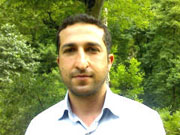
Pastor Yousef Nadarkhani has been in prison for more than 1,000 days.
Iran (MNN/ACLJ) ― The Iranian pastor who has spent more than 1,000 days in prison will be headed by to court. Iranian authorities are demanding Youcef Nadarkhani be back into court in Iran September 8, 2012 at 9:00 AM to answer for "charges brought against him."

According to the American Center for Law and Justice, it's unclear if the charges are new or are connected to his apostasy conviction. Nadarkhani was convicted and sentenced to death for apostasy: becoming a Christian. When Iranian officials demanded that he recant his faith in Jesus Christ or die, he responded, "I cannot." He has been illegally imprisoned and separated from his wife and two boys since 2009.

The ACLJ has obtained a copy of the official Iranian court summons demanding his appearance.

What is clear is that his new court date will come after more 1,060 days spent in prison for nothing but his faith in Jesus Christ--an imprisonment that violates Iran's own constitution.

The ACLJ is continuing to work with contacts in Iran, the State Department, and foreign diplomats to pressure Iran for the release of this persecuted pastor. The Tweet for Youcef campaign continues to grow, now reaching more than 2.8 million Twitter accounts around the world with daily information and updates about Pastor Youcef.

Continue to pray for Nadarkhani and other Christians who are being persecuted for their faith. The church is growing in Iran, which is why the government is taking action against Christians.


Wednesday, July 18, 2012

Gaza Christians protest


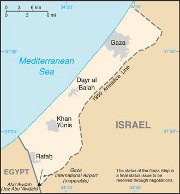
Gaza (MNN) ― Despite their low status in the region, Christians were bravely protesting on the streets of Gaza on Monday after two believers were forcibly converted to Islam, according to the Associated Press.

Carl Moeller of Open Doors USA says, "A young man, Ramez, was forced to convert back to Islam after having been a believer. This is just an example of the kind of pressure that Christians live under."

Ramez's parents say he was held against his will and forced to give up his faith in Christ. A woman was also reportedly re-converted.

Moeller says this is not only an unacceptable practice, but it's one that threatens the very existence of Christians in Hamas-led Gaza.

There are less than 2,000 total Christians in Gaza -- whether nominal or evangelical -- out of a population of 1.7 million. Moeller says, "It's quite likely that if pressure continues at this level for any length of time, the community will cease to exist altogether. And then the Christian churches in Gaza will simply be museums about what used to be there."

It's looking similar to the extermination of Christians in Iraq, actually. Although Moeller says the attacks against believers are much more violent in Iraq, the situation is still dire in Gaza due to the low population.

"If the radicals in Gaza -- and that probably defines the majority of the population: radical Islamist ideology -- wanted to, they could eliminate the Christian population very, very rapidly. And this is the great fear."

So although it may only be two believers today, more could follow. And regardless, Open Doors wants all believers there to know that other Christians worldwide are standing with them in prayer.

"The questions that the Christian community have there are fundamentally 'Can they survive?' 'Can they be preserved?' Our commitment at Open Doors is to stand shoulder-to-shoulder with the persecuted Christians in this context," says Moeller.

"Pray that the Church would remain and that they would be given more civil protections. For the tiny minority, these are very important things: that they have the rights that every other person has, and that they would be able to worship Christ freely and without fear that those among their congregation would be made to forcibly return to Islam." 


Thursday, July 12, 2012

Christian legislator's post on the line


Pakistan (MNN) ― A Pakistan Christian legislator almost lost his political seat--but not because he’s a Christian.

According to Compass Direct News, Rana Asif Mahmood’s opponents said he wasn’t qualified for the minorities’ seat in the Punjab Provincial Assembly because his Computerized National Identity Card (CNIC) labels him as a Muslim. But Mahmood qualifies for the seat as a minority Christian.

Mahmood said that the National Database and Registration Authority (NADRA) made an error on his CNIC because his name sounds Muslim, but they refuse to fix the mistake.

Opponents seeking to disqualify Mahmood accepted his statement after he strongly declared on the floor that he was born as a Christian. He asked them not to create propaganda that would falsely lead Muslim extremists to believe he is trying to leave the Islamic faith and thus seek to kill him.

While his Muslim identity didn’t cost Mahmood the seat in the Punjab Provincial Assembly, he did lose a cabinet position and his part in the provincial budget proposal for 2012-2013.

Mahmood stated, “The situation was revealed to me when my son applied for a CNIC a few months ago. He was told that he could not put down Christianity as his religion because the records showed his father to be a Muslim.”

When he learned of the problem, Mahmood said, “[I] reported it to NADRA. After some days, I received my CNIC, and it did not mention religion, so I assumed that NADRA had changed its records.”

NADRA’s system doesn’t let Muslims change their identity in the religion column of their CNIC. However, non-Muslims can make changes to their religious affiliation. Converting to Islam is an especially welcomed change.

Mahmood’s passport identifies him as a Christian, and because NADRA mistakenly identified him as a Muslim, he’s also had to correct his passport twice.

An anonymous NADRA official who spoke with Compass Direct said those applying for a new CNIC are sent a form with their personal information where they are given the chance to identify any mistakes. If someone gave evidence of religious identity and proved the clerical error, the mistake would be fixed.

The official went on to say, “But a clerical error is highly unlikely. Data is cross-checked several times in cases of identity card entries.”

Apparently, Mahmood didn’t see improved results even after following those steps.

Please pray for Mahmood’s safety and perseverance, that he might be a light for Christ in Pakistan’s political arena.

Wednesday, May 23, 2012

Egypt's elections to result in Sharia Law?

Mission Network News: "Egypt (MNN) ― For what many say is the first time in history, Egyptians are heading to the polls today and tomorrow for a truly democratic presidential election.

It's been over a year since the nation ousted Hosni Mubarak from presidency. In the time the nation has gone without a definite ruler, poverty has increased from 42% to 47%, and Egyptians are growing increasingly restless. Now all presidential candidates promise a better Egypt."

Read more...

Thursday, May 3, 2012

Sharia law concerns ministry in Chechnya

Mission Network News: "Russia (MNN) ― The government in the autonomous region of Chechnya is openly approving Muslim honor killings. Over the last few years, dozens of bodies of young Chechen woman have been found.

President of Russian Ministries Sergey Rakhuba says Chechnya's president "approved publicly, saying the killings were okay because the lady that got shot by relatives publicly had loose morals. He went on to describe women as the property of their husbands and say their main role is to bear children.""

Read more...

Tuesday, March 27, 2012

Status of Iranian pastor is in question

Iran (MNN/ASN) ― A well-known publication recently wrote an article stating that Iranian authorities claim Pastor Youcef Nadarkhani will not be executed. Jason DeMars of Present Truth Ministries (www.presenttruthmn.com) which has been following Nadarkhani's case, says that "while this appears to be great news, we cannot trust it."

According to Assist News, DeMars says, "We have documented many instances that Iranian media and government authorities have lied about this case to the public. They have recently acknowledged that Nadarkhani is charged with Christian activities but [authorities] continue to deny that he has been convicted of apostasy."

"We have copies of his written verdict that can easily be found online stating that his only charge is apostasy. In addition, his attorney, Mr. Mohammed Dadkhah, has clearly stated that the only charges levied against his client are apostasy," DeMars said.

DeMars added that Iran wants Nadarkhani's case to disappear from the news so that they can do as they wish with him, but "we will not forget, and we will keep praying and working until he is released."

There also have been rumors circulating once again that Youcef was executed, says DeMars. "These rumors are completely false. We are thankful to be able to confirm that as of March 16, Youcef was still alive. Keep praying and spreading the word to everyone you know; ask your friends and your pastors to do the same."

Meanwhile, a Twitter campaign on behalf of Pastor Nadarkhani has reached one million people worldwide, according the Christian Post.

Pastor Nadarkhani preached to a congregation of 400 before he was arrested by authorities in Oct. 2009. Now the story of his standing for Christ against enormous odds reaches far and wide around the globe.

An online article by Katherine Weber for the Christian Post states that the American Center for Law and Justice (ACLJ) has been at the forefront of Iranian pastor Youcef Nadarkhani's court case, and the group's many endeavors--namely its "Tweet for Youcef" campaign and congressional petition--have seen substantial results.

The article says those who sign up for the "Tweet for Youcef" campaign allow the ACLJ to use their Twitter accounts to post a daily Nadarkhani update, which includes the number of days Nadarkhani has been imprisoned, facts about his court case, and a link back to the ACLJ's Nadarkhani information page.

Since the campaign began in mid-February, it has gained a substantial following, now reaching 1.1 million Twitter users per day in 89% of the world's nations, the Christian Post (CP) reported. Of those nations, 35 are mostly Muslim populated or governed by some form of Shariah law -- including Iran, Saudi Arabia, Pakistan, Afghanistan, Syria, Egypt, and Libya, the ACLJ told CP via an e-mailed statement.

"The ability for people all over the world to express their support for Pastor Youcef is remarkable. We're delighted that the 'Tweet for Youcef' campaign expanded so quickly, reaching one million Twitter accounts daily -- truly an important milestone," Jordan Sekulow, executive director of the ACLJ, told CP. "But we're not stopping there. The number now exceeds 1.1 million -- a vital tool in providing information, support for Pastor Youcef, and pressure on Iran to release him without delay."

The Christian Post goes on to report that celebrity icons have pledged their support for Nadarkhani using the ACLJ's "Tweet for Youcef" campaign. On March 1, Matt Hasselbeck, NFL quarterback for the Tennessee Titans, tweeted his support for the Iranian pastor.

Donald Trump, Megyn Kelly, Actress Julie Benz, Michelle Malkin, Rep. Michele Bachmann, and Ann Coulter have also tweeted their support for the ACLJ and Nadarkhani.

Actress Patricia Heaton from "Everybody Loves Raymond" has signed up for the "Tweet for Youcef" campaign, allowing the ACLJ to use her Twitter account to post Nadarkhani tweets, providing information on his imprisonment and how viewers can do more, the Christian Post article stated.

"We're grateful that a number of high-profile individuals -- including those in the business, media, sports and political worlds -- want to help spread the word about Pastor Youcef's plight," Sekulow told CP. "It's clear that this social media campaign transcends all boundaries -- geographic, political and ideological -- all joining together with one goal in mind: to stand up for human rights and religious freedom, and demand the release of Pastor Youcef immediately and unconditionally," Sekulow added.

The ACLJ also successfully issued a petition to free Nadarkhani, gaining 189,000 signatures in just two weeks. The petition called on Congress to pass House Resolution 556, which condemned Iran for its human rights violations and demanded Nadarkhani's immediate release. The Resolution was passed March 1.

Jordan Sekulow traveled to Brazil recently to raise awareness for Nadarkhani's plight. There, he spoke with Brazil's Vice President Michel Temer, who promised that the Brazilian government will continue to stand in solidarity with Nadarkhani.

Although the ACLJ has confirmed that Nadarkhani was alive as of March 3, there has been no further information on the state of his execution order, which is believed to have been issued in late February.

Friday, March 2, 2012

Indonesia: saying "NO" to Islamic Intolerance

-- specifically to the Islamic Defenders Front (FPI)

By Elizabeth Kendal

Something happened in Palangkaraya, the provincial capital of Central Kalimantan, on Saturday 11February 2012 that may prove pivotal for Indonesia. While it was not the first time Indonesian moderates, reformists, human rights activists and peace-loving citizens have taken a stand against Islamic intolerance, it was an inspirational victory.

On 11 February, four prominent leaders of the Islamic Defenders Front (FPI: Front Pembela Islam) flew into Central Kalimantan from Jakarta to inaugurate their organisation in Palangkaraya. Upon landing, however, the FPI delegation -- which included FPI founder, Saudi-educated Habib Rizieq -- was blocked by a crowd of around 800 locals, mostly indigenous Dayaks, at Palangkaraya's Tjilik Riwut Airport.

After first staging a street protest -- displaying banners at strategic locations and railing against the FPI and its plans to open an office in the city -- the protestors met up at Tjilik Riwut Airport in time to besiege the FPI leaders on their plane. According to Tempo Interactive, "The residents said they did not want the organization, which often uses violence, to enter their area."

The protestors forced their way onto the runway to confront the FPI officials, causing air traffic to be disrupted for over three hours. They dispersed only after airport officials convinced them that the FPI members would not be permitted to disembark and would travel on to another destination.

The Jakarta Globe headline on 16 February was a classic: "Could Palangkaraya Be Our Rosa Parks' Moment in the War Against Violence?" According to Jakarta Globe correspondent Pangeran Siahaan, "The people of Palangkaraya believe violence, which the FPI advocates, is intolerable and they found FPI’s presence in their city as a threat to society. The residents were successful in ousting the FPI, as the FPI officers . . . fled without stepping off their plane."

From Palangkaraya to Jakarta . . .

As Peter Alford, Jakarta correspondent for The Australian comments, "Islamic Defenders Front (FPI) bullying is so rarely confronted that the spectacle of its officials being almost literally run out of town in Central Kalimantan last weekend grabbed national attention.

"Civil society activists in the national capital, where the hard-liners wield their strongest influence, have tried to seize upon FPI's momentary discomfiture to galvanise a 'Movement for an FPI-free Indonesia'."

Jakarta's 'Movement for an FPI-free Indonesia' held its inaugural public demonstration at the Hotel Indonesia (HI) traffic circle on 14 February. "If Kalimantan can do it, Jakarta can also do it," activist spokeswoman Tunggal Pawestri told the Jakarta Globe.

The Jakarta Globe's Pangeran Siahaan attended the demonstration, which he says was inspired by the courage, determination and principle on display in Palangkaraya and fuelled by the same spirit.

"Everybody," writes Siahaan, "has said that they’re fed up with the unlawful behavior of such organizations, but nothing had been done publicly to declare a war against violence and intolerance until the citizens of Palangkaraya stood up and their voices reached the people of Jakarta. Driven by the same spirit and anger caused by the government’s leniency towards violence, I joined the protest rally at the HI traffic circle. It was a peaceful event as the protesters unfurled banners and posters while chanting, 'Indonesia Damai! Tanpa FPI! Tanpa Kekerasan' ('Peace in Indonesia! Without FPI! Without Violence!')."

Siahaan despairs that when FPI militants disrupted the protest and began assaulting some of the protestors, the police chose to shepherd the protestors, rather than the attackers, away from the HI traffic circle, supposedly for safety reasons. 

"What a bucket of nonsense," rails Siahaan, "because what’s the purpose of the police’s being there if not to prevent harm to the rally attendants?"

Vivi Widyawati, a coordinator with the "Movement for an FPI-free Indonesia" said the Jakarta rally was intended to widen opposition to the hardline group following the Dayaks’ 11 February protest at Palangkaraya airport.

. . . to Surabaya and beyond

And as Megawati Wijaya reports for Asia Times, opposition to the FPI iswidening. "The anti-FPI movement spread to Surabaya, another major metropolitan area where people referring to themselves as 'Surabaya Residents Against Violence' held a similar rally on February 17. Although the group did not specifically refer to the FPI in its addresses promoting non-violence, yells of 'Indonesia without FPI, Indonesia without violence' could be heard from the gathered mass, according to local press reports."

In order to maintain momentum, Jakarta's "Movement for an FPI-free Indonesia" is planning to take the battle online using Twitter, blogging and other social media tools. Bhagavad Sambada, one of the movement's founders, is confident: "The snowball has rolled and it is getting bigger. The movement will be more widespread and will be unstoppable."

The FPI has slammed the movement as a "Western-funded plot".

-----

Related:
FPI files reports to police over hostile Palangkaraya welcome
Dicky Christanto, The Jakarta Post, Jakarta | Mon, 02/13/2012 11:54 AM

No love shown to the FPI
Bagus BT Saragih, The Jakarta Post, Jakarta | Wed, 02/15/2012

FPI and the Government: Best Friends?
by Calvin Michel Sidjaja, Jakarta Globe, 21 Feb 2012

Saturday, February 25, 2012

Miseries of Christians in Pakistan Under Severe Religious Domination

By Michael Ireland
Senior International Correspondent, ASSIST News Service


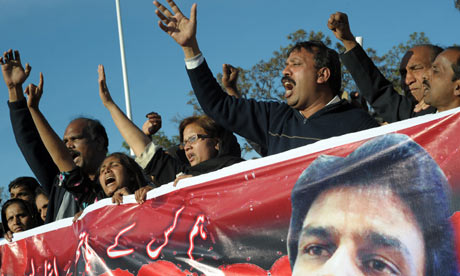
Christian Rally in Pakistan

PAKISTAN (ANS) -- The miseries of Christians in Pakistan are enormous and visible everywhere and at every level. The religion of Islam dominates in the constitutional, political, judicial, social, cultural, and governmental systems.

So writes Pastor Baber George, a key leader from Pakistan who has had to flee for his life, in an e-mail to ANS.

Pastor George says that Islam is the official state religion, and Islamic Shariah is being enforced as the supreme law of the land.

“Under this system,” he writes, “ the Christians of Pakistan do not have equal political and socio-economic status; or equal opportunities to play a leading role in the national set-up. There are no Christians in government, education, or other leadership offices.”

According to Pastor George, the Christian educational institutions, which were running and managed by the churches, were taken over by force and nationalized by the Bhutto government in 1972.

“Now, no Christian character is visible in these captured institutions. Lots of other non-Christian institutions have been denationalized and given to their real owners. But for no known reason, the Christian institutions are not being denationalized and given to the churches. At present, more than 5000 jobs, which were for Christians, are now held by Muslims,” George said.

Because of this, says George, those 5000 or more Christians have been forced into unemployment and thousands of dependents have been deprived of their livelihood.

“These institutions were the basic centers for learning, social and cultural gatherings, and spiritual development for the Christians. Today Christian teachers, professors, or students are not seen there. Now these places are the dens of automatic weapons and training centers for religious terrorism. Many Muslim and non-Muslim countries have complained that the ground of Pakistan is being used for international terrorism,” he said.

Not all Muslims in Pakistan are terrorists, George writes.

“A large majority of them want to live in a tolerant society and brotherhood-like atmosphere. However, more than 20 Islamic religious parties are misusing the name of Islam, instigating illiterate Muslims against the non-Muslims (Christians, Jews, Hindus) that Jihad (Holy War) has to be launched against them to bring Islam to glorious status.

“When dignitaries visit Pakistan, the government states that it favors the non-Muslim minorities. But that is baseless lip service. Instead, the law is like a sharpened Islamic sword held to the necks of innocent Christians.”

There are many cases of blasphemy law, pending in different courts, with the accused waiting for their fate, although some have gone into hiding, said George.

“However, the Muslim fundamentalists are after them to search and kill them whenever they can find them. The fanatical and rigid Muslim priests often say in public meetings that all Christians are blasphemers because they believe that Jesus Christ is the Son of God, and God Himself,” he said.

“The Christians are hated at the worst level, but their women are chased, kidnapped, raped, and even made to be Muslims by force. Then they are married to Muslims against their will.”

George cited, for instance, the case the daughter of a Christian man named Tara Masih was kidnapped and raped. Another Christian girl named Surryia Bibi, was kidnapped, raped, and forced to marry her kidnapper/rapist.

“The sufferings of Christian women are very troublesome, “ he siad. “They go through a different kind of brutality.

“Under Islamic law, the rights of women have been eroded. Women aren’t equal to men. In Pakistan two women are equal to one man. Under the Islamic Evidence Act, whenever a woman is raped and she wants a criminal case registered against the rapist, she has to produce four Muslim men as witnesses. No women or non-Muslim men or women can be witnesses. The evidence of the Christian man or woman has no validity against any Muslim rapist.”

George goes on to say that Untouchable and ‘detestable’ are the marks of the Christian community.

“Untouchability is not prohibited legally from all sectors,” George says.

He adds: “This is promoted against the Christians. All of the jobs, which are considered the most degradable, Untouchable, or considered below Muslim dignity are reserved for the Christians. The Christians are treated inhumanely, socially degraded, and of the lowest community. They are not allowed to enter the dining rooms or kitchens while they are cleaning the houses. Nor are they allowed to sit on the furniture, where Muslims have to sit. The Christians are hated at the worst level.”

George concludes by saying that all the pastors, clergies, evangelists, social and human-rights activists, Christian politicians, and all other Christian leaders are under the severe target of Muslim extremists, terrorists, and other Muslim hard-liners.

“Even police authorities are chasing the Christian leaders. Those Christian religious ministers and human-rights activists who show special concern to the Christian victims, their life and properties, families, and interests, are under great danger.”


** Michael Ireland is the Senior International Correspondent for ANS. He is an international British freelance journalist who was formerly a reporter with a London (United Kingdom) newspaper and has been a frequent contributor to UCB UK, a British Christian radio station. While in the UK, Michael traveled to Canada and the United States, Albania,Yugoslavia, Holland, Germany,and Czechoslovakia. He has reported for ANS from Jamaica, Mexico, Nicaragua, Israel, Jordan, China,and Russia. Michael's volunteer involvement with ASSIST News Service is a sponsored ministry department -- 'Michael Ireland Media Missionary' (MIMM) -- of A.C.T. International of P.O.Box 1649, Brentwood, TN 37024-1649, at: Artists in Christian Testimony (A.C.T.) International where you can make a donation online under 'Donate' tab, then look for 'Michael Ireland Media Missionary' under 'Donation Category' to support his stated mission of 'Truth Through Christian Journalism.' Michael is a member in good standing of the National Writers Union, Society of Professional Journalists, Religion Newswriters Association, Evangelical Press Association and International Press Association. If you have a news or feature story idea for Michael, please contact him at: ANS Senior International Reporter

** You may republish this story with proper attribution.