Wednesday, January 23, 2013

To coup, or not to coup?

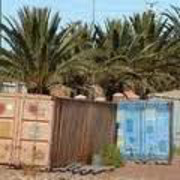
Eritrean prison camps (Photos by Open Doors)

Eritrea (MNN) ― The buzz word people are using to describe Eritrea's events over the last 48 hours is "coup," but do the signs match an actual coup d'état?

By the government's admission, it was a takeover effort, however small, however failed. Todd Nettleton, a spokesman for the Voice of the Martyrs USA, explains, "Some soldiers surrounded the Ministry of Information in the capital city of Asmara on Monday. They forced a minister to read a statement on State TV in Eritrea. However, it seems that he only got a few sentences into the statement before the TV broadcast signal was cut."

Government troops quelled the would-be rebellion before it got started. However, in a tightly-controlled regime like Eritrea, Nettleton notes, "It seems to be sort of a ‘blip' on the radar, but the fact that there were soldiers acting directly against the government perhaps is a sign of building unrest within Eritrea. Who knows what it means for the future?"

That begs the question of what the else calm facade is hiding. What of the fate of the mutinous soldiers? Nettleton says, "I certainly would not want to be one of these soldiers now, after they have surrendered, because we know that the situation in Eritrean prisons  for Christians is desperate, and obviously, for political enemies of the regime."

The soldiers' demands were two-fold: "They wanted to return to the parameters that were laid down in the constitution of 1997. It also said that they wanted to release political prisoners."

Since independence in 1993, Eritrea has been a one-party state. The government has come under fire by human rights watchdogs who call the regime one of the world's most repressive. That's an assessment Open Doors agrees with.

Open Doors, which comes alongside the persecuted church, keeps tabs on the world's 50 worst countries known for their oppression of Christians. On that list, Eritrea ranks 10th. And that's not a number likely to change for the better in the near future, says Open Doors' spokesman Jerry Dykstra.

In fact, he says just hours before news of the failed coup, "At least 10 leaders of the churches (banned by the government ten years ago) have been rounded up in the past day or two."

Eritrean opposition activists exiled in neighboring Ethiopia said there was growing dissent within the Eritrean military, especially over economic hardships. Of the coup, Nettleton says it might be the first crack in the mask. "The fact that this [involves] soldiers and people in the military, that seems to say that the disenchantment with the leadership there is spreading." He adds, "I think the message that I would take from it is that Eritrea's people are not happy being oppressed under the hand of the president."

Then, there's word that the health of the current president, Isaias Afewerki, is worsening. That might not actually be a positive swing for the oppressed Christians, though, Dykstra reflects. "There is some sense from Open Doors researchers that perhaps a form of radical Islam may take over the country with the death of the president." In short, Eritrea's Christians could find themselves facing a situation similar to those Christians in the newly re-formed Egypt.

As such, church leaders fear that this particular campaign is far more serious because it wants to "eradicate the underground church by targeting its key leaders around the country." If that's true, the death tolls will start climbing. Dykstra says already, "31 Christians died in prisons last year. It's kind of hard to put an estimate on the number of Christians in prison. Last year, it was [estimated] at around 1200."

According to Open Doors, since news of the renewed systematic arrests emerged, several church leaders have gone into hiding for a second time in only a few months. According to trusted sources close to the events in Eritrea, church leaders have remained in good spirits despite these pressures.

For Christians in Eritrea, the past few months have been somewhat of a roller-coaster ride. After the death of the Ethiopian Prime Minister in August last year, there was heightened tension in Eritrea. Christians testified that talk of renewed fighting between Eritrea and Ethiopia after the demise of one of their long-time rivals led to a very grim atmosphere.

There were reports of the government circulating rifles to households in case war broke out. Some Christians described those months of uncertainty as their darkest night while praying earnestly for the light of a new dawn for their country. Nettleton says, "We want to pray for the church as a whole. One of the great challenges is existing in a situation where no public services are allowed. Anytime Christians gather together--evangelical Christians, it's not legal."

Timing now on outreach work will be critical. Anyone viewed as an enemy could be more at-risk for trouble. Nettleton explains, "The president of Eritrea will be watching this and saying, ‘We need to get a handle on this quickly,' which in the short term, perhaps, is going to mean more oppression and more control. It's hard to say at this point what this means."

Dykstra says with circumstances so uncertain, "They're asking for our prayers because of this situation, especially with the loss of the leadership of the 10 Christian leaders."

Tuesday, January 22, 2013

Evangelicals arrested in Mexico, pressured to renounce their faith


By Mark Ellis
Senior Correspondent, ASSIST News Service

baptism of new believers
SOUTHERN CALIFORNIA (ANS) -- More than 50 evangelicals were arrested in mid-December in a community north of Mexico City, held without food, water, or sanitation, and pressured to renounce their "new" religion.

"We had some most distressing news of renewed persecution of Indian believers in Mexico," says David Kietzman, executive director of Latin American Indian Mission (LAIM).

There had been strained relations in the community of Pahuatlan, Hidalgo, about 175 miles northeast of Mexico City. "Mostly it had taken the form of pressure on the evangelical pastors, who would be called in, roughed up a bit, and possibly spend the night in jail," Kietzman notes.

"The complaints always focused on the fact that they were breaking the harmony in the community by introducing this 'new' religion that did not respect the old customs, and particularly did not support the village fiestas."

On December 17 the conflict escalated. At a community meeting to appoint delegates to the fiesta for the coming year, all the evangelicals in attendance were arrested.

"Not only were 52 of them carted off to the very small jail, but also guards were sent to all the exits from the town, so that word of this illegal action could not get out to state officials," Kietzman notes.

"Those in jail were kept without food and water (and access to sanitary facilities), the pastor was kept bound to a chair, and the g roup was repeatedly told they could not leave until they signed a renunciation of their new religion."
MORE

Iran says American tried to turn children against Islam


In defense, Abedini says he has no political motives


Colorado Springs, Jan. 20 (World Watch Monitor) — Iran on Monday accused an Idaho man of trying to entice young people to Christianity and away from the country’s official religion, Islam, the man’s American-based legal team says.

The trial of Saeed Abedini, 32, of Boise, began Monday in the Tehran courtroom of Abbas Pir-Abbassi, a Revolutionary Court judge notorious for harsh sentences. Abedini faces a lengthy prison sentence and possibly the death penalty for the alleged crime of attempting to undermine the Iranian government through the spread of Christianity.

The American Center for Law and Justice said prosecutors presented evidence that Abedini created “a network of Christian house churches” starting in 2000, the year he left Islam for Christianity.

“The regime alleged that Pastor Saeed intentionally sought to sway the minds of Iranian youth by turning the youth toward Christianity and against Islam, the official religion of Iran,” the center said in a prepared statement.

The American Center for Law and Justice is a Washington, D.C.-based attorney group that uses litigation to press for religious and speech freedom. It has waged a lobbying campaign to persuade the Obama Administration to make a public demand for Abedini’s release.

Abedini was arrested in September during a visit in which supporters say he was managing the construction of a non-religious orphanage. His supporters say he had agreed in 2009 to stop building the church network and to focus exclusively on the orphanage project, and that he had made eight orphanage-oriented visits to Iran before his arrest.

The center said Abedini is represented in Iran by “Naser Sarbazi, a Muslim lawyer in Iran who is dedicated to preserving human rights and upholding the right for all individuals to practice their faith freely.” It also said Abedini’s father, who lives in Iran, was the only family member permitted in the courtroom.

Abedini’s wife, Nagmeh, posted this account of Monday’s courtroom proceedings on the “Pray for Pastor Saeed Abedini” Facebook page:

Saeed was able to share from the Bible to the Judge and say that he was not a political person and had no political intentions, but he was a follower of His Lord Jesus Christ. There will be no more hearings and the formal charges and sentences will most likely be announced next week according to his lawyer in Iran.

There seemed to have been moments when the judge was moved by Saeed's testimony. Please continue to pray for the Judge and Saeed's release and his return back to our family.

We should be hearing some news next week.
The American Center for Law and Justice posted a report on its website Monday that claims several lay leaders of the house churches have been summoned to appear in court. But it also said it’s unknown whether the judge will permit any more witnesses, or whether the trial is essentially completed.

Abedini and his wife were born Muslim in Iran. She moved to the United States as a child, obtained U.S. citizenship, converted to Christianity, relocated to Idaho with her family, and eventually returned to Iran to connect with her extended family, said Lauren Phillips, coordinator for international outreach for Cavalry Chapel of Boise, where the couple are members. Though ordained after his work planting house churches in Iran, Abedini is not active as a pastor in his home church.

In Iran Nagmeh met Abedini, who had converted to Christianity in 2000 and was helping to start house churches. Married in 2004, they moved to Idaho in 2005 after Abedini endured an interrogation session over his church activities, according to an attorney at the American Center for Law and Justice. As the spouse of an American citizen, Abedini too was granted U.S. citizenship.
END

*****************

Copyright 2013 World Watch Monitor

Stakes raised in religious hostility


International (MNN) ― 75% of the world’s population lives in countries and/or societies with religious hostility, according to a report last year from The Pew Research Center.

That number is up from 70% the year before.

Of the five specific religions cited in the study, Christians were ranked with the highest number of nations harassing them.

However, Tom Elliff, President of the International Mission Board, says persecution of Christians will not dampen the Gospel. “That’s what persecution proves in a country. There are those who totally abandon the faith, and then there are those to whom the Gospel IS them. It is their life. It is their salvation. They understand it is only Christ, and only in Him is there eternal life.”

Although there is more hostility to the Gospel, there is also a greater need for people to hear the name of Christ.

“The world’s population is not declining. It is growing,” says Elliff. “It took until 1804 to reach the first billion [people] in our history, and now we have 7 billion on this globe. It’s not just that they’re being born, but they are dying at 2 [people] per second. That means an entire city disappears from this globe every 24 hours.... These are people who, for the most part, do not know Christ, and many of them right now--1.27 billion of these people--could die without ever hearing the name of Jesus.”

Elliff says in a world’s growing opposition to the Christians, the Church’s response will be defined. “Does that mean we’re going to pull in our dollar, go back home and say, ‘Well, let’s find the 25% of the [world’s population] that are friendly to us?' Or are we going to find creative ways like global strategic mobilization? Are we going to find creative ways to share the Gospel with people who are in this dark, broken world?”

For the IMB, creatively mobilizing the Gospel last year resulted in almost 30,000 churches planted and hundreds of thousands coming to know Christ.

Get involved with IMB missions or give to support their work.

Fake Picture caption still doing the rounds


It alleges that it shows the charred bodies of Nigerian Christians supposedly burned in a massacre perpetrated by Muslim terrorists

By Dan Wooding
Founder of ASSIST Ministries

The picture that has been doing the rounds
LAKE FOREST, CA (ANS) -- In the dark days when I worked for the British tabloids, we had a motto which was, "Never let the truth interfere with a good story."

Well sadly, this seems to also be the motto of well-meaning Christians who have been circulating messages claiming that the photo here shows the charred bodies of 500 Nigerian Christians burned in a terrible massacre by Muslim terrorists.
While the story is true, for back in March of 2010, a terrible massacre took place close to Jos where as many as 500 people, many of them women and children, were killed by Hausa-Fulani, Muslim herders, the picture that has been doing the rounds, has nothing to do with Nigeria, but instead comes from a terrible tanker explosion in the Democratic Republic of Congo.

Having been born in Northern Nigeria to British missionary parents, and given the Hausa name of Dan Juma (son of Friday), I was horrified when I first saw the picture of the hundreds of charred bodies.

Another picture of the charred bodies not in Nigeria, but Congo
One posting of the picture said, "Christians burnt alive by Sunni Muslims in NIGERIA.PLEASE SHARE IT OR JUST UPLOAD YOUR OWN.BUT SOMEHOW SPREAD IT IF YOU'RE EVEN 1% CHRISTIAN - It is still not over yet!"

Another read: "The religion of peace is really showing us how it needs to be done. Apparently this happened in April 2011, but it did not make front page news. Why does the Western Church think they are special and needs to be raptured before the tribulation starts? We really need a wakeup call."
Being a journalist now for some 43 years, I have learned never to accept these claims on face value, so I did some checking and finally found this story by Katrina Manson of Reuters dated Saturday, July 3, 2010, with the headline, "Fuel tanker explosion kills over 230 in Congo."

So it appears that the photo above was apparently not taken in Nigeria at all, but in Congo and story begins, "At least 230 people were killed when a fuel tanker overturned and exploded in eastern Democratic Republic of Congo, unleashing a fire ball that tore through homes and cinemas packed with people watching World Cup soccer.

"Officials said on Saturday the explosion late on Friday also injured 196 people, adding that the death toll could rise.

"They described scenes of devastation in the town of Sange, where houses were burned and bodies littered the streets. Some people died while trying to steal fuel leaking from the tanker, but most were killed at home or watching World Cup soccer in cinemas."

So, like so many of you, I am horrified with the shocking violence that is being perpetrated by groups like Boko Haram in Nigeria, but I believe that we should also be careful when we circulate items like this one, and check them out, before claiming them to be true, which this time was apparently was not the case.

Muslims Attack Christians in Egypt on Rumor of Sexual Assault


By Jeremy Reynalds
Senior Correspondent for ASSIST News Service

EGYPT (ANS) -- Thousands of Muslims from Marashda and surrounding villages attacked eight Coptic homes and businesses, including five pharmacies, which were looted and torched. Coptic-owned cars were also torched.

According to a story by Mary Abdelmassih of the Assyrian International News Agency (AINA), the attacks were caused by rumors that a 55-year-old Coptic man, Nader Masoud, sexually assaulted a 6-year-old Muslim girl.

The attacks on the village, which has a mostly Christian population, started with several Coptic businesses being torched and the Church of Abu Fam having its cross demolished and glass smashed.

AINA reported that Anba Kyrollos, Bishop of Nag Hammadi, said a medical check of the Muslim girl proved her "virginity," but the attacks "took place after the Muslims knew of the medical verdict and the sexual assault was only a rumor."

Bishop Kyrollos said Masoud turned himself in to police for his own safety.

Then clashes broke out again later in the day in Marashda, this time between security forces and the Muslim protesters. The incident occurred after the police arrested 10 Muslims reportedly responsible for some of the morning's violence.

AINA said more than 2,000 Muslims were on the village bridge trying to stop the police from transporting the arrested Muslims. The mob prevented police vehicles from passing, and tried to break into the police cars to free the suspects.

AINA said this led security forces to call for reinforcement troops from the Central Security Directorate in Qena, which fired teargas on the protesters.

According to the newspaper Aldostor-Assly, the Muslim Brotherhood Freedom and Justice Party and the Salafists groups denied any involvement in the Marshada events.

AINA said there's now a relative calm in the village after a friendly meeting occurred at the church. It was attended by the pastor, security officials, the Muslim girl's family and Muslim elders. They decided to let the courts resolve the issue.

However, AINA said, some Muslims continued to demonstrate in front of the police station where the accused Coptic man is being held.

Meanwhile, Copts are staying in their homes for fear of attacks. The Coptic Church cancelled an evening service celebrating the feast of Epiphany, and security forces are still present in the village.