Friday, August 24, 2012

Music Groups To ‘Sing for Freedom’ For Pakistani Down’s Syndrome Girl

By Dan Wooding
Founder of ASSIST Ministries

LONDON, UK (ANS) -- A Pakistani 11-year-old with Downs’s syndrome, who may face the death penalty for blasphemy over her alleged burning of pages from the Quran, is to receive support from two music groups tomorrow (Wednesday, August 22, 2012) in the British capital.
Members of ooberfuse
A London-based electro-pop band, ooberfuse, featuring a Wizard MC from the British Pakistani Christian Association (BPCA), has today released a song, “Turning the Tide”, raising their voices in protest against the latest victim of Pakistan’s “black” blasphemy laws.

Following the courageous advocacy work for victims of Pakistan’s controversial blasphemy law, started by Punjabi Governor, Salman Taseer -- who was brutally gunned down by his own bodyguard in January 2011 -- and Pakistan’s Minister for Minorities, Shahbaz Bhatti -- murdered by Taliban assassins in March 2011 -- “Turning the Tide” highlights the plight of young Rimsha Masih arrested by the police last Thursday, under pressure from the mob, at Mehrabadi village, on the outskirts of Islamabad.

Cherrie, the front-woman of ooberfuse, says: “Over the weekend we got a call from Wilson Chowdhry of the BPCA alerting us to the events unfolding last Thursday which culminated in Rimsha’s arrest. She was persuaded to take a sack full of rubbish to the garbage but, unbeknown to her, the sack contained ash from burnt papers including fragments from the Quran. In no time at all and with a few days remaining of the extended Ramadan fast preceding the day-festival of Eidan enraged crowd had gathered calling for her arrest and execution.”

A previous protest in London
Hal, from ooberfuse, added: “When is this madness going to end? The intolerance of the Islamic majority towards non-Muslim faiths in countries like Pakistan is staggering. The blasphemy law gives legal credence to preposterous claims from disgruntled disaffected members of the community that Islam has somehow been defamed. These claims are very often fabricated by Muslims hell-bent on inciting religious hatred against peace-loving minorities like the Christians and Ahmadis.”

Wilson Chowdhry, Chairman of the British Pakistani Christian Association (www.britishpakistanichristians.co.uk), said, “This intolerance has sunk to new levels of depravity with the incarceration of a juvenile girl with physical disabilities. The founding father of Pakistan, Quaid-e-Azam Muhammad Ali, said in his 1947 inaugural speech: ‘You are free; you are free to go to your temples, you are free to go to your mosques or to any other place of worship in this State of Pakistan. You may belong to any religion or caste or creed that has nothing to do with the business of the State.’

Wilson Chowdhry
“He would be turning in his grave right now if he knew how the apparatus of the Pakistan State is being cynically used against defenseless minority faiths. ‘Turn the Tide’ is inspired by his words and the tragic story of a defenseless disabled girl called Rimsha.”

“Turning the Tide” is be released tomorrow evening (Aug 22) and will be sung live outside the Pakistan Embassy in London, during a 2 hour demonstration from 7pm organized by the BPCA - calling for freedom for Rimsha. Lead humanitarians from a variety of faiths will be joining us in solidarity seeking an end to the ongoing injustice.

Note: oober comes from the German word über. It translates to exceedingly, abundantly, above anything we can ask for or imagine. Delimitation of fuse from the web: blend: mix together different elements.

Pakistan: Orphan Christian boy found brutally tortured and burned to death

By Dan Wooding
Founder of ASSIST Ministries

Human Liberation Commission of Pakistan activists
 shout slogans during a protest against alleged
anti-Christian violence (AFP Photo/Arif Ali)

FAISALABAD, PAKISTAN (ANS) -- The violence against Christians in Pakistan is continuing unabated, and the latest shocking incident, monitored by the ASSIST News Service (www.assistnews.net), involves a young Christian boy who was brutally tortured before being killed in Faisalabad, Pakistan, which is about 100 miles from Lahore.

According to reports, 11-year-old Samuel Yaqoob had been missing since the evening of August 20, when he had stepped out of his home in a Christian colony to go to the market to buy food for his family.

Wilson Chowdhry, Chairman of the British Pakistani Christian Association, who has been tracking this shocking case said, “After extensive searching his body was found near a drain in the Christian colony, bearing marks of horrific torture, with the murder weapon nearby.

“His nose, lips and belly had been sliced off, and his family could hardly recognize him because the body was so badly burnt. Some 23 wounds by a sharp weapon have been identified in the autopsy. When sending his body for an autopsy, police raised the possibility of sodomy.

“The police, and the mother, according to some reports named Asia Bibi [not the same Asia Bibi as the iconic blasphemy law death sentence victim], said that there had been no demands for ransom, nor any accusation of blasphemy.

“Parts of Pakistani culture have a strong homosexual pederast culture, and Christian and other minority boys are especially susceptible to rape and abuse because of the powerlessness of their community and their despised status,” added Chowdhry. “In one case fairly recently, a Christian boy was kidnapped, raped, tortured and killed by a police officer, his body similarly being dumped in a drain.”

Local Assistant Sub-Inspector Shafiq Ahmed said police were investigating “all aspects of the case.”

He said Yaqoob’s father died a few months ago and the family was “very poor”, which he said ruled out the possibility that he was kidnapped for ransom.

“We did not receive a complaint of blasphemy. However we are investigating this aspect as well. The autopsy will tell whether the boy was sodomized,” Ahmed said.

The killing comes days after an 11-year-old Christian girl with Down’s Syndrome was arrested by police in Islamabad on a charge of blasphemy for allegedly burning pages of the Quran.

Rimsha Masih’s family and dozens of Christians fled their homes due to threats from Muslims.

In that case, Pakistani President Asif Ali Zardari directed the Interior Ministry to investigate the incident and to provide protection to the local Christians.


Thursday, August 23, 2012

Pakistan considers anti-conversion laws; India's Christians concerned

(Photo courtesy of Mission India)

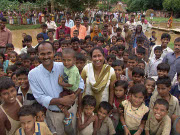
India (MNN) ― Shunned and hated in Pakistan, families who suffered through torture, kidnapping and increasing pressure to convert to Islam finally fled across the border to India.

The only difference is that instead of Christian families, those on the run were Hindu. That prompted a huge cry from the Indian government on their behalf.

Officially, the government's stance is that Pakistani Hindus arriving in India are on pilgrimage. However, this week, Pakistan President Asif Ali Zardari waded into the fray. After being briefed on the growing problem of mass migration, he told the Sindh government to amend the Constitution and write an "anti-conversion" law.

That is raising some alarms. Pakistan already has a "blasphemy" law which is frequently used to settle personal scores with Christians. Even though a new anti-conversion bill is supposed to protect minority religions, that's not how it's often enforced.  

On top of that, Dave Stravers with Grand Rapids, Michigan-basedMission India says if Pakistan comes up with its own "anti-conversion" law, it sets a precedent that neighboring states in India are likely to follow. Additionally, some Hindu leaders have grown more aware of the fast growth of Christians, especially in light of the Dalit Awakening in 2001. 

"They're worried that their culture is being eroded and their political influence, their power, is being eroded. So they want to stop it." 

Though India's constitution provides full religious freedom of worship and witness for all religions, there remains opposition. The rise of Hindutva extremism -- "India is Hindu only" -- resulted in hate campaigns against Christians and Muslims.

"Any law proposed in any India state will affect Christians first," Stravers notes. Harsh anti-conversion regulations in at least five states have done little to placate Hindu extremists. In many districts, the laws are often loosely worded and widely open to interpretation.  

In smaller villages, Christians are given a choice: reconvert to Hinduism, leave the village, or face death. The risk of violent mobs and riots exploding into days of rampage is high. Simmering tensions are threatening to explode with the smallest twitch. Stravers agrees, "Inter-religious conflict and inter-ethnic conflict in this (border) region is often violent.... It causes a lot of fear."

Yet, oppression has done little to stem the flow of the Gospel. Stravers marvels, "Christian workers have such a great deal of courage in the face of opposition." Pray that despite the intimidation and violence in many of India's states, Christians will unashamedly preach the Gospel.


More reforms, less progress for refugees

(Image courtesy of VBB)

Burma (MNN) ― In a tightly-controlled nation riddled with severe human rights violations, even the smallest of reforms is a step forward, right?

Perhaps.

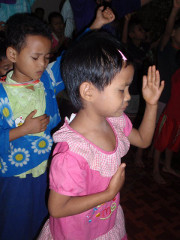
But Dyann Romeijn withVision Beyond Borders is waiting to see how Burma's latest press reforms will play out for people affected most by the country's violence: over 500,000 ethnic refugees. The last time MNN spoke with Vision Beyond Borders about Burma's reforms, it was about the negative side effects inflicted upon refugees. Would press reforms cause the same problems?

"It's hard to say at this point," Romeijn states. "A lot of times the government is closing off areas where the violence and stuff is. So I don't know that the [refugees] would have access to the press. That remains to be seen."

The proposed press reforms are Step 2 in the government's 3-stage process to full media freedom. In the first step, publications were allowed to be released without prior censorship. Burma only has one independent television channel; the third step in this process would support the growth of private media.

Although Burma has come a long way over the past year, some issues still need to be addressed. Earlier this month, a UN Specialist assessed the situation in Burma, and while praising the country's progress, noted a significant number of human rights concerns. Romeijn says the governmental changes aren't trickling down to those who are suffering.

"The majority of people in the ethnic areas are not seeing any real change," says Romeijn. "We are encouraged by some of the reforms that are taking place within the mainstream. But again, those that have taken place so far have not affected the ethnic groups, so I don't know how much effect the press reforms will have."

On a positive note, the horrendous trials suffered by Burma's ethnic groups are working to fortify believers and further the spread of the Gospel. Approximately 70% of each the Karen and Kachin people groups follow Christ and proclaim Him as Lord.

"In those ethnic groups, Christianity is spreading; it's continuing to grow," Romeijn reports. "And through the persecution, what we're seeing is a strengthening of their faith. They're just resolute; they're becoming solid in their beliefs."

Romeijn says the biggest contribution you can make is this: prayer.

"That's probably the most important thing people can do," she emphasizes. "All the money in the world will not solve the problems in Burma. They're too deep.

"Only God can touch and reform hearts, and so it truly is through prayer that we'll see a change there."

You can help in practical ways too. Click here to collect items that can be sent to refugees in Burma, like toiletries and medicine. You can support a child or pastor in Burma by clicking here, or go to Southeast Asia on a short-term mission trip with Vision Beyond Borders.

Monday, August 20, 2012

Pastor Nadarkhani to face charges Iran

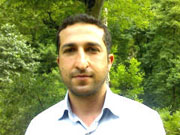
Pastor Yousef Nadarkhani has been in prison for more than 1,000 days.
Iran (MNN/ACLJ) ― The Iranian pastor who has spent more than 1,000 days in prison will be headed by to court. Iranian authorities are demanding Youcef Nadarkhani be back into court in Iran September 8, 2012 at 9:00 AM to answer for "charges brought against him."

According to the American Center for Law and Justice, it's unclear if the charges are new or are connected to his apostasy conviction. Nadarkhani was convicted and sentenced to death for apostasy: becoming a Christian. When Iranian officials demanded that he recant his faith in Jesus Christ or die, he responded, "I cannot." He has been illegally imprisoned and separated from his wife and two boys since 2009.

The ACLJ has obtained a copy of the official Iranian court summons demanding his appearance.

What is clear is that his new court date will come after more 1,060 days spent in prison for nothing but his faith in Jesus Christ--an imprisonment that violates Iran's own constitution.

The ACLJ is continuing to work with contacts in Iran, the State Department, and foreign diplomats to pressure Iran for the release of this persecuted pastor. The Tweet for Youcef campaign continues to grow, now reaching more than 2.8 million Twitter accounts around the world with daily information and updates about Pastor Youcef.

Continue to pray for Nadarkhani and other Christians who are being persecuted for their faith. The church is growing in Iran, which is why the government is taking action against Christians.


Ethnic and communal violence spreads fear throughout India

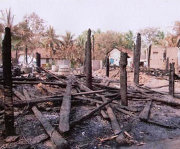
Assam violence (File photo courtesy of Gospel For Asia)

India (MNN) ― The beauty of India's Assam state is belied by its bloody history.

Ethnic and religious violence in that region has forced the military to respond and impose a curfew after days of rioting.
At least 50 died and hundreds were injured in the clashes that lasted a week and a half--clashes between Muslim settlers and the Hindu-leaning Bodos. The Bodos are one part of three larger indigenous secessionist movements.  

Although the issues that lead to conflict are complex, Danny Punnose with Gospel For Asia simplifies what's been going on there. "There's always tribal fighting between tribes, or land disputes. This is a very common thing up in the northeast part of India in those areas. But the violence is getting a little more severe where people are actually being killed and there's rioting happening. So the army has been called out to give a sense of security, but also a sense of protection."

Stories of Muslim-Hindu violence spread like wildfire through social media outlets, which also sparked panic that led to days of more rioting. Government officials had been trying to encourage people to ignore the inflammatory stories, to no avail. Punnose goes on to say that "there are rumors that violence is going to break out there because there are lots of Assamese workers and students down in the south." As the trouble had been escalating and spreading, thousands who were from the Northeast fled the southern city of Bangalore last week.

Nearly 400,000 people are in makeshift camps, displaced by the escalating fighting. In the meantime, curfews have been imposed in some areas. "Everything [comes] to a standstill. It's the only way to contain certain elements of the violence," says Punnose, adding that  those who violate curfew risk their lives. "They think that you are part of the underground, or the underground thinks you're part of the army, so you're caught in the crossfire."

In some areas, curfews have been relaxed to certain hours. Although the violence seems to have calmed somewhat, it would take very little to ignite uprisings. Issues are deeply polarizing. Punnose says until the uneasy calm can be trusted, much of their work is also at a standstill.

Solutions won't easily be reached, he goes on to say. "It's very, very deeply ingrained. It's not just the caste system: it's tribal, and it's land. It's so many levels of the dynamics of this, and then you've got violence and you've got strikes."

GFA is asking for prayer. "Pray for the leaders of the nation to have wisdom to know how to handle this. You're not talking about people just being upset with each other. This is thousands of years of ingrained prejudice and animosity and anger."

Although their teams can't get out, Punnose says they are readying themselves for response. "Pray that God would give us opportunities to share the love of Christ, whether it's praying for people or counseling people, or maybe it's relief work to help people get back on their feet."