Thursday, April 19, 2012

Attacked Turkish Pastor Joins in Memorials for Slain Christians

Christian Martyr in Turkey

Istanbul church leader says he has known hostility from Muslims nearly all his life.
ISTANBUL, April 18 (CDN) — After a memorial service for three Christians who were murdered in Malatya, Turkey five years ago today, an Istanbul pastor who was attacked over Easter weekend said he’s experienced hostility from Muslims nearly all his life.

Semir Serkek, 58, pastor of Grace Church in Istanbul’s Bahcelievler district, said he personally knew Turkish converts to Christianity Necati Aydin and Ugur Yuksel and German Christian Tilmann Geske, who were brutally murdered by five young men in the southeastern city of Malatya on April 18, 2007.

“I looked at their fate with some envy, because they were young and I am old, but they left – I have gone through many things,” he said. “But they were so young, so young.”

On a day when memorial services were held for the three slain Christians in Malatya, Izmir and Elazig as well as the ones Serkek attended at both the Kozyatag Cultural Center and Gedikpasha Church in Istanbul, the pastor said the physical violence on him the evening (April 7) before Easter Sunday surprised him.

“I’ve been verbally abused for being a Christian many times, but this was the first time I was hit, so this was surprising and made me sad,” Serkek said.

Serkek was alone at Grace Church finishing preparations for the next day’s Easter celebration when at around 9 p.m. he heard frantic pounding at the door, he said. Opening it, he found four young men in their late teens who claimed they had questions and demanded to enter.

The men, whom Serkek said appeared to be about 18 years old, were agitated, and when he refused to let them in they used insulting language, he said. They threatened to kill him if he didn’t recite the Islamic testimony of faith.

“This made me uneasy, and I told them that this was a church and they should come back in the morning,” Serkek told Compass. “‘This is a Muslim neighborhood, what business does a church have here?’ they asked me, and told me again and again that if I didn’t accept the final religion I would die.”

Finally one of the men kicked Serkek in the chest. The blow threw the pastor down the entrance steps to the ground. The Muslims ran away laughing, Serkek said.

Born to a Syriac Christian background family in the southeastern city of Mardin, Serkek said that while the violence surprised him, he has known verbal abuse since childhood and especially since he started serving God and began openly sharing his faith 35 years ago.

“To be honest, I’ve experienced these things from my childhood,” Serkek said. “I know these things closely. I’m from Mardin, and I’m a Syriac Christian. We are serving actively, and we have to spread the Word to be a source of blessing. This is what we are called to do, to bless. This is how God will use us, and I believe this with all my heart.”

Two days after the attack, Turkish Director of Religious Affairs Mehmet Gormez called Serkek from Denmark, where he was traveling, to express his disappointment about the attack on him, according to local press.

“I don’t want to be ungrateful, but I also told him that these men are trained in the mosques,” Serkek said. “At least 10 times they repeated their demand that I say the kelime-i sahadet [Islamic testimony of faith]. They pressured me. They told me I will die. They had violence in them. They didn’t even know me. They used insulting language. Their goal was to provoke me.”

Serkek said he is convinced the four Muslims who attacked him did not pass by his church site by accident or impulsively. He said the attack was planned, and that if police catch them he would like to know who put them up to it.

On Sunday (April 15), 17 activists from a non-profit organization known as Dur De, which fights racism and hate-crimes, came to Grace Church in a show of support to Serkek. Earlier last week, a delegation from a Muslim non-profit called Damla Nur Dursun also visited Serkek and brought him flowers.

On Easter weekend, Turkish Prime Minister Recep Tayyip Erdogan and President Abdullah Gul issued official statements wishing the country’s Christians a Happy Easter. Gul stated that “regardless of ethnic origins, language, faith and political views, everyone is an equal citizen in Turkey and equal owners of the Turkish state,” according to the Anatolian Agency. Erdogan wished Christians peace and well-being.

The attack on Serkek, however, came as a bitter reminder to the nation’s Christian community that Turkey has a long way to go in giving equal standing to non-Muslims.

Along with the memorial services around Turkey today, Geske’s family published an announcement inTaraf newspaper.

“While remembering with deep love and respect my husband, our father and our brothers, we pray and invite our beloved country’s people and government to a new level of tolerance,” the announcement read. “A new tolerance that brings peace and alleviates pain from this country where thousands have been killed in the name of religion, race, political opinion and differences of tradition. We invite every child and every citizen to choose life instead of death, good instead of evil and blessing instead of curse.”

Aydin, Yuksel and Geske worked for Zirve Publishing Co. distributing Christian material, as did Serkek for many years. The pastor said that he himself was nearly lynched in the northeastern town of Artvin for handing out Christian materials.

Because of Turkey’s long-term and systematic limitations on non-Muslim communities, the United States Commission on International and Religious Freedom recommended that Turkey be designated as a “Country of Particular Concern” this year. There are an estimated 4,500 Christian converts in Turkey.


END

Christian Acquitted of ‘Blasphemy’ Charge in Pakistan


Prosecutor unable to produce any evidence despite clamoring of Muslim mobs.
LAHORE, Pakistan, April 17 (CDN) — A Pakistani Christian falsely charged with “blasphemy” after rescuing his 8-year-old nephew from a beating at the hands of Muslim boys has been cleared of the charge.


Dildar Masih, a 27-year-old father of two young children, was acquitted on March 26 after prosecutors failed to produce any evidence against him, he said.


“I was produced in court three times during the case proceedings, but not one accuser ever turned up at the hearings,” Masih told Compass by phone. “You cannot imagine my joy when the prison officials told me that I had been acquitted by the court. I had not been taken to the hearing that day; only my lawyer, Javed Raza, and father were present in the courtroom.”


His nephew, Ihtesham (also known as Sunny), had gone out to fetch ice when Muslim boys from a nearby madrassa (religious school) beat him for refusing to convert to Islam in village No. 68 AR Farmwala, in Khanewal district’s Mian Channu area in Punjab Province, on June 10, 2011.


Seeing the attack from a distance, Masih shouted and rushed to the scene, rescued his nephew and then went to his work as a painter. Soon after the incident, a Muslim mob of about 55 led by village prayer leader Qari Hasnain besieged Masih’s house and ordered his father, Yousaf Masih, to hand over “the blasphemer” to them.


Yousaf Masih said that Hasnain claimed to have heard Dildar Masih “abusing Islamic holy words” as he was standing in the entrance of his mosque near the site of the incident. Hasnain later telephoned clerics in neighboring villages, and they called on all Muslims to “come out for the defense of Islam” after Friday prayers (see, “Pakistani Families Flee after Another Bogus ‘Blasphemy’ Charge,” June 15, 2011).


Unaware of the declarations emanating from the mosque, Dildar Masih had no idea why the Islamic throng arrived at the house he was painting and “pounced on him like tigers,” his elderly father told Compass.


Police registered a blasphemy case against Dildar Masih, No. 211/11 under Section 298 of the Pakistan Penal Code and Section 16 of the Maintenance of Public Order, later that night after a crowd of about 2,500 Muslims gathered outside the police station and demanded officers hand him over to them.


He told Compass that he could scarcely believe his ears when he learned that he had been acquitted and would be released that same day. He said that there had been instances when Muslim prisoners and junior jail officials at the Multan Central Jail had tried to vent their anger at him, “but some prisoner or another would intervene in the situation and tell them that I was not guilty of blasphemy and thus saved me from being beaten up.”


Masih said that during his imprisonment, he stood by his faith that Jesus would free him from the false charge and that he would be able to return to his family.


“I prayed a lot … This was the only other thing I did in prison besides having food and sleeping,” he said. “I kept on telling God that I had complete faith in Him and would wait for the day when He would set me free.”


After being released from jail – so full of joy that he forgot several of his belongings in his hurry to leave – Masih joined his family in a village where the entire clan has relocated after the incident.


“I haven’t found work as yet, but I’m sure God will provide a living for me very soon,” he said. “It’s so good to be back among my two children and wife … And yes, I’m much more closer to God now.”


He said he’s witnessed the hand of the Almighty at work.


“About 13 people are currently imprisoned in Multan Central Jail under blasphemy charges,” he said. “I was the only Christian, and probably the only one to have been able to return home in less than a year.”


END

Syrian Christian targeted in Syria

Jordan (MNN) ― Refugees who have fled to Jordan from Syria are telling mission leaders supported by Christian Aid Mission about deliberate, new persecution from the "Arab Spring" insurgents who are seeking to overthrow the brutal Assad regime in Damascus.

Nearly 100,000 Christians so far have fled from Homs and other cities being targeted by government forces, but it is no longer just to escape the crossfire. Now, more reports are revealing that a new wave of persecution is deliberate and growing. As a result, Virginia-based Christian Aid Mission is sending additional aid to help the growing numbers of refugees which have fled to Jordan, Lebanon, and Turkey.

"It is over; we can't get back what we lost," said one discouraged Christian refugee here in Jordan. "It will never be the same anymore for me or my family. We've lost hope." He said he had to flee with his family at night, because anti-Christian persecution in Syria is becoming a steadily growing reality.

"I had my own business. I ran a supermarket, and we were financially stable. Unfortunately, that's not the case anymore. Our dreams vanished when a group of terrorists threatened to kill my family, burn our house, and set fire to the supermarket if I didn't pay them $7,000.

"I paid the amount, hoping that they would leave us alone, but they did not. Instead, they kidnapped me for a whole week. They only let me go on one condition: that each month I would pay them the same amount.

"What do you think I could do? I fled. I packed our stuff, taking only the basics. I took my family and came to Jordan. My son, Omar, has one year left to finish his bachelor's degree, but now his dreams have vanished as well. I used to be a business owner...but now I am a laborer who can hardly provide the day-to-day basics for my family."

Meanwhile, indigenous missionaries supported by Christian Aid are standing in the gap to help by visiting Syrian refugees in northern Jordan, sometimes every day. Like the grocer, they also have left everything. Many have lost sons and other family members since the fighting began.

Another older woman told native missionaries how close death is for Syrian Christians, "I was talking with friends next to our building when suddenly, from every direction, we heard gun shots. At the same moment, I watched my friends fall dead in front of me. I lost my friends in one second. I was also hit by a bullet. It fragmented my knee, and now I can't walk normally."

"Only three weeks ago, two car bombs detonated in the middle of a Christian neighborhood in Syria, close to the Syrian Air Intelligence building. The explosions caused massive damage, turning walls to rubble. We know one family whose house walls were so damaged that they were practically living on the street; they were able to find shelter from the cold at a relative's home. Of course, they were not the only family that lost their home that day."

Many of these victims have come to Syrian refugee camps in the northwest towns of Jordan. Local believers have welcomed them warmly with an open heart, but it is a challenge for these churches and Christian communities to handle the economic and social demands of this crisis. The health care and education systems are both overloaded by the influx of new patients and students.

"Here at our mission," said a leader whose compassionate work is being helped by Christians in America, "we view this refugee crisis as an opportunity to share the love of Christ. It is God who opened the door for us to minster to these refugees, and we cannot abandon our brothers and sisters.

"We believe that if we are faithful, this may be a time of harvest among the Syrian refugees. God is sovereign, and He cares. We must care, too, for we are ambassadors for Christ and must reflect God's love."

Because Christians in the United States are sending aid, the Jordanian missionaries are visiting refugee families and listening to their stories, as well as distributing food packages, blankets, mattresses, and other aid.

"As we show compassion for their pain and grieve with them, we also try to show respect as well. After each visit, we distribute New Testaments and Christian tracts--particularly to those who have not begun to follow the Lord.

"After each visit we receive a positive blessing from the refugees' reactions. One family told us that they had been visited by other charity organizations, but they know that we are different because we respect them and make them feel loved and welcome."

The mission church has kept it's doors open 24 hours a day for the refugees since the crisis began. Native Christian volunteers frequently receive calls for help at midnight. The needs are huge. Many are unable to find jobs or ways to support themselves. Others are injured, struggling with broken bones, disabilities, and illness that need medication. The leaders are asking Christian Aid to help find more funds in the USA to help meet these physical needs.

Also, they are asking for help to provide targeted training for Christian youth. "We want to equip young Christians to be leaders and peacemakers during this humanitarian crisis. They need discipleship if they are going to be light in darkness and peace in the time of fear," explained the leader.

"Each member of the local churches must know how to boldly share his faith, or our witness will be diminished. Discipleship requires investments of time, resources, and courage, and we are asking the Lord to provide everything needed.

"We pray that God will use Christian Aid and friends in America to help us bring beauty from ashes. May you all be His hands and feet to share this work with us, and help us reach out to desperate and discouraged Syrian refugees.

The leader continued, "We know that only our God can truly meet their needs but God can use Americans as they go beyond sympathy and act in love now to help us reach Syrian refugees with the Gospel." 


Azerbaijan scrutiny through EuroVision fails to raise red flags

(Image courtesy of Eurovision)

Azerbaijan (MNN) ― The Eurovision Song Contest is an annual competition held among active member countries of the European Broadcasting Union.

It is one of the longest-running, most-watched television programs in the world.  

This year, Azerbaijan hosts the competition, and Forum 18 News Service notes that freedom of religion or belief and related human rights such as the freedom of expression and of assembly remain highly restricted. 

Joel Griffith with the Slavic Gospel Association explains, "This Eurovision Song Contest doesn't necessarily have religious freedom tied to it, but it is a major European event. And Azerbaijan is also a signatory to many conventions when it comes to human rights." 

The question is WHY these violated rights are being allowed to pass unchallenged with Eurovision's global scrutiny. 

"There just seems to be a real concern--not only with religious freedom groups but with human rights groups and Western governments, in general--that you would have signatories to these conventions that are supposed to guarantee human rights. And then you have a country that's known, in recent years, for cracking down on some of these freedoms."

Azerbaijan is part of the Caucuses with a Muslim-dominated population. It also ranks 25th on this year's Open Doors World Watch List, a compilation of countries known for the persecution of Christians.   

The country's record on this issue is not widely known. However, Griffith says, "Since 2003, we've had local and international human rights organizations document cases of fraud, corruption, human rights abuses, and rule of law. 

We've just seen a steady increase in reports of religious freedom being violated."

One case in point: as of January 2010, all religious groups were required to renew their registration. Since then, no new churches have been able to register. Congregations without registration are often raided, with church leaders arrested or fined.

Griffith says they saw what was coming and came alongside the church with a Bible institute to help with the training of church leaders prior to the changes. Although they're still working, "What we have to do--not just in Azerbaijan but in any of the former Soviet countries where you have a larger Muslim domination, especially in Central Asia--is try to help churches as discreetly as possible."

The atmosphere seems to more hostile than ever. Azeri believers are considered traitors as Christianity is associated with the country's rival, Armenia. Many Christians are unable to find or keep jobs and are monitored by the secret police. 

"The main thing we're able to do right now is try to help as discreetly as we can, and try to raise awareness of the situation. Obviously, intercessory prayer holds a major role in this. Pray for our brothers and sisters there that they would not only be able to obtain freedom to worship but also to proclaim the Gospel."

Students respond to threatening 'anti-discrimination' policy at Vanderbilt

USA (MNN) ― Students all across the Vanderbilt University campus handed out 4,000 MP4 players loaded with one video yesterday. Today, the same group of students will be meeting with the Tennessee university's board.

The reason for the hype? An anti-discrimination policy that's being called discriminatory.

In late 2010, Vanderbilt changed a school policy to include a stricter anti-discrimination code. Essentially, the school's idea was that any student should be able to lead any group. If they're prohibited from doing so, it's discrimination.

The problem is: a large number of groups are discriminatory by nature. InterVarsity Christian Fellowship invites anyone and everyone to come to their meetings, but when it comes to leadership, that's a different story. Leaders have to at least be Christians, not to mention adhere to a number of other ethical and spiritual codes.

Religious groups aren't the only groups with such specifications. As the student, alumni, and faculty stars of the MP4 video point out, sororities would never induct a male president, and fraternities would never allow a female leader either. 

The video claims Vanderbilt has not, however, gone after Greek organizations. It seemingly has honed in on religious groups.

That could mean the end of groups like InterVarsity on campus.

"For InterVarsity specifically, because our constitution says that leaders of InterVarsity chapters have to be Christians and practice their Christian walk, we would be sent off campus because of that," InterVarsity's Andrew Ginsberg told MNN two months ago, following a meeting to decide InterVarsity's fate.

The meeting was inconclusive, but now students have begun their own campaign to put an end to the religious discrimination.

Yesterday, students distributed 4,000 MP4 players to students, faculty, and staff from 10 locations on Vanderbilt's campus. These MP4 players featured a seven-minute video presenting the response of Vanderbilt students, faculty, staff, and alumni to the administration's expanded non-discrimination policy. (View the video here.)

Last night, students, faculty, alumni, and concerned friends gathered for a prayer service at the Student Life Center Courtyard to worship and pray that God would bless administrators and the Board of Trust with wisdom. They also prayed that God would prepare the hearts of those in the faith community to respond in a way that reflects Christ, no matter what the outcome.

Today, students have invited board members to a barbecue lunch in the Student Life Center Courtyard. They ask for prayer that some board members would attend and that good conversations might take place between students and board members.

Religious freedoms are increasingly being attacked in the United States. Pray that the Gospel would prevail.

Monday, April 16, 2012

Mission Network News

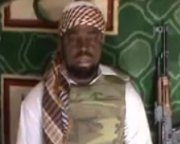
Mission Network News: "Nigeria (MNN) ― In its most recent YouTube video post last week, Nigerian terrorist sect Boko Haram threatened that it would bring down the federal government by June.

Boko Haram is responsible for several attacks on Christians, including a bombing April 8, Easter Sunday, which killed over 45 people."

Read more...