Showing posts with label harassment. Show all posts

Saturday, March 2, 2013

An Islamic Sudan may become a reality

(Cover photo by Bread For the World.
Story photo by Kids Alive International)

Sudan (MNN) ― Sudan is quietly slipping toward becoming an Islamist state. Sudan's President Omar Hassan al-Bashir has said he wants to adopt a "100 percent" Islamic constitution now that the South has split off.

Christians worry they won't be able to practice their faith--a concern that's been borne out in action by Sudan's recent crackdowns. Matt Parker, Vice President of Operations at Kids Alive International, says, "Although the government itself is saying there is religious freedom, really those are empty words."

Parker goes on to say that Kids Alive partners have shared stories this week about churches that have been destroyed, as well as a corresponding wave of arrests and deportations. "We do know of other Christian organizations in the area (in fact, I spoke to the director of another organization just this week) who have lost some of their key staff and are really concerned about what the future holds." What's more, "I've heard stories this week of offices of Christian organizations being broken into, raided. There are reports of orphanages and schools being closed."

Although officials strongly deny any discrimination against Christians, Parker says, "Christians in Sudan, churches, are very fearful about what the future holds, but there's very little reported in the media about this."

Bashir has been facing pressure from religious hardliners. The Sudan Tribune reports that a group of Islamists recently signed the "Islamic Dawn" charter that would establish Sharia law in Sudan. Further, the charter would ban any parties opposed to the move. The recent round of arrests might be an effort to appease these groups. Parker explains, "We've heard of people being arrested. We've heard of people being deported from the country for sharing about their faith. At the same time, there are Christians in Sudan that are committed to sharing the Good News."

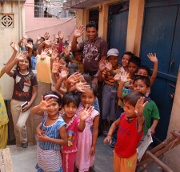
Kids Alive International has a presence in Khartoum. "We have a program working with 30 former street children, providing them with quality care, residential care, based on the compound of a church." The staff, while not directly affected by the closures and arrests, are watching the situation closely, says Parker. "We're very aware that we may have a limited window of opportunity to be there, and we're committed to being there for as long as we can and making the most of this opportunity that we have to be witnesses for Christ."

The Kids Alive ministry is Christ-centered, focused on fulfilling the physical, emotional, and spiritual needs of children. For now, they're still operating normally. "Be praying for churches. Be praying for Christian leaders in Khartoum, praying that God will strengthen them and give them wisdom in this situation."

Awareness is a big part of how you can help. Parker says because of the potential for disruption, "pray for our ministry and the 30 boys that we care for. Pray that these boys, each one of them, would grow up to be godly men."

Thursday, April 19, 2012

Azerbaijan scrutiny through EuroVision fails to raise red flags

(Image courtesy of Eurovision)

Azerbaijan (MNN) ― The Eurovision Song Contest is an annual competition held among active member countries of the European Broadcasting Union.

It is one of the longest-running, most-watched television programs in the world.  

This year, Azerbaijan hosts the competition, and Forum 18 News Service notes that freedom of religion or belief and related human rights such as the freedom of expression and of assembly remain highly restricted. 

Joel Griffith with the Slavic Gospel Association explains, "This Eurovision Song Contest doesn't necessarily have religious freedom tied to it, but it is a major European event. And Azerbaijan is also a signatory to many conventions when it comes to human rights." 

The question is WHY these violated rights are being allowed to pass unchallenged with Eurovision's global scrutiny. 

"There just seems to be a real concern--not only with religious freedom groups but with human rights groups and Western governments, in general--that you would have signatories to these conventions that are supposed to guarantee human rights. And then you have a country that's known, in recent years, for cracking down on some of these freedoms."

Azerbaijan is part of the Caucuses with a Muslim-dominated population. It also ranks 25th on this year's Open Doors World Watch List, a compilation of countries known for the persecution of Christians.   

The country's record on this issue is not widely known. However, Griffith says, "Since 2003, we've had local and international human rights organizations document cases of fraud, corruption, human rights abuses, and rule of law. 

We've just seen a steady increase in reports of religious freedom being violated."

One case in point: as of January 2010, all religious groups were required to renew their registration. Since then, no new churches have been able to register. Congregations without registration are often raided, with church leaders arrested or fined.

Griffith says they saw what was coming and came alongside the church with a Bible institute to help with the training of church leaders prior to the changes. Although they're still working, "What we have to do--not just in Azerbaijan but in any of the former Soviet countries where you have a larger Muslim domination, especially in Central Asia--is try to help churches as discreetly as possible."

The atmosphere seems to more hostile than ever. Azeri believers are considered traitors as Christianity is associated with the country's rival, Armenia. Many Christians are unable to find or keep jobs and are monitored by the secret police. 

"The main thing we're able to do right now is try to help as discreetly as we can, and try to raise awareness of the situation. Obviously, intercessory prayer holds a major role in this. Pray for our brothers and sisters there that they would not only be able to obtain freedom to worship but also to proclaim the Gospel."

Friday, March 2, 2012

A ministry team employs an unusual strategy in India

India (MNN) ― Disruptive violence against evangelists, pastors, and church gatherings continues to occur on a monthly basis in India, usually where the Christians live and work in remote or rural areas.

Mainly, the troublemakers are organized by extremist Hindu organizations who believe that those belonging to other faiths have no place in India and should be forced to leave.

According to Open Doors, it is likely that there's a higher degree of persecution because of the success Christianity is having among the low castes and untouchables, or Dalits. It means a loss of influence and power to Hindu leaders.

With the likelihood of rising oppression, Dave Stravers with Grand Rapids, Michigan-based Mission India asks, "How do you engage in this battle in a way that will break down the barriers and enable people to understand what Jesus can mean for their life?"

India's secularism may be critical to answering that question. Stravers explains that "India has never been more open to the Gospel than now. The growth of churches has really stirred up some of these activists. We have a ministry in India that's doing this in a really effective way, and it seems to completely disarm the opponents."

Their strategy is unusual, Stravers admits. "How can you use children to fight a spiritual battle? That's the question." That's especially important when you consider that for the average family helped by Mission India, grinding poverty is a major problem. 40% of India's population under five is malnourished; a staggering 72% of Indian children never attend high school, and there are 60 million child laborers.

You start with education. Mission India has Bible Clubs and many other programs that build on relationship in the community. "There are literally tens of thousands of Christian volunteers that want to do this. They go every day, two hours a day, and  they get this relationship with the kids and then with their parents. We have many converts, and in most cases, we end up with a new church."

Teachers that run the clubs are trained from the local churches. Mission India provides all of the materials and training. Stravers says they're not shy about who they are and what they're about. Even so, "Hindu and Muslim parents are very willing for their children to attend these clubs because they know Christians have a reputation for education, and they know their kids need this kind of help if they're going to succeed in school."

So, when word gets out that a club is starting, there's immediately a throng of eager participants. "Children come after school to meet in a location. A Christian teacher from some nearby church tutors them in their lessons, leads them in some games, tells Bible stories, helps with learning memory verses, and sings songs." Most of these kids take their new material home, sing the songs, and otherwise live out the lessons they're learning. On more than one occasion, says Stravers, that has resulted in the parents coming to Christ, too.

Even though Christians are bracing for increasing persecution in the future, that's having very little effect on the zeal following this program. "The demand is four or five times what we can provide. It only costs a dollar to bring a child through one of our 10-Day Clubs." Stravers goes on to say they have to turn away thousands of churches for lack of funding, which supports training and resourcing.

However, their teams can't afford to stop. A future body of Christ hangs in the balance. "India has 350 million children under the age of 14, more than the entire population of the United States. The remarkable thing is that it's the Hindu children and the Muslim children who are the most eager to participate."

Learn more on our homepage in the Featured Links Section.

Friday, January 20, 2012

Karnataka Christians most targeted in India

India (MNN) ― Karnataka State is one of the most dangerous places in India for Christians, according to the Evangelical Fellowship of India's (EFI) annual report.

After the Bharatiya Janata Party came to sole power in May 2008, anti-Christian attacks increased in the state and continue steadily increasing every year, according to the EFI. However, harassment doesn't always come in the form of violence. It is often subversive and emotionally draining.

Don Edwards, a spokesman with Grand Rapids, Michigan-based Mission India, shares one case involving a group of their partners. "Two and a half years ago, we had a training going on in the same state of Karnataka where all the trouble is happening today. 10 of our partners were arrested, thrown in jail, and then released on bond waiting for a court hearing."

In late 2010, there was faint hope that a judge would throw out the Karnataka case in which the team was accused of "inciting communal violence and bribing people to become Christians" in August 2009 during a 3-day training session for the Children's Bible Club program.

The partners have to travel back to Karnataka to appear before the court to answer the charges. The months of delay, while not a direct threat, intimidates through inconvenience and expense.

Edwards says, "They have to drop everything and show up at the court at least once a month. That's been going on now for two and a half years. Every time they show up,at court, the court case is postponed. It's quite an act of harassment."

Once again, the team arrived in Karnataka on Thursday, January 19. "There was another court hearing. It was postponed for another five days. The court hearing has now been postponed until next Tuesday, January 24. We certainly would appreciate any prayers from those who would remember Mission India's ministry, especially in the state of Karnataka."

The charges they face could be determined under India's Penal Code, Section 295-A which reads, in part: the offense is "deliberate and malicious acts intended to outrage religious feelings or any class by insulting its religion or religious beliefs."   

While legal protections against violations of religious freedom exist in India, corruption impacts how the laws are enforced, a fact noted by the U.S. State Department. Edwards notes, "It could be interpreted any way by the judge and whoever is the political power broker in the state at the time. That particular crime of 'intending to outrage religious feelings' is punishable by imprisonment for three years, or a fine, or both."

The accusations are false: the team was sleeping at the time they were arrested, so they could not have been inciting communal violence. "That's just one of the charges leveled against this particular group and often is leveled against people when they're attacked by Hindu fundamentalists and the government arrests the Christians rather than those who are committing the violence."

There is openness to the Gospel, and the church is growing. Edwards urges you to pray "that this case would be dismissed and these Christians would no longer be harassed simply because they  were conducting training for Christians to share the Gospel."

Mission India has long waiting lists of people who want to participate in their literacy program, Bible Club, and other outreach programs. Growth is only limited by resources, however. Here are links to help Mission India move forward.

Thursday, August 18, 2011

Iranian, Syrian ties spell trouble in the Middle East


Middle East (MNN) ― There are growing concerns that Iran and Syria are becoming fast friends who share not only ideology, but also methodology. Iran's open backing of Syria has raised some red flags as the Assad regime deals with the uprisings of the Arab Spring.

As Iraq prepares for the eventual U.S. troop drawdown, security there seems to be in question with the recent week of bombings. The greater concern, though, is what could happen between the  two Shia-leaning countries without a force in between them. Iran and Syria could be open to overtures from Hamas and Hezbollah, which would make the region a "Shiite Crescent."

Once Syria's crisis gets settled, will the region return to peace? Sara Afshari with SAT-7 says, "Iran likes to be the main power player in the Middle East, not only as the powerful country but as the leader of Islam. They like to achieve power and authority in whatever way they can around those countries, including Syria, Iraq, and even Bahrain."

Brutal repression of dissidents is the usual pattern--one that hasn't escaped the notice of SAT-7, a Christian satellite television Ministry to the Middle East and North Africa. Afshari explains, "Christianity inside Iran is really growing. Seeing themselves and seeing that Christianity is growing rapidly inside their own country is a little bit hypocritical for them."

While SAT-7 PARS hasn't been directly targeted, their team has noticed an uptick in harassment on the government level from Iran. "You see a wave of arrests and more difficult situations for Christians in Iran--more persecution, more imprisonment for new believers and new (Christian) leaders."

The young people of Iran are restless. They're looking for a message that rings of truth, Afshari explains. "They lost their hope, their motivation. That is why we feel that we need to be there for them--emotionally, psychologically and spiritually."

The hope of Christ has been embraced warmly by the Farsi-speaking audience. "Almost all television channels have become very political. When they watch our channel and see that we don't take a side, but we try to be there with them with our prayers, with the message of hope and peace, they feel it's a place where they can come and rest."

With all of the oppression, fighting and disillusionment, the love of Christ runs counter to nearly every other message right now, says Afshari. "We are there with the message of hope, and especially with the message of reconciliation, with the message of forgiveness, with the message of living together peacefully and in harmony--with the message of the Gospel to heal the wounds."

Through SAT-7 PARS programming on satellite TV, the house church movement in Iran is growing. People are contacting the counseling centers to find out more. Even though recurrent attacks on Christianity are brutal in the region and many believers are in jail, the light of Christ is shining even brighter.
  
Afshari notes that spiritual warfare is intense and that intercession is needed for the growth and protection of Christians. "Pray for wisdom for our teachers, our presenters and our writers--[that they would know] how to present programs which can touch people's hearts and impact their lives."
  
The hope is that in the end, SAT-7 PARS can be one of the tools God uses to bring freedom to the countries that would be part of the "Shiite Crescent." Learn more about SAT-7 here.

Tuesday, August 16, 2011

Hostility toward religion a reality; ministry launches solidarity campaign


International (MNN) ― A new study titled "Rising Restrictions on Religion" shows increased hostility toward religion between 2006 and 2009.

Released by Pew Research Center's Forum on Religion and Public Life, the study revealed that hostile action by community or government toward religious groups rose substantially for more than 2.2 billion people during the study period.

The report also noted that this data was not surprising due to the fact that many of the countries with the increase had already experience high levels of hostility or restrictions.
 
Violence considered in the report included damage or destruction of property to physical assault, false charges, detention and displacement. Also predictable was the percentage of Christians involved in the harassment. According to the report, they were the victims of mob violence in 52 separate incidents by the middle of 2009.

Christians also faced harassment in130 countries, the highest numbers among the religious groups studied. According the report, the top ten countries with the highest hostilities regarding religion included Iraq, India, Pakistan, Afghanistan, Somalia, Indonesia, Nigeria, Bangladesh, Israel and Egypt.

A slightly different distinction with another top ten list involved countries with government restrictions in place: Egypt, Iran, Saudi Arabia, Uzbekistan, China, Maldives, Malaysia, Burma, Eritrea and Indonesia.

Open Doors World Watch List (WWL) is a list of the top 50 countries where persecution of Christians is the worst. A comparison of both Pew lists finds the countries in the top 50. However, the 2011 WWL names the following as the world's worst persecutors of Christians: North Korea, Iran, Afghanistan, Saudi Arabia, Somalia, Maldives, Yemen, Iraq, Uzbekistan, and Laos.

Carl Moeller with Open Doors explains that "over 70% of the world's population lives in places where  religious liberty is restricted. Well over 100 million Christians right now, as we speak, in over 60 countries, are being actively persecuted for their faith."

Given the scenario facing believers, Open Doors launched the International Day of Prayer for the Persecuted Church in 1996. From a core group of approximately 7,000 churches, the IDOP has grown to be the largest prayer day event of its kind in the world.

IDOP is a means of encouraging solidarity, offering a rallying point for Christians and others to stand behind the persecuted Church. Moeller says, "When I hear that the vast majority of the world lives in places where they are not free to believe, in the way that we are here, my heart goes out to them and I want to do something."

Traditionally the second Sunday in November, IDOP this year has a preparatory campaign launch called "One With Them." Moeller says, "By being part of 'One With Them' and going to onewiththem.com, I can actually show the world that I care and make a difference."

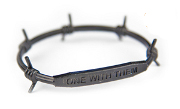
The sole functions of IDOP are prayer and awareness. One With Them serves both purposes with the help of a rubber bracelet shaped like barbed wire. "This campaign is really focused on the International Day of Prayer for the Persecuted Church in November coming forward, where we will mobilize literally millions of Christians around the world to pray for persecuted believers."

Since most of the persecuted church feels forgotten by the rest of the world, Moeller says, "The most important thing we do will be to mobilize prayer for these Christians. That's the number one request they have. Our commitment is to provide whatever resources they need, and in order to do that, we need the support of people in the United States."

Because Open Doors is so committed to getting people to join in the solidarity movement, they're giving the bracelets away to encourage people to participate. Go to Onewiththem.com where you can request a bracelet for yourself and one for a friend. Beyond that, you can purchase extras. The prayer reminder comes packaged with a commitment to pray for the persecuted church. Also, written inside the card is the pledge: "I wear this wristband in solidarity with my brothers and sisters in Christ, who share my faith but not my freedom."

Moeller says, "It's really vital that people mobilize those that they know who have opportunity to step in the gap and provide the material resources, the Bibles, the rebuilt churches, the food, clothing and shelter for the victims of the violence in these places."

Tuesday, August 2, 2011

Romania's Church Feeling the Bite of Legislation

Romanian Church service
 (Photo by Johan Koolwaaij)

Romania (MNN) ― Religious laws have been brought into play in Moldova since 2004, and it appears that the ideology is finally crossing the borders into Romania.

Patrick Klein with Vision Beyond Borders just returned from a mission trip to the Roma in Romania. He says their ministry partners have told them that in the south part of the country, "The Orthodox Church has been hiring thugs to attack pastors. Then also, we've heard that there's legislation in front of the Romanian government right now to close down any church that's under 300 members."

The type of legislation pending before Parliament bears some similarities to bills introduced in Moldova within the last seven years. However, there has not been a lot of coverage. Klein says if they go through without opposition, "It would mean that there's a lot of little churches that would be closed down that would no longer be able to operate. There's a lot of pressure from the Orthodox Church because they see the opposition from the Bible-believing churches."

If Moldova is the pattern followed by Romania, the future for smaller churches will be difficult. Registration in Moldova is required by law but has not always been easily available to smaller religious organizations. In fact, according to Voice of the Martyrs Canada, religious groups that apply for registration are often denied.
  
Additionally, unregistered religious groups cannot own, buy, or sell property, are not permitted to invite foreign citizens to the country, cannot officially hire personnel, and are not allowed to hold a bank account.

Registration--or the lack thereof--effectively ties the hands of traditional mission groups. If the smaller churches can't share the Gospel, there's a bigger problem on the horizon, warns Klein: false teaching. "We were talking to these religious leaders and we said, ‘If you have no assurance of salvation, how can you lead people in the church themselves? You're the one they look up to.' These men looked at us dumbfounded, then said, ‘Nobody knows if they're saved or not.'"

For now, the window remains open in Romania, and Vision Beyond Borders will work as quickly as possible. "As our teams go in, I want to see us reach out more and more, getting the Gospel out to more and more people to help strengthen these smaller congregations. I hope to see them grow. If this legislation passes, that any church under 300 would be shut down, let's do what we can to build up these congregations."

In the meantime, Klein urges prayer that God would prepare the Church for what's likely coming. "We could pray that this legislation would not be allowed to be pushed through, praying for the Romanian church to be strong, that we're standing with them, and we're committed to keep getting the Gospel in and trying to reach these people."