Thursday, March 22, 2012

Egypt's Coptic church mourns loss amidst concerns

( Cover photo by David Hoffman)  
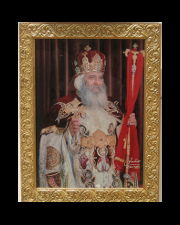
Egypt (MNN) ― Mourners packed Cairo's main cathedral for the March 20 funeral of the leader of Egypt's Coptic Church, Pope Shenouda III.

He led the church during a time where Egypt was becoming increasingly Islamist, and Copts were beginning to come under attack in the majority Muslim nation. SAT-7 Egypt director, Farid Samir, explains, "For Christians, he was like their political representation. That was not a good thing that Christians were living behind the walls of the church, but that was the system because of the oppression. You can say the Christians felt that the church [was] their place. (Sic) "

The loss of Shenouda's influence at a time when upheaval is a regular part of the landscape hasn't been reassuring, Samir says. "All Christians feel that we lost an important leader and pioneer. He's been there 41 years as a Pope. He dealt with all kinds of situations, so he was like a pioneer in that area. Lots of Christians now feel like they're orphans."

Muslims and Christians came together in a common cause in the 2011 revolution that eventually ousted President Hosni Mubarak. A civilian transition government supervised by the Supreme Military Council leads the transition now. Under it, there is an increasingly anti-Christian attitude and simultaneous sympathy toward the Muslim Brotherhood.

SAT-7 is a Christian satellite television ministry to the Middle East and North Africa. Samir says with all the uncertainty, "They (the Christians) feel their loss, especially at this time. They don't know who the coming president is. Do we have an Islamic state? Do we have a liberal state? They're not sure what's happening, so there's a lot of uncertainty which makes it worse."

The production team adjusted their programming to address the current events. "SAT-7 tried to give hope and tried to share the emotions of the people, but also to present the hope of Christ." Mock goes on to say that this week, they've focused on the emerging worries without Shenouda III. "There is another episode called 'Salt of the Earth.' It's a talk show for current affairs, and it discusses the future of Christians in Egypt, how to deal with the new government, how to deal with the political situation."

Although Egypt has seen less of the religious violence that has prompted members of ancient Christian communities to migrate from Iraq and other Arab countries, the country ranks 15th on the 2012 Open Doors World Watch List. 

There have been increasing reports of Salafi Muslims intimidating local Christians by blocking entrances to churches, demanding that church buildings be moved outside communities, or that church repairs be forbidden.

However, Shenouda was making headway at least in opening dialogue with the Muslim Brotherhood. Samir says, "The good thing that was happening was the Muslim Brotherhood went and visited him lately to show that they want to make a bridge between Muslims and Christians or between the government and Christians."

Shenouda's loss is a blow to some, but what he started can be continued. Samir says, "The good thing that was happening was the Muslim Brotherhood went and visited him lately to show that they want to make a bridge between Muslims and Christians or between the government and Christians."

The selection process for a new pope could take months. An interim leader will be selected this week, and nominations for papal candidates will begin then. After two rounds of voting by the Supreme Council of Bishops, three candidates names will be put on slips of paper, placed in a jar, and a child will select one of the names.

Samir says until there is a new Pope, many feel vulnerable during a time of extreme change in Egypt. "Pray for us at SAT-7 to tackle issues that Christians suffer from, to start real dialogue between Christians and Muslims, to start a real dialogue about politics, and at the same time, to have hope in Christ."

Morocco church looks different

Morocco (MNN) ― Two years ago, many foreign Christians were expelled from Morocco. It changed the face of the Moroccan church. The Christians, for example, now meet in smaller groups than they were used to. Twenty members are a big church nowadays.

2010 was a difficult year for the church in Morocco. "After the foreigners were expelled, almost half of the churches stopped; it was really a big crackdown" says an Open Doors worker responsible for North Africa. A year later, things turned normal again for the estimated 3,000 Christians, but the tendency is to split up the groups of believers into smaller groups.

The current year is seen as a crucial year for the church. There are some signs that things might become more difficult. 

In the beginning of March, three brothers were arrested at a coffee shop. "It was clear that they were arrested because of their Christian activity. The police asked questions about this and tried to find Christian literature or material." According to the Open Doors spokesman, they also tried to find the pastor of the three men. He was warned, however, and went to a safe place. The three men were released a day after their arrest because of lack of proof.

"For the Christians in Morocco, these arrests are a sign. The country is now governed by a government with clear influence of Islamists. Christians believe that the arrests are the start of a new trend," says the Open Doors worker.

According to the Open Doors worker, the fact that many foreigners had to leave the country has turned out to be a positive thing for the Moroccan church. "The church needs its own personality to organize itself. The only big difficulty is financial. The churches have less money now."

Becoming a Christian in Morocco is, in itself, not forbidden. But it is almost a miracle when someone converts. "It is forbidden to share the Gospel with non-Christians," says the worker. One of the tools Open Doors uses to support and to strengthen the church are Christian TV programs, Web sites, and follow-up. For Web sites, Christians need a lot of wisdom and discernment. "The government tries to infiltrate this with spies," says the worker about the Web sites.

The face of the churches has changed in the last years. "Ten years ago, I would have said that most of the members were singles; now you see families in the churches. That also makes the churches stronger. I would say that the church has potential to grow by itself. The church has good leaders that have no fear. The foundation is good."

Open Doors is helping Christian leaders in Morocco. "We offer training and help the leaders to be able to train others so they can stay in the country."

Morocco is No. 29 on the Open Doors 2012 World Watch List of the worst persecutors of Christians in the world.

Wednesday, March 21, 2012

Christians Targeted in Sudan’s ‘Ethnic Cleansing’


Black, largely pro-south civilians of Nuba Mountains flee aerial bombing.
The “ethnic cleansing” that Sudanese President Omar al-Bashir has undertaken against black Africans in the Nuba Mountains is also aimed at ridding the area of Christianity, according to humanitarian workers.


By targeting Christians among people who are also adherents of Islam and other faiths in the Nuba Mountains, military force helps the regime in Khartoum to portray the violence as “jihad” to Muslims abroad and thus raise support from Islamic nations, said one humanitarian worker on condition of anonymity.


In South Kordofan state – which lies on Sudan’s border with the newly created nation of South Sudan but is home to sympathizers of the southern military that fought against northern forces during Sudan’s long civil war – Bashir’s military strikes are directed at Muslims as well as Christians, but churches and Christians are especially targeted, he said.


“The ongoing war against Christians and African indigenous people is more of an ‘ethnic cleansing’ in that they kill all black people, including Muslims, but they give specific connotation to the war in targeting Christians to secure funding and support from the Arab and Islamic world by saying this war is a religious war,” he said. “And in so doing, they get huge support from those countries.”


Aerial bombardment killed the five members of the Asaja Dalami Kuku family, which belonged to the Episcopal Church of Sudan, in Umsirdipa in the Nuba Mountains on Feb. 25, the source said.


The government in Khartoum is using Antonov airplanes to drop bombs, “coupled with state- sponsored militia targeting churches and Christian families,” said the humanitarian worker.


“The brutal state-sponsored militias are moving from house to house searching for Christian and African indigenous homes as the government continues with air strikes,” he added.


The Satellite Sentinel Project has gathered evidence that Antonov aircraft have indiscriminately bombed civilian populations in South Kordofan, although after a recent crash the government has said it will no longer use the planes.


In Kadugli, the capital of South Kordofan, at least four church buildings have been razed and more than 20 Christians killed, he said.


“The Islamic north sees Nuba Christians as infidels who need to be Islamized through Jihad,” the source said. “But the fact of the matter is this war is ethnic cleansing – a religious as well as political war, indeed a complex situation.”


Between June 2011 and March 2012, four church buildings have been destroyed, said another humanitarian worker; they belonged to the Episcopal Church of Sudan, the Roman Catholic Church, the Sudanese Church of Christ and the Evangelical Presbyterian Church.


“On Aug. 18, 2011, the Sudanese Church of Christ building was razed to ashes,” the worker said.


On June 7, 2011, state-sponsored militia destroyed the office of the Sudan Council of Churches at Kadugli, along with its vehicle, the sources said.


On Feb. 26, three church leaders visited the devastated areas of Kaduguli, led by Bishop Daniel Deng of the Episcopal Church of Sudan, and then presented grievances to the government. They were surprised that the government denied the attack on the church buildings.


“A government official said [southern and other] militia groups were the ones destroying the churches, and not the government,” one of the aid workers said.


Fighting in South Kordofan, a major battleground during Sudan’s 1983-2005 civil war, broke out again in June 2011 as Khartoum moved to assert its authority against gunmen formerly allied to the now independent South Sudan. The conflict between Bashir’s forces and the Sudan People’s Liberation Movement-North (SPLM-N) spread from South Kordofan to Sudan’s Blue Nile state in September 2011.


The United Nations estimates the conflict has displaced 400,000 people, with 300,000 in danger of starving within a month. Additionally, the U.N. Commissioner for Refugees estimates there are 185,000 refugees from South Kordofan and Blue Nile in South Sudan and Ethiopia.


Sudan’s Interim National Constitution holds up sharia (Islamic law) as a source of legislation, and the laws and policies of the government favor Islam, according to a U.S. Department of State report. On several occasions in the past year, Bashir has warned that Sudan’s constitution will become more firmly entrenched in sharia.


When the Comprehensive Peace Agreement was signed in 2005, the people of South Kordofan were to decide whether to join the North or the South, but the state governor, wanted for war crimes himself, suspended the process, and Khartoum instead decided to disarm the SPLM-N by force.


“The church and enfeebled women and children have become victims of this fight,” one of the humanitarian workers said. “We as the church have a moral and spiritual obligation to stand with our brothers and sisters who are suffering in the Nuba Mountains.”


END

Parents, Islamic Extremists Beat Young Woman in India


Christian in West Bengal cast out of home for her faith.
A young woman was thrown out of her home this month for daring to give thanks for healing in Christ’s name in a predominantly Muslim village in India’s West Bengal state, and then her parents helped Islamic extremists to beat her nearly unconscious.


The attack on Rekha Khatoon, 22, took place on March 9 in Nutangram, Murshidabad.


“I boldly told those who beat me up that I may leave my parents, but that I will not leave Jesus,” Khatoon said. “Jesus has healed me, and I cannot forget Him.”


In a village where hard-line Muslims have threatened to kill the 25 families who initially showed interest in Christ, leaving only five frightened Christian families, Khatoon was returning from worship with Believers Church at Al Hamdulillah Hall when her parents and Muslim extremists attacked her, she said. They called her a pagan, among other verbal abuse.


The mob also harassed the Christian woman who encouraged Khatoon to trust Christ as Lord, Aimazan Bibi, said Bashir Pal, pastor and founder of the village Believers Church.


“On the same night, Rekha Khatoon’s father, Nistar Shaike, and about 20 Muslim radicals surrounded Aimazan’s house, shouted anti-Christian slogans, threatened to harm her and her family and falsely accused her of ‘luring’ Rekha to convert to Christianity,” Pastor Pal told Compass.


After finding herself alone on a road after the beating, Khatoon had taken refuge in Aimazan Bibi’s home.


Khatoon had met Amaizan Bibi last year and told her about a reproductive ailment that caused her to bleed heavily, and the older woman had shared both the gospel of Christ and His healing power with her, Pastor Pal said.


“After Rekha Khatoon came to know about her ailment, she met one of our church members, Aimazan Bibi, and she shared her physical problem with her and told her that her illness was getting worse as she was not able to purchase medicines anymore,” he said.


Aimazan Bibi also invited Khatoon to attend church. On Dec. 23, Khatoon came to the worship center, where Christian women laid hands on her, he said. The pastor and congregation prayed for God’s healing touch in Jesus’ name.


“She received healing from Christ, and thereafter she attended the worship services whenever she could,” Pastor Pal said. “On Jan. 17, Khatoon attended one house church meeting in her village and once again testified that Jesus has healed her, and that she had not taken any medicine since Dec. 23.”


He said the Muslim extremists warned Khatoon not to have contact with Christians. West Bengal is 25.2 percent Muslim, with Hindus in the predominantly Hindu country making up 72.5 percent of the population in the state, according to Operation World. The state, which borders Muslim-majority Bangladesh, is only 0.6 percent Christian.


Upon learning that she was attending Christian worship meetings, her parents had strictly warned her not to have any relationships with Christians and not to attend their fellowship, Aimazan Bibi said.


“However, she told them that she cannot forget Jesus and His love for her,” she said.


Pastor Pal’s wife, nurse Anasea Pal, added that at another house church meeting, Khatoon brought her sister and talked about the healing she had received from Christ.


Khatoon has since relocated to another area, where she lives largely confined for her own protection.


Khatoon and her mother had attended worship services at the church previously; they began there in 2009 until area Muslims, furious to hear that several women were attending worship services, warned them to cease all contact with Christians or else they would face harm. The local mosque then offered Khatoon’s mother a job carrying food for the local Islamic leader to ensure she stopped all contact with Christians.


She also stopped Khatoon from attending Christian meetings.


Tensions prevail in the area, with enraged Muslim radicals threatening to hurt the five Christian families on the slightest pretext. In addition to harassing Aimazan Bibi, Islamic extremists have ruined her son Sirajul Shaike’s business, throwing away all his vegetables and chasing him out of the village market.


“It is very difficult for them now, since selling vegetables was the main source of income for the family,” Pastor Pal said.


Christians in the village have endured all manner of physical torture and social boycotts at the hand of Muslim extremists, Pastor Pal said. He added that the extremists are not allowing Christians to enter the village.


END

Uzbekistan tightens grip on unregistered churches with series of raids

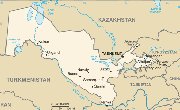
Uzbekistan (MNN) ―Uzbekistan has earned its spot as 7th on the Open Doors World Watch List for the persecuted church and is proving its keep.

Basic religious rights have been defied multiple times in Uzbekistan over the last couple of months. According to Forum 18, last month police raided an unregistered church and confiscated literature, pianos, and church property. A week later, the church pastor was fined $3,421 -- a cost of 100 times the minimum monthly wage.

Just a few days before the raid on the church, a woman's home was raided. She was fined 20 times the minimum monthly wage, and her Christian books were handed over to Samarakand Regional Muslim Board.

Just a couple of weeks later, a Baptist congregation in the southern town of Mubarek was raided and will be fined.

These types of raids are not new to Uzbek Christians, and especially not to members of unregistered churches. Alleged "expert analyses" are routinely used by authorities to confiscate religious material, Forum 18 reports.

The number of serious raids and fines that took place in recent weeks has some concerned. "It really does seem like Uzbekistan is beginning to step up its campaign against unregistered churches and groups of any kind," says Joel Griffith with Slavic Gospel Association. "Of course we're watching to see what kind of trickle-down this has on even the registered churches."

Griffith agrees that raids like this could be indicators of worse persecution to come. Already, pastors have been arrested all across Central Asia.

The number of basic rights that have been denied is disconcerting. Uzbekistan and surrounding, oppressive nations continue to bring concern to human rights watch groups.

Despite the influx of persecution and more likely to come, the church is standing strong. SGA has to be discrete about what they've seen, as far as church growth is concerned. But Griffith does say this: "You could look on a global perspective: typically, the more they try to stamp the church out, the more it grows."

Pray for boldness for church members, especially those who are younger. Griffith says many older members of the church remember well what it was like to live under the oppressive Soviet regime, but younger Uzbeks don't. Pray for church growth despite persecution. 

Tuesday, March 20, 2012

Three Iranian Christian converts released on bail

Three Iranian Christian converts released on bail: "TEHRAN, IRAN (ANS) -- An Iranian court has agreed to temporarily release three Christian converts on a large sum of bail.

According to the Christian news agency, Mohabat News, www.mohabatnews.com , the three Christian detainees who were arrested in Shiraz were released after 36 days in custody and uncertainty. Shiraz is located in Fars province, 934 KMs south of Tehran, the capital."

Read more...