Sunday, December 1, 2013

Kenyan bishop hurt in clash with local tribe

Three members of congregation also hurt in attempt to retrieve abducted member

Bishop Daniel Laichena, centre, was injured after demanding
 that Njuri Ncheke elders release a member of his congregation.
David Muchui / Youtube
The bishop of a Pentecostal church in eastern Kenya was hurt on Saturday (Nov. 23) in a clash with elders from a local tribe after a member of his church was abducted.
Three members of the bishop’s congregation were also injured during the clash in Meru, a region on the northeastern slopes of Mt. Kenya.
Bishop Daniel Laichena, head of the Full Gospel Church in Tigania East, was attacked by more than 40 elders of the Njuri Ncheke council at the local shrine where he had gone in an attempt to free the abducted man, Justus Kamai.
Kamai was eventually freed, but he claimed that the elders had forced him to undergo a spiritual ritual inside the shrine.

Refugees Victimized in Nigerian Violence

By Jeremy Reynalds
Senior Correspondent for ASSIST News Service

FAIRFAX, VA. (ANS) -- On Nov. 13, members of the terrorist group Boko Haram kidnapped Father Georges Vandenbeusch, a French parish priest of Nguetchewe.

Ann Buwalda and Emmanuel Ogebe visit Nigerian refugees
Vandenbeusch was kidnapped in north Cameroon and later transferred to Nigeria.

In a letter to supporters, Ann Buwalda, executive director of the Jubilee Campaign said a statement from Boko Haram demands the release of Boko Haram members jailed in compensation for Vandenbeusch's life.

Buwalda said this kidnapping is only a small piece of what seems like an insurmountable problem in northern Nigeria and its neighbor Cameroon, as the violence spills over.

The United Nations High Commissioner for Refugees (UNHCR) has registered 8,000 refugees from Nigeria in Cameroon, near the area where the priest was abducted. 

Another 2,000 refugees have been registered in Niger and Chad.

Last month, Jubilee Campaign members Emmanuel Ogebe and Buwalda traveled to visit with Nigerian Christian refugees who have fled to the neighboring country of Cameroon from the terrorist atrocities inflicted on them in Borno State since May 25 of this year.

Due to the active Boko Haram terrorist attacks taking place within various pa rts of Borno State it was too dangerous for Ogebe and Buwalda to go directly there. Instead, they traveled through the adjacent Adamawa State to meet with refugees just across the state line in Gwoza.

A number of pastors brought refugees hiding in neighboring Cameroon back across the border to meet with us. While official United Nations reports mention ten thousand Nigerian refugees, there are reports of many unregistered refugees.

The team interviewed widows and others from the group of over 150 refugees who waited more than a day for our arrival. The refugees told Jubilee Campaign that on May 25, Boko Haram insurgents first burned down three churches in Gwoza area to test what the authorities would do.

Since nothing was done, the terrorists attacked again and burned down another 24 churches as well as 318 Christian homes, killing several Christians.

Buwalda said when Christian leaders pleaded to the local police for help, they were told to use bows, arrows and stones to protect themselves. As a re sult, all the Christians in the community fled. Although they would like to return to their ancestral homes, they told the team that the lack of proper security makes that impossible.

After distributing clothing brought for refugees, the team encouraged them with words of comfort from the Bible and prayed with them. The same day as this meeting, it was reported that nine people were killed, aside from three more churches that were burned.

Buwalda said these Christians have literally been bombed into the stone-age by Islamist terrorists who burnt their homes and ran them out of their villages in northern Nigeria. They need to start basically from scratch. Just last week 150 more homes were attacked.

UNHCR estimates around 5,000 or higher people have been displaced in northeast Nigeria. Recently, escalating numbers are seeking refuge in neighboring Cameroon.

Cameroon fears its inability to receive the refugees and contain violence. On Oct. 5, Cameroon officials attempted to forcibly return 111 people to northern Nigeria. During the incident 15 were killed and seven others were wounded. The rest quickly fled back to Cameroon and were detained.

Buwalda said, "Jubilee Campaign would like to help them in their desperation. Needs of the refugees include: tents and camping supplies (flashlights, stoves, ponchos, solar lamps, first aid kits, portable toilets, sleeping bags). Neither World Vision, World Relief or Samaritan's Purse are operating in Nigeria therefore, it is a real challenge to get basic relief supplies to distribute to the refugees."

Jubilee Campaign is a nonprofit organization which promotes the human rights and religious liberty of ethnic and religious minorities.

For more information about Jubilee Campaign visit www.jubileecampaign.org

Beijing House Church Raided

By Jeremy Reynalds
Senior Correspondent for ASSIST News Service

A woman walks to a Christian church in Beijing,
 April 17, 2011.
BEIJING (ANS) -- The meeting site of a Christian house church in Beijing was raided for being an "illegal gathering."

According to a news release from ChinaAid, believers said at least three house church meetings in the local area were raided by police.

In one case, more than 20 people, including police officers, religious affairs officials and joint defense team members burst into a meeting of 25 believers.

ChinaAid said, "They began breaking up the meeting, destroying installations in the room, and removing four or five cases of Bibles."

When a radio station contacted the local police and religious affairs officials on Monday they told the station that due to security concerns believers are not allowed to meet in private.

On Sunday morning, a meeting of Christians from the Harvest Church was broken up by more than 20 people from Gaoliying Police Station. Police cut short the sermon, forcibly dispersed the believers, and searched the rooms for religious items.

Mr. He said, "More than 20 of them came in yesterday while we were meeting. As soon as they arrived, they started removing computers, projector and sto ols from the room. Their director said that we were not welcome, and (they) took all our books, hymnals and Bibles. These past few days, we've been getting ready to negotiate with them and get our things back."

ChinaAid reported that another person, Ms. Xing, said the police officers were "rude and outrageous" after they entered the room. They shouted, "'Stay seated! Don't move!' (They were) like bandits, even grabbing the Bibles we were holding in our own hands. And, when we tried to make a video recording of them with our cell phones, they grabbed the phones and deleted everything."

House church believers hold small meetings throughout Beijing, and most of the time, the authorities don't interfere. 

ChinaAid said an officer later explained that this meeting was broken up because, "There was a relatively large number of people there; there were children and elderly people. If something dangerous happened, they themselves cannot be held responsible."

Mr. He said that many house churches in that tow n have dealt with the same issue.

In addition, Beijing's Chenguang Bookstore, which mainly sells religious literature, was subjected to multiple inspections from different government departments around the Oct. 1 National Day holiday. They were told that they could be shut down.

In communist countries such as China, ChinaAid said efforts to exert control over the Christian population have increased.

According to ChinaAid, "China continues to insist on asserting its authority over all Christian groups, especially over those not registered with the State."

An international non-profit Christian human rights organization, ChinaAid is committed to promoting religious freedom and the rule of law in China.


For more information visit www.chinaaid.org

Seven-Year-Old Boy in India Tortured, Murdered for Christian Faith

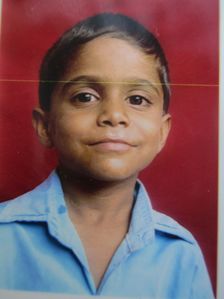
 A two-year-old photo of Anmol,
 a seven-year-old boy kidnapped
, tortured and murdered in
 northern India for his faith.
CARROLLTON, Texas, Nov. 26, 2013 /Christian Newswire/ -- The body of a seven-year-old boy in India retrieved from a pond last week revealed horrific details of torture before he was brutally murdered because of his Christian beliefs. 

Photo: A two-year-old photo of Anmol, a seven-year-old boy kidnapped, tortured and murdered in northern India for his faith.

The son of a believer, Anmol went missing after attending Sunday School at a Believers Church on Nov. 17 in northern India. His body was found the following day. Previous threats and persecution of his family indicate he was targeted because of his family's faith.  

"The unprecedented torture and death of this innocent child sadden our hearts incredibly," said Dr. K. P. Yohannan, Gospel for Asia founder and international director. "Persecution of Christians is a weekly occurrence, but this intensity of brutality against a child is unthinkable. In this horrible tragedy, we find strength and hope in Jesus."

According to Yohannan, persecution of Christians has increased by over 400 percent in the past few years. 

Anmol's parents last saw him when he left their home for School. When he did not return, they filed a missing persons report with local authorities. By evening, they identified their child's body at the hospital.

Anmol's face was burned, his hands were slashed and destroyed by fire, and his mouth was tied shut. Hot fragments of coal or firewood had been placed on his stomach, burning his abdomen, and his toes were broken.

Autopsy reports came back indicating Anmol's final cause of death was drowning. 

At least 200 people attended the final viewing and funeral. "The wail of the people and the parents was heartbreaking," said one official. "It was truly a painful and intolerable incident. The kidnapers had tortured the child in such an inhuman way. It was very clear that he was brutally killed."

Details identifying the murderer have not been released, pending further investigations. Anmol's family had been the target of persecution since 2003 when his father, Harish, made a decision to live for Jesus after witnessing the miraculous healing of his brother. At least 45 people began following Jesus at the same time, resulting in ongoing persecution in the community.

Gospel for Asia is calling for prayer for the consolation of Anmol's parents, brother and sister, grieving extended family members, that the persecutors would come to know the love of Christ, and the protection of all believers. 

More information and ways to pray are available at www.gfa.org/info/child-murdered.

Rash of blasphemy accusations after Pakistan church bombings

Many Muslims sympathized with victims, but still new blasphemy cases


The remains of a Munawar Masih's belongings in Michael Town,
 Karachi, after they were taken from his home and set on fire.
World Watch Monitor
In the light of UK Foreign Office Minister Baroness Warsi’s speech in Washington DC ten days ago, World Watch Monitor has looked back over the period since the Peshawar bombs. A climate of much sympathy has nevertheless been punctured by several charges of blasphemy against Christians for actions in the immediate aftermath of the tragedy.
Four blasphemy cases against Christians were registered in less than a month, four times higher than the monthly average recorded over the last two years.
In all these blasphemy charge cases, no direct evidence was available against those accused.

Tuesday, November 26, 2013

After Retaking of Delga, Christians Terrorized in Other Towns in Egypt

By Dan Wooding
Founder of ASSIST Ministries

CAIRO, EGYPT (ANS) -- Three months after the Egyptian Army liberated Delga from militant Muslims, Islamists and criminals are terrorizing Christians in other towns across Egypt, human rights activists said.
Priest examining damage in church building in Minya Governorate, Egypt. (Photo: Watani Weekly)

According to the Middle East Correspondent of Morning Star News (http://morningstarnews.org), Islamists in the towns are again charging Jizya, a Koranic fine on non-Muslims also known as the "submission" or "humiliation" tax, after a lull following the retaking of Delga on Sept. 16, said human rights activists within the country. In several towns across Egypt, Muslim extremists and criminals have set up a cottage industry persecuting Christians for profit, the activists said.

"Extortionists using the threat of kidnapping, torture and murder are seizing money, land and other property from Christian's throughout the southern part of the country but mainly in Minya and Assiut governorates," said the story.

Mina Thabet, founding member of the Maspero Youth Union said, "What you are dealing with now is some criminals attacking Christians - Christians who own shops and things like that. He added that in the case of militant Islamists, persecuting Christians is seen "as a religious duty."

Although exact numbers of the crimes are difficult to estimate, human rights activists say the attacks are both common and widespread, affecting Christians in dozens of towns. Almost every week, there are reports of Copts kidnapped and held for ransom.

"This past month alone, we had nine cases of kidnapping in Minya, and they all paid their ransom, which was between 100,000 and 250,000 Egyptian pounds [US$14,500 to $36,300] for each case," said Ezat Ibrahim, director of the Minya branch of the Al-Kalema Human Rights Organization.

An Egyptian Christian who had been
kidnapped and tortured
Most of the kidnapping victims have been tortured, Ibrahim said. Many were tortured so severely that when they returned to their families, they were completely broken, unable to talk about their ordeals, much less report the crimes to police.

Morning Star News went on to say that one victim, a Copt who works as a human rights researcher, was kidnapped in an undisclosed town in Minya and severely tortured. The kidnappers tied him up, held an automatic rifle next to his ear and fired it repeatedly.

Besides the emotional damage he suffered, the shockwaves exiting the rifle combined with the muzzle blast shattered the Christian's eardrums and burned his face. The Copt begged his family to gather the ransom money, and eventually they paid the kidnappers some 50,000 Egyptian pounds (US$7,260). He returned to his family shattered and unable to speak of the ordeal until recently.

Most of attacks are happening in Minya Governorate, 152 miles (245 kilometers) south of Cairo, with another large share taking place in Assiut Governorate, 200 miles (320 kilometers) south of Cairo. In Manshat al-Mughlaqa, a village in Minya, a heavily-armed group led by a criminal who goes by the name of Saddam Hussein collects the Jizya by threatening to kill Christians or their children, according to Watani Weekly. Many Copts have paid the "tax" with amounts ranging from 25,000 to 250,000 Egyptian pounds (US$3,630 to US$36,300).

The Middle East Correspondent said, "The ransom demands are enormous for the average Egyptian, with the amounts based on Muslims' widespread perception that Copts are wealthy. And those who don't have the means to pay have to beg for money from family and neighbors, meaning just one kidnapping can terrorize and financially drain an entire community. If victims of extortion attempts fail to submit and happen to own land, their fields and livestock are promptly set on fire.

"Under attack for weeks, the Copts of Manshat al-Mughlaqa have asked police and military security several times for protection, but personnel have done nothing, according to Watani. Thabet said it is rare for police or military security to intervene to protect Copts because the forces lack either the will or the capability to take on criminal gangs."

Lack of initiative by police, perpetrators' hatred for Christians and failure of the justice system to prosecute people attacking Christians all contribute to the extortion and allow it to continue, Thabet said. There is a perception that Christians can be attacked with impunity.

"If you hurt a Christian, no one is going to do anything to you," Thabet said. "No one is ever brought to justice in any sectarian violence against Christians."

Police on a street in Delga trying to restore order (Photo: Open Doors)
The Egyptian Army, joined with local police on Sept. 16, as they moved into Delga ostensibly to break up a group of Islamists that had set up a state within a state who claimed they had done so under the authority of Islam. In two days, the army brought the town back under control with sporadic fighting and arrests that lasted until Sept. 20.

What seemed to be an attempt to save the Copts, Thabet said, was actually meant to crush Islamic opposition to the military government that took power following a wave of national protests that led to the removal of then-President Mohamed Morsi. Weeks after the army cleared the streets, Islamists and criminal elements returned to Delga and villages across Minya Governorate to make money by attacking Christians, although to a lesser degree and in ways that were less of a threat to the national government than before.

"It's like groups of criminals were coming there for a job," Mina said.

Part of the difficulty in breaking up the groups is the way they are structured and how they go about committing their crimes. The extortion gangs started operating when Morsi was still president. Before the military removed him from office on July 3, the gangs usually forced Copts off land by "squatting" on their property and harassing and threatening them until they abandoned the lands or even their businesses, Ibrahim of Al-Kalema said.

President Morsi before his arrest
The Morsi regime did nothing to stop the seizures; in fact, most Coptic activists and journalists say that his rhetoric, which tended to be divisive, contributed to the atmosphere of impunity. But after Morsi was pushed out of power, the extortion gangs switched their approach to kidnapping and intimidation. Victims could be abducted in one village and held in another until the ransom was paid. Even if police did decide to get involved in stopping the extortion, they would be faced with a constantly moving target, Ibrahim said.

Thabet told Morning Star News that that regardless of the cost, the Christian community, international interests and the Egyptian government all have to do something to stop the extortion and kidnappings.

"We have a long history of sectarian violence," he said. "But we are in the 21st century now. There has to be a stop to this."