Friday, December 28, 2012

2012: Boko Haram's bloodiest year

(Photo courtesy of Christian Aid)

Nigeria (MNN) ― Boko Haram, a Nigerian militant Islamist group, had their bloodiest year in 2012, responsible for over 750 deaths.

General Aziza, Nigeria’s former national security advisor, says the upscale in Boko Haram’s terrorist attacks may be linked with the upcoming 2015 Nigerian presidential elections.

When President Goodluck Jonathan, a Christian, was elected president of Nigeria in 2011, a series of Boko Haram killings followed. Boko Haram made threats on the president to resign or else turn Nigeria into an Islamic nation.

Rae Burnett, the Africa Director for Christian Aid Mission, explains, “I do believe that it’s spiritual warfare, but it’s definitely the desire to see that Islam is the world religion. They start where they are, and these guys are Nigerian, so they want to be empowered in Nigeria.”

Several of the Muslim-majority Northern states began declaring themselves under Sharia law after the 2011 elections. Of the 32 Nigerian states, 12 currently are govern by Islamic Sharia law. 2015 will be Muslims’ next chance to gain power in Nigeria’s political arena.

However, Boko Haram grew quiet on the large-scale attack front earlier this month. The fact that Christmas was approaching—the biggest Christian holiday of the year—wasn’t lost on anyone and created an eerie silence. Attacks were expected, especially since Boko Haram has declared intent to eradicate Christians from Nigeria.

And Boko Haram militants have the means to back up this desire. With ties to Al-Qaeda and funding for weapons, they fight in pockets and avoid any clashes with the Nigerian military. They’ve gotten bolder. According to Burnett, “They do whatever is in front of them. If it’s a school bus, they’ll blow it up. If it’s a school, they’ll blow it up. They’re trying to make people afraid.”

Because of the disjointed nature of Boko Haram’s fighting tactics, several smaller attacks still occur weekly in Northern Nigeria, but they are largely unreported.

Burnett shares, “Once, I read [about another attack] and called my friend [in Nigeria] and said, ‘Why didn’t you tell me about this?’ He said, ‘Look, if I tell you about every terrorist attack, we would be on the phone all the time.’ They’ve become so common place that they are happening every day. We don’t hear about them.”

The attacks have gotten so bad in the state where Christian Aid’s headquarters are located that they need to move to a safer site. But Christian Aid can’t do it without the funds. Out of the $40,000 needed, they only have $10,000—enough to buy the land and lay a foundation. Christian Aid still needs $30,000 to finish the headquarter buildings and residences.

“They really need to move from the state where they are now,” says Burnett. “Two and three times a week, they are suffering terrorist attacks.”

But despite the danger, the 120 missionaries in Nigeria associated with Christian Aid are staying in the ministry field. “They are committed to making the Lord known and dying for Him if need be,” says Burnett. “They’re doing wonderful work, and many people are coming to Christ.”

Pray for Christians in Nigeria to persevere and hold fast to their hope in the Lord. Pray for many others in Nigeria to come to know Christ and for church leaders to advance their ministry.

Muslim extremist groups continue to grow violent toward Christians in Indonesia


Indonesia (MNN) ― The United Nations High Commissioner for Human Rights recently raised concerns over the plight of religious minorities in Indonesia.

Many are Christians who have been noting the rise of violent attacks and forced displacement. This, in addition to other forms of discrimination, such as being denied identification cards. Sources from Open Doors and the Voice of the Martyrs say there have been reports of forced church closures, even where the churches have secured legal permission.

International Christian Concern reported Jakarta police finally taking security measures to protect Christians as they gathered to celebrate Christmas Eve and Christmas Day. More than 12,000 police were deployed to roughly 2,000 churches throughout Central Java.

Muslim extremist groups in Indonesia, with suspected ties to al Qaeda, continue to grow more violent towards Christians, with little resistance from authorities.

Voice of the Martyrs noted one incident with a girl named Ribur who was jailed for 60 days for talking about her faith in Jesus. According to the VOM report, she chose to be part of an agricultural mission project in Aceh on the island of Sumatra. Teaching about how to raise crops and livestock often gave the team opportunities to answer questions about their faith.

ICC says Ribur eventually began a community Bible study. She and another teammate had developed a relationship with a local woman, who eventually gave her life to Christ. That’s where Ribur ran into trouble.

Shortly after this, a mob attacked Ribur and the other Christian worker. The beating continued for 45 minutes, eventually ending when the police came and arrested the pair for blaspheming Islam. When officials asked her why she shared about Jesus, Ribur said, "Jesus wants everyone to know about Him."

Eventually, the pair was released. However, Franz Magnis-Suseno of the Driyarkara School of Philosophy says, "The religious situation in Indonesia is marked by a rising number of social conflicts between neighborhoods and villages; conflicts on ethnic and, increasingly, on religious lines."

The Commission for Missing Persons and Victims of Violence (Kontras) cited the lack of religious freedom in Indonesia as among the issues that marred the country's human rights record.

Ignorance by the government has obviously encouraged increasing violence against minority groups in other areas, too, all across the country, which could potentially be misused by political interests approaching the 2014 legislative and presidential elections, said Kontras.

Pray for Christians like Ribur who are facing persecution for their faith. Ask God to give those who face persecution the strength to stand strong and testify the truth.

Iran: Pastor Nadarkhani Jailed Again

He again spends Christmas behind bars

By Dan Wooding
Founder of ASSIST Ministries

Pastor Nadarkhani

RASHT, IRAN (ANS) -- It was a bad Christmas for Pastor Yousef Nadarkhani, the Church of Iran pastor who, according to Christian Solidarity Worldwide (CSW), has been returned to jail on an earlier charge.

In September, a court acquitted Pastor Nadarkhani of apostasy, but sentenced him to three years for evangelizing Muslims. Since he had already spent close to three years in Lakan Prison in Rasht, the pastor was released after posting bail.

However, CSW sources now report that Pastor Nadarkhani has now been returned to jail on the orders of the director of Lakan Prison, who claimed he had been released several days too early due to the insistence of his lawyer, Mohammed Ali Dadkhah.

In November, Pastor Nadarkhani was a special guest at CSW’s National Conference in London, England, where he thanked all who had prayed and petitioned for him during his initial incarceration.

Mervyn Thomas, CSW's Chief Executive told the ASSIST News Service: “We are disappointed to hear Pastor Nadarkhani has been returned to prison in such an irregular manner. The timing is insensitive and especially sad for his wife and sons, who must have been looking forward to celebrating Christmas with him for the first time in three years.

“We hope that Pastor Nadarkhani will be released without delay once this alleged sentence has been fully served. We are also asking for prayers for the pastor's safety, and for his family at this difficult time.”
Christian Solidarity Worldwide (CSW) is a Christian organization working for religious freedom through advocacy and human rights, in the pursuit of justice.

Difficult Christmas for Asia Bibi and Younis Masih

By Dan Wooding
Founder of ASSIST Ministries

Asia Bibi

PAKISTAN (ANS) -- This will be Asia Bibi’s fourth Christmas in prison. The mother of five was arrested for blasphemy in 2009 and has been in prison ever since. In November 2010 she was sentenced to death and two senior ministers who spoke in her defense – Salman Taseer and Shahbaz Bhatti – were assassinated by Islamic extremists.

According to the Pakistan Christian Post (www.pakistanchristianpost.com), no one has been arrested over Bhatti’s murder and although Taseer’s killer was imprisoned, the judge who passed the sentence had to flee the country after receiving death threats.

“Asia is appealing against her death sentence at the Pakistani High Court but the process is a lengthy one and has faced many setbacks. We have heard reports that she remains strong in faith despite her unimaginable ordeal, but her future remains very uncertain and the appeal could last many more years,” said the Pakistan Christian Post story.

The Centre for Legal Aid, Assistance and Settlement (CLAAS) is monitoring this case with grave concern, and a spokesperson said, “We are providing financial support to her lawyer, Mr. Chaudhry, and we are campaigning at the international level by raising awareness of her case with politicians and the EU.

“We also continue to speak to the international community about the lack of religious freedom and respect for human rights in Pakistan generally. Please pray for Asia this Christmas and her strength as she fights for her freedom.”

Younis Masih
The spokesperson added, “Younis Masih is still in prison after seven years and we regret to report that the appeal against his death sentence for blasphemy is carrying into another year. CLAAS has been working with Younis on his case since January 2011 and we have been paying regular visits to him in prison.

“In addition to spiritual and legal support, we are providing basic items to help make his detention more comfortable. We are also proving food aid to his wife and children each month.

“It has been another difficult year for Younis, who was sentenced to death for making derogatory remarks against the Prophet Muhammad in 2005. An appeal hearing was held in November but proceedings were halted by the judge and it was rescheduled for December 17. Younis was present for the hearing and joined by CLAAS national director Joseph Francis and defense lawyer Naeem Shakir. However, the hearing was once again adjourned and is now due to take place on January 17, 2013.”


Christianophobia - To Find Ttrue Persecution, Look Abroad


Book Review


Rupert Shortt, 298 pp. (including index), 2012, Ryder/Random House (UK)

By Steve Rabey

"The next 10 years will bring increasing persecution upon believers," wrote bestselling US author and former megachurch pastor Jack Hayford in 2010. "The spirit of anti-Christ is increasing its intensity. The heat will not only increase against institutional Christianity, but any believer who lives 'out of the closet' of silence or reserve."

Where will the "fires of this persecution" burn brightly? "In the Western world," wrote Hayford, who was one of the leaders the American monthly Christian magazine ‘Charisma’ asked to answer the question, "What will life be like for the church in 2020?"

While Hayford and other high-profile religious leaders use tax-exempt churches, para-church ministries, or popular print, broadcast and web outlets, to proclaim that Christians in America suffer grievous oppression, veteran British journalist Rupert Shortt seeks to set the record straight by painting a vivid portrayal of global persecution in “Christianophobia,” a good book with an unfortunate title.

"About 200 million Christians are now under threat" around the world, writes Shortt, "more than any other faith group." In his guided tour of nearly 20 countries where believers are in danger, Shortt recounts numerous incidents that could serve as updates to John Foxe's Reformation-era “Book of Martyrs.” In recent years, believers have been burned alive, beheaded, crucified, tortured, had their tongues cut out, been forced to emigrate, and witnessed their churches bombed and their homes burned to the ground.

This is "persecution as I understand it," he writes. "None of the opinions, insults, or laws judged offensive by many Western Christians amounts to persecution." And unfortunately, things have only been getting worse in many regions, generating more Christian martyrs in the 20th century than during the previous nineteen put together.

Jesus warned his followers that they would experience persecution, a prediction that was already coming true before the books of the New Testament were completed. Today, Shortt argues, "the greatest curbs on religious freedoms take place in Muslim majority countries."

Take Egypt, where Christianity grew deep roots in the centuries before Mohammed. Today, there are more than 10 million Christians among a population of more than 80 million. But Christians have faced increasing pressures in recent decades, and the overthrow of a dictator and a historic election that promoted the Muslim Brotherhood's Mohamed Morsi have complicated matters even more.

The book documents how attacks and bombings of churches have increased since the election; forced emigration is shrinking the Christian population; Coptic Christians (the largest group of Egyptian Christians) face systematic obstacles to promotion in the army, police and legal professions; Coptic women have been abducted and forced to convert to Islam; and Muslims who convert to Christianity may be shunned, harassed, physically harmed and even killed.

Shortt is quick to point out he doesn't blame Islam per se for the growing pressure on Christians. After all, Christians and Muslims marched hand-in-hand in 2011 during the Tahrir Square demonstrations against the Mubarak regime. Rather, an increasingly fervent strain of "politicized Islamism" has swept the Arab world, exploiting popular anxieties and endangering interfaith. Religion has only become more politicized as the scheduled Dec. 15 vote on a proposed Egyptian constitution nears.

Still, Shortt notes the causes of conflict often are more mundane, such as differences in lifestyle, or fears that hard-working, thrifty and self-disciplined Christians may have an edge over their neighbors in the daily competition for survival. "I reject the...fantasy that holds Islam to be uniquely violent," he writes. In fact, he asserts, "much anti-Christian prejudice and violence has nothing to do with militant Islam."

Throughout the Middle East, for example, both ancient grudges and modern statecraft contribute to Christians' vulnerabilities. The West has embraced, supported and armed a series of unpopular dictators, unintentionally increasing the credibility of groups like Al Qaeda. And interventions that may have seemed like a good idea to some at the time, such as restoring Iran's Shah to power in 1953, have more deeply entrenched both anti-Western and anti-Christian feelings.

Nor does Shortt hold Christians blameless in the rise of religious intolerance. For one thing, Christian churches in the region have their own long history of "violent intolerance." Christians in many countries have also been slow in embracing or promoting interfaith dialogue and tolerance. In other places, Christians have allowed inter-church divisions to weaken both their witness and the social fabric. Not all church leaders have been well trained or temperate. And in some cases, he writes, overzealous believers have allowed their exuberant house church worship services to antagonize their neighbors.

In Nigeria, where the population has roughly equal numbers of Christians and Muslims, religious conflicts play out against a backdrop of chronic sectarian problems among some 500 ethnic groups. When tensions rise, followers of Jesus and followers of Mohammed seem more apt to blame and attack each other rather than to love and work with each other. "Muslims have (also) suffered grievously at the hands of Christians," writes Shortt. In too many of these cases, the conflicts turn deadly. Shortt describes conflicts that erupted after the 2011 Nigerian Presidential elections in which a Christian candidate was elected. The results led to outbursts of violence that left more than 800 people dead, more than 300 churches razed and some 65,000 people displaced.

In Iraq, he says, the American-led invasion of 2003 has been a "disaster" for a struggling Christian population that numbered between 1.2 and 1.4 million in 1990. Today the Christian population in this "cultural and spiritual heartland of Christianity" has dwindled to fewer than 200,000 souls. The Christians who remain have witnessed the destruction and desecration of their churches, convents, monasteries and orphanages. Bishops have been murdered or beheaded in their churches. "Few populations on earth have suffered as acutely as Iraq's in recent years," he writes.

Shortt does not make out his exhibition of petty disputes, Western diplomatic miscalculation and Christian culpability to be excuses for anti-Christian violence. Nor does he explain why it may be important to believers to face up to these realities. Beyond the argument that the threat to Christians is vastly under-recognized, he draws few conclusions from his just-the-facts approach to the subject.

In some countries where Christians are persecuted, national constitutions officially enshrine religious freedom. The problem, writes Shortt, is that "beliefs may be manifested only in particular ways." The danger is not in embracing Christian doctrine, but in living it out. In country after country, Christians who attend church worship services, read Christian literature, observe Christian holidays or wear crosses subject themselves to social ostracism, violence or criminal charges, and courts seldom support their constitutionally mandated rights.

Conditions are bad and getting worse. So, what can be done? If you were hoping the Arab Spring, with its promise of democracy, would bring relief, think again. "Nowadays," says Shortt, "where political systems reflect people's values, they usually also reflect people's strong religious beliefs." Even in "secular" nations such as Turkey, a country "torn between two versions of itself," religious values often trump official policies. In 1965, Harvard's Harvey Cox predicted the imminent rise of "the secular city," but Shortt sees religion on the rise. "God is winning in global politics," he writes.

In some cases, Christians persevere amidst the persecution. Such is the case in China, where decades of suppression following Mao's Cultural Revolution haven't been able to halt the growth of underground and house churches that Shortt says have brought about "a spiritual renaissance" that is considered by some to be "the greatest religious revival in history."

Elsewhere, one bright spot is the influence of individual, incarnational Christians who minister to people's needs and serve as ambassadors of Christ. Shortt says these nurses and doctors in hospitals, teachers in schools and "Bible women" who work in villages around the globe are "translators" who "help interpret Christianity in local languages and cultures."

Such committed individuals can't singlehandedly eradicate the growing global problem of Christian persecution, but at least they can embody the message that Shortt conveys to all people of faith: "Good religion promotes conflict resolution; bad religion fosters discord."

END

Steve Rabey is a Colorado writer, editor and consultant who has written more than 2,000 articles and more than 30 books (www.rabeywords.com).

*****************

Copyright 2012 World Watch Monitor


christianophobia
Monday, December 24, 2012

Pakistani Mob Beats to Death Muslim Accused of Blasphemy

By Jeremy Reynalds
Senior Correspondent for ASSIST News Service

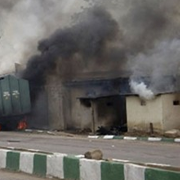
KARACHI, PAKISTAN (ANS) -- A mob in Pakistan has stormed a police station and beaten to death a Muslim man accused of desecrating the Koran.

The victim's body was then set alight, according to witnesses.

According to a story by the BBC, the unnamed victim had earlier been handed over to the police after burnt pages of the Koran were found in a mosque in Dadu district, 330km (200 miles) north of Karachi, where he had been staying overnight.

Hours later a mob went to the police station, seized the man and killed him.

The district police chief, Usman Ghani, told the BBC the gruesome incident was filmed on cell phones. He said the video was being reviewed to help identify those responsible for the attack.

The BBC reported that 30 people have so far been detained in connection with the attack.

The local police chief and five of his officers have been arrested for failing to protect the man.

The BBC's Karachi correspondent Shahzeb Jillani said blasphemy is a highly sensitive issue in Pakistan, where scores of people have been killed by mobs or vigilantes.

He added that the controversial laws are often misused to persecute minorities or settle disputes.

Most recently, the BBC said, international attention focused on the case of Christian teenager Rimsha Masih, who was held over blasphemy allegations.

The BBC said the case was dismissed last month after a neighbor testified that she had been framed, possibly to force Christians out of her neighborhood outside Islamabad.

In 2011, two leading politicians - the Governor of Punjab province, Salman Taseer, and the Religious Minorities Minister, Shahbaz Bhatti - were assassinated after speaking out against the existing blasphemy legislation.