Monday, March 19, 2012

Brutality in Syria creates humanitarian crisis

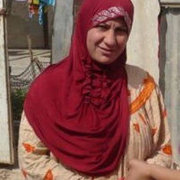
(Photos courtesy Christian Aid Mission) 
Syria (MNN/CAM) ― The crisis in Syria has created a flood of refugees. According to the United Nations, the number fleeing the regime's wrath has risen by several thousand in the past few days and now tops 34,000.

Their most recent numbers show that hundreds of thousands are thought to be displaced within Syria. Bill Bray with Christian Aid Mission says, "Almost every day, we're getting new reports of increasing numbers of refugees and increasing sacrifice being made by the Christian community in the surrounding countries to reach out."

Most of the poor refugees, made up of nominal Christian and other minorities, are fleeing to neighboring countries where the reception has been chilly. "They are trying to contain the refugee crisis, and displaced persons within Syria and not welcoming them across their borders. All the borders are mined and armed--protected. They don't want a huge rush of refugees from Syria coming into their countries. They don't want to set up great refugee camps and so forth."

Bray says their team has been responding to the building humanitarian crisis since last June. Their first inkling of how bad it was going to be was when "the leaders that we assist kept saying, 'Can we have permission to divert the funds that you've been giving for evangelism or other causes that were earmarked.... Can we start using this to aid the Christian refugees that are coming across the border?'  They asked for more help, and we've been sending more and more help." 

Why? "The Christian community is often neglected in the distribution of aid to the refugees. And the host governments in Turkey and Jordan and Lebanon really are not welcoming these refugees and don't want to recognize them." Bray adds that it's not just Christians, but also "the Bedouins, the gypsies--there are minority groups that are neglected in aid distribution." As a result, "An amazing number of Bedouins are coming to believers for help," says the Christian Aid Mission spokesperson.

The good news is that more help is getting in. But the bad news is that things are getting worse. Even as international pressure grows on President Assad al-Bashar, the government response has been bruising. For most Non-Government Organizations, that means no aid in the country. For informal response like Christian Aid, it's quite a different story. "We have a vast network in all of hose countries. They're already in place. There are missionaries that are doing covert evangelism; they're reaching out to their communities. They're seeing the needs, and the heart of Christian compassion is in them."

This is an opportunity to show the love of Christ to people who are suffering terribly, says Bray. First, the physical needs. "There's a lot of need for anything that provides warmth. Fuel oil, mattresses, warm clothes, blankets, shoes, because they're fleeing with what they've got on their backs." Feeding and housing one refugee family costs about $130 a week in temporary shelters -- the cost of food alone is $70 a week.

When believers help, the inevitable "why" is answered with "Christ." As a result, "They very much want Arabic Bibles, CDs, Christian literature. There's a great demand to receive spiritual aid as well as material aid."

"We are not really prepared to help these people," says a local missionary leader, "but we cannot keep our doors closed when we see our brothers and sisters in need--whether they are from Christian or Muslim background."

"God uses times of crisis to soften hearts to the gospel," added the Christian Aid staff spokesman. "This may be a time of harvest among Muslim and Christian refugees. God is sovereign. He cares for Muslims. Countries in the Middle East are going through great upheaval. Now many Muslims are turning to Christ. Maybe the long turmoil in Syria is God's way of bringing this about."

Bray concludes, "They can pray for strength for the Christian community and wisdom in dealing with the government and local police officials. A lot of these people are illegal immigrants, they're undocumented; there are no jobs for them so we need to pray for the Christian community as they try to integrate these refugees into their churches and into the community."

Christian Aid has set up a special emergency fund: Gift Code 400REF. Check our Featured Links Section for details.

Congressional Scorecard to hold U.S. legislators accountable for religious freedom decisions

USA (MNN) ― The points have been tallied and the scores are in. The Open Doors USA Congressional Scorecard for International Religious Freedom of the 112th session of Congress was just released, ranking U.S. Congressmen and Senators on their promotion of religious freedom.

Why assign a point value to a legislator's record on issues regarding international religious freedom? Lindsay Vessey with Open Doors has spent six years on Capitol Hill talking to various legislators, and she says one idea has become quite clear:

"Nearly everyone says that they care about religious freedom. But when it comes to actually taking action to help people who are being persecuted for their faith, we find that a lot of legislators weren't willing to take action."

Vessey explains, "The Scorecard is a tool that Open Doors created, mostly to create awareness and accountability regarding international religious freedom with our federal legislators."

Essentially, the Scorecard is a way to keep tabs on legislators' voting records on religious freedom legislation. Open Doors has published this midterm Congressional Scorecard to evaluate each senator's and representative's record on religious freedom issues.

Legislators are graded on their votes and co-sponsorship of a selection of the most important religious freedom bills and resolutions that seek to protect Christians and other persecuted faith groups worldwide.

After the first Scorecard was released in the 111th session of Congress, the response of U.S. citizens caused a reaction. And seeing their support of religious freedom in tangible numbers made legislators think about their actions.

"As we're raising this issue and getting people more engaged, we see a lot better response to various things that are happening around the world," adds Vessey.

Vessey says one example this year was with Iranian pastor Youcef Nadarkhani. A resolution drafted in Congress on Nadarkhani's behalf was passed nearly unanimously.

Decisions to promote religious freedom like this inadvertently help further the spread of the Gospel. The hope is that the more the U.S. pressures countries with poor religious freedom policies, the more freedom there will be. More freedom to practice religion means more doors open for the Gospel, especially in nations where it's currently unsafe for believers to share their faith.

There's still a long way to go for U.S. legislators to make the maximum impact. According to the Scorecard, U.S. senators on average scored much lower than their House counterparts. The highest score for any Senator was 75%, whereas 10 Members of the House received perfect scores. Many legislators argue that they don't cosponsor bills because there doesn't seem to be a demand from constituents. International religious freedom is thus a low priority.

However, when U.S. citizens get involved and voice their concern, state and federal heads turn. To view the Scorecard and find out if your representative or senator has religious freedom as a top priority, click here. Open Doors has sample letters you can send to your senators and representatives to thank them for their support or to ask for increased support. 

Christians win legal challenge brought by Muslims for village in Indonesia

By Dan Wooding
Founder of ASSIST Ministries


HORALE, MALUKU PROVINCE, INDONESIA (ANS) -- Indonesian Christians have won a lengthy legal battle over the ownership of their village against neighboring Muslims who had virtually razed it to the ground in 2008.

Arial view of the destruction


According to Barnabas Fund (www.barnabasfund.org) Horale in Maluku province, Indonesia, was destroyed in an attack by a Muslim mob from the neighboring village of Saleman on May 2, 2008.


They were said to have burnt down 120 houses, three churches and the village school, and destroyed 15 hectares of crops. Four Christians were killed and 56 injured in the onslaught.
“One week after the incident, Muslims from Saleman brought a legal challenge over the ownership of Horale, claiming that the land was part of their territory,” said a Barnabas Fund spokesperson. “The case was first heard at county level, where a Muslim is the head of the government. Despite evidence in support of the Horale Christians, the court ruled in favor of the Saleman villagers.

Villagers helped to rebuild their homes
“The Christians appealed to the provincial court, which overturned the verdict, prompting the Muslims to take the matter to the Supreme Court. It has now ruled that the ten square miles in question rightfully belong to the Christian residents.


“Had they lost the case, they would have had to leave the village with nowhere else to go.”
Barnabas Fund helped the Horale Christians, who are low-earning farmers, with their legal costs.

The spokesperson added, “We have also helped finance the reconstruction of the village, which is now home to around 150 families (900 individuals). Funds were used to turn 106 semi-permanent houses provided by the government in the aftermath of the attack into permanent homes, and to build 14 new properties for those who had none.
Barnabas Fund helped finance
the reconstruction of Horale
“We assisted in rebuilding the three damaged churches and also provided other resources for the villagers, including rice and electricity.
The attack in May 2008 forced the Christian villagers to flee to the jungle. Now that their properties have been rebuilt and their right to Horale has been established, they hope to be left to resume their lives in peace.”


Dan Wooding, 71, is an award winning British journalist now living in Southern California with his wife Norma, to whom he has been married for 48 years. They have two sons, Andrew and Peter, and six grandchildren who all live in the UK. He is the founder and international director of ASSIST (Aid to Special Saints in Strategic Times) and the ASSIST News Service (ANS) and was, for ten years, a commentator, on the UPI Radio Network in Washington, DC. He now hosts the weekly “Front Page Radio” show on KWVE in Southern California which is also carried throughout the United States. The program is also aired in Great Britain on Calvary Chapel Radio UK and also in Belize and South Africa. Besides this, Wooding is a host for His Channel Live, which is carried via the Internet to some 192 countries and also provides a regular commentary for Worship Life Radio on KWVE. You can follow Dan Wooding on Facebook under his name there or at ASSIST News Service. Dan has recently received two top media awards -- the Passion for the Persecuted award from Open Doors US, and one of the top "Newsmakers of 2011" from Plain Trust magazine. He is the author of some 44 books, one of which is his autobiography, “From Tabloid to Truth”, which is published by Theatron Books. To order a copy, press this link. Wooding, who was born in Nigeria of British missionary parents, has also recently released his first novel “Red Dagger” which is available this link.


** You may republish this story with proper attribution.

Lawyers for Accused Christian Prevented From Entering Hearing by 300 Muslim Lawyers who Stormed Egyptian Court

By Michael Ireland
Senior International Correspondent, ASSIST News Service


Egyptian High Court of Justice
CAIRO, EGYPT (ANS) -- More than 300 Muslim lawyers inside and outside a courthouse in the southern Egyptian province of Assuit today prevented defense lawyer Ahmad Sayed Gabali, who is representing the Christian Makarem Diab, from going into court.

Egyptian journalist Mary Abdelmassih, writing for AINA -- Assyrian International News Agency,www.aina.org  says Diab was found guilty of 'Insulting the Muslim Prophet' and today was scheduled a hearing on his appeal.

In her report, Abdelmassih reports that attorney Dr. Naguib Gabriell, head of the Egyptian Union of Human Rights Organization, said there was "terror in the Assiut Court today."

Gabriell added that he was on his way to court when he was advised that Muslim lawyers have issued death threats to any Christian lawyers who attend the court session.

"Makram Diab was assaulted by Muslim lawyers during his transfer from the courtroom and security failed to protect him," Gabriell told AINA.

According to the AINA news report, Peter Sarwat, a Coptic lawyer, said that Muslim lawyers representing the plaintiffs prevented the defense team from entering court.

"They said no Muslim will defend a Christian. It was agreed that Christian lawyers would take over and two Coptic lawyers volunteered, but the Muslims decided later that even Christians would not defend him,” Sarwat said.

Sarwat told AINA the Muslim lawyers wanted to assault the chief judge, but he managed to leave the court via a rear door.

The AINA news report goes on to say that Adel Ramadam and Ahmad Mohamad Hossam, two Muslim lawyers and activists from the renowned NGO Egyptian Initiative for Personal Rights (EIPR) went to court to defend Diab's right to a fair trial but were assaulted by the other Muslim lawyers.

"They were assaulting us in a beastly and strange way just because we went there to defend a citizen who happened to be a Christian," said Adel Ramadam.

Ramadam also said that to get out of court was a complex operation and a huge task for the security personnel. "We left court in a security vehicle which took us to Security headquarters, otherwise, we don't know what the outcome would have been for us."

AINA explained that Makram Diab, a school secretary was sentenced by the Abanoub misdemeanor court two weeks ago to six years imprisonment on charges of insulting Islam's prophet. His defense lawyer, Ahmad Sayed Gabali, was also prevented during that session from entering the court by Muslim lawyers.

"I went to court today because I believe this citizen was stripped of all his rights," said Adel Ramadam in an aired interview today. "He had a quarrel with a Salafi school colleague and then 11 days later, it was suddenly decided by Muslims that they will report the case. He was detained by the prosecution for 4 days and two days later in a 10-minute session and without any defense lawyer present, he was sentenced to 6 years, which is way above the maximum of a misdemeanor case."

AINA said that eyewitnesses reported the Muslim lawyers were armed with clubs. A police captain, two EIPR lawyers, and two reporters from Ros-el-Youssef and El-Bashayer Egyptian newspapers were injured in the milieu.

Human rights groups reported that they were also forced out of the courtroom by the Muslims, AINA also reported.

Adel Ramadam said the court session never started because the judge knew that the defense team was prevented from entering the court, and knew of the assaults. "He just postponed the appeal session to April 5."


** Michael Ireland is the Senior International Correspondent for ANS. He is an international British freelance journalist who was formerly a reporter with a London (United Kingdom) newspaper and has been a frequent contributor to UCB UK, a British Christian radio station. While in the UK, Michael traveled to Canada and the United States, Albania,Yugoslavia, Holland, Germany,and Czechoslovakia. He has reported for ANS from Jamaica, Mexico, Nicaragua, Israel, Jordan, China,and Russia. Michael's volunteer involvement with ASSIST News Service is a sponsored ministry department -- 'Michael Ireland Media Missionary' (MIMM) -- of A.C.T. International of P.O.Box 1649, Brentwood, TN 37024-1649, at: Artists in Christian Testimony (A.C.T.) International where you can make a donation online under 'Donate' tab, then look for 'Michael Ireland Media Missionary' under 'Donation Category' to support his stated mission of 'Truth Through Christian Journalism.' Michael is a member in good standing of the National Writers Union, Society of Professional Journalists, Religion Newswriters Association, Evangelical Press Association and International Press Association. If you have a news or feature story idea for Michael, please contact him at: ANS Senior International Reporter

** You may republish this story with proper attribution.

Crackdown in Iran Hits Official Churches


Authorities target Isfahan’s Anglicans, as well as ‘underground’ Christians.
In a rare crackdown on a concentrated area, Iranian authorities have arrested Christians living in the country’s third largest city in what is seen as a tactic to discourage Muslims and converts to Christianity from attending official churches.

Since last month officials have arrested about 12 Christian converts in Isfahan, 340 kilometers (211 miles) south of Tehran. Authorities have arrested leaders and members of churches meeting in buildings, as well as some from underground churches, according to Mohabat News.

The targeted arrests started on Feb. 22, when intelligence officers arrested approximately seven Christians at their homes between 6 a.m. and 7 a.m., Mohabat reported. Authorities raided their homes and confiscated valuables, including Bibles, computers, identification and other documents, and in one case even pictures decorating walls.

The Christian Iranian news service identified those detained on Feb. 22 as Hekmat Salimi, pastor of St. Paul Anglican Church, a convert of 30 years and author of theological books; Giti Hakimpour, 78, a female pastor at St. Luke’s Anglican Church; Shahram Ghaedi, an actor; Maryam Del-Aram, 54; Shahnaz Zarifi, a mother of two; and Enayat Jafari.

Another Christian, Majid Enayat, was arrested on the same day at his workplace. He is a member of a house church, and Mohabat reported that prior to his arrest, authorities arrested other members of his group. Some of these Christians warned him that authorities intended to arrest him.

Of those arrested, Mohabat reported that authorities released Hakimpour on Feb. 25. Authorities have denied proper medical treatment to Del-Aram, who is under medical supervision. When her daughter tried to bring her medication to her at the prison, they refused it, according to Mohabat.

On March 2, authorities arrested another convert in Isfahan, Fariborz Parsi-Nejad.

Authorities have allegedly arrested more Christians in Isfahan, but sources have not been able to confirm the arrests and details. None of those arrested in Isfahan last month has been officially charged.

Though religious freedom monitors in Iran said it was not clear what triggered authorities to target Christians in Isfahan, one Iranian Christian outside the country said it may be yet another tactic to stop converts from attending Farsi-speaking meetings in official church buildings.

“I now have 12 names of Christians arrested in Isfahan,” said the Iranian Christian, who requested anonymity. “Isfahan is a very Islamic city. We have two or three church buildings there. The government is very sensitive in Isfahan, which is the only city apart from Tehran with official church buildings. Now the government is focusing on the church buildings to scare the people so they don’t go.”

There are also a number of church buildings in various cities in Iran that are attended by ethnic Armenian Christians. The services are held in Armenian, and members have relatively more freedom to meet.

Earlier in February, authorities in Tehran ordered Emmanuel Protestant Church and St. Peter’s Evangelical Church to discontinue their Farsi-language services. These were the last two official churches in the capital offering Farsi-language services on Fridays.

On Feb. 12, Noorallah Qabitizade was transferred to Dastgerd Prison in Isfahan. He was originally arrested in Dezful on Dec. 24, 2010, and this is the third time authorities have transferred him to a different prison because he is outspoken about his faith while incarcerated. His conditions in Isfahan were expected to be harsher, according to Mohabat.

Previous ArrestsSince the beginning of this year, authorities have arrested Christian converts in Tehran, Ahwaz, Shiraz, Isfahan and Kermanshah.

In Tehran, authorities on Feb. 8 arrested the pastor of Narmak Assemblies of God Church. He was released on bail on Feb. 16. Sources reported that his arrest was part of a government targeting of government-sanctioned, evangelical denominations.

In Kermanshah, authorities raided a house church on Feb. 21, arresting 13 Christians who had gathered to worship. Authorities verbally and physically abused them during the arrest, according to Mohabat. Of those arrested, most were released the next day, and now only three remain in prison.

But the Revolutionary Court of Kermanshah last month sentenced Masoud Delijani, a convert to Christianity arrested last year, to three years in prison on charges of being a Christian, holding illegal house church gatherings, evangelizing Muslims and action “against national security,” according to Mohabat.

Arrested on March 17, 2011, Delijani suffered great mental and physical pressure while in prison, according to Mohabat. In July 2011 he was released on bail amounting to about US$100,000 and rearrested two weeks later. Authorities did not give him due legal process, denying him legal defense, according to Mohabat.

In January 2010, officials had ordered the Pentecostal Church of Assyrians in Kermanshah to close on charges of spreading Christianity among Muslims.

Christians in Iran, most belonging to networks of house churches meeting in small groups in secret, are routinely arrested and interrogated. Iranian authorities view Christianity as a deviant anti-government movement and Christians as pawns of the West.

Iran is the fifth worst persecutor of Christians in the world, according to the most recent World Watch List by Christian support group Open Doors.


END

Nuns Traumatized after School Attack in Egypt


One hospitalized for breakdown after sword-wielding Muslims converge.
Two nuns in Upper Egypt faced “unimaginable fear” – with one later hospitalized over the emotional trauma – when 1,500 Muslim villagers brandishing swords and knives trapped them inside a guesthouse last week and threatened to burn them out.


The next day, the assailants frightened children at the school; attendance has since dropped by more than a third.


Accusing the nuns of building a church at the site, the throng on March 4 chanted Islamic slogans as they surrounded the guesthouse of a privately run, public school in the village of Abu Al-Reesh, in Aswan Province. Two nuns, volunteer teachers at Notre Dame Language Schools, barricaded themselves into the school’s guesthouse for about eight hours.


The women were “terrified,” said Magdy Melad, director of the school.


“No matter what I say, I cannot give a picture of the fear and the worry they had,” Melad said.


School workers hid a third nun from the mob in a separate building on the campus out of fear that the mob would attack her as well. While two of the three nuns are Egyptian, one with a French name holds both Egyptian and French passports.


Conservative Muslims began milling around the school and accosting school employees at 2 p.m. on March 4. A group of men with swords stopped one employee and accused him of “building a church, and we are coming to attack the place,” the employee told Melad, who was at the scene of the attack.


“Huge numbers of people with swords, knives and daggers were gathering,” Melad said. “All that was in my head was that I was worried about the nuns. So I called and told them not to open the door and not to move until I came to get them.”


The Muslims tried to push their way into the building as the nuns kept calling for help. The door to the guesthouse is made of heavy reinforced metal, according to Melad, which prevented the building from being breached. Members of the mob ransacked the entire building, stealing security cameras, electrical equipment and a satellite dish on top of the guesthouse, among other items.


From three mosques near the school, people began shouting over loudspeakers in minarets, summoning more Muslims to surround the guesthouse.


“People of Abu Al-Reesh, get down [there] – the Christians are building a church and building a monastery,” the loudspeakers blared, according to Melad Kamel Garas, owner of the school. “The Christians took our ancestor’s land and are building a church.”

School workers tried to get the nuns out of the building, but the Muslims sent them away.


“When we tried to get them out, they refused to let them out, and they wanted to burn them alive in the guesthouse,” Garas said.


School employees called police, but initially only three officers showed up, according to Melad. The mob set upon them. Four more trucks arrived with reinforcements, but authorities were still unable to control the mob.


Eventually, school workers began talking with moderate Muslims and were able, along with the police contingent, to get all the nuns out. As the women were pulled through the crowd, different men began shouting that they were “pigs” and “infidels” who wanted to “build a church,” according to Garas.


The two nuns suffered cuts and bruises in the attack, and one fainted during the ordeal, according to Garas. The women were taken to a Catholic church in Aswan, except for one, who suffered what Melad characterized as a “major” nervous breakdown and had to be transported on March 8 to Cairo, where she was hospitalized.


The three nuns, who range in age from 30s to mid-50s, were part of a volunteer contingent brought to the school to teach manners to younger students. The nuns have been there for a year and are certified teachers. They did not teach religious classes other than to Christian students; school officials inspected all of their course work and materials, and their texts were approved by the national Ministry of Education, Melad said.


“They are committed to teach what the Ministry of Education has told them to teach,” Melad said.


The next day, the mob started intermittently attacking the school itself.


“They scared the children in a very, very bad way,” Melad said. “The children were so scared, terrified.”


Notre Dame Language Schools enrolls about 560 students ranging from preschoolers to ninth graders. It is open to students from all faiths; roughly 360 of the students are Muslim, the rest being members of the Coptic minority. Having opened two years ago, the school has about 170 employees, 60 of them Coptic Christians and the rest Muslims.


After the nuns were removed from the guesthouse, members of the mob refused to let anyone inside, even after police inspected the building’s interior and found no place of worship.


Leaders of the mob told school officials that they were not allowed to use the guesthouse. They also said the school could no longer continue doing construction work around the guesthouse.


Eventually the Muslims left the school property, and police posted a guard outside the building. But now the Islamists have enlisted a group of children who mill around the guesthouse and tell them if anyone goes inside, according to Melad.


This poses a problem because the guesthouse is also the utility control room for the school; all electrical switches, and the valves for the school water supply, are located there. School workers find themselves in the strange position of having to ask people from the mob to use school property. Police, Garas said, have done nothing to regain control of the guesthouse.


As a result, attendance at the school has dropped by 34 percent, something Garas said he understands.


“All the loss in property, that can be replaced,” Garas said. “But all I am worried about is I don’t want to lose one of the children. Because God forbid, if in an irrational act like this, one of the children got injured or hurt, all the money in the world wouldn’t be able to fix or replace that.”


An attempt is underway to force school officials into a “reconciliation meeting,” which in Egypt usually results in Christians having to accept concessions with nothing in return. In September another group of Muslims in Aswan rioted outside another guesthouse, wrongly claiming that church officials were building a house of worship inside. In a reconciliation meeting, church officials agreed to remove the crosses outside the building and not to ring any church bells.


This wasn’t enough, and eventually Salafis and other hard-line Muslim villagers began rioting again. Ultimately church officials entered another series of reconciliation meetings. Altogether, the priests conceded to every major demand the Muslim villagers made but received no conciliatory offers in return. While the domes on top of the church building were being removed in accordance with the meetings, the villagers attacked and burned it to the ground.


The priest of the church was later charged with a building violation and sentenced to six months in jail. None of the Muslims who attacked the church building have been charged. The priest will appeal the sentence.


Reconciliation meetings are, in theory, arbitration meetings between two equal entities that are loosely based on traditional tribal councils. But most human rights activists in Egypt say that the reconciliation process works to deny rights to powerless groups while maintaining an image of legality and fairness.


All in all, Garas said, the persecution in Aswan echoes what seems to be an unofficial motto there, “No Christians allowed.”


END