Friday, August 31, 2012

Killing of Islamic cleric leads to violence

(Image courtesy of Open Doors USA)

Kenya (MNN) ― Muslim rioters took to the streets of Mombasa, Kenya following the death of Sheikh Aboud Rogo. Unknown gunmen sprayed Rogo's van with bullets, immediately killing the controversial Islamic cleric. Jerry Dykstra with Open Doors USA said rioters focused their rage on two targets.

"Muslims in Mombasa put some of the blame on the government," Dykstra explains, "but also they attacked Christian churches and organizations."

Five Mombasa churches were attacked and severely damaged by rioters; a few worshippers were injured in the process. The National Council of Churches in Kenya (NCCK) offices were damaged as well.

"We have completely failed to understand the logic that made…demonstrators associate the heinous murder of Aboud Rogo with the churches," said Rev. Canon Peter Karanja, NCCK's General Secretary.

Dykstra said it's not unusual to see believers becoming the scapegoat.

"Christians are blamed for a lot of things," he stated.

Most attacks against Christians have been linked to al-Shabaab, the Somalia-based terrorist cell of al-Qaeda. Al-Shabaab has been growing at a steady rate along the border of Somalia and Kenya. Dykstra expressed concern about al-Shabaab's expansion.

"They've been increasing in power and influence on that border area."

As al-Shabaab's presence increases, it could become even harder for believers to share the Gospel in Kenya.

Al-Shabaab has expanded its hunt for Christians from Somalia to neighboring Kenya, and Rogo was an alleged al-Shabaab fundraiser and recruiter. Remember the July 1 attacks against believers in Garissa? Dykstra said Rogo supported them because he didn't want Muslims and Christians working together.

"He called that a really good happening, a good thing," noted Dykstra.

Within the last year, Christian aid workers have been killed and kidnapped. Two believers died at a Kenyan revival meeting whenterrorists threw a grenade toward the podium. In July, gunmen attacked a Garissa church with grenades and then shot believers as they tried to escape. More than 60 were injured in this attack, and 18 believers died.

"The border area between Kenya and Somalia has become a dangerous place for the followers of Christ, as well as aid workers trying to help those caught in the chaos and poverty," said Carl Moeller, President/CEO of Open Doors. "As we have seen in the past, innocent believers are often targets of the extremists' rage.

"Please pray that the Christians there will stay strong in the faith and that rioting will come to an end."


Pakistani Christian girl still held

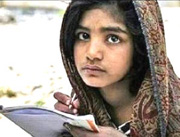
Ramsha Masih will be in court tomorrow.
Pakistan (MNN) ― A bail hearing has been adjourned until Saturday of a young Pakistani girl accused of blasphemy.

Rimsha Masih was taken into custody a few weeks ago after an angry mob surrounded her home accusing her of burning pages with verses of the Quran written on them.

Masih, who's reported to be about 14-years-old, is also believed to be mentally disabled.

According to Voice of America, a lawyer representing the accuser challenged a medical report released earlier this week that said the girl was 14-years-old, but mentally younger than that. The girl's lawyer, Tahir Naveed Chaudhry, hopes the judge would settle the matter during a bail hearing set for tomorrow.

Human-rights groups are asking for the girl to be released immediately. According to Christian Solidarity Worldwide, Prominent Muslim clerics in Pakistan and the country's president are pressing for a fair and impartial investigation into her case.

Pakistan's blasphemy laws have long been used to harass religious minorities and settle personal vendettas. Amnesty International and other human rights groups called for Pakistan to reform their blasphemy laws and protect Masih and her family against possible intimidation or attack.

Christian leaders in the government have been targets of attacks. Last year, Pakistan's Minister of Minorities, Shahbaz Bhatti--the only Christian member of the federal Cabinet, was killed by an assassin in Islamabad. And Salman Taseer, Punjab province's governor, was killed by one of his bodyguards for his opposition to the blasphemy law.

Christians are the largest non-Muslim religious minority in Pakistan, making up about 5% of the population.

The United States has called Masih's case "deeply disturbing" and urged Pakistan's government to protect not just its religious minority citizens, but also women and girls.


Thursday, August 30, 2012

Lawyers for Jailed Christian Lawyer Gao Zhisheng Barred from Prison Visit

Photo: Shaya Prison

SHAYA, XINJIANG, China, Aug. 29, 2012 /Christian Newswire/ -- Two lawyers for jailed Christian lawyer Gao Zhisheng were denied a meeting with him Monday by authorities at the prison in far west China where he has been held since last December, years after "disappearing" into police custody.

ChinaAid learned that prominent Beijing human rights lawyers Li Xiongbing and Li Subin, engaged by Gao's eldest brother, traveled Sunday from Xinhe county to Shaya county, in the remote part of the region of Xinjiang where Gao is being held. Along the way, they were stopped at a police guard post where their IDs were checked.

At 8 a.m. Monday, the two set off for Shaya prison from the county seat on the only road to the prison, which was fenced off on both sides by barbed wire. En route, they were stopped again for ID checks and an inspection of the trunks of their two vehicles. Upon arrival at the prison at 9 a.m., they made their request to see Gao to the police officer on duty at the desk, Dong Ping.

Dong said that they needed prior approval by the prison authorities to visit Gao. Because the prison administrators were holding their Monday meeting of the Communist Party branch committee and an administrative affairs meeting, no decision could be made until the meetings had ended and the prison administrators were consulted about whether the two lawyers could visit.

Around 10 a.m., the section chief for prison administration, a police officer surnamed Xu, arrived at the duty office, and Dong gave him the lawyers' written request for a visit. Xu checked the lawyers' request for a meeting, letter of authorization, law licenses and photocopies of Gao's eldest brother's government-issued ID card. He also asked to further inspect the lawyers' ID cards. After he'd finished reading everything, he left with all the paperwork as well as the lawyers' ID cards, saying he needed to consult his superiors.

Around 11:30 a.m., Xu and a prison administrator surnamed Kang invited the two lawyers into Xu's office, where they gave these answers:
  1. The letter of authorization signed by Gao's brother, Gao Zhiyi, was not acceptable because such a letter should be signed by Gao Zhisheng himself. They cited the Ministry of Justice's "Temporary Regulations on Lawyers Meeting with Prisoners" as their "reason."
  2. Gao Zhisheng himself is a senior attorney, and as such, he has no need to engage other lawyers to represent him in his appeal.
  3. Lawyer Gao does not wish to see any family members or relatives
The two lawyers suggested that they meet briefly with Gao to hear from him directly whether he agreed with his brother's decision to have the two lawyers handle his appeal, but the prison officials said this "was not in compliance with the regulations." The lawyers followed with a heartfelt appeal for the prison police to pass on to Gao Zhisheng the letter authorizing them to represent him that was signed by his brother, Gao Zhiyi, so that he could also sign the document to indicate whether he agreed with his brother's decision to hire them to represent him. The prison authorities' answer was, "There's no need."

Left with no other options, the two lawyers left Shaya county and on Tuesday morning went to Xinjiang's Prison Administration Bureau (in capital Urumqi) where they expressed their objections and filed a complaint about the prison's actions. They were received by the deputy chief of prisons, who was surnamed Kai, and two police officers, who repeated the same answer that their lawyers' request for a meeting was not approved and further clarified that Shaya prison's answer was in fact their answer.

The two lawyers said that the prison's requirement that lawyers must be "authorized by the prisoner" in order for a meeting to take place was totally illogical and goes against common sense, as well as being a violation of the existing laws. The criminal procedural law, prison law, and the law on lawyers, as well as other laws all stipulate that the family members of prisoners and of defendants can hire lawyers, and that lawyers can meet with prisoners on the basis of a letter of authorization from a family member, the lawyers' licenses, and a letter requesting a meeting from the lawyers' practice. The prison authorities and the Xinjiang Prison Administration Bureau concocted all kinds of illogical reasons to refuse the lawful requests of the lawyers for a meeting, which not only was a serious violation of the law but is also an unjustified deprivation of the legitimate rights of the lawyers as well as of Gao's family members.

This being the case, the two lawyers plan to report this matter to other relevant departments and to fight for the right to meet with Gao, as well as to employ further legal measures to ensure that the legitimate rights of their client are protected.

ChinaAid condemns the Shaya prison authorities and the Xinjiang Prison Administration Bureau for their erroneous decision and calls on the international community to urge relevant authorities of the Chinese government to reverse these illegitimate and outrageous decisions and immediately restore the legitimate rights of Gao Zhisheng to meet with his family members and lawyers.

Gao Zhiyi has telephoned the prison hundreds of times, hoping to speak with Gao and to inquire about his health. His family has had no word from or about Gao since a brief visit in March and are extremely concerned for his safety and well-being.

ChinaAid founder and president Bob Fu said, "To deny legal representation and family visits to imprisoned human rights lawyer Gao Zhisheng is both inhumane and a violation of China's own laws. We call upon the highest authorities in the Chinese regime to release him immediately and allow him to join his family in the United States."

Christian Newswire

Teen accused of blasphemy will leave jail, but can’t go home, lawyer says


Reunion with parents is likely, but safety is uncertain


By Murad Khan

Lahore, Pakistan, August 30 (Open Doors News) — Rimsha Masih is likely to be cleared of the blasphemy charge against her, but never will be able to return home, her lawyer says.

Tahir Naveed Chaudhry, who has taken up the defense of the young Christian girl whose case has renewed international debate about Pakistan’s notorious anti-blasphemy laws, said he is confident Rimsha will qualify for release on bail this week. The government, however, may ask the court to keep her in custody until tensions ease.

Naveed, a member of Pakistan’s Punjab provincial assembly, also hinted that the blasphemy accusations against Rimsha may have been motivated partly by overtures toward her older sister being rebuffed.

“I am quite hopeful of securing Rimsha’s release on bail,” Naveed told Open Doors News. “A medical board has certified that she is 14, although her church record claims it to be around 11.”

Under Section 7 of Pakistan’s Juvenile Justice Ordinance, he said, Rimsha is not an adult and her case should be transferred to a juvenile court. Nor does she have the maturity to understand the concept of blasphemy, he said.

“The medical report has also supported our contention that her mental age is not compatible with her physical age,” Naveed said. “Both official findings will help us in proving that the charges against her have been wrongly framed and she should be set free on bail immediately.”

Rimsha, a resident of a poor Christian pocket of Islamabad, was reported to authorities Aug. 17 on the testimony of neighboring Muslims who accused her of carrying burned pages of Quranic verses. Little is known about how the girl came to be carrying burned religious texts. Even so, police have said they placed the girl in jail both to placate angry demonstrators and to keep Rimsha safe from attack. Her parents likewise were removed to protective custody, while hundreds of Christian neighbors fled to the relative safety of more distant Islamabad sectors. Pakistan’s president, Asif Ali Zardari, stepped into the matter, warning against vigilantism and ordering the interior ministry to investigate.

The accusations against the girl have renewed international condemnation of Pakistan’s anti-blasphemy laws, which carry the potential of a life sentence for desecrating the Quran, and the death penalty for insulting the prophet Muhammad. Inside Pakistan, the laws enjoy widespread popular support, and prominent government officials who have advocated they be repealed have been killed.

Rimsha’s defense, her lawyer said, pivots on the legal requirement that “willful desecration of the Quran” must be proved. In this case, Rimsha is both too young, and too mentally incapable, to carry out intentional defamation.

“The law clearly does not apply on her,” Naveed said. “There was no willful desecration on her part. There is no way the poor child could have known what she is being accused of having done.”

A medical board constituted by an “additional district magistrate” had found Rimsha’s age to be around 14. On Tuesday, the judge instructed Naveed to file a fresh application requesting the court to order a new medical exam, this time by a medical board convened by a more senior district magistrate. The judge observed that the first medical board had been constituted by the order of a lesser magistrate, and not by the court.

“I filed a fresh application as per the court’s orders and requested the setting up of a medical board to determine Rimsha’s age,” Naveed said. “The court accepted my application and directed the district magistrate to constitute the board which will present its findings on Aug. 30.”

The complaint against Rimsha was registered under the name of Malik Ammad, who Naveed said is the son-in-law of the man who owns the house in Meherabad in Islamabad’s Sector G-12, where the girl lived with her family.

“Ammad does not enjoy a good repute in the locality,” the lawyer said. “Rimsha’s family shared with me that he had made several attempts to ‘befriend’ Rimsha’s older sister but had been unsuccessful. This could be one of the reasons besides the discriminatory attitude of some of the locality’s Muslims.”

He said about 50 Christian families had been living among 500 Muslim families in the area for the last 15 years.

“Most of the Christians are laborers and their women work as maids in the nearby bungalows, while the Muslims have businesses in the area and own almost all property in the locality,” he said. “Soon after the incident, a large number of Christians fled the area fearing violence as the Muslims threatened to burn down their homes but now the situation was improving and several families had returned to their residences.”

Though he said he is hopeful the court will release Rimsha on bail and that she would soon be united with her family, Naveed said he is equally certain the family will face more upheaval.

“As with every blasphemy accused, Rimsha and her family won’t be able to return to their home as it may put their lives at risk,” he said.

A government source told Open Doors News that intelligence agencies had warned authorities that setting Rimsha free at this stage could stoke religious tension.

“The agencies have advised the government to oppose Rimsha’s bail and keep her in custody until the matter cools down,” the source said, asking not to be named because of the sensitivity of the situation.

Regardless, Naveed said, “the government should release her and ensure the security of all Christians living in the area.”

Rimsha has found some support from Muslim quarters as well, with the leader of a prominent Islamist group calling for the release of the girl, if found innocent, and punishment for the persons responsible for leveling the false accusation.

END

**********
Copyright 2012 Open Doors News

Open Doors News is distributed to raise awareness of Christians worldwide who are persecuted for their faith.
Kyrgyzstan's coalition falls, impact on Christians unknown

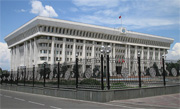
Kyrgyzstan's coalition falls.

Kyrgyzstan (MNN) ― Another government in a predominately Muslim nation has fallen. This time it's a former Russian Republic -- the Republic of Kyrgyzstan. This is a nation that has increasingly become antagonistic to evangelical Christians and has taken steps to curb religious freedom.

Slavic Gospel Association has limited work in the country for this very region. SGA's Joel Griffith says this isn't the first issue in Kyrgyzstan, but he describes what happened. "The most recent flare-up is this collapse of the coalition government. The two parties apparently withdrew in protest, and Reuters says basically their objections were a bad economy alleged corruption."

The two parties claim Prime Minister Omurbek Babanov has yet to enact a single reform and is accusing him of using "shadowy" organizations to handle money. It unclear what will happen next as there is no clear majority coalition in the five party system.

Griffith says the evangelical church has been under fire the last few years. "With an unstable situation, depending on who actually comes to power both in the parliament and in the presidency later, it could have a significant impact on evangelical churches in their freedom to either worship or proclaim the Gospel. So it's something that needs to be watched."

While persecution isn't new, Griffith says, "No matter what happens, churches are going to continue to proclaim the Gospel no matter what. But it certainly does stand the pressure is more than likely, the knot will tighten up in the days ahead."

According to Griffith, prayer is essential. "We really need to intercede for the churches there that the Lord would use this situation to somehow open the door for the churches to be able to freely worship and also to proclaim the Gospel. That certainly doesn't go with the trend, but the Lord can do anything, and that has to be our prayer."


Forum 18 notes new penalties and shift of power away from judicial courts


Tajikistan (MNN) ― Tajikistan has added new punishments for non-Islamic religious activity. According to Forum 18 News Service, Tajikistan has tightened its religious restrictions and given power to the State Committee for Religious Affairs to oversee punishments. Forum 18 says these new restrictions are "part of a steady tightening of state controls over all religious activity."

Under the newly-added penalties, people can be fined for sending Tajik citizens abroad for religious education, preaching or teaching religious doctrines in their homes, and establishing ties with religious organizations overseas.

Religious organizations can be penalized for carrying out any religious activity not specifically spelled-out in their statutes.

"The Religion Law and the administrative penalties totally violate believers' rights," members of one religious community told Forum 18.

Another alteration is the ability for Tajikistan's State Committee for Religious Affairs (SCRA) to directly administer punishments to religious groups without investigation by police or prosecutors. One independent legal expert said courts should administer punishment for legal violations, not the state.

"[In 2011], after the new provisions to the Religion Law were added, the authorities did not particularly punish religious communities," said the anonymous members. Now they're afraid that with the introduction of these new penalties, authorities will start cracking down on them.

Hikmatullo Sayfullozoda of the officially registered Islamic Renaissance Party (IRP) told Forum 18 that new penalties and changes in the Religion Law were "made to limit as much as possible the religious believers from exercising their religious freedoms."

Tajikistan is #34 on the Open Doors World Watch List. These new fines could become a substantial financial burden, especially for believers without work or those living in poorer areas. Pray for Tajik believers facing persecution.