Tuesday, January 7, 2014

Authorities strike Bible Society of Malaysia

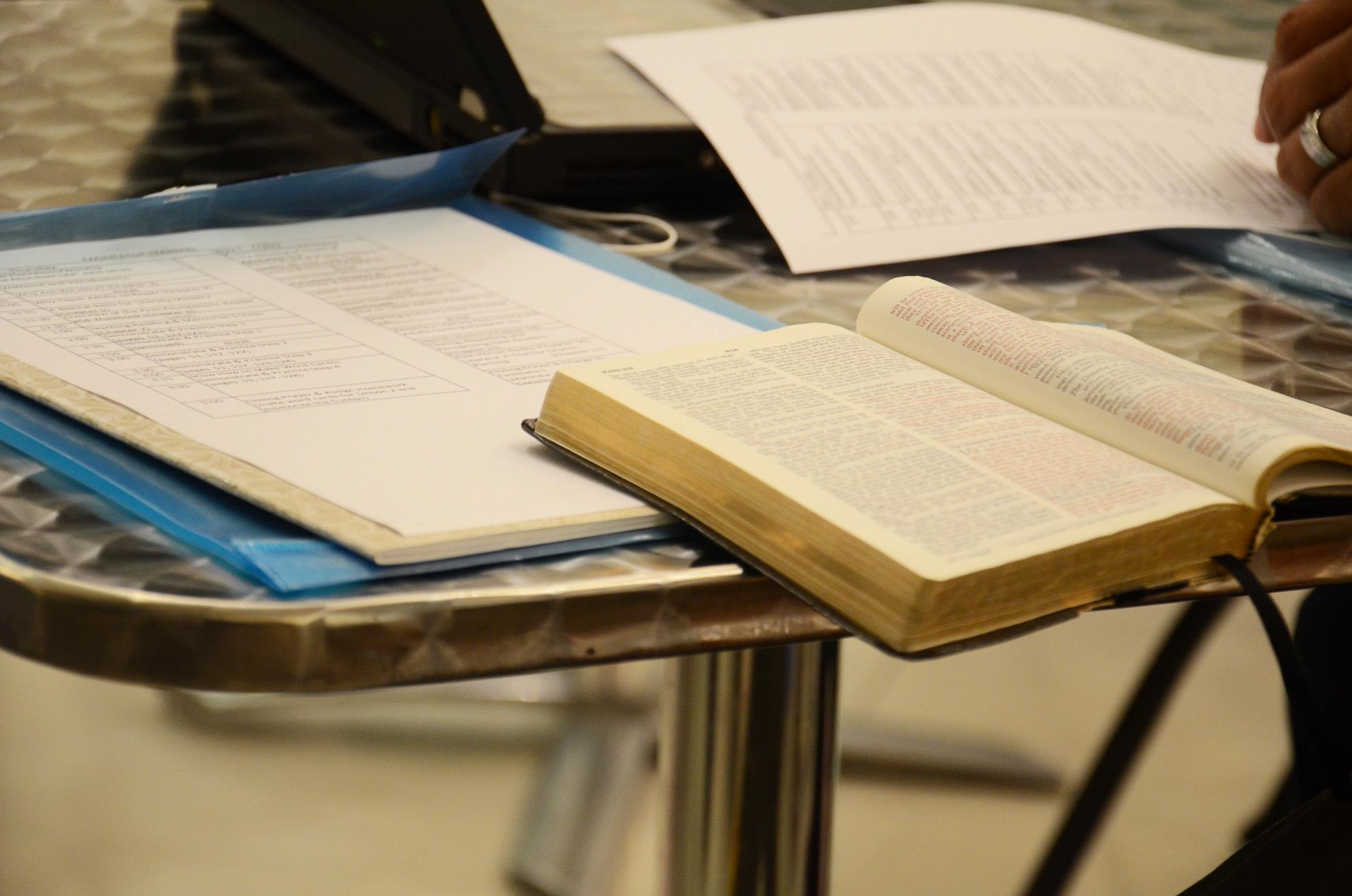
Image courtesy Eric Toah via Flickr
(Image courtesy Eric Toah via Flickr)
Malaysia (MNN) — The “Allah” issue continues to unfold in Malaysia. According to Malaysiakini.com, authorities recently raided a Bible Society of Malaysia (BSM) office in Selangor and confiscated hundreds of Malay-language Bibles.
BSM president Lee Min Choon told the Web news group that the state Islamic Religious Department (Jais) confiscated 321 copies of Scripture and 10 Bibles in the Iban language on Thursday.
“We don’t know what will happen, but I guess this is something to do with the ‘Allah’ word fiasco,” Choon told Malaysiakini.com.
Choon and two other Bible Society members were arrested during the raid. Although they were later released on bail, the trio was told to report to Jais on Friday for further investigation.
“The word ‘Allah’ is the common word for God,” explains Voice of the Martyrs USAspokesman Todd Nettleton.
“It is used by both Muslims and Christians, but now the government is saying, ‘Hey, Christians are not allowed to use that word; these Bibles that are printed with the wordAllah inside them are now illegal.’”
Islamic officials reportedly used a 1988 state law as support for their decision to raid the BSM office. The enactment puts a blanket ban on non-Muslims’ use of 35 Arabic religious words, including Allah.
However, lawyers told TheMalayMailOnline.com on Friday that the Jais raid, and use of the 1988 law to support their actions, was unconstitutional.
“The constitution does not say we can’t use these words at all, it just [says] the state law may restrict propagation of other religions on Muslims,” said human rights lawyer Andrew Khoo.
Root Cause
A Baba Malay Bible in the Peranakan Museum.  (Photo cred Jerry Wong via Flickr)
A Baba Malay Bible in the Peranakan Museum.
(Photo: Jerry Wong via Flickr)
Allah tensions between Malaysia’s Muslim and Christian communities trace back to a 2009 court case involving a Roman Catholic newspaper, “The Herald.” They wanted the right to use the wordAllah in their publications, and a Christian judge ruled that it was okay, thereby granting Christ-followers permission to use Allahin reference to God.
However, Islamic parties fought back, claiming Allah was strictly a Muslim word, and the Home Ministry filed an appeal in 2010. In October, an upper court overturned the 2009 decision, making Allah strictly an Islamic word.
The case is still before Federal Court, and a hearing is expected to take place on February 24, according to TheMalayMailOnline.com.
Below the Surface
Nettleton says the Allah debate and issues stemming from this case all point to a deeper conflict.
“The Malay people are considered to be, by the government at least, 100% Muslim,” he states.
“They [the government] don’t want the Malay people to be evangelized, so they want to make it as difficult as possible for Christians to communicate the Gospel message in the Malay language.”
Most Christians in Malaysia are not ethnic Malays, Nettleton explains, and he says the government “wants to keep it that way.” Many states have written legal codes that give religious minorities basic freedoms, such as using Allah to describe God or owning religious texts. But, the majority draw a line at evangelism.
“The government very much wants to keep the Malay people Muslim,” Nettleton explains. He says it’s officially illegal to proselytize–share the Gospel with–a Malay Muslim.
Pray that government efforts to stop Gospel work will backfire.
Nettleton notes human nature plays an interesting role in this case because “if something is forbidden, it [becomes] interesting.
(Photo courtesy Bible League Malaysia)
“We can pray that, among the Malay people, they will wonder, ‘Well, what’s all the fuss about this Book that they don’t want us to read?’ and perhaps even get a copy and start reading it. I think this can be a time where seeds are planted, a time where people are interested in the Gospel.”
Pray for courage and strength for the Body of Christ in Malaysia. Pray for BSM as they contest the raid on their office.
“We can pray for that process, but I think just mostly pray for the believers to continue to be bold witnesses for Christ, in spite of this pressure and persecution that they’re facing.”

Imprisoned Pakistani Catholic Asia Bibi Writes to Pope Francis Saying Only God Can Free Her

By Jeremy Reynalds
Senior Correspondent for ASSIST News Service

KARACHI, PAKISTAN (ANS) -- The Catholic Pakistani mother sentenced to death for blasphemy, has written to Pope Francis saying that only God can liberate her.

Asia Bibi
According to an article in the Catholic Bishops Conference of the Philippines News Service (CBCP News) relying on a Dec. 31 report in the Italian daily Tempi, Asia Bibi said, "I also hope that every Christian has been able to celebrate the Christmas just past with joy. Like many other prisoners, I also celebrated the birth of the Lord in prison in Multan, here in Pakistan."

She continued by saying that "only God will be able to free me" and made a point of thanking the 'Renaissance Education Foundation" that helped make her "dream come true" to live Christmas with her husband and children by bringing them to Multan.
Pope Francis greets pilgrims in St. Peter's Square
before the Wednesday general audience Dec. 11, 2013. 
(Credit: Kyle Burkhart / CNA).

"I would have liked to be in St. Peter's for Christmas to pray with you," she told Pope Francis, "but I trust in God's plan for me and hopefully it will be achieved next year."

Bibi is awaiting the conclusion of an appeals process after being incarcerated for four and a half years without trial.

Working as a farmhand in June 2009, she was asked to fetch water for some of her co-workers.

She complied, but some of her Muslim colleagues refused to drink the water as they considered Christians to be "unclean."

CBCP News said arguments followed (there was already a running feud between Bibi and a neighbor over property damage), and witnesses maintain that Bibi verbally abused the two women, their religion, and the prophet Muhammad.

A few days later, complaints were made to a cleric about these alleged derogatory comments, resulting in a mob coming to her house and beating her and members of her family.

Bibi was rescued by the police but, under pressure from the crowd, they charged her under Section 295 C of the Pakistan Penal Code, the country's notorious anti-blasphemy law.

"I am very grateful to all the churches that are praying for me and fighting for my freedom," CBCP News said she continued in the letter.

Bibi added, "I do not know how long I can go on and on. If I am still alive, it is thanks to the strength that your prayers give me. I have met many people who speak and fight for me. Unfortunately still to no avail. At this time I just want to trust the mercy of God, who can do everything, that all is possible. Only He can liberate me."

Bibi was also grateful to all the people who work and raise funds for her cause. She then talked about her daily hardships.

"This winter I am facing many problems: my cell has no heating and no suitable door for shelter from the bitter cold," CBCP News said she told the Pope. "Also the security measures are not adequate, I do not have enough money for daily needs, and I am very far from Lahore so my family cannot help me."

She concluded by asking Pope Francis to accept her best wishes for the new year. "I know you pray for me with all your heart," she wrote. "And this gives me confidence that one day my freedom will be possible. Certain to be remembered in your prayers, I greet you with affection. Asia Bibi, your daughter in the faith."

Assyrian International News Agency Says Sources Dispute Claims of Christian Casualties in Iraq Christmas Day Bombings

By Jeremy Reynalds
Senior Correspondent for ASSIST News Service

BAGHDAD, IRAQ (ANS) -- On Dec. 25 2013, multiple news agencies (including the Assyrian International News Agency, or AINA) reported twin bombings in Dora.
The aftermath of the bombing outside
St. John Catholic Church. 
(via AINA)

That's a formerly Assyrian (also known as Chaldean and Syriac) and Christian neighborhood in southern Baghdad.

According to a story by AINA, one bombing occurred outside St. John Catholic Church. 

The explosion killed 27 and wounded 56. A second bomb exploded in an outdoor market, killing 11 and wounding 21.

AINA reported that according to the wire reports, dozens of Christians were killed in the bombings.

AFP quoted a police colonel as saying, "The attack targeted the church, and most of the martyrs are Christians. The attack happened when worshipers were leaving the church."

Reuters reported a police officer as commenting, "A car parked near the church exploded when the families were hugging each other goodbye before leaving. The blast was powerful...Bodies of women, girls and men were lying on the ground covered in blood. Others were screaming and crying while they were trying to save some of their wounded relatives."

However, AINA said, the Patriarch of the Chaldean Church, H.H.. Louis Sako, issued a st atement saying the attack was not directly targeted at the church.

Archdeacon Temathius Esha, an Assyrian priest in Dora, told AFP, "The church has nothing to do with the attack; the attack was against the market."

AINA said there is no doubt that these bombings occurred and that dozens of persons were killed. However, questions were raised about the number of Assyrian/Christian fatalities, beginning with Patriarch Sako's statement.

AINA said the agency contacted two Assyrians in Iraq to gain a clearer understanding of the situation.
According to Pascale Warda, Iraq's former Minister of Displacement and Migration, no attacks against churches occurred and there were no Christian casualties.

AINA reported Pascale said, "What some media reported was not right because the attack in Dora was in the market, where some other poor people were wounded, but not a single Christian was hurt, and no church was attacked."
The priest of St. John Catholic Church, Father Firas, told Warda the attack was far fro m the church and there were no Assyrian casualties.

Father Tima, of the Assyrian Church in Dora, also told Warda that his church had not been attacked.

The Christmas mass at St. John ended at 9 a.m. and the attack occurred at 11 a.m.

According to Susan Patto, an Assyrian in Baghdad, because of previous church attacks, all churches have discontinued midnight mass and conduct mass very early in the morning, from 7 to 9 a.m.. Parishioners are also discouraged from congregating outside the church after mass.
The explosion happened after 11 a.m., Patto said.

AINA said she added, "There is a police station about 500 meters from St. John, and the car bomb targeted the police station. The church was closed and no one was there. The story about the church being attacked was first reported by Al-Sharqiya news channel and picked up by other news agencies. Most of (the) fatalities were in the second explosion in the market, while the targeted police station had only few casualties. There are no known Assyrian ca sualties."

According to Warda, the news of Christian casualties was spread by those "who are unhappy with any establishment of security in Iraq."

The Dora neighborhood was formerly a Christian neighborhood, with over 150,000 Assyrians living there.
AINA said beginning in 2004 a sustained series of church bombings, kidnappings and killings by Al-Qaeda affiliated groups forced most the residents to flee, most with literally just the clothes they wore, as they were not allowed to take any of their belongings with them. Now there are only about 3000 Assyrians remaining in Dora.

According to AINA, 73 churches have been attacked or bombed since June 2004. That's 45 in Baghdad, 19 in Mosul, eight in Kirkuk and one in Ramadi.

On Oct. 31 2010 Al-Qaeda terrorists attacked Our Lady of Deliverance Chaldean Catholic Church in Baghdad on Sunday evening during a church service. When police raided the church the terrorists set fire to their explosives, ultimately killing 58 parishioners, including two priest s.

For information about the Assyrian International News Agency visit www.aina.org

Death Penalty Order Deepens Hard-line Islamist Trend in Pakistan, Critics Say Ruling could broaden powers of Federal Shariat Court, they fear

By Dan Wooding
Founder of ASSIST Ministries

LAHORE, PAKISTAN (ANS) -- Morning Star News (http://morningstarnews.org) is reporting that compliance with an order that only the death sentence can be given to those convicted of insulting Islam's prophet will further endanger Christians and increase the powers of the Islamic court that issued it, critics said.
Muslim mobs attack a Christian area of Lahore after blasphemy allegation in March.(Morning Star News, M. Ali)

Its Pakistan Correspondent says, "While Christians fear that government compliance with the Federal Shariat Court's (FSC) Dec. 4 order to remove life imprisonment as a punishment for insulting Muhammad could usher in a new era of persecution, some critics said the greater concern is that it could broaden the powers of the controversial court.

"Section 295-C of Pakistan's blasphemy laws calls for either death or life imprisonment for persons convicted of insulting Muhammad. The FSC has given the government a "couple of months" to implement, through parliament, the order to remove life imprisonment as a possible punishment.

"The FSC order comes less than three years after assassinations of two government officials silenced most criticism of the blasphemy laws."

The story goes on to say that while the ruling could further encourage extremists to attack those they believe are insulting Muhammad, the FSC order may have little specific legal impact since judges have tended to issue death penalty sentences for such convictions anyway, according to Yasser Latif Hamdani, who practices law in superior courts.

"This is a guideline that the courts have already followed," Hamdani told Morning Star News. "The problem is that it has symbolic significance. It opens the door for the Federal Shariat Court to exercise greater influence on the legal system. Will the FSC also rule that insanity is not a defense?"

Hamdani said he hoped that the order would land before the Supreme Court's Shariat Appellate Bench, "which may take a more positive and liberal view," he said.

Attorney Shoaib Salim of the Lahore High Court also expressed hope that it could be reversed.

"The FSC is only empowered to examine and determine whether the laws of the country comply with sharia [Islamic law] or not," Salim said. "The ultimate decision rests with the parliament."

He said it was unlikely that the government would implement an order that would further incite religious hatred and persecution in Pakistani society. The blasphemy laws have been routinely abused to settle personal vendettas as antagonists can easily level false accusations that ruin lives.

Since its establishment in 1980, the FSC has been the subject of criticism and controversy. Created as an Islamization measure by the military regime of Gen. Muhammad Zia-ul Haq, and subsequently protected under the controversial 8th Amendment, the FSC has opponents who question its existence and usefulness.

Comprising eight Muslim judges, including three required to be Islamic law scholars (Ulema), the court exercises jurisdiction over criminal courts deciding Hudood cases, which involve punishments prescribed by Islamic writings.

"Critics say the FSC merely duplicates the functions of superior courts and contravenes the authority of parliament. They allege that the way its judges are appointed and retained is tainted, and that the court does not fully meet criterion for an independent judiciary," said the Pakistan Correspondent.

"The FSC's decisions are binding on high courts as well as on subordinate judiciary. Appeals against its decisions lie with the Shariat Appellate Bench of the Supreme Court, consisting of three Muslim judges of the Supreme Court and two Islamic scholars appointed by the president."

Criticism Silenced

Misuse of the blasphemy laws in Pakistan has long been debated, but the assassination of two top government officials and a senior judge in the last decade and a half has silenced even the most vocal critics.

Salmaan Taseer meeting with Asia Bibi before he was gunned down
Former Punjab Gov. Salmaan Taseer's own police bodyguard gunned him down on Jan. 4, 2011 for calling for a review of the blasphemy laws and giving moral support to Asia Bibi, a woman sentenced to death for alleged blasphemy. Two months later, on March 2 of that year, Federal Minister for Minority Affairs Shahbaz Bhatti was assassinated in Islamabad; members of the Tehrik-i-Taliban Pakistan, or Pakistani Taliban, claimed responsibility. He had faced threats on his life for voicing opposition to the blasphemy laws.

The Rt. Rev. Michael Nazir-Ali, former Lord Bishop of Rochester, United Kingdom, and current president of the Oxford Centre for Training, Research, Advocacy and Dialogue, said the FSC verdict is a cause of concern for Pakistani Christians.

"Everyone knows how the blasphemy laws are misused in this country," Dr. Nazir-Ali, on a visit to Pakistan, told Morning Star News. "During several of our engagements with the Pakistani government, we have repeatedly asked them to deal with blasphemy cases with utmost care and consideration to ensure that there's no miscarriage of justice. No blasphemy case should be registered without proper investigation at the highest government level regardless of whether the accused is a Christian or of another faith."

Islamist Clerics Defiant

Morning Star News stated that Pakistan's top Islamist clerics, meantime, have not only pushed for greater FSC powers but declared that they will not tolerate any amendments to the blasphemy laws.

A few days after nearly 150 Christian homes were burned to the ground in March by violent Muslim mobs in Lahore's Joseph Colony over allegations that a Christian youth had insulted Muhammad, top Sunni Islamist clerics led by Ruet-e-Hilal Committee Chairman Mufti Muneebur Rehman recommended that all persons accused of blasphemy should be tried by the FSC.

The clerics also opposed the imposition of penalty for the accusers in such cases, arguing that no punishment existed for falsehood in other cases. Mufti Muneeb also demanded that defamation of sacred religious personalities should be declared a crime under international law.
Pakistan Christians protesting he blasphemy laws

Punishment for false witness does have some advocates. After much lobbying, in September Pakistan Ulema Council Chairman Allama Tahir Ashrafi strove to make the country's top religious body, the Council of Islamic Ideology (CII), recommend the death sentence for those making false blasphemy accusations. Ashrafi believes that such a law was necessary as a deterrent.

Hardliners in the CII, however, shot down Ashrafi's initiative.

"I have been relentlessly protesting the misuse of the blasphemy laws," Ashrafi said. "This is not only bringing a bad name to Pakistan but also the entire Muslim Ummah [community]. It's a pity that the other religious leaders failed to understand the importance of a strong deterrent for false accusers. Those making a false accusation needed to face death penalty because the words attributed to the accused were actually uttered by the accuser."

CII Chairman Maulana Muhammad Khan Sheerani said a majority of the CII members believed there was no need to amend the blasphemy laws.

"We don't want to discourage people from coming forward and lodging complaints against blasphemers," he said. "There's already a law - Section 194 of the Pakistan Penal Code - which envisages punishments for lodging a false FIR."

Sheerani, who believes the FSC order removing life in prison for those convicted under Section 295-C was in line with Islamic injunctions, said the FSC was the right forum to decide blasphemy cases.

"Laws relating to Islam should be decided by the FSC," he said. "Our senior clerics have already recommended that such cases be decided within three months. If the suspect is found innocent, the false accuser can be tried under the relevant section of the PPC [Pakistan Penal Code]," he said.

Napolean Qayyum, a Christian rights activist, said the ruling would usher in a new era of persecution.

"We have seen people taking the law into their own hands and deciding for themselves what the punishment should be," Qayyum said. "This ruling will only embolden elements who use the blasphemy laws to target the weak and marginalized communities of this country. How many more innocent lives would it take for the government to realize that it needs to do something to bring an end to this victimization?"

Attorney Aneeqa Maria, head of Christian rights group The Voice Society, told Morning Star News that Pakistan's blasphemy laws have no standards for evidence or for proof of intent, even though intent must be shown for a conviction, as well as no procedural safeguards to penalize those who make false allegations.

"They are a constant sword hanging over our heads, and no government has so far been able to stop their blatant misuse," Maria said. "Everyone knows how these laws are used as a tool for settling personal disputes, and now the FSC has taken this skeleton out of the closet after so many years. I believe this would encourage the accusers to try and get their victims implicated under Section 295-C."

Monday, December 30, 2013

Iranian Christian Converts Arrested as They Celebrated Christmas

By Jeremy Reynalds
Senior Correspondent for ASSIST News Service

IRAN (ANS) -- Iranian security authorities raided a house where a group of Christians had gathered to celebrate Christmas on Dec. 24.

They and arrested house owner Mr. Hosseini , Ahmad Bazyar, Faegheh Nasrollahi, Mastaneh Rastegari, and Amir-Hossein Ne'matollahi.

A story by Mohabat News Iranian Christian News Agency said The Committee of Human Rights Reporters reported that during the raid, plain clothes security insulted and searched people there, carefully searched the house and seized all the Christian books, CDs and laptops they found there. They also took the satellite TV receiver with them.

Authorities also searched the house of one of Mr. Hosseini's neighbors. Mohabat News said they insulted and beat the father, and told those there not to say a word about what they had seen.

There is no news on the whereabouts or condition of the Christians who were arrested.

In recent years, Mohabat News said, authorities have intensified their pressure and threats against Christians around Christmas. That has included arresting a number of Christians, and increasing their surveillance on churches.

While Christmas is a time of celebrations f or Christians worldwide, Mohabat News said "with threats from the Islamic government, Christmas is a different experience for Iranian Christians."

Mohabat News said while his government continues to harass Iranian Christians and curtail their freedom, ironically, Iranian President Hassan Rouhani sent Pope Francis Christmas greetings on Dec. 25.

For more information visit  www.mohabatnews.com


Verdict for Moroccan Convert from Islam Sentenced for "Proselytism" Expected Feb. 6

Hastily convicted Mohamed El Baladi received 30-month prison term. 

By Jeremy Reynalds
Senior Correspondent for ASSIST News Service

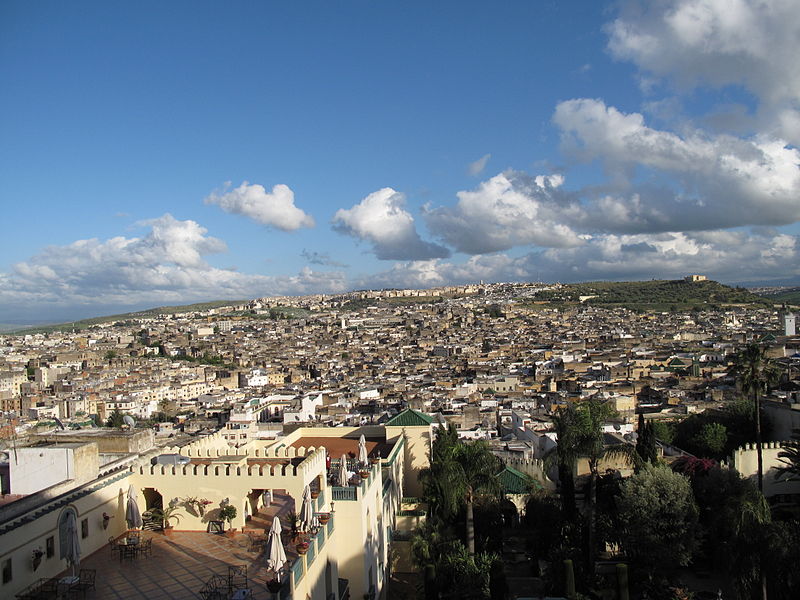
Fez, Morocco. (Wikipedia, Zimaal)
TIZI OZOU, ALGERIA (ANS) -- A Moroccan appeals court on Dec. 26 heard arguments for a Christian convert from Islam hastily sentenced to prison for alleged "proselytizing," sources said. The Court of Appeal in Fez is expected to deliver a ruling on Feb. 6.

According to a story by Morning Star News, Mohamed El Baladi was sentenced to 30 months in prison on Sept. 3, just a week after his arrest on Aug. 28, in a court in the northern town of Taounate, 50 miles from Fez.

Unlike that occasion, when the court convicted him before police allowed him to obtain legal representation, several defense lawyers were on hand at the hearing.

Authorities on Sept. 26 released him from prison after international outcry over his conviction. El Baladi, 31, was charged with encouraging young Muslims to convert, punishable by six months to three years in prison and a fine of up to 500 dirhams (US$60), according to Article 220 of Morocco's penal code.

El Baladi's fine of 1,500 dirhams exceeded the maximum. Police also took 5,000 dirhams from his home during the raid, a source said.

According to Morning Star News, sources said police in the remote town of Ain Aicha, Taounate Province, arrested him for alleged proselytizing, vilified him for leaving Islam and pr essured him to reveal names of other converts to Christianity. Strict sharia (Islamic law) condemns apostates from Islam to death.

Mohamed Oulad Ayad of the Moroccan Association for Human Rights reportedly said he hopes the sentence will be reduced to a one-month suspended sentence and fine of no more than 500 dirhams.

Human rights advocates say El Baladi's conviction and sentencing violated the Universal Declaration of Human Rights (UDHR). Algeria is a signatory to the International Covenant on Civil and Political Rights, which implements provisions of the UDHR.

Along with the 5,000 dirhams police stole, gendarmerie also seized several Christian CDs, books and magazines, Morning Star News reported sources said.

The West has generally applauded Morocco's new constitution of 2011, which provides for a fair trial and presumption of innocence until proven guilty for those accused of breaking the law.

While police monitoring and harassment of Christians is common in Morocco, El Baladi's case come s as Christians have become increasingly unsettled by persecution and violations of religious freedom.

Morocco's King Mohammed VI is seen as a moderate, but Islam is the official religion of the state, and the king's titles include, "The Defender of the Faithful."

Morning Star News said Christians are also suspicious as his government shares power in a coalition that includes the Justice and Development Party, considered to have links with the Muslim Brotherhood. The party calls for a society governed by Islam.

On Dec. 28, 2005, Christian convert Jamaa Ait Bakrim was sentenced to 15 years in prison for proselytism and for destroying the goods of others by burning two abandoned telephone poles touching his property.


In March 2010, the government expelled at least 33 Christian foreign residents from the country. Among them were 10 adult Christians, along with their children, who were running The Village of Hope, a foster daycare center for orphans. The foster children were turned over to the care of peopl e they did not know.

In addition to the expulsions, Morning Star News reported, about 81 people were declared "persona non grata" for alleged proselytizing.

There are about 8,000 Moroccan Christians out of a population of almost 35 million people, according to the 2012 International Religious Freedom Report of the U.S. Department of State.

For more information about Morning Star News visit http://morningstarnews.org