Wednesday, November 13, 2013

China asks Church for help with social care

Church to play major role in caring for increasingly elderly population


China is facing a social care crisis, particularly in
 caring for an increasingly elderly population.
Richard Asia / Flickr / Creative Commons
The Chinese government has welcomed the role of the Church in providing social care in the country.
China’s leaders have been holding a meeting this week in Beijing to discuss the economic and political agenda for the next decade, in which it seems the Church will play a vital role.
Though it is the world’s second biggest economy, China is facing a social care crisis, particularly in caring for an increasingly elderly population.
According to the Chinese Academy of Social Sciences, by 2040 nearly 20 per cent of China’s rural population will be aged over 65.
The government called on the Church to provide care for the elderly, as well as offering drug prevention and rehabilitation, and work with those living with HIV. 

Fearing Assassination, Christian Accused of "Blasphemy" in Pakistan Turns Himself In

By Jeremy Reynalds
Senior Correspondent for ASSIST News Service
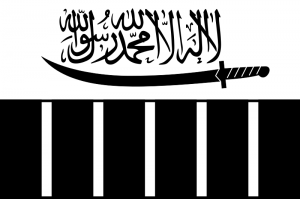
Flag of Lashkar-e-Taiba, predecessor of Jamaat ud Dawa.
 (ArnoldPlaton, Wikipedia)
ISTANBUL (ANS) -- A young evangelist in Pakistan, in hiding after being accused of blaspheming Islam's prophet, has surrendered to police due to serious threats to his life from Islamic extremists, his lawyer said.

Attorney Aneeqa Maria, head of The Voice Society, told Morning Star News that Adnan Masih agreed to surrender to police in Lahore on Nov. 6, the end of his pre-arrest bail period, because of serious threats to his life.

Additional Sessions Judge Khizar Hayat Khan acknowledged the risk to Masih's life and ordered police to ensure his security while he is in custody, she said.

"We thought it wise to surrender Masih to the police by bringing to the judge's notice that he would have most likely been killed by Islamist extremists belonging to the banned militant outfit, Jamaat ud Dawa (JuD), which had been demanding from the police and The Voice Society that he be handed over to them," Maria said.

She said that Masih, 26, was deeply frightened when he agreed to surrender.

"The hapless man knew he did not have any option - the odds were against us, and Masih knew we could do nothing else except seek refuge in courts," she said. "My heart grieved when I handed him into police custody. I 'm determined to prove his innocence, because I believe that he has been wrongly accused."

The furor of Islamist protestors outside the Lahore courtroom on Nov. 7 led Judge Muzamil Ahmed Khan to call off Masih's scheduled appearance in which the court would have decided where he will be held, Maria said. She added that he will likely be sent to prison until trial as a security precaution.

"We reached the district courts at 7:30 a.m., but a large number of Islamists, some of them armed, were present outside the courtroom," she said.
Morning Star News said Maria continued, "We went to the superintendent of police's office, where we were told that Masih would be produced in court on Friday (Nov. 8) because they feared violence. We would not have believed him if we hadn't seen the extremists at the courts ourselves. The police are saying that they will send Masih to prison, as keeping him in their custody could be a security risk. They will interrogate him in prison."

For weeks Islamist clerics and members of the JuD protesting outside the police station have called for Masih's death. The JuD registered a case against Masih on Oct. 8. If convicted of blaspheming Muhammad, he faces the death penalty.

"When we filed his pre-arrest bail on Oct. 26, they started hounding us and issued us threats through various sources," Maria said.

She continued, "A large number of protesters were gathered at the sessions court on Nov. 6 as expected. Bringing his willingness to surrender to the court's notice was the best option at that time. Now if anything happens to him, the police would be responsible."

Morning Star News said Masih was charged under Sections 295-A, 295-B and 295-C of Pakistan's controversial blasphemy law after he tried to correct misconceptions about Christianity in a Muslim book.

Sources close to him say that Masih denies having written anything against Islam or Muhammad when he scribbled in the Muslim book he found in a glassworks shop where his brother works.

Maria said the Sessions Court would have rejected Masih's petition for permanent bail because of the unprecedented inclusion of all three sections of the controversial blasphemy law.

The Christian attorney said that the matter had become a serious security threat for everyone involved due to the involvement of JuD, which has been threatening her and other members of the legal team since she filed Masih's pre-arrest bail in court.

Maria said the defense counsel would now petition for his bail.

"It is most likely that the judge will refuse bail as has been observed in several such cases, but then we will move a bail petition in the High Court," she said. "I believe we will be able to secure Masih's release from there."

Police told her that Masih had been interrogated until 2 a.m. on Nov. 7, but that he had refused to admit the charges against him, she said.

Masih's wife and two young daughters have sought refuge in another town for their security.

Sadar Superintendent of Police Operations Jahanzeb Khan told Morning Star News that Masih was safe in custody.

"We will not allow any person to take the law into their hands," he said. "The case will be investigated on merit, and all angles will be thoroughly examined."

He added that police could interrogate Masih in prison if they felt that keeping him in a police station was not required.

Sources in the superintendent of police's office told Morning Star News that police would not seek his physical custody.

"In such cases, the accused persons are safe inside prisons where a separate barrack is allotted to all persons accused of blasphemy," said a senior official of the Lahore Camp Jail.

He continued, "Those facing or convicted of blasphemy are not allowed to mingle with the other inmates, and special security is deployed at their barrack. They are taken outside their barrack for exercise when all other inmates are locked in their respective cells."

Masih was filling in for this brother, Irfan Masih, at the glassworks shop on Oct. 7, the day of the alleged crime.

Masih, who has a master's in English and trained as a pastor at a United Pentecostal seminary, became bored and began going through books in a desk drawer, where he noticed one entitled, "I Asked the Bible Why Korans Were Burnt (in Urdu, 'Mein ney Bible sey poocha Quran kyun jaley')," sources said.

A source close to Masih said the evangelist and tutor noticed several false statements about the Bible and about Jesus, which he highlighted with a marker and corrected by answering with verses from the Bible.

The next day Masih found a case had been registered against him for blasphemy under the Pakistan Penal Code's Section 295, parts A, B and C - for allegedly outraging religious feelings, defiling the Koran and defaming Muhammad respectively.

Morning Star News said the book belonged to a Muslim worker at the shop, Abid Mehmood, who upon seeing the notations went to police and also notified the JuD. That group is the religio-political face of the Lashkar-e-Taiba, which has been designated as a glob al terrorist group operating in Pakistan, India and Afghanistan.

The United States has announced a $10 million bounty on JuD chief Hafiz Muhammad Saeed, but he is supported by Pakistan's powerful Directorate for Inter-Services Intelligence and moves about freely in the country.

Masih and his family went into hiding after learning that JuD had issued a fatwa calling for his head. A source said he had no idea that "pointing out false references in a book would land him in such big trouble."

Masih and his wife fled their home with very little money, leaving behind their valuables and important documents such as national identity cards and passports, which police have reportedly seized.

Hafiz Abdul Malik of the JuD had earlier told Morning Star News that the group would not tolerate one word against their prophet.

"How dare someone use derogatory language against our beloved prophet . Don't they know that the Koran orders us to slit the throat of whoever is disrespectful to Allah's beloved prophet ?" he said.

While many in Pakistan believe that the blasphemy laws are contrary to basic human rights and are widely misused against Christians and Muslims alike, very few have publicly demanded repealing them.

Statute 295-A forbids outraging religious feelings, 295-B forbids defiling the Koran and 295-C forbids defaming Muhammad, but parts A and B require that intent be shown in order to obtain a conviction.

Defiling the Koran is punishable by life in prison (25 years in Pakistan), and defaming Muhammad is punishable by death with or without a fine.

For more information about Morning Star News visit http://morningstarnews.org

Wednesday, October 30, 2013

Iranians jailed for ‘house church’ attendance

Christians lose appeals against incarceration for meeting together to pray

Three of the four jailed Christians in Adel-Abad Prison. From left to right:
 Mojtaba Seyyed Alaedin Hossein, Homayoun Shokouhi
 and Mohammad-Reza Partoei.
Mohabat News
Four Iranian Christians jailed for attending a ‘house church’ have lost their judicial appeals.
Mojtaba Seyyed Alaedin Hossein, Mohammad-Reza Partoei, Vahid Hakkani and Homayoun Shokouhi were each sentenced in June to three years and eight months in prison.

Shokouhi’s wife Fariba and son Nima both received suspended sentences of two years’ imprisonment at the appeals-court hearing, which took place in Shiraz.

This is the latest in a long line of prosecutions of Christians in Iran, with the most common charges being actions against public security and propaganda against the regime.

Article 26 of the Iranian Constitution gives the right to religious minorities, including Christians, to form societies and to meet together.

Iran's abuses widespread despite reform promise

(Image courtesy Voice of the Martyrs)
Iran (MNN) ― Iran's regime has made stopping the spread of Christianity a cornerstone of its crackdown on religious freedom.

It's those actions and others like them that have drawn closer scrutiny from the United Nations. The UN's special rapporteur for human rights in Iran has said the country has shown "no sign of improvement" in human rights and "continues to warrant serious concern."

Spokesman for the Voice of the Martyrs USA Todd Nettleton says Iran dismissed the findings. "Their instant response was, ‘Well, this is biased. He doesn't know what he's talking about.' But the reality is: this is what we see happening inside Iran."

There are estimated to be as many as 370,000 Christians in Iran, according to the most recent U.S. State Department report. The UN report noted Iran's "authorities continue to compel licensed Protestant churches to restrict Persian-speaking and Muslim-born Iranians from participating in services, and raids and forced closures of house churches are ongoing.... More than 300 Christians have been arrested since 2010, and dozens of church leaders and active community members have reportedly been convicted of national security crimes in connection with church activities, such as organizing prayer groups, proselytizing, and attending Christian seminars abroad."

Recent attempts to show a more moderate face aren't really convincing, adds Nettleton. "They're not going to fool the people inside Iran who know this is going on, and they're not going to fool the international community because the stories are just too consistent. Even though they would like for the information to stay locked in Iran, it does get out, and groups like the Voice of the Martyrs and others are able to say, ‘This is what's really happening behind the scenes.'"

In fact, a Voice of the Martyrs Canada report indicates Iranian Christians are requesting prayer following a series of arrests that took place about the time the government released some prisoners in an effort to appear more liberal.

At least 20 Christians, mainly from Muslim backgrounds, were detained in Tehran, Karaj, Isfahan, and Tabriz. As a sign of being politically progressive, the government of newly-appointed President Hassan Rouhani pardoned and then released 11 prisoners of conscience on September 20. Two of them were Christians.

Meanwhile, Christian Solidarity Worldwide released a report that documented the sentencing of four Christian men to 80 lashes on Oct. 6.  The men were arrested in a house church after a communion service last December and charged with consuming alcohol in violation of the theocracy's strict laws. The group has ten days to appeal.

How does the new regime respond to international concerns? It's not really up to the administration, explains Nettleton. "Presidents will come and go. The Supreme Council is really where the power's at in Iran. They will decide what the human rights situation is in Iran, and as I said, they're Islamic mullahs, so they're going to go according to Islamic law which teaches that if you leave Islam to follow another religion like Christianity, you're an apostate. The call for that is the death penalty."

Young Iranians, who make up a majority of the population, are dissatisfied with both their religion and government. Why? "One of the real side effects of the human rights situation and the abuse of people in Iran is that it's being done in the name of the government, which is an Islamic government. The people identify that as being done by Islam, so they see the failure of Islam in their country, and they are very open to the Gospel."

That's resulted in a rapidly-growing Church in Iran, which cycles back around again to clerical rulers who see Christianity as a threat to Iran's majority ultra-orthodox Shiite Islamic religion, a crackdown, disillusionment, and more growth.

Persecution has intensified since 2005, with marked increases in 2011 and 2012. Authorities raid house church services, detain worshipers and threaten church members. The publishing, importation, or reprinting of Bibles or Christian literature is illegal.

VOM supports satellite TV and radio broadcasts that are instrumental in sharing the Gospel and teaching the growing church. Nettleton observes, "That's the good news. It is coming with persecution; we believe there are 42 publicly known cases of Christians who are currently in prison in Iran, so that growth is coming with a price."

It's very difficult for us to truly understand the tremendous pressures Muslim converts face in a society that harshly opposes the Christian faith. The Voice of the Martyrs comes alongside this remnant. "One of the very significant ways that we're involved in Iran is to produce Bibles for the Iranian church and deliver them--get them into the hands of the Christians inside Iran," Nettleton explains. "Another thing that we're involved in is helping people to advocate and encourage some of those Christians who are in prison."

Christians stand fast after years of violence, and the Gospel is spreading

(Image courtesy Mission India)
India (MNN) ― In some parts of India, who or what you put your faith in holds the power of life and death.

Orissa is one out of five states in India that has an active anti-conversion law. The violence that exploded between Hindus and Christians in August of 2008 has left bleeding wounds, and hostility remains. As more Indians convert to Christianity, attacks increase.

“Who you worship in India is a big deal,” says Dave Stravers, president of Grand Rapids, Michigan-based Mission India. “The testimony of believers to Jesus is the key factor here.”

Recently, a man was violently assaulted for distributing tracts. He was dragged to the police and told to stop.

In another village, a young man witnessed to four of his friends who then came to Christ. The five young men, mostly teenagers, met for regular prayer meetings. One day, a large group of Hindu activists interrupted their prayer by breaking down the door and beating them.

“Often the persecutors result to violence,” Straver says. “Almost every worker at some point gets physically attacked, beaten up. So we pray for the miracle of great courage.”

These stories echo the acts of genocide in 2008. “That was the typical reaction years ago, but now the new stories we are hearing are actually more encouraging,” says Stravers.

He shares a story of a Mission India church planter in a small village. Four families out of 72 came to Christ as Stravers ministered to them, and the rest of the villagers became terrified. They believed that Shiva, their village god, would punish the whole village because of these four families. Fear for their crops and their health caused great hostility.

The village leaders ordered the families to stop following Christ, but they refused. For the time being, the Christian families are meeting outside of the village to worship.

Members of Mission India are confident that as the fear of Shiva abates, more families will come to Christ in that village. The steadfastness of those four families is very encouraging, and they continue to witness to their neighbors.

Often pride of heritage and culture can be a barrier for the Gospel. Indians are extremely proud of their background, and their resistance to the Gospel can increase when it is presented by a foreigner.

“The fact that there are very few foreign workers in India for the past 30 years is actually positive,” says Stravers. “We try to help the workers in India in a way that does not give a foreign face to the Gospel.”

Poverty is also a barrier for new Christians. Most Christians in India are first generation and do not have great understanding of skills in ministry. They need access to Bibles and other materials that could aid in witnessing. They also would benefit from training. To see how you can help, click here.

Pray that new believers and the workers placed in India will be encouraged. They know that they will face persecution and resistance. Pray for courage and strength, and that they would look to the eternal significance of their work. Pray that the Gospel will continue to spread in India despite the restrictions and hostility toward it.

Two pastors killed in Kenya

Perpetrators must be arrested and security increased, say church leaders

Mombasa.
Lauren Pressley / Flickr / Creative Commons
Two pastors from southern coastal towns in Kenya were killed last weekend in separate attacks.
Charles Mathole, a leader of Mombasa's Redeemed Gospel Church in Mtopanga, was found dead in church on the morning of Sunday October 20, shot in the head and with a Bible in his lap.
In Kilifi, about 60 kilometres north of Mombasa, the body of a pastor with the East African Pentecostal Churches, Ibrahim Kithaka, was found dumped in a patch of bushes.
The two deaths come just a few days after the coastal town of Mombasa witnessed its worst rioting in recent years after the drive-by shooting of a Muslim Imam, Ibrahim Rogo, itself in the aftermath of the Westgate mall attack.