Showing posts with label christian satellite television. Show all posts

Monday, September 16, 2013

Arson a 'small price to pay' for Egyptian pastor

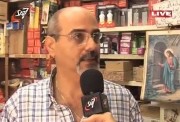
(Photos courtesy SAT-7)
Egypt (SAT-7) ― Days ago, SAT-7, a Christian satellite television service to the Middle East and North Africa, aired footage of Egyptians worshipping in the remains of the Evangelical Church of Beni Mazar.
Located in the town of Minia, it was one of over 80 Egyptian churches targeted in violent attacks during August. This special episode aired as part of the SAT-7 program, "My Church."

Dark smears mark where flames licked the outside walls of the church building after arsonists set it ablaze. The charred hull of the interior is crumbling and peeling where wood and paint previously existed. Singed wiring hangs loose from the ceiling.

On August 14, Rev. Hany Jacque received a phone call notifying him that angry rioters had broken in the door of the church. For seven hours, the rioters stole furniture from inside, broke the glass windows, and burned the church's books, including its Bibles. They also looted and burned its community services building next door, which had provided medical and financial assistance to all the residents of Beni Mazar, regardless of their religion.
Rev. Jacque reflected on the destruction, "The Church is not walls and buildings. The Church is us, the people of God. They burned and destroyed the building, but it will never be possible for them to burn and destroy the Church because the Church will remain forever. If this was the cost for the God's people in this place, that's alright. Pay it, because God's people must always speak the truth.... This is a small price to pay for us to speak the truth."

During the service aired on SAT-7 this week, congregants filled the desecrated building with songs of praise and the words of Scripture. Congregants sang, "Jesus, we bless Your name." They joined hands and prayed that God would accomplish His will in the Church. The song leader encouraged the congregation, saying, "The joy of the Lord is your strength...God's glory in the midst of the Church is a sign for what is coming in the land of Egypt. The Church will be filled with glory."

Rev. Jacque preached a message from Haggai 2. He read encouragement from the Word to the congregation, saying, "‘The glory of this present house will be greater than the glory of the former house,' says the Lord Almighty. ‘And in this place I will grant peace,' declares the Lord Almighty." Toward the end of the service, Rev. Jacque asked Church members to forgive the rioters. He quoted what Jesus said of His attackers on the cross: "They know not what they do."

The Reverend emphasized that while they would have a new building, it was just as important that all things become new in their hearts and their thinking. Another church member closed in prayer, saying, "We turn our eyes today from our surroundings to Your lordliness.... Lord, we pray today for everyone who wronged us, with all love: for each one who extended his hand with an axe, for each one who extended his hand with fire, or stole from the Church."

Attacks targeting Christians intensified after former president Mohamed Morsi was removed from power.

Dr. Terence Ascott, SAT-7 CEO, reflects on the response of Egyptian Christians: "It is evident that the almost universally non-violent response to these attacks (the worst assault on Christians in Egypt for almost 600 years) has greatly impressed many Muslims. This has been a very public turning of the other cheek by the Christians of Egypt and a very public act of obedience to Jesus' injunction for His followers to 'love your enemies and pray for those who persecute you' (Matt 5:44)."

Some Christians are leaving Egypt in hopes of economic opportunities and security, but there is also a spiritual revival taking place among those who remain. Programming Manager George Makeen, an Egyptian citizen, is optimistic about the new opportunities that the revolution brings. He says, "People try to find ways to co-exist and live together, as they now feel responsible for their safety and their future. There are still drastic troubles of lack of trust and misunderstandings, but I think we are moving forward toward knowing and respecting each other."

Makeen sees improvements in education as the key to a brighter future for Egyptians and believes a SAT-7 program could shed light on this. Current public school curricula do not provide an accurate presentation of national history or teach the components of a democratic system.

Given the opportunity, Makeen would also arrange for SAT-7 to do more filming in rural areas to raise awareness for the problems residents outside the cities face. In the meantime, SAT-7 provides a broad platform for reaching and teaching Arabic speakers throughout the region with Christ's message of hope and reconciliation.

Thursday, September 12, 2013

Overcoming persecution with the Egyptian church

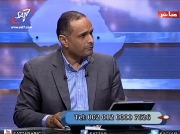
(Images courtesy SAT7)
Egypt (SAT7) ― On July 3, when millions of discontented Egyptians toppled their president (again), current affairs show Bridges was prepared with episodes addressing implications of the week's events. In fact, Bridges had been airing episodes discussing the June 30 protests before they even occurred.

The producers of Bridges felt it was important to continue live broadcasts throughout the summer. At the SAT-7 studio in Cairo, host Dr. Ehab Kharat interviewed politicians and social activists, asking them to discuss the challenges that would face Egyptians in the coming months. Some of the topics they addressed were the poor state of the economy, the prevalence of corruption, changing the constitution, and holding elections.
In the weeks following President Morsi's ouster, angry Morsi loyalists attacked over 80 churches, burning many to the ground and killing a child in front of her church. They also looted and attacked Christian business establishments, apartments, and schools. In some instances, Muslims stood by their Christian neighbors to protect them and decried the attacks.

In response to the horrifying attacks, Bridges sent a filming crew 700 kilometers south of Cairo to Al Dabia, one of the villages affected by sectarian tensions. Women tearfully explained that police removed them from their homes, leaving their husbands to be tortured and die. Church leaders in this particular village were crushed because their longtime neighbors stood by without helping, while Christians were attacked and their buildings looted.

George Makeen, Programming Manager for SAT-7 ARABIC, describes the powerful episode: "Testimonies of people who lost their beloved ones and who lived these hours in fear and pain were heart-breaking. In this episode, we talked about the way to social justice and reconciliation. We discussed the danger of using violence to implement political demands and agendas."

SAT-7, a Christian satellite television ministry to the Middle East and North Africa,  purposed to provide those affected with an opportunity to grieve publicly.
Rev. Dr. Safwat Al-Baiady, President of the Evangelical Churches in Egypt and Deputy Chairman of the SAT-7 International Council, has appeared on past episodes of Bridges as a guest. He notes that Christian schools and hospitals are open to people of all religious backgrounds.

During the civil unrest from the end of June through July, Christian field hospitals even treated members of the Muslim Brotherhood who had perpetrated attacks on churches. The agony of persecution created opportunities for Christians to show their attackers the meaning of forgiveness and unconditional love.

Church leaders throughout Egypt, including Rev. Dr. Al-Baiady, have emphasized that the Church is a body of people and not a building. In the face of persecution, he says, "Our purpose now is to show mercy.... We care for people, not buildings. We can restore the buildings, but we cannot restore a person who is killed or injured."

One of Al-Baiady's greatest concerns is for the young children. He asks, "What kind of children will they be when they grow up? So I say, please don't lose a generation. The children, the coming generation, will be affected by all the scenes they are watching." There are many voices trying to shape the minds of children in Egypt right now. For parents, monitoring the influences in their children's lives can begin with television in the home. As Egyptians look to stay informed and find answers about their changing nation, SAT-7 ARABIC offers a biblical perspective on events that is appropriate for family members of all ages.

Currently, the Egyptian army is fighting militants in the Sinai Peninsula and has taken off the air several television channels connected to the Muslim Brotherhood. However, Executive Director Farid Garas reports that attacks on Christians have subsided elsewhere in the country: "The attacks on churches have stopped, and security is returning to the streets. The good thing about what happened is the unity between Egyptians."

Join us in praying that God's Spirit of peace and love will unite Egyptians and empower them to overcome the persecution of past months.

Wednesday, September 5, 2012

United Nations crisis meeting on Syria ends in failure

(Photos courtesy SAT-7)

Syria (SAT7/MNN) ― The United Nations gathered last week to try to come to some solution to the Syrian violence.

Even as the world's leaders puzzled over the lack of safe zones and supporting refugee camps, rebels kept the government forces occupied with a barrage of attacks in Aleppo, and the violence spilled over the border into Tripoli, Lebanon.

That led to requests for U.N. help from Turkey, Jordan, and Lebanon, which are bearing the brunt of the mounting refugee crisis.

SAT-7, a Christian satellite television ministry to the Middle East and North Africa, has studios in Beirut. "The condition in Lebanon is becoming more and more difficult for everybody. There aren't a lot of opportunities for young people," says Naji Daoud, Executive Director of the SAT-7 studio in Beirut. The unrest has added to the challenges facing the region, both acknowledged and answered by SAT-7.

About 30,000 Syrian refugees have flowed into Lebanon since the uprising against the regime of President Bashar Assad. According to Naji, wealthy Syrian refugees typically rent hotel rooms or apartments, while poor Syrian refugees live in tents in substandard conditions. Many of the poorer refugees are alienated from the assistance of Lebanese who support Syrian President Assad.

Naji says that churches, on the other hand, are helping these individuals. At the same time, while there has been an influx of Syrian refugees in Lebanon, there has also been an exodus of Lebanese Christians. The exodus is in response to the lack of job and educational opportunities in Lebanon, and the decline in state services.

"Bridges," a SAT-7 show broadcast from its Beirut studio, is confronting Lebanon's challenges head-on. An entire episode was dedicated to the effect of Syria's conflict on Lebanon. Tapping into widespread concerns, the show host posed the question, "Are Christians in danger?" Show guest Gussan Hejar said of Christians, "They fear the unknown today."

SAT-7 USA President Rex Rogers weighs in on importance of their during crisis times. "We broadcast also, in terms of live programming, sometimes panels of individuals who talk about how to protect yourself, how to exercise your 'rights,' so to speak, how to be salt and light in a society that isn't open to Christians doing that kind of thing, typically."

Rogers goes on to say that as viewers also minister to the staff, another picture is emerging. "I think God is drawing the Church (capital C) together in the Middle East, and they're performing an incredible function of connecting with these folks and helping them to get through a very, very difficult time."

Building the Church remains SAT-7's goal, while at the same time offering a message of comfort and hope to all through the presentation of a Christian worldview. That extends far beyond the borders of the Middle East and North Africa, explains Rogers. "It makes the American Christian community a little more aware, that is to say the region is more salient, it's more on their mind, and they understand more so they respond more quickly."

Despite uncertainty, the team at SAT-7 has no plans to go anywhere. That sends a strong message to their viewers: they're committed to the community. Developing future projects sends the message that they're sending down roots. Rogers says, "We have a new initiative, or project, we call the TEACH project: TEACH stands for Theological Education for Arab Christians at Home, and it's simply Bible instruction and discipleship. It's helping people who've recently come to the Lord to be able to grow in the grace and knowledge of the Lord."

With Syria's violence in the foreground, it may be some time before the fighting stops and things settle down. In the meantime, SAT-7, along with its entire sister channels, SAT-7 PARS, SAT-7 KIDS, SAT-7 ARABIC, SAT-7 TURK and SAT-7 PLUS are all working to bring a measure of peace that passes understanding.


Wednesday, June 27, 2012

Egypt's new president makes history again


(Photo courtesy of Jonathan Rashad)
President-elect Morsi.
 (Story photo courtesy SAT7)

Egypt (MNN) ― Egypt's first-ever democratically-elected president, Mohamed Morsi, has already made history.
Now, he'll do it again by appointing a Christian vice president as one of his first acts. He will also choose another vice president who is a woman.

The Islamist figure, a Muslim Brotherhood leader, promised to ensure rights of minorities. Farid Samir, the Executive Director of *SAT-7's studios in Cairo, says despite the show of good will, "Although most of the promises that he had made are positive, it's not the promises. [Minorities] had fears of being treated as second-class citizens."

In a May 12th speech at Cairo University, Morsi said, "The Koran is our constitution, the Prophet is our leader, jihad is our path, and death in the name of Allah is our goal.
"   
However, the greater concern for Christians came from a report Monday from Iranian state media. Samir says, "They're afraid of following Iran's regime because the first announcement he made, he said, 'We want to restore our relationships with Iran.'"

According to the semi-official Fars news agency, Morsi views a renewal of diplomatic ties with Tehran as a way to achieve "strategic balance" in the region. Samir says nobody is sure how far that renewal will go. "They have two armies. One army is the official army, and the other army is to protect Islam and to protect the regime. So we don't know if this is what he means by 'following the Iranian regime' or learning from that."

Then, in what seems to be an about face, Morsi's policy adviser this week emphasized that Egypt "definitely" would not be an "Islamic Republic."

Meanwhile, Egypt's courts suspended a ruling that said the military could arrest citizens, forcing the military back from what was perceived to be a move toward martial law.

What does all this mean? It seems it's an effort to allay fears of sharia, jihad, and religicide. Samir notes, "We can't forget that this Muslim Brotherhood didn't just start now, but it was there for 80 years, working underground. But now, it's official." There's good reason for concern. "There is a lot of fear, also, about seeing the same violent acts against Christians, but this time, with legal coverage."

Christians may face losing more of their voice, more rights, and possibly, face more trouble. Reports of widespread evacuation have already begun to file in.

The greatest concern: who will Morsi be to believers after the "honeymoon" period is over? Samir says, first, "Church leaders are trying their best to strengthen the faith of people trying to talk about higher authority of God over any humans, and that God's will is over all that's happening."

Then, SAT-7 studios in Cairo began offering a forum for viewers. Samir explains, "We started a current affairs show called 'Salt of the Earth,' bringing hope, encouraging Christians to share in the community."

The events of the past few weeks have revealed serious divisions in society, and many Egyptians are stunned. Samir adds that the uncertainty has had an interesting effect on ministry. "They'll talk about our role as Christians in the region, and the important thing is that the churches are full of people now. The same day that they announced Morsi as president, the churches were full of people. They seek God more now."

As an organization that does not take political positions, SAT-7 supports viewers by teaching how they can apply Christian principles to everyday life. In this case, says Samir, "We need this to be effective. We include a dialogue between denominations, and between Christians and Muslims, also."

Biblical perspective helps. It emphasizes the need for an attitude of reconciliation between election winners and losers, as well as a readiness for participating in writing a new constitution. Samir adds, "Fear is not really logical, but when we give some logic, and some biblical facts, it helps ease the fears down a little bit."

In the days ahead, there is a lot at stake. Samir encourages believers to stay involved in Egypt's emergence. It's a painstaking process, and what the nation will look like on the other side remains undetermined. "Pray for protection for the staff and the facilities, for wisdom for producers, for presenters to speak the truth. Pray also...for people to read the Word of God."

*A Christian satellite and television ministry to the Middle East and North Africa.

Wednesday, January 25, 2012

Protestors gather to remind government of revolution demands

Protestors in Tahrir one year later.
 (Photo by Bora S. Kameel)

Egypt (MNN) ― Egypt's military ruler has decreed a partial lifting of the nation's hated emergency laws effective today--the first anniversary of the start of the popular uprising that toppled longtime authoritarian ruler Hosni Mubarak.
The move caps off a wild beginning for Egypt's first democratically -elected parliament in 60 years.

A top priority will be for the chamber to elect a 100-member panel to draft a new constitution, which will have to be put to a vote in a referendum. The next major step in the transition will be a presidential election, scheduled to be held before the end of June.

However, the changes are not going in the direction revolutionary groups wanted. They're calling for mass demonstrations against the military rule on January 25, the one-year anniversary of the uprising that eventually led to former President Hosni Mubarak's ouster. SAT-7 USA President Rex Rogers says, "There's a lot of hope tempered by realism. There have certainly been some positive changes. Things have opened up."

That's a step in the right direction, but it hasn't come easily. SAT-7, a Christian satellite television ministry to the Middle East and North Africa, has an office in Cairo. Despite the weeks of unrest, their team has kept up with the events and adjusted accordingly. Rogers notes, "We've done a lot more live programming. We've tried to interact with people's on-the-ground needs. We've tried to share with them how practical Christianity is for life, and at the same time, continue to pray because we don't know exactly which direction this is going to go."

Daily live TV shows gave an outlet for the building emotional tension. Egyptian church leaders created an opportunity to calm angry spirits, to call for peace and to explain the Gospel. Rogers explains, "We try to encourage people, we try to help them understand how do you stand up for your rights, and at the same time turn the other cheek? We try to get in and understand 'what does the Word of God say?' 'When is it right to do one thing and right to do another?' "

Even as protestors gather in Tahrir Square to remind Parliament of the revolution's demands, Rogers says, "Pray for safety, obviously. Pray for an understanding of individuals different from oneself. I mean that religiously, and otherwise. You pray for people, and have a concern those that do not believe as you believe because ultimately, you want to reach out to them."

Despite a growing sense of disillusionment that's been widely purported, Rogers adds, "Staff is hopeful. They continue to pray. They are optimistic, but at the same time, they recognize there are a lot of political tensions taking place."

SAT-7's five channels include: SAT-7 ARABIC, SAT-7 PARS (Farsi), SAT-7 TÜRK (Turkish), SAT-7 KIDS (Arabic) and SAT-7 PLUS (Arabic). SAT-7 has an estimated 15 million viewers (Intermedia research, 2009) and broadcasts in three languages: Arabic, Farsi and Turkish. SAT-7 can be viewed via satellite in the Middle East, North Africa, Europe, much of Central Asia and worldwide atwww.SAT7.org.