Monday, September 3, 2012

8 in 10 missing persons sucked into India's human trafficking problem

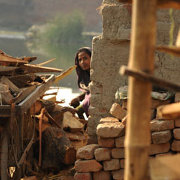
(Image courtesy Bright Hope International)
India (MNN) ― A newly-released report from Gujarat state in India reveals that 8 out of 10 missing persons are sold to brothels.

The statistics defy belief. Three years ago, human rights watchers said more than 1.2 million children in India were sold into prostitution, and as many as 100 million people in India are involved in trafficking-related activities. That number has only gone up.

The most likely victims of human trafficking are those living on less than a $1 a day. C.H. Dyer with Bright Hope International notes that, "People that are in extreme poverty will go to great measure to find security, food, just the basics of life."

Desperation drove local churches to Bright Hope to ask for help. "'We know there's a lot of prostitution and a lot of young girls that are forcibly put into prostitution in our community. What can we do to make a difference?'"

Bright Hope developed a network of churches in India to raise awareness and build strategic partnerships to be a part of the solution. The three-pronged approach included awareness, rescue, and rehabilitation. 

An anti-trafficking program developed that included training for those who were involved in the rescues and rehabilitation programs for the rescued. The program hasn't been without its challenges. Building trust takes time. "Getting them out of the situation, working with the local authorities, working with the police to gain their confidence and the ability to go into these brothels and pull out the minors and offer the older women the chance to come out: this is all new in this rescue area."

It's a responsibility they don't take lightly with so much at stake, says Dyer. "You take your time, you pray, and you get the advice of those who have gone before you."

A proven track record...what does that mean for a rescue program? Dyer explains, "You'll see the people start to say, 'This works for people. Education, the Scriptures, a strong local church, job training."

In fact, the success rate has been encouraging. "The agencies we're working with have documented lower rates of prostitution in those communities where they have done this with good planning, and that's what we're bringing to this: proven solutions and a proven God who changes lives."

However, a successful rescue means there's an angry pimp or gang lord. "Certain pastors and leaders that are involved with our team have gotten death threats already and threats of violence against them."

Taking on human trafficking means a church is entering the spiritual fray. Dyer says often, there are drugs or idolatry involved. "It is dangerous. It is the front lines against evil. We need to partner with them in prayer specifically, that the power of the Lord would come upon them and protect them and lead them as they do these good works in His name."

Then, there's the question of whether slave rescues actually perpetuate the cycle of slavery. In cases where people were rescued from slavery in Ghana, it was found that many of them found their way back in later, or new slaves were taken. Dyer says that was the first question they asked themselves before embarking on this path: "Are you going to stir the pot and make things worse, or are you really going to get to some of the solutions that can change lives?"

Rehabilitation is focused on healing through professional Biblical counseling to regain strength, hope, and faith in God and His ability to restore them. Opportunities to earn a liveable wage must be given. Through job skills training, girls can have well-paying jobs as they rebuild their lives. Dyer goes on to explain that "These kinds of programs really can help people rise above their economic and spiritual situation. So we can create a pathway where some more will follow."

That being said, the team is gearing up for another major foray. "In just a few weeks, we're going to see this all ramp up to take even more girls out. My real desire today is that everybody who hears our voices would pray for the churches involved in human trafficking around the world."


Sunday, September 2, 2012

Imam Reportedly Fabricated Evidence against Rimsha

By Jeremy Reynalds
Senior Correspondent for ASSIST News Service

LAHORE (ANS) -- There's an encouraging development likely to end the ordeal of a 14-year-old Christian girl charged under the blasphemy law and allow her to be released from jail on bail.

According to a story by Pakistan Today, a witness has claimed that the cleric who played a major role in framing charges of burning pages of the Holy Quran on the girl fabricated the evidence by placing Quranic pages in the ash brought to him by the complainant.

imam Khalid Jadoon
Recording his statement before a magistrate in Islamabad on Saturday, Hafiz Zubair said he and two other people were present in the mosque for Aitekaf. That was when Malik Ammad, the complainant in the case, came to the mosque's imam Khalid Jadoon with a plastic bag that he claimed contained the ashes of a Noorani Qaida allegedly burnt by Rimsha.

Zubair said Jadoon brought some pages of the Holy Quran from inside the mosque and mixed them with the ash.

"I asked Jadoon why he was fabricating the evidence. He said that this would ensure a strong case against the girl and would ultimately help them in evicting the Christians from the locality," said Azhar.

Pakistan Today said he added that the other two people present in the mosque at that time had also asked the imam not to place false evidence against the girl.

Commenting on the development, Rimsha's lawyer Tahir Naveed Chaudhry told Pakistan Today that Azhar's statement proved that the case against the minor girl was fabricated.

"Jadoon and Ammad concocted the evidence and they should be booked on the same charge that they had leveled against the girl," he said.

Pakistan Ulema Council Chairman Hafiz Tahir Ashrafi also condemned the imam for implicating a minor girl in a false case.

"The revelation proves our stance that the case against the girl was fabricated. The government should take immediate notice of this revelation and should give exemplary punishment to the perpetrators of the crime to ensure that the law is not misused against any person," Pakistan Today reported he said.

Earlier in the day, Judge Muhammad Azam Khan adjourned the hearing of the case until Monday. He asked police to investigate a bail application made on Rimsha's behalf after prosecutors claimed paperwork had not been signed by the girl or her mother.

Pakistan Today said speaking to reporters outside the court, Rimsha's lawyer Tahir Naveed Chaudhry accused prosecutors and lawyers of using delaying tactics.


Islamists Demand Placing Coptic Church Funds Under Egyptian State Control

By Jeremy Reynalds
Senior Correspondent for ASSIST News Service

Muslim Brotherhood to Church: “All your money are belong to us!”

EGYPT (ANS) -- Demands raised this week by Islamists in the Constituent Assembly, which is drafting the new Egyptian constitution, for placing the Church's funds under state financial control were categorically rejected by church leaders and Copts at large.

According to a story by Mary Abdelmassih for the Assyrian International News Agency (AINA), Anba Pakhomious, Acting Patriarch of the Coptic Orthodox Church, condemned the action of Salafist groups.

He said, "The mere submission of such a proposal is totally unacceptable, and if it is approved, this proposal has only one meaning, that Copts are clearly persecuted."

AINA said he added that the church will not accept the monitoring of its money or donations by any entity, and should not pay taxes to the state because all its activities fall within the provision of the needs of orphans and needy Copts. As a result, the state cannot claim taxes because they are not investment projects.

Counselor Edward Ghaleb, one of the three Coptic Orthodox Church representatives in the Constituent Assembly, said that if the government does not fund the church in any way, how can it demand monitoring its resources.

AINA reported he said that it was illogical to seek permission from the Central Auditing Authority to budget for the food for the monks in monasteries, and in the ordination of priests, as well as the numerous services provided by the Coptic Church, which are completely funded by collections from Copts.

Father Matthias Nasr, priest of the Church of the Virgin Ezbet el Nakhl, said the state has never funded churches, unlike mosques, which get funding from the taxpayer money paid by Muslims and Christians. AINA reported he said this new Salafist proposal is aimed at allowing the Muslim Brotherhood to dominate all institutions and exercise control on churches and Christians.
According to AINA, Khaled Saeed, spokesman for the Salafist Front, said the proposal of state monitoring of church funds came after the "insistence by some people" to monitor funds of the Muslim Brotherhood, stressing that the Salafist front does not interfere in the religious beliefs.

"There should be control over church funds," AINA reported he said during a debate over the issue with Ramses El-Naggar, legal adviser to the Coptic Church, which was aired on the Egyptian independent TV Channel Al Hayat on Aug. 28.

Saeed said the smallest monastery in Egypt is larger than the Vatican or Al-Azhar Mosque, which leads to concerns over the presence of a "church state within the Egyptian civil state."

AINA reported although assuring all Copts not to fear state control over the church, as the Copts are "part of the Egyptian people," he said that "still it is necessary to know where does its money go and if it is on the right track or not." He pointed out that the new constitution will put rules governing all state institutions.

For his part, Ramses Naggar said that comparing the Church with the Muslim Brotherhood is an error, because the MB has a political aim while the church is a spiritual institution.

AINA said he added that church charities like orphanages or senior citizen homes are subject to state control and he saw no harm in having limited control over churches. However, he said, church donations cannot be monitored, pointing out that mosques and churches are not monitored unless they disturb public order and morality.

Coptic intellectual Kamal Zakher, founder of the Secular Front, said that church funds are already controlled by the Coptic Endowment organization and the Milli Council. He explained that the Islamist proposal is a political message to the church to force it to take certain positions or "to seize its funds to control the imbalance in the state budget," reported El-Watan newspaper.

"They are trying to divert our attention from the public demands which went out demonstrating on 24/25 August to legalize the status of the MB and expose the sources of its funding," AINA reported the Free Copts statement said. "If you want to control me then fund me from the tax payer as the mosques, then you have the right to monitor me," the statement continued.

AINA said The Copts Without Chains organization described calls made by political Islam as attempts of "cheap political blackmail and political thuggery."

The movement demanded from them to look instead for ways to investigate suspicious sources of funding of the Muslim Brotherhood, the Salafist groups and the Sharia societies as well as the civil mosques that receive billions of dollars from third parties, which are used in supporting extremism, terrorism and Islamization of Christian minors.


India: 5,000 Victims in Kandhamal District, Orissa, Gather To Demand Justice

By Dan Wooding
Founder of ASSIST Ministries

ORISSA, INDIA (ANS) -- Around 5,000 victims and survivors of the 2008 communal violence in Kandhamal district, Orissa, attended a public rally yesterday to mark the fourth anniversary of the violence and call for justice, peace and harmony. Local authorities only granted permission on the evening before the rally, and organizers claimed they had deliberately obstructed it for as long as possible.
Bishop Sarat Nayak


According to Christian Solidarity Worldwide (CSW), Bishop Sarat Nayak, Catholic Bishop of Berhampur, addressed the rally, saying, "Peace can come only when there is truth and justice." The Christians, some of whom covered their mouths with black ribbons, displayed banners with slogans including, "We want justice, justice, justice," "Stop politics in the name of religion," and "We demand brotherhood in Kandhamal."

The rally also included a song written by Sharada Charan, a survivor of the violence, which captured some of the collective sentiment of the victims. The lyrics are translated as, "We are the people of Kandhamal / We are searching for our lost friends / We lived blinded by unfaith / We forgot love and affection in the shadow of discrimination / There are only sorrowful tears / Smiles of happiness have faded / the sons of the land are leaving / They are thrown away on the road of progress / So let's forget the past and move forward / Singing songs of love."

One of the men who allegedly set fire to one of many homes during the violence


Fr. Ajay Singh, an Orissa-based human rights activist involved in facilitating the Kandhamal rally, said, "This rally was to pay homage to the dead, and to call for justice, security and livelihood for the victims. It was to draw the attention of the government and other stakeholders to these needs, and to encourage the victims and build up solidarity among them.

"Despite the government giving permission only at the very last moment, the people came from far-flung, remote areas serviced with little public transport, braving the rain and possible threats and intimidation from the Sangh Parivar [extremist Hindu nationalist organisations] and government officials," said a CSW spokesperson.

"That indicates their thirst for justice, which you could see written on their faces, and when they left, they had a feeling that justice would be done sooner or later. We need to see progress towards that."
A Christian protestor


CSW said that also on August 30, the Himachal Pradesh High Court delivered a judgment in a case challenging the anti-conversion law in the state, striking down two provisions but holding the other aspects of the law to be constitutional. The court ruled against section 4 of the law, which makes it mandatory for a person seeking to convert to give prior notice to the district administration (except in the case of those re-converting to their earlier religion, which typically refers to a conversion to Hinduism), and rules 3 and 5, which mandate the state to inquire into every conversion. The Evangelical Fellowship of India, a principal petitioner in the case, welcomed the striking down of two clauses but said it was "regrettable" that the rest of the law was upheld, and noted that this "inadvertently played into the hands of communal forces."

David Griffiths, South Asia Team Leader for CSW, said, "As Bishop Sarat noted at the Kandhamal rally, justice is a prerequisite for peace. It is important to remember that the 2008 violence in Orissa came only eight months after an earlier wave of violence, for which there was mass impunity. With extremists still perpetuating communal tensions and the victims remaining deeply disenfranchised, the only way to guard against further violence and to promote true peace is to secure justice. That is why the cry of the victims must be heard.

"In Himachal Pradesh, the ruling striking down two aspects of the anti-conversion law was welcome, but it is disappointing that the other provisions of the law were upheld. The very concept of anti-conversion laws has been strongly criticized both by the UN Special Rapporteur on freedom of religion or belief and during India's recent Universal Periodic Review at the UN, and we fully concur with the view that these laws are in violation of India's obligations under international law."

Christian Solidarity Worldwide (CSW) is a Christian organisation working for religious freedom through advocacy and human rights, in the pursuit of justice.


Friday, August 31, 2012

Talk of violence against Rimsha worries her lawyer


Yesterday’s confidence replaced by fear that judge will yield to mob

LAHORE, Pakistan, Aug. 30 (Open Doors News) — Confident on Wednesday of Rimsha Masih’s release, her lawyer was apprehensive Thursday after a prosecutor hinted strongly at the likelihood of violence if she is freed.

"This girl is guilty,” said Rao Abdur Raheem, a lawyer for the man who has accused the girl of blasphemy against Islam. “If the state overrides the court, then God will get a person to do the job.”

One of Rimsha’s lawyers, Tahir Naveed Chaudhry, called Raheem’s remarks “an open threat” meant to cow the court into trying the girl as an adult, thereby exposing her to the possibility of the harshest penalties possible, including death.

Thursday’s dramatic turn followed Tuesday’s release of a medical report that determined the girl to be 14 years old. Naveed said Wednesday the report was powerful evidence that would persuade the court to shift Rimsha’s case to the juvenile courts, where potential penalties are less severe.

Instead, the local court in Pakistan’s federal capital adjourned Rimsha’s bail hearing Thursday after Raheem disputed the medical report’s legitimacy. Rather than make a ruling, the judge kicked the matter into Saturday.

Rimsha, a resident of an impoverished Christian sector of Islamabad, was reported to police Aug. 17 on the testimony of neighboring Muslims who accused her of carrying burned pages of Quranic verses. Her defense argues she is too young to face blasphemy charges as an adult, and too mentally handicapped to even understand the concept of blasphemy.

Raheem, who presented his papers in court Thursday, challenged the medical report on the basis that the panel that produced it was not convened by the court, but by a subordinate magistrate. The report was issued, he said, a day before the court itself issued an order convening a medical panel.

He asked the court to annul the report because “the doctors and the State were supporting the Christian girl,” and to form a new board to determine her age while leaving alone the question of her mental capacity. Christian advocacy groups have suggested the girl suffers from Down syndrome, which is associated with learning disabilities.

“The medical report on Rimsha is illegal, as it followed the orders of a civil servant and not the court, and went beyond its remit of determining her age,” Raheem told news reporters. “The government is supporting her and manipulating court proceedings.”

Rimsha’s arrest has prompted widespread condemnation of Pakistan’s anti-blasphemy laws. Pakistan President Asif Ali Zardari has ordered an investigation, and has said the law must not be used to settle personal scores.

Other prominent government figures, including Punjab provincial Governor Salmaan Taseer, have been killed after publicly urging reform of the blasphemy laws. Raheem served as an attorney to Taseer’s assassin, Malik Mumtaz Qadri.

”Every person advocating (Rimsha’s) release should know that if she is allowed to walk free, there are many Mumtaz Qadris in this country,” Raheem said Thursday to  a large number of reporters at the court hearing.

"If the court is not allowed to do its work, because the state is helping the accused, then the public has no other option except to take the law into their own hands," he said.

Naveed, the attorney for the girl, told Open Doors News that even though there is no legal justification to refuse bail to his client, Raheem’s dark talk is likely to influence the judge’s decision on Saturday.

“Raheem’s reference to many more Qadris in Pakistan is an open threat to the judge, and to us,” said Naveed, who also is a member of Pakistan’s Punjab provincial assembly. “Everyone knows that extremist elements can go to any lengths to impose their will. We have recorded his public statement and will ask the court to take notice of it but I fear the situation will be very volatile when we appear in court on Saturday.”

A Lahore High Court judge, Arif Iqbal Bhatti, was gunned down in his chambers in 1997 after he acquitted two Christian brothers, Salamat Masih and Rehmat Masih, in a blasphemy case.  Since then, several people accused of blasphemy have spent years in prison awaiting a judge willing to take up their appeals.
Naveed said the judge who had been assigned Rimsha’s case was on leave and would be resuming his duties Saturday.

“Although the case is quite clear, it solely depends on the judge if he is willing to show courage and release the poor child on bail,” he said. “In a recent case, a judge refused to give bail to a Christian man falsely accused of blasphemy on the pretext that he was safer inside the jail. So you can understand that the judges are also under immense pressure, and since this case has already attracted immense media coverage and consequently attention of extremist elements, I can just hope and pray God works in this situation.”

Napolean Qayyum, leader of the Pakistan People’s Party Minorities Wing and field director of Christian organization World Vision in Progress, told Open Doors News that in his several years in the field pursuing persecution cases, almost all people charged under the blasphemy laws are convicted by judges under mob pressure.

“Religious elements gather outside courtrooms on every hearing and the poor judge has no choice but to convict the accused. The same thing happened in the case of Aasia Bibi and I fear that now these Islamist elements will try to pressure the judge hearing Rimsha’s case in similar manner,” he said.

Qayyum said that the Chief Justice of Pakistan should take notice of the situation and form a judicial panel to investigate the case. “Lower courts cannot withstand public pressure so a high-powered judicial commission stands a better chance of digging out the truth.”

As for Rimsha’s safety, Naveed said the girl’s legal team is prepared to move her to a safer location as soon as the judge orders her release on bail. He also has said it is unlikely she or her family would ever be able to return to their home in the Meherabad sector of Islamabad.

He rejected the notion that Rimsha would be safest if kept in jail, even if declared a juvenile, until her trial. “The law provides relief of bail to juveniles and she should be set free,” he said.

Human rights lawyer and activist Hina Jillani told Open Doors News that Pakistani law provides relief to women and children and in this case it is evident the Christian girl is not only a juvenile but also mentally handicapped.

“Under Article 25 of Pakistan’s constitution, it is the State’s responsibility to ensure the protection of women and children and this specific case involves a girl child so the government must ensure her security,” she said.

Hina lamented that only a few people in Pakistan had the courage to speak out against the misuse of the blasphemy laws, which often are used to settle personal vendettas. “It is unacceptable that we continue to persecute Pakistan’s minorities with such laws. Our minorities are very much a part of Pakistan as Muslims and it is the State’s responsibility that justice is administered and no vulnerable community is targeted by religious zealots.”

Naveed, a member of the All Pakistan Minorities Alliance of the late Christian minister Shahbaz Bhatti, said the government is extending all possible support, but acknowledged it may not be enough.

“Who can guarantee complete security but God?” he said. “I am greatly disturbed by Raheem’s threatening statement, but I trust God will keep all of us in His protection.”
END
**********

Copyright 2012 Open Doors News

Syrian refugee crisis hits Jordan

Hussein Malla\AP

Jordan (MNN) ― The violence continues in Syria, and now a border situation is causing a refugee crisis.

Bill Bray with Christian Aid Mission says, "Early in the week the Turks closed their border, and it's created a lot of panic. The fighting on the ground is horrific. A lot of these [refugees] are widows and children. This is a real crisis."

Jordanian native missionary leaders say they are being overwhelmed by a new surge of terrified Syrian refugees. "They are coming under the fences every night--2,500 to 3,000 at a time since the border with Turkey closed two days ago," says an indigenous leader of one of the main mission groups who asked not to be identified for security reasons.

"There are already 180,000 refugees here from Syria, and they are growing every day. This is a very, very intense time for us." The Christians are responding as good Samaritans to the desperate refugees, helping them find food and shelter. Most are women and children.

The indigenous leaders asked Christian Aid Mission and others in the USA to help send more immediate financial aid so that food, medicine, and clothing can be purchased on the local market for free distribution to the refugees.

"The refugees are only dressed in light, summer wear and have nothing but the clothes on their backs," he said. "They don't want to enter government camps where there is food and water shortages. Instead, they are coming to us for food and clothing."

Winter is coming, he added, and at least $150,000 will be needed now to keep food parcels going out, supply blankets and winter clothing.

Like all the other front line states, Jordan has officially closed its borders to Syrian refugees and is trying to resist pressure by Sunni Jihadists from nearby Saudi and Qatar. The Islamic Jihad wants to divide up Syrian territory under various militias in order to help bring down the regime of President Bashar al-Assad, an Alawite Muslim who is accused of many atrocities but has protected the Christian minority.

A special fund has been set up by Christian Aid coded 400REF to aid the Syrian Christians during this time of crisis. 

Offerings for the suffering believers of Syria are being collected by phone at 800-977-5650 or at the Christian Aid Mission Web site: www.ChristianAid.or.

"We want to thank you Americans from the bottom of our hearts," said the Jordanian native missionary. "Your prayer and support is helping us befriend, love, and supply aid to these people. Discipleship requires an investment of time, resources, and courage, which we trust the Lord to provide to us."

Bray says, "The biggest thing they need right now is cash immediately to purchase food, medicines, and warm clothing."
A nearby pastor said, "I feel like finally, for the first time, we are doing outreach successfully."

Among the biggest needs they face:

• $70 each to sponsor the education of one child
• $45 each to supply medications for a refugee family
• $12 each for Arabic Bibles
• $55 each for food packets
• $180 per share of rent if a family shares an apartment with several other families

All the Syrian refugees told Christian Aid Mission reporters that they fled Syria after family members were killed. "We lost it all in Syria," said one woman. "I feared for my children, but here in Jordan they can play without being shot! I worry for my family that didn't make it out. I lost friends and loved ones. I've lost all hope."

Just crossing the border can be deadly. "We waited until nightfall, climbed through a barbed-wire fence under heavy gunfire with our husbands and kids. Our husbands didn't make it across."

Another said she came because "I couldn't sleep at night as I watched over my kids thinking this is our last night."

Bray says workers supported by Christian Aid Mission are using this for the Gospel sake. "In the midst of it, they're doing a lot of child evangelism and children's classes. This provides a lot of context in which to do a lot of Christian outreach."

Christian Aid Mission has been supporting indigenous missions in Syria and the front line states of Lebanon, Iraq, Jordan, and Turkey for decades. "We already had an indigenous network in place before the fighting began," said a Christian Aid Mission spokesperson in Charlottesville, Virginia. "We are able to get help to the field quickly."