Showing posts with label church planting. Show all posts

Friday, January 20, 2012

Elections don't change much or give new freedom in Kazakhstan

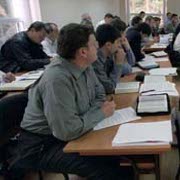
Training for church leaders.
 (Photo courtesy of Slavic Gospel Assocation)

Kazakhstan (MNN) ―Leaders in Kazakhstan are looking to lift the state of emergency that was to last through January 31. Things seem to have settled down in the oil-rich town where riots between striking oil workers and security forces claimed over 50 lives in mid-December.

Kazakh President Nursultan Nazarbayev declared the emergency in response to uprisings that took place--a move that was partially aimed at salvaging his image of stability right before elections. 

On January 15, voters went to the polls against the backdrop of the smoke of the government crackdowns. The result: two more parties will join Nazarbayev's party in parliament for the first time in 20 years of independence. The new Parliament is slated to open its first session today.

The ruling party Nur Otan took the lions' share--nearly 81% of the votes. Ak Zhol, the Democratic Party garnered nearly 7.5%, and the Communist People's Party brought up the rear with just over 7% of the vote.  

However, not everyone was pleased with the results. Opposition leaders organized a modest rally in Almaty denying the legitimacy of the January 15 election that reinforced Nazarbayev's power. Joel Griffith with Slavic Gospel Association' says, "The Organization for Security and Cooperation in Europe issued a statement pretty critical of Kazakh authorities for de-registering parties and candidates at the last minute. They were basically saying that it deprived voters of their choices."

Still, it seems clear that things will remain as they are for now. "President Nazarbayev continues to maintain a fairly firm grip on power, and I don't think we see that changing anytime soon. What will be interesting in the days ahead will be if this continued criticism manages to encourage any further democratic reform."

As with any democratic election process, there's a slim hope that change will result from casting a vote.  Toward the end of 2011, the country adopted harsh new restrictions that raised eyebrows among human rights watchdog groups. Griffith says between the same people in power and the trend of the region, that hope appears to have been dashed, especially when couched in security terms. "The reasons given for passing these types of laws are they want to put controls on Muslim extremism."

In reality, Griffith says, "Once these laws go into place, it's the evangelical churches that appear to take the brunt of the crackdown that takes place. It's definitely a situation that bears watching. It's definitely a situation that bears for a lot of prayers. We need to pray for the security and protection of the evangelical churches that are there."

SGA has come alongside evangelical churches in Kazakhstan through a variety of ministries, including support of the Almaty Bible Institute. Griffith says that won't change. "These churches are going to  continue their ministry, regardless of what government does. But of course, they'll have to do it in a much more secure, discrete fashion, and we certainly don't want to do anything that would jeopardize their security in any way."

SGA supports children's ministries such as Immanuel's Child, Orphans Reborn, summer camps and national church-planting missionaries. There's more at our Featured Links.

Friday, July 15, 2011

Nepal Church Workers Unfazed by Anti-Conversion Bill

Nepali partners, radio station
 (Photos courtesy HCJB Global)

Nepal (MNN) ― In about a month and a half, Nepal is supposed to have a new constitution ready to go.

Faced with an August 31 deadline, there's a high risk of a collapsed peace process should the draft not be completed by that time.

The new deadline is the extension of another deadline at the end of May which was missed. The May target came about as the result of a 2008 election that eventually brought about an accord between the Maoist rebels and the government. However, the peace was hinged on meeting a two-year mandate for a new constitution.

The political chaos that could result from another miss could permanently derail what's been accomplished since the civil war ended in 2006.

With such dire warnings ringing in their ears, lawmakers set about working on something they could finish quickly: the penal codes. According to Christian Solidarity Worldwide, a committee established by the government to review those submitted a proposal that would ban all religious propagation.

The concern is that this revision mirrors similar anti-conversion laws throughout India and pushes even further away from religious freedom. Christians have been sounding the alarm over the proposed changes, but Ty Stakes, Regional Director for HCJB Global Asia Pacific, says their partners are much more steady in their response. "They've experienced persecution before. Almost everybody I know that is a Christian has experienced some sort of persecution from their families."

Stakes points out that 25-30 years ago, there were hardly any Christians in Nepal. He estimates that today, there are probably over 700,000 Christians. They were the trailblazers, so hardship and oppression isn't seen by them as a new thing. "Many of the leaders I know that are older, who lived through the times before the mid 80s and earlier (and were Christians), have been in jail, and they have been prosecuted previously by the government for their faith."

However, because the Church is growing, there are many new believers who haven't experienced persecution yet, and there are questions about the "chilling effect" rumors of trouble might have on evangelists. The answer is simple, Stakes notes. "My friends in Nepal see the political instability as evidence of a continued open door for them to reach out to their communities, to their people for the Gospel."

History brings a great deal of strength and confidence to the foundation laid by the Gospel. "The advantage they have is a generation of people who are right there, right now, that can say to the many, many people who have come to Christ in the last decade or so, 'This is going to be okay. We've lived through this before. Get ready.' They can prepare for it and speak to it from their experience."

HCJB Global equips these evangelists for evangelism and church planting, says Stakes. "These are the guys that God has brought to us who want to see a greater evangelism blanket put out there with local radio, so we help them do local radio." Many have also established small Bible training schools, as well as leadership training schools, working on the principle of grassroots. "The leadership development process is always behind, so they just keep struggling ahead and teaching people to teach other people."

With the indigenous church structure setting deep roots, are there concerns that an anti-conversion law will undo years of work? Stakes notes, "This isn't a done deal yet. The legislation is not in place, and it's not being enforced on any level. The situation for Christians to reach out to their communities hasn't changed as of today."

A new draft constitution is supposed to be presented August 31. There's time to pray. "Pray that God will keep the door open, and that He will create momentum in the political process so that as He's working out His will in governments and leadership all around the world, He'll do that in Nepal and will continue to allow the opportunity for the Nepali Church to grow."

Tuesday, July 12, 2011

The Dangerous 'Road to Somalia'

Persecution in Somalia increases,
 and Christian refugees fleeing to
 Kenya are looking for hope.
Somalia (MNN) ― The brutality of the persecution Somali Christians are facing has many fleeing across the border into Kenya. But even leaving the country does not always stop the Al-Shabaab, a radical Muslim group that is hunting down Christians in Somalia. The #1 country on the failed state list, in the throes of civil war, drought, famine, piracy; all these make living in Somalia very dangerous. A Christian in Somalia? Even more so.

In the midst of it all, Somali Christians are not alone. God is using Global Advance and Kenyan Christians to reach out to Somalis in their time of need. At the Global Advance Frontline Shepherds Conference in Kenya, God stirred the hearts of the Christian leaders in Kenya for their Somali brothers and sisters they see fleeing into their country and even those still in Somalia.

Jonathon Shibley with Global Advance says, "They've called their project ‘Road to Somalia.' They're targeting refugees that have come across the border into Kenya, and they are working with people who are living there in these [refugee] camps. They are discipling future leaders that are going to go back into Somalia with the vision to begin to plant churches and indigenous mission works throughout Somalia."

It is a huge risk they are taking. The name for the Frontline Shepherds Conference takes on a whole new meaning as these Christians--both Kenyan and Somali--will literally be in the "frontlines" of danger and persecution. But the call to minister and evangelize for the name of Christ is stronger.

"There's always a risk to taking the Gospel," admits Shibley, "especially in areas like this, and there's really no way to get around it. We need grace and wisdom on how to help them."

Global Advance has been conducting Frontline Shepherds Conferences since 1990 all over the world. It is shocking that only 8% of the 2 million pastors in developing nations have formal ministry training. As Global Advance seeks to equip the other 92%, those leaders armed with training in ministry can be more effective with preaching the Gospel.

According to the UN Refugee Agency, Kenyan refugee camps this year are receiving nearly 10,000 Somali refugees a month. This number is nearly twice the amount of Somali refugees per month in 2010. Political and religious persecution has increased. Somalis both in and out of the country are desperate for hope, and Kenyans are eager to share the hope we have in Christ. But it can't stop at the refugee camps. These efforts, while dangerous, must extend into Somalia.

The cultural and societal challenges in Somalia make the need for effective Christian leaders great. Kenyans hope that by working with native Somali Christians in Road to Somalia,' "these Somali Christians will be able to go back across the frontlines into their country and reach others with the Gospel.

Shibley asks of believers, "Pray that God will soften the hardened ground that's out there and that God will put Somalia on the hearts of many believers that are in east Africa. He has positioned millions of believers throughout east Africa, and there needs to be more indigenous efforts to reach Somalia."