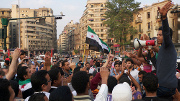
Muslim Assailants in Egypt Escape Prosecution: "Government orders closure of school’s guesthouse that villagers attacked.
ISTANBUL, April 20 (CDN) — A recent “reconciliation meeting” between members of a Muslim mob that attacked a Christian-owned school in Egypt and school administrators was nothing less than an attempt at legalized extortion, the director of the school said.
"
Read more...
“The same sufferings are experienced by your brotherhood in the world” (1 Peter 5).
Saturday, April 21, 2012
Friday, April 20, 2012
EU to temporarily lift Burma sanctions
Burma (MNN) ― At a meeting this coming Monday, the European Union is expected to suspend sanctions on Burma for one year.
According to VOA News, the EU has plans to suspend all sanctions except an arms embargo for the next 12 months. The Associated Press reports the potential for another review by the EU in six months.
"It's a great step, the way that the sanctions were lifted. So that it does encourage more change and more progress," says Dyann Romeijn with Vision Beyond Borders. "I think that the whole consensus is that they'd like to reward the steps that have been made, but also to recognize that the steps that have been made are not enough for the sanctions to be completely lifted and ended."
Violence in Burma has been on a steady decline as the nation has welcomed more and more democratic reform, including the addition of opposition leader Aung San Suu Kyi to parliament. Christians have been a particular target of genocide and other attacks in the past.
"There is still some violence and some persecution against Christians and some of the tribal groups, but even that is decreasing," notes Romeijn. "That needs to end for the sanctions to be completely lifted."
The world is watching now, and the Burmese government seems to be responding. Regardless of what happens, it will take generations for the Burmese people to heal from the oppressive, military rule they suffered under. Vision Beyond Borders remains cautious, but with the EU's close eye on Burma, change seems to be genuine.
Romeijn says the kind of turnaround exhibited in this next chapter of Burma's reform story can only be the result of years of fervent prayer.
"I truly believe that there's no other way this could happen," she says. "We've seen this kind of oppression in many other countries, and you don't see that peaceful transition, which is what people have been praying for."
Under the stipulations given for lifted sanctions, Burma will have to further decrease violence and increase rights.
Romeijn believes the church will soon be able to tell its story of persecution, but more importantly, the Gospel of Jesus Christ, across the nation.
Keep praying for Burma as they travel down this new road to democracy, perhaps even to Christ.
Labels:
aung san suu kyi,
Burma,
democracy,
European Union,
myanmar,
persecution,
reform,
sanctions,
vision beyond borders
Location:
Burma
Cuba's reforms bring hope amid austerity
| Seminar on stewardship in Cuba (Photo courtesy FARMS International) |
When Cuba implemented its own austerity measures, they were denounced as "draconian." The cuts were painful. However, Joseph Richter with FARMS International says, "What I saw and what was described to me about what it was like, even a year ago, was very dramatic because now you see small businesses popping up along every street and small restaurants and small enterprises that weren't even heard of just a year ago."
In the past 24 months, Cuba's communist government has announced a series of economic openings intended to ease its announced plan to trim the country's bloated government by 1 million jobs and to make the government leaner. A lot of jobs disappeared, along with the safety nets. Richter says, "What really impressed me was the work ethic of the Cuban people and their excitement about this new opportunity to work for themselves, to gain a profit and to help their family. They see a much brighter future."
FARMS was in Cuba to provide instruction, but they could also assess what was really going on and plan for more future work. Very little vocational training has been made available for Cubans as they transition into the marketplace.
Richter explains, "We were there to train people in economic stewardship, as far as the church is concerned--the whole issue of giving and tithing and how the church can be strengthened through families that prosper and families that give generously to their local church."
The reforms include expanded self-employment, a liberalization of rules surrounding family-run restaurants, greater flexibility for Cuban farmers to sell their products, Richter notes. "The government now is leasing land, or allowing farmers to lease land from the government, to produce crops and animals and those types of things that can be sold on the open market."
Most of the 181 newly allowed self-employment categories involve things like beauty salons, barber shops, plumbers, and other service oriented work. "This is a big change in Cuba. We need to be wise, we need to be thoughtful about the opportunities there for the Christians, and also the opportunities there for us to pray for our brothers and sisters in that country."
The opportunities are exciting. For one thing, says Richter, "There is more and more openness to help from the churches. This is something that will be a matter of prayer and a matter of thanking the Lord for because still, the country is under a lot of restrictions."
The time spent in the oppressive atmosphere has created spiritual hunger. The Church is growing, therefore, the Gospel is getting out. Hope means Cuba can think about its future. "It's changing fast, and in a good way, I think. We're not concerned so much about the political situation there; we're more concerned about the freedom in the church, and we're praying that God would just keep that door open."
Labels:
business,
Cuba,
evangelism,
farms international,
gospel,
reforms,
stewardship,
tithing
Location:
Cuba
Syria failing to meet ceasefire conditions
Syria (MNN) ― Syria and the United Nations finally agreed on the framework for observers monitoring a shaky ceasefire.
The three-month mission will be to monitor the cessation of hostilities that began on April 12 and the implementation of the Annan plan.
Since the uprising against President Bashar al-Assad's regime erupted in March 2011, more than 11,000 people have been killed, with more than 120 dying since the truce came into force.
In what was optimistically called an "Arab Spring," some changes did occur. Certain laws restricting the people were lifted. However, as protests continued, the Syrian government responded with military force resulting in thousands being killed and tens of thousands being displaced from their homes.
Many fled for camps along the borders of Turkey, Jordan, Lebanon.
As a result, Operation Mobilization says people are struggling to feed their families. Shops can barely keep any products in stock because many roads are blocked. In addition, thousands of Syrians are fleeing into Turkey or camping on the Syrian side of the border.
In the midst of this destruction, communities of Syrian believers are on the frontlines of bringing help and hope to their own people, according to Operation Mobilization. These followers of Jesus are reaching out to those who are starving and hurting by providing food packets and sharing God's love.
$75 will provide a food packet which will feed an extended family for one month. None know what the next few years will hold for Syria and its people, but they do know that the Arab world is crying out for something new. Please consider how you can help. Find the link at our Featured Links Section.
Labels:
bashar al assad,
civil war,
gospel,
humanitarian aid,
peace accord,
syria
Location:
Syria
South Sudanese Christians Trapped in Hostile North
Islamic extremists threaten to seize Bible school in Khartoum.
JUBA, South Sudan, April 19 (CDN) — As tensions between Sudan and South Sudan turn into military combat on the border, predominantly Christian citizens of southern origin trapped in Sudan fear the Islamic government and Muslims in general will turn on them, sources told Compass.Officially foreigners though many of the half million southern Sudanese in Sudan have never lived anywhere else, the ethnic southerners have been granted another 30 days as of April 8 to register or leave the country. But the government has forbidden hundreds of ethnic southerners from boarding planes for Juba, saying they require documents from the southern capital in order to leave.
“They closed all ways in front of us in order to prevent us from travel to our country,” said one church leader.
South Sudanese Christians were surprised to learn that all flights and land routes to South Sudan were closed to them on April 9, with no information forthcoming on when they would be allowed to leave, sources said. The Sudanese government last week declared it was in a state of war with South Sudan, adding to the fears of the trapped southern Sudanese.
Church leaders who wish to remain in the north said they have not been provided enough information on how to register for legal status. And many South Sudanese fear that registering will only help officials to monitor their movements.
Media and mosques, church leaders said, are increasingly sending derogatory messages about southern Sudanese to the general public. While the government at once orders and prohibits them from leaving, Islamic groups insist that ethnic southerners be deported.
“South Sudanese citizens must be deported immediately,” supporters of the Al Intibaha newspaper, which has published stories hostile to southerners, shouted at a recent press conference in Khartoum.
Sources said many Sudanese of ethnic southern origin complain of hearing comments such as, “Why are you still here? Have you not gone back yet to your country?”
In addition, on April 9 hundreds of South Sudanese displaced by war were heading to Khartoum by bus from Renk when they were stopped in Kosti and forced to turn back, according to local media reports.
Bible School ThreatenedThe precarious legal status of the southern Sudanese has fostered more concrete hostilities. In Khartoum, an Islamic mob with a bulldozer threatened to demolish a Bible school on April 9, saying it was located on land that should be returned to “the land of Islam” because southern Sudanese were no longer legal citizens.
Claiming that Gerief West Bible School was located “in the land of Islam of our grandfathers,” some 100 angry Muslim extremists brandishing clubs had first threatened to take over the school on March 30, a school employee said. The mob threatened to harm students and staff members, he said.
“On April 9 at 8 a.m. the mob came again, but this time with one big bulldozer in a clear attempt to raze the school building, but students and school administration protested and called the police to protect them,” he said.
Police arrived and forced the assailants to withdraw from the school compound, he said, but the Islamists went away enraged and again threatened to take the land by force. The school, which sits on nine hectares of land, belongs to the Sudan Presbyterian Evangelical Church and trains church leaders from various denominations.
The source said that Khartoum officials seek to take church lands on the pretext that they belong to southern Sudanese who have lost their citizenship. Southern Sudanese voted to secede from Sudan on July 9, 2011. Since then, Sudanese President Omar al-Bashir has pledged to base the new Sudan more deeply on sharia (Islamic law).
A student at the school said there was a prayer meeting going on when the attackers arrived with the bulldozer.
“It was an answer to the prayers the worshipers were offering that made the Muslims go away without injuring a brother or a sister,” the student said. “They wanted to raze the building; the situation is difficult, and you cannot imagine how bad it is.”
Encouraged by weekly anti-Christian messages that imams preach at Friday mosque services, many Muslims take for granted that harassment of Christians and Christian institutions is tolerated, sources said.
END
Labels:
islamic extremists,
Sudan,
sudanese christians,
trapped
Location:
Sudan
Thursday, April 19, 2012
Attacked Turkish Pastor Joins in Memorials for Slain Christians
| Christian Martyr in Turkey |
Istanbul church leader says he has known hostility from Muslims nearly all his life.
ISTANBUL, April 18 (CDN) — After a memorial service for three Christians who were murdered in Malatya, Turkey five years ago today, an Istanbul pastor who was attacked over Easter weekend said he’s experienced hostility from Muslims nearly all his life.Semir Serkek, 58, pastor of Grace Church in Istanbul’s Bahcelievler district, said he personally knew Turkish converts to Christianity Necati Aydin and Ugur Yuksel and German Christian Tilmann Geske, who were brutally murdered by five young men in the southeastern city of Malatya on April 18, 2007.
“I looked at their fate with some envy, because they were young and I am old, but they left – I have gone through many things,” he said. “But they were so young, so young.”
On a day when memorial services were held for the three slain Christians in Malatya, Izmir and Elazig as well as the ones Serkek attended at both the Kozyatag Cultural Center and Gedikpasha Church in Istanbul, the pastor said the physical violence on him the evening (April 7) before Easter Sunday surprised him.
“I’ve been verbally abused for being a Christian many times, but this was the first time I was hit, so this was surprising and made me sad,” Serkek said.
Serkek was alone at Grace Church finishing preparations for the next day’s Easter celebration when at around 9 p.m. he heard frantic pounding at the door, he said. Opening it, he found four young men in their late teens who claimed they had questions and demanded to enter.
The men, whom Serkek said appeared to be about 18 years old, were agitated, and when he refused to let them in they used insulting language, he said. They threatened to kill him if he didn’t recite the Islamic testimony of faith.
“This made me uneasy, and I told them that this was a church and they should come back in the morning,” Serkek told Compass. “‘This is a Muslim neighborhood, what business does a church have here?’ they asked me, and told me again and again that if I didn’t accept the final religion I would die.”
Finally one of the men kicked Serkek in the chest. The blow threw the pastor down the entrance steps to the ground. The Muslims ran away laughing, Serkek said.
Born to a Syriac Christian background family in the southeastern city of Mardin, Serkek said that while the violence surprised him, he has known verbal abuse since childhood and especially since he started serving God and began openly sharing his faith 35 years ago.
“To be honest, I’ve experienced these things from my childhood,” Serkek said. “I know these things closely. I’m from Mardin, and I’m a Syriac Christian. We are serving actively, and we have to spread the Word to be a source of blessing. This is what we are called to do, to bless. This is how God will use us, and I believe this with all my heart.”
Two days after the attack, Turkish Director of Religious Affairs Mehmet Gormez called Serkek from Denmark, where he was traveling, to express his disappointment about the attack on him, according to local press.
“I don’t want to be ungrateful, but I also told him that these men are trained in the mosques,” Serkek said. “At least 10 times they repeated their demand that I say the kelime-i sahadet [Islamic testimony of faith]. They pressured me. They told me I will die. They had violence in them. They didn’t even know me. They used insulting language. Their goal was to provoke me.”
Serkek said he is convinced the four Muslims who attacked him did not pass by his church site by accident or impulsively. He said the attack was planned, and that if police catch them he would like to know who put them up to it.
On Sunday (April 15), 17 activists from a non-profit organization known as Dur De, which fights racism and hate-crimes, came to Grace Church in a show of support to Serkek. Earlier last week, a delegation from a Muslim non-profit called Damla Nur Dursun also visited Serkek and brought him flowers.
On Easter weekend, Turkish Prime Minister Recep Tayyip Erdogan and President Abdullah Gul issued official statements wishing the country’s Christians a Happy Easter. Gul stated that “regardless of ethnic origins, language, faith and political views, everyone is an equal citizen in Turkey and equal owners of the Turkish state,” according to the Anatolian Agency. Erdogan wished Christians peace and well-being.
The attack on Serkek, however, came as a bitter reminder to the nation’s Christian community that Turkey has a long way to go in giving equal standing to non-Muslims.
Along with the memorial services around Turkey today, Geske’s family published an announcement inTaraf newspaper.
“While remembering with deep love and respect my husband, our father and our brothers, we pray and invite our beloved country’s people and government to a new level of tolerance,” the announcement read. “A new tolerance that brings peace and alleviates pain from this country where thousands have been killed in the name of religion, race, political opinion and differences of tradition. We invite every child and every citizen to choose life instead of death, good instead of evil and blessing instead of curse.”
Aydin, Yuksel and Geske worked for Zirve Publishing Co. distributing Christian material, as did Serkek for many years. The pastor said that he himself was nearly lynched in the northeastern town of Artvin for handing out Christian materials.
Because of Turkey’s long-term and systematic limitations on non-Muslim communities, the United States Commission on International and Religious Freedom recommended that Turkey be designated as a “Country of Particular Concern” this year. There are an estimated 4,500 Christian converts in Turkey.
END
Subscribe to:
Posts (Atom)