Friday, June 22, 2012

Christians already leaving Egypt


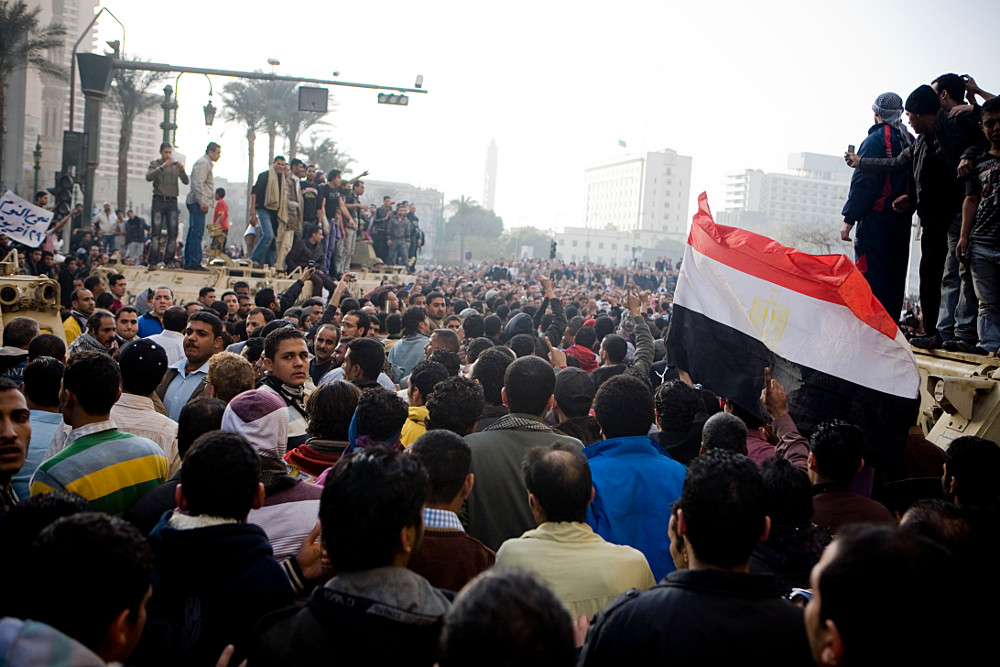
Protesters already crowd Tahrir Square preparing for election results.

Egypt (MNN) ― Protesters are already in Tahrir Square in Cairo, Egypt. Egypt's Presidential Election Commission announced yesterday they are delaying the results of this week's presidential election indefinitely. The commission says they're investigating election irregularities. Egyptians are in Tahrir Square demanding the results be released.

Rody Rodeheaver, President of IN Network USA, describes the atmosphere. "I'll just quote my director there. He says 'it's just crazy.' He's referring to the atmosphere. He's referring to the confusion. Everything that they thought they had gained has fallen apart."

Rodeheaver says it's not only a confusing time for the average Egyptian, but especially for Christians. He was told that most Christians voted for Ahmed Shafik. "Even though he represents going back to the Mubarak era, they were much more comfortable with him than they were with the Muslim Brotherhood."

Why? Rodeheaver says, "The institution of Sharia Law will basically stymie Egypt's ability economically, politically, and religiously to really have any kind of freedom."

While the elections haven't been announced yet, Rodeheaver says the evangelical church is already feeling the impact. "It was shocking to me when my staff person said, 'In our church, there have been over 60 people who have left Egypt to go to the U.S. to start a new life because of their fear.'"

While that is bad news, Rodeheaver says there has been some good news with all this uncertainty. IN Network has seen growth in leadership, discipleship, and evangelism training. "There has been this period of ability to do ministry unimpeded. The fear now is that that door will shut."

Rodeheaver is asking you to pray for safety for young people as they travel to and from summer camp. He's also asking you to pray for Egyptian churches. "If you're part of a congregation and all of a sudden you realize that 60 people are no longer there, that creates an emotion and psychological barrier." Pray that God will assure Christians that He is at work and that they can stand strong.

If you'd like to help IN Network share Christ, click here. 


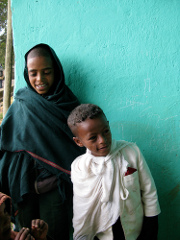
Released Christian finds kids missing


Kids of wrongfully imprisoned
 Christian father are missing. (Photo
 courtesy of Colleen Taugher)

Ethiopia (MNN) ― Tamirat Woldegorgis, a Christian in southern Ethiopia falsely accused of desecrating a Qur’an, has just been released after serving two of his three sentenced years in prison.

However, Tamirat has lost more than just two years of his life in prison. Due to cramped and harsh conditions, one of his legs is now paralyzed.

Furthermore, when he returned home, Tamirat discovered that his two children, ages 6 and 15, are missing.

"I have been trying to locate my children, but all in vain," says Tamirat. "My life is ruined--I have lost my house, my children, my health. I am now homeless, and I am limping."

According to Voice of the Martyrs, Canada’s source Compass Direct News, Tamirat is staying with a friend in an undisclosed town. Tamirat believes Muslims from his area may have taken his kids to restrict his influence.

Tamirat used to work in a cloth-making business before his arrest. When Tamirat was arrested back in August 2010, it was because his co-worker found that Tamirat had written “Jesus is Lord” on a piece of cloth.

Tamirat’s co-worker further accused him of writing “Jesus is Lord” in the cover of a Qur’an, but with no evidence. But Tamirat was still sentenced to three years in prison on November 18, 2010 for desecration of a Qur’an, a serious offense according to Muslim Shariah law.

Ethiopia is nearly 35% Muslim. Jijiga, the town where Tamirat was imprisoned, is the capitol of Ethiopia’s Somali Region Zone Five, which follows Shariah principles.

Persecution of Christians in Ethiopia is only getting worse. Ethiopia moved up to #38 on the World Watch List of countries with the worst Christian persecution, where last year it was #43.

Pray for the safety and salvation of Tamirat’s children, and for reunion with their father. Pray for courage among persecuted Ethiopian Christians and for the spread of the Gospel there.


Thursday, June 21, 2012

Nigeria imposes curfew to stem religious violence


Ministry to Fulani in Nigeria (File footage by Christian Aid Mission)

Nigeria (CAM/MNN) ― Two cities in Northern Nigeria remained under curfew Wednesday after rioting and reprisal killings followed deadly church bombings on Sunday.  

Kaduna and Damaturu were under lock down 24-hours-a-day, while soldiers patrolled the nearly deserted streets.

The Sunday bombings struck three churches in Kaduna State, killing at least 21, presumably all of them Christians. 

Boko Haram claimed the attacks, saying they're fighting for an Islamic state under Sharia law. The extremist group does not recognize the Nigerian government or the constitution. The group is also well-funded and organized. According to Christian Aid Mission, the government is ignoring the threat.

The church bombings are a serious threat to the stability of Nigeria due to the current religious divisions. The danger is that this week's retaliatory attacks will continue, spiraling out of control.

Rae Burnett, Africa director for Christian Aid Mission, says the good news is that missionaries of the indigenous Nigerian ministries they help have not been directly targeted by Boko Haram. However, several supporters have been murdered, and random terrorist shootings have come close, too. Burnett goes on to note that these missionaries have not involved themselves at all in politics, only the Gospel, and they have kept a low profile until now.

Burnett shares a dispatch she just received from a *ministry leaderwho has been her friend since 1996.

Terrorists have struck again. This time we had to evacuate our missionaries from Kandawa fields as Muslim militants discovered the work and threatened them. Right now, we need your prayers as Chris (the overseer of all ministry work in the northern Islamic area) is still trapped in the fields with several missionaries, some with infants.

On Sunday, three churches were bombed in Kaduna and Zaria, killing several people. This led to reprisals and killings all over the place. Yet the government is doing nothing.

More than 65 people are already confirmed dead. A 24 hour curfew has been declared, and we do not know how to reach the converts in the war zone.

Before today, Boko Haram had not done so much damage to us in this part of the country. We are appealing for funds to buy mattresses, blankets, mosquito nets, and food for our converts that are about to move out.

This is urgent. We have dispatched three other staff, but there is no access to the area. Fighting and fighting. Please we need your prayers for Nigeria. I am writing this in the midnight asking for all our friends to pray and help. You can also send support to them. Our staff for the first time are affected in this kind of killing. Help and ask believers to pray and support. We need your support and we need your prayers.

The converts too need prayers. We do hope you will pray for Nigeria now.

We need to relocate quickly. I am currently in Abuja (the capital city) and will go to Kebbi state to rescue our staff as soon as possible, but no going in or out of the area for now. We want to be ready immediately when they can escape with their converts.

We are so grateful for the property Christian Aid enabled us to buy, but we must have resources to build our simple headquarters and a place to help these victims of terrorism.

Thanks for your prayers for Nigeria and others around us.

This indigenous Nigerian ministry has experienced tremendous open doors for the Gospel in Islamic strongholds that have never before been evangelized. However, because of Boko Haram, they have to move their headquarters from an Islamic state where they have been in peace for more than 25 years, to a centralized and neutral place better suited to direct the work.

Christian Aid has provided the land, but $35,000 is needed to provide a simple headquarters building where the leader and staff would also live.

After so many years, the work is well-known and could be targeted at any time. Please pray for these heroes of the faith as they continue to press forward with the Gospel in this time of extraordinary danger.

*The ministry name is not mentioned for security.

Clock ticking for Senate resolution


Pastor Youcef Nadarkhani
 (Photo courtesy of Open Doors USA)

Iran (MNN) ― The U.S. resolution calling for the release of Iranian Pastor Youcef Nadarkhani is now one step closer to a vote in the U.S. Senate.

Senate Resolution 385 was passed unanimously by the Senate Foreign Relations Committee this past Tuesday, June 19.

When Pastor Youcef Nadarkhani was arrested in Iran on October 2009, it was on the charge of apostasy. Lyndsay Vessey with Open Doors USA says that while the case has gone up and down, Nadarkhani remains steadfast behind bars. “He’s been in prison for well over a year, but he’s been told that if he recants his faith and returns to Islam, he will be released. But he’s not been willing to do that.”

Senate Resolution 385, drafted by Sen. David Vitter, R-LA “condemn[s] the Government of Iran for its continued persecution, imprisonment, and sentencing of Youcef Nadarkhani on the charge of apostasy.”

The resolution is partnered with House Resolution 556 which passed on a unanimous vote earlier this year. The Senate resolution was introduced the same day the House resolution passed.

The American Center for Law and Justice (ACLJ), an organization that fights religious discrimination, says this Senate resolution “could not come at a more important time with Pastor Youcef's attorney continuing to face imprisonment himself.”

Nadarkhani’s lawyer, Mohammed Ali Dadkhah, is facing nine years of jail time after being sentenced with “acting against the national security.” Dadkhah has not been granted trial.

The clock is ticking for this resolution to go to the Senate for a vote before control switches hands in the upcoming election season. If the Senate resolution is not completely passed through all the systems and signed into recognition before a new Senate session begins at the end of the presidential elections, the resolution will start back again at square one.

Some may wonder whether a resolution from the United States can really make a difference in Nadarkhani’s case and call Iran to accountability. Vessey considers, “When the U.S. government speaks out, it does let the Iranian government know that they are being watched. And it also, I think, gives hope to those who are suffering persecution.”

Pray for Senate Resolution 385 to be put to a vote in the Senate quickly and pass through with little trouble. Pray for courage for Pastor Youcef Nadarkhani and his family, and for religious persecution in Iran to diminish in the face of the Gospel.


Wednesday, June 20, 2012

Convert from Islam in Sudan Loses Wife, Children


Faith in Christ leads judge to annul marriage, forbid seeing kids.
By Simba Tian
 
KHARTOUM, Sudan, June 19 (Compass Direct News) – A year ago Mohammed Khidir Khalil was glad his family had obtained refugee status in Egypt after fleeing Islamic hostilities in Sudan.
 
The 38-year-old Christian was also heartened that his formerly unbelieving wife was attending church with him.
 
Today the convert from Islam is back in Sudan fighting to recover his family after his in-laws compelled his wife to claim she was Muslim and divorce him. A Sudanese court automatically granted her custody of their two sons and forbade him to see them, he said. He fears that if he persists in his legal battle, he faces the threat of being accused of “apostasy,” or leaving Islam.
 
It was last August that his Muslim mother-in-law visited them in Egypt.
 
“Without my knowledge, she took my wife and children back to Sudan,” Khalil said.
 
The couple had fled Sudan just before the South Sudan vote for independence on Jan. 9, 2011, after threats from the couples’ Muslim families and others intensified, Khalil said. In Egypt, they reported their case to the U.N. High Commissioner for Refugees (UNHCR) and won asylum.
 
In emails to friends back in Sudan, Khalil freely shared his Christian experience and pointed out what he termed as contradictions in Islam.
 
Hearing nothing from his family after his mother-in-law took his wife and two sons back to Sudan, on Christmas Day Khalil decided to return to an undisclosed town in Sudan to search for them. He was shocked to discover that his wife, Manal Hassan, had filed for divorce on grounds that she was a Muslim and he a Christian.
 
Khalil, who converted to Christianity in 2001, had met Hassan in 2007. At that time shesaid she was neither a Christian nor a Muslim, and they married in a non-religious wedding. The bride’s Muslim family learned that Khalil was a Christian but had no objection to the marriage, he said.
 
By 2010 the couple had joined an undisclosed church and had become visibly active in it; opposition from their families grew, leading to the couple’s flight to Egypt in early 2011.
 
Last February, Khalil decided to appeal the divorce ruling. His wife had presented a copy of the UNHCR certificate showing Khalil’s testimony as a Christian, however, and that was proof enough for a judge to rule in March that the marriage be annulled and the children automatically handed over to the spouse professing “the popular religion” – Islam, the supposed faith of Hassan.
 
In spite of the court’s ruling that Khalil did not have a right to even visit the children, in April he decided to try to see them. His former wife’s family threatened to call police if he persisted.
 
“I am very upset with courts like this that bar one from seeing one’s children,” he said. “I have to appeal against this.”
 
Asked what risks he might incur by appealing, Khalil said it could lead to a case against him for apostasy – punishable by death in Sudan, where sharia (Islamic law) is established as a primary source of legislation.
 
“They might take the case to a prosecution court, which might lead to my sentencing to death according to Islamic apostasy law – but I am ready for this,” Khalil said. “I want the world to know this. What crime have I done? Is it because I became a Christian? I know if the world is watching, they will be afraid to do any harm to me.”
 
Conversion
Khalil was a practicing Sufi Muslim when he began studies at a university in Alexandria, Egypt, in 1998. By the time he graduated in 2000, he had left Islam; he returned to Sudan an atheist.
 
After his return to Sudan, Khalil came into contact with a U.S. pastor who inspired him with his Christian faith.
 
“He was very calm and confident,” Khalil said.
 
He recalled that the pastor made reference to the Nubian people of southern Egypt and northern Sudan calling themselves “sons of the Nile,” the river being considered the source of life, and connecting that idea with the Son of God likewise coming from God as the source of all life. References to Jesus as the Good Shepherd whose Father was the God of love also moved him. Khalil decided to visit the pastor’s church, and he entrusted his life to Christ in 2001.
 
He stayed with the pastor for three months before he left to his home village. The pastor paid him visits, and when his family realized that Khalil had embraced the Christian faith, his father threatened to shoot him. Khalil fled home.
 
He was later baptized in a historically Nubian area near his home village. Khalil began winning friends to Christ, and persecution intensified; family members reported him to the police, and he fled his country.
 
“Life became unbearable, and I decided to flee to the United Arab Emirates, where I was received by a Sudanese family in 2001,” he said.
 
He remained there until the signing of the Comprehensive Peace Agreement between north and south Sudan in 2005, and then decided to return to Sudan with the hope of serving his community. He became an English teacher, at the same time developing programs to promote Nobiin, one of the Nubian languages, and its cultural heritage. Building a literacy program for children in Nobiin, he also wrote poetry in the language and translated several hymns and Bible verses into it.
 
Along with his other challenges, Khalil is working toward publishing his sundry manuscripts in the Nobiin language, in spite of financial constraints. A deacon at his church summed up: “Mohammed needs prayers and support at this trying moment.”
 
 
END
 
**********
Copyright 2012 Compass Direct News

Is Egypt on the brink of civil war?


Scene from 29 January. Photo: 3arabawy.

Egypt (MNN) ― The world expects to see some kind of violence despite the official outcome of Egypt's election. The country's presidential election results are expected tomorrow, but the country appears to be equally divided between the Muslim Brotherhood candidate, Mohammed Morsi, and the secular candidate, Ahmed Shafiq.

According to reports, protests were called across Egypt on Tuesday against the ruling military council's bid to grab new powers. Meanwhile, the United States and Britain wants a swift transfer of leadership once the announcement is made.
Tom Doyle with e3 Partners says Egypt is a tinder box. "If the situation isn't figured out soon, I mean there could be a very strong civil war that could last a very long time in Egypt. We already know that there was a whole bunch of corruption in the midst of this election, so politically it's an absolute mess."

Doyle agrees that it doesn't matter who wins the election. "Shafiq, if he's declared the winner, no question I think there's going to be riots. If the Brotherhood wins, Christians, born again believers, nominal Muslims -- all of them live in fear. And I think there will be a lot of activity, too -- a lot of protests, probably rioting -- just like we saw during the revolution."

What's Doyle's prognosis? "I think it's just beginning in Egypt to really unravel with more protests and riots and killings."
While many would believe the evangelical church is stymied, Doyle says the uncertainty has "actually accelerated things. When we were in Egypt, we were hearing stories of more Muslims coming to faith in Christ this year than in any of the Christian leaders could remember in several years past."

e3 Partners supports the church in the Middle East, including Egypt. Your support is vital to providing them the resources they need to help with evangelism and discipleship. Doyle says they also need your prayers. "Pray for boldness for opportunities. And pray that God would stem the tide -- that He would just push it back so there wouldn't be this regional war because it would be very ugly if it breaks out."

If you'd like to support the work of e3 Partners, click here.